
Home首頁首页 · Memoirs回憶錄回忆录 · 羈旅雁鳴
Part 5 of 8第 5 部分,共 8 部分
Volume 3: Far Away, Yet Next Door, essays 6–7下集:天涯若比鄰,第 6–7 篇下集:天涯若比鄰,第 6–7 篇
簡介中原為英文的部分由 AI(Claude)於 2026 年 11 月譯成中文,尚未經作者審閱。
三冊原 PDF 共有 81 個字因字型缺字而無法顯示,本頁已依上下文補上,或有出入。
第6篇:亨利福特
博物館
2019年10月26日,是我和妻今年到底特律探望小兒Anderson的第二個星期六,安排至大底特律都會區西南方Dearbonr縣內的亨利福特博物館參觀。
博物館的全銜是《亨利福特美國創新博物館》(Henry Ford Museum of American Innovation)展館面積250英畝,展品2600萬件,跨越美國開國前後300年。
除了主展館外,還有格林菲爾德村、福特榮格工廠及班森福特研究中心。
到了此地,會讓人們了解到整個美國,它的文化、它的發明創造,和美國人民的開拓精神。可以親身體驗美國為何能在建國後不到200年(1776-1945),就可臻於世界第一強國,迄今䇄立不搖。進而可以從中汲取靈感,激勵參訪者的思考,學習美國經驗,建設自己的國家。
亨利福特博物館館長Patricia E.Mooradian女士的歡迎詞中說道:什麼能點燃你內心的火焰並喚醒你的靈魂,讓你敢於夢想,勇於實踐,為夢想付諸行動,並使其成為可能。那麼請來本館體驗,我們誠摯的熱烈歡迎。(1)
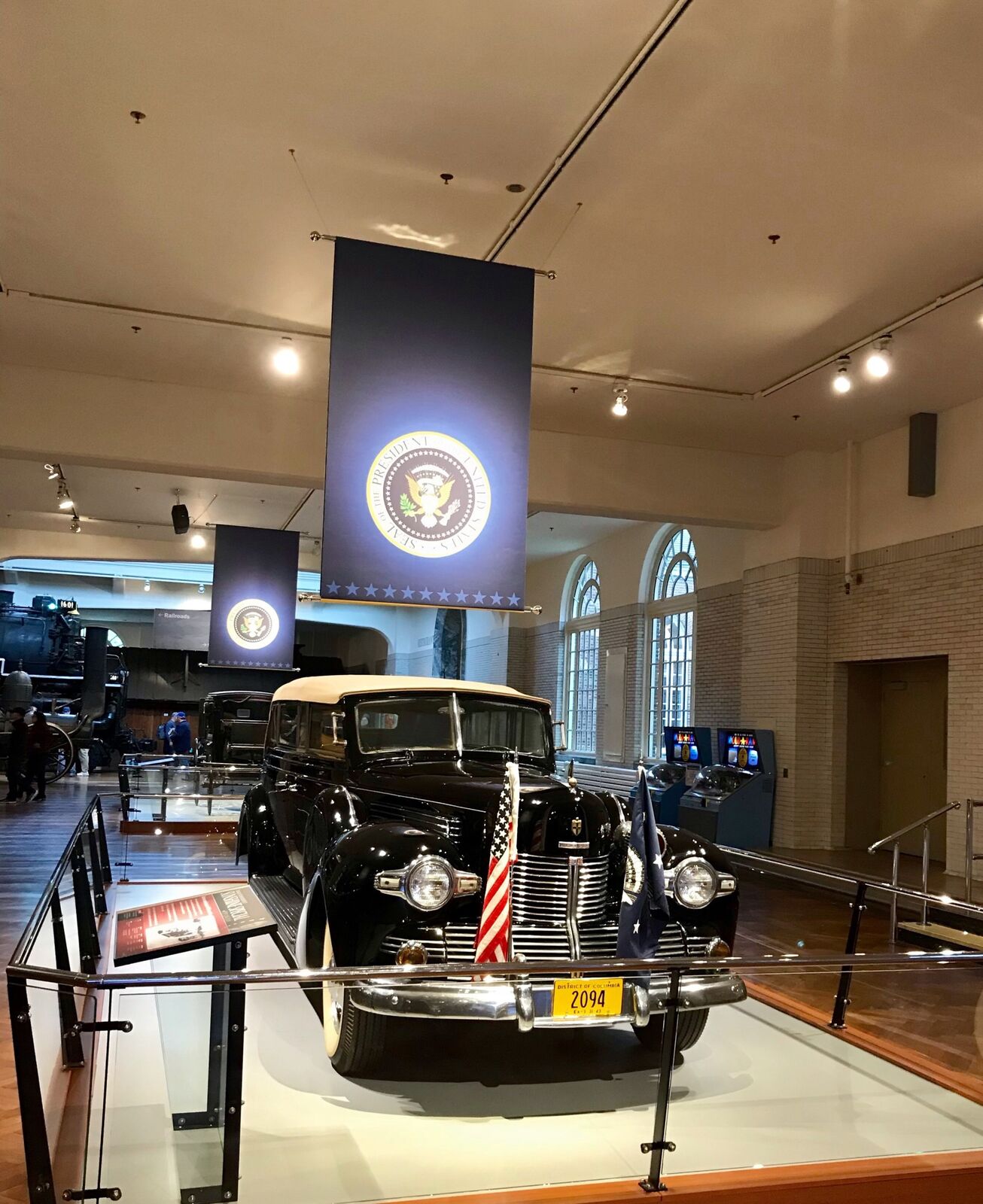
入館向右轉,出現在眼前的是,美國總統座車展示區,展出五位歷任總統座駕。
1930年美國第31任總統胡佛任內(1929-1933),聯邦政府開始派遣專車提供總統使用。在先進通訊系統、配備防彈裝甲的安全條件下打造頂級車輛,以彰顯總統的職權。
1961年在第35任總統甘迺廸任內(1961-1963),啓用福特公司生産的林肯型座車。
1983年在第40任總統雷根任內(1981-1989),凱迪拉克轎車首次成為總統座駕。
雷根總統座車排第一,依序是甘迺廸、艾森豪、富蘭克林羅斯福、西奧多羅斯福。
我們在甘迺廸總統座車前端凝近五分鐘,1963年11月22日中午,甘迺廸總統在德克薩斯州達拉斯迪利廣場遇刺身亡,當時他就坐在這輛敞蓬車內。(2)
來到第34任總統艾森豪(1953-1961)的座車前,我凝視了很久,這輛車子覺得有些面熟,聯想起民國49年(1960年)6月間,美國唯一任內訪問中華民國的艾森豪總統與蔣中正總統同乘的那輛敞篷車。
1960年6月18日,艾森豪總統訪問中華民國,下午近五時蔣總統陪同艾森豪抵達總統府前廣場,向50萬民眾發表演說。
當時我是財務學校二年級的學生,與北部各軍事院校的師生們,站在距離講台最近的位置,聆聽艾森豪總統的演說,同時看見兩位總統的風采,也看見了那輛我從來沒有見過的總統級豪華座車。這輛美國總統座車,是否就是當年出現在台北的那一輛,有待查證。
還有一件事情,與艾森豪總統訪問中華民國有關。艾森豪在台北的前後兩天(6月17日及19日),福建廈門方面的中共砲兵,向金門發射了17萬發砲彈,造成軍民嚴重傷亡,遭到國際媒體強烈譴責。(3)
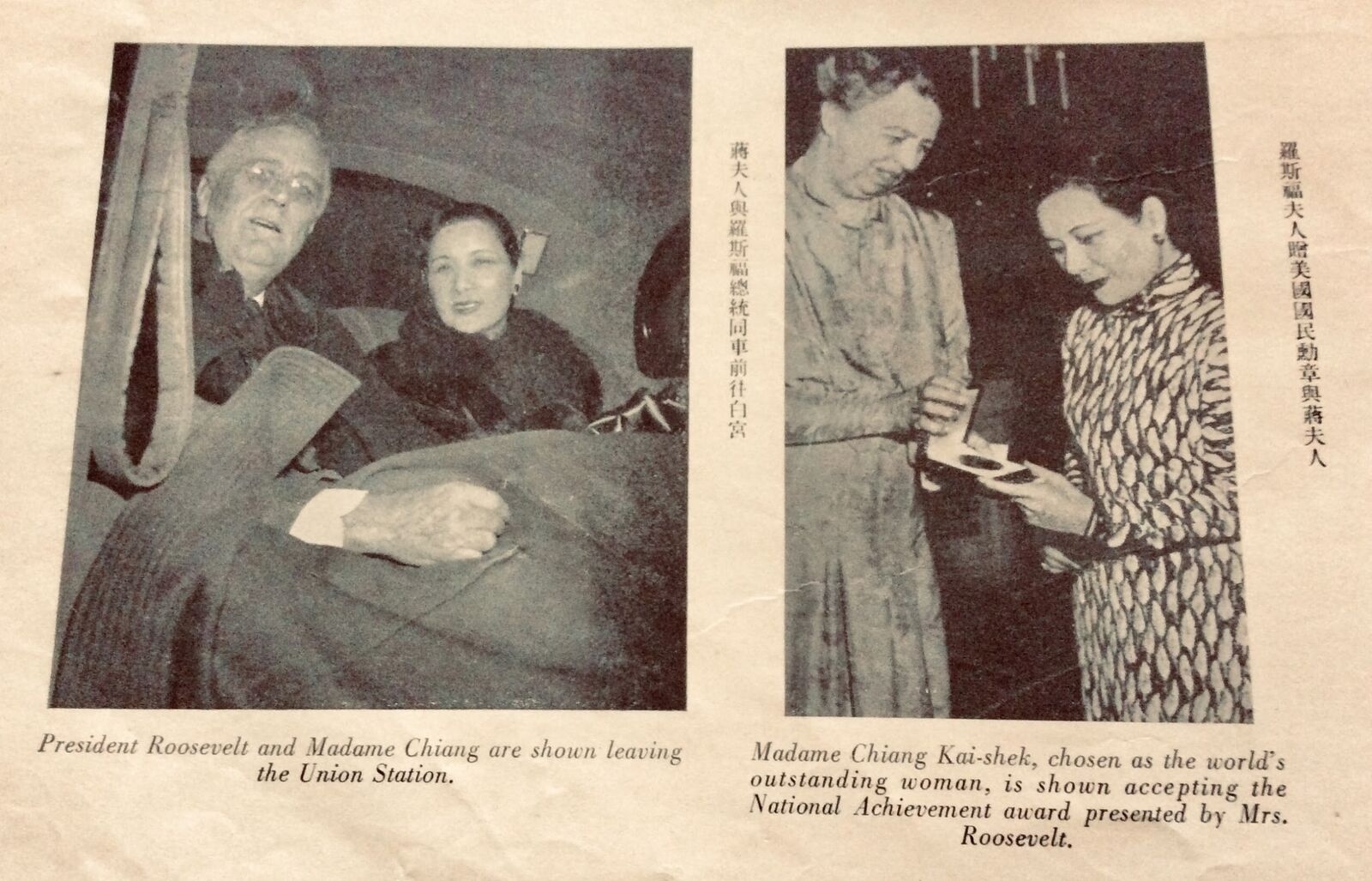
我們繼續走到第32任總統富蘭克林羅斯福(Franklin Delano Roosevelt 1933-1945)的座車前,這輛美國總統座車與蔣夫人宋美齡女士有點關係。
民國31年(1942年)11月,宋美齡應美國總統羅斯福的夫人愛蓮娜羅斯福(Anna Eleanor Roosevelt)的邀請,到美國訪問。首站停留紐約,至次年2月17日赴華府訪問,次日在國會參眾兩院發表演說,並入住白宮11天。
之後數月內,分赴紐約、芝加哥、舊金山、洛杉磯、加拿大渥太華演講。總計超過25萬人聆聽,所到之處萬人空巷,爭睹風采造成轟動。蔣夫人述說中國對日抗戰內憂外患與孤立待援的情形,獲得美國各界及民眾慷慨解囊,支援抗戰。
蔣夫人1943年2月17日由紐約搭乘火車,抵達華盛頓Union Station車站。羅斯福總統暨夫人愛蓮娜親自到車站恭迎。我們面對的這輛總統座車,就是當年迎接蔣夫人的那輛車。
在其後的一輛車,則是第26任總統西奧多羅斯福(老羅斯福Teddy Roosevelt 1901-1909)的一輛史丹利型蒸氣車(Stanley Steamer)(4)
看完了五輛美國總統座車後,對美國汽車的進化史,有了一些概念。
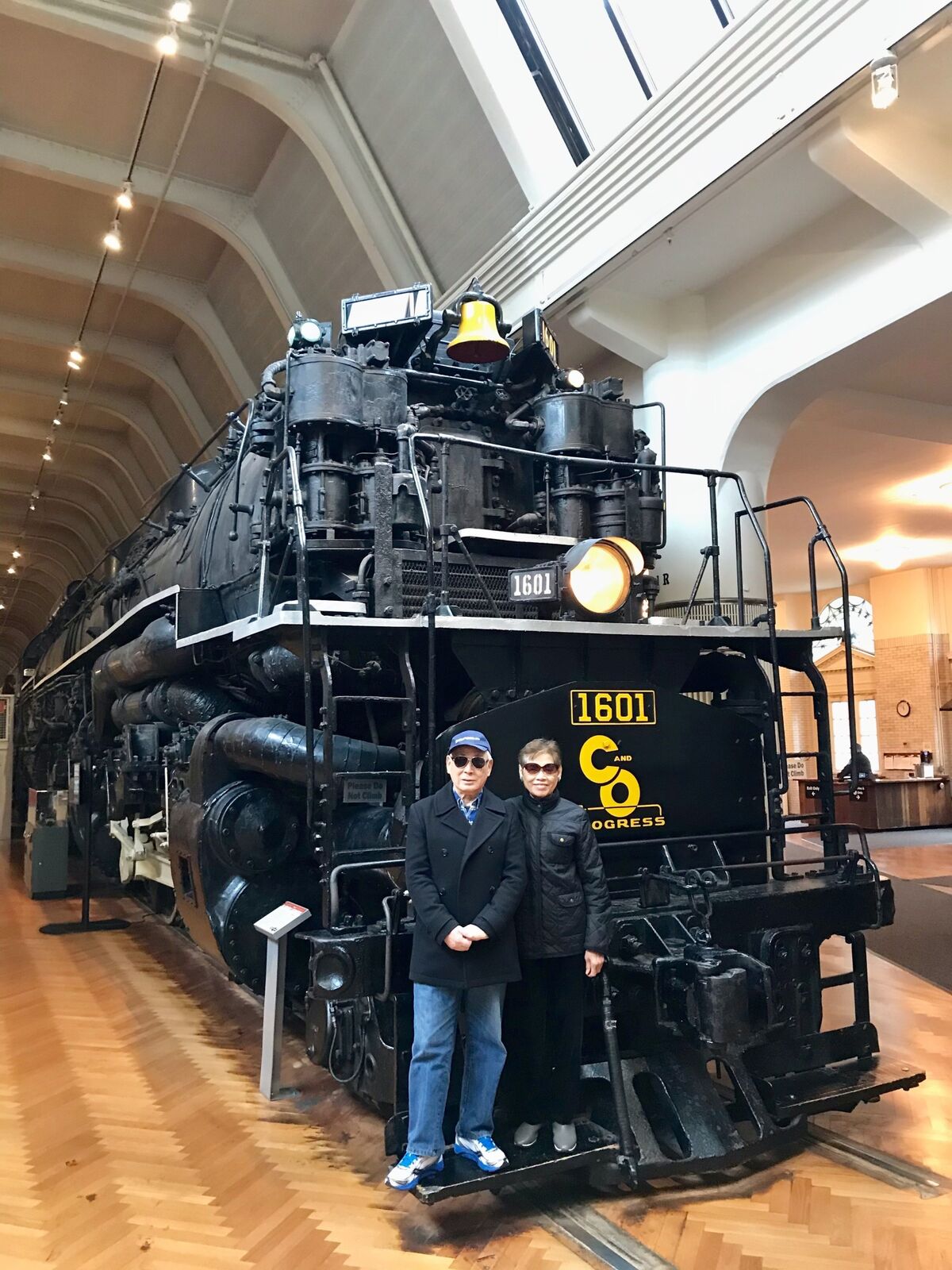
隨後來到一個巨無霸型的鐵路機車頭前,這個龐然大物有5公尺高,14公尺長,製造於1850年代。敬佩美國的科技進步與科學家的研發精神,驚訝它在廣袤的美國大陸上,來往運輸貨物及旅客,長達百年之久。這個機車頭在19世紀中葉曾擔負著運送西維吉尼亞煤炭至美國中部各州的重任,動力之大可以拖掛1英里長(1.6公里)的運煤車廂。
美國擁有全球最大的鐵路網路,2017年的統計鐵路里程為14萬9千910公里。排名第二的是2018年統計的中國大陸,有13萬1千公里,比美國少1萬8千公里。排名第三的是俄羅斯,只有8萬6千公里。
鐵路在美國經濟社會發展中,起到十分重要的作用。1810年-1850年的工業革命時期,到1850年-1890年新殖民開拓時期,鐵路促成美國成為全球經濟強國的地位,扮演了不可替代的作用。
美國鐵路始建於1828年,由馬里蘭州的巴爾的摩(Baltimore)至俄亥俄州的哥倫布市(Columbus)。1830年引進英國工程師喬治史蒂芬森(George Stephenson 1781-1848)硏發的蒸氣式火箭號機車頭加入營運,促成以後20年間,以紐約、芝加哥、亞特蘭大為鐵路中心的美國中部及中西部鐵路網的建成。機車頭的研發成果,比起英國更勝一籌。(5)
美國的鐵路史密切關聯到移民開拓史,早在美國獨立戰爭時期(1775 Apr.19-1783 Sep.3)就有一批批無畏艱難,冒著危險,穿越西部崇山峻嶺,騎着馬駕著篷車的移民開拓者,向西岸遷徙,這些先民被後人稱讚為「馬背上的英雄」。
從1775年開始,到1869年美國太平洋鐵路建成通車為止,前後長達95年,是謂美國國內移民開拓時期。經歴1848年至1855年的加州淘金熱,1850年加利福尼亞成為聯邦第31州,1861年至1865年的美國南北戰爭。
1862年5月6日,美國國會參眾兩院通過太平洋鐵路法案,6月20日林肯總統簽署。法案由政府保障援助,提供移民安全舒適的交通工具,及用於郵政、軍事、農工科技物資的運輸。次年,1863年1月開始興建,全長3000多公里。(6)
太平洋鐵路由加利福利亞中央太平洋鐵路公司、西太平洋鐵路公司、聯合太平洋鐵路公司承包合建,全程分兩段,東段西段同時動工。
西段由加州的沙加緬度(Sacramento)向東延伸689英里(1108公里),東段由內布拉斯加州的奧馬哈(Omaha)向西推進1086英里(1747公里),兩支鐵路在猶他州的奧格登(Ogden,鹽湖城北37英里)會合。
因此,美國東、中西部鐵路網,可以與這條太平洋鐵路在密蘇里州的堪薩斯(Kansas)銜接,東岸的客貨運輸,可以直接到達西岸。
此一壯舉被英國BBC評為自工業革命以來,世界七大工業奇蹟之一。推動美國成為太平洋與大西洋兩洋兼具的經濟強國,美國經濟發展開始進入狂飆時代。(7)
離開巨無霸火車機車頭後,來到一輛同樣是美國製造,生產於1870年代的鏟雪火車前。
美國東北部及環五大湖各州,每年十月起可見飄雪,十一月至次年二月,更有暴風雪出現。
遇到暴雪天氣,層層厚雪覆蓋了鐵路,如不及時處理,鐵軌上就形成冰層,火車行駛受到嚴重影響,因此有鏟雪火車的發明。
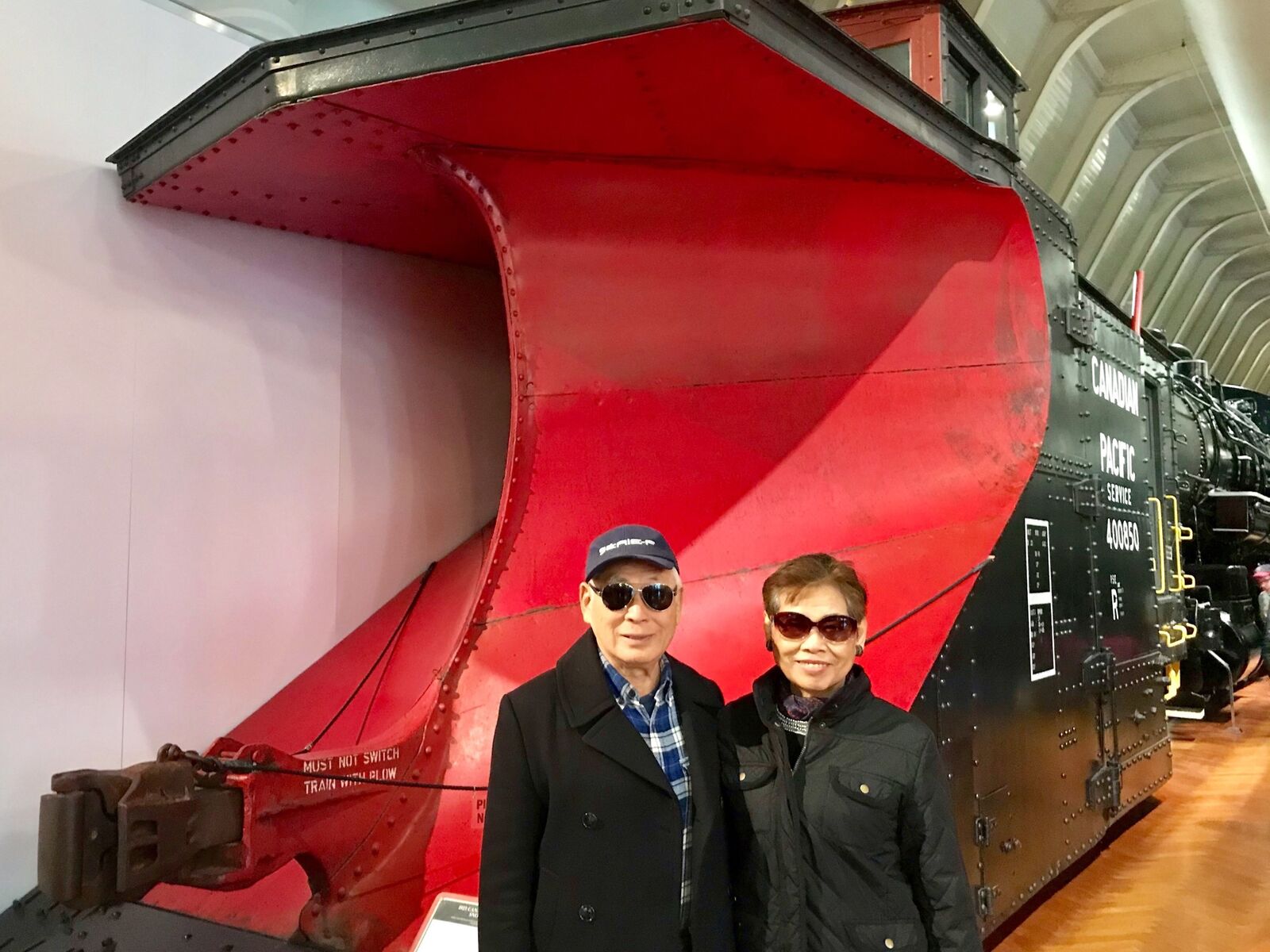
出現在眼前的這輛鏟雪火車有12英尺高,25英尺長,9英尺寬(寛過鐵軌4英尺)。車頭中央有一尖刀型鋼柱,兩側向外呈弧形,正面漆成深紅色。行駛中的鏟雪火車,可將鐵軌上的厚雪鏟除至兩旁,雪花四濺直衝雲天,如水壩泄洪,又似飛瀑奔放。紅色火車奔馳在藍天白雲,皚皚白雪之間的鏟雪景觀難得一見。(8)
在鐵路展示區內,除了實體的機車頭,呈現在眼前外,更有照片、圖表、文字的輔助說明。
美國的鐵路演變從最初的䒱氣驅動到1950年代後,至今仍在使用的柴油驅動。
至於美國鐵路的電氣化,早在19世紀晚期就開始推動。但僅限於東北部包括紐約州、麻沙諸薩州在內的少數幾個州,賓夕法尼亞州擁有全國最大的電氣化鐵路網。但一直無法向外拓展,鐵路私有化及資金不足是一大原因。
就整體美國鐵路運輸而言,長途客運日漸式微。但貨運總量十分可觀,貨櫃、煤炭、石油的運輸,在經濟發展中起了重要作用。1987年至2000年,美國鐵路貨運量就增長了172%,佔整個運輸市場份額的43%,高於其他發達國家。
美國的高速鐵路,採重點興建。加利福尼亞州高速鐵路,是推動的領先者。長約800英里(1300公里),從舊金山到洛杉磯延伸至聖地牙哥。另一條由洛杉磯,至拉斯維加斯。但在緩慢進行中,建成營運將是2030年以後的事。(9)
美國福特汽車公司創辦人亨利福特(Ford,Henry 1863-1947)生於美國密西根州的農家,父親具有牧師身分。自小就喜愛機器的他,12歲喪母,四年後離開田園,到底特律一家機器鋪工作。
21歲那年,父親給了他40英畝(0.16平方公里)的田地,叫他經營農場。但他對機器熱愛的程度,遠超過種田,兩年後去了底特律的愛迪生公司(1886年)。
當年愛迪生(Edison,Thomas 1847-1931)已經發明電燈(1879年)。愛迪生對這位胸懷大志的年輕人極為激賞,給予多方面的協助。
那時的亨利福特,對不用馬拉的車輛極感興趣,從此投入研究,從1769年法國人古納製造的汽車開始,到早期的汽油引擎汽車。
他夜以繼日的研究改進,終於在1896年5月,某夜兩點鐘大功告成。次晨,福特把那輛有點像馬車的車子,開了出去,沿着大街行駛,造成轟動。後來他以美金200元,賣給了一位商人。一年後,又製造了一輛功能更好的敞篷、四輪、汽油驅動、駕駛盤特長、前座可乘兩人的汽車。
坐在這輛汽車上的福特父子,經常出現在街頭。隨後,底特律市長發給他全世界第一張駕駛執照。(10)
亨利福特對自己研發的汽車前景頗具信心,評估汽車運輸對美國經濟發展,將會帶來革命性的改變。從1898年至1903年五年間,投入大量資金、人力及技術研發。1903年福特汽車公司在底特律Dearborn現址成立。
從1903年至1908年五年間,福特汽車從A型車到T型車的研發過程中,只有N型車及S型車短暫出廠。
1908年9月27日,第一輛T型車誕生,它的面世在美國工業史上,具有重要意義。
T型車的量產,以其低廉的價格,使汽車作為一種實用工具,走入尋常百姓之家,美國因此成為《車輪上的國度》。
該車的成功在於亨利福特的數項前瞻意志。1,裝配線大規模作業,代替傳統個體手工製作。靈感得自於芝加哥屠宰廠,使用電力的自動系統。2,支付員工較高薪酬,鼓勵員工購買,帶動市場需求。1920年代的美國技術工人,每日基本工資為美金一元。亨利福特將少部分的利潤作為發展基金外,全部改善員工的生活,工資提高到每日五元的驚人數字。使得全國各地的技術工人及工業人才,紛紛至福特公司謀職。3,實施員工分期付款購買,輔以銷售。
因此員工有足夠的能力,購買自己生產的汽車,帶動了美國20年代的公路網建設,旅遊、餐飲、旅館、景點的開發,欣欣向榮。
1927年T型車量產達到最高峰,也研發出新款車輛。這年(民國16年)福特汽車在中國打開市場,上海有了代理商。(11)
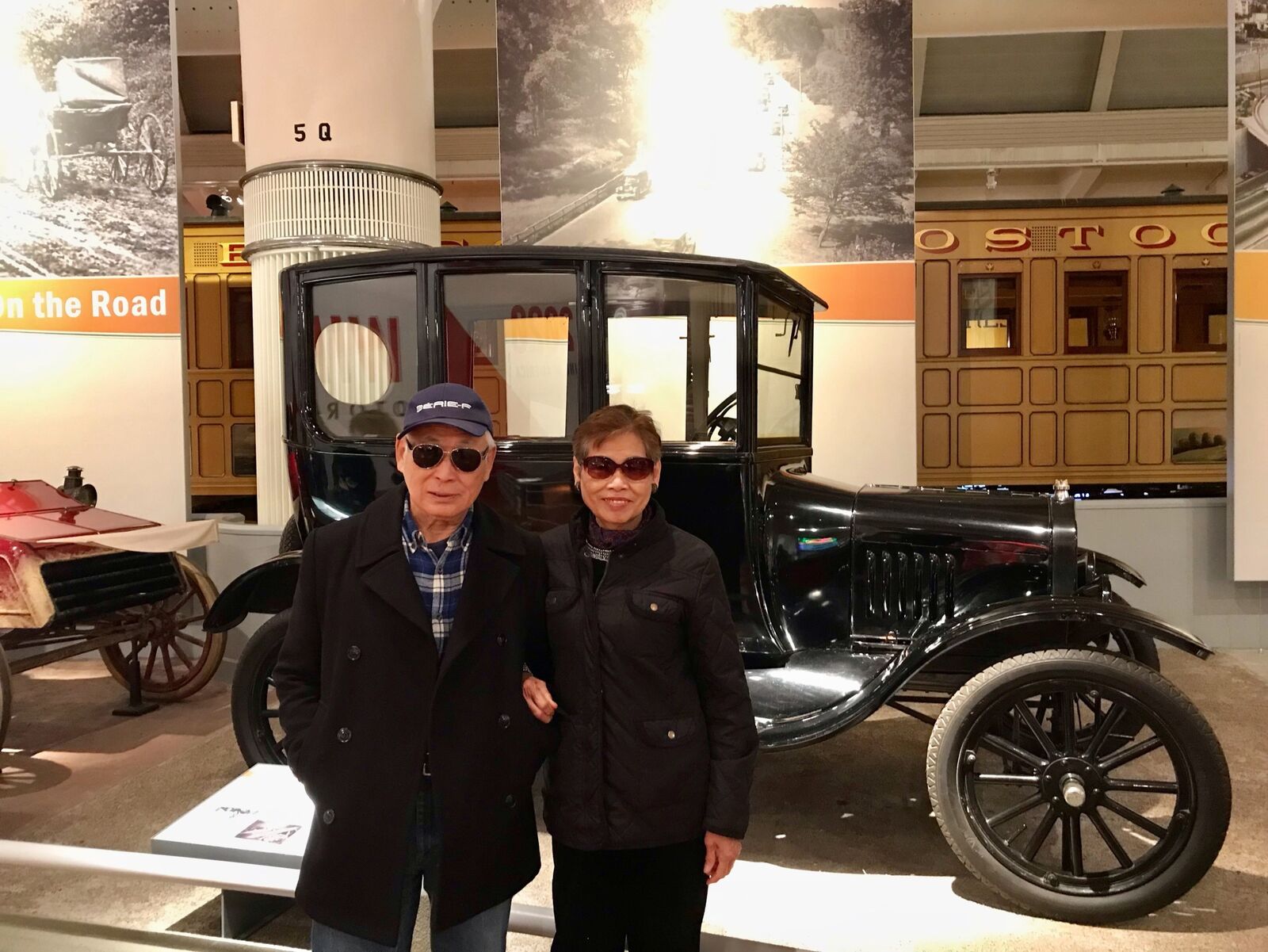
美國的企業主面對1910年代汽車工業的興起與國家經濟發展有着密切關係,紛紛投資汽車生產。繼福特汽車公司1903年成立之後,通用汽車(GM)也於1908年成立,克萊斯勒汽車公司也在1925年創辦,被稱為「美國三大車廠」。
美國第28任總統威爾遜(1913-1921)當年就鼓勵民間投資生產汽車及興建公路,到了第29任總統哈定(1921-1923)任內,政府更積極協助民間推動此項交通運輸工程。此後10年之內,美國的公路網已具初步規模。
1929年胡佛總統上任(1929-1933),就有了高速公路的概念,並對建立全國高速公路網,有了規劃。無奈1930年代美國經濟陷入蕭條,此項計劃中斷。
30年代末,美國經濟復甦,建立高速公路網的腳步加速。第32任總統富蘭克林羅斯福(1933-1945)任內,二次大戰爆發,全國高速公路網更具戰略上的價值。
美國出版公司Rand McNally Company在1942年出版的World Atlas地圖34頁及35頁內,已將美國高速公路的分佈,標明得相當清楚。
美國於1937年修建了第一條加州高速公路,二戰後以美國為首的發達國家,掀起高速公路建設潮,興起以美國為代表的西方經濟發達國家的汽車文化。
上世紀五十年代,艾森豪總統(1953-1961)任內,美國是世界超級經濟強國,聯邦投入巨大的公共資源興建高速公路,形成了今日美國傲視全球的高速公路網體系。(12)
1962年福特汽車公司研製了一款擁有時尚外形,又適合年輕人駕駛的跑車,取名為福特野馬(Ford Mustang)。為的是紀念二次大戰中,屢獲戰功極富盛名,由一名福特員工子弟駕駛的P57型野馬戰鬥機而命名。
1965年,這款敞蓬版的野馬跑車,送上了紐約帝國大廈第86層觀景台,創下了汽車離地面最高的紀錄。
2015年,為了紀念這個日子,在賭城拉斯維加斯舉辦了一次50週年紀念活動。來自世界各地的野馬跑車愛好者,將珍藏包括第一代至第三代車,運到美國展示,吸引了近20萬人觀賞。
2013年第六代野馬誕生,銷售量突破900萬輛。去年2018年,更突破1000萬輛。
博物館內展示出一輛1967年福特野馬Ski Country藍色外殼有篷車,我們在前佇足很久。(13)
18世紀中期,美國獨立戰爭之前,英國有許多科學家,就開始利用水力及蒸氣為動力,去改造生產工具,發明了許多很實用的機器。
1775年,英國工程師瓦特(Watt James1736-1819)在伯明罕發明了蒸氣機,而且加以改進,不但解決了礦區的排水問題,也使蒸氣的力量廣泛用於紡織機、車床等大型機器。更引發美國工程師富爾頓(Robert Fulton 1765-1815)的靈感,將蒸氣機安裝在輪船上,而且發明了汽船。
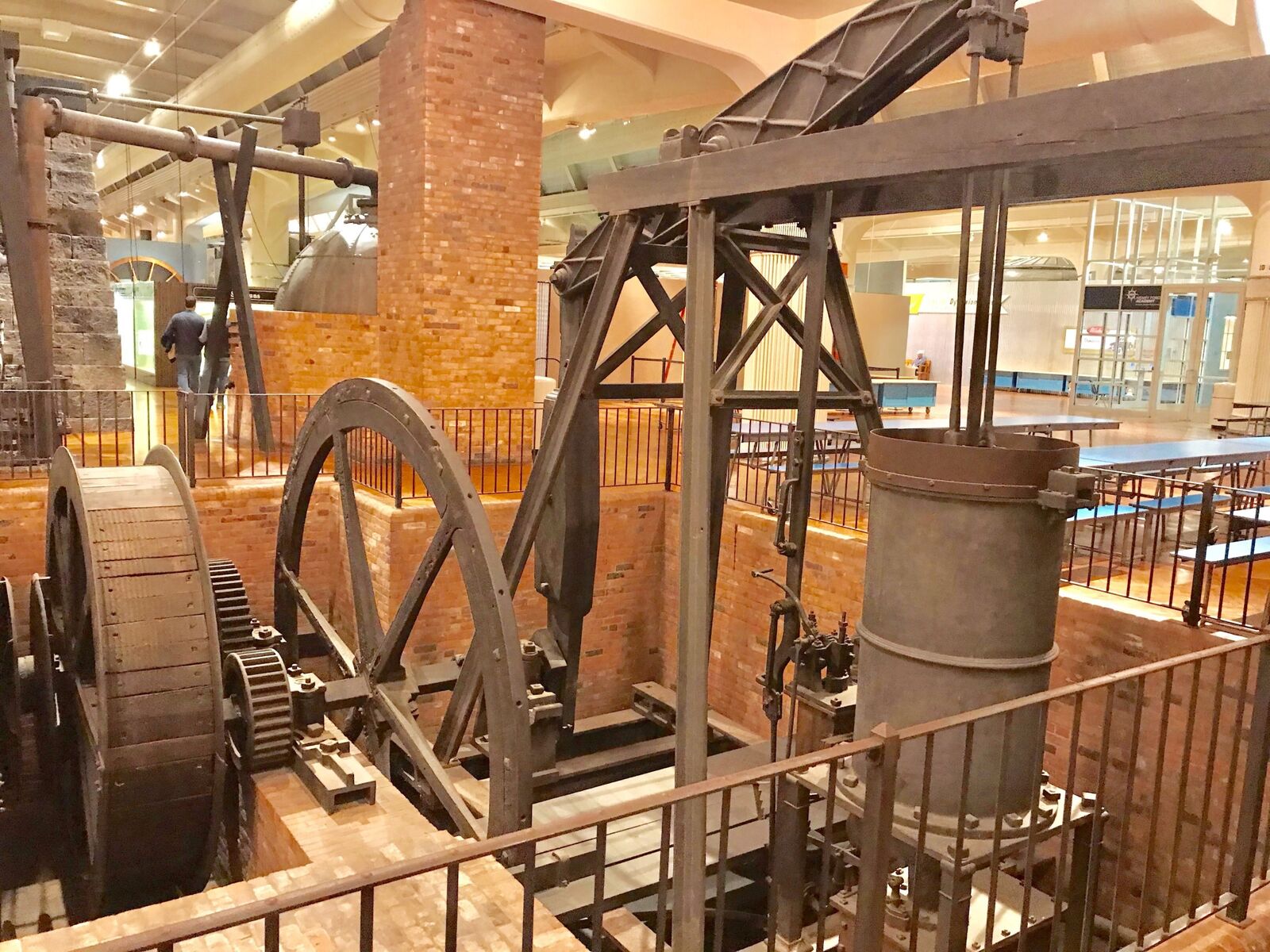
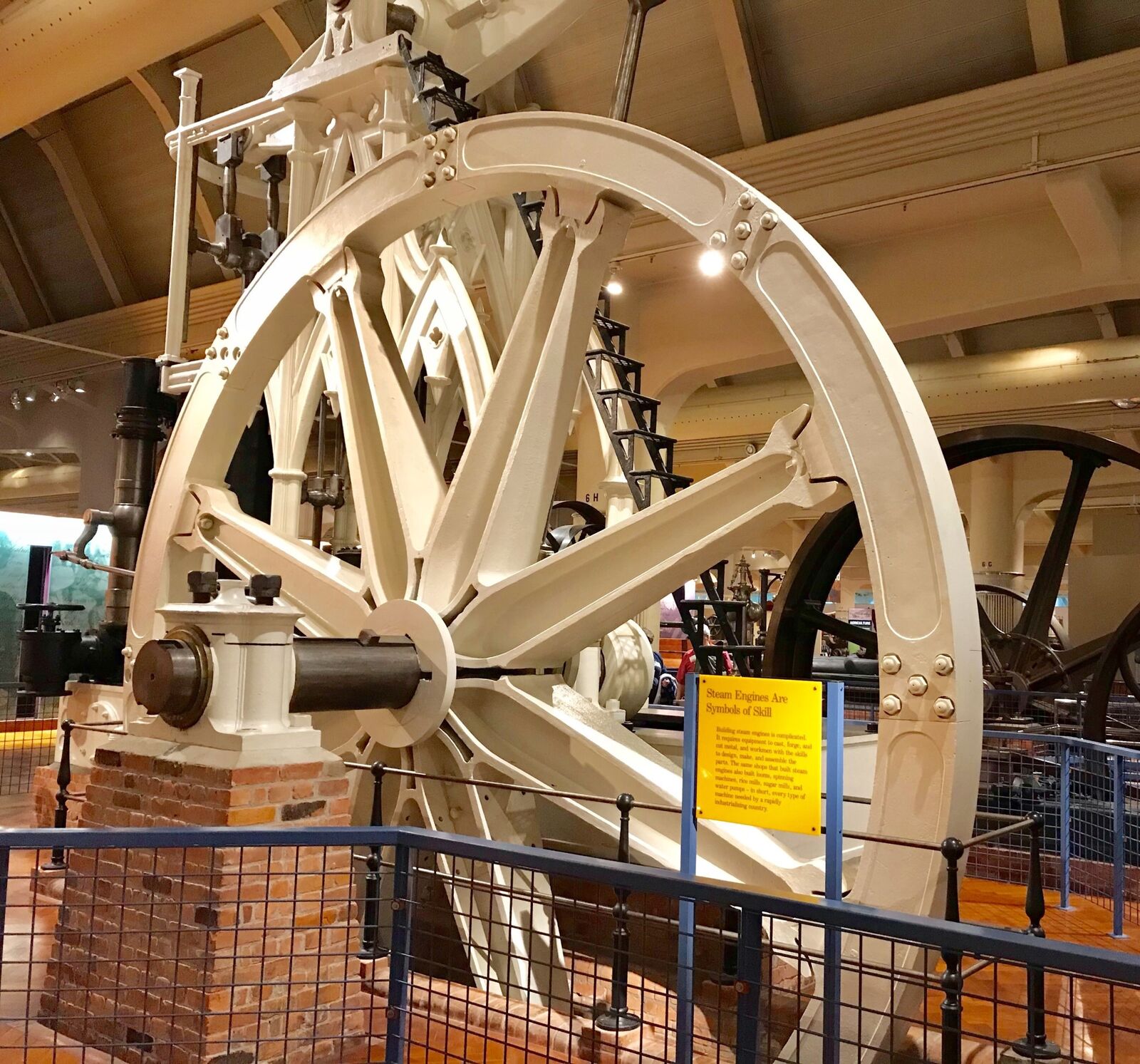
蒸氣機的運作,將煤炭及油燃料,經過加熱鍋爐,使水沸騰,産生高壓蒸氣,推動飛輪運轉。火車運輸因此有了革命性的改變,更帶動了20世紀初期美國海運及航空工業的飛速發展。
我們走進美國製造展示區,看到從未見過的各式機器。從解說員的口述中,瞭解到美國在19世紀初期,機械科技就有了長足的進步。美國的先驅們,以積極的創造力,將美國塑造成製造業的超級大國。(14)
萊特兄弟(Wright Wilbur 1867-1912 Orville1871-1948)是製造飛機的先驅,首先完成有動力裝置載人航空器,飛上天的人。在他們之前,雖然有載人升空的氣艇,那只算是漂浮而已,不是飛行。
兄弟兩人學歴不高,只有高中程度,卻喜歡讀書,對機器感到興趣,尤其對飛行器的研究,近乎狂熱。
1902年,兄弟倆研製成一架滑翔機,試飛了200多次都很成功。決定進一步研究,設法加上動力,製造出一架真正能夠在空中飛行的航空器。
他們用了一年的時間,於1903年11月,心目中的飛行器終於研製成功,給它取了一個名字叫「飛行家」。12月17日,在北卡羅萊納州經過四次的試飛,居然在空中飛行了260公尺遠。當時美國政府相當重視這件事,也引起英、法等國的注意。
1908年他們研製的一架飛機,搭乘了一名乘客,在空中飛行了兩小時二十分鐘。1909年萊特兄弟在俄亥俄州成立「萊特公司」,專門製造飛機。
萊特兄弟的父親,一直在教會工作,與亨利福特的父親,是金蘭之交,兩家人有着世誼關係。
當年福特汽車公司已成立五年,經營得十分出色。亨利福特卻對飛機有了濃厚的興趣,決定與萊特兄弟合作,除了製造汽車外,也投資航空事業。(15)
福特汽車投入航空事業,並沒有成立飛機製造公司,僅在現有的設備基礎上,與萊特兄弟共同研發。
1909年,也就是萊特公司成立的那一年,亨利福特的獨子埃德賽爾福特,用一台福特的T型發動機,製成了一架上單翼飛機,試飛相當成功,加強了亨利福特對硏發飛機的信心,企業家們對飛機製造躍躍欲試。
1912年洛克希德公司成立,也帶動了風潮。1916年7月1日,波音公司也相繼成立。
1914年7月28日,第一次世界大戰爆發,戰爭進行至1918年11月11日。福特公司投入戰鬥戰的製造,洛克希德及波音也跟進生產,性能上卻不如福特。
一戰期間,福特公司聘請了包括麥克唐納飛機製造公司創辦人Tames Smith McDonnell在內的數名麻省理工學院畢業生,對研發中的3-AT型飛機進行改良,重新設計。1926年,第一架福特三引擎飛機(Ford Tri-Motor)出廠,當時的設計是使用雙引擎,為了消除人們對飛行安全的顧慮,改用三引擎,此型飛機得到極高的評價。
1926年至1933年間,Ford Tri-Motor機,共生産了199架,完全用於民航,並且投入多個國際航線,成為早期美國民航界的主要機種。更值得稱讚的是,還參與了人類第一次北極航空探險,收集到第一手的北極資料。
此其間,美國的民用航空公司紛紛成立。聯合航空United於1926年4月6日成立,美國航空American Airlines同年4月15日成立,泛美航空Pan Am1927年3月14日成立,Alaska航空也在1932年成立。Ford Tri-motor 1928年型更成了搶手貨,成為這幾家航空公司的主要機隊。
此型福特三引擎飛機,至今出廠已有90餘年,但仍可飛行自如,飛安無慮。
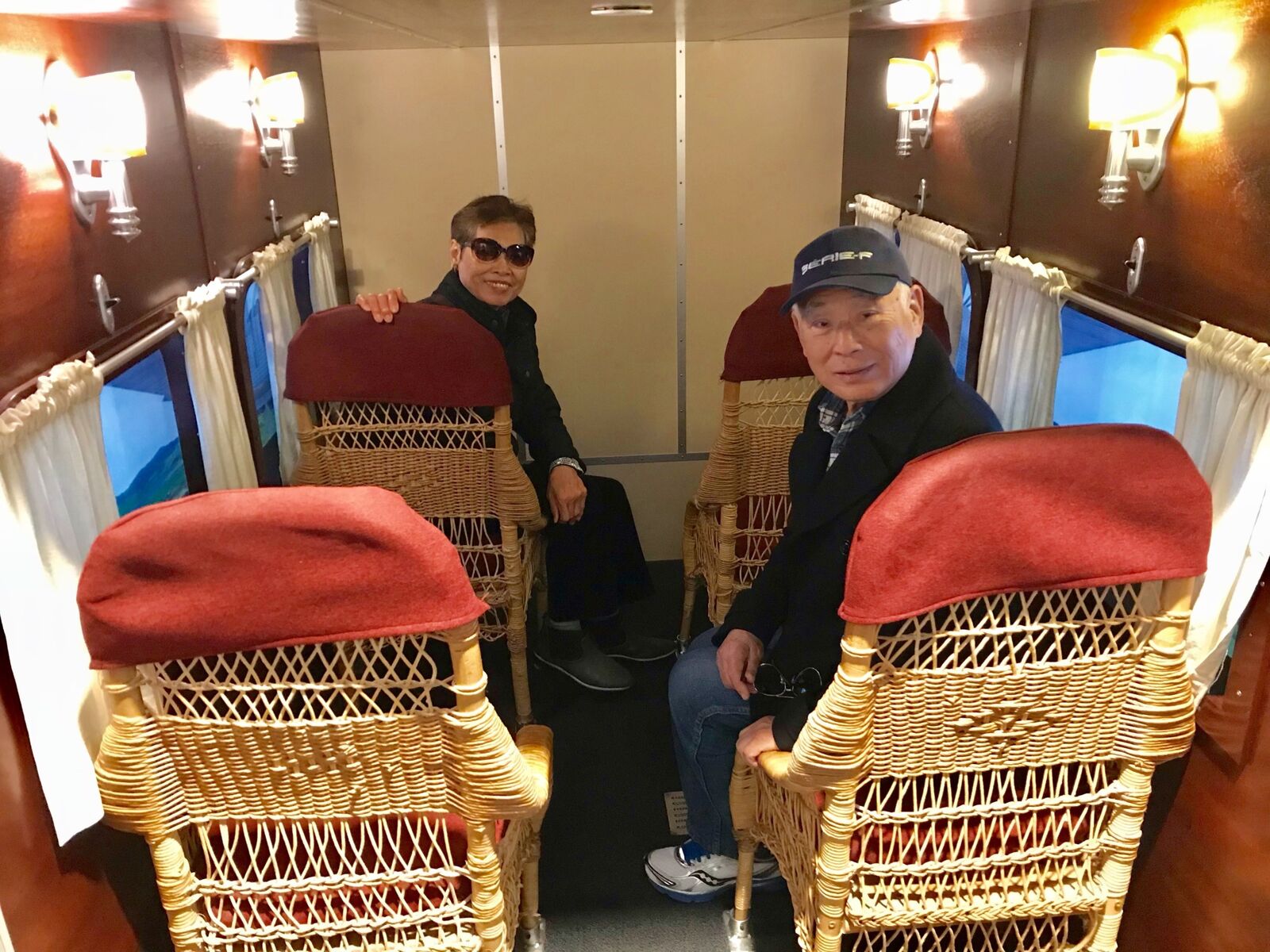
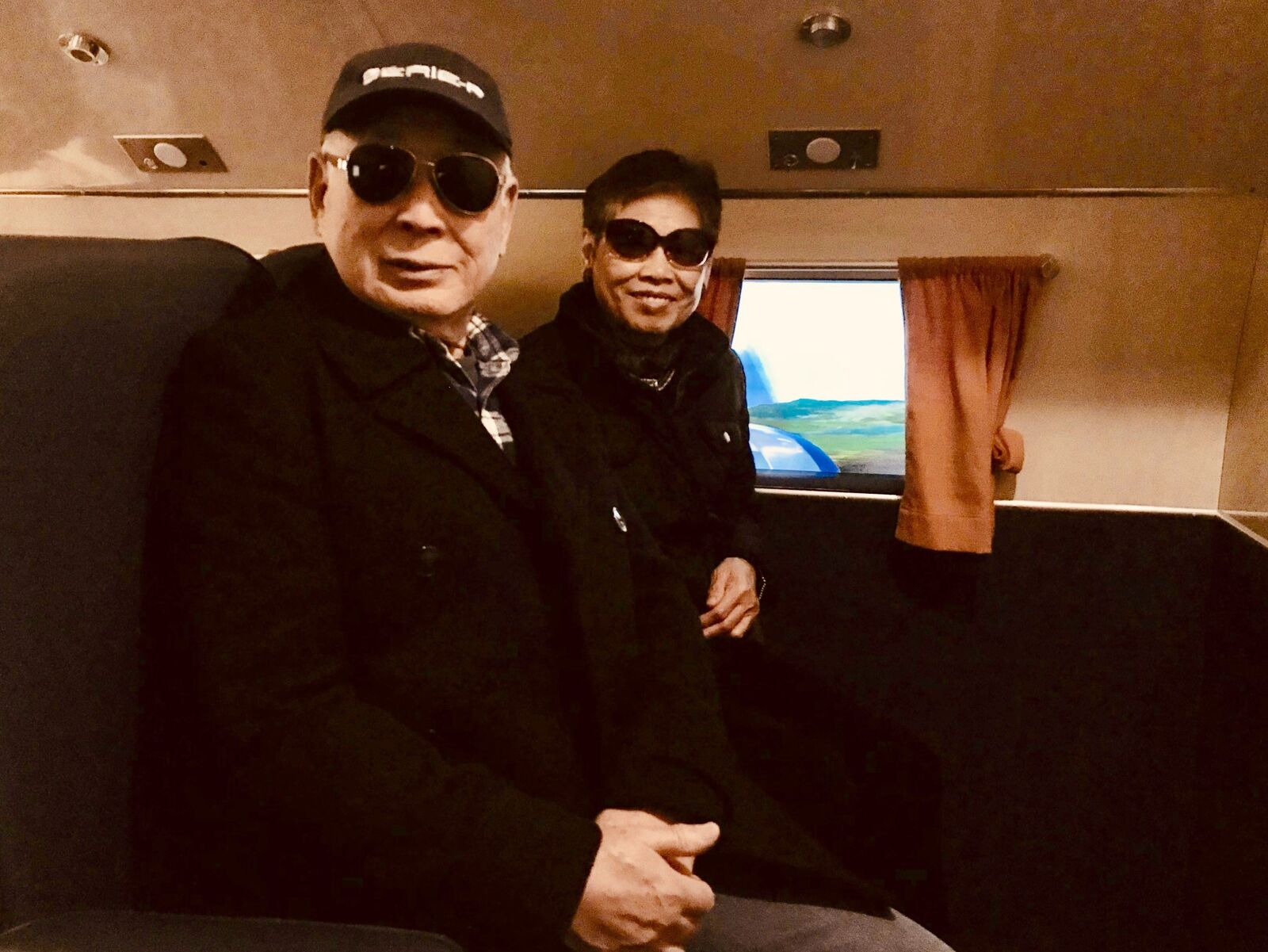
博物館內展示了一架此型飛機,我們在同一機種的客艙內,坐在當年的座椅設備上,享受了一次摹擬飛行,聽機聲隆隆,白雲飛逝而過。(16)
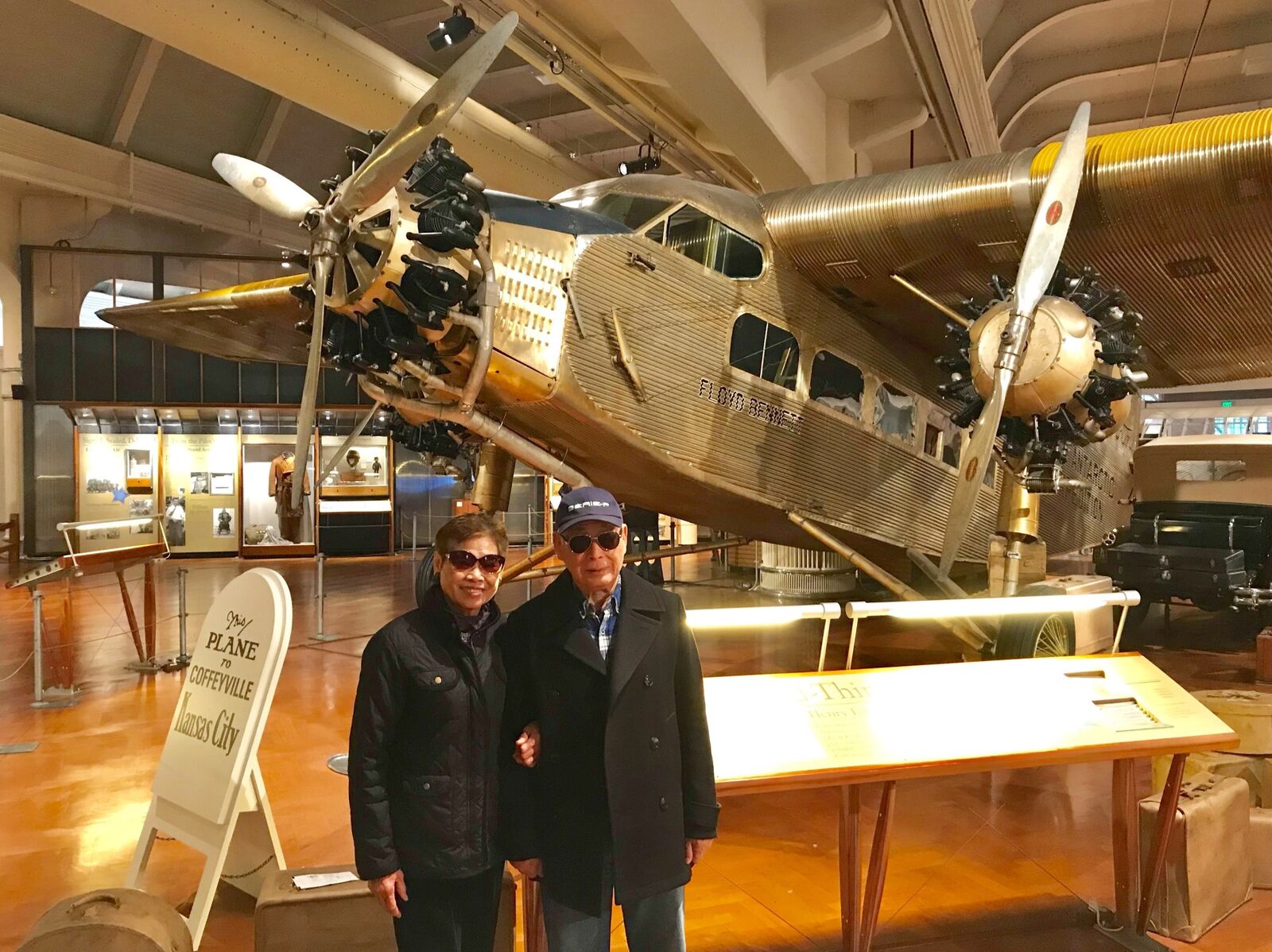
1941年12月8日,中國沿海時間,珍珠港事件發生,美國對日宣戰,二次大戰開始。1942年福特公司停止生産所有民用車輛及飛機,全部資源投入戰爭需要。當時美國的飛機製造公司,已多達7家之多,相互競爭研發,性能日新月異。
1942年至1945年,福特共製造了8600台引擎,用於四引擎的B-24轟炸機。5700部飛機發動機,用於各型軍用飛機。二次大戰中,產量排名前十名的飛機,B型轟炸機就有1萬8千482架,其中B-24排名第五,而福特公司就生產了8000架,平均每63分鐘就可生產一架。
福特公司有如此強大的生產能力,得益於1913年全球首創的工業生產流水線、員工福利制度及工會組織。其對世界工業的影響,不亞於兩次工業革命。
福特汽車在二戰期間,還生産了8萬輛坦克車、裝甲車、水陸兩棲車及反坦克車,以及其他軍用卡車、吉甫車。
二次大戰期間,美國的年輕人,多半派赴國外作戰,國內民生工業改生産軍需用品,工廠嚴重缺工,政府鼓勵婦女進入工廠。
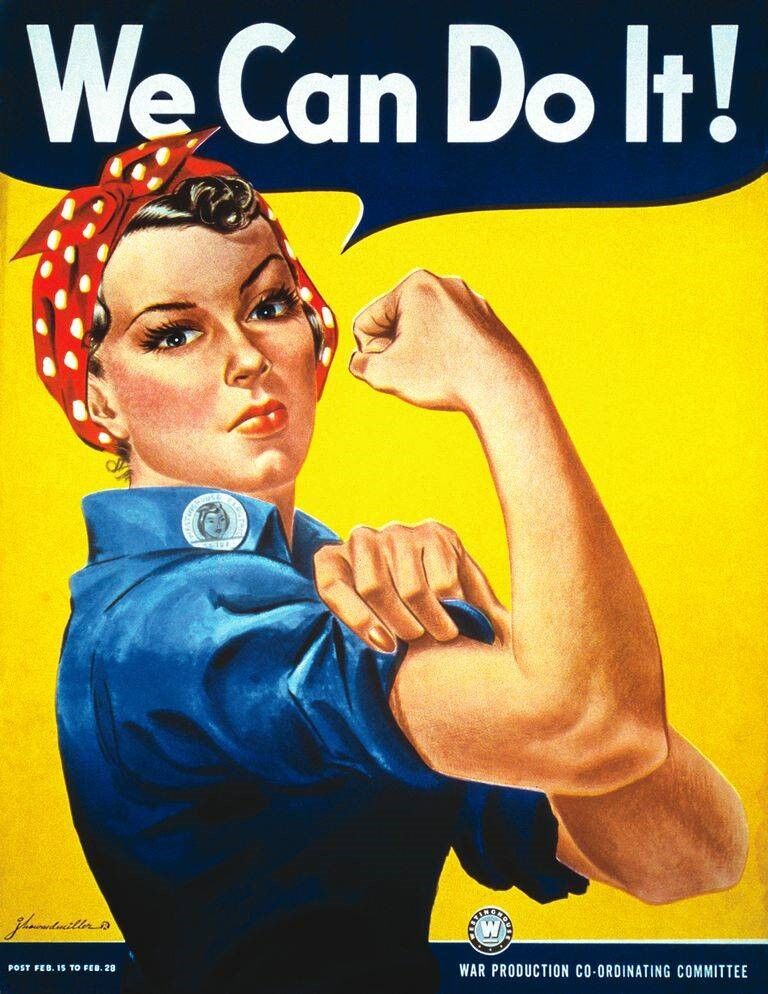
有一宣傳海報,以真人真事服務於福特汽車公司,製造軍用汽車的Rosie女士為版本,命名為《Rosie The Riveter》(上螺絲的Rosie),標以《We Can Do It》(我們也可以做),鼓舞了全國上下的民心士氣。這幅文宣海報,至今仍有企業運用,常見於報章雜誌。
博物館內還展示了各一架1939年的Douglas DC-3及1967年的Boeing737客機座艙,保存艙內的原有裝置,供參觀者攝影留念。(17)
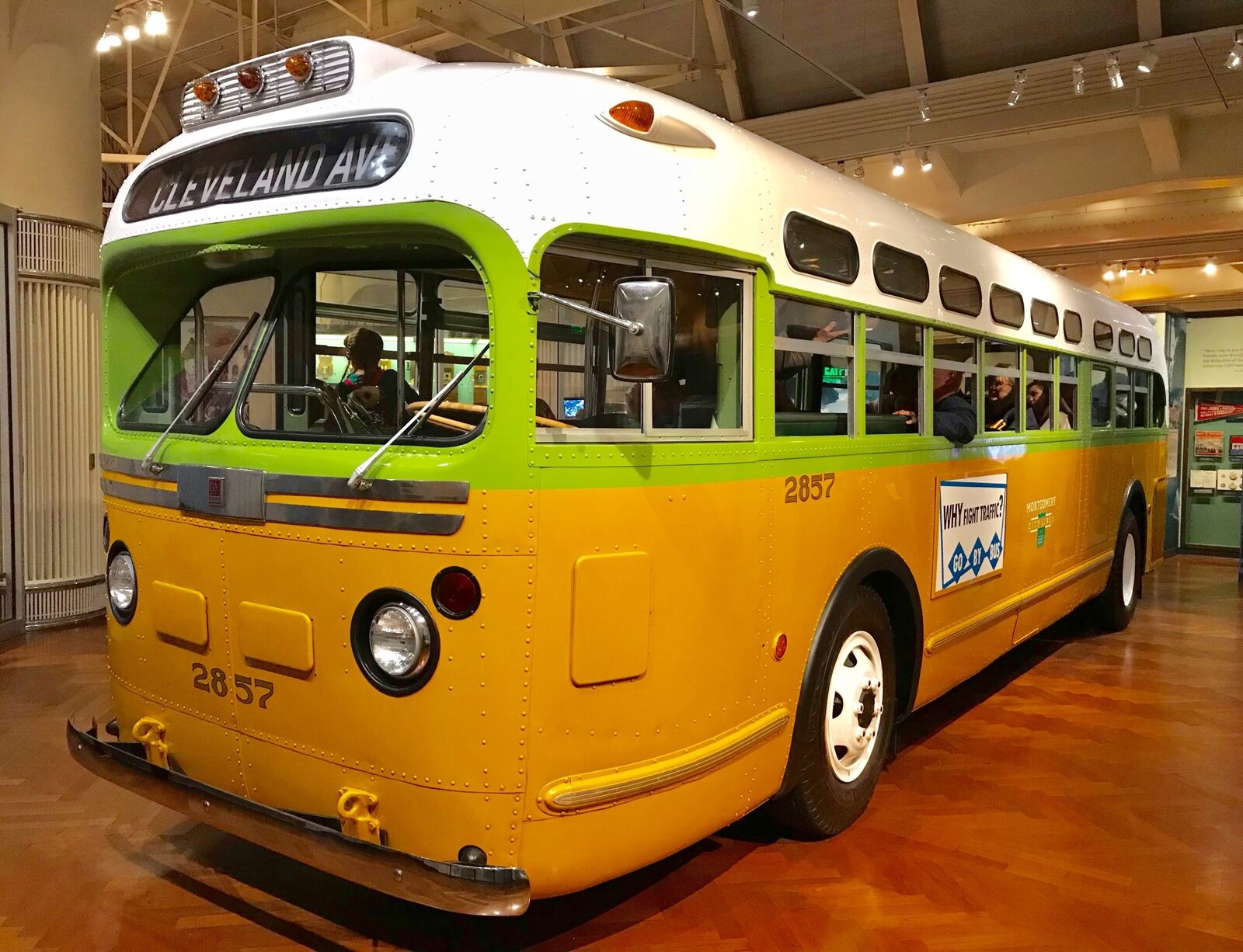
我們步入一輛1950年代的鵝黃色公共汽車前面,看完了簡介,讓我再度複習了一次美國的民權運動史。
非裔美國人的民權運動(Civil Rights Movement)早在內戰時期,就曾發生過。與其他少數民族一樣,同是美國民權運動的一部分。非裔美國人為了爭取與白人同等地位,發起的群眾性鬥爭運動,從內戰結束(1865年)後,長達90年。
1955年12月1日,阿拉巴馬州蒙哥馬力市的一名非裔婦女羅莎帕克絲(Rosa Parks 1913-2005),在一輛公共汽車就座時,司機叱責她給白人讓位,她拒絕了司機的要求,寧可被監禁一天,並且罰款美金10元。
事件轟動一時引發強烈抗議,非裔美人實施罷乘運動,寧願步行上下班長達半年,而且全州響應,擴及全國。
羅莎面對媒體,說出了她心中的話《I have a desire》(我有一個願望),有一天我們可以得到法律保障。羅莎帕克絲被尊稱為「現代民權運動之母」。
羅莎誕生在阿拉巴馬州Tuskegee,雙親是木匠和教師,中學沒有讀完。晚年在底特律Riverfront Towers高樓公寓度過,面對底特律河,對岸是加拿大溫莎公爵市(Windsor)。
羅莎拒絕讓座事件那年,美國牧師民權運動領袖馬丁路德金恩博士(Martin Luther King 1929-1968)才26歲。他奔走全國各大城市,作巡迴佈道演講,用盡畢生之力,推動民權運動。1963年8月28日,他在華盛頓林肯紀念堂前發表演說《l have a dream》(我有一個夢想),成為舉世精典。隨後美國國會1964年通過民權法案,1965年通過投票權法案,1968年通過公平住宅法案。美國前後兩位民權鬥士,讓世人永遠懷念。
福特博物館展示的這輛公共汽車,就是當年羅莎女士搭乘的那輛公車。(18)
亨利福特一生中,有三位與其肝膽相照亦師亦友的朋友,除了萊特兄弟外,就數愛迪生(Edison,Thomas A 1847-1931)。他們四人均是農家子弟,卻有相同的志趣,研究發明成就實業。
我們來到一部蒸氣式發電機前,其右側就是1879年愛迪生發明電燈泡時的那套設備。聽完了解說員的説明及看了一些參考資料,我們對愛迪生這位對世界文明有極大貢獻的發明家,有了更深一層的認識,更為亨利福特與愛迪生,如同手足般的友情而感動。
1890年代,愛迪生已是世界聞名的發明家,他在佛羅里達州的邁爾斯堡(Fort Myers,位於佛州西南),買了一幢避寒別墅。位在別墅對面的就是亨利福特的「森密諾爾小屋」,兩家成了最好的鄰居。
1871年,愛迪生24歲,他在新澤西州建立了一間工廠,製造一些工業用品及研發蓄電池,頗有收穫。1876年,他又在Menlo Park(新澤西州Edison City),將他的一處房產,改建成住所及研究室(Menlo Park Lab)。從此完全投入發明事業,1877年發明留聲機,1878年改良貝爾電話機,1879年發明電燈泡,1882年JP摩根,向愛迪生購置了一部蒸氣發電機,電力輸送至曼哈頓下城的數家銀行,帶動了公司行號燈泡照明。(19)
福特博物館內,家居展區也是一個看點,收藏了自1670年起至1920年代,跨越四個世紀的各式家具,近一萬件,而且保持原始的居家佈置。從這些展品中,可以看到美國人民各時代各階層的生活變遷。
館內還有一處可以體驗美國著名建築師、綜合預言型設計家Buckminster Fuller(1895-1983)的節能穹頂房屋,展示未來數個世代的住宅趨勢。這位美國建築界的怪咖,在1930年代,就有了環保意識,應用到房屋設計上。
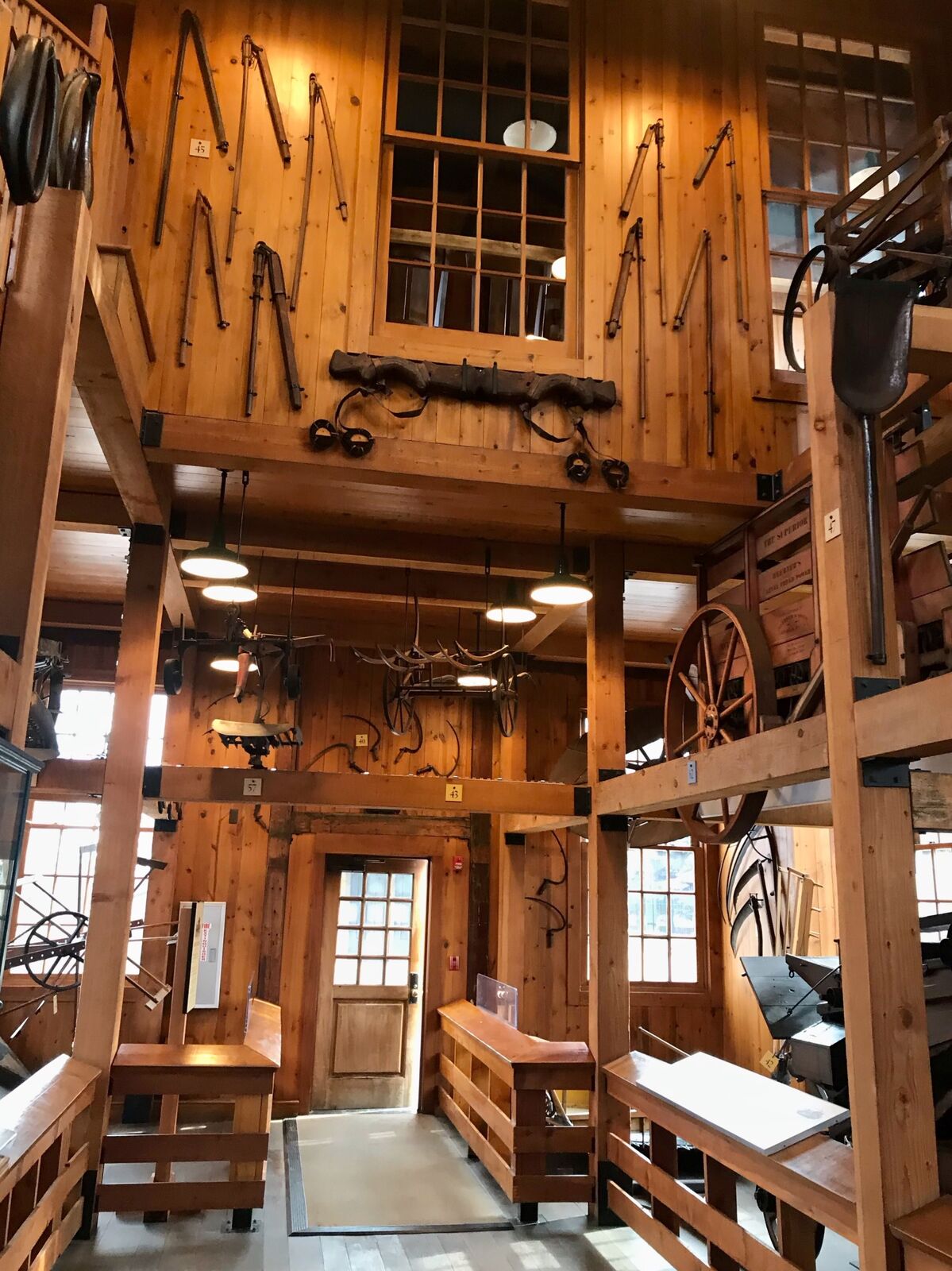
我們走進農業展區,看到包括曳引機、播種機、收割機在內的最經典最實用的農具、農業機械收藏。配合圖片、照片及實物對照,了解到美國農民幾個世紀來,如何在廣袤的土地上種植、收割、儲藏及加工玉米、小麥、大豆、花生、菸草和棉花。
亨利福特博物館成立於1929年10月21日,迄今已滿90年,最近十年,平均每年都有超過150萬人入館參觀。
上文(20)最後一段,部分修改如後,並結束本篇:
看完了各展區後,感受到數世紀以來,美國人民所經歷過的科技、人文與社會的變遷。在其相互影響之下,促進了美國的飛躍進步,使其臻於世界強國之林。(20,夲篇完)
第7篇:亨利福特的青田村
2019年10月18日,我與妻前往底特律,探望服務於福特汽車公司的小兒Anderson,停留五個星期。每逢週六、週日,遊覽密西根州及俄亥俄州著名景點。11月23日,次日就要回洛杉磯,我們遊覧了此行第六個景點,亨利福特的青田村(Greenfield Village)。
青田村位於密西根州Dearborn,底特律西南方約15英里,緊鄰Oakwood大道上的亨利福特博物館,面積0.3237平方公里,有梵蒂岡城(0.44平方公里)四分之三大。(1)
亨利福特的雙親係愛爾蘭移民,1863年7月30日亨利生於密西根州韋恩縣(Wayne)格林菲爾德鎮的一座農莊裡,底特律隸屬縣內。19世紀末,因底特律的崛起,韋恩縣撤銷。
1912年,福特T型車開始量產,此年5月12日,摯友威爾伯萊特(Wilbur Wright)去世,年僅45歲,愛迪生也65歲了。
六月中的一個星期天,亨利福特夫婦作完成禮拜,路過一大片向日葵田,在田邊佇足沉思,感嘆人生,追憶往昔。聯想起他那塊80英畝的未耕地,何不加以運用,開闢成一個小村落。除了找回童年鄉村的記憶外,也可作為退休後的安養居所。更發奇想,盡可能將老友們的住所、工作室等,一磚一瓦照原樣遷移村內。
心願終於在1929年8月底前建成,以迎接愛迪生發明電燈50年。(2)
走進青田村莊園,立即有一種似曾相識的場景,曾在一部好萊塢描述19世紀美國北部農村為題材的電影中出現。
左前方不遠是一處僅有一個小月台的火車站,正面是一條名為Mill street的鄉村馬路,右轉的福特路上有一處馬廐,圈養着數匹用來拉車的高壯駿馬,緊鄰是一處青草地,有近十隻的綿羊在吃草。
入村後,我們第一個參觀的是,一座大豆實驗室。
美國大豆産區,主要分佈在五大湖南部和西部州。密西根州被四個大湖圍繞,其北是蘇必略湖,其東是休倫湖,西為密西根湖,東南是伊利湖。
1920年代是美國經濟繁榮的年代,到了1929這一年,全球進入經濟大衰退時期,1930年代被形容是大蕭條時代(GreatDepression),美國也深受其害。加上美國中西部大旱及沙麈暴肆虐,農產品大量減產,造成糧食危機,價格上漲。加上金融市場失控,失業率大增。街頭大排長龍領取福利和分配食物者,處處可見。年輕人大量西漂至加州發展,農田耕種無人問津。
亨利福特看到這種情形,覺得不可思議,決心從改善農田水利開始,研究大豆品種改良及耕種方法,於是成立大豆研發實驗室。(3)
大豆又稱黃豆,古時叫菽,原産地在中國大陸東北,17世紀傳入美洲,適合寒帶、溫帶及亞熱帶氣候種植,美國大豆的産區,集中在北、中、南各州。
大豆實驗室內,陳列著許多有關美國大豆生產的資料。農具包括最原始的犁具,及研發過程中的曳引機、播種機、除草機及收割分類機等。也了解到美國也經歷過,牛隻馬匹犁地播種的年代。
在美國歷史上,有多次大遷徙,20世紀初期因受自然災害,造成了另一次大移民,這次多半是農民,對美國未來半個世紀的經濟發展,影響至鉅。
亨利福特來自農村,深刻感受到農民對農地的那份深厚感情,及離鄉背井的無奈。希望有一天,藉由大豆品種的研發,土質的改良,恢復往日盛景。讓西漂的鄕親,回到故鄉發展。(4)
1918年至1928年,是美國獨立建國以來,國強民富的黃金十年。政府鼓勵民間投資運輸事業,建立全國交通網,使物盡其用貨暢其流、航運、空運、鐵路、公路各項設施同時並進。
此期間,為了開發大西部,建築了兩條影響美國民生經濟至關重要的公路。一條是由底特律通往芝加哥,全長453公里的密西根大道。另一條則是由芝加哥經過伊利諾、密蘇里、堪薩斯、奧克拉荷馬、德克薩斯、新墨西哥、亞利桑納各州至加尼福尼亞Santa Monica,全長3900公里的66號公路,又名美國大街。
兩條公路分別於1927年及1928年完成,始料未及的是,在1930年代世界經濟蕭條,美國大恐慌時代,卻成了大批農民及民眾逃避荒年,而西遷至加州的難民之路。我在大豆實驗室,了解到這段歴史。(5)
亨利福特建築青田村,從構思到1929年完成,長達17年。
此其間,村內完成的重要工程包括:環村鐵路(四個站),環村公路縱橫12條,設火車機車保養廠,購進1873年美國生產之機車頭三輛,設機車頭迴轉盤。
房屋遷移:1,遷移萊特兄弟1871年在俄亥俄州Dayton城的Wright Family Home故居。2,遷移愛迪生1876年在新澤西州Menlo park成立的研究室(Menlo park Lab)。
直至1944年,亨利福特夫婦,將1860年其父建於密西根州韋恩縣的故居,也是亨利福特的誕生地點,按照原型一磚一瓦遷至村內,安享晚年。
青田村與亨利福特美國創新博物館,同時建成,並對外開放。迄今(2019年)已有90年歷史,兩處不但呈現出美國開拓者的潛質,走進這裏更能了解到他們的非凡智慧。(6)
1927年愛迪生已高齡八十,在其佛羅里達州邁爾斯堡別墅避寒療養。亨利福特欲在1929年8月底前,愛迪生發明電燈50週年時,能夠完成遷移在新澤西州的愛迪生研究室。
該年10月21日青田村開幕,愛迪生受邀兼程共襄盛舉。美國第31任總統胡佛,親臨祝賀。
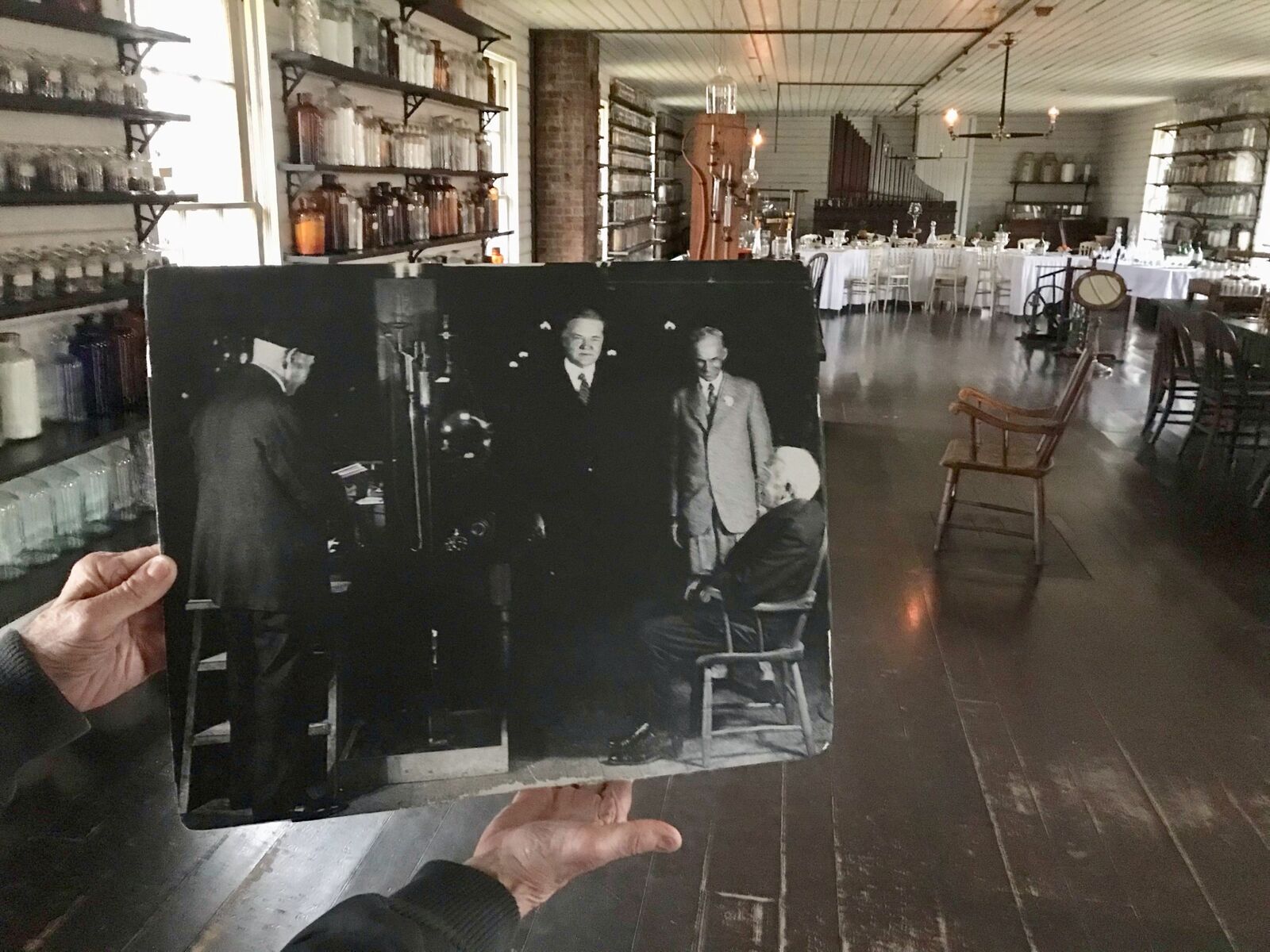
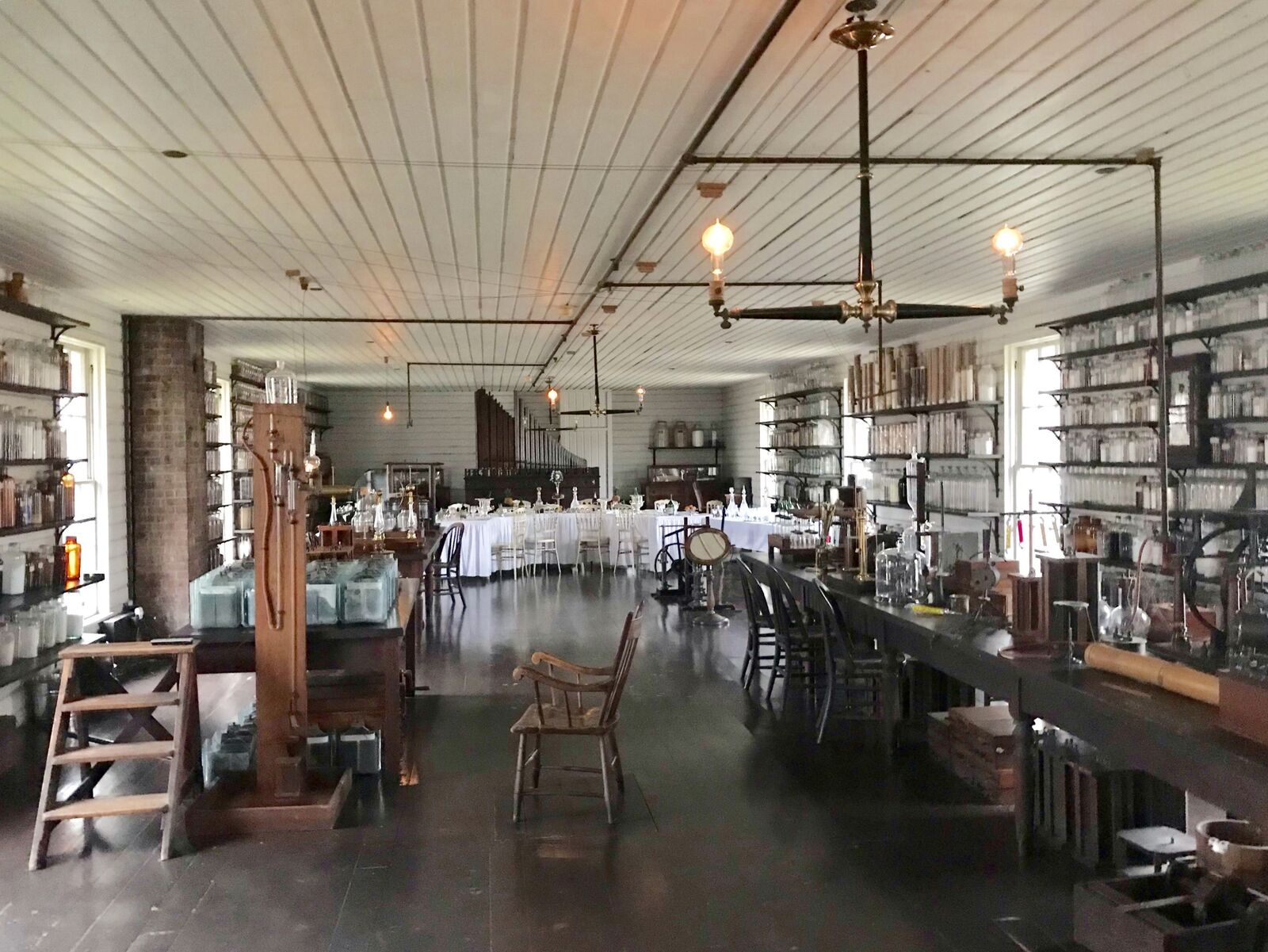
當愛迪生走進研究室時,驚訝萬分,簡直不敢置信眼前的場景。與其闊別了整整36年的研究室,居然關係位置一點不差的重現眼前。尤其是他那把坐了逾30年的核桃木手扶椅,也在現場。
因他不良於行,他就坐在這把椅子上,胡佛總統由亨利福特陪同,趨前向他致敬。
會後,亨利福特交代其秘書,將這把椅子,分寸不移,固定在原地,以作永久紀念。我們也在這間研究室內和這把椅子前,拍下珍貴的照片。(7)
愛迪生自1871年在新澤西州,成立他的第一個稱不上是工廠的工廠開始,終其一生投入研究發明事業之上。
他的發明獲得世界各國專利近千件,對世界文明貢獻最大的三大發明是:1893年的電影放映機,1879年的電燈泡,和1977年的留聲機。
我們參觀了愛迪生研究室之後,來到了愛迪生發明品展覽室。除了電燈泡製作機器,在福特博物館參觀過外,這裡收集了愛迪生發明品近20件,其中最感興趣的是一台最原始的留聲機。
使我想起早期在中國大陸上海百代唱片公司的一則廣告,一隻Shiba lnu犬,立於一台留聲機旁,對準一個大喇叭,好似唱歌的畫面。
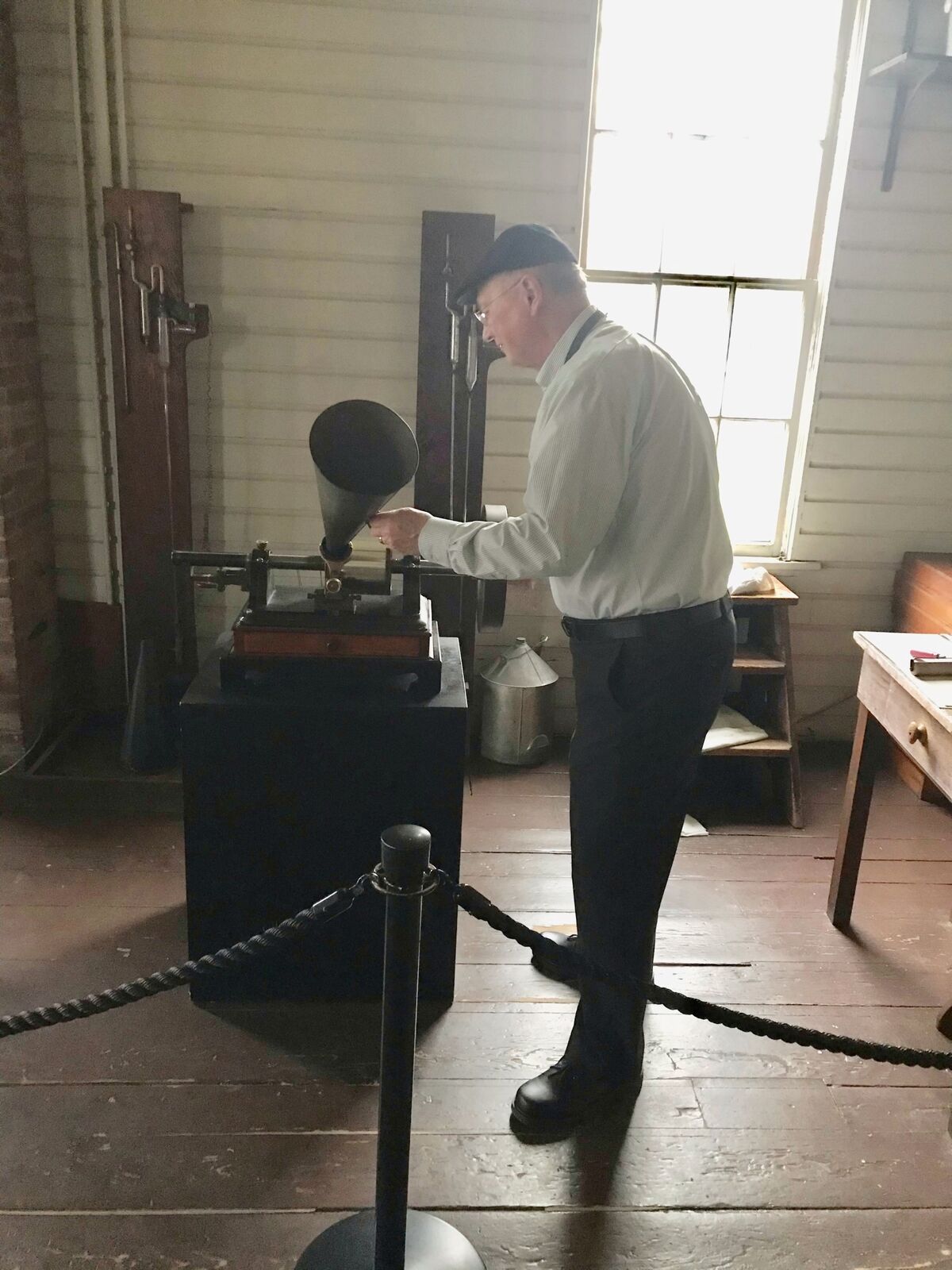
一位年逾八十歲的志工解說員,給我們講解了當年愛迪生製作這台留聲機的艱辛過程。愛迪生將一張錫箔片,包在一個刻有凹陷螺紋的圓筒上,另外將一個圓椎形漏斗作為傳聲器,漏斗末端有膜片,連接一根唱針。操作時一面搖圓筒,一面對著漏斗發音,聲音經由唱針的震動,原音就留在留聲機上。這位志工給我們作了一次示範,我們也留下了珍貴的照片。(8)
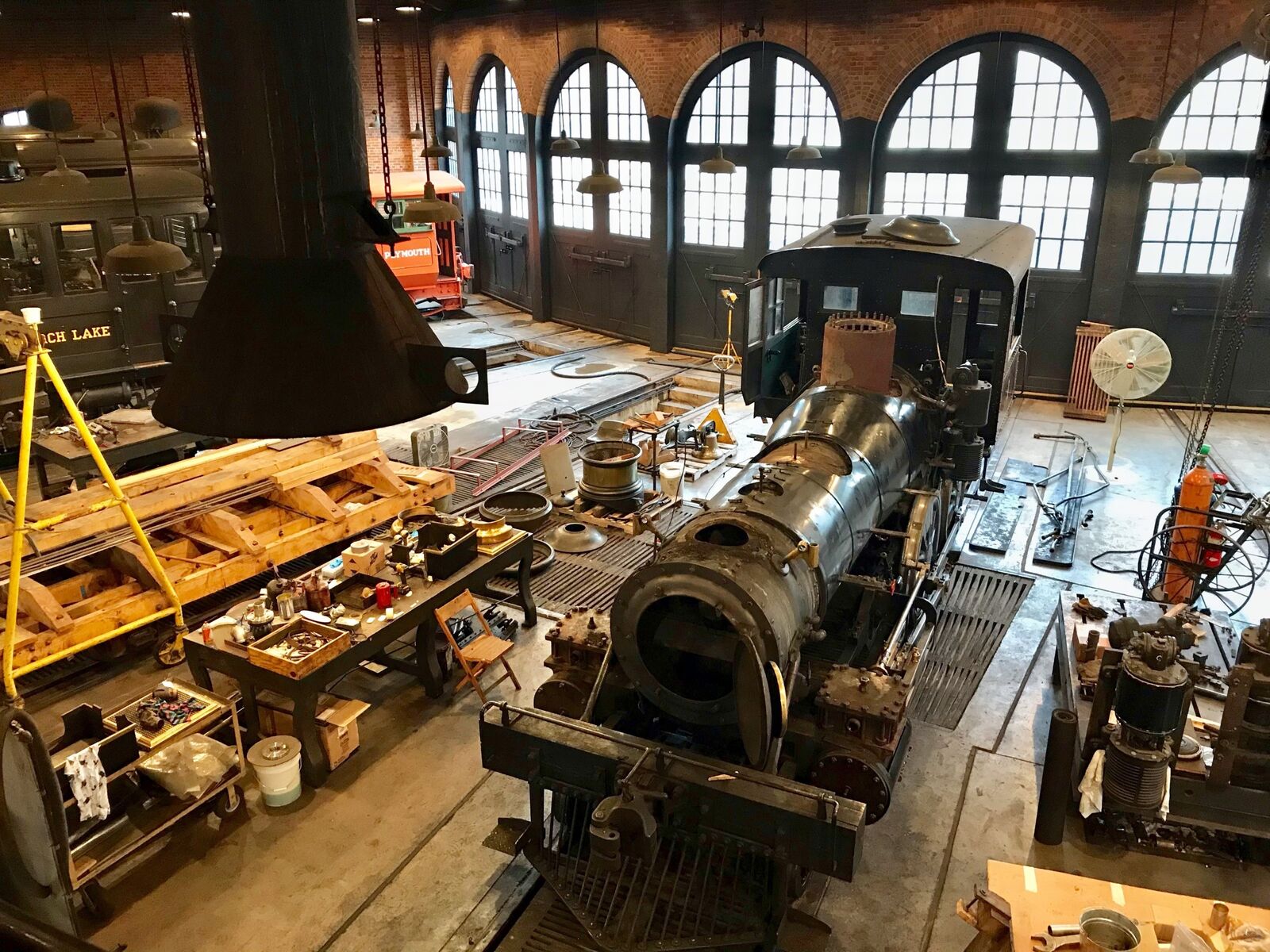
隨後我們來到鐵路樞紐區,包括鐵路轉車台(機車頭迴轉盤)、煤塔與水塔、火車機車庫。前兩者設於露天,僅路過參觀。在機車庫內停留很久,傾聽志工解說。
車庫內有三輛1870年代美國生產的火車機車頭,正在作定期維護保養。三輛機車頭至今仍在村內行駛,其中一輛同型車,還在賓州境內作為觀光旅遊使用。
三輛機車頭,福特公司購於1920年代,曾行駛於底特律至俄亥俄州Toledo間,至二次大戰。
另外,頗富盛名的阿明頓與西姆斯機械車間(Armington&Sims Machine Shop)就在附近。這間傳統的車間,如今成為培訓創造人才的搖籃。幾乎所有19世紀的機械設備,都可正常運作。(9)
福特T型車1912年開始量產,造就了美國車輪上的革命。從此機械動力車輛,逐步代替了傳統的馬車運輸。由最初的客用車,到後來專門為農民設計的載貨車。
經過日新月異的研發,福特汽車將持續性的設計思維和最精湛的製車技術完美結合。百年後的今天,福特汽車在全球製車業中,已是歷史最悠久,產品功能最先進的庸中佼佼。
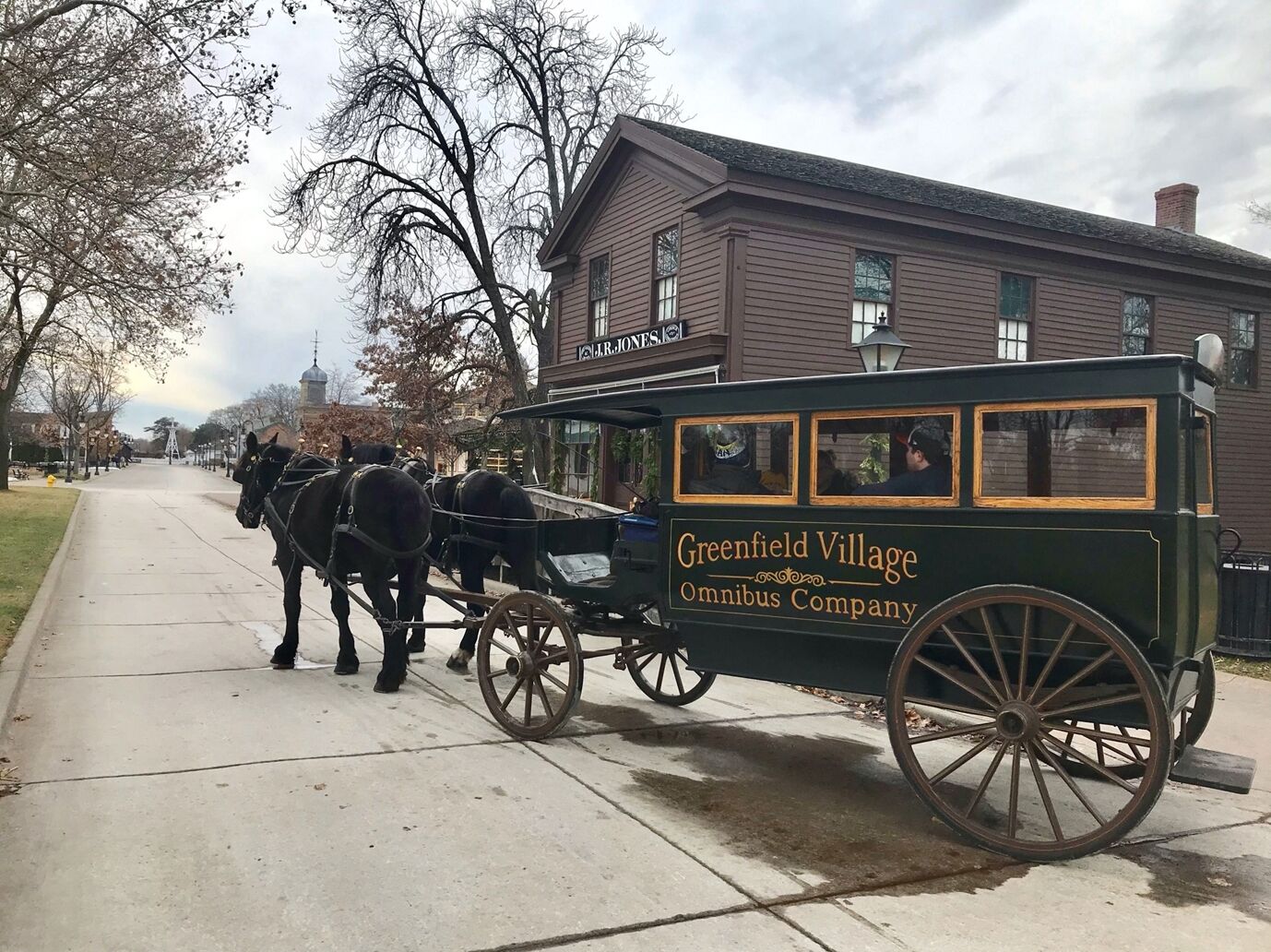
走進福特青田村,遊客可以漫步遊歴,也可購票搭乘四種不同的交通工具,火車、馬車、40年代的公共汽車和福特T型車,在村內88個景點,不限車種不限班次,任意敖遊。
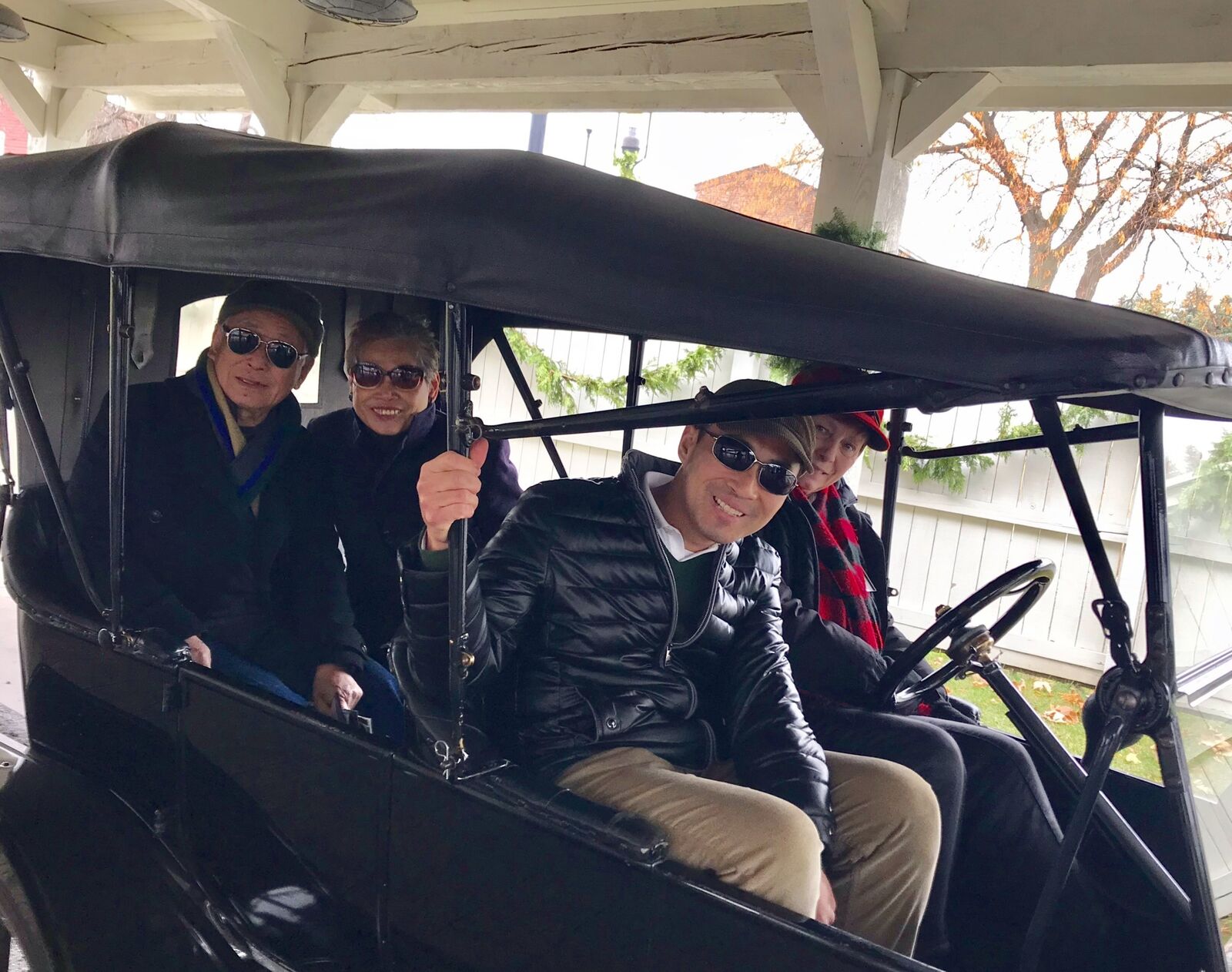
我們在T型車遊客碼頭,是起點站也是終點站,很幸運的搭上了目前唯一的一輛早在1914年出產的T型車,行駛得相當平穩,享受到首次坐古董車的樂趣。村內服役的同型車有14輛,出廠都晚於1914年。(10)
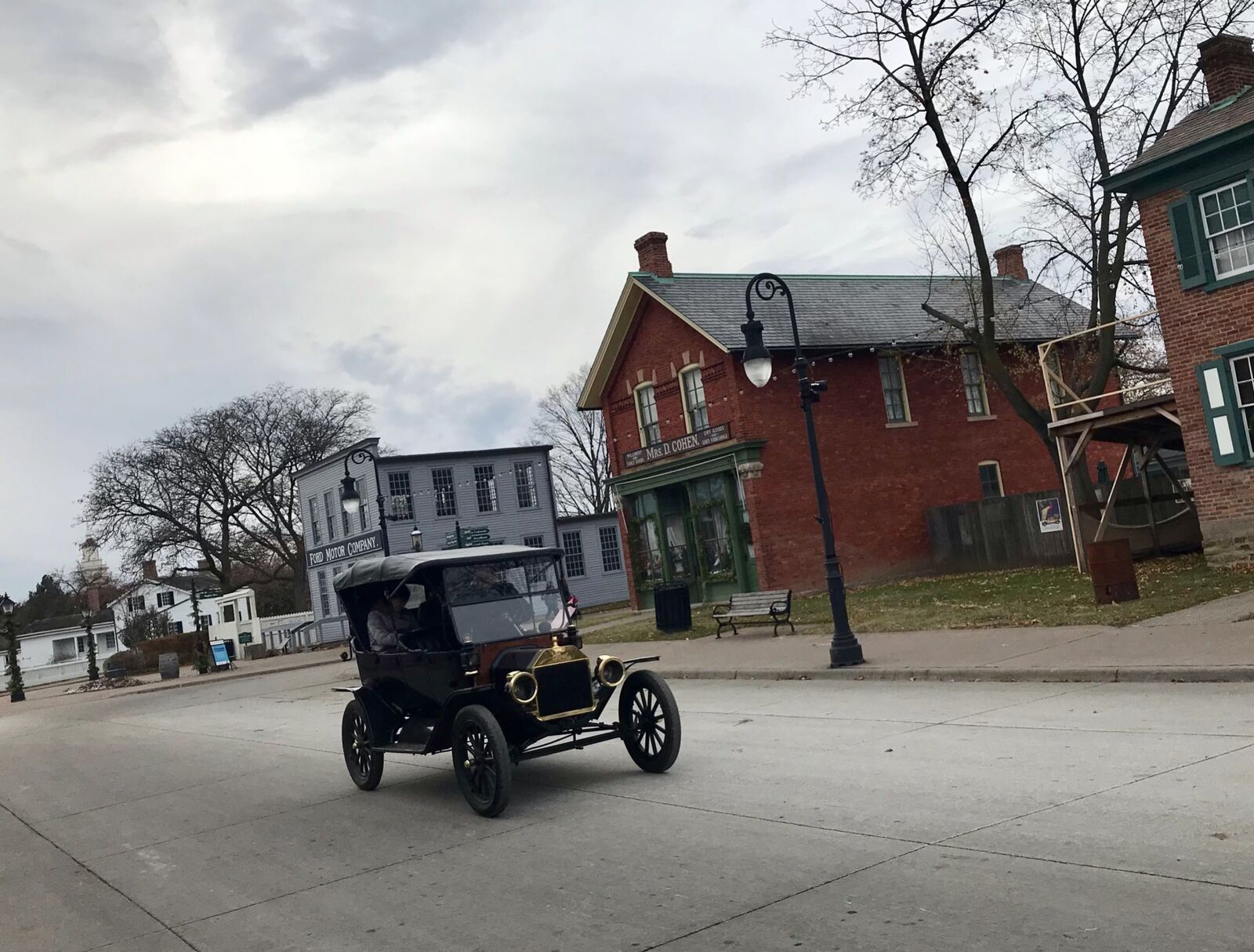
1903年福特T型車在底特律首産,當時尚在研發階段,至1914年開始量產,1927年累積生産了1500輛。1945年亨利福特將工廠原設計,以四分之一比例遷移至青田村。
我們搭乘的這輛T型車,以逆時針方向,時速25英里,車行約20分鐘,繞行四條大街,回到原搭車地點。駕駛是一位中年婦女志工,所經之處均詳細介紹,不時與馬車、公共汽車交會通過。我們步行至Bagley大道路口招呼站,改乘馬車前往伊格爾酒館(Eagle Tavern Dining)用餐,一座19世紀50年代愛爾蘭式的餐館,裝璜、燈飾、餐桌椅,包括侍者的衣著,播放的音樂,都以原汁原味呈現。(11)
用餐約一小時,餐廳裡播放出20年代及30年代數首美國爵士樂歌曲,包括1931年黑人女歌手Billie Holiday唱的《All of me》,以及1935年影歌雙棲明星Fred Astaire唱的《Cheek to Cheek》和《The Very Thought of You》,據說這些都是當年亨利福特最愛聽和最愛唱的歌曲。抗戰勝利後的上海,這些歌曲曾在百樂門舞廳,由菲律賓樂團伴奏,知名歌星演唱過一段很長的時間。
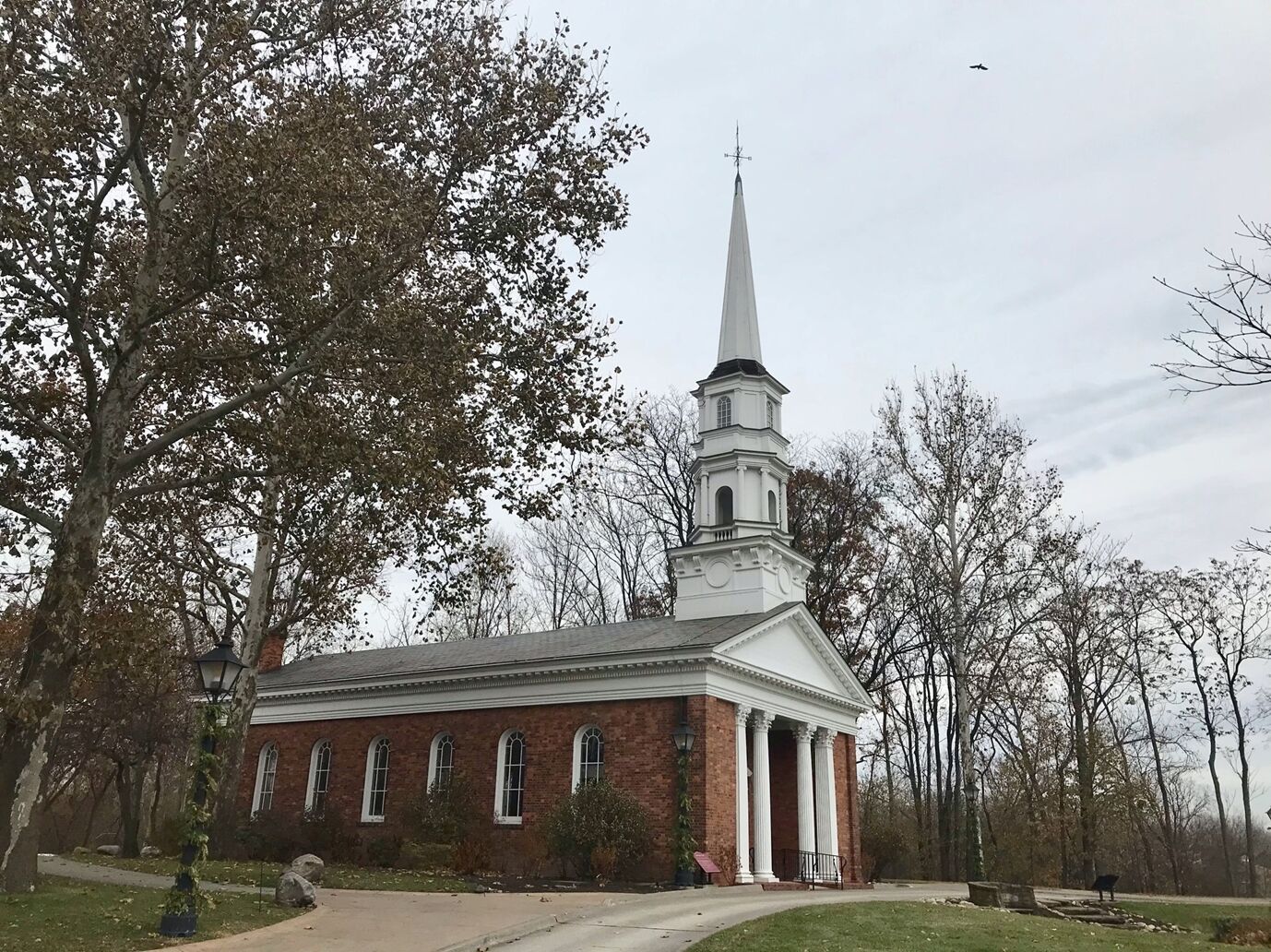
餐後路過近鄰的瑪達瑪麗教堂,佔地不大,卻是村內唯一做禮拜的地方,一度闢為小學堂,成為孩子們上課的地方。(12)
我們沿著主街向西南方向步行,經過瓊斯雜貨店、市政廳、費瑟爾太太餐廳(供應美國南方美食)、格林珠寶店、主街商場(出售歷史紀念品、糖果及禮品),來到萊特自行車店(Wright Cycle Shop)及萊特之家(Wright Home)。
萊特兄弟是美國的發明家,飛機製造的先驅,也是最先在天空飛行的人。兩兄弟喜歡研究機械,1892年在俄亥俄州代頓市(Dayton)開了一間自行車店,成為研究飛機的初步,名譟一時。
1929年青田村建成之時,亨利福特懷念逝世的摯友威爾伯萊特(Wright Wilbur 1867-1912),擬將萊特兄弟在Dayton的故居,遷移至青田村,當時並未如願,直到1945年才遷建完成。一幢建於1870年代的木屋,按原建築一窗一木呈現在村內。(13)
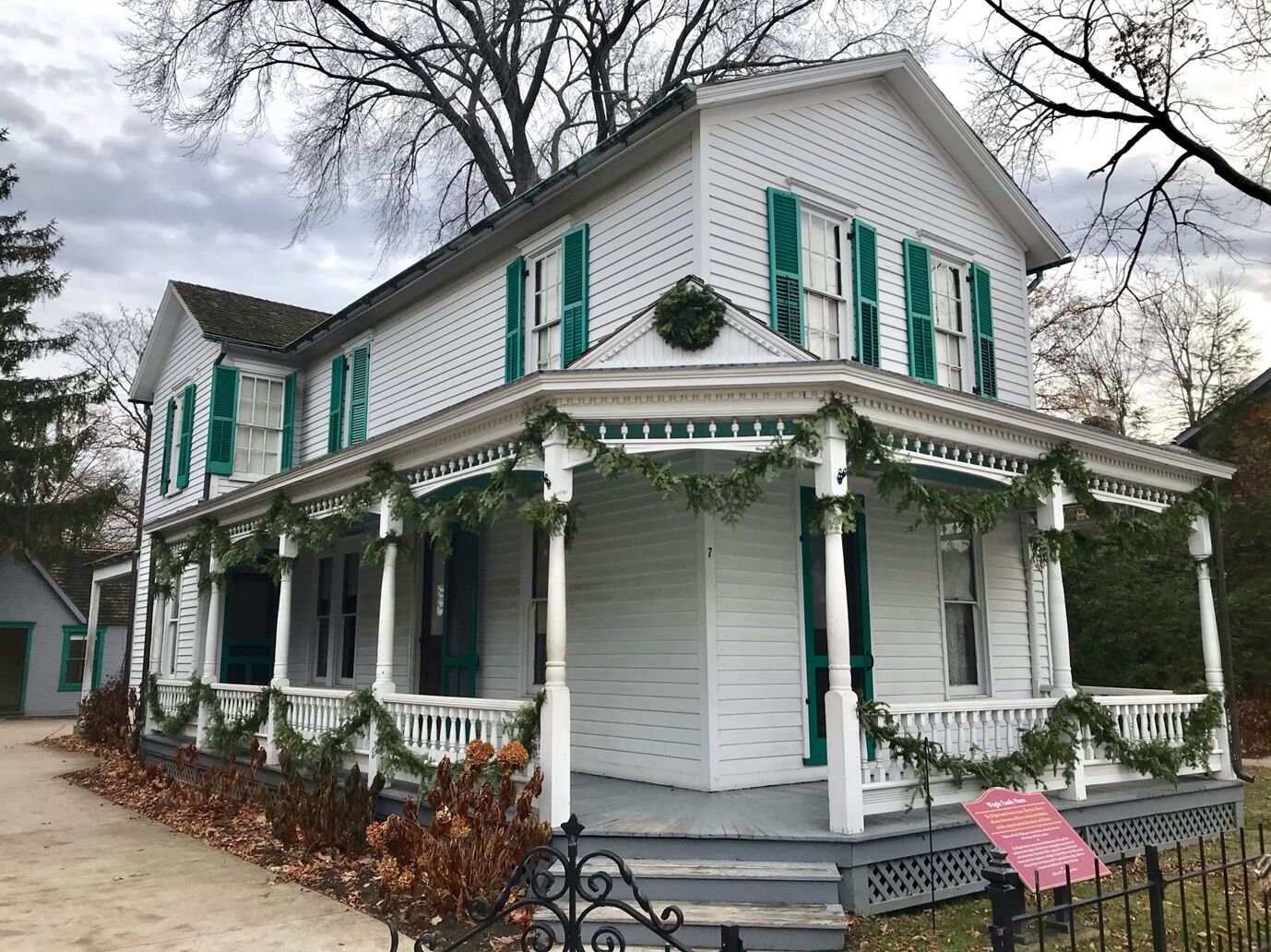
青田村裡的萊特故居,命名為Wright Home(萊特之家),與萊特自行車店及愛迪生研究室齊名,都是遊客必訪的地方,這些建築物的遷移,意味著亨利福特那份對老友們的真情。
三國時巴蜀漢學家譙周(201-270)曾說:「交得其道,千里同好,固於膠漆,堅于金石。」意思是,結交到真誠相待的朋友,雖遠隔千里,也固如膠漆的不分,堅如金石的不變。
摯友們故居的遷移,正凸顯了亨利福特為人交友的君子風骨。(14)
離開萊特之家,我們由主街轉入福特路(Ford Road),來到福特之家(Ford Home),一幢很不起眼的獨立小屋,黛瓦白壁窗明几淨。大門離地面5呎,五段木階而上,兩側各有雙層玻璃窗一座,適應當地寒冷氣候。兩座紅磚煙囱,分置屋脊兩端。
屋內向西一隅,有一小閣樓,廳室家具簡單實用。驚訝這位美國汽車巨擘,生活得竟如此平凡儉樸。(15)
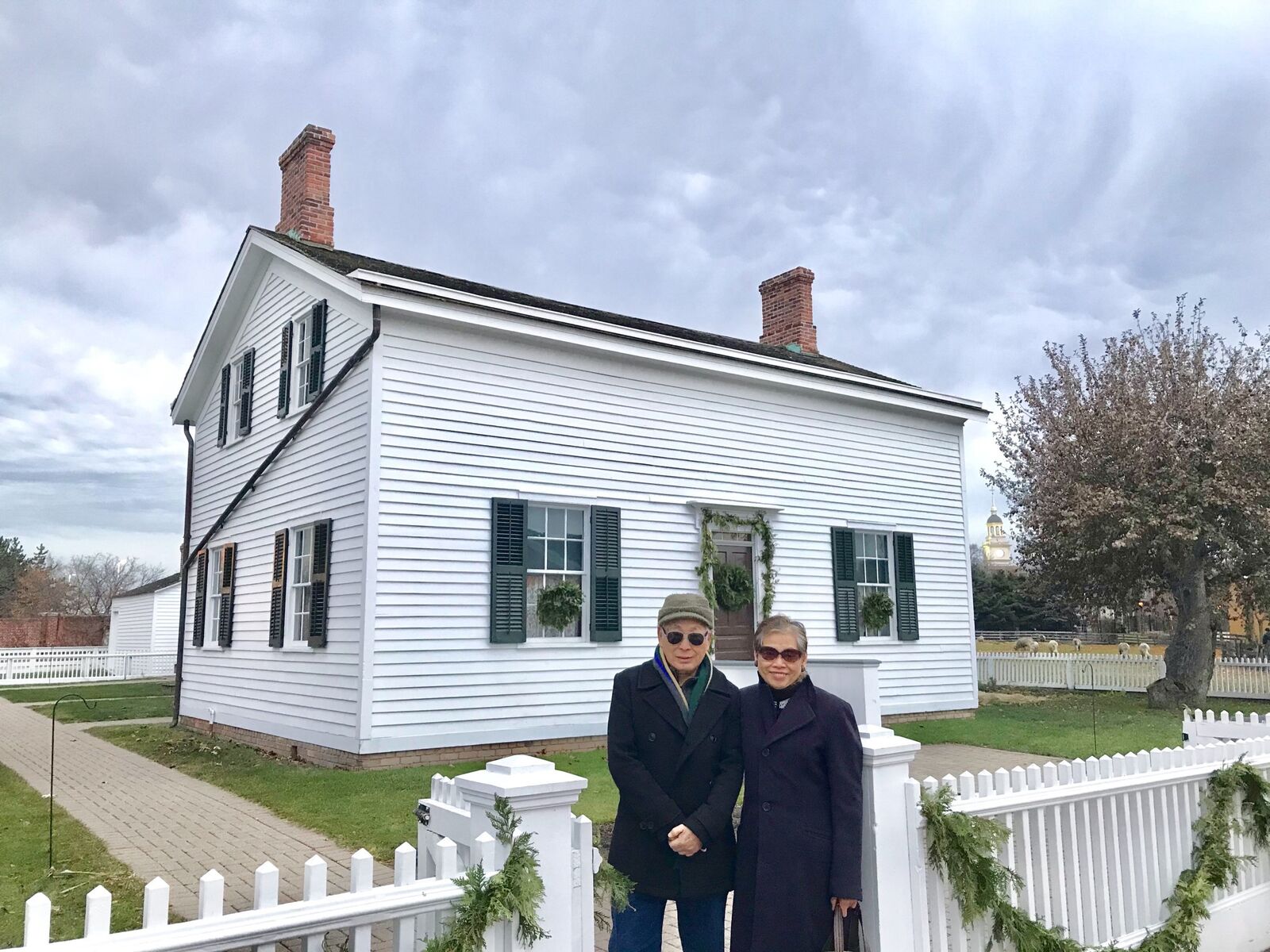
1943年5月26日,亨利福特的獨子Edsel Ford(埃茲爾福特)英年辭世,年僅50歲。這年亨利福特已高齡八十,在喪子悲痛中,責令孫軰,將位於密西根州韋恩縣Greenfield鎮,建於1860年的祖屋遷至青田村。
十四個月後,於次年(1944年7月)遷建完成。
亨利福特與妻子Clara Ford(克拉拉福特)在這裡渡過了晩年,亨利逝世於1947年4月8日,三年後克拉拉去世。
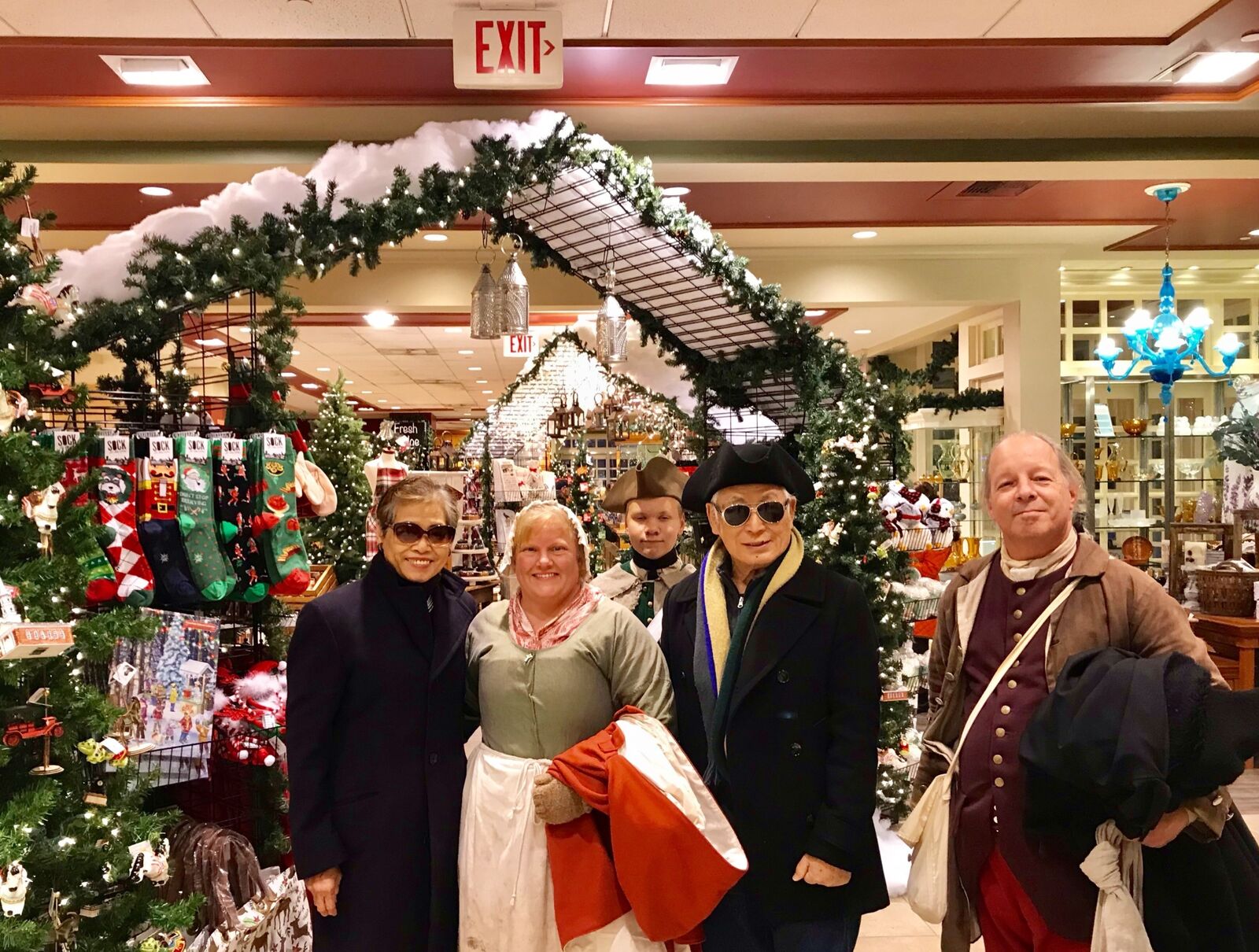
離開福特之家(Ford Home),經過亨利福特劇場(Henry Ford Theater),在劇場藝品店內邂逅一對夫婦帶著孩子,身著獨立戰爭時期的戲裝,準備卸服回家。彼此談笑甚歡,並且合影留念。
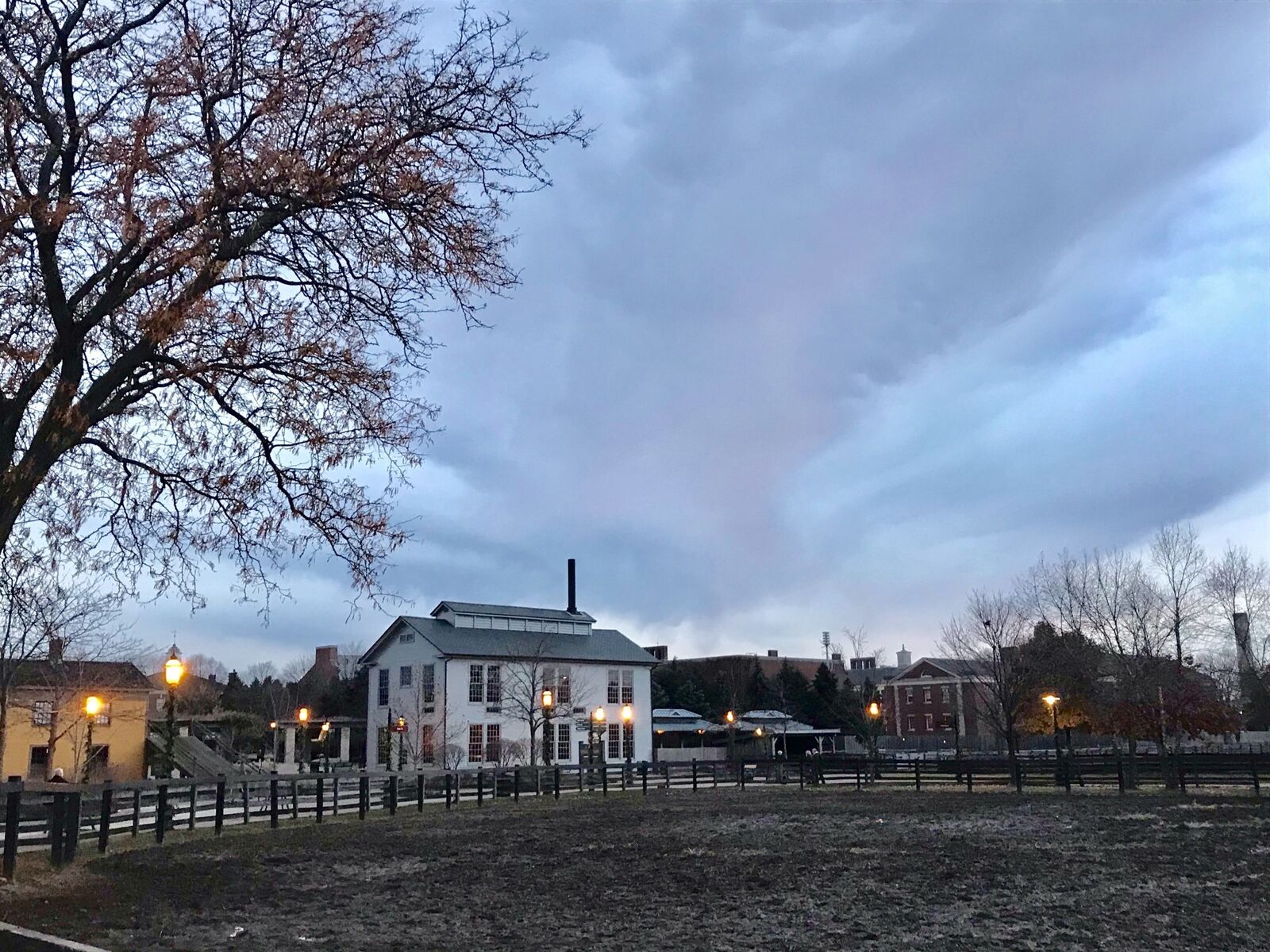
時近黃昏,路燈亮了,各廳室的燈也亮了,星星也在閃爍了,青田村的夜色如此絢麗迷人。(16,本篇完)
简介中原为英文的部分由 AI(Claude)于 2026 年 11 月译成中文,尚未经作者审阅。作者的中文原文保留繁体字。
三册原 PDF 共有 81 个字因字体缺字而无法显示,本页已根据上下文补上,可能有出入。
本文保留原文的繁体字。
第6篇:亨利福特
博物館
2019年10月26日,是我和妻今年到底特律探望小兒Anderson的第二個星期六,安排至大底特律都會區西南方Dearbonr縣內的亨利福特博物館參觀。
博物館的全銜是《亨利福特美國創新博物館》(Henry Ford Museum of American Innovation)展館面積250英畝,展品2600萬件,跨越美國開國前後300年。
除了主展館外,還有格林菲爾德村、福特榮格工廠及班森福特研究中心。
到了此地,會讓人們了解到整個美國,它的文化、它的發明創造,和美國人民的開拓精神。可以親身體驗美國為何能在建國後不到200年(1776-1945),就可臻於世界第一強國,迄今䇄立不搖。進而可以從中汲取靈感,激勵參訪者的思考,學習美國經驗,建設自己的國家。
亨利福特博物館館長Patricia E.Mooradian女士的歡迎詞中說道:什麼能點燃你內心的火焰並喚醒你的靈魂,讓你敢於夢想,勇於實踐,為夢想付諸行動,並使其成為可能。那麼請來本館體驗,我們誠摯的熱烈歡迎。(1)
入館向右轉,出現在眼前的是,美國總統座車展示區,展出五位歷任總統座駕。
1930年美國第31任總統胡佛任內(1929-1933),聯邦政府開始派遣專車提供總統使用。在先進通訊系統、配備防彈裝甲的安全條件下打造頂級車輛,以彰顯總統的職權。
1961年在第35任總統甘迺廸任內(1961-1963),啓用福特公司生産的林肯型座車。
1983年在第40任總統雷根任內(1981-1989),凱迪拉克轎車首次成為總統座駕。
雷根總統座車排第一,依序是甘迺廸、艾森豪、富蘭克林羅斯福、西奧多羅斯福。
我們在甘迺廸總統座車前端凝近五分鐘,1963年11月22日中午,甘迺廸總統在德克薩斯州達拉斯迪利廣場遇刺身亡,當時他就坐在這輛敞蓬車內。(2)
來到第34任總統艾森豪(1953-1961)的座車前,我凝視了很久,這輛車子覺得有些面熟,聯想起民國49年(1960年)6月間,美國唯一任內訪問中華民國的艾森豪總統與蔣中正總統同乘的那輛敞篷車。
1960年6月18日,艾森豪總統訪問中華民國,下午近五時蔣總統陪同艾森豪抵達總統府前廣場,向50萬民眾發表演說。
當時我是財務學校二年級的學生,與北部各軍事院校的師生們,站在距離講台最近的位置,聆聽艾森豪總統的演說,同時看見兩位總統的風采,也看見了那輛我從來沒有見過的總統級豪華座車。這輛美國總統座車,是否就是當年出現在台北的那一輛,有待查證。
還有一件事情,與艾森豪總統訪問中華民國有關。艾森豪在台北的前後兩天(6月17日及19日),福建廈門方面的中共砲兵,向金門發射了17萬發砲彈,造成軍民嚴重傷亡,遭到國際媒體強烈譴責。(3)
我們繼續走到第32任總統富蘭克林羅斯福(Franklin Delano Roosevelt 1933-1945)的座車前,這輛美國總統座車與蔣夫人宋美齡女士有點關係。
民國31年(1942年)11月,宋美齡應美國總統羅斯福的夫人愛蓮娜羅斯福(Anna Eleanor Roosevelt)的邀請,到美國訪問。首站停留紐約,至次年2月17日赴華府訪問,次日在國會參眾兩院發表演說,並入住白宮11天。
之後數月內,分赴紐約、芝加哥、舊金山、洛杉磯、加拿大渥太華演講。總計超過25萬人聆聽,所到之處萬人空巷,爭睹風采造成轟動。蔣夫人述說中國對日抗戰內憂外患與孤立待援的情形,獲得美國各界及民眾慷慨解囊,支援抗戰。
蔣夫人1943年2月17日由紐約搭乘火車,抵達華盛頓Union Station車站。羅斯福總統暨夫人愛蓮娜親自到車站恭迎。我們面對的這輛總統座車,就是當年迎接蔣夫人的那輛車。
在其後的一輛車,則是第26任總統西奧多羅斯福(老羅斯福Teddy Roosevelt 1901-1909)的一輛史丹利型蒸氣車(Stanley Steamer)(4)
看完了五輛美國總統座車後,對美國汽車的進化史,有了一些概念。
隨後來到一個巨無霸型的鐵路機車頭前,這個龐然大物有5公尺高,14公尺長,製造於1850年代。敬佩美國的科技進步與科學家的研發精神,驚訝它在廣袤的美國大陸上,來往運輸貨物及旅客,長達百年之久。這個機車頭在19世紀中葉曾擔負著運送西維吉尼亞煤炭至美國中部各州的重任,動力之大可以拖掛1英里長(1.6公里)的運煤車廂。
美國擁有全球最大的鐵路網路,2017年的統計鐵路里程為14萬9千910公里。排名第二的是2018年統計的中國大陸,有13萬1千公里,比美國少1萬8千公里。排名第三的是俄羅斯,只有8萬6千公里。
鐵路在美國經濟社會發展中,起到十分重要的作用。1810年-1850年的工業革命時期,到1850年-1890年新殖民開拓時期,鐵路促成美國成為全球經濟強國的地位,扮演了不可替代的作用。
美國鐵路始建於1828年,由馬里蘭州的巴爾的摩(Baltimore)至俄亥俄州的哥倫布市(Columbus)。1830年引進英國工程師喬治史蒂芬森(George Stephenson 1781-1848)硏發的蒸氣式火箭號機車頭加入營運,促成以後20年間,以紐約、芝加哥、亞特蘭大為鐵路中心的美國中部及中西部鐵路網的建成。機車頭的研發成果,比起英國更勝一籌。(5)
美國的鐵路史密切關聯到移民開拓史,早在美國獨立戰爭時期(1775 Apr.19-1783 Sep.3)就有一批批無畏艱難,冒著危險,穿越西部崇山峻嶺,騎着馬駕著篷車的移民開拓者,向西岸遷徙,這些先民被後人稱讚為「馬背上的英雄」。
從1775年開始,到1869年美國太平洋鐵路建成通車為止,前後長達95年,是謂美國國內移民開拓時期。經歴1848年至1855年的加州淘金熱,1850年加利福尼亞成為聯邦第31州,1861年至1865年的美國南北戰爭。
1862年5月6日,美國國會參眾兩院通過太平洋鐵路法案,6月20日林肯總統簽署。法案由政府保障援助,提供移民安全舒適的交通工具,及用於郵政、軍事、農工科技物資的運輸。次年,1863年1月開始興建,全長3000多公里。(6)
太平洋鐵路由加利福利亞中央太平洋鐵路公司、西太平洋鐵路公司、聯合太平洋鐵路公司承包合建,全程分兩段,東段西段同時動工。
西段由加州的沙加緬度(Sacramento)向東延伸689英里(1108公里),東段由內布拉斯加州的奧馬哈(Omaha)向西推進1086英里(1747公里),兩支鐵路在猶他州的奧格登(Ogden,鹽湖城北37英里)會合。
因此,美國東、中西部鐵路網,可以與這條太平洋鐵路在密蘇里州的堪薩斯(Kansas)銜接,東岸的客貨運輸,可以直接到達西岸。
此一壯舉被英國BBC評為自工業革命以來,世界七大工業奇蹟之一。推動美國成為太平洋與大西洋兩洋兼具的經濟強國,美國經濟發展開始進入狂飆時代。(7)
離開巨無霸火車機車頭後,來到一輛同樣是美國製造,生產於1870年代的鏟雪火車前。
美國東北部及環五大湖各州,每年十月起可見飄雪,十一月至次年二月,更有暴風雪出現。
遇到暴雪天氣,層層厚雪覆蓋了鐵路,如不及時處理,鐵軌上就形成冰層,火車行駛受到嚴重影響,因此有鏟雪火車的發明。
出現在眼前的這輛鏟雪火車有12英尺高,25英尺長,9英尺寬(寛過鐵軌4英尺)。車頭中央有一尖刀型鋼柱,兩側向外呈弧形,正面漆成深紅色。行駛中的鏟雪火車,可將鐵軌上的厚雪鏟除至兩旁,雪花四濺直衝雲天,如水壩泄洪,又似飛瀑奔放。紅色火車奔馳在藍天白雲,皚皚白雪之間的鏟雪景觀難得一見。(8)
在鐵路展示區內,除了實體的機車頭,呈現在眼前外,更有照片、圖表、文字的輔助說明。
美國的鐵路演變從最初的䒱氣驅動到1950年代後,至今仍在使用的柴油驅動。
至於美國鐵路的電氣化,早在19世紀晚期就開始推動。但僅限於東北部包括紐約州、麻沙諸薩州在內的少數幾個州,賓夕法尼亞州擁有全國最大的電氣化鐵路網。但一直無法向外拓展,鐵路私有化及資金不足是一大原因。
就整體美國鐵路運輸而言,長途客運日漸式微。但貨運總量十分可觀,貨櫃、煤炭、石油的運輸,在經濟發展中起了重要作用。1987年至2000年,美國鐵路貨運量就增長了172%,佔整個運輸市場份額的43%,高於其他發達國家。
美國的高速鐵路,採重點興建。加利福尼亞州高速鐵路,是推動的領先者。長約800英里(1300公里),從舊金山到洛杉磯延伸至聖地牙哥。另一條由洛杉磯,至拉斯維加斯。但在緩慢進行中,建成營運將是2030年以後的事。(9)
美國福特汽車公司創辦人亨利福特(Ford,Henry 1863-1947)生於美國密西根州的農家,父親具有牧師身分。自小就喜愛機器的他,12歲喪母,四年後離開田園,到底特律一家機器鋪工作。
21歲那年,父親給了他40英畝(0.16平方公里)的田地,叫他經營農場。但他對機器熱愛的程度,遠超過種田,兩年後去了底特律的愛迪生公司(1886年)。
當年愛迪生(Edison,Thomas 1847-1931)已經發明電燈(1879年)。愛迪生對這位胸懷大志的年輕人極為激賞,給予多方面的協助。
那時的亨利福特,對不用馬拉的車輛極感興趣,從此投入研究,從1769年法國人古納製造的汽車開始,到早期的汽油引擎汽車。
他夜以繼日的研究改進,終於在1896年5月,某夜兩點鐘大功告成。次晨,福特把那輛有點像馬車的車子,開了出去,沿着大街行駛,造成轟動。後來他以美金200元,賣給了一位商人。一年後,又製造了一輛功能更好的敞篷、四輪、汽油驅動、駕駛盤特長、前座可乘兩人的汽車。
坐在這輛汽車上的福特父子,經常出現在街頭。隨後,底特律市長發給他全世界第一張駕駛執照。(10)
亨利福特對自己研發的汽車前景頗具信心,評估汽車運輸對美國經濟發展,將會帶來革命性的改變。從1898年至1903年五年間,投入大量資金、人力及技術研發。1903年福特汽車公司在底特律Dearborn現址成立。
從1903年至1908年五年間,福特汽車從A型車到T型車的研發過程中,只有N型車及S型車短暫出廠。
1908年9月27日,第一輛T型車誕生,它的面世在美國工業史上,具有重要意義。
T型車的量產,以其低廉的價格,使汽車作為一種實用工具,走入尋常百姓之家,美國因此成為《車輪上的國度》。
該車的成功在於亨利福特的數項前瞻意志。1,裝配線大規模作業,代替傳統個體手工製作。靈感得自於芝加哥屠宰廠,使用電力的自動系統。2,支付員工較高薪酬,鼓勵員工購買,帶動市場需求。1920年代的美國技術工人,每日基本工資為美金一元。亨利福特將少部分的利潤作為發展基金外,全部改善員工的生活,工資提高到每日五元的驚人數字。使得全國各地的技術工人及工業人才,紛紛至福特公司謀職。3,實施員工分期付款購買,輔以銷售。
因此員工有足夠的能力,購買自己生產的汽車,帶動了美國20年代的公路網建設,旅遊、餐飲、旅館、景點的開發,欣欣向榮。
1927年T型車量產達到最高峰,也研發出新款車輛。這年(民國16年)福特汽車在中國打開市場,上海有了代理商。(11)
美國的企業主面對1910年代汽車工業的興起與國家經濟發展有着密切關係,紛紛投資汽車生產。繼福特汽車公司1903年成立之後,通用汽車(GM)也於1908年成立,克萊斯勒汽車公司也在1925年創辦,被稱為「美國三大車廠」。
美國第28任總統威爾遜(1913-1921)當年就鼓勵民間投資生產汽車及興建公路,到了第29任總統哈定(1921-1923)任內,政府更積極協助民間推動此項交通運輸工程。此後10年之內,美國的公路網已具初步規模。
1929年胡佛總統上任(1929-1933),就有了高速公路的概念,並對建立全國高速公路網,有了規劃。無奈1930年代美國經濟陷入蕭條,此項計劃中斷。
30年代末,美國經濟復甦,建立高速公路網的腳步加速。第32任總統富蘭克林羅斯福(1933-1945)任內,二次大戰爆發,全國高速公路網更具戰略上的價值。
美國出版公司Rand McNally Company在1942年出版的World Atlas地圖34頁及35頁內,已將美國高速公路的分佈,標明得相當清楚。
美國於1937年修建了第一條加州高速公路,二戰後以美國為首的發達國家,掀起高速公路建設潮,興起以美國為代表的西方經濟發達國家的汽車文化。
上世紀五十年代,艾森豪總統(1953-1961)任內,美國是世界超級經濟強國,聯邦投入巨大的公共資源興建高速公路,形成了今日美國傲視全球的高速公路網體系。(12)
1962年福特汽車公司研製了一款擁有時尚外形,又適合年輕人駕駛的跑車,取名為福特野馬(Ford Mustang)。為的是紀念二次大戰中,屢獲戰功極富盛名,由一名福特員工子弟駕駛的P57型野馬戰鬥機而命名。
1965年,這款敞蓬版的野馬跑車,送上了紐約帝國大廈第86層觀景台,創下了汽車離地面最高的紀錄。
2015年,為了紀念這個日子,在賭城拉斯維加斯舉辦了一次50週年紀念活動。來自世界各地的野馬跑車愛好者,將珍藏包括第一代至第三代車,運到美國展示,吸引了近20萬人觀賞。
2013年第六代野馬誕生,銷售量突破900萬輛。去年2018年,更突破1000萬輛。
博物館內展示出一輛1967年福特野馬Ski Country藍色外殼有篷車,我們在前佇足很久。(13)
18世紀中期,美國獨立戰爭之前,英國有許多科學家,就開始利用水力及蒸氣為動力,去改造生產工具,發明了許多很實用的機器。
1775年,英國工程師瓦特(Watt James1736-1819)在伯明罕發明了蒸氣機,而且加以改進,不但解決了礦區的排水問題,也使蒸氣的力量廣泛用於紡織機、車床等大型機器。更引發美國工程師富爾頓(Robert Fulton 1765-1815)的靈感,將蒸氣機安裝在輪船上,而且發明了汽船。
蒸氣機的運作,將煤炭及油燃料,經過加熱鍋爐,使水沸騰,産生高壓蒸氣,推動飛輪運轉。火車運輸因此有了革命性的改變,更帶動了20世紀初期美國海運及航空工業的飛速發展。
我們走進美國製造展示區,看到從未見過的各式機器。從解說員的口述中,瞭解到美國在19世紀初期,機械科技就有了長足的進步。美國的先驅們,以積極的創造力,將美國塑造成製造業的超級大國。(14)
萊特兄弟(Wright Wilbur 1867-1912 Orville1871-1948)是製造飛機的先驅,首先完成有動力裝置載人航空器,飛上天的人。在他們之前,雖然有載人升空的氣艇,那只算是漂浮而已,不是飛行。
兄弟兩人學歴不高,只有高中程度,卻喜歡讀書,對機器感到興趣,尤其對飛行器的研究,近乎狂熱。
1902年,兄弟倆研製成一架滑翔機,試飛了200多次都很成功。決定進一步研究,設法加上動力,製造出一架真正能夠在空中飛行的航空器。
他們用了一年的時間,於1903年11月,心目中的飛行器終於研製成功,給它取了一個名字叫「飛行家」。12月17日,在北卡羅萊納州經過四次的試飛,居然在空中飛行了260公尺遠。當時美國政府相當重視這件事,也引起英、法等國的注意。
1908年他們研製的一架飛機,搭乘了一名乘客,在空中飛行了兩小時二十分鐘。1909年萊特兄弟在俄亥俄州成立「萊特公司」,專門製造飛機。
萊特兄弟的父親,一直在教會工作,與亨利福特的父親,是金蘭之交,兩家人有着世誼關係。
當年福特汽車公司已成立五年,經營得十分出色。亨利福特卻對飛機有了濃厚的興趣,決定與萊特兄弟合作,除了製造汽車外,也投資航空事業。(15)
福特汽車投入航空事業,並沒有成立飛機製造公司,僅在現有的設備基礎上,與萊特兄弟共同研發。
1909年,也就是萊特公司成立的那一年,亨利福特的獨子埃德賽爾福特,用一台福特的T型發動機,製成了一架上單翼飛機,試飛相當成功,加強了亨利福特對硏發飛機的信心,企業家們對飛機製造躍躍欲試。
1912年洛克希德公司成立,也帶動了風潮。1916年7月1日,波音公司也相繼成立。
1914年7月28日,第一次世界大戰爆發,戰爭進行至1918年11月11日。福特公司投入戰鬥戰的製造,洛克希德及波音也跟進生產,性能上卻不如福特。
一戰期間,福特公司聘請了包括麥克唐納飛機製造公司創辦人Tames Smith McDonnell在內的數名麻省理工學院畢業生,對研發中的3-AT型飛機進行改良,重新設計。1926年,第一架福特三引擎飛機(Ford Tri-Motor)出廠,當時的設計是使用雙引擎,為了消除人們對飛行安全的顧慮,改用三引擎,此型飛機得到極高的評價。
1926年至1933年間,Ford Tri-Motor機,共生産了199架,完全用於民航,並且投入多個國際航線,成為早期美國民航界的主要機種。更值得稱讚的是,還參與了人類第一次北極航空探險,收集到第一手的北極資料。
此其間,美國的民用航空公司紛紛成立。聯合航空United於1926年4月6日成立,美國航空American Airlines同年4月15日成立,泛美航空Pan Am1927年3月14日成立,Alaska航空也在1932年成立。Ford Tri-motor 1928年型更成了搶手貨,成為這幾家航空公司的主要機隊。
此型福特三引擎飛機,至今出廠已有90餘年,但仍可飛行自如,飛安無慮。
博物館內展示了一架此型飛機,我們在同一機種的客艙內,坐在當年的座椅設備上,享受了一次摹擬飛行,聽機聲隆隆,白雲飛逝而過。(16)
1941年12月8日,中國沿海時間,珍珠港事件發生,美國對日宣戰,二次大戰開始。1942年福特公司停止生産所有民用車輛及飛機,全部資源投入戰爭需要。當時美國的飛機製造公司,已多達7家之多,相互競爭研發,性能日新月異。
1942年至1945年,福特共製造了8600台引擎,用於四引擎的B-24轟炸機。5700部飛機發動機,用於各型軍用飛機。二次大戰中,產量排名前十名的飛機,B型轟炸機就有1萬8千482架,其中B-24排名第五,而福特公司就生產了8000架,平均每63分鐘就可生產一架。
福特公司有如此強大的生產能力,得益於1913年全球首創的工業生產流水線、員工福利制度及工會組織。其對世界工業的影響,不亞於兩次工業革命。
福特汽車在二戰期間,還生産了8萬輛坦克車、裝甲車、水陸兩棲車及反坦克車,以及其他軍用卡車、吉甫車。
二次大戰期間,美國的年輕人,多半派赴國外作戰,國內民生工業改生産軍需用品,工廠嚴重缺工,政府鼓勵婦女進入工廠。
有一宣傳海報,以真人真事服務於福特汽車公司,製造軍用汽車的Rosie女士為版本,命名為《Rosie The Riveter》(上螺絲的Rosie),標以《We Can Do It》(我們也可以做),鼓舞了全國上下的民心士氣。這幅文宣海報,至今仍有企業運用,常見於報章雜誌。
博物館內還展示了各一架1939年的Douglas DC-3及1967年的Boeing737客機座艙,保存艙內的原有裝置,供參觀者攝影留念。(17)
我們步入一輛1950年代的鵝黃色公共汽車前面,看完了簡介,讓我再度複習了一次美國的民權運動史。
非裔美國人的民權運動(Civil Rights Movement)早在內戰時期,就曾發生過。與其他少數民族一樣,同是美國民權運動的一部分。非裔美國人為了爭取與白人同等地位,發起的群眾性鬥爭運動,從內戰結束(1865年)後,長達90年。
1955年12月1日,阿拉巴馬州蒙哥馬力市的一名非裔婦女羅莎帕克絲(Rosa Parks 1913-2005),在一輛公共汽車就座時,司機叱責她給白人讓位,她拒絕了司機的要求,寧可被監禁一天,並且罰款美金10元。
事件轟動一時引發強烈抗議,非裔美人實施罷乘運動,寧願步行上下班長達半年,而且全州響應,擴及全國。
羅莎面對媒體,說出了她心中的話《I have a desire》(我有一個願望),有一天我們可以得到法律保障。羅莎帕克絲被尊稱為「現代民權運動之母」。
羅莎誕生在阿拉巴馬州Tuskegee,雙親是木匠和教師,中學沒有讀完。晚年在底特律Riverfront Towers高樓公寓度過,面對底特律河,對岸是加拿大溫莎公爵市(Windsor)。
羅莎拒絕讓座事件那年,美國牧師民權運動領袖馬丁路德金恩博士(Martin Luther King 1929-1968)才26歲。他奔走全國各大城市,作巡迴佈道演講,用盡畢生之力,推動民權運動。1963年8月28日,他在華盛頓林肯紀念堂前發表演說《l have a dream》(我有一個夢想),成為舉世精典。隨後美國國會1964年通過民權法案,1965年通過投票權法案,1968年通過公平住宅法案。美國前後兩位民權鬥士,讓世人永遠懷念。
福特博物館展示的這輛公共汽車,就是當年羅莎女士搭乘的那輛公車。(18)
亨利福特一生中,有三位與其肝膽相照亦師亦友的朋友,除了萊特兄弟外,就數愛迪生(Edison,Thomas A 1847-1931)。他們四人均是農家子弟,卻有相同的志趣,研究發明成就實業。
我們來到一部蒸氣式發電機前,其右側就是1879年愛迪生發明電燈泡時的那套設備。聽完了解說員的説明及看了一些參考資料,我們對愛迪生這位對世界文明有極大貢獻的發明家,有了更深一層的認識,更為亨利福特與愛迪生,如同手足般的友情而感動。
1890年代,愛迪生已是世界聞名的發明家,他在佛羅里達州的邁爾斯堡(Fort Myers,位於佛州西南),買了一幢避寒別墅。位在別墅對面的就是亨利福特的「森密諾爾小屋」,兩家成了最好的鄰居。
1871年,愛迪生24歲,他在新澤西州建立了一間工廠,製造一些工業用品及研發蓄電池,頗有收穫。1876年,他又在Menlo Park(新澤西州Edison City),將他的一處房產,改建成住所及研究室(Menlo Park Lab)。從此完全投入發明事業,1877年發明留聲機,1878年改良貝爾電話機,1879年發明電燈泡,1882年JP摩根,向愛迪生購置了一部蒸氣發電機,電力輸送至曼哈頓下城的數家銀行,帶動了公司行號燈泡照明。(19)
福特博物館內,家居展區也是一個看點,收藏了自1670年起至1920年代,跨越四個世紀的各式家具,近一萬件,而且保持原始的居家佈置。從這些展品中,可以看到美國人民各時代各階層的生活變遷。
館內還有一處可以體驗美國著名建築師、綜合預言型設計家Buckminster Fuller(1895-1983)的節能穹頂房屋,展示未來數個世代的住宅趨勢。這位美國建築界的怪咖,在1930年代,就有了環保意識,應用到房屋設計上。
我們走進農業展區,看到包括曳引機、播種機、收割機在內的最經典最實用的農具、農業機械收藏。配合圖片、照片及實物對照,了解到美國農民幾個世紀來,如何在廣袤的土地上種植、收割、儲藏及加工玉米、小麥、大豆、花生、菸草和棉花。
亨利福特博物館成立於1929年10月21日,迄今已滿90年,最近十年,平均每年都有超過150萬人入館參觀。
上文(20)最後一段,部分修改如後,並結束本篇:
看完了各展區後,感受到數世紀以來,美國人民所經歷過的科技、人文與社會的變遷。在其相互影響之下,促進了美國的飛躍進步,使其臻於世界強國之林。(20,夲篇完)
第7篇:亨利福特的青田村
2019年10月18日,我與妻前往底特律,探望服務於福特汽車公司的小兒Anderson,停留五個星期。每逢週六、週日,遊覽密西根州及俄亥俄州著名景點。11月23日,次日就要回洛杉磯,我們遊覧了此行第六個景點,亨利福特的青田村(Greenfield Village)。
青田村位於密西根州Dearborn,底特律西南方約15英里,緊鄰Oakwood大道上的亨利福特博物館,面積0.3237平方公里,有梵蒂岡城(0.44平方公里)四分之三大。(1)
亨利福特的雙親係愛爾蘭移民,1863年7月30日亨利生於密西根州韋恩縣(Wayne)格林菲爾德鎮的一座農莊裡,底特律隸屬縣內。19世紀末,因底特律的崛起,韋恩縣撤銷。
1912年,福特T型車開始量產,此年5月12日,摯友威爾伯萊特(Wilbur Wright)去世,年僅45歲,愛迪生也65歲了。
六月中的一個星期天,亨利福特夫婦作完成禮拜,路過一大片向日葵田,在田邊佇足沉思,感嘆人生,追憶往昔。聯想起他那塊80英畝的未耕地,何不加以運用,開闢成一個小村落。除了找回童年鄉村的記憶外,也可作為退休後的安養居所。更發奇想,盡可能將老友們的住所、工作室等,一磚一瓦照原樣遷移村內。
心願終於在1929年8月底前建成,以迎接愛迪生發明電燈50年。(2)
走進青田村莊園,立即有一種似曾相識的場景,曾在一部好萊塢描述19世紀美國北部農村為題材的電影中出現。
左前方不遠是一處僅有一個小月台的火車站,正面是一條名為Mill street的鄉村馬路,右轉的福特路上有一處馬廐,圈養着數匹用來拉車的高壯駿馬,緊鄰是一處青草地,有近十隻的綿羊在吃草。
入村後,我們第一個參觀的是,一座大豆實驗室。
美國大豆産區,主要分佈在五大湖南部和西部州。密西根州被四個大湖圍繞,其北是蘇必略湖,其東是休倫湖,西為密西根湖,東南是伊利湖。
1920年代是美國經濟繁榮的年代,到了1929這一年,全球進入經濟大衰退時期,1930年代被形容是大蕭條時代(GreatDepression),美國也深受其害。加上美國中西部大旱及沙麈暴肆虐,農產品大量減產,造成糧食危機,價格上漲。加上金融市場失控,失業率大增。街頭大排長龍領取福利和分配食物者,處處可見。年輕人大量西漂至加州發展,農田耕種無人問津。
亨利福特看到這種情形,覺得不可思議,決心從改善農田水利開始,研究大豆品種改良及耕種方法,於是成立大豆研發實驗室。(3)
大豆又稱黃豆,古時叫菽,原産地在中國大陸東北,17世紀傳入美洲,適合寒帶、溫帶及亞熱帶氣候種植,美國大豆的産區,集中在北、中、南各州。
大豆實驗室內,陳列著許多有關美國大豆生產的資料。農具包括最原始的犁具,及研發過程中的曳引機、播種機、除草機及收割分類機等。也了解到美國也經歷過,牛隻馬匹犁地播種的年代。
在美國歷史上,有多次大遷徙,20世紀初期因受自然災害,造成了另一次大移民,這次多半是農民,對美國未來半個世紀的經濟發展,影響至鉅。
亨利福特來自農村,深刻感受到農民對農地的那份深厚感情,及離鄉背井的無奈。希望有一天,藉由大豆品種的研發,土質的改良,恢復往日盛景。讓西漂的鄕親,回到故鄉發展。(4)
1918年至1928年,是美國獨立建國以來,國強民富的黃金十年。政府鼓勵民間投資運輸事業,建立全國交通網,使物盡其用貨暢其流、航運、空運、鐵路、公路各項設施同時並進。
此期間,為了開發大西部,建築了兩條影響美國民生經濟至關重要的公路。一條是由底特律通往芝加哥,全長453公里的密西根大道。另一條則是由芝加哥經過伊利諾、密蘇里、堪薩斯、奧克拉荷馬、德克薩斯、新墨西哥、亞利桑納各州至加尼福尼亞Santa Monica,全長3900公里的66號公路,又名美國大街。
兩條公路分別於1927年及1928年完成,始料未及的是,在1930年代世界經濟蕭條,美國大恐慌時代,卻成了大批農民及民眾逃避荒年,而西遷至加州的難民之路。我在大豆實驗室,了解到這段歴史。(5)
亨利福特建築青田村,從構思到1929年完成,長達17年。
此其間,村內完成的重要工程包括:環村鐵路(四個站),環村公路縱橫12條,設火車機車保養廠,購進1873年美國生產之機車頭三輛,設機車頭迴轉盤。
房屋遷移:1,遷移萊特兄弟1871年在俄亥俄州Dayton城的Wright Family Home故居。2,遷移愛迪生1876年在新澤西州Menlo park成立的研究室(Menlo park Lab)。
直至1944年,亨利福特夫婦,將1860年其父建於密西根州韋恩縣的故居,也是亨利福特的誕生地點,按照原型一磚一瓦遷至村內,安享晚年。
青田村與亨利福特美國創新博物館,同時建成,並對外開放。迄今(2019年)已有90年歷史,兩處不但呈現出美國開拓者的潛質,走進這裏更能了解到他們的非凡智慧。(6)
1927年愛迪生已高齡八十,在其佛羅里達州邁爾斯堡別墅避寒療養。亨利福特欲在1929年8月底前,愛迪生發明電燈50週年時,能夠完成遷移在新澤西州的愛迪生研究室。
該年10月21日青田村開幕,愛迪生受邀兼程共襄盛舉。美國第31任總統胡佛,親臨祝賀。
當愛迪生走進研究室時,驚訝萬分,簡直不敢置信眼前的場景。與其闊別了整整36年的研究室,居然關係位置一點不差的重現眼前。尤其是他那把坐了逾30年的核桃木手扶椅,也在現場。
因他不良於行,他就坐在這把椅子上,胡佛總統由亨利福特陪同,趨前向他致敬。
會後,亨利福特交代其秘書,將這把椅子,分寸不移,固定在原地,以作永久紀念。我們也在這間研究室內和這把椅子前,拍下珍貴的照片。(7)
愛迪生自1871年在新澤西州,成立他的第一個稱不上是工廠的工廠開始,終其一生投入研究發明事業之上。
他的發明獲得世界各國專利近千件,對世界文明貢獻最大的三大發明是:1893年的電影放映機,1879年的電燈泡,和1977年的留聲機。
我們參觀了愛迪生研究室之後,來到了愛迪生發明品展覽室。除了電燈泡製作機器,在福特博物館參觀過外,這裡收集了愛迪生發明品近20件,其中最感興趣的是一台最原始的留聲機。
使我想起早期在中國大陸上海百代唱片公司的一則廣告,一隻Shiba lnu犬,立於一台留聲機旁,對準一個大喇叭,好似唱歌的畫面。
一位年逾八十歲的志工解說員,給我們講解了當年愛迪生製作這台留聲機的艱辛過程。愛迪生將一張錫箔片,包在一個刻有凹陷螺紋的圓筒上,另外將一個圓椎形漏斗作為傳聲器,漏斗末端有膜片,連接一根唱針。操作時一面搖圓筒,一面對著漏斗發音,聲音經由唱針的震動,原音就留在留聲機上。這位志工給我們作了一次示範,我們也留下了珍貴的照片。(8)
隨後我們來到鐵路樞紐區,包括鐵路轉車台(機車頭迴轉盤)、煤塔與水塔、火車機車庫。前兩者設於露天,僅路過參觀。在機車庫內停留很久,傾聽志工解說。
車庫內有三輛1870年代美國生產的火車機車頭,正在作定期維護保養。三輛機車頭至今仍在村內行駛,其中一輛同型車,還在賓州境內作為觀光旅遊使用。
三輛機車頭,福特公司購於1920年代,曾行駛於底特律至俄亥俄州Toledo間,至二次大戰。
另外,頗富盛名的阿明頓與西姆斯機械車間(Armington&Sims Machine Shop)就在附近。這間傳統的車間,如今成為培訓創造人才的搖籃。幾乎所有19世紀的機械設備,都可正常運作。(9)
福特T型車1912年開始量產,造就了美國車輪上的革命。從此機械動力車輛,逐步代替了傳統的馬車運輸。由最初的客用車,到後來專門為農民設計的載貨車。
經過日新月異的研發,福特汽車將持續性的設計思維和最精湛的製車技術完美結合。百年後的今天,福特汽車在全球製車業中,已是歷史最悠久,產品功能最先進的庸中佼佼。
走進福特青田村,遊客可以漫步遊歴,也可購票搭乘四種不同的交通工具,火車、馬車、40年代的公共汽車和福特T型車,在村內88個景點,不限車種不限班次,任意敖遊。
我們在T型車遊客碼頭,是起點站也是終點站,很幸運的搭上了目前唯一的一輛早在1914年出產的T型車,行駛得相當平穩,享受到首次坐古董車的樂趣。村內服役的同型車有14輛,出廠都晚於1914年。(10)
1903年福特T型車在底特律首産,當時尚在研發階段,至1914年開始量產,1927年累積生産了1500輛。1945年亨利福特將工廠原設計,以四分之一比例遷移至青田村。
我們搭乘的這輛T型車,以逆時針方向,時速25英里,車行約20分鐘,繞行四條大街,回到原搭車地點。駕駛是一位中年婦女志工,所經之處均詳細介紹,不時與馬車、公共汽車交會通過。我們步行至Bagley大道路口招呼站,改乘馬車前往伊格爾酒館(Eagle Tavern Dining)用餐,一座19世紀50年代愛爾蘭式的餐館,裝璜、燈飾、餐桌椅,包括侍者的衣著,播放的音樂,都以原汁原味呈現。(11)
用餐約一小時,餐廳裡播放出20年代及30年代數首美國爵士樂歌曲,包括1931年黑人女歌手Billie Holiday唱的《All of me》,以及1935年影歌雙棲明星Fred Astaire唱的《Cheek to Cheek》和《The Very Thought of You》,據說這些都是當年亨利福特最愛聽和最愛唱的歌曲。抗戰勝利後的上海,這些歌曲曾在百樂門舞廳,由菲律賓樂團伴奏,知名歌星演唱過一段很長的時間。
餐後路過近鄰的瑪達瑪麗教堂,佔地不大,卻是村內唯一做禮拜的地方,一度闢為小學堂,成為孩子們上課的地方。(12)
我們沿著主街向西南方向步行,經過瓊斯雜貨店、市政廳、費瑟爾太太餐廳(供應美國南方美食)、格林珠寶店、主街商場(出售歷史紀念品、糖果及禮品),來到萊特自行車店(Wright Cycle Shop)及萊特之家(Wright Home)。
萊特兄弟是美國的發明家,飛機製造的先驅,也是最先在天空飛行的人。兩兄弟喜歡研究機械,1892年在俄亥俄州代頓市(Dayton)開了一間自行車店,成為研究飛機的初步,名譟一時。
1929年青田村建成之時,亨利福特懷念逝世的摯友威爾伯萊特(Wright Wilbur 1867-1912),擬將萊特兄弟在Dayton的故居,遷移至青田村,當時並未如願,直到1945年才遷建完成。一幢建於1870年代的木屋,按原建築一窗一木呈現在村內。(13)
青田村裡的萊特故居,命名為Wright Home(萊特之家),與萊特自行車店及愛迪生研究室齊名,都是遊客必訪的地方,這些建築物的遷移,意味著亨利福特那份對老友們的真情。
三國時巴蜀漢學家譙周(201-270)曾說:「交得其道,千里同好,固於膠漆,堅于金石。」意思是,結交到真誠相待的朋友,雖遠隔千里,也固如膠漆的不分,堅如金石的不變。
摯友們故居的遷移,正凸顯了亨利福特為人交友的君子風骨。(14)
離開萊特之家,我們由主街轉入福特路(Ford Road),來到福特之家(Ford Home),一幢很不起眼的獨立小屋,黛瓦白壁窗明几淨。大門離地面5呎,五段木階而上,兩側各有雙層玻璃窗一座,適應當地寒冷氣候。兩座紅磚煙囱,分置屋脊兩端。
屋內向西一隅,有一小閣樓,廳室家具簡單實用。驚訝這位美國汽車巨擘,生活得竟如此平凡儉樸。(15)
1943年5月26日,亨利福特的獨子Edsel Ford(埃茲爾福特)英年辭世,年僅50歲。這年亨利福特已高齡八十,在喪子悲痛中,責令孫軰,將位於密西根州韋恩縣Greenfield鎮,建於1860年的祖屋遷至青田村。
十四個月後,於次年(1944年7月)遷建完成。
亨利福特與妻子Clara Ford(克拉拉福特)在這裡渡過了晩年,亨利逝世於1947年4月8日,三年後克拉拉去世。
離開福特之家(Ford Home),經過亨利福特劇場(Henry Ford Theater),在劇場藝品店內邂逅一對夫婦帶著孩子,身著獨立戰爭時期的戲裝,準備卸服回家。彼此談笑甚歡,並且合影留念。
時近黃昏,路燈亮了,各廳室的燈也亮了,星星也在閃爍了,青田村的夜色如此絢麗迷人。(16,本篇完)
Parts of this introduction that were in Chinese were translated by AI (Claude) in November 2026. Not yet reviewed by the author.
Translated from the Chinese by AI (Claude) in November 2026. Not yet reviewed by the author. The three PDFs lost 81 characters their font couldn’t show; they were filled in from context before translating.
Essay 6: The Henry Ford
Museum
October 26, 2019 was the second Saturday of my wife's and my visit this year to my younger son Anderson in Detroit. We arranged a visit to the Henry Ford Museum in Dearborn County, southwest of the Greater Detroit metropolitan area.
The museum's full name is the Henry Ford Museum of American Innovation. It covers 250 acres and holds 26 million objects, spanning 300 years from before and after the founding of the United States.
Besides the main museum building, there are also Greenfield Village, the Ford Rouge Factory and the Benson Ford Research Center.
Coming here helps people understand America as a whole: its culture, its inventions and creations, and the pioneering spirit of the American people. Visitors can experience firsthand why America was able, in less than 200 years after its founding (1776-1945), to become the most powerful nation in the world, a position it still holds firmly today. From this they can draw inspiration, stimulate their own thinking, and learn from the American experience to build up their own countries.
In her words of welcome, Ms. Patricia E. Mooradian, president of the Henry Ford Museum, says: What sparks the fire inside you and awakens your soul, letting you dare to dream, have the courage to act, put your dreams into action and make them possible? Then come and experience our museum. We sincerely and warmly welcome you. (1)
Turning right after entering the museum, we came upon the display of American presidential cars, showing the official cars of five past presidents.
In 1930, during the term of Herbert Hoover, the 31st President of the United States (1929-1933), the federal government began providing a dedicated car for the president's use. These top-class vehicles were built with advanced communication systems and bulletproof armor for security, and to reflect the authority of the president's office.
In 1961, during the term of John F. Kennedy, the 35th President (1961-1963), a Lincoln built by the Ford company came into use as the presidential car.
In 1983, during the term of Ronald Reagan, the 40th President (1981-1989), a Cadillac limousine became the presidential car for the first time.
President Reagan's car stood first in line, followed in order by those of Kennedy, Eisenhower, Franklin D. Roosevelt and Theodore Roosevelt.
We stood gazing at the front of President Kennedy's car for nearly five minutes. At noon on November 22, 1963, President Kennedy was assassinated in Dealey Plaza in Dallas, Texas, while sitting in this very open-top car. (2)
When I came to the car of Eisenhower, the 34th President (1953-1961), I gazed at it for a long time. The car seemed somewhat familiar. It reminded me of the open car in which President Eisenhower, the only American president to visit the Republic of China while in office, rode together with President Chiang Kai-shek in June 1960 (year 49 of the Republic).
On June 18, 1960, President Eisenhower visited the Republic of China. At nearly five o'clock in the afternoon, President Chiang accompanied Eisenhower to the plaza in front of the Presidential Office, where he gave a speech to 500,000 people.
At the time I was a second-year student at the Finance School. Together with the teachers and students of the military academies in the north, I stood closest to the podium and listened to President Eisenhower's speech. I saw both presidents in person, and I also saw that presidential-class luxury car, the like of which I had never seen before. Whether this American presidential car is the very one that appeared in Taipei that year remains to be verified.
One more thing is connected with President Eisenhower's visit to the Republic of China. On the days just before and after Eisenhower's stay in Taipei (June 17 and 19), the Chinese Communist artillery at Xiamen in Fujian fired 170,000 shells at Kinmen. They caused heavy military and civilian casualties and drew strong condemnation from the international media. (3)
We walked on to the car of the 32nd president, Franklin D. Roosevelt (Franklin Delano Roosevelt, 1933-1945). This presidential car has a certain connection with Madame Chiang Kai-shek, Soong Mei-ling.
In November 1942 (year 31 of the Republic), Soong Mei-ling visited the United States at the invitation of Eleanor Roosevelt (Anna Eleanor Roosevelt), wife of President Roosevelt. Her first stop was New York, where she stayed until February 17 of the following year, when she went to Washington. The next day she addressed both houses of Congress, and she stayed in the White House for eleven days.
Over the following months she gave speeches in New York, Chicago, San Francisco, Los Angeles and Ottawa in Canada. In all, more than 250,000 people heard her. Wherever she went the whole town turned out to catch a glimpse of her, and she caused a sensation. Madame Chiang described China's War of Resistance against Japan: the troubles at home, the threats from abroad, and how China stood isolated, waiting for help. Americans from all walks of life responded by giving generously to support the war.
On February 17, 1943, Madame Chiang Kai-shek took the train from New York and arrived at Union Station in Washington. President Roosevelt and his wife Eleanor came to the station in person to welcome her. The presidential car in front of us was the very car that met Madame Chiang that day.
The car after it was a Stanley-type steam car (Stanley Steamer) that belonged to the 26th president, Theodore Roosevelt (Teddy Roosevelt, 1901-1909). (4)
After seeing the five American presidential cars, I had some idea of how the American automobile had evolved.
Next we came to a gigantic railway locomotive. This colossus is 5 meters tall and 14 meters long, and it was built in the 1850s. I admired America's technological progress and the research spirit of its scientists, and I marveled that it had carried freight and passengers back and forth across the vast American continent for a full hundred years. In the mid-19th century this locomotive had the heavy task of hauling West Virginia coal to the states of the central United States. It was powerful enough to pull a string of coal cars a mile long (1.6 kilometers).
The United States has the largest railway network in the world. Statistics for 2017 put its rail mileage at 149,910 kilometers. Second is mainland China, with 131,000 kilometers according to 2018 statistics, 18,000 kilometers less than the United States. Third is Russia, with only 86,000 kilometers.
Railways played an extremely important role in America's economic and social development. From the Industrial Revolution of 1810-1850 through the new period of colonization and settlement of 1850-1890, railways helped make the United States a global economic power, and their role was irreplaceable.
The first American railway was built in 1828, from Baltimore in Maryland to Columbus in Ohio. In 1830 the steam locomotive Rocket, developed by the English engineer George Stephenson (1781-1848), was brought into service. This led over the next twenty years to the building of the railway network of the central and Midwestern United States, with New York, Chicago and Atlanta as its hubs. American achievements in locomotive development went on to surpass even Britain's. (5)
America's railway history is closely tied to its history of migration and settlement. As early as the American Revolutionary War (April 19, 1775 - September 3, 1783), wave after wave of settlers made their way toward the West Coast. Undaunted by hardship and braving danger, they crossed the high mountains of the West on horseback and in covered wagons. Later generations praised these pioneers as "heroes on horseback."
The 95 years from 1775 until the Pacific Railroad opened to traffic in 1869 are known as the period of internal migration and settlement in the United States. They spanned the California Gold Rush of 1848 to 1855, California's admission as the 31st state of the Union in 1850, and the American Civil War of 1861 to 1865.
On May 6, 1862, both houses of the US Congress passed the Pacific Railroad Act, and on June 20 President Abraham Lincoln signed it. Under the act, the government guaranteed and supported a railroad that would give settlers safe and comfortable transport and would carry mail, military supplies, and agricultural, industrial and technical goods. Construction began the next year, in January 1863, and the line was more than 3,000 kilometers long. (6)
The Pacific Railroad was built jointly under contract by the Central Pacific Railroad Company of California, the Western Pacific Railroad Company and the Union Pacific Railroad Company. The route was divided into an eastern and a western section, and work started on both at the same time.
The western section ran east for 689 miles (1,108 kilometers) from Sacramento, California. The eastern section pushed west for 1,086 miles (1,747 kilometers) from Omaha, Nebraska. The two lines met at Ogden, Utah (37 miles north of Salt Lake City).
As a result, the railway networks of the East and the Midwest could link up with the Pacific Railroad at Kansas, in Missouri, and passengers and freight from the East Coast could travel straight through to the West Coast.
The BBC in Britain named this great feat one of the seven industrial wonders of the world since the Industrial Revolution. It helped make the United States an economic power facing both the Pacific and the Atlantic, and the American economy entered an age of headlong growth. (7)
After leaving the giant locomotive, we came to a snowplow train, also made in America, built in the 1870s.
In the northeastern United States and the states around the Great Lakes, snow begins to fall in October each year, and from November to the following February there are blizzards as well.
In a heavy snowstorm, layer upon layer of thick snow covers the tracks. If it is not cleared in time, ice forms on the rails and trains are seriously disrupted. That is why the snowplow train was invented.
The snowplow train in front of us was 12 feet high, 25 feet long and 9 feet wide (4 feet wider than the track). In the middle of its front was a knife-shaped steel ridge, from which the two sides curved outward, and the front was painted deep red. On the move, the snowplow threw the thick snow off the tracks to both sides, sending it spraying up into the sky like floodwater released from a dam or a waterfall in full spate. A red train racing along under blue sky and white clouds, between banks of gleaming snow, is a rare sight. (8)
In the railway exhibit area, besides the actual locomotives on display, there were photographs, charts and written explanations.
American railways evolved from steam power in the early days to diesel power from the 1950s on, which is still in use today.
The electrification of American railways began as early as the late 19th century. But it was limited to a few states in the Northeast, including New York and Massachusetts, and Pennsylvania had the largest electrified rail network in the country. Electrification never managed to spread beyond them, largely because the railways were privately owned and short of funds.
For American rail transport as a whole, long-distance passenger service has steadily declined. But freight volume is considerable, and the transport of containers, coal and oil has played an important part in economic development. From 1987 to 2000, American rail freight volume grew by 172%, reaching 43% of the whole transport market, a higher share than in other developed countries.
In the United States, high-speed rail is being built only on key routes. California's high-speed railway leads the way. About 800 miles (1,300 kilometers) long, it runs from San Francisco to Los Angeles and on to San Diego. Another line runs from Los Angeles to Las Vegas. But progress is slow, and the lines will not be finished and running until after 2030. (9)
Henry Ford (Ford, Henry, 1863-1947), founder of the Ford Motor Company, was born into a farming family in Michigan, and his father was a minister. He loved machines from childhood. He lost his mother at twelve, and four years later he left the farm to work in a machine shop in Detroit.
When he was 21, his father gave him 40 acres (0.16 square kilometers) of land and told him to run a farm. But his love of machines went far beyond any interest in farming, and two years later (1886) he went to the Edison company in Detroit.
By then Thomas Edison (Edison, Thomas, 1847-1931) had already invented the electric light (1879). Edison greatly admired this ambitious young man and helped him in many ways.
At that time Henry Ford was intensely interested in vehicles that did not need horses to pull them, and from then on he threw himself into research. He studied everything from the vehicle built by the Frenchman Nicolas-Joseph Cugnot in 1769 to the early gasoline-engine cars.
He worked day and night on his research and improvements, and finally, at two o'clock one night in May 1896, he succeeded. The next morning Ford took the car, which looked rather like a horse carriage, out along the main street, and it caused a sensation. Later he sold it to a businessman for 200 US dollars. A year later he built a better car: an open, four-wheeled, gasoline-powered car with an extra-long steering wheel and a front seat for two.
Ford and his son were often seen riding through the streets in this car. Later the mayor of Detroit issued him the world's first driver's license. (10)
Henry Ford was confident about the future of the car he had developed, and he judged that motor transport would bring revolutionary change to America's economic development. In the five years from 1898 to 1903, he put large amounts of money, manpower and technical research into it. In 1903 the Ford Motor Company was founded at its present site in Dearborn, Detroit.
In the five years from 1903 to 1908, as Ford developed its cars from the Model A to the Model T, only the Model N and Model S were briefly produced.
On September 27, 1908, the first Model T was born, and its arrival holds an important place in American industrial history.
Mass-produced and sold at a low price, the Model T made the car a practical tool and brought it into ordinary households, and so America became "a nation on wheels."
The car's success came from several of Henry Ford's farsighted ideas. 1. Large-scale assembly-line production instead of traditional handcraft by individual workers. The inspiration came from the electrically powered automatic systems of the Chicago slaughterhouses. 2. Paying workers higher wages to encourage them to buy cars, which drove market demand. In the 1920s, the basic daily wage of an American skilled worker was one dollar. Apart from a small share of profits set aside as a development fund, Henry Ford put all the rest into improving his workers' lives, raising wages to the astonishing figure of five dollars a day. Skilled workers and industrial talent from all over the country flocked to Ford for jobs. 3. Letting employees buy on installments, as a further aid to sales.
So employees could afford to buy the cars they themselves built. This spurred the building of America's road network in the 1920s, and tourism, restaurants, hotels and new scenic attractions all flourished.
Mass production of the Model T reached its peak in 1927, and a new model was developed as well. In that year (year 16 of the Republic), Ford opened up the Chinese market, with a dealer in Shanghai. (11)
In the 1910s, American business owners saw that the rise of the automobile industry was closely tied to the nation's economic development, and they rushed to invest in car production. After the Ford Motor Company was founded in 1903, General Motors (GM) followed in 1908 and the Chrysler Corporation in 1925. They became known as "the Big Three" of American carmakers.
The 28th president, Woodrow Wilson (1913-1921), encouraged private investment in car production and road building. Under the 29th president, Warren G. Harding (1921-1923), the government helped the private sector push this transport project forward even more actively. Within the next ten years, America's road network had taken shape in its early form.
When President Herbert Hoover took office in 1929 (1929-1933), the idea of the expressway already existed, and plans were drawn up for a national expressway network. Unfortunately, the American economy sank into depression in the 1930s, and the plan was halted.
At the end of the 1930s the American economy recovered, and work on the expressway network sped up. During the term of the 32nd president, Franklin D. Roosevelt (1933-1945), the Second World War broke out, and a national expressway network took on even greater strategic value.
In the World Atlas published in 1942 by the American publisher Rand McNally Company, pages 34 and 35 already showed the layout of America's expressways quite clearly.
In 1937 the United States built California's first highway. After the Second World War, the developed nations, led by the United States, set off a wave of highway construction, and a car culture arose in the economically developed Western countries, with the United States as its foremost example.
In the 1950s, during President Eisenhower's term (1953–1961), the United States was the world's economic superpower. The federal government poured enormous public resources into building highways, creating the highway network that America today holds up proudly before the world. (12)
In 1962 Ford Motor Company developed a sports car with a stylish shape that suited young drivers, and named it the Ford Mustang. The name honored the famous P57 Mustang fighter plane of the Second World War, which won many battle honors and was flown by the son of a Ford employee.
In 1965, a convertible version of the Mustang was taken up to the observation deck on the 86th floor of the Empire State Building in New York, setting the record for the highest a car had ever been above the ground.
In 2015, to commemorate that day, a 50th anniversary celebration was held in the gambling city of Las Vegas. Mustang enthusiasts from all over the world shipped their treasured cars, from the first to the third generation, to the United States for display, and nearly 200,000 people came to see them.
In 2013 the sixth-generation Mustang was born, and sales passed 9 million cars. Last year, in 2018, they passed 10 million.
The museum displays a 1967 Ford Mustang with a blue Ski Country body and a top, and we stood in front of it for a long time. (13)
In the mid-18th century, before the American Revolutionary War, many British scientists began using water power and steam to transform the tools of production, and they invented many very practical machines.
In 1775 the British engineer James Watt (1736–1819) invented the steam engine in Birmingham and went on to improve it. It not only solved the problem of draining the mines but also allowed steam power to be widely used in large machines such as textile machines and lathes. It also inspired the American engineer Robert Fulton (1765–1815), who installed a steam engine on a ship and invented the steamboat.
A steam engine works by burning coal or oil fuel to heat a boiler, bringing the water to a boil and producing high-pressure steam that drives a flywheel. Rail transport was revolutionized as a result, and this in turn drove the rapid growth of American shipping and the aviation industry in the early 20th century.
We walked into the Made in America exhibit area and saw all kinds of machines we had never seen before. From the guide's explanations, we learned that American mechanical technology had already made great strides by the early 19th century. America's pioneers, with their energetic creativity, shaped the United States into a manufacturing superpower. (14)
The Wright brothers (Wilbur Wright, 1867–1912, and Orville Wright, 1871–1948) were pioneers of aircraft building, the first people to complete a powered, manned flying machine and take it up into the sky. Before them there had been airships that carried people aloft, but that only counted as floating, not flying.
The two brothers had little formal schooling, only a high school education, but they loved to read and were interested in machines, and they were almost fanatical about researching flying machines.
In 1902 the brothers built a glider and test-flew it more than 200 times, all successfully. They decided to go further and find a way to add power, to build an aircraft that could truly fly through the air.
After a year's work, in November 1903, the flying machine they had dreamed of was finally completed, and they named it the "Flyer." On December 17, after four test flights in North Carolina, it actually flew 260 meters through the air. The American government took the event quite seriously at the time, and it also drew the attention of Britain, France and other countries.
In 1908 an airplane they had built carried a passenger and stayed in the air for two hours and twenty minutes. In 1909 the Wright brothers founded the Wright Company in Ohio, devoted to building airplanes.
The Wright brothers' father had always worked for the church, and he and Henry Ford's father were close friends, so the two families had ties going back generations.
By then Ford Motor Company had been in business for five years and was doing extremely well. Henry Ford, however, had developed a deep interest in airplanes and decided to work with the Wright brothers, investing in aviation as well as building cars. (15)
When Ford Motor Company entered aviation, it did not set up an aircraft company. It simply worked with the Wright brothers on joint development, building on the equipment it already had.
In 1909, the year the Wright Company was founded, Henry Ford's only son, Edsel Ford, used a Ford Model T engine to build a high-wing monoplane. Its test flight was quite successful, which strengthened Henry Ford's confidence in developing airplanes, and businessmen were eager to try their hand at aircraft manufacturing.
The founding of the Lockheed company in 1912 also fed the trend. On July 1, 1916, the Boeing company was founded as well.
On July 28, 1914, the First World War broke out, and the fighting lasted until November 11, 1918. Ford put its efforts into building fighter planes, and Lockheed and Boeing followed with production of their own, but their performance fell short of Ford's.
During the First World War, Ford Motor Company hired several graduates of the Massachusetts Institute of Technology, including James Smith McDonnell, founder of McDonnell Aircraft, to improve and redesign the 3-AT airplane then under development. In 1926 the first Ford Tri-Motor rolled out of the factory. The design at the time used two engines, but to dispel people's worries about flight safety, three engines were used instead, and the plane was very highly regarded.
From 1926 to 1933, a total of 199 Ford Tri-Motors were built. All were used in civil aviation and flew a number of international routes, becoming a main aircraft type in early American civil aviation. Even more praiseworthy, the plane took part in humanity's first aerial expedition to the North Pole and gathered firsthand data on the Arctic.
During this period, American civil airlines were founded one after another. United Airlines was founded on April 6, 1926; American Airlines on April 15 of the same year; Pan Am on March 14, 1927; and Alaska Airlines also in 1932. The 1928 model of the Ford Tri-Motor became a hot commodity and the mainstay of these airlines' fleets.
This model of Ford Tri-Motor first came out of the factory more than 90 years ago, yet it can still fly with ease and in complete safety.
The museum displays one of these airplanes. Inside the cabin of the same model, sitting in the original seats of the day, we enjoyed a simulated flight, listening to the roar of the engines as white clouds flew past. (16)
On December 8, 1941, China coast time, the attack on Pearl Harbor took place. The United States declared war on Japan, and the Second World War began. In 1942 Ford Motor Company stopped producing all civilian vehicles and aircraft and devoted all its resources to the needs of the war. By then the United States had as many as seven aircraft manufacturers, competing with one another in research and development, and the performance of their planes improved by the day.
From 1942 to 1945, Ford built 8,600 engines for the four-engine B-24 bomber and 5,700 aircraft engines for various military aircraft. Among the ten aircraft types produced in the largest numbers during the Second World War, the B bombers numbered 18,482. The B-24 ranked fifth among them, and Ford alone produced 8,000 of them, on average one every 63 minutes.
Ford Motor Company owed this enormous production capacity to the industrial assembly line it pioneered in 1913, the first in the world, and to its system of employee benefits and its labor union organization. Its influence on world industry was no less than that of the two Industrial Revolutions.
During the Second World War, Ford also produced 80,000 tanks, armored cars, amphibious vehicles and anti-tank vehicles, as well as other military trucks and jeeps.
During the Second World War, most young American men were sent overseas to fight, and domestic consumer industries switched to producing military supplies. Factories were severely short of workers, and the government encouraged women to go into the factories.
One propaganda poster was modeled on a real person, Rosie, who worked at Ford Motor Company building military vehicles. It was called "Rosie the Riveter" and carried the words "We Can Do It!" It lifted the spirits and morale of the whole nation. Businesses still use this poster today, and it is often seen in newspapers and magazines.
The museum also displays the passenger cabins of a 1939 Douglas DC-3 and a 1967 Boeing 737, with their original fittings preserved, where visitors can take souvenir photos. (17)
We stepped up to a pale yellow bus from the 1950s and, after reading the description, I once again reviewed the history of the American civil rights movement.
The civil rights movement of African Americans had already begun as early as the Civil War. Like those of other minorities, it was part of the American civil rights movement as a whole. The mass struggle that African Americans launched to win equal standing with white people lasted for 90 years after the end of the Civil War (1865).
On December 1, 1955, Rosa Parks (1913–2005), an African American woman in Montgomery, Alabama, was sitting on a bus when the driver scolded her and told her to give up her seat to a white person. She refused the driver's demand, preferring to be jailed for a day and fined ten US dollars.
The incident caused a sensation and set off strong protests. African Americans boycotted the buses, choosing to walk to and from work for half a year. The whole state joined in, and the movement spread across the country.
Facing the press, Rosa spoke what was in her heart: "I have a desire," that one day we can have the protection of the law. Rosa Parks has been honored as "the mother of the modern civil rights movement."
Rosa was born in Tuskegee, Alabama. Her parents were a carpenter and a teacher, and she did not finish high school. She spent her later years in an apartment in the Riverfront Towers high-rise in Detroit, facing the Detroit River, across from the city of Windsor in Canada.
In the year Rosa refused to give up her seat, Dr. Martin Luther King Jr. (1929–1968), the American minister and civil rights leader, was only 26. He traveled to all the major cities of the country on preaching and speaking tours, devoting his whole life to advancing the civil rights movement. On August 28, 1963, he gave his speech "I Have a Dream" in front of the Lincoln Memorial in Washington, and it became a classic known around the world. Afterward the US Congress passed the Civil Rights Act in 1964, the Voting Rights Act in 1965 and the Fair Housing Act in 1968. These two champions of American civil rights will be remembered by the world forever.
The bus on display at the Ford museum is the very bus Ms. Rosa rode that day. (18)
In his lifetime Henry Ford had three friends with whom he shared complete trust, each both a mentor and a friend. Besides the Wright brothers, there was Thomas Edison (Thomas A. Edison, 1847–1931). All four of them were farm boys, yet they shared the same aspirations: to research and invent, and to build industries.
We came to a steam-powered generator, and to its right was the set of equipment Edison used when he invented the light bulb in 1879. After listening to the guide's explanation and reading some of the reference materials, we came to a deeper understanding of Edison, an inventor who contributed so greatly to world civilization, and we were moved by the brotherly friendship between Henry Ford and Edison.
By the 1890s Edison was already a world-famous inventor, and he bought a winter home in Fort Myers, Florida (in the southwest of the state). Across from it stood Henry Ford's "Seminole Lodge," and the two families became the best of neighbors.
In 1871, at the age of 24, Edison set up a factory in New Jersey, making industrial goods and developing storage batteries, with good results. In 1876, in Menlo Park (Edison, New Jersey), he converted one of his properties into a residence and laboratory (the Menlo Park Lab). From then on he devoted himself entirely to invention. In 1877 he invented the phonograph, in 1878 he improved Bell's telephone, and in 1879 he invented the light bulb. In 1882 J. P. Morgan bought a steam generator from Edison and sent electricity to several banks in Lower Manhattan, which led businesses to adopt electric light. (19)
The home furnishings area of the Ford museum is another highlight. It holds nearly 10,000 pieces of furniture of every kind, spanning four centuries from 1670 to the 1920s, kept in their original household arrangements. From these exhibits you can see how the lives of Americans of every era and every social class changed over time.
The museum also has a spot where visitors can experience the energy-saving dome house of Buckminster Fuller (1895-1983), the famous American architect and visionary, all-round designer. It shows housing trends for several generations to come. This eccentric of American architecture was already environmentally conscious in the 1930s and applied that awareness to house design.
We walked into the agriculture area and saw a collection of the most classic and practical farm tools and machinery, including tractors, seeders and harvesters. Pictures, photographs and the actual objects side by side showed how, over several centuries, American farmers planted, harvested, stored and processed corn, wheat, soybeans, peanuts, tobacco and cotton on their vast land.
The Henry Ford Museum was founded on October 21, 1929, and has now passed its 90th year. Over the past decade it has averaged more than 1.5 million visitors a year.
The last paragraph of the previous installment (20) is partly revised as follows, and this concludes the chapter:
After seeing all the exhibition areas, I felt the changes in technology, culture and society that the American people have gone through over the centuries. Working on one another, they drove America's rapid progress and raised it into the ranks of the world's great powers. (20, end of this chapter)
Essay 7: Henry Ford's Greenfield Village
On October 18, 2019, my wife and I went to Detroit to visit my younger son Anderson, who works for Ford Motor Company, and stayed for five weeks. Every Saturday and Sunday we toured well-known sights in Michigan and Ohio. On November 23, the day before we were to return to Los Angeles, we visited the sixth sight of the trip: Henry Ford's Greenfield Village.
Greenfield Village is in Dearborn, Michigan, about 15 miles southwest of Detroit, right next to the Henry Ford Museum on Oakwood Boulevard. It covers 0.3237 square kilometres, three quarters the size of Vatican City (0.44 square kilometres). (1)
Henry Ford's parents were Irish immigrants. Henry was born on July 30, 1863, on a farm in Greenfield Township, Wayne County, Michigan, the county to which Detroit belongs. At the end of the 19th century, with the rise of Detroit, Wayne County was abolished.
In 1912 the Ford Model T went into mass production. On May 12 of that year his close friend Wilbur Wright died at only 45, and Thomas Edison was already 65.
One Sunday in mid-June, after attending church, Henry Ford and his wife passed a large field of sunflowers. They stopped at its edge, lost in thought, sighing over life and recalling the past. He thought of his 80 acres of uncultivated land and wondered why he should not put it to use and turn it into a small village. Besides recovering memories of his country childhood, it could also be a home for his retirement. He went further and had a bold idea: as far as possible, he would move his old friends' homes, workshops and so on into the village, brick by brick and tile by tile, exactly as they were.
His wish was finally fulfilled before the end of August 1929, in time to mark the 50th anniversary of Edison's invention of the electric light. (2)
As soon as we entered Greenfield Village, the scene felt familiar. It had appeared in a Hollywood film about rural life in the northern United States in the 19th century.
Not far ahead on the left was a railway station with just one small platform. Straight ahead was a country road called Mill Street. On Ford Road, to the right, was a stable housing several tall, sturdy horses used to pull carriages, and next to it was a grassy meadow where nearly ten sheep were grazing.
The first place we visited in the village was a soybean laboratory.
America's soybean-growing regions lie mainly in the states south and west of the Great Lakes. Michigan is surrounded by four of the Great Lakes: Lake Superior to the north, Lake Huron to the east, Lake Michigan to the west and Lake Erie to the southeast.
The 1920s were years of economic prosperity in America. In 1929 the world entered a period of severe economic decline, and the 1930s came to be called the Great Depression. America suffered badly. On top of this, severe drought and raging dust storms in the Midwest caused farm output to plunge, leading to a food crisis and rising prices. The financial markets also spun out of control and unemployment soared. Long lines of people waiting for relief and food handouts could be seen on streets everywhere. Large numbers of young people drifted west to California to seek their fortunes, and no one was left to tend the fields.
Henry Ford found this situation hard to believe. He resolved to begin by improving farmland irrigation and to research better soybean varieties and growing methods, and so he set up a soybean research laboratory. (3)
The soybean, also called the yellow bean and in ancient times known as *shu* (菽), originated in Northeast China on the mainland and reached the Americas in the 17th century. It can be grown in cold, temperate and subtropical climates. America's soybean production is concentrated in the northern, central and southern states.
The soybean laboratory displays a great deal of material on American soybean production. The farm tools range from the most primitive ploughs to the tractors, seeders, weeders and harvester-sorters developed along the way. We also learned that America, too, went through an era when oxen and horses pulled the ploughs at sowing time.
There have been several great migrations in American history. In the early 20th century, natural disasters caused yet another mass migration, this time mostly of farmers, and it had an enormous effect on America's economic development over the next half century.
Henry Ford came from the countryside himself and deeply understood farmers' strong attachment to their land, and how helpless they felt at having to leave home. He hoped that one day, through developing new soybean varieties and improving the soil, the former prosperity could be restored and the folks who had drifted west could come home to make their living. (4)
The years 1918 to 1928 were a golden decade of national strength and public wealth unmatched since American independence. The government encouraged private investment in transport and the building of a nationwide transportation network, so that resources were put to full use and goods flowed freely. Shipping, air transport, railways and highways all developed side by side.
During this period, to open up the great West, two highways of vital importance to the American economy and people's livelihood were built. One was Michigan Avenue, 453 kilometres long, running from Detroit to Chicago. The other was Route 66, also known as the Main Street of America, 3,900 kilometres long, running from Chicago through Illinois, Missouri, Kansas, Oklahoma, Texas, New Mexico and Arizona to Santa Monica, California.
The two highways were completed in 1927 and 1928. No one could have foreseen that during the worldwide depression of the 1930s, America's era of great panic, they would become refugee roads for masses of farmers and others fleeing the lean years and moving west to California. I learned this history at the soybean laboratory. (5)
From conception to completion in 1929, Henry Ford's building of Greenfield Village took 17 years.
During that time, the major works completed in the village included: a railway around the village (with four stations); 12 roads running across the village; a locomotive maintenance shop; three locomotives built in America in 1873, which were purchased; and a locomotive turntable.
Buildings relocated: 1. The Wright Family Home, the Wright brothers' former residence in Dayton, Ohio, from 1871. 2. The laboratory Edison set up in Menlo Park, New Jersey, in 1876 (Menlo Park Lab).
Not until 1944 did Henry Ford and his wife move the house his father had built in 1860 in Wayne County, Michigan, which was also Henry Ford's birthplace, into the village brick by brick and tile by tile according to its original form, to spend their later years there in peace.
Greenfield Village and the Henry Ford Museum of American Innovation were completed and opened to the public at the same time. They now (2019) have a history of 90 years. The two sites not only show the potential of America's pioneers; walking in, you also come to understand their extraordinary ingenuity. (6)
In 1927 Edison was already eighty and was spending the winter recuperating at his villa in Fort Myers, Florida. Henry Ford wanted to complete the relocation of Edison's New Jersey laboratory before the end of August 1929, in time for the 50th anniversary of Edison's invention of the electric light.
On October 21 of that year Greenfield Village opened. Edison was invited and hurried there to join the grand occasion. Herbert Hoover, the 31st President of the United States, came in person to offer his congratulations.
When Edison walked into the laboratory, he was utterly astonished and could hardly believe the scene before him. The laboratory he had left a full 36 years earlier had reappeared before his eyes with everything in exactly its original place. Above all, his walnut armchair, which he had sat in for over 30 years, was there too.
Because he had difficulty walking, he sat in this chair, and President Hoover, accompanied by Henry Ford, came forward to pay his respects.
Afterwards, Henry Ford instructed his secretary to fix the chair in place without moving it an inch, as a permanent memorial. We, too, took precious photographs in this laboratory and in front of this chair. (7)
From 1871, when he set up his first factory, which hardly deserved the name, in New Jersey, Edison devoted his entire life to research and invention.
His inventions earned nearly a thousand patents in countries around the world. His three inventions that contributed most to world civilization were the film projector in 1893, the light bulb in 1879 and the phonograph in 1977.
After visiting Edison's laboratory, we came to the exhibition room of Edison's inventions. Apart from the light-bulb-making machine, which we had already seen at the Ford museum, nearly 20 of Edison's inventions are collected here. What interested me most was a very early phonograph.
It reminded me of an old advertisement of the Pathé Records company in Shanghai on the mainland in the early days: a Shiba Inu dog standing beside a phonograph, facing a large horn, as if it were singing.
A volunteer guide over eighty years old explained to us the painstaking process by which Edison made this phonograph. Edison wrapped a sheet of tinfoil around a cylinder cut with a spiral groove, and used a cone-shaped funnel as the mouthpiece. At the narrow end of the funnel was a diaphragm attached to a needle. To operate it, you turned the cylinder by hand while speaking into the funnel, and through the needle's vibrations the original sound was recorded on the phonograph. The volunteer gave us a demonstration, and we took precious photographs of that too. (8)
Next we came to the railway hub, which includes the railway turntable (locomotive turntable), the coal tower and water tower, and the locomotive shed. The first two are in the open air, and we only looked at them in passing. We spent a long time in the locomotive shed, listening to a volunteer's explanations.
In the shed were three American-built locomotives from the 1870s undergoing routine maintenance. All three still run in the village today, and another locomotive of the same model is still used for sightseeing in Pennsylvania.
Ford Motor Company bought the three locomotives in the 1920s, and they ran between Detroit and Toledo, Ohio, until the Second World War.
In addition, the well-known Armington & Sims Machine Shop is nearby. This traditional workshop is now a cradle for training creative talent. Almost all of its 19th-century machinery is still in working order. (9)
The Ford Model T went into mass production in 1912 and brought about America's revolution on wheels. From then on, motor vehicles gradually replaced traditional horse-drawn transport, starting with passenger cars and later trucks designed especially for farmers.
Through constant research and development, Ford has perfectly combined sustainable design thinking with the finest carmaking skills. Today, a century later, Ford is the outstanding name in the world's car industry, with the longest history and the most advanced products.
At Ford's Greenfield Village, visitors can stroll around on foot, or buy a ticket and ride four different kinds of transport, the train, horse-drawn carriages, a 1940s bus and the Ford Model T, roaming freely among the 88 sights in the village on any vehicle and any run they like.
At the Model T visitors' stop, which is both the starting point and the terminus, we were lucky enough to board the only Model T currently running that was built as early as 1914. It ran quite smoothly, and we enjoyed the fun of riding in an antique car for the first time. There are 14 cars of this model in service in the village, all built later than 1914. (10)
The Ford Model T was first produced in Detroit in 1903, when it was still at the development stage. Mass production began in 1914, and by 1927 a total of 1,500 had been built. In 1945 Henry Ford moved the factory's original design to Greenfield Village at one-quarter scale.
The Model T we rode in went counterclockwise at 25 miles an hour. After about twenty minutes and four main streets, it brought us back to where we had boarded. The driver was a middle-aged woman volunteer who described everything we passed in detail, and now and then we met horse-drawn carriages and buses going the other way. We walked to the stop at the corner of Bagley Avenue and took a horse-drawn carriage to the Eagle Tavern (Eagle Tavern Dining) for a meal. It is an Irish-style eating house from the 1850s, and its decor, lamps, tables and chairs, down to the waiters' clothes and the music it plays, are all presented just as they originally were. (11)
Our meal lasted about an hour, and the restaurant played several American jazz songs from the 1920s and 1930s. Among them were "All of Me," sung in 1931 by the Black singer Billie Holiday, and "Cheek to Cheek" and "The Very Thought of You," sung in 1935 by Fred Astaire, a star of both film and song. These are said to have been the songs Henry Ford most loved to listen to and to sing. In Shanghai after the victory in the War of Resistance against Japan, these songs were performed for a long time at the Paramount Ballroom by well-known singers, accompanied by Filipino bands.
After the meal we passed the nearby Martha-Mary Chapel. It is not large, yet it is the only place of worship in the village. At one time it was turned into a small schoolhouse where the children had their lessons. (12)
We walked southwest along Main Street, past the Jones general store, the Town Hall, Mrs. Fisher's restaurant (serving Southern American food), the Grimm jewelry store and the Main Street shops (selling historical souvenirs, candy and gifts). We came to the Wright Cycle Shop and the Wright Home.
The Wright brothers were American inventors, pioneers of aircraft building, and the first people to fly in the sky. The two brothers loved to study machinery. In 1892 they opened a bicycle shop in Dayton, Ohio, which became the first step in their research on aircraft and made them famous for a time.
When Greenfield Village was completed in 1929, Henry Ford, remembering his late close friend Wilbur Wright (1867-1912), planned to move the Wright brothers' old home in Dayton to Greenfield Village. It could not be done at the time, and the move was completed only in 1945. The wooden house, built in the 1870s, now stands in the village exactly as it was originally built, down to every window and every timber. (13)
The Wrights' old home in Greenfield Village is named the Wright Home. It is as famous as the Wright Cycle Shop and Edison's laboratory, and all of them are places no visitor should miss. The moving of these buildings shows Henry Ford's true affection for his old friends.
Qiao Zhou (201-270), a scholar from Ba-Shu in the Three Kingdoms period, once said: "When friendship is made in the right way, friends a thousand li apart share the same affection; it is firmer than glue and lacquer, harder than metal and stone." (交得其道,千里同好,固於膠漆,堅于金石。) That is, when you make friends who treat you with sincerity, even a thousand li apart you remain as inseparable as glue and lacquer and as unchanging as metal and stone.
The moving of his close friends' old homes shows the gentlemanly character Henry Ford brought to making and keeping friends. (14)
Leaving the Wright Home, we turned from Main Street onto Ford Road and came to the Ford Home, a very unassuming little detached house with dark roof tiles and white walls, its windows bright and its rooms spotless. The front door stands five feet above the ground, reached by five wooden steps, and on each side is a double-glazed window, suited to the cold local climate. Two red-brick chimneys stand at either end of the roof ridge.
In the west corner of the house is a small attic, and the furniture in the rooms is simple and practical. I was amazed that this American automobile giant had lived such a plain and frugal life. (15)
On May 26, 1943, Henry Ford's only son, Edsel Ford, died in the prime of life, only 50 years old. Henry Ford was already eighty that year. In his grief at losing his son, he instructed his grandsons to move the family's ancestral home, built in 1860 in the town of Greenfield in Wayne County, Michigan, to Greenfield Village.
Fourteen months later, in the following year (July 1944), the move was completed.
Henry Ford and his wife Clara Ford spent their last years here. Henry died on April 8, 1947, and Clara died three years later.
Leaving the Ford Home, we passed the Henry Ford Theater. In the theater's gift shop we met a couple and their children, dressed in costumes from the time of the American Revolutionary War and about to change and go home. We chatted and laughed happily together and took a photo as a keepsake.
Dusk was approaching. The streetlights came on, the lights in the buildings came on, and the stars began to twinkle. Night in Greenfield Village was splendid and enchanting. (16, end of this piece)