Home首頁首页 · Memoirs回憶錄回忆录 · 羈旅雁鳴
Part 7 of 8第 7 部分,共 8 部分
Volume 3: Far Away, Yet Next Door, essays 9–14下集:天涯若比鄰,第 9–14 篇下集:天涯若比鄰,第 9–14 篇
簡介中原為英文的部分由 AI(Claude)於 2026 年 11 月譯成中文,尚未經作者審閱。
三冊原 PDF 共有 81 個字因字型缺字而無法顯示,本頁已依上下文補上,或有出入。
第9篇:絲路之旅
西安行
西元前122年(西漢元狩元年)漢武帝派遣張騫,率100餘人出使西域。開闢了由長安為起點,經甘肅、新疆到中亞各國的絲綢之路,呈現出中原人的視野,當時西漢的國都就在長安。
長安是西安的古稱,是中華民族歴史上第一座被稱為「京」的都城。擁有3100年的建城史,1200年的建都史。歷經西周、秦、漢、隋、唐等十三個朝代在此建都,與雅典、羅馬、開羅並稱為世界四大文明古都。
在近代歷史上,1936年12月,西安又是改寫中國歷史的城市,西安事變在此發生,影響到未來的對日抗戰及國共內戰。
西安位於陜西省中部,北臨渭水,南依秦嶺終南山,是陜西省的首府,也是西北第一大城。(1)
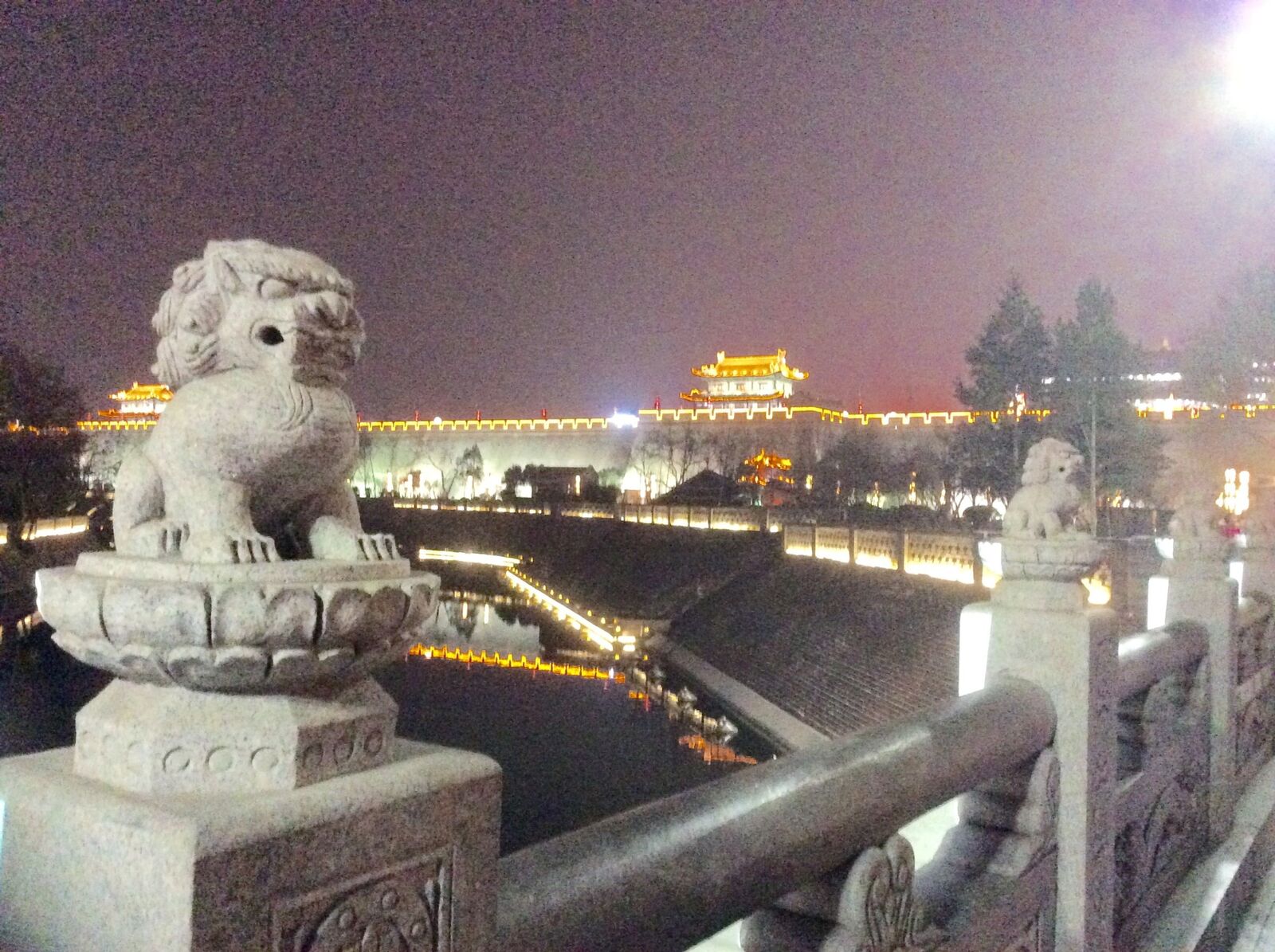
2017年2月1日,正值中國陰暦新年期間,小兒Anderson陪同我和妻,由上海浦東搭機來到這座古城。這是他第二次西安行,上次於2015年11月6日至8日,與他的哥哥Anthony聯䄃而來。那次旅行,對深愛中華民族歷史文化的他們而言,是一次難忘的記憶,西安的一股仙逸之氣,會讓人留連忘返,也誘使我和妻有了此次西安之行。
西安的飛機場不在西安,是在西安城北47公里,咸陽市渭城區。出了機場上了旅館的接待車,看見公路兩旁的市招,都與咸陽有關,於是咸陽就成了我們的話題(2)
Anthony前次西安行回美,暢談他的旅遊觀感。他快人快語直接了當地説:整個西安城包括咸陽在內,地底下每尺土地埋的都是死人,珍貴的文物不計其數。不管死人也好,文物也好,都是全體中國人的財寶。1974年3月,一名農民工,偶然間發現了希世國寶兵馬俑,震驚了世界。
咸陽城北的畢原,翠柏蒼松,碑碣夾道,有周朝,文、武、成、康諸帝及周公旦、姜子牙的墓地。周文王陵寢四週地下,已有周、秦、漢各代古物出土。昔日以豪華絕世的阿房宮舊址,猶可親臨憑弔。畢原之東更有漢朝高帝、景帝、惠帝以及呂后武則天的陵墓。
咸陽城西的茂陵,有漢武帝及衛青、霍去病的墓地。茂陵之西的馬嵬坡,是西元756年安祿山叛變,自稱大燕皇帝攻入關中,唐玄宗奔蜀途中,六軍不進,逼迫玄宗賜死楊國中及楊玉環的地方。
遙想「回眸一笑百媚生,六宮粉黛無顏色」的當年,對比今日黃土一堆,荒草蔓生的情景,讓人不甚感嘆。(3)
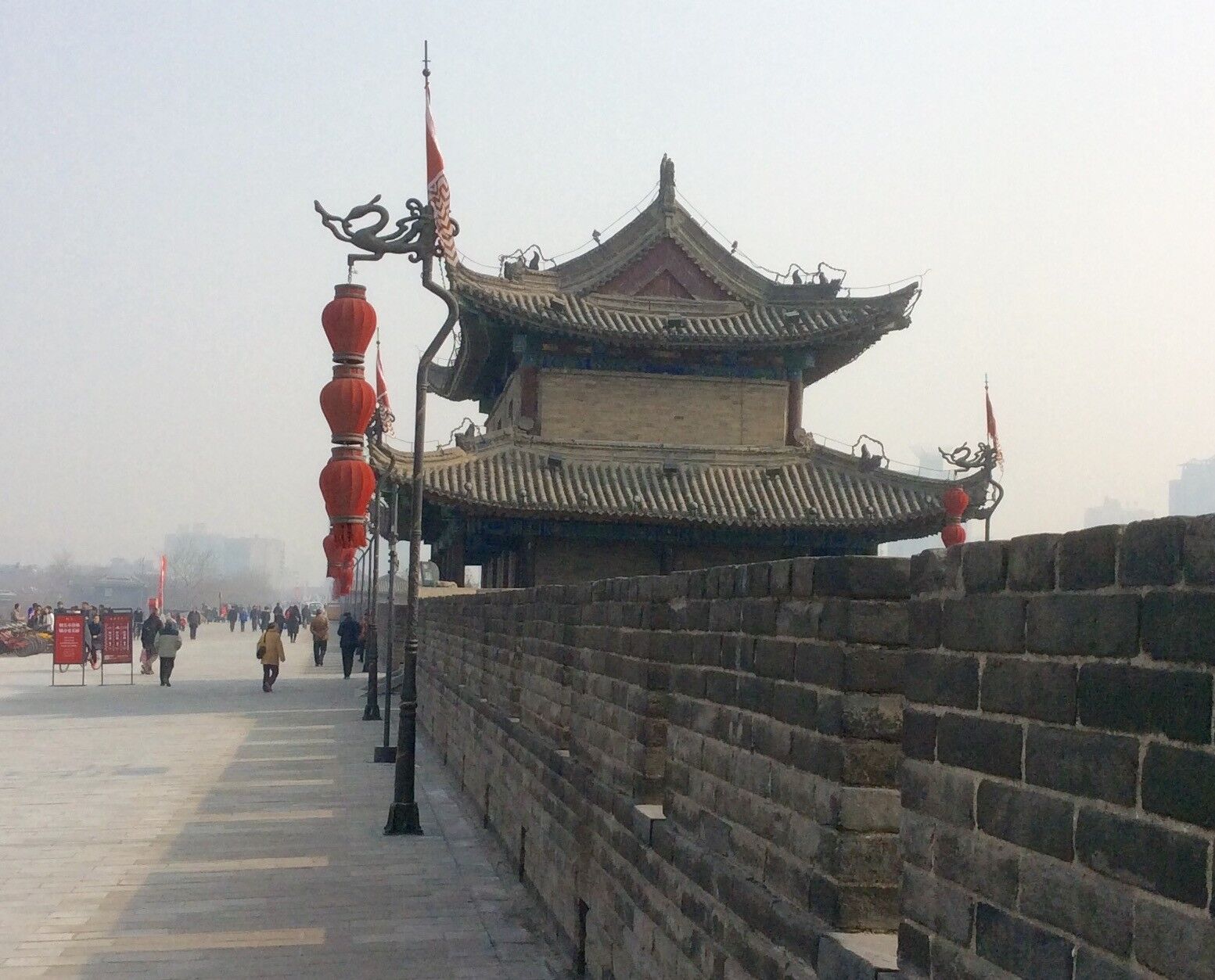
離開咸陽國際機場,順著312號公路東南行,約50分鐘進入西安市區。路經絲綢之路塑雕群,十分壯觀。績往東行數分鐘,西安城牆呈現眼前,有東、西、南、北四座城門。
下榻的酒店在城南永寧門西南側,可以俯瞰整個永寧門正前方的國貿春天廣場。車水馬龍、人來人往,一番大都市景象。
西安城牆又稱明城牆,建立於明太祖洪武7年至11年(1374-1378),在唐朝皇城的基礎上整建而成,現今的唐城牆已不存在。
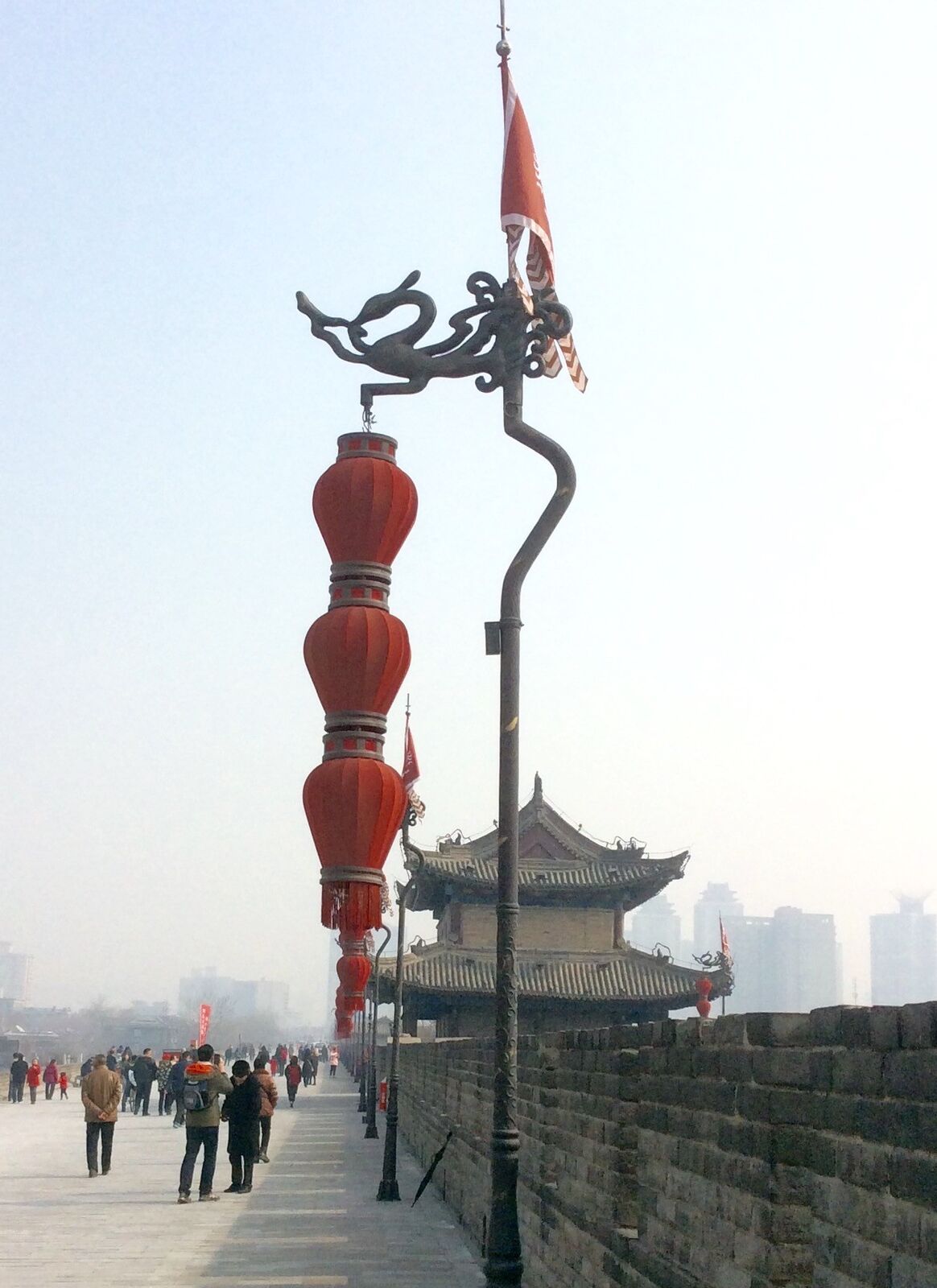
西安城牆是中國現存的古城牆中,規模最大,也是最完整的一座。呈長方型,周長13.75公里,牆高12米,比萬里長城還高出4米。頂寛更高達15米,底寛18米,可以練兵更可跑戰車,極具防禦戰略價值。城牆外有護城河、吊橋、箭樓、垛口等一系列軍事設施。中世紀歐洲任何一個都市的城牆,都無法與其媲美。
我們在西安的第三天,登上這座城牆,用了4個小時,來回於最精華的地段。由城牆上俯看西安城,何止是壯觀,簡直是震撼。(4)
西元535年,北朝西魏文帝時,長安就是西魏的國都。至北周(557-581)孝閔帝開國,長安依舊是首都。西元581年北周隋王楊堅自稱皇帝,8年後成了開國之君隋文帝。
西元583年,隋文帝在長安建大興城。至唐代(618-907)高祖李淵開國,就在大興城的基礎上不斷擴建,逐有今日西安的雛形。
早唐時期的長安建設,就運用了天體運行,旭日落日的照射,時鐘般的規律,打造成一個棋盤式的都會區,城市景觀嘆為觀止。(5)
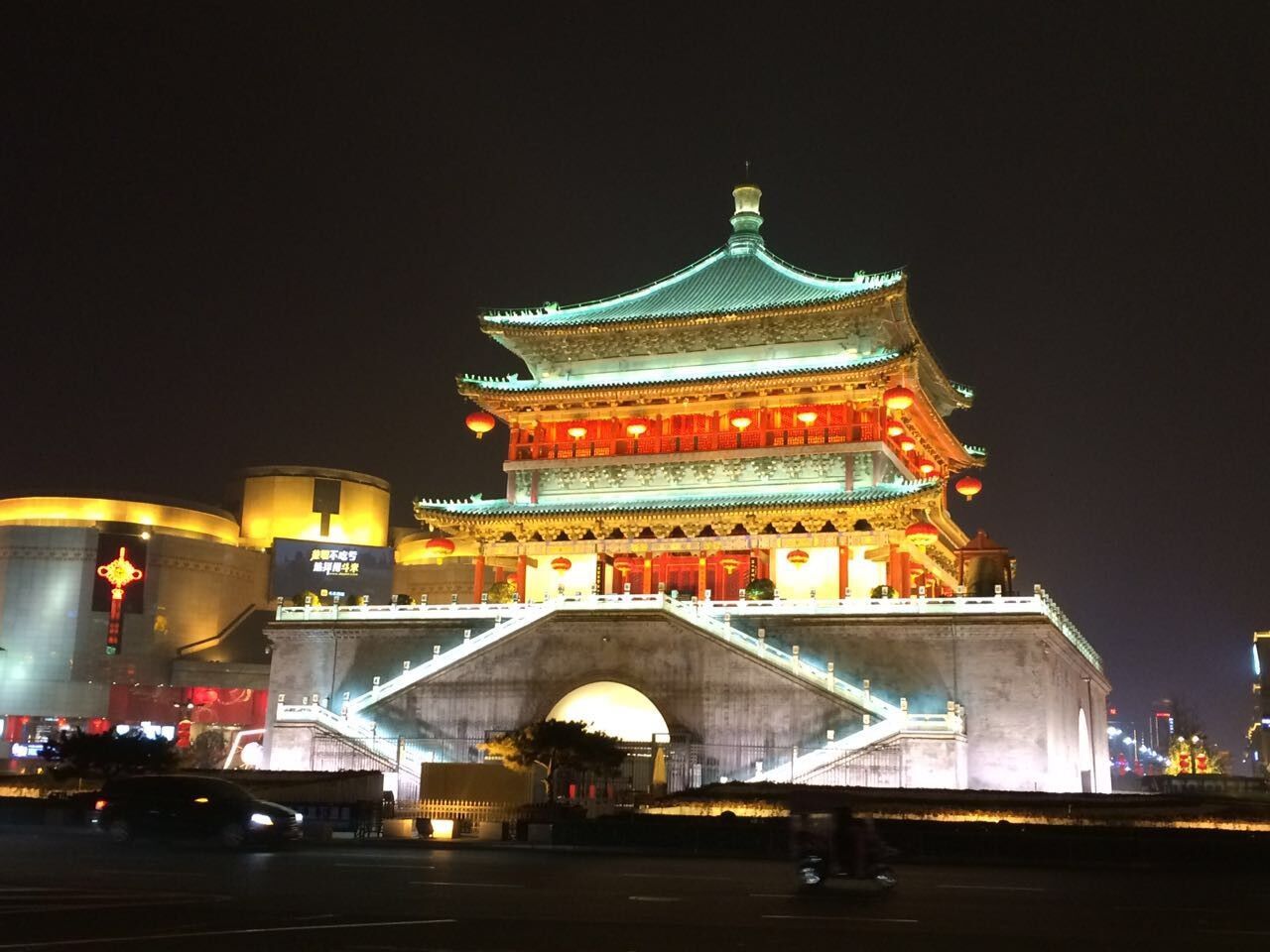
西安鼓樓位於西大街上,與其東南方不遠的鐘樓相對。鼓樓建於明太祖洪武13年(1380),樓南樓北兩側各懸匾額一面,南側書「文武盛地」,北側書「聲聞於天」。樓周放置4面大鼓,24面小鼓。小鼓用小篆字書寫24節氣,配合節令運行。
鐘樓建於洪武17年(1384),與鼓樓同高36米,兩樓並列內城古建築第一高。鐘樓位於西安市中心,由此內城分為東、西、南、北四條大街。東大街至長樂門,西大街至安定門,南大街至永寧門,北大街至安遠門。
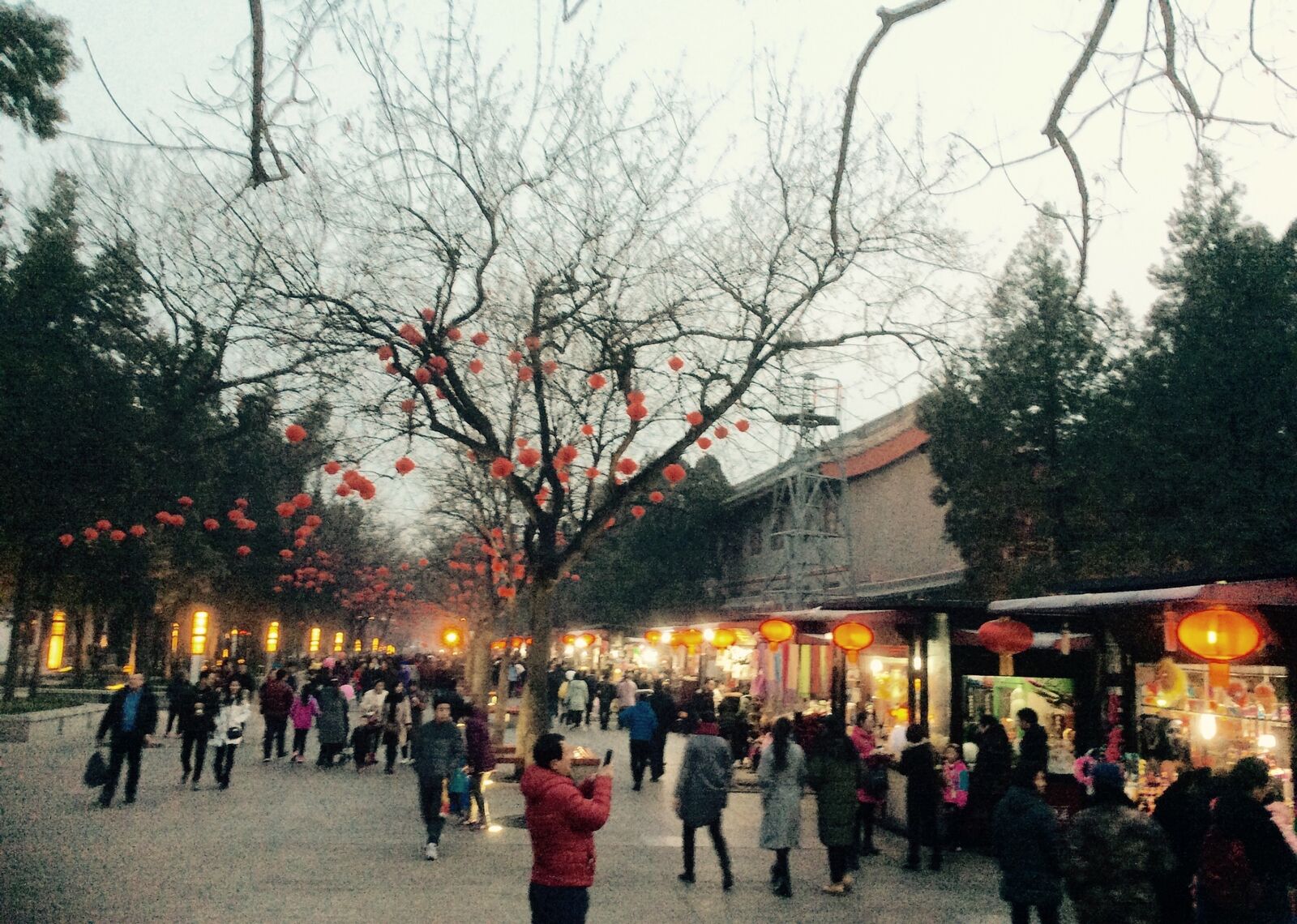
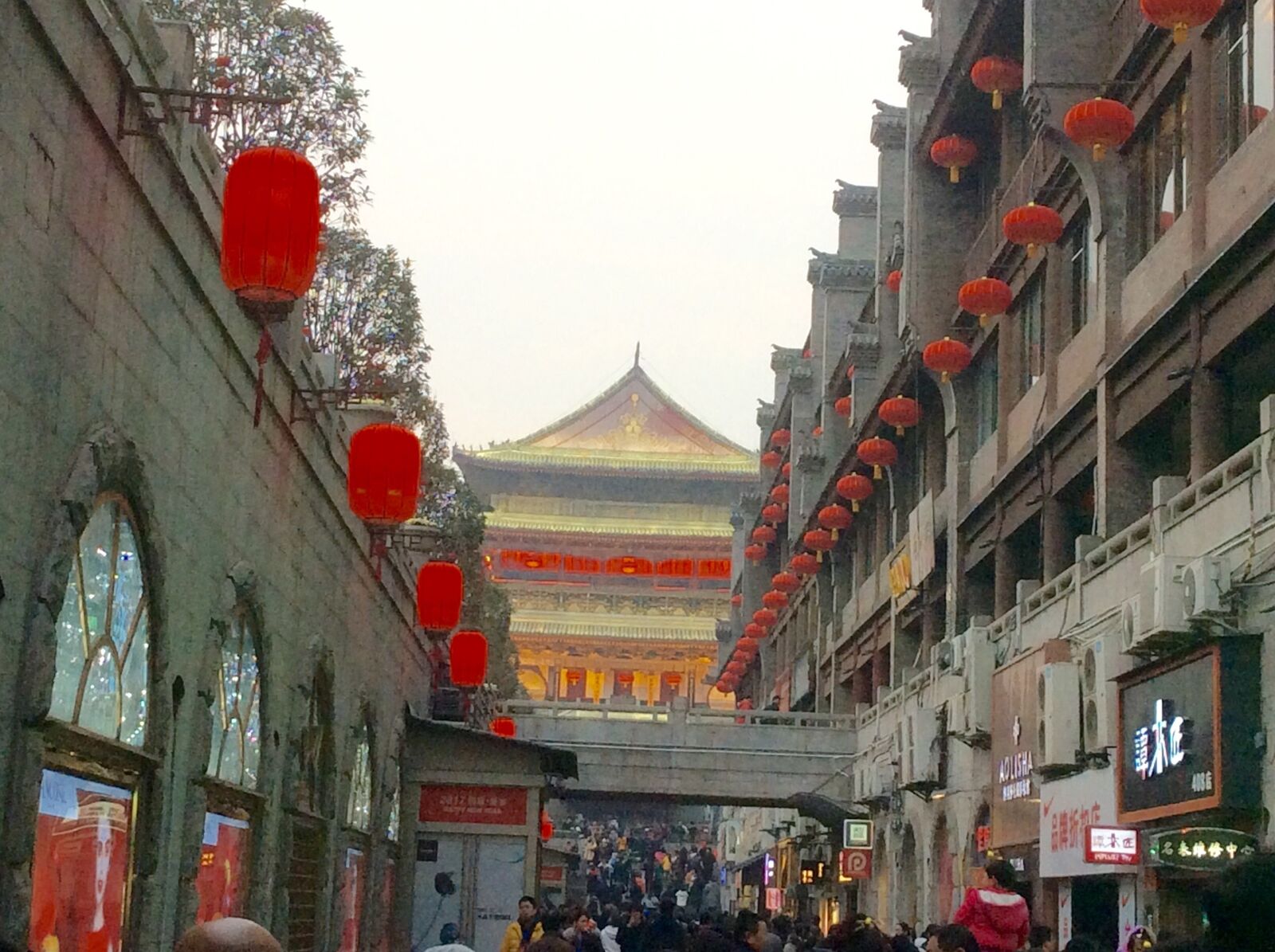
鐘鼓兩樓周邊形成一個大商業區,吸引大批觀光客前來用餐、購物,開放至午夜。各式彩燈閃爍,耀眼奪目。
鐘鼓兩樓建成之後,每日凌晨鐘聲響起,遠及數里之外。傍晚時分鼓聲隆隆,嚮徹雲霄,因此有「暮鼓晨鐘」一詞。當年長安居民,每日須至商業中心東大街及西大街購買食物、用品。因此又有「買東西」一詞。
回民街是西安著名的美食文化街,位於鼓樓之北,長約500米。西安特色小吃,灌湯包、肉夾饃、臊子麵、餃子宴等,這裡應有盡有。(6)
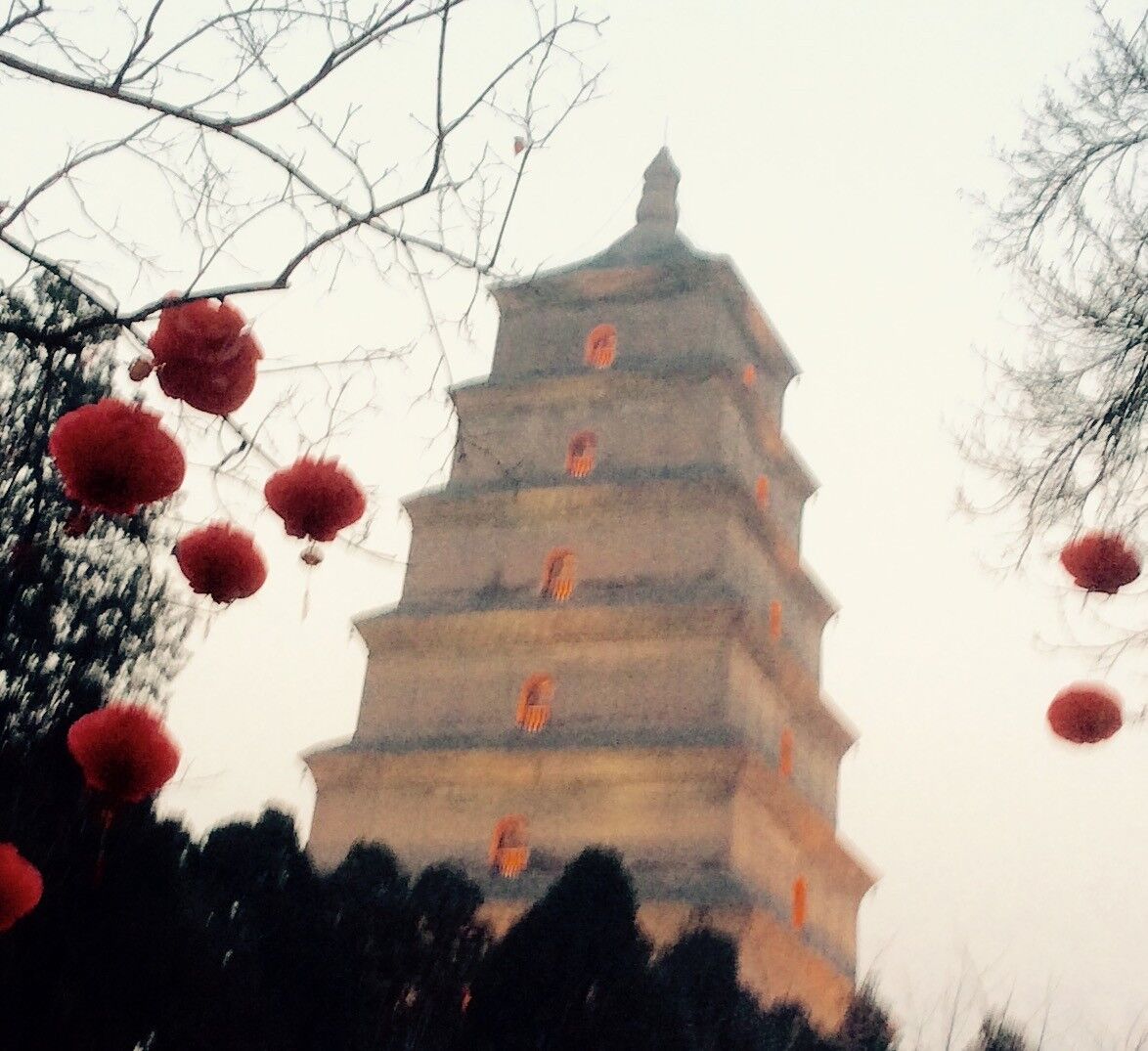
座落於西安市雁塔區大慈恩寺內的大雁塔,建於唐高宗永徽3年(652年),是為了收藏玄奘法師(602-664)的佛經而建築的一座七層佛塔。
佛塔兩側有兩座石碑,一為唐太宗貞觀19年(645年),玄奘取經回到長安那年,為玄奘譯經而作的總序「大唐三藏聖教序」石碑。另一座是唐高宗永徽4年(653年),為玄奘而作的「聖教序記」石碑。兩碑均由唐初四大書法家之一的褚遂良書寫,一字一字鉤勒摹本自王羲之(307-365)書蹟。
大雁塔西北,近小雁塔,有一處武家坡的王寶釧寒窯,寒窯門前有一聯:十八年古井無波,為從來烈婦貞媛,別開生面。
千餘歲寒窗向日,看此處曲江流水,想見冰心。
京劇「紅鬃烈馬」中有一段名為「武家坡」的戲,講的就是薛平貴與王寶釧結親,分離18年後再重逢的故事。(7)
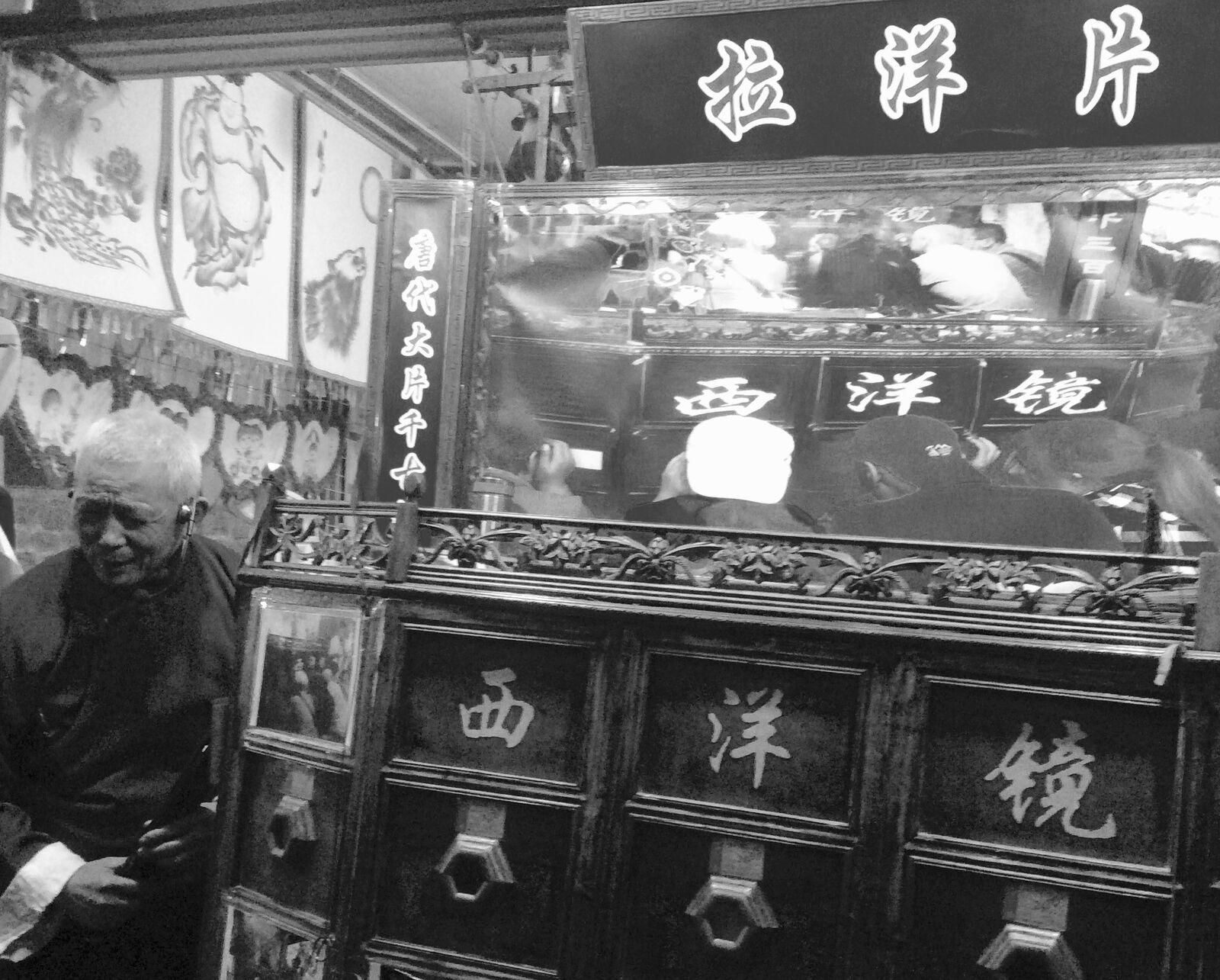
西安碑林博物館,是喜愛碑石藝術人士的最佳選擇。博物館位於西安市三學街文廟舊址,是一座收藏、研究碑石墓誌及其他古代石刻藝術品的博物館。
收藏品包括歷代石刻造像、書法、文物等,多達700多件,皆是藝林考古珍寶。其中柳公權、顔真卿的書法石雕最為有名。另有大秦景致碑一座,更是研究宗教歷史學家的稀世珍寶。
西安為七朝國都,歷經兩千年,留下來的古蹟、城垣、帝王陵墓、寺廟、樓宇,登錄名冊者多達320多處。觀光客只能重點選擇,由酒店安排旅行社組團,做一日至數日遊,既省時又省力更省錢,又多了一層安全保證。
解說員均接受過專業訓練,學歷高、學識豐富、口齒清晰,富愛心耐心,對歷史文化的瞭解,如數家珍。
西安市往西行,有景點茂陵、乾陵和法門寺。往東行,可達華清池西安事變遺址、秦皇陵及秦始皇兵馬俑。
我唸初中時,弟妹們均在小學讀書。先父喜歡唱京劇,常聽他唱「法門寺」。有太監劉瑾的一段戲詞:你既然瞧不起皇上,還瞧得起咱家嗎?哈、哈、哈、哈。
從那時起,我們一見到父親,互相就哈、哈、哈、哈大笑起來的往事。(8)
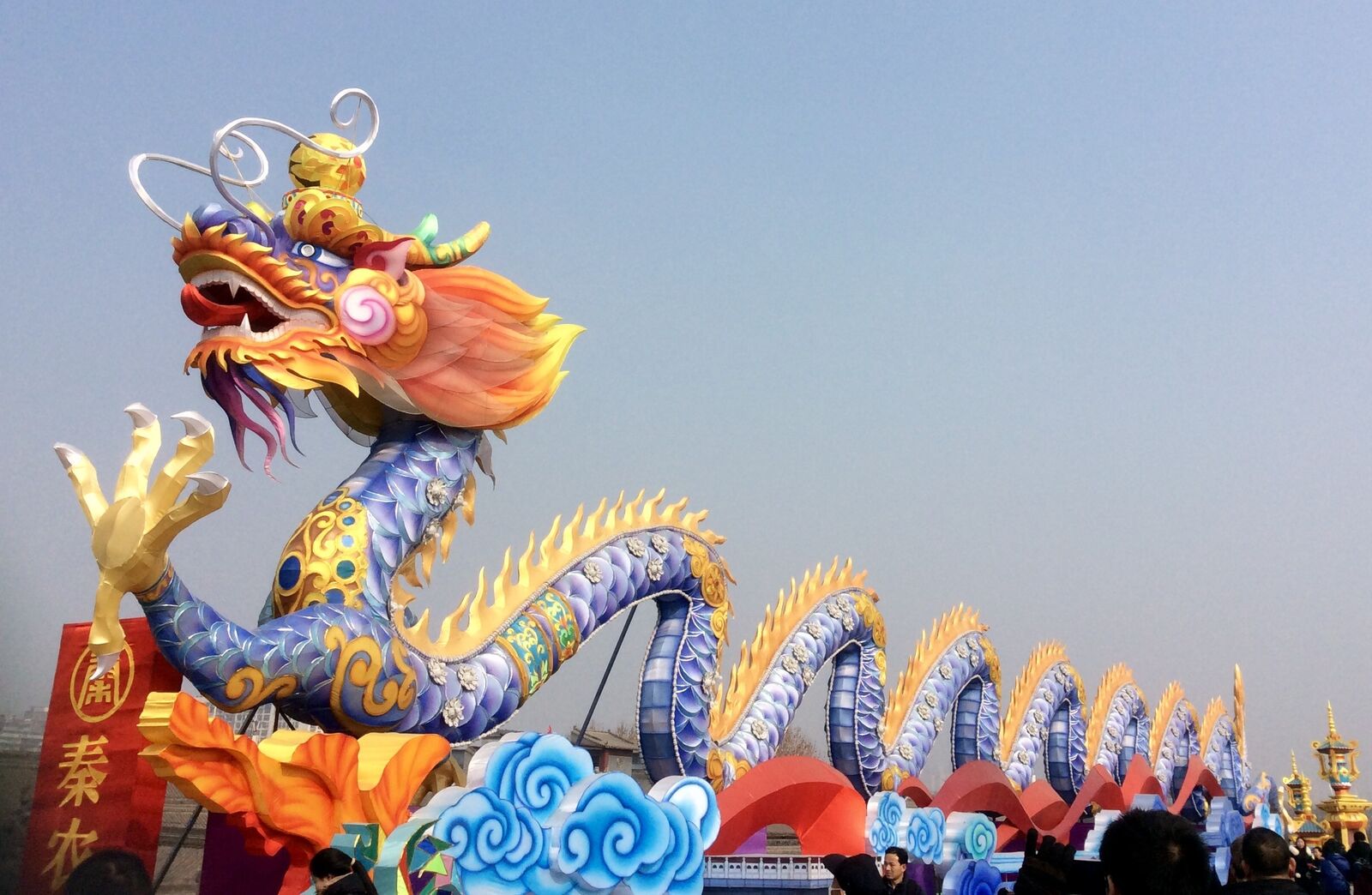
第二天上午九時,搭上酒店安排的旅遊巴士,前往西安市以東的驪山華清池。全車有十四個家庭,我們編為第一家庭,相當高興。
華清池位於西安市臨潼區驪山北麓,有西安事變時蔣介石的行轅,及被軟禁於內的綏靖公署。華清池有一纜車站,可乘空中纜車,達驪山山頂。
華清池係一溫泉浴池,因唐玄宗(685-762,年78歲)和楊貴妃(719-756,年38歲)的愛情故事始於此,而聞名於世。
華清池用水,採循環流動式設計,温泉恆溫攝氏40度。為保護古蹟遺址,浴池進出水口已封閉,僅見一乾涸的大水池而已。
當年盛況也只能在白居易(772-846,年75歲)的長恨歌中臆想了。「春寒賜浴華清池,溫泉水滑洗凝脂。侍兒扶起嬌無力,始是新承恩澤時。」(9)
離開華清池後,續往西安事變舊址。見當年蔣介石行轅辦公室、寢室、會議室、侍衛室、會客室,彈痕累累,清晰可見,各室陳設簡單樸實。中華民國國旗及中國國民黨黨旗,仍然懸於會議室正面。一部手搖式電話機,仍在辦公室的桌面上。
多年前,閲讀蔣介石於民國26年(1937年)1月,在奉化溪口寫的「西安半月記」,序言中,開宗明義就指出:去年十二月十二日,西安之變,事起倉卒,震驚中樞,幾搖國本。
書中詳述他與張學良、楊虎城的互動,事變的經過,軟禁過程,被視為是研究西安事變的重要史料。
面對現場實景,回想「西安半月記」內所述情形,對照80年來中國之命運,激動之情油然而生。(10)
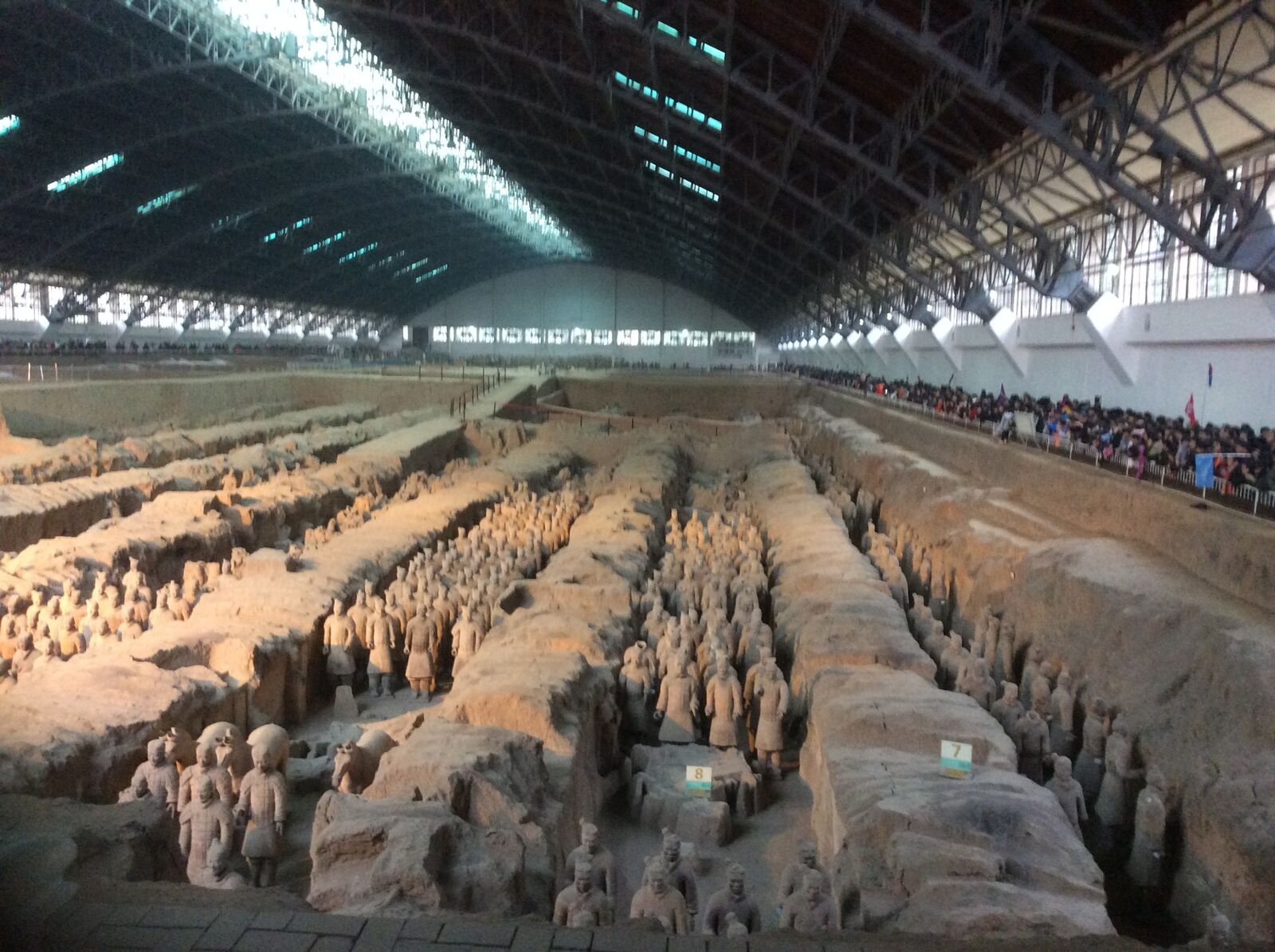
1974年正值文革末期,陜西大旱,臨潼西陽村農民楊志發,因其有解放軍背景,受命爲村長,當年還不滿30歲。這年3月29日,他率領一組村民,在一低窪處挖掘水井,挖約至5公尺處,本擬放棄,但發現一些類似陶塑之類的東西,仔細一看,是一件兵俑塑品。
楊志發直覺地認為是件古物,迅速上繳。結果驚動陜西省文化單位,立即成了世界大新聞。政府頒發人民幣30元,證書一紙,給予獎勵。
從此相關機構着手挖掘,除了兵俑,又發現馬俑、戰車,相繼出土。經過考古學家鑑定,係秦代稀世珍寶,並成立「秦始皇兵馬俑博物館」於此地。
兵馬俑分1,2,3號坑,總面積約兩萬平方米。截至2019年,1號坑已發掘三分之一,2號坑正在發掘中,3號坑已全部發掘完成整理,總計八千餘件。
1987年秦始皇兵馬俑各坑,被聯合國教科文組織列入「世界文化遺產名錄」,並讚譽為「世界第八奇蹟」。(11)
2017年2月4日,我們結束了西安三天半的旅遊。前往機場的途中,一直是咸陽景致。咸陽這座秦時古城,正是王維「送元二使安西」詩中的渭城。
渭城朝雨浥輕塵,
客舍青青柳色新。
勸君更盡一杯酒,
西出陽關無故人。
王維生於西元699年(唐武后聖歷二年),當時的陽關就是今日甘肅省的敦煌。而安西更在陽關以西2969公里,今日新疆維吾爾自治區的庫車境內。唐朝時,為統轄西城,在此設安西都護府。
王維的摰友元二,奉朝廷之命前往安西,那真是遙遠遙遠的一段路。唐朝從長安往西行,多半在渭城送別。(12,本篇完)
第10篇:大馬首府
吉隆坡見聞
2017年1月22日至30日,丁酉年春節前後,小兒Anderson邀請我和妻作了一次大馬新加坡九日遊。1月22日晚8時20分,由上海浦東機場,搭乘中國東方航空聯營的上海航空,飛行5小時20分鐘,於次晨1時40分抵達馬來西亞首府吉隆坡,成為此行的首站。
馬來西亞由14個州組成,1963年脫離英國殖民而獨立。兩年後的1965年,新加坡自聯邦出走,自立門戶,成了馬來西亞永久的遺憾。
馬來西亞面積33萬2千6百平方公里,人口3千2百萬(2016年)。是一個包含馬來人、華人、印度人及其他少數民族的多元民族國家。國土被南中國海分隔為兩部份,西邊在馬來半島上,東邊在加里曼丹島以北與印度尼西亞為鄰,包括沙巴和沙勞越。全國處在赤道以北至北緯6度之間,熱帶雨林覆蓋多數地區,棕櫚、長春藤、翠竹、蘭花交織成一個美麗奇異的世界,也是全球錫和橡膠的最大輸出國。(1)
馬來西亞自建國以來歴經57年(2020),7任首相。首任東姑阿都拉曼,雄才大略,幾乎同時與新加坡總理李光耀,領導國家臻於現代化之林。其中第五任Abdullah,生於檳城,祖先來自中國海南島。
馬國歷任首相,雖因個人的政黨背景、個性為人、處事風格和政治理念各有不同,但對建設國家戮力從公。
首都吉隆坡,面積243平方公里,人口180萬,大吉隆坡都會區人口近700萬。華人是吉隆坡第二大民族,佔人口比例43.2%,唐人街已有200年歴史。
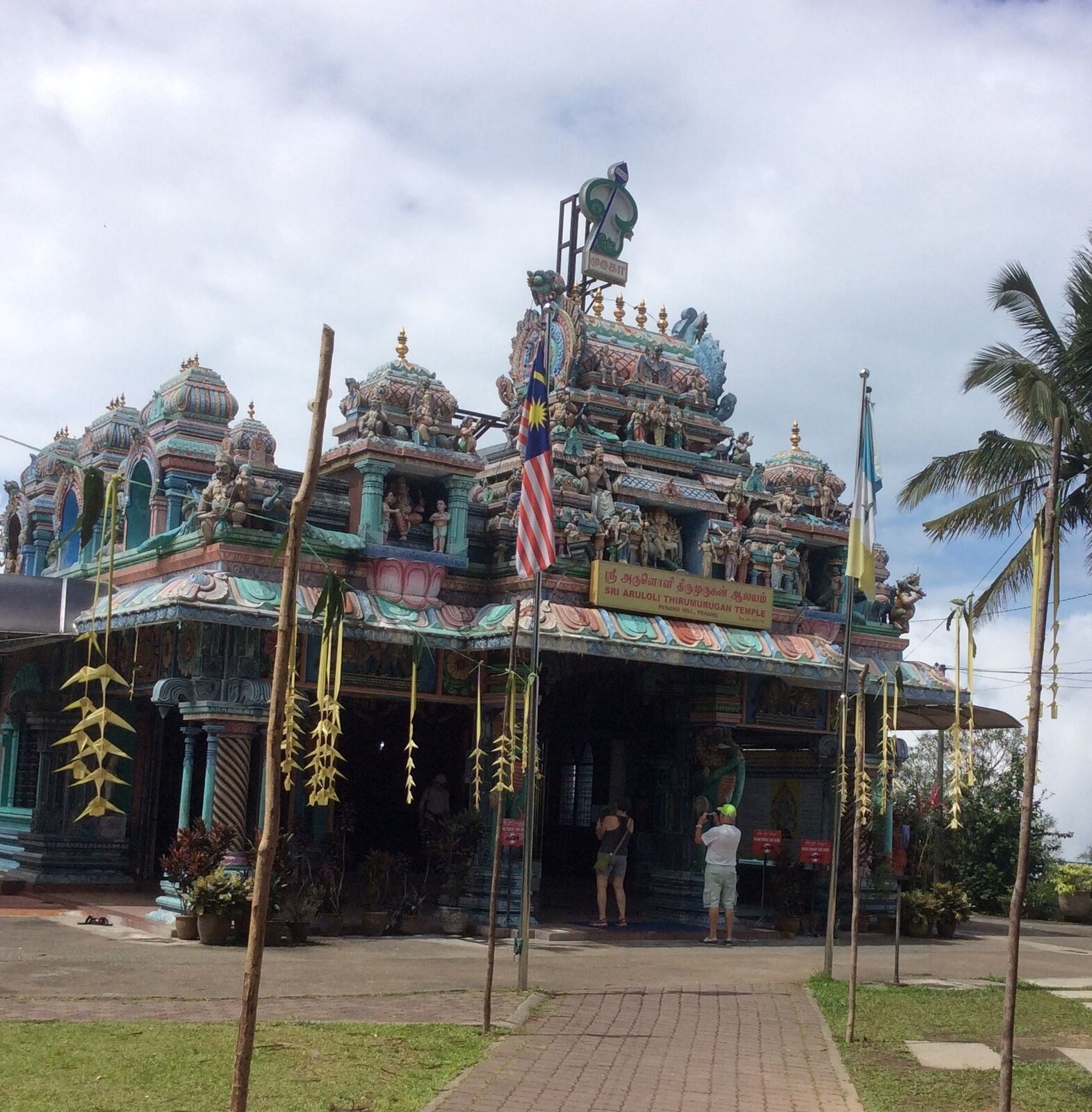
多元文化在吉隆坡發揮得淋漓盡致,清真寺、佛殿、印度廟隨處可見。各民族的美食,享用不盡。
林蔭大道綠意盎然,熱帶植物蒼翠茂盛,道路兩旁花卉怒放,行走其間宛如進入一座城市花園。(2)
吉隆坡國際機場,距離市中心有50公里,位於華人較多的雪蘭莪州雪邦城,是東南亞通往印度及西南亞各國的中轉機場,2014年全新擴建完工,有兩座現代化的航站大廈。
雙子星大樓是吉隆坡傲世的建築物,集商業、金融、電信、觀光、政府行政於一身。樓高452公尺,1998年落成,耗資16億美元,是當時的世界第一高樓,2004年底卻被樓高509公尺的台北101大樓超越。不到6年,杜拜的哈里發塔,更以169層、828公尺的高度,於2010年1月4日啓用,並開放觀光。台北101大樓退居世界第五,雙子星大樓退居第八。(3)
1995年吉隆坡快㨗通軌道,又稱巴生河流域輕快鐵道系統完工運行,行經吉隆坡主要建築物及觀光景點,多達60多處,尖峰時段列車每隔三至五分鐘一班。
兩年後的1997年,國際機場㨗運完工,計6站57公里,30分鐘就可抵達市區,施工僅用了兩年八個月。
相較於桃園國際機場㨗運,1996年開工,全長51.3公里,遲至21年後的2017年3月才能通車,箇中緣由,來龍去脈不必細述,路人皆知。
在吉隆坡,要體驗大馬多元文化的魅力,步行搭配乘坐㨗運,是最好的方法。建成於1888年的吉隆坡中央藝術坊,其周邊旅遊景點,是馬來西亞文化遺產、藝術及手工藝品展示的中心地帶。
Dataran Merdeka馬來西亞獨立廣場,是馬國各族裔,每年8月31日集會慶祝國慶的場地,廣場上的國旗桿,高100公尺,全球最高,升起的國旗也是全球最大。
蘇丹阿都沙末大廈,是吉隆坡的重要地標,馬國宣布獨立時的會場所在地。(4)
聖瑪麗大教堂,是第一座以磚塊興建的馬國天主教堂,於1887年2月13日獻堂,出自於英國建築大師AC Norman手筆下的哥德式建築。
建成於1965年8月27日的國家清真寺(National Mosque)以獨特的現代風格設計著稱。
吉隆坡火車總站,早期稱為「火車站酒店」,是英國建築師胡柏克(A.B.Hubbock)所設計的西方摩爾式建築物。
著名的茨場街Chinatown,有180年歴史,觀光夜市遠近馳名。早在清道光年間,就有福建漳泉二州的商人,在此起灶落戶。
關帝廟,建於1888年(清光緒14年),佔地半英畝,香火鼎盛,是華人廟會中心。
大排檔一條街,品嚐道地的大馬美食,營業由下午六時至凌晨二時。(5)
馬國自2015年以來,物價漲幅每年都在2%以上,2019年的失業率高達5.6%。大學生的失業率一再攀高,已達驚人的30萬人,平均四名大學生中,就有一人失業,這與教育政策有關,但比起台灣,要好得太多了。
馬來西亞政治一向偏向美國,經貿與中國大陸熱絡,一帶一路的觸角也伸向此地。
在一次旅馬華僑朋友的家宴中,談到台灣的經貿新南向政策。這位老僑答道:後景堪憂,為何捨近求遠,不利用有利條件,前進中國大陸(6,夲篇完)
第11篇:歷史名城
麻六甲
雖然光環已失,但是曾經輝煌。四百年的殖民統治,讓麻六甲(Melaka)有說不盡的歷史故事,道不完的民族恩仇。
西元1403年(明成祖永樂元年)10月,成祖欽派中官尹慶出使麻六甲,當時的滿剌加國。1405年(永樂3年),鄭和受命赴麻六甲,率領200艘船隊,兩萬名隨員,自江蘇太倉的劉家港出發,宣揚國威,前後達五次,表達的是關懷,並無屯兵駐守。
一百年後的西元1511年(明武宗正德6年),葡萄牙人侵佔麻六甲。1641年(明思宗崇禎14年),荷蘭人驅逐了葡萄牙人取而代之。再過了145年,英國人的勢力,於1786年(清乾隆51年)伸入馬來半島,又被英國殖民至二次大戰。1941年至1945年,日本人又暴虐統治了4年。這段前塵往事,從何細數。(1)
2017年1月24日,在吉隆坡下榻的酒店安排下,組成了一個40餘人的旅行團,車行2小時20分鐘,南行駛入麻六甲市區。
途中,熱帶雨林的細雨,微帶涼意。路旁椰林棕櫚,婆娑在薄霧之中,皆是一片南洋美景。
遊覧車停靠在荷蘭廣場上,赤深色的荷蘭紅,醒目耀眼。葡萄牙人建築的古堡,僅留下殘缺的城門。荷蘭人在此建立的大鐘樓、教堂、市集場、䕶城堤,引證了荷蘭人在此統治了150年。與大鐘樓毗鄰的是,英女王維多利亞的石雕及噴泉,方圓百公尺內是多幢英式Tudor建築。區區三英畝的範圍內,皆是西方列強角逐的痕跡。
廣場內的一座歷史博物館,一尊高約兩公尺的鄭和石雕像,矗立館前,連同碑座逾三公尺。另闢有「鄭和文物陳列館」,稱鄭和為「和平的使者」,對比西方列強,凸顯出中華民族的泱泱大度。(2)
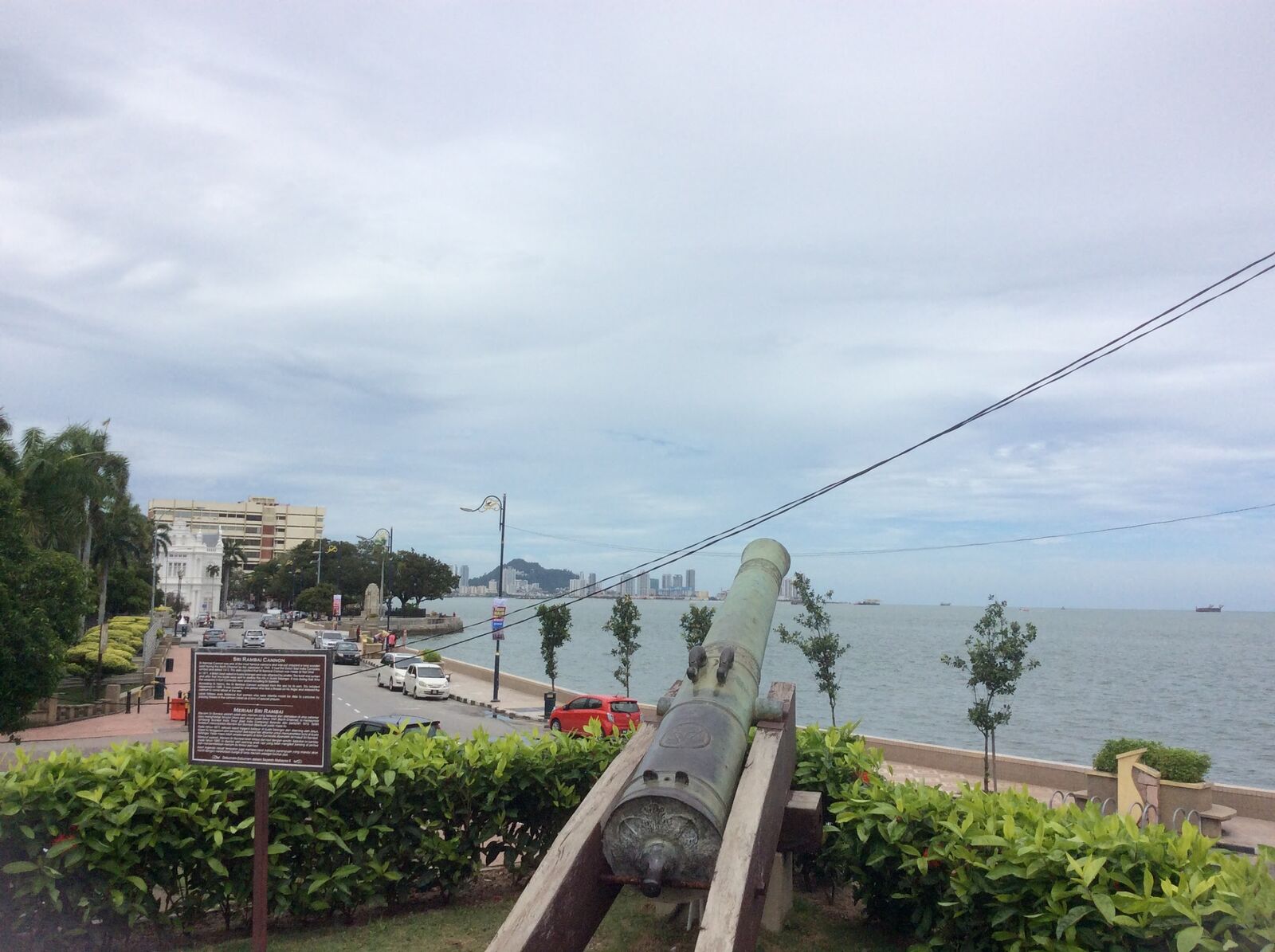
城南的葡萄牙廣場,顯得沒落冷清。往日的大商船不見蹤影,寥寥幾艘漁船,漂泊在海面上,隨浪起伏。僅存的一尊大砲,孤零零地在細雨中,面對海峽。
市郊的景點三寶山、三寶井、三寶廟,是17世紀的華人,為紀念三寶太監鄭和而建。三寶山腳下,有一座華人抗日紀念碑,碑上有中國國民黨黨徽,及蔣中正主席於民國35年親題的「忠貞足式」四字石刻。為的是追悼馬來半島當年15萬華人,因支援抗戰,而遭日軍屠殺的忠魂,這段歷史可能已被國人遺忘。
馬來半島有西方國家視為珍品的香料,隨著大航路的開通,阿拉伯人及印度人,先後為了香料到此經商。中國的絲綢、瓷器、茶葉、日常生活用品,也在此與阿拉伯商人、印度商人,物物交換,麻六甲成了貿易中心,回教及印度教,也因此傳入此地。
青雲寺是一座明清時代的中國寺廟建築,兩旁巷道,華人店舖做著各式生意。我們在緜緜細雨中,走在青石板的老街上,去體驗一下麻六甲中國人過往的歷史滄桑。
走進一家名為「娘惹黄梨饀餅之家」的中式點心茶館,喝杯下午茶。(3)
餅店主人是一位年約50餘歲的中年婦女,祖先來自福建泉州,外祖父娶了一位馬來姑娘,生下了她的媽媽,當地人稱呼的「娘惹」。婆家的尊翁,卻是一位馬來人與華僑小姐生下的「峇峇」。
女店主的華語普通話,說得很順溜。近半個小時的邂逅交談,多半傾聽她的先祖至此蓽路藍縷,開疆闢土的故事。
在她的口述中,華人很容易融入當地自由、多元、和諧共處的社會,並不因為是多元民族,而彼此齟齬衝突。
值得讚揚學習的是,殖民統治時期的各國建築,都保留了下來,政府每年編列預算,加以維護。並沒有因為殖民的仇恨,加以摧毀,畢竟那是歷史的記憶,走過的路。
麻六甲雖然光環褪色,但是曾經輝煌。像一位歷經風霜的老人,芳華不再,仍見一股蒼勁之力。這裡有講不完的故事,說不盡的滄桑歷史,看不完的熱帶風情,有機緣我會再來。(4,本篇完)
第12篇:海上珍珠
檳榔嶼
2017年1月25日,我們由吉隆坡搭機飛行約45分鐘,353公里,到達西北方一向有「海上珍珠」,或是「東方花園」美譽之稱的檳榔嶼。檳榔嶼是華僑給它取的名字,源於島上隨處可見檳榔樹而來。
檳榔嶼又稱檳城(Penang),是馬來西亞13個聯邦州屬之一。北隔玻璃州與泰國南部為鄰,西隔麻六甲海峽與印尼蘇門答臘島相望。位於北緯5度,東經100度。年平均溫度在攝氏24度至32度之間。首府喬治市(Georgetown)因英王喬治三世而得名,是馬來西亞第二大城,華人佔全城40%。1786年英國勢力到達檳城,殖民統治至1957年8月31日,英屬馬來亞聯合邦獨立為止,長達171年。
檳榔嶼喬治市榮獲世界知名旅遊雜誌《孤獨星球》,評選為2014年全球最佳美食城市榜首,2016年全球十大最佳旅遊城市第四名。(1)
檳榔嶼是一個古典與現代具有創意、傳統、環保的觀光都市,全境景點有77處。
根據此地觀光局的資料,我作了一番整理,大致分類。
國家公園、古堡花園、華人文物館、熱帶水果農場、高爾夫俱樂部、兒童遊樂園地、熱帶植物園及59層360度可高空俯看全城美景的空中餐廳,各一處。藝文畫廊、名人故居,各三處。圓環夜市、大型購物中心、主題公園,各六處。水上村落七處,博物館十一處,寺廟教堂十八處。
我用了8句64字,來形容檳榔嶼的美景及誘人之處。
渡輪古堡旭陽晚照,
長堤別墅濱海步道。
海浪沙灘跨海大橋,
漁村海灣水上人家。
教堂廟院鼔鳴鐘響,
榴蓮䆁迦水果之鄕。
夜市佳餚美食天堂,
酒店高樓購物商場。(2)
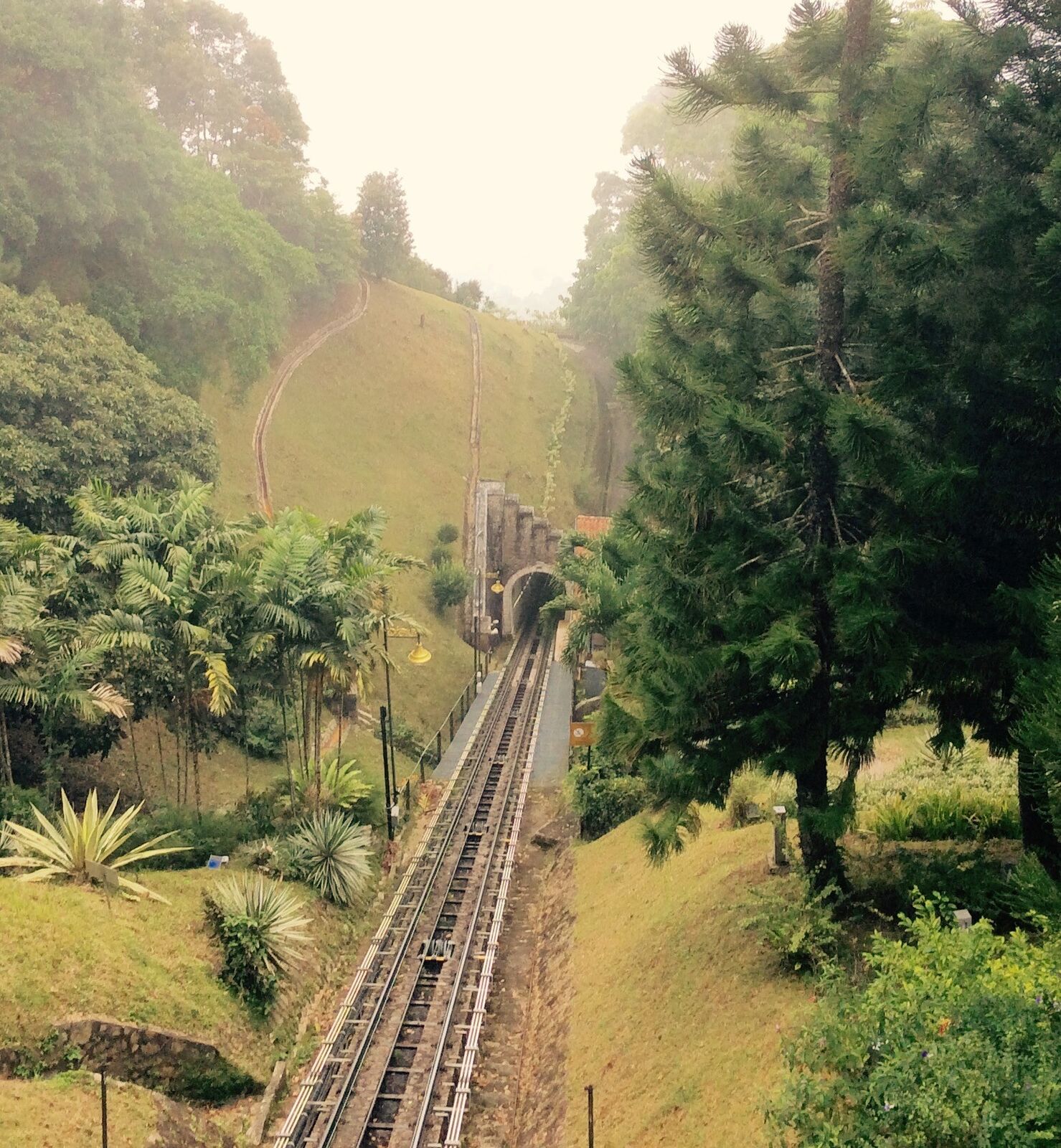
檳城山(Penang Hill)又稱升旗山,是檳榔嶼中北部一座海拔830公尺的生態公園山。可以在山頂鳥瞰喬治市市景,有環山公路到達,也可以順步道或搭乘纜車上山。一路風光明媚,景觀悅目。山上有飛禽公園、花卉公園及貓頭鷹博物館。殖民統治時期建築的英式洋樓及別墅,分散在山區各角落,獨立後已成為政商名流渡假的所在。山中有一間頗具歴史的Bellevue酒店,名揚大馬。清晨、傍晚,雲霧繚繞,山雖不高,卻有仙靈之氣。
檳城山南方3公里處,有一座東南亞最大的佛教寺廟「極樂寺」,建築在一座小山上。1890年動工興建,有一座七層樓高全手工雕刻的「萬佛塔」,40年後的1930年才竣工。更有一座高30米的觀音銅像,是目前世界僅有,於2002年建成。每逢中國新年期間,每晚逾20萬盞各色彩燈,徹夜照明,金壁輝煌至數十里外。建築費用來自歷年華僑工商團體、慈善事業及個人捐助。我們恰逢其時,於除夕夜登山,享受了一次近萬人的新年盛會。(3)
於2016年招標興建的檳城單軌輕鐵㨗運系統,將於2020年年底竣工啟用。計程車仍然是最便捷的交通工具,駕駛員半數以上是華人,祖先多半來自福建,華語普通話、閩南語、客家話說得都很好,英語也能溝通。並不會因㨗運的通車,而擔心生計。觀光客逐年增加,隨叫隨到及親切的服務,是他們的信心。
喬治市城北的一處海灣,面積有2.2平方公里,投入兩億美元,填海造陸,配合㨗運完工,打造一個集遊船、夜市、商店、劇院、旅館於一體的東南亞最大的海上公園。地面建築物及周邊道路設施,至少投資10億美元。預計2022年竣工啟用,檳榔嶼的盛況,將可期待。(4)
檳城的唐人街,橫跨喬治市四條大馬路,堪稱全球最大的唐人街。店舖、飯館、藥房、客棧、宗祠、會所、洋行、銀樓,林立在街道兩旁。兼具殖民時期及傳統閩南建築的兩層小樓房,別具風格。
這座城中之城,是華僑的發跡地,也是檳城最早開發的地方。午後的小茶樓裡,供應榴蓮起士蛋糕,加上濃郁的馬來咖啡,飄香四溢。品味一壺極頂烏龍,可以消磨一個下午。康有為、郁達夫、徐悲鴻,都曾在這裡停留過一段時間,留下了他們的記憶。
孫中山先生曾五次來到檳城,1910年11月31日,在此召開「庇能會議」,策劃第十次革命。次年4月27日(陰暦3月29日),趙聲、黃興等人,在廣州領導起義。
喬治市城西,有一座孫中山紀念館,館內陳列孫總理在革命時期的文物和事跡紀錄。館外矗立一座高7英尺的孫中山銅像,是每年紀念孫先生相關節日,僑胞聚會的地方。
檳城有一份創刊於1910年12月20日的華文報紙《光華日報》,是孫中山先生為了向華僑宣揚革命,推翻清朝專治,建立中華民國而創辦。在大馬四大都市發行(檳城、吉隆坡、麻六甲、新加坡),派報遠至泰國、香港。2005年時平均每日發行量,超過6萬份。直至現在(2020年),仍然是全球華埠發行最久,仍在出報的一份長青華文報紙。(5)
1786年(清乾隆51年)英國皇家海軍上校萊特,帶領他的艦隊,順著貿易之路,登陸檳城,隨即派兵駐守。在東北角海岸,建築了一座木造五角星式,佔地5英畝的康華麗古堡(Fort Cornwallis)1804年又改為混凝土建築。
古堡圍牆高聳,大砲指向馬六甲海峽出口處,控制了檳城全部海域,形勢固若金湯。
康華麗古堡每日開放參觀,引證了英國列強殖民統治的歷史,市政當局列為一級古蹟保護。
在康華麗堡東南方2公里處,有一座維多利亞女皇紀念鐘樓,是1897年(清光緒23年)由華僑富商謝增煜出資興建。60英呎高的鐘樓,每一英呎代表女皇執政一年,象徵著維多利亞女皇執政60週年。
女皇登基是在1837年(清道光17年)6月22日,三年後的道光20年,中英第一次鴉片戰爭起。而1897年的前兩年,是頤和園建成之年,前三年(光緒20年)是慈禧太后60大壽。
在當時的時空背景下,這座混合了英式鐘樓與回教摩爾式圓頂的建築,而且由華人出資建成,留給我們的是,有太多的想像空間。
2008年7月7日,檳榔嶼首府喬治市,包括上述兩座古蹟在內,被聯合國教科文組織列為世界文化遺產。
喬治市從210年前建城以來,這座城市容納了包括馬來人、華人、印度人、阿拉伯人、亞齊人、泰國人、緬甸人和英國人的特色建築。說明了,馬來西亞這個伊斯蘭國家,能夠容納各民族的傳統和文化,展現出她的大格局。(6)
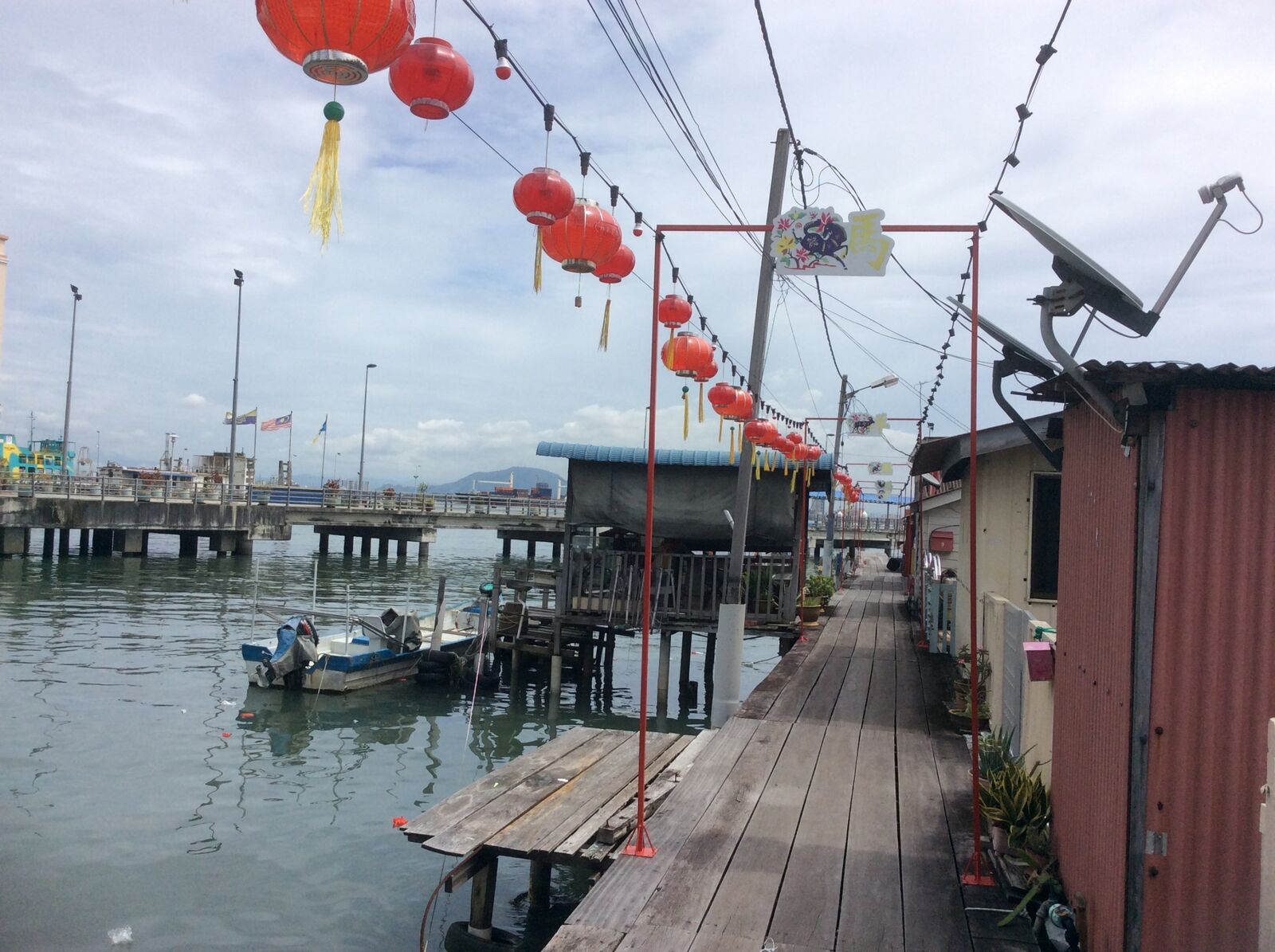
喬治市東南方,有王、林、周、陳、李、楊六大姓氏橋,再加上一個雜姓橋(其他各姓氏),合稱檳城姓氏橋(Clanjetties)。
姓氏橋建於清咸豐、同治年間(1851-1874),沿著海岸的海墘路平行興建,祖先來自福建沿海連江、長樂、莆田、惠安、漳泉、金廈等地。
姓氏橋是華僑商人、漁民、碼頭工人的家,這些住家建築在海上,由一道長長的棧橋連結在一起,彼此照應,相互支援,自成一個團隊社區。各姓各戶均信奉媽祖,設宗祠,更有同鄉會組織。
丙申年陰曆除夕(2017年1月27日)中午,我們來到姓氏橋,家家戶戶張燈結綵,迎接新年。與一林姓長者邂逅聊天,並以大碗拉麵款待。一碗拉麵足夠一家人食用,大碗拉麵是檳城著名美食,葷素均有,海鮮蔬菜任君選擇,來到檳城不能錯過機會。(7)
姓氏橋也面臨著許多現實問題,年輕的一代,不再依戀這種水上人家的生活方式,紛紛各奔前程。
喬治市是馬來西亞華人最多的都市,也是治安最佳的都市。整個檳榔嶼,就像一顆海上珍珠,閃爍在麻六甲海峽之上。這趟檳城之旅,留下美好記憶。(8,本篇完)
第13篇:世界花園
新加坡
新加坡位於馬來半島南端,由新加坡島和周邊十數個小島組成。北方隔著柔佛海峽與馬來西亞相望,位於麻六甲海峽入口處,地位重要,是全球最繁忙的海港、空港之一。
1965年8月9日脫離馬來西亞聯邦,自成一國,全名為新加坡共和國,沒有首都建制,一般稱新加坡,就是指新加坡共和國。
面積710平方公里,是台北市的2.62倍,人口500萬(2015年)是台北市的1.85倍。由華人、馬來人、印度人、歐亞混血四大族群組成,華人佔70%。(1)
2017年1月28日,是丁酉金鳳年正月初一,我們從馬來西亞的檳城,搭機抵達新加坡,一下飛機就感受到一股過年的喜悅。通往入境大廳的長廊兩旁,是經過專業設計,以柔和的燈光色彩,吉祥如意的圖案,展現出過年的喜慶氣氛,卻沒有出現大紅的燈籠高高掛。
這座從2013年起,連續5年獲得全球機場評比冠軍的新加坡樟宜機場,確實不同凡響,嘉許如潮水般湧來。
我們初來乍到,僅是片面的瞭解,但已經感受到這座機場,設計的精心獨特的魅力了。(2)
出了機場搭上出租車,車行50分鐘到達市中心。寬敞的公路兩旁,一叢叢高大的樹木直入雲霄,綠油油的草坪搭配五彩繽紛的花卉,讓人心曠神怡,世界花園都市的美譽,的確名副其實。
進入市區,一幢幢新穎設計的高樓建築,覆蓋著綠色植被,打造一個環保都市,是新加坡政府奮鬥的目標。
旅館稍事休息後,立即搭乘地鐵,約10分鐘到達Bayfront站。這是新加坡地鐵最繁忙的一站。出站後,整個Marina Bay就在視線之內。我們不急於進入新加坡最大的Shopping Mail濱海灣金沙綜合度假村,卻沿著新加坡河的河邊漫步。(3)
如同上海一般,新加坡昔日是一個不起眼的小漁村,如今卻成為一個極具現代化的國際都市。摩天大樓融和了殖民時期的舊建築,兼具英國、中國、印度、馬來的傳統風格。無論從造型、建材、智能、功能各方面來評價,都是建築美學的典範。使實用與時尚結合,展現出新加坡的城市魅力。
濱海灣金沙酒店與金沙空中花園,是新加坡的新地標,離地200米,建築物像一艘飛騰的大船,橫跨三棟大樓,高聳入雲,勇往直前。一座空中游泳池和一座雲海觀景台,是瀏覧新加坡河及灣區景觀的最佳位置。
濱海灣金沙酒店南方不遠處,有一座酷似蓮花座的建築,目標顯著,遊客絡繹不絕。在其東南方,是兩座相連,外觀像榴蓮的水岸建築「濱海藝術中心」,佔地6公頃,內有1600個座位的音樂廳,及2000個座位的劇院,三樓還有一座表演藝術圖書館。許多國際知名的歌唱家、樂團、劇團,紛紛來此表演,幾乎檔期全滿。(4)
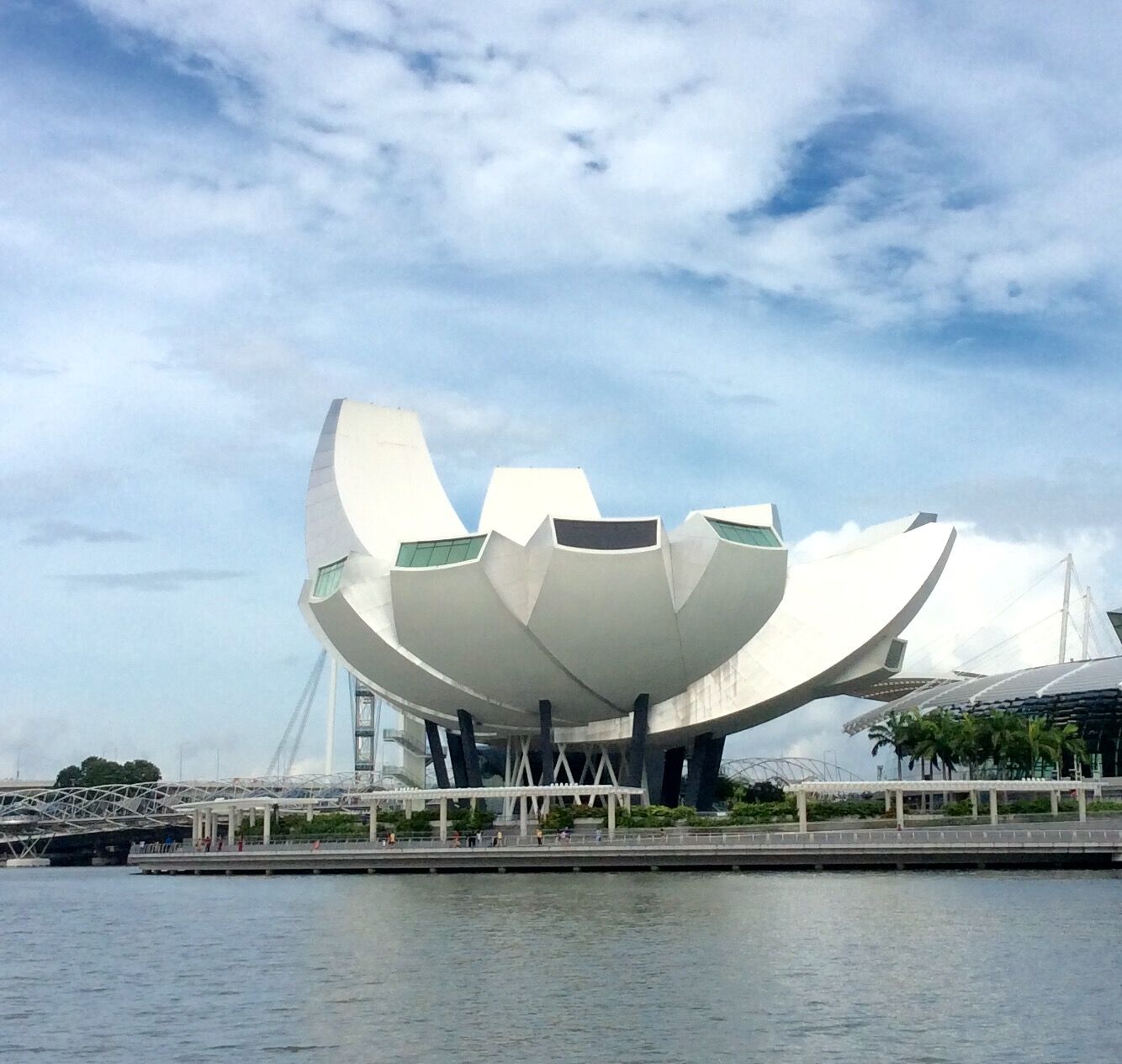
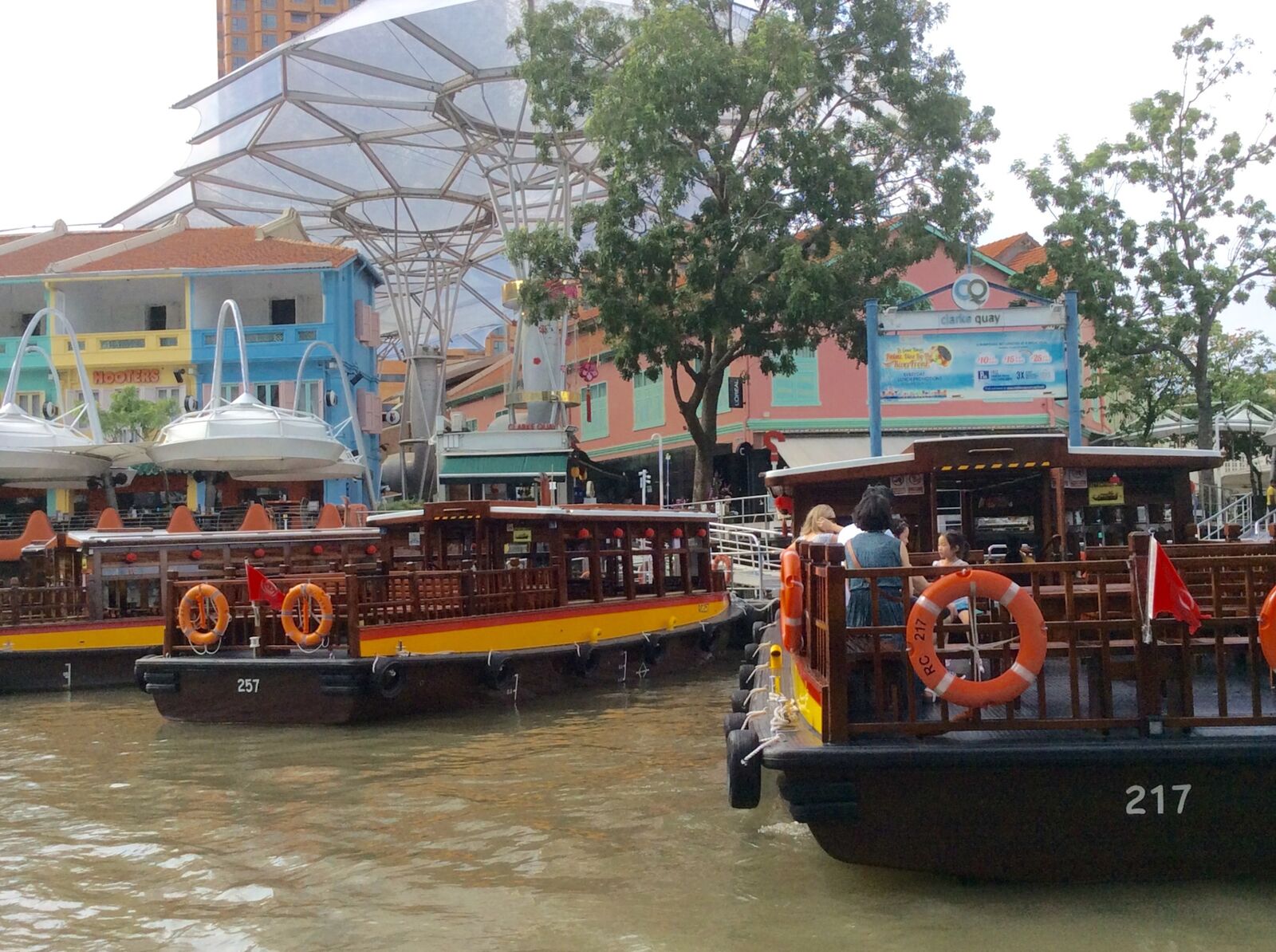
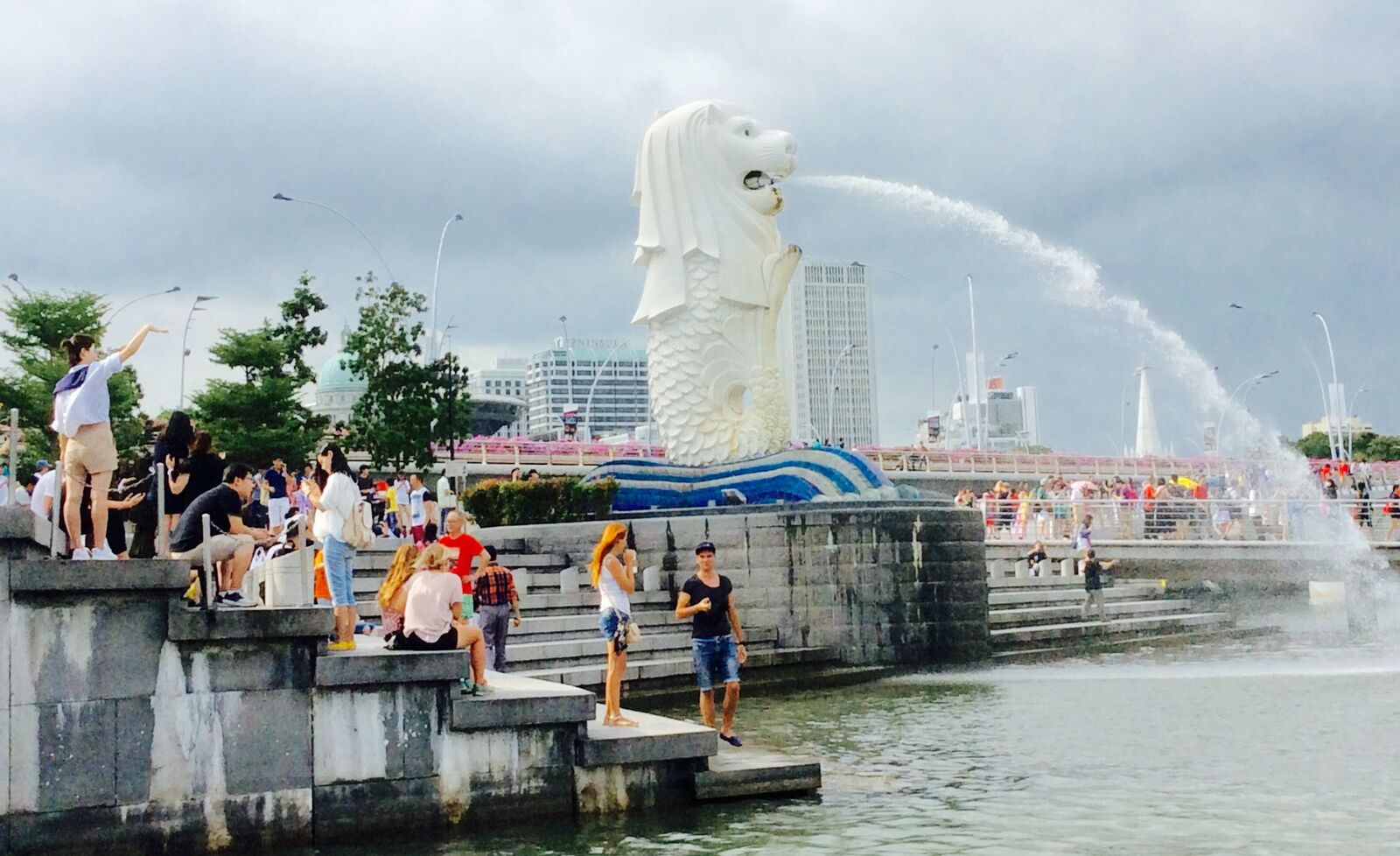
相傳11世紀時,一位名叫「聖尼羅烏達瑪」的王子,前往麻六甲途中,路過新加坡。一登陸就看見一隻魚身魚尾獅頭,相當可愛的動物,從他眼前奔馳而過,認為是吉祥之兆,就將這座無名小島,命名Singapura,梵文是獅子城的意思。
1964年新加坡「範克里夫水族館」館長布侖納,設計了現今的魚尾獅造型圖案。1971年由名雕塑家林浪新塑造成型,次年交由建築師林南,建造於現今的魚尾獅公園內。如今公園成了觀光客必遊之地,魚尾獅成了新加坡註冊標誌。魚尾獅高8米,重40噸,用乳白色大理石雕成。
漫步在新加坡河邊寛闊的行人道上,可以看到名為「河的子民」的雕塑群,展現的是早期新加坡商人,在河岸交易的場景。其中有一處是華人苦力,正在給牛車上麻袋的情景,表情栩栩如生,看來發人省思。(5)
如果到了中國城,一定要去「牛車水原貌館」看看,這座展覽館是新加坡唯一可以實地還原早期華人,居住生活景象的展館,可以體會華人在此蓽路藍創業艱辛的一面。
搭乘彩船順著新加坡河,遊覽至濱海灣,灣區內的各大建築清楚的一覽無遺。有一種感受湧入心頭,新加坡人憑藉著豐富的想像力,及時勤奮,努力不懈,而使夢想成真。
華聯銀行大樓,樓高280公尺,是新加坡第一高樓,63樓的酒吧餐廳樓,可以360度旋轉,俯瞰全城風景,尤其是入夜後,整個新加坡都在一片燈海之中。
新加坡的酒店,至少有70家。評價十家最佳五星級酒店,除了浮爾頓灣大酒店、新加坡四季酒店、香格里拉大酒店外,新加坡萊佛士酒店(Raffles Hotel)連續十年(2007-2016),被選為第一名,值得一遊。(6)
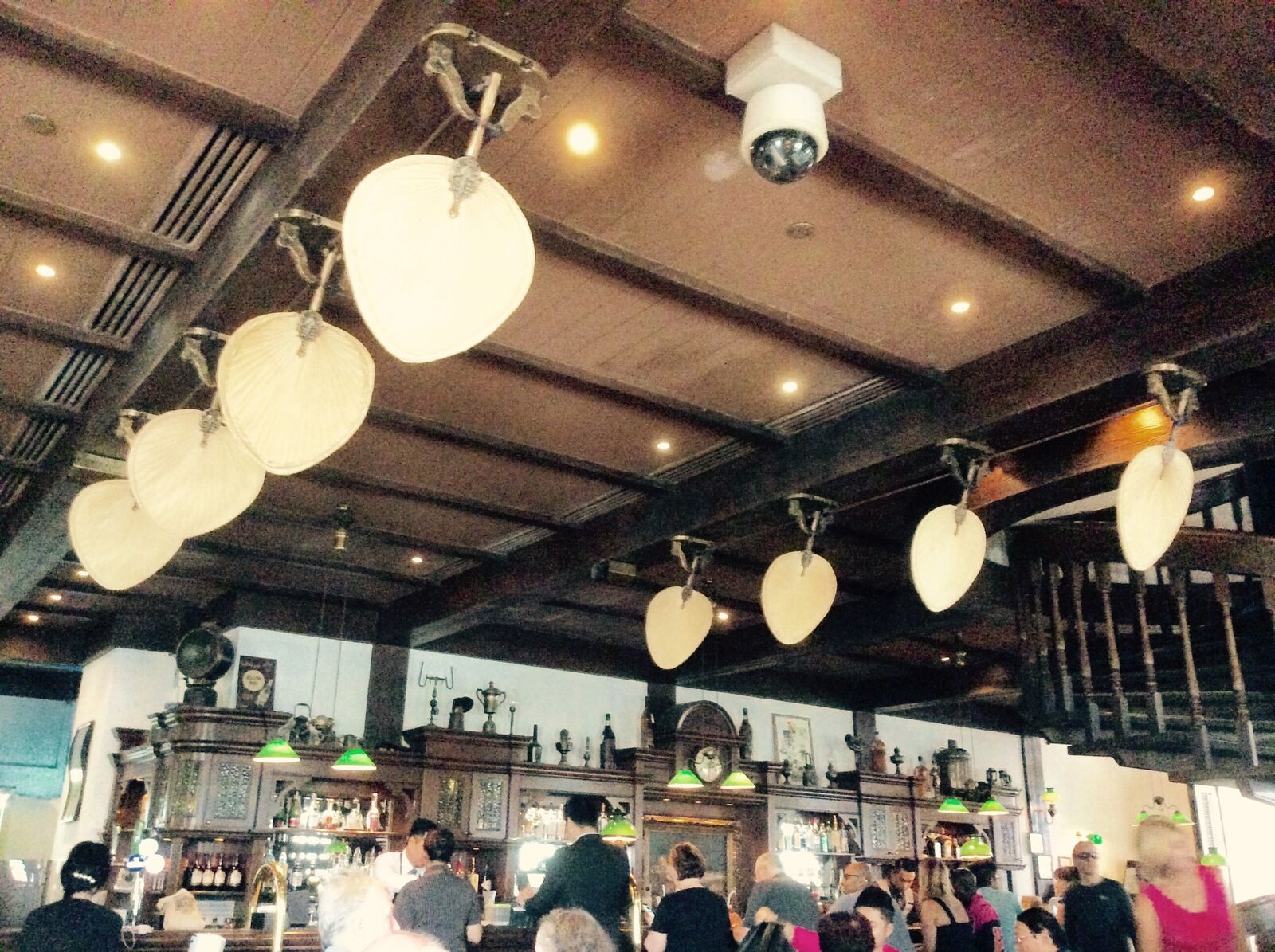
萊佛士酒店建於1887年(清光緒13年),是一間具有英國殖民時期特色的旅館。為了紀念新加坡海港城市的創建者,英國政治家萊佛士(1781-1826)而命名。
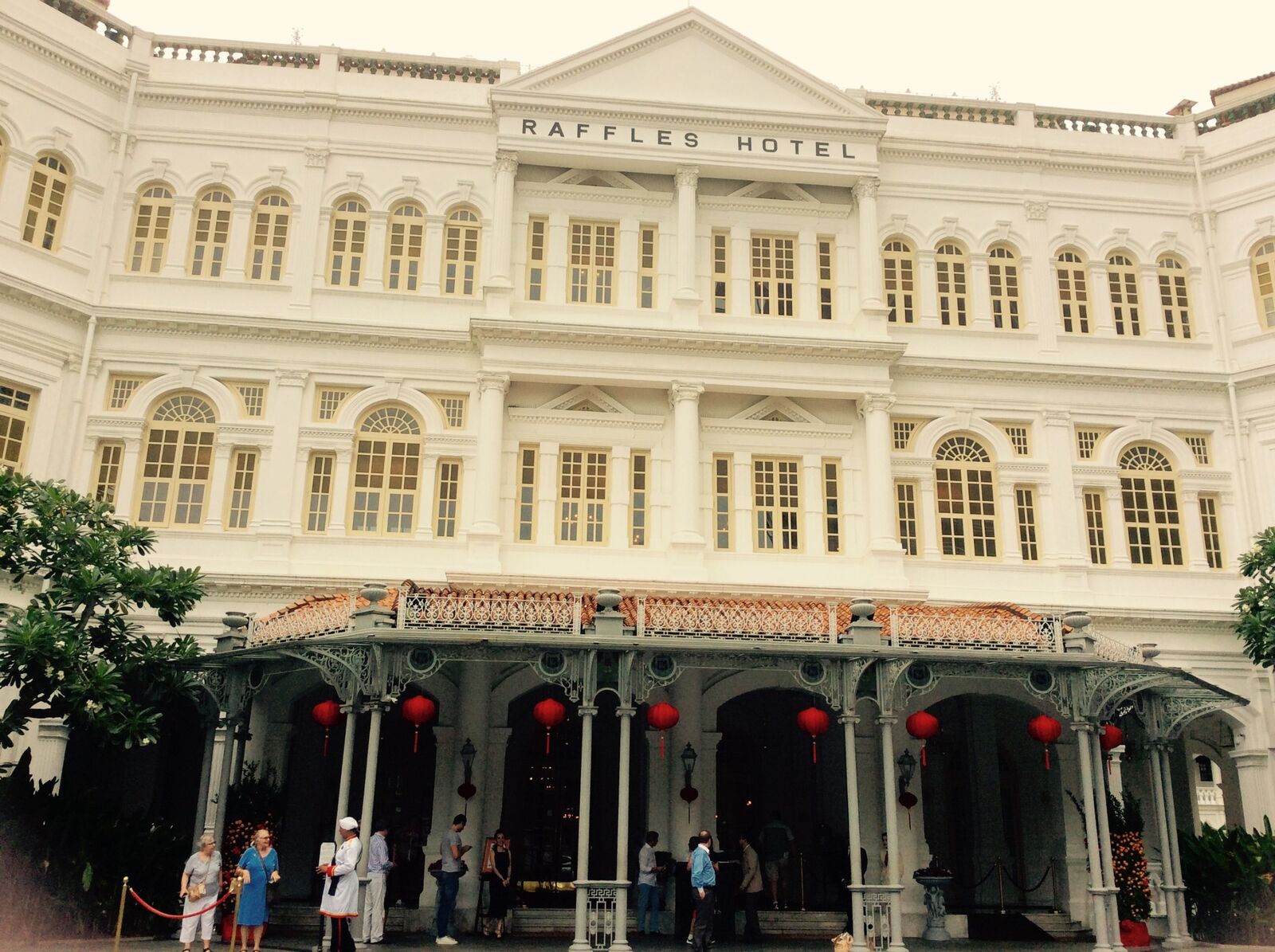
酒店內有一個熱帶花園、一座博物館、一座維多利亞風格的劇院。Long Bar是重點設計,國際馳名,英式古典門窗,天花板下一葉一葉的扇形吊扇,左右擺動帶來微風,讓人想到18世紀歐洲宮廷裡的場景。
名為「新加坡司令」的鷄尾酒,來自這家酒店。是一位祖籍海南島的華裔調酒師嚴崇文先生,於1910年至1915年間,精心調製而成,顏色粉紅,酸甜可口,一炮而紅。原為女士們設計,今已無此區別,深受大眾喜愛。
這座Long Bar還有一個特別之處,是新加坡唯一可以丟棄垃圾的公共場所。每檯桌上都免費供應一麻布袋的帶殻花生。鷄尾酒佐以花生,集香、甘、醇、美於一身。花生殻任情棄於地面,爽快至極回味無窮。(7)
2010年,有兩家賭場,分別由馬來西亞雲頂集團及拉斯維加斯金沙集團,投資興建於聖淘沙名勝世界及濱海灣金沙娛樂城內,僅限於持有外國護照的人,才能入內,還要經過如同機場安檢一般的嚴格檢查。
有如設立賭場一樣,建國之初有關官方語文的選定,英語文、華語文、馬來語文,都有各方堅持的選項。兩者都經過一番激辯之後,才得定奪。
在當時的時空背景下,李光耀極力說服各方,爭取到英語文為官方語文。無論從政治角度、經濟考量、教育層面,都能與世界接軌。時至今日,證明了李光耀的前瞻卓見。(8)
新加坡夜間動物園,位於市中心以北約25英里處的萭里湖路,佔地28.3公頃。是一個全開放式的野生動物園,全球十大動物園之一,也是僅次於泰國清邁,世界唯二的夜間動物園。沒有地鐵㨗運到達,只能搭乘公交車或出租車。這樣也好,一路上可以欣賞到新加坡的鄉村風景,熱帶植被下的村莊、小橋、流水、人家。
每晚七時至午夜十二時開放,周邊的餐館、零售店、藝品店,下午五時就開始營業。可以盡情享受新加坡的道地美食,辣椒螃蟹、沙爹、海南雞飯,也可以觀賞到馬來土著民族的歌唱舞蹈表演。
遊客可以選擇遊園公車或徒步方式夜遊園區,沒有安全顧慮。在整片熱帶雨林裏,目睹各種野生動物,在夜晚的生態活動。也可以聽到鳥鳴、蟲鳴、風聲、流水聲。撲面而來的是,各種花香、草香、樹香及夜來之香。(9)
2008年全球金融危機,新加坡與周邊亞洲各國,都面臨了通貨膨脹、物價上漲、外資緊縮、勞動力短缺、人口老化、生育率下降,種種問題。
李顯龍內閣面對反對黨種種指責之下,卻能謙卑接受、盡心竭力、提升改革,這是一個難能可貴値得尊敬的政府。
世界最大的人力資源諮詢公司Mercer,公佈了當年度全球450個城市的「生活品質指數」排行榜,新加坡以第25名,連續8年蟬聯亞洲冠軍,比起美國最佳城市舊金山的29名,還排前4名。在城市基礎設施項目中,新加坡排名世界第一。(10)
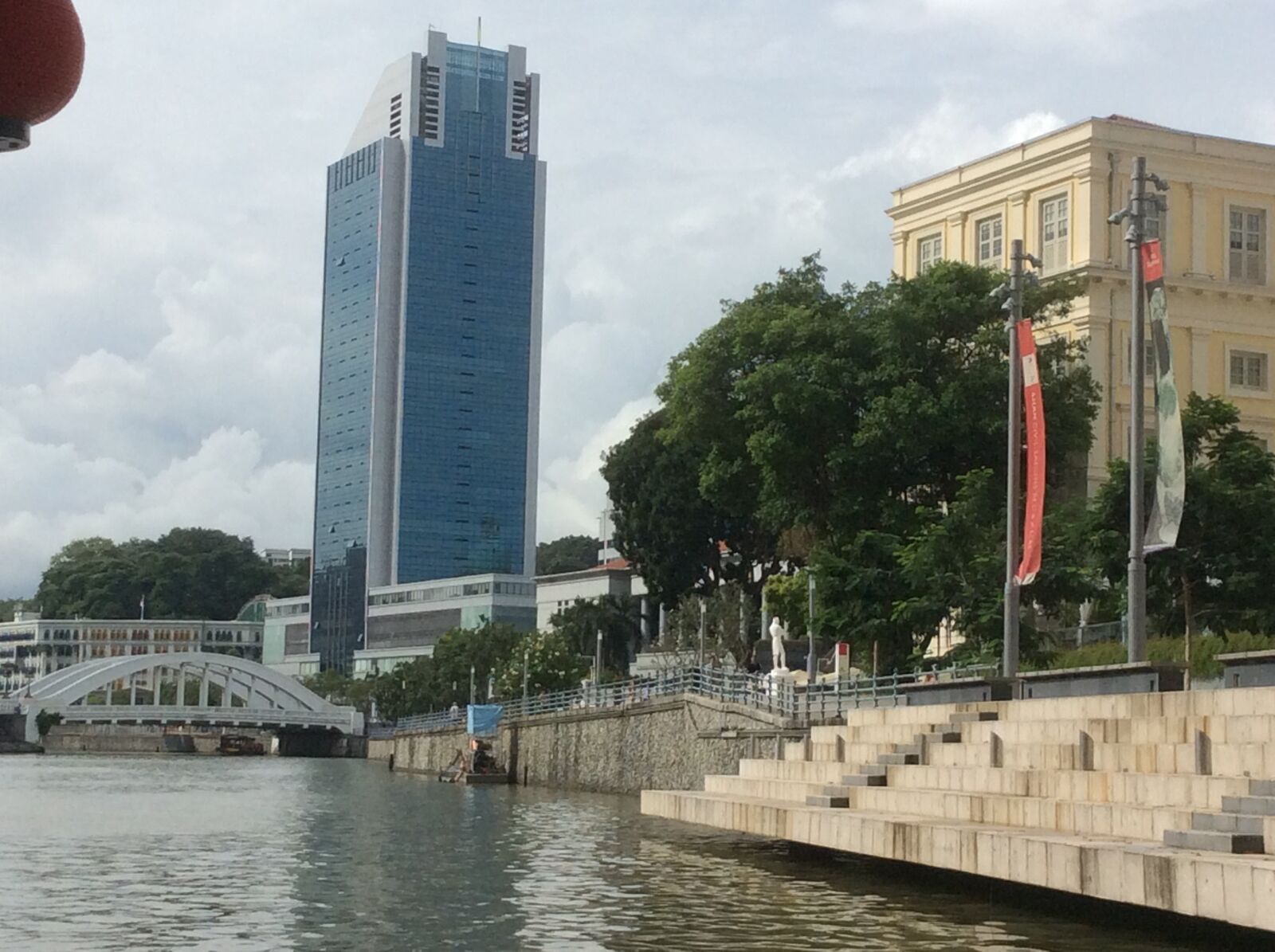
1860年代,烏節路是一條田間小路,周邊是果園,因此也稱為果園路,現在郤稱為「外勞一條街」。
1965年新加坡獨立建國,這裡逐漸繁榮熱鬧起來,今日發展成一個大型的超級商場,兼具公園功能的休閒、娛樂和購物中心。提供各式各樣的廉價商品,包括二手的名牌包包、服飾等等。街上有電影院、保齡球館、健身房、餐飲店、零售店、診所、美容院,可說是一應俱全。
每到假日,三五成群的外勞,走在這條路上,各自說着自己的語言,邊走邊聊。樹蔭之下,石階之上,席地而坐。吃着零食便當,談笑風生,渡過愉快的一天。我們躬逢其盛,留下深刻印象。
在新加坡的三天半中,我們兩次搭乘彩船,遊覧新加坡河,離境的前一天晚上,坐在船上,居然聽到一位女士低吟國語歌曲「秦淮河畔」,面對岸上的都市叢林,想起一年前,也是春節期間,夜遊南京秦淮河時的情景。
比較兩河兩岸景觀,現代宏偉,雅典古樸形成對比。漫游兩地皆有明月逐人來,火樹銀花合,笑語滿盈盈,遊船搖曳行的感受。新加坡河對我細數着它的過往今來,臻於現代化的過程。而秦淮河卻是一次與杜牧、劉禹錫、李香君的邂逅。我總覺得新加坡多了一些匠氣,少了一些仙氣。(11)
我們提早了數小時到達樟宜機場,為的是仔細體驗一下,這座集花園、蝴蝶園、雕塑館、祈禱室、購物商店、中轉洒店、美容院、餐廳、咖啡廳、娛樂中心於一體的綜合遊樂園式的機場。
機場的設計極具巧思,吸引了旅客的目光,抓住了旅遊者的味蕾。那怕只是買上一件伴手禮,喝上一杯咖啡,吃上一塊起士蛋糕。
飛機起飛後,俯瞰藍天白雲下的新加坡城,宏偉的建築景觀,獨特的現代魅力,有了再會的衝動。祝福新加坡共和國日日茁壯,國泰民安。飛機朝向上海飛行。(12,本篇完)
第14篇:原鄉之旅
越南行
離別家鄉歲月多,
物事人非已消磨。
猶記當年西堤水,
未知春風依舊否。
這是吾妻思念久別40餘年來的深度感受,她時而低吟著那首中文翻唱的越南老歌。「我又來到昔日海邊,海風依舊吹皺海面。那樣熟悉那樣依戀,只有舊日人兒不見。」。這是一種期盼,希望能夠如願。
1971年5月,吾妻首次離別僑鄉越南,前往台灣。兩年後的1973年5月,她帶著我們的長子Anthony返鄉探親兩個月,孩子在越南渡過了一個快樂的周歲,從此再也沒有回去那個家。
時過43年後的2016年2月,再次踏上那塊土地,已是世事滄桑,不是當初的越南了。
1975年4月26日,越共南下攻克西貢,這天小兒Anderson在台誕生,五天後的4月30日,20世紀的一場荒謬越南戰爭結束,北越統一了南越。
這次妻子的原鄕之旅,卻是小兒Anderson的精心安排。(1)
2月4日下午,我們赴上海虹橋機場,搭乘中國南方航空5時45分班機,前往越南胡志明市。中途在廣州候機2小時,於次晨1時25分,到達新山一國際機場。這座建立於1930年的機場,二次大戰及越戰期間,發揮了它的運輸功能。2010年至2015年,每年客流量均超過1000萬人次,目前已不能滿足需求。
在胡志明市東北方40公里,同奈省境內,正在興建一座4條跑道,每條均在4000米,三個航站大廈的隆城國際機場,2025年完成第一期工程。
到達下榻的西貢大陸酒店(Hotel Continental Saigon)已是凌晨三時。
西貢大陸酒店興建於1880年,是一座三層樓的法式殖民建築,有寬敞舒適的住房,中庭花園,混合中式法式創作的家具裝璜,懷舊的Check in大廳,可以欣賞街景的咖啡座,彷彿置身巴黎,享盡異國情調。
這座充滿傳奇故事的酒店,曾是泰戈爾及英國作家Graham Greene(1904-1991)長住過的地方。兩人每天都會來到這裡的Sidewalk Cafe坐上一會兒,吃點點心喝杯咖啡,找尋寫作的題材。
Graham Greene在這裡完成了他的成名小說「沉靜的美國人」。好萊塢影星湯姆克魯斯、阿諾史瓦辛格,日本藝人酒井法子,也多次入住。
1975年4月越南淪陷前數週內,美國時代雜誌和新聞週刊的戰地記者,曾在酒店二樓設置據點,報導即時新聞,寫成極具參考價值的戰地日記。(2)
此次越南行,內子秀蓮事前已聯絡好,已有三代世誼的林大嫂黃素玉女士,旅遊期間將登門歡聚。
2月5日到越南頭一天,林大嫂的公子林乾,上午八時許來到酒店,安排我們作胡志明市一日遊,並探訪秀蓮在堤岸的舊居。
我們與林乾在酒店餐廳共進早餐,餐廳連接花園,環境優美清靜。餐點豐盛,法式、越式、中式,有多種選擇。侍者著越南傳統經典服飾,服務親切,笑容可掬,留下美好印象。
一日行,擇重點參訪,餘作外觀巡遊。胡志明市著名景點有郵政總局、聖母大教堂、紅教堂、戰爭遺蹟博物館、濱城巿場、總統府、市政廳、歌劇院、西貢河等近20處,前五處為必遊之地。
秀蓮久別重逢西貢,這裡有她年輕時的笑容、無數個春秋歲月與她共度,風曾暖和,雨曾輕柔,雲飄依舊,我們共同仰望著西貢的天空。(3)
【歌劇院】
我們搭乘酒店的特約出租車,作了路線安排,一處一處遊覽。酒店對街數步之遙,就是西貢歌劇院(Saigon Opera House),由法國建築師設計興建,歴時三年於1900年落成啟用,目前仍然是市區內最美麗的建築物,走經這裡頗有一種在巴黎街頭的感受。
【聖母院大教堂】
距離酒店不到500米的聖母大教堂(Notre Dame Cathedral)又稱西貢巴黎聖母院大教堂,或稱紅教堂,建成於1880年,施工長達17年。哥德式建築,用紅色磚塊砌成,有兩座鐘樓,高達58米。隸屬教廷天主教西貢大主教區,正面是花園廣場,氣勢恢宏。背面緊鄰馬路,各型車輛及摩托車穿梭不息。
【中央郵局】
胡志明市中央郵局(Saigon Central Post Office)與聖母大教堂僅一街之隔,建立於1886年,充滿法國風情,外觀像似一座歐式車站,圓頂極富古典氣息。建築師是設計巴黎埃菲爾鐵塔及紐約自由女神像的古斯塔夫埃菲爾(Gustavo Eiffel 1832-1923,誕生在法國,袓先來自德國),中央郵局也是西貢電信總局所在地。寛敞的大廳內部裝飾華麗,兩側是郵務櫃台。入口的通道長廊,是一整排的藝品店及紀念品店。
按習慣Anderson購買了兩張風景明信片,就近在櫃台,寄往洛杉磯家中。
大廳一隅的電信局,業務被網路科技取代,特色的電話亭,不再使用,成了歴史的遺蹟,牆壁上的數個古典時鐘,仍然走動,顯示出世界各主要城市的當時時間,吸引不少懷古的遊客,拍照留念。(4)
【統一宮】
統一宮建成於1868年,是當時法國殖民統治時的總督府,稱為「諾羅敦宮」。
1946年至1954年,法國與胡志明領導的越南共產黨軍隊,打了長達九年的戰爭。法國以失敗收場,雙方在瑞士日內瓦簽訂「休戰協定」,以北緯17度,分界為北越和南越。北越由胡志明政府統治,南越由保大政府管理。法國於1956年全面退出越南,這座建築物更名為「獨立宮」。
1955年,吳廷琰推翻保大王朝,「獨立宮」也成了總統府。
分治後的南、北越,胡志明一直沒有放棄解放南越的野心。於是有長達20年的二次越戰,美國涉入這場20世紀最荒謬的戰爭,美軍以失敗告終。1975年4月30日,北越統一了南越,這座建築物再度更名為「統一宮」現在的名字。
統一宫有四層樓,內有100多個大小廳堂,裝飾華麗各具特色。地下室有對外通訊系統,並有避難地道,還有一個可以降落直升機的平台。
【市政廳】
市政廳建立於1890年,由法國建築師設計建成,具有濃厚的法國風格,線條簡潔。兩層樓建築,屋頂為紅色。南北越統一前是西貢市政府,統一後成為胡志明市的政府大樓,內有「胡志明市人民委會大廳」。
2015年5月19日,是胡志明(1890-1969)125歲冥誕,為了紀念這位擊敗法國和美國的革命領袖,在大廳前塑造了一座巨型胡志明銅像,以茲永久追念。
目前大廳不對外開放,也不能對建築物近距離拍照。(5)
【濱城市場】
落成於1912年的西貢濱城市場(Ben Thanh Market)是胡志明市的一個地標建築,最大的交易中心。位於第一郡市中心,是一座超大型的室內傳統市場,包括日用品、手工藝品、服裝、海鮮、肉品、果蔬、花卉、美食等攤位及店面。清晨六時開始營業至午夜,白天市集,晚上夜市。來到這座市場,可以充份體驗出當地居民的生活縮影。即將建成的地下鐵路系統,在此設站。
【地下鐵路系統】
胡志明市地鐵系統(WSP),是越南首個地鐵工程。計劃中6條市內,4條市郊,全長109公里73站。
市內第一條地鐵,由濱城至仙泉,行經第一郡市中心。由日本佳友工程負責施工,2012年8月28日動工,預計2021年底通車,2030年全線通車。(6)
【戰爭遺蹟博物館】
來到胡志明市旅遊,戰爭遺蹟博物館(War Remnants Museum)是必遊之地,機會錯過將是遺憾。館址原是二次越戰期間(1955年至1975年),美國中央情報局西貢辦事處舊址。1975年9月,由統一後的越南政府開設,命名為「美國戰爭罪惡館」。
1995年美國與越南建立全面外交關係,更名為現在的「戰爭遺蹟博物館」,此館被列入亞洲最具吸引力的博物館內。
展館分兩部份:室外陳列被越共虜獲的美軍戰鬥機、直升機、坦克車、大砲等。室內分為8個主題展示廳,以小件戰利品步槍、手槍、砲彈、手榴彈、文獻資料、照片為主,還有各種刑具、囚籠。更誇張的是,還有一座殖民時代的斷頭台。
每張照片都是由戰地記者冒著生命危險和鮮血,拍攝下來的戰爭慘烈景象。越戰期間,各國陣亡與失蹤的記者有93人,比二次大戰期間盟軍陣亡的戰地記者,還要多出20人。這場戰爭,美軍陣亡5萬8千307人,失蹤2161人,30萬3千644人受傷。
入內參觀的遊客,各各都精神緊繃,表情嚴肅,心情凝重,感嘆戰爭的殘酷。(7)
【堤岸】
離開戰爭遺蹟博物館,已是下午五時,車行約10分鐘,到達西貢河西岸的堤岸(Cholon),這個全球華人最密集的地方,截至2015年,華人已超過50萬。
1879年(清光緒5年)堤岸建市,四年後的1883年(光緖9年)中法越南戰爭起,再兩年(光緒11年)簽訂「中法和約」,清廷割讓越南給法國。
1932年西貢與堤岸合併成雙聯市,通稱「西堤」。越南的中國城就在堤岸,覆蓋主要的兩條大街同慶大道及阮豸街(Nguyen Trai),興建中的地鐵第二線,將此地連線濱城。
堤岸最高的建築物是25層樓的溫莎大酒店,傲立在中國城內,每一客房都能飽覽市區景色。
天后宮又稱穗城會館,是堤岸最古老的華人廟宇,建立於清咸豐時期(1851-1861),內有鑄造於1761年(清乾隆26年)的銅鐘及銅香鼎各一座。
有百餘年歴史的平西市場和安東購物廣場,每天都有上萬民眾及觀光客,來此消費。
天主教方濟各教堂在堤岸也頗具歷史,分散在越南各地的華人天主教徒近8萬人。
堤岸有越南最具規模的美食街,每週七天,天天營業,越夜越熱鬧。
我們來到阮豸街157號,秀蓮曾住過17年的家,一棟三層紅色磚造樓房,時隔43年再次回家看看,已經是世事滄桑,物是人非,心頭湧起無限感慨。(8)
我對統一後的越南,一直是霧裏看花一知半解,總認為仍然是一個一黨獨大,專制獨裁,社會貧窮落後的國家。一旦踏上這塊土地,經過一番實地瞭解和觀察之後,與我的想法有了落差。
單就堤岸一地來講,內子驚訝她的原鄉,竟然有了翻天覆地的改變。街道拓寬了,市容整潔了,高樓大廈多了,商業買賣活絡了,夜市營業到凌晨,街上車水馬龍,摩托車像過江之鯽,簡直很難想像。
離開堤岸夜市,返回旅館的路途上,驚艷的是,白天未曾看到的火樹銀花奇麗街景。稍事休息後,作了一次漫步燈海夜遊。
越南人有著過中國新年的習俗,歡樂熱鬧的氣氛,重視的程度,遠在中國大陸、台灣、港澳之上。
【行人廣場】
胡志明市政府早在年前的聖誕節,就將市中心數條主要道路,以數萬盞各式五彩燈泡、霓虹,配以各式花卉圖案,每隔50公尺,搭建高架拱門,橫跨街道。從歌劇院、中央郵局、聖母大教堂、統一宮到市政府,都在燈海範圍之內。
一到傍晚,萬燈齊開,璀璨艷麗,壯觀耀目,像夜空中一條飛舞中的巨龍。吸引大批民眾及觀光客,直到元宵燈會之後。
胡志明市有一條最繁華的步行大道阮惠街(Nguyen Hue)又稱「行人廣場」,面對胡志明市政府,一條3公里的筆直大街,由北到南,到達西貢河畔。
廣場禁止各類車輛入內,公園式的設計,寬敞的步道,各方藝人可在場內表演,並設畫廊及表演舞台。行人道緊鄰商店,綿延數公里,飯館、藝品店、花店、精品店、露天咖啡座、美式快餐店、客棧、銀樓,應有盡有。尤其是到了夜晚,人潮陣陣湧到,通宵都在熱鬧氣氛中度過。(9)
2月6日星期六(乙未年,肖羊,隂曆12月28日),林乾的妻子阿美,一大早來到酒店,為我們當導遊,作湄公河三角洲一日遊。
【芹苴市】
我們一行人搭乘酒店安排的一輛七人座SUV,前往胡志明市西南方169公里的芹苴市(Can Tho),來一次逍遙遊。享受一下南越的風土人情,秀麗風景,吃一餐地道的越南美食。
芹苴市,當地的華裔習慣稱其為「琴居」。位於湄公河三角洲中央位置,是越南五個中央直轄市之一,也是越南第四大城,南越的古城,與越南中部的順化齊名。湄公河的支流芹苴河,流經市郊。五個直轄市分別是河內(首都)、胡志明市、海防、芹苴、峴港。
芹苴市面積719平方公里,略小於台灣的新北市793平方公里,人口120萬(2015年)。是湄公河下游后江水系的交滙處,及六條公路的交通樞紐。
湄公河發源於中國的青藏高原,中國境內叫瀾滄江,流經寮國、緬甸、泰國、柬埔寨,在越南南部的湄公河三角洲(Mekong Delta)分別由九個出海口,流入南中國海。
湄公河三角洲面積3萬6千平方公里,相當於台灣省,人口1900萬(2015年)。農地面積200萬公頃(2萬平方公里),是台灣農地76萬公頃的2.63倍。
湄公河三角洲也是中南半島三大米倉之一,為越南提供了53%的稻米,80%的魚獲量,75%的水果産量,出口超過三分之一。(10)
我們搭乘的這輛7人座休旅車,連同駕駛共五人,坐起來寬鬆舒適。駕駛人以其專業,考量春節期間車輛的流量,選擇了一條快㨗公路赴芹苴。
路經三角洲三線城市永隆,及丐冷郡、豐田縣、寧橋郡進入芹苴市區。胡志明市至芹苴,目前尚無高速公路。
越南的公路,多半狹窄,基礎設施落後,摩托車幾乎成了每個家庭的交通工具。2011年,越南的摩托車總量為3千3百64萬輛,近十年來快速增加,已超過4千5百萬輛。2019年4月1日,越南政府公布全國人口總數為9千6百20萬人,每兩個人就有一輛摩托車。
由於是陰曆除夕的前一天,春節長假期,形成回鄉人潮。我們的休旅車,全程在摩托車陣中,駛往芹苴。車潮洶湧,長達數公里,車流量持續不斷,畫夜超過十小時。
越南人騎摩托車的技術,好似特技表演。走在我們前面的摩托車,是一輛重型日製Honda,乘坐的人應是一家人。父親居中當駕駛,母親在其後,抱一個,背一個,油箱上還坐了一個,還能在車陣中搶車道。讓我們為這一家人的安全提心弔膽,更讓我們驚嘆的是,全程無任何交通事故,順暢到達芹苴。(11)
在前往芹苴的路上,所經過的鄉鎮不下20個,景觀頗似中國大陸的珠江三角洲,有其魚米之鄉的特色。略帶不同的是,有些農村的住宅,受到法式建築的影響,紅色的屋頂,配以綠色的農地,讓人賞心悅目。
另一個悦目景觀是,只有在年節期間才能看到的公路花卉攤位,出售各種應景花卉,蝴蝶蘭、黃菊花、洋桔梗、玫瑰和紅梅花,是家居年節時的首選。
越南的梅花,産於北越,南越的蘭賓高原,也有高品質的紅梅花,可以供應巿場需要。
車行約三小時,進入芹苴市區,直駛位於東北方,永隆河(Vinh Long)西岸的寧橋碼頭(Ninh Kieu Pier)。
碼頭在一個見方400公尺的寧橋公園盡頭,著名的「寧橋河濱酒店」(Ninh Kieu Riverside Hotel)就在公園旁。
我們搭上了一艘預約好的八人座小木船,由船夫掌舵,順河而上,徜徉在這條風光明媚的大河上。
穿梭在河面上的觀光客彩船,載滿貨物的大木船,做買賣的夫妻檔獨木舟,水上的交易市場,河邊的水上人家,編織成這片湄公河三角洲上的特殊景象。(12)
湄公河由柬埔寨進入越南境內,分流成12條大小分支流,後合流成9條,流入大海。因水流平穩,特大雨時才有急湍,因此獨立舟應運而生。
小舟就地取材,製造經濟快速,造型線條優美,既窄又長,通常用於水上人家謀生工具,運送米糧、魚獲、日用品、果蔬、花卉,至水上市場出售。
夫妻同舟共濟,妻前夫後,中央放置貨物。均著黑色長衫長褲,戴斗笠,已改馬達驅動。夾在各類船隻之中,形成河面特有景觀。
水上人家,因地制宜,逐水草而居。世界五大洲均有,分佈在南、北回歸線之間,中南半島各國尤具特色。
越南水上人家,均係基層平民,艱苦不改其樂,鄰國柬埔寨的「生命之湖」水上人家,竟然也是越南人。
芹苴地區的水上市場,規模嫓美泰國曼谷,已是觀光景點,帶動了地方繁榮,也給民眾帶來財富。(13)
離開水上市場,回程前往距離寧橋碼頭南方約三公里一處遠離塵囂的地方。在一座浦邊小碼頭上了岸,步行約十分鐘,到達一個佔地約3英畝的花園渡假村。
小村子由一對中年夫婦經營,主事人阮又海的祖先來自中國大陸廣西憑祥,已有160年歷史。阮又海與林乾是遠親,阮林兩家又是連襟。
在來小村子的路上,椰林婆娑,花木扶疏,遍地青蒼,一路微風送爽,一條小溪與小路平行,流向大河。
渡假村被一片榴蓮樹林和小溪圍繞,跨過一座兩公尺的木橋,阮又海夫婦已在村頭迎接,阿美見到很久未見面的姐夫姐姐,顯得格外高興,我們也很愉快認識了一對新朋友。
經過數代人的艱辛過程,小村子建設得有如一個世外桃園。園內荷浪蓮香,亭台入勝,除了各種花卉盛開外,園內還種植了菠蘿蜜、龍眼、荔枝、紅毛丹、芒果和鳳梨,可隨心所欲,隨採隨食。放山雞在林間放養,池塘裡有假山,紅袍鯉魚穿梭其中,塘邊樹蔭下還有三隻大白鵝,兩條小黃狗,寸步不離緊跟在女主人身後。一長排法式小木屋,五間闢為客棧,三間自用。客房經常滿客,帶來不少經濟收入。
女主人為我們準備了一桌越式土雞大餐,大快朵頤,終生難忘。
辭別了阮家,在小船上遠望浮家泛宅水上人家,水上市場仍然交易熱絡。在寧橋碼頭會合了駕駛,趕在黃昏之前,參加大陸酒店安排的一場活動。(14)
回程芹苴至胡志明市,一路暢通,下午五時前回到大陸酒店。稍事休息,趕赴阮明開街(Nguyen Thi Minh Khai)金龍水上木偶劇院(Golden Dragon Water Puppet Theatre)欣賞水上木偶秀。
水上木偶戲起源於北越,近800年歷史,是越南的國粹,最具傳統的越南民間舞台戲。
劇情透過木偶,以歌聲、舞蹈來表演神話、傳說、民俗風情及農民生活。
舞台搭在水池上,隱藏在後台的演員,掌控不同木偶,用長線或竹竿操縱木偶行動。演員需要長時間浸泡水中,以其強勁的臂力及純熟的控繩技巧,讓木偶生靈活現的演出。
樂隊成員身著古裝,用古樂器彈奏音樂和歌唱,來表達木偶的動作。
演出內容包括越南民族音樂、歌曲和舞蹈。以動物為元素的有龍舞、獅舞、鳳凰舞,農民生活的有牧童騎牛嬉水、插秧、捕魚、賽船,傳說的有黎王還劍,神話的有龍獅龜鳯四靈舞,有慶祝豐收的拜天拜祖舞。
此次越南行,有緣觀賞水上木偶戲,留下美好深刻回憶。(15)
觀賞水上木偶戲後,直奔西貢河碼頭,搭乘遊船夜遊西貢河。碼頭在一商業區的盡頭,停靠着三艘客船,一艘改裝成固定式的船上餐廳,另兩艘為遊船。
我們登上一艘船身彩繪成大鯊魚的遊船,上下兩層,一樓為餐廳式設計,二樓表演歌舞及雜耍特技。表演者邊唱邊跳舞,與遊客同樂。
酒店為我們安排在二樓最佳位置,各點了一盤越式精緻點心,各持一杯濃郁的法式咖啡,一邊享受美食,一邊欣賞表演,一邊瀏覽夜景。
遊船南下而行,繞過越南第一高樓折返,需時90分鐘。兩岸大廈林立,霓虹映波,十里洋場,車水馬龍,彷彿置身於黃浦江的彩船上。
西貢河發源於越南蘭賓高原西南,柬埔寨邊境,經祿寧、邊和、胡志明市,流向南中國海。邊和至胡志明市這一段,最具觀光價值。(16)
來到胡志明市的第三天,2016年2月7日星期天(陰曆乙未羊年除夕)上午七時,林乾到了酒店與我們會合。隨旅行團前往胡志明市西北方約70公里的古芝縣(Cu Chi)濱亭鄉,參觀越戰歷史遺蹟古芝地道。
【古芝地道】1975年4月30日,北越統一,次年政府開放觀光,揭開了古芝地道的神秘面紗。
越南戰爭期間(1955-1975)古芝地道是越共在南越古芝地區建築的地下秘密防禦系統,全長200公里。無數條地道縱橫交錯有如迷宮,成為越共打叢林戰游擊戰的產物。覆蓋西貢、堤岸、嘉定、古芝等七個縣市鄉鎮。同樣的地道,遍佈整個越南,古芝地道頗具代表性。
地道是一座堅固的作戰陣地,內有戰指中心、會議室、彈藥庫、寢室、餐廳。2004年12月15日,列為國家級歷史建築物,受到保護,僅部分開放參觀。
各方遊客對分佈在草叢樹林裡,狹窄得僅可容納一個人進出的秘密口道,頗為好奇。一位身材瘦小的解說員,示範進出技巧。一位沒有腰身,體型略胖的遊客,一試再試,均無法鑽入,引來全場哄笑。
地道口連接各地道,在美軍空襲或遇緊急追擊時,可以就近避難。
有一處被擴建的地道入口,專供遊客出入,進入之後別有天地,內部通風良好,光線稍暗,資料室內燈火通明,播放影片及幻燈片,說明地道內的環境和作業情形。
實地參觀了一程地道系統後,對劣質裝備、士氣高昂、意志堅定的越共部隊,為何能夠擊敗美國精兵,有了新的認知。(17)
在回程的路上,林乾對越共的一些認識,對我們侃侃而談。
首先談起胡志明(Ho Chi Minh 1890-1969),1930年1月3日,在他40歲時,成立了越南共産黨,開始抵抗法國統治。
二次大戰後,形勢對越共有利,1946年他下令「越南解放軍」向法國開戰,打了九年的仗,獲得全面勝利。1954年7月,雙方簽訂停戰協定,以北緯17度為界,劃分北越、南越兩國,胡志明在北越成立政府,實行共產統治。
隨後胡志明扶植越共「南方民族解放陣線」,實施叢林游撃戰,對抗南越政府,為統一越南作凖備。越戰進入第二階段,美國參與戰爭,直到1975年4月30日,美軍撤離越南,南北越統一。
1959年,胡志明下令開闢5條主幹道129條支線,總長度達兩萬公里的「胡志明小徑」(Ho Chi Minh Trail),支援南方解放陣線,打贏統一戰爭。
小徑經由安南山脈的萊嶺(Lai Leng),沿寮國邊境至柬埔寨隆發(Lomphat),入南越境內。鼎盛時期,每天有近千輛卡車,從各線運送戰備物資,支援南方游擊部隊。
1973年南方解放陣線開始換裝,已有蘇聯製T-55型戰車,南、北越統一當日,曾用此戰車直衝南越總統府,俘虜了代總統楊文明。
回到胡志明市,接近黃昏,直驅11郡,至林乾住處,探望其母,也是秀蓮表嫂的黃女士,這家人為我們準備了一大桌除夕年夜飯。(18)
離鄉43年重返故里,半世紀的隔離世事滄桑,當年離鄉風華正茂,如今重逢髮白疏落,不禁感嘆。
秀蓮見到表嫂,興奮激動之情,表現於言行。
表嫂黃素玉女士,中年喪偶,膝下一女五子,在艱困中飽經風霜,教養子女個個成器。可謂茹苦含辛,無所不至,百千萬億生而後成。
除夕大餐由兩位媳婦主廚,廣東菜、越南菜、法國燒烤,佳餙傾出。老少近20人,圍繞一特大圓桌,言談歡笑,舉杯互祝健康,迎接新年。
席間談及越南統一後的生活,比較前後兩朝,40餘年在社會主義共産統治下,一樣清貧渡日,生活未覺多大變化。然而在國家建設上,確實優於前朝。
我們與表嫂家人暢談甚歡,近晚間十時。接受酒店建議,就近刻意搭乘人力三輪車(Celo),參觀在阮惠街行人廣場,每年除夕開幕的花市夜景。塲內攤位近百,出售各種應景花卉,購花賞花遊客如織,歡聲笑語人山人海。
越南Celo三輪車,人力驅動,前面兩輪後面一輪,位置與台灣三輪車相反,箱座可乘二人,乘客在前駕駛人在後,視野寛闊行駛平穩,是其優點。
此夜又見摩托車陣,四面八方湧向花市。市中心各道路,火樹銀花一片燈海。除夕夜的胡志明市,無人入眠,皆在歡樂中渡過。
午夜之前我們離開花市,趕赴酒店參加跨年晚會。花園內20圓桌座無虛席,估計應在兩百人以上。
身著古裝,男女各半的16人樂團,持續演奏越南國樂。主持人是酒店總經理,司儀是一位英語流利儀態優雅,身穿奧黛長衫(Ao Dakota)的中年女士。一次獨具巧思,包括旅客及酒店員工在內的跨年同樂晚會,喜氣洋洋地在此舉行。
在倒數計時聲中,迎接2016年(丙申猴年)陰曆正月初一新年的到來。
司儀陪同總經理分赴各桌,分發每人一個越幣十萬盾的大紅包(美金約一元五角),大吉大利人人笑顏逐開。
讓我們難忘的是,樂團演奏迎接新年的第一個曲子是,流行於海外華人社會的台灣歌曲「愛拼才能贏」,用越南古樂器演奏出來,別有一番韻味。我們跟著樂聲,打著拍子搖頭晃腦唱了起來。
舞獅隊向我們拜年,Anderson就地取材,將那紅包內的兩萬元抽出存念,換裝美金十元答謝。我們在越南,歡渡了一個別具意義的中國新年。(19)
2016年2月8日星期一(丙申年正月初一),酒店花園餐廳佈置得喜氣洋洋,晨六時開放早餐,增添粵式茶點、年糕應景。越南人深受中華文化影響,充分表現在年節之上。
一大早,酒店對街的國家歌劇院廣場前已見人潮,多半是一家人扶老攜幼而來身著傳統國服,展姿取景拍照留念。
越南國服,源自18世紀北越順化廣南國宮廷,20世紀初受中國旗袍及法國時裝啓發,經專家設計改良而成,被推崇為國服。1960年代,在南越極為流行。質地輕柔穿著舒適,名貴絲綢普通布料,材質不一。男性長袍稱Ao gam(奧康),女性長衫稱Ao dai (奧黛)。
Ao dai變化多樣,色彩繽紛單一平素均有,由寛鬆到收緊,衣領至腋下對角縫合,似旗袍。裙擺過膝接近地面,開叉至腰,配以長褲斗笠,凸顯女性體態優美。被全球服裝設計界,視為世界四大女性美服之一,與旗袍、和服、朝鮮服齊名。
奧黛之美,美於起風之時,裙擺隨風飄揚,宛如搖曳的荷花,散發一股清香,讓人心神蕩漾。
越南自南越時期,教育部就實施高中以上女生,以白色奧黛為學校制服,至今不變。(20)
胡志明市的二月天氣,雨季已過,涼爽舒適有如中國江南四月。
趁此新年吉日,我們一早離開了酒店,漫步於市區大街公園景點,所到之處一片祥和歡喜,分享到一次越南人過中國新年的熱烈情景。
【商業大樓金融塔】
近中午時分,到達全市第一高樓金融塔(Bitexco Finacial Tower)登樓眺望全市風光,並享受一次越式午餐,喝上一杯法國咖啡。
金融塔位於西貢河北岸,2006年興建2010年完工,樓高264公尺,地上68層地下3層,排名世界124(2015年)。外觀造型正面看似蓮花(越南國花),側觀仿如杜拜帆船酒店,是一座綜合性的商業大樓,融合辦公、商店、美食樓於一體,也是跨年夜施放煙火的高樓。
我們先至59樓觀景台,繞行一圈遠眺全市美景盡收眼底,西貢河蜿蜒市區,有如上海黃浦江,曼谷湄南河。
後至52樓餐廳,入座靠窗位置用餐,可見不遠處正在興建中的越南第一高樓地標建築Landmark 81,已於2018年8月17日完工啟用,樓高81層461公尺,總面積24萬平方公尺,排名世界17,媲美台北101。
下午3時離開金融塔,趕赴聖母大教堂,進堂下午三時四十分的彌撒禮。(21)
天主教於1533年(明世宗嘉靖12年)傳入越南,較佛教於公元二世紀經由中國傳入,晚了1400年。
在越南天主教僅次於佛教,為第二大宗教。法國殖民時期(1885-1955)天主教頗有影響力,可以左右政府政策。南北越分治後,北越共產政權對所有宗教都嚴密監控。
南越的越南共和國政府,則尊重民衆信仰,天主教所有運作均遵從梵蒂岡教廷教律行事,教區主教由教廷任命。教友信衆已有600萬人,華裔約8萬人,在亞洲是僅次於菲律賓的國家。南越首任總統吳廷琰,就是一位虔誠的天主教徒。
1975年南北越統一,在南越的天主教運作受到限制。隨著時間的流逝,共產政府逐步放寬對宗教的限制。1990年越梵雙方有了接觸,2007年成立天主教「越梵聯合工作小組」,2018年12月在河內擧辦改善兩國關係研討會,朝建交方向發展。
我們進入聖母大教堂,在聖母雕像前誦唸了一串玫瑰經,隨後入座。在值班神父的主持下,從進堂式到領聖體至彌撒完成,行禮如儀與台北、洛杉磯聖堂並無二致。
彌撒後赴林乾寓所向表嫂辭行,次日我們將回上海。此次越南故里之旅,兩次與表嫂家人相會,言談甚歡。相約有緣再會,同旅北越。
北越的下龍灣、陸龍灣、長安生態保育區,經過精心規劃,已成為世界級的觀光勝地。1994年12月17日,聯合國教科文組織已將下龍灣列為世界自然遺產。(22)
越南的咖啡文化,在法國殖民統治時期,由歐陸引入,鼓勵農民種植咖啡,西貢地區底藴最為深厚。南越人比北越人更喜愛喝咖啡,尤其是法式咖啡,有小巴黎之稱的西貢,街頭巷尾隨處可見大小不一的咖啡館。
越南是世界第二大咖啡出口國,僅次於巴西。前五名依序是巴西、越南、哥倫比亞、印尼和宏都拉斯。越南年産咖啡150萬噸(2500萬袋),品質優於巴西。
我們下榻的大陸酒店,創立於1880年,是一座法國式三層樓旅館建築,其露天咖啡座馳名越南,調製咖啡的師傅畢業自巴黎藍帶廚藝學校(Le Cordon Bleu)。我們在越南的最後一晚,不能錯過機會,就近享受了一次香醇濃郁,散發著果香、花香的法式越南咖啡。
2月9日星期二(中國新年正月初二),一大早街上依然車水馬龍,人們持續在歡渡新年。上午十點鐘的新山一國際機場,十分鐘之內就有六架飛機起降,觀光客大批湧入。我們結束了五天四夜的回鄉之旅,搭乘中國南航班機,經廣州回上海。
停留時間雖然短促,然而感觸很多,使我訝異的是,在社會主義共産統治下的越南,人民幸福指數在全球151國中排名94,緊追鄰國排名80的馬來西亞。今年(2020年)一舉提升了11名,排名83,超越了中國大陸。
飛機在跑道上滑行進入起飛位置,加足馬力一飛衝天,胡志明市漸漸消失在視線之外。
越南,一個快速發展中的國家,一個懷念的地方,那是我曾經生活過的故鄕,期盼有緣再來相會,秀蓮如此説。(23,夲篇完)
简介中原为英文的部分由 AI(Claude)于 2026 年 11 月译成中文,尚未经作者审阅。作者的中文原文保留繁体字。
三册原 PDF 共有 81 个字因字体缺字而无法显示,本页已根据上下文补上,可能有出入。
本文保留原文的繁体字。
第9篇:絲路之旅
西安行
西元前122年(西漢元狩元年)漢武帝派遣張騫,率100餘人出使西域。開闢了由長安為起點,經甘肅、新疆到中亞各國的絲綢之路,呈現出中原人的視野,當時西漢的國都就在長安。
長安是西安的古稱,是中華民族歴史上第一座被稱為「京」的都城。擁有3100年的建城史,1200年的建都史。歷經西周、秦、漢、隋、唐等十三個朝代在此建都,與雅典、羅馬、開羅並稱為世界四大文明古都。
在近代歷史上,1936年12月,西安又是改寫中國歷史的城市,西安事變在此發生,影響到未來的對日抗戰及國共內戰。
西安位於陜西省中部,北臨渭水,南依秦嶺終南山,是陜西省的首府,也是西北第一大城。(1)
2017年2月1日,正值中國陰暦新年期間,小兒Anderson陪同我和妻,由上海浦東搭機來到這座古城。這是他第二次西安行,上次於2015年11月6日至8日,與他的哥哥Anthony聯䄃而來。那次旅行,對深愛中華民族歷史文化的他們而言,是一次難忘的記憶,西安的一股仙逸之氣,會讓人留連忘返,也誘使我和妻有了此次西安之行。
西安的飛機場不在西安,是在西安城北47公里,咸陽市渭城區。出了機場上了旅館的接待車,看見公路兩旁的市招,都與咸陽有關,於是咸陽就成了我們的話題(2)
Anthony前次西安行回美,暢談他的旅遊觀感。他快人快語直接了當地説:整個西安城包括咸陽在內,地底下每尺土地埋的都是死人,珍貴的文物不計其數。不管死人也好,文物也好,都是全體中國人的財寶。1974年3月,一名農民工,偶然間發現了希世國寶兵馬俑,震驚了世界。
咸陽城北的畢原,翠柏蒼松,碑碣夾道,有周朝,文、武、成、康諸帝及周公旦、姜子牙的墓地。周文王陵寢四週地下,已有周、秦、漢各代古物出土。昔日以豪華絕世的阿房宮舊址,猶可親臨憑弔。畢原之東更有漢朝高帝、景帝、惠帝以及呂后武則天的陵墓。
咸陽城西的茂陵,有漢武帝及衛青、霍去病的墓地。茂陵之西的馬嵬坡,是西元756年安祿山叛變,自稱大燕皇帝攻入關中,唐玄宗奔蜀途中,六軍不進,逼迫玄宗賜死楊國中及楊玉環的地方。
遙想「回眸一笑百媚生,六宮粉黛無顏色」的當年,對比今日黃土一堆,荒草蔓生的情景,讓人不甚感嘆。(3)
離開咸陽國際機場,順著312號公路東南行,約50分鐘進入西安市區。路經絲綢之路塑雕群,十分壯觀。績往東行數分鐘,西安城牆呈現眼前,有東、西、南、北四座城門。
下榻的酒店在城南永寧門西南側,可以俯瞰整個永寧門正前方的國貿春天廣場。車水馬龍、人來人往,一番大都市景象。
西安城牆又稱明城牆,建立於明太祖洪武7年至11年(1374-1378),在唐朝皇城的基礎上整建而成,現今的唐城牆已不存在。
西安城牆是中國現存的古城牆中,規模最大,也是最完整的一座。呈長方型,周長13.75公里,牆高12米,比萬里長城還高出4米。頂寛更高達15米,底寛18米,可以練兵更可跑戰車,極具防禦戰略價值。城牆外有護城河、吊橋、箭樓、垛口等一系列軍事設施。中世紀歐洲任何一個都市的城牆,都無法與其媲美。
我們在西安的第三天,登上這座城牆,用了4個小時,來回於最精華的地段。由城牆上俯看西安城,何止是壯觀,簡直是震撼。(4)
西元535年,北朝西魏文帝時,長安就是西魏的國都。至北周(557-581)孝閔帝開國,長安依舊是首都。西元581年北周隋王楊堅自稱皇帝,8年後成了開國之君隋文帝。
西元583年,隋文帝在長安建大興城。至唐代(618-907)高祖李淵開國,就在大興城的基礎上不斷擴建,逐有今日西安的雛形。
早唐時期的長安建設,就運用了天體運行,旭日落日的照射,時鐘般的規律,打造成一個棋盤式的都會區,城市景觀嘆為觀止。(5)
西安鼓樓位於西大街上,與其東南方不遠的鐘樓相對。鼓樓建於明太祖洪武13年(1380),樓南樓北兩側各懸匾額一面,南側書「文武盛地」,北側書「聲聞於天」。樓周放置4面大鼓,24面小鼓。小鼓用小篆字書寫24節氣,配合節令運行。
鐘樓建於洪武17年(1384),與鼓樓同高36米,兩樓並列內城古建築第一高。鐘樓位於西安市中心,由此內城分為東、西、南、北四條大街。東大街至長樂門,西大街至安定門,南大街至永寧門,北大街至安遠門。
鐘鼓兩樓周邊形成一個大商業區,吸引大批觀光客前來用餐、購物,開放至午夜。各式彩燈閃爍,耀眼奪目。
鐘鼓兩樓建成之後,每日凌晨鐘聲響起,遠及數里之外。傍晚時分鼓聲隆隆,嚮徹雲霄,因此有「暮鼓晨鐘」一詞。當年長安居民,每日須至商業中心東大街及西大街購買食物、用品。因此又有「買東西」一詞。
回民街是西安著名的美食文化街,位於鼓樓之北,長約500米。西安特色小吃,灌湯包、肉夾饃、臊子麵、餃子宴等,這裡應有盡有。(6)
座落於西安市雁塔區大慈恩寺內的大雁塔,建於唐高宗永徽3年(652年),是為了收藏玄奘法師(602-664)的佛經而建築的一座七層佛塔。
佛塔兩側有兩座石碑,一為唐太宗貞觀19年(645年),玄奘取經回到長安那年,為玄奘譯經而作的總序「大唐三藏聖教序」石碑。另一座是唐高宗永徽4年(653年),為玄奘而作的「聖教序記」石碑。兩碑均由唐初四大書法家之一的褚遂良書寫,一字一字鉤勒摹本自王羲之(307-365)書蹟。
大雁塔西北,近小雁塔,有一處武家坡的王寶釧寒窯,寒窯門前有一聯:十八年古井無波,為從來烈婦貞媛,別開生面。
千餘歲寒窗向日,看此處曲江流水,想見冰心。
京劇「紅鬃烈馬」中有一段名為「武家坡」的戲,講的就是薛平貴與王寶釧結親,分離18年後再重逢的故事。(7)
西安碑林博物館,是喜愛碑石藝術人士的最佳選擇。博物館位於西安市三學街文廟舊址,是一座收藏、研究碑石墓誌及其他古代石刻藝術品的博物館。
收藏品包括歷代石刻造像、書法、文物等,多達700多件,皆是藝林考古珍寶。其中柳公權、顔真卿的書法石雕最為有名。另有大秦景致碑一座,更是研究宗教歷史學家的稀世珍寶。
西安為七朝國都,歷經兩千年,留下來的古蹟、城垣、帝王陵墓、寺廟、樓宇,登錄名冊者多達320多處。觀光客只能重點選擇,由酒店安排旅行社組團,做一日至數日遊,既省時又省力更省錢,又多了一層安全保證。
解說員均接受過專業訓練,學歷高、學識豐富、口齒清晰,富愛心耐心,對歷史文化的瞭解,如數家珍。
西安市往西行,有景點茂陵、乾陵和法門寺。往東行,可達華清池西安事變遺址、秦皇陵及秦始皇兵馬俑。
我唸初中時,弟妹們均在小學讀書。先父喜歡唱京劇,常聽他唱「法門寺」。有太監劉瑾的一段戲詞:你既然瞧不起皇上,還瞧得起咱家嗎?哈、哈、哈、哈。
從那時起,我們一見到父親,互相就哈、哈、哈、哈大笑起來的往事。(8)
第二天上午九時,搭上酒店安排的旅遊巴士,前往西安市以東的驪山華清池。全車有十四個家庭,我們編為第一家庭,相當高興。
華清池位於西安市臨潼區驪山北麓,有西安事變時蔣介石的行轅,及被軟禁於內的綏靖公署。華清池有一纜車站,可乘空中纜車,達驪山山頂。
華清池係一溫泉浴池,因唐玄宗(685-762,年78歲)和楊貴妃(719-756,年38歲)的愛情故事始於此,而聞名於世。
華清池用水,採循環流動式設計,温泉恆溫攝氏40度。為保護古蹟遺址,浴池進出水口已封閉,僅見一乾涸的大水池而已。
當年盛況也只能在白居易(772-846,年75歲)的長恨歌中臆想了。「春寒賜浴華清池,溫泉水滑洗凝脂。侍兒扶起嬌無力,始是新承恩澤時。」(9)
離開華清池後,續往西安事變舊址。見當年蔣介石行轅辦公室、寢室、會議室、侍衛室、會客室,彈痕累累,清晰可見,各室陳設簡單樸實。中華民國國旗及中國國民黨黨旗,仍然懸於會議室正面。一部手搖式電話機,仍在辦公室的桌面上。
多年前,閲讀蔣介石於民國26年(1937年)1月,在奉化溪口寫的「西安半月記」,序言中,開宗明義就指出:去年十二月十二日,西安之變,事起倉卒,震驚中樞,幾搖國本。
書中詳述他與張學良、楊虎城的互動,事變的經過,軟禁過程,被視為是研究西安事變的重要史料。
面對現場實景,回想「西安半月記」內所述情形,對照80年來中國之命運,激動之情油然而生。(10)
1974年正值文革末期,陜西大旱,臨潼西陽村農民楊志發,因其有解放軍背景,受命爲村長,當年還不滿30歲。這年3月29日,他率領一組村民,在一低窪處挖掘水井,挖約至5公尺處,本擬放棄,但發現一些類似陶塑之類的東西,仔細一看,是一件兵俑塑品。
楊志發直覺地認為是件古物,迅速上繳。結果驚動陜西省文化單位,立即成了世界大新聞。政府頒發人民幣30元,證書一紙,給予獎勵。
從此相關機構着手挖掘,除了兵俑,又發現馬俑、戰車,相繼出土。經過考古學家鑑定,係秦代稀世珍寶,並成立「秦始皇兵馬俑博物館」於此地。
兵馬俑分1,2,3號坑,總面積約兩萬平方米。截至2019年,1號坑已發掘三分之一,2號坑正在發掘中,3號坑已全部發掘完成整理,總計八千餘件。
1987年秦始皇兵馬俑各坑,被聯合國教科文組織列入「世界文化遺產名錄」,並讚譽為「世界第八奇蹟」。(11)
2017年2月4日,我們結束了西安三天半的旅遊。前往機場的途中,一直是咸陽景致。咸陽這座秦時古城,正是王維「送元二使安西」詩中的渭城。
渭城朝雨浥輕塵,
客舍青青柳色新。
勸君更盡一杯酒,
西出陽關無故人。
王維生於西元699年(唐武后聖歷二年),當時的陽關就是今日甘肅省的敦煌。而安西更在陽關以西2969公里,今日新疆維吾爾自治區的庫車境內。唐朝時,為統轄西城,在此設安西都護府。
王維的摰友元二,奉朝廷之命前往安西,那真是遙遠遙遠的一段路。唐朝從長安往西行,多半在渭城送別。(12,本篇完)
第10篇:大馬首府
吉隆坡見聞
2017年1月22日至30日,丁酉年春節前後,小兒Anderson邀請我和妻作了一次大馬新加坡九日遊。1月22日晚8時20分,由上海浦東機場,搭乘中國東方航空聯營的上海航空,飛行5小時20分鐘,於次晨1時40分抵達馬來西亞首府吉隆坡,成為此行的首站。
馬來西亞由14個州組成,1963年脫離英國殖民而獨立。兩年後的1965年,新加坡自聯邦出走,自立門戶,成了馬來西亞永久的遺憾。
馬來西亞面積33萬2千6百平方公里,人口3千2百萬(2016年)。是一個包含馬來人、華人、印度人及其他少數民族的多元民族國家。國土被南中國海分隔為兩部份,西邊在馬來半島上,東邊在加里曼丹島以北與印度尼西亞為鄰,包括沙巴和沙勞越。全國處在赤道以北至北緯6度之間,熱帶雨林覆蓋多數地區,棕櫚、長春藤、翠竹、蘭花交織成一個美麗奇異的世界,也是全球錫和橡膠的最大輸出國。(1)
馬來西亞自建國以來歴經57年(2020),7任首相。首任東姑阿都拉曼,雄才大略,幾乎同時與新加坡總理李光耀,領導國家臻於現代化之林。其中第五任Abdullah,生於檳城,祖先來自中國海南島。
馬國歷任首相,雖因個人的政黨背景、個性為人、處事風格和政治理念各有不同,但對建設國家戮力從公。
首都吉隆坡,面積243平方公里,人口180萬,大吉隆坡都會區人口近700萬。華人是吉隆坡第二大民族,佔人口比例43.2%,唐人街已有200年歴史。
多元文化在吉隆坡發揮得淋漓盡致,清真寺、佛殿、印度廟隨處可見。各民族的美食,享用不盡。
林蔭大道綠意盎然,熱帶植物蒼翠茂盛,道路兩旁花卉怒放,行走其間宛如進入一座城市花園。(2)
吉隆坡國際機場,距離市中心有50公里,位於華人較多的雪蘭莪州雪邦城,是東南亞通往印度及西南亞各國的中轉機場,2014年全新擴建完工,有兩座現代化的航站大廈。
雙子星大樓是吉隆坡傲世的建築物,集商業、金融、電信、觀光、政府行政於一身。樓高452公尺,1998年落成,耗資16億美元,是當時的世界第一高樓,2004年底卻被樓高509公尺的台北101大樓超越。不到6年,杜拜的哈里發塔,更以169層、828公尺的高度,於2010年1月4日啓用,並開放觀光。台北101大樓退居世界第五,雙子星大樓退居第八。(3)
1995年吉隆坡快㨗通軌道,又稱巴生河流域輕快鐵道系統完工運行,行經吉隆坡主要建築物及觀光景點,多達60多處,尖峰時段列車每隔三至五分鐘一班。
兩年後的1997年,國際機場㨗運完工,計6站57公里,30分鐘就可抵達市區,施工僅用了兩年八個月。
相較於桃園國際機場㨗運,1996年開工,全長51.3公里,遲至21年後的2017年3月才能通車,箇中緣由,來龍去脈不必細述,路人皆知。
在吉隆坡,要體驗大馬多元文化的魅力,步行搭配乘坐㨗運,是最好的方法。建成於1888年的吉隆坡中央藝術坊,其周邊旅遊景點,是馬來西亞文化遺產、藝術及手工藝品展示的中心地帶。
Dataran Merdeka馬來西亞獨立廣場,是馬國各族裔,每年8月31日集會慶祝國慶的場地,廣場上的國旗桿,高100公尺,全球最高,升起的國旗也是全球最大。
蘇丹阿都沙末大廈,是吉隆坡的重要地標,馬國宣布獨立時的會場所在地。(4)
聖瑪麗大教堂,是第一座以磚塊興建的馬國天主教堂,於1887年2月13日獻堂,出自於英國建築大師AC Norman手筆下的哥德式建築。
建成於1965年8月27日的國家清真寺(National Mosque)以獨特的現代風格設計著稱。
吉隆坡火車總站,早期稱為「火車站酒店」,是英國建築師胡柏克(A.B.Hubbock)所設計的西方摩爾式建築物。
著名的茨場街Chinatown,有180年歴史,觀光夜市遠近馳名。早在清道光年間,就有福建漳泉二州的商人,在此起灶落戶。
關帝廟,建於1888年(清光緒14年),佔地半英畝,香火鼎盛,是華人廟會中心。
大排檔一條街,品嚐道地的大馬美食,營業由下午六時至凌晨二時。(5)
馬國自2015年以來,物價漲幅每年都在2%以上,2019年的失業率高達5.6%。大學生的失業率一再攀高,已達驚人的30萬人,平均四名大學生中,就有一人失業,這與教育政策有關,但比起台灣,要好得太多了。
馬來西亞政治一向偏向美國,經貿與中國大陸熱絡,一帶一路的觸角也伸向此地。
在一次旅馬華僑朋友的家宴中,談到台灣的經貿新南向政策。這位老僑答道:後景堪憂,為何捨近求遠,不利用有利條件,前進中國大陸(6,夲篇完)
第11篇:歷史名城
麻六甲
雖然光環已失,但是曾經輝煌。四百年的殖民統治,讓麻六甲(Melaka)有說不盡的歷史故事,道不完的民族恩仇。
西元1403年(明成祖永樂元年)10月,成祖欽派中官尹慶出使麻六甲,當時的滿剌加國。1405年(永樂3年),鄭和受命赴麻六甲,率領200艘船隊,兩萬名隨員,自江蘇太倉的劉家港出發,宣揚國威,前後達五次,表達的是關懷,並無屯兵駐守。
一百年後的西元1511年(明武宗正德6年),葡萄牙人侵佔麻六甲。1641年(明思宗崇禎14年),荷蘭人驅逐了葡萄牙人取而代之。再過了145年,英國人的勢力,於1786年(清乾隆51年)伸入馬來半島,又被英國殖民至二次大戰。1941年至1945年,日本人又暴虐統治了4年。這段前塵往事,從何細數。(1)
2017年1月24日,在吉隆坡下榻的酒店安排下,組成了一個40餘人的旅行團,車行2小時20分鐘,南行駛入麻六甲市區。
途中,熱帶雨林的細雨,微帶涼意。路旁椰林棕櫚,婆娑在薄霧之中,皆是一片南洋美景。
遊覧車停靠在荷蘭廣場上,赤深色的荷蘭紅,醒目耀眼。葡萄牙人建築的古堡,僅留下殘缺的城門。荷蘭人在此建立的大鐘樓、教堂、市集場、䕶城堤,引證了荷蘭人在此統治了150年。與大鐘樓毗鄰的是,英女王維多利亞的石雕及噴泉,方圓百公尺內是多幢英式Tudor建築。區區三英畝的範圍內,皆是西方列強角逐的痕跡。
廣場內的一座歷史博物館,一尊高約兩公尺的鄭和石雕像,矗立館前,連同碑座逾三公尺。另闢有「鄭和文物陳列館」,稱鄭和為「和平的使者」,對比西方列強,凸顯出中華民族的泱泱大度。(2)
城南的葡萄牙廣場,顯得沒落冷清。往日的大商船不見蹤影,寥寥幾艘漁船,漂泊在海面上,隨浪起伏。僅存的一尊大砲,孤零零地在細雨中,面對海峽。
市郊的景點三寶山、三寶井、三寶廟,是17世紀的華人,為紀念三寶太監鄭和而建。三寶山腳下,有一座華人抗日紀念碑,碑上有中國國民黨黨徽,及蔣中正主席於民國35年親題的「忠貞足式」四字石刻。為的是追悼馬來半島當年15萬華人,因支援抗戰,而遭日軍屠殺的忠魂,這段歷史可能已被國人遺忘。
馬來半島有西方國家視為珍品的香料,隨著大航路的開通,阿拉伯人及印度人,先後為了香料到此經商。中國的絲綢、瓷器、茶葉、日常生活用品,也在此與阿拉伯商人、印度商人,物物交換,麻六甲成了貿易中心,回教及印度教,也因此傳入此地。
青雲寺是一座明清時代的中國寺廟建築,兩旁巷道,華人店舖做著各式生意。我們在緜緜細雨中,走在青石板的老街上,去體驗一下麻六甲中國人過往的歷史滄桑。
走進一家名為「娘惹黄梨饀餅之家」的中式點心茶館,喝杯下午茶。(3)
餅店主人是一位年約50餘歲的中年婦女,祖先來自福建泉州,外祖父娶了一位馬來姑娘,生下了她的媽媽,當地人稱呼的「娘惹」。婆家的尊翁,卻是一位馬來人與華僑小姐生下的「峇峇」。
女店主的華語普通話,說得很順溜。近半個小時的邂逅交談,多半傾聽她的先祖至此蓽路藍縷,開疆闢土的故事。
在她的口述中,華人很容易融入當地自由、多元、和諧共處的社會,並不因為是多元民族,而彼此齟齬衝突。
值得讚揚學習的是,殖民統治時期的各國建築,都保留了下來,政府每年編列預算,加以維護。並沒有因為殖民的仇恨,加以摧毀,畢竟那是歷史的記憶,走過的路。
麻六甲雖然光環褪色,但是曾經輝煌。像一位歷經風霜的老人,芳華不再,仍見一股蒼勁之力。這裡有講不完的故事,說不盡的滄桑歷史,看不完的熱帶風情,有機緣我會再來。(4,本篇完)
第12篇:海上珍珠
檳榔嶼
2017年1月25日,我們由吉隆坡搭機飛行約45分鐘,353公里,到達西北方一向有「海上珍珠」,或是「東方花園」美譽之稱的檳榔嶼。檳榔嶼是華僑給它取的名字,源於島上隨處可見檳榔樹而來。
檳榔嶼又稱檳城(Penang),是馬來西亞13個聯邦州屬之一。北隔玻璃州與泰國南部為鄰,西隔麻六甲海峽與印尼蘇門答臘島相望。位於北緯5度,東經100度。年平均溫度在攝氏24度至32度之間。首府喬治市(Georgetown)因英王喬治三世而得名,是馬來西亞第二大城,華人佔全城40%。1786年英國勢力到達檳城,殖民統治至1957年8月31日,英屬馬來亞聯合邦獨立為止,長達171年。
檳榔嶼喬治市榮獲世界知名旅遊雜誌《孤獨星球》,評選為2014年全球最佳美食城市榜首,2016年全球十大最佳旅遊城市第四名。(1)
檳榔嶼是一個古典與現代具有創意、傳統、環保的觀光都市,全境景點有77處。
根據此地觀光局的資料,我作了一番整理,大致分類。
國家公園、古堡花園、華人文物館、熱帶水果農場、高爾夫俱樂部、兒童遊樂園地、熱帶植物園及59層360度可高空俯看全城美景的空中餐廳,各一處。藝文畫廊、名人故居,各三處。圓環夜市、大型購物中心、主題公園,各六處。水上村落七處,博物館十一處,寺廟教堂十八處。
我用了8句64字,來形容檳榔嶼的美景及誘人之處。
渡輪古堡旭陽晚照,
長堤別墅濱海步道。
海浪沙灘跨海大橋,
漁村海灣水上人家。
教堂廟院鼔鳴鐘響,
榴蓮䆁迦水果之鄕。
夜市佳餚美食天堂,
酒店高樓購物商場。(2)
檳城山(Penang Hill)又稱升旗山,是檳榔嶼中北部一座海拔830公尺的生態公園山。可以在山頂鳥瞰喬治市市景,有環山公路到達,也可以順步道或搭乘纜車上山。一路風光明媚,景觀悅目。山上有飛禽公園、花卉公園及貓頭鷹博物館。殖民統治時期建築的英式洋樓及別墅,分散在山區各角落,獨立後已成為政商名流渡假的所在。山中有一間頗具歴史的Bellevue酒店,名揚大馬。清晨、傍晚,雲霧繚繞,山雖不高,卻有仙靈之氣。
檳城山南方3公里處,有一座東南亞最大的佛教寺廟「極樂寺」,建築在一座小山上。1890年動工興建,有一座七層樓高全手工雕刻的「萬佛塔」,40年後的1930年才竣工。更有一座高30米的觀音銅像,是目前世界僅有,於2002年建成。每逢中國新年期間,每晚逾20萬盞各色彩燈,徹夜照明,金壁輝煌至數十里外。建築費用來自歷年華僑工商團體、慈善事業及個人捐助。我們恰逢其時,於除夕夜登山,享受了一次近萬人的新年盛會。(3)
於2016年招標興建的檳城單軌輕鐵㨗運系統,將於2020年年底竣工啟用。計程車仍然是最便捷的交通工具,駕駛員半數以上是華人,祖先多半來自福建,華語普通話、閩南語、客家話說得都很好,英語也能溝通。並不會因㨗運的通車,而擔心生計。觀光客逐年增加,隨叫隨到及親切的服務,是他們的信心。
喬治市城北的一處海灣,面積有2.2平方公里,投入兩億美元,填海造陸,配合㨗運完工,打造一個集遊船、夜市、商店、劇院、旅館於一體的東南亞最大的海上公園。地面建築物及周邊道路設施,至少投資10億美元。預計2022年竣工啟用,檳榔嶼的盛況,將可期待。(4)
檳城的唐人街,橫跨喬治市四條大馬路,堪稱全球最大的唐人街。店舖、飯館、藥房、客棧、宗祠、會所、洋行、銀樓,林立在街道兩旁。兼具殖民時期及傳統閩南建築的兩層小樓房,別具風格。
這座城中之城,是華僑的發跡地,也是檳城最早開發的地方。午後的小茶樓裡,供應榴蓮起士蛋糕,加上濃郁的馬來咖啡,飄香四溢。品味一壺極頂烏龍,可以消磨一個下午。康有為、郁達夫、徐悲鴻,都曾在這裡停留過一段時間,留下了他們的記憶。
孫中山先生曾五次來到檳城,1910年11月31日,在此召開「庇能會議」,策劃第十次革命。次年4月27日(陰暦3月29日),趙聲、黃興等人,在廣州領導起義。
喬治市城西,有一座孫中山紀念館,館內陳列孫總理在革命時期的文物和事跡紀錄。館外矗立一座高7英尺的孫中山銅像,是每年紀念孫先生相關節日,僑胞聚會的地方。
檳城有一份創刊於1910年12月20日的華文報紙《光華日報》,是孫中山先生為了向華僑宣揚革命,推翻清朝專治,建立中華民國而創辦。在大馬四大都市發行(檳城、吉隆坡、麻六甲、新加坡),派報遠至泰國、香港。2005年時平均每日發行量,超過6萬份。直至現在(2020年),仍然是全球華埠發行最久,仍在出報的一份長青華文報紙。(5)
1786年(清乾隆51年)英國皇家海軍上校萊特,帶領他的艦隊,順著貿易之路,登陸檳城,隨即派兵駐守。在東北角海岸,建築了一座木造五角星式,佔地5英畝的康華麗古堡(Fort Cornwallis)1804年又改為混凝土建築。
古堡圍牆高聳,大砲指向馬六甲海峽出口處,控制了檳城全部海域,形勢固若金湯。
康華麗古堡每日開放參觀,引證了英國列強殖民統治的歷史,市政當局列為一級古蹟保護。
在康華麗堡東南方2公里處,有一座維多利亞女皇紀念鐘樓,是1897年(清光緒23年)由華僑富商謝增煜出資興建。60英呎高的鐘樓,每一英呎代表女皇執政一年,象徵著維多利亞女皇執政60週年。
女皇登基是在1837年(清道光17年)6月22日,三年後的道光20年,中英第一次鴉片戰爭起。而1897年的前兩年,是頤和園建成之年,前三年(光緒20年)是慈禧太后60大壽。
在當時的時空背景下,這座混合了英式鐘樓與回教摩爾式圓頂的建築,而且由華人出資建成,留給我們的是,有太多的想像空間。
2008年7月7日,檳榔嶼首府喬治市,包括上述兩座古蹟在內,被聯合國教科文組織列為世界文化遺產。
喬治市從210年前建城以來,這座城市容納了包括馬來人、華人、印度人、阿拉伯人、亞齊人、泰國人、緬甸人和英國人的特色建築。說明了,馬來西亞這個伊斯蘭國家,能夠容納各民族的傳統和文化,展現出她的大格局。(6)
喬治市東南方,有王、林、周、陳、李、楊六大姓氏橋,再加上一個雜姓橋(其他各姓氏),合稱檳城姓氏橋(Clanjetties)。
姓氏橋建於清咸豐、同治年間(1851-1874),沿著海岸的海墘路平行興建,祖先來自福建沿海連江、長樂、莆田、惠安、漳泉、金廈等地。
姓氏橋是華僑商人、漁民、碼頭工人的家,這些住家建築在海上,由一道長長的棧橋連結在一起,彼此照應,相互支援,自成一個團隊社區。各姓各戶均信奉媽祖,設宗祠,更有同鄉會組織。
丙申年陰曆除夕(2017年1月27日)中午,我們來到姓氏橋,家家戶戶張燈結綵,迎接新年。與一林姓長者邂逅聊天,並以大碗拉麵款待。一碗拉麵足夠一家人食用,大碗拉麵是檳城著名美食,葷素均有,海鮮蔬菜任君選擇,來到檳城不能錯過機會。(7)
姓氏橋也面臨著許多現實問題,年輕的一代,不再依戀這種水上人家的生活方式,紛紛各奔前程。
喬治市是馬來西亞華人最多的都市,也是治安最佳的都市。整個檳榔嶼,就像一顆海上珍珠,閃爍在麻六甲海峽之上。這趟檳城之旅,留下美好記憶。(8,本篇完)
第13篇:世界花園
新加坡
新加坡位於馬來半島南端,由新加坡島和周邊十數個小島組成。北方隔著柔佛海峽與馬來西亞相望,位於麻六甲海峽入口處,地位重要,是全球最繁忙的海港、空港之一。
1965年8月9日脫離馬來西亞聯邦,自成一國,全名為新加坡共和國,沒有首都建制,一般稱新加坡,就是指新加坡共和國。
面積710平方公里,是台北市的2.62倍,人口500萬(2015年)是台北市的1.85倍。由華人、馬來人、印度人、歐亞混血四大族群組成,華人佔70%。(1)
2017年1月28日,是丁酉金鳳年正月初一,我們從馬來西亞的檳城,搭機抵達新加坡,一下飛機就感受到一股過年的喜悅。通往入境大廳的長廊兩旁,是經過專業設計,以柔和的燈光色彩,吉祥如意的圖案,展現出過年的喜慶氣氛,卻沒有出現大紅的燈籠高高掛。
這座從2013年起,連續5年獲得全球機場評比冠軍的新加坡樟宜機場,確實不同凡響,嘉許如潮水般湧來。
我們初來乍到,僅是片面的瞭解,但已經感受到這座機場,設計的精心獨特的魅力了。(2)
出了機場搭上出租車,車行50分鐘到達市中心。寬敞的公路兩旁,一叢叢高大的樹木直入雲霄,綠油油的草坪搭配五彩繽紛的花卉,讓人心曠神怡,世界花園都市的美譽,的確名副其實。
進入市區,一幢幢新穎設計的高樓建築,覆蓋著綠色植被,打造一個環保都市,是新加坡政府奮鬥的目標。
旅館稍事休息後,立即搭乘地鐵,約10分鐘到達Bayfront站。這是新加坡地鐵最繁忙的一站。出站後,整個Marina Bay就在視線之內。我們不急於進入新加坡最大的Shopping Mail濱海灣金沙綜合度假村,卻沿著新加坡河的河邊漫步。(3)
如同上海一般,新加坡昔日是一個不起眼的小漁村,如今卻成為一個極具現代化的國際都市。摩天大樓融和了殖民時期的舊建築,兼具英國、中國、印度、馬來的傳統風格。無論從造型、建材、智能、功能各方面來評價,都是建築美學的典範。使實用與時尚結合,展現出新加坡的城市魅力。
濱海灣金沙酒店與金沙空中花園,是新加坡的新地標,離地200米,建築物像一艘飛騰的大船,橫跨三棟大樓,高聳入雲,勇往直前。一座空中游泳池和一座雲海觀景台,是瀏覧新加坡河及灣區景觀的最佳位置。
濱海灣金沙酒店南方不遠處,有一座酷似蓮花座的建築,目標顯著,遊客絡繹不絕。在其東南方,是兩座相連,外觀像榴蓮的水岸建築「濱海藝術中心」,佔地6公頃,內有1600個座位的音樂廳,及2000個座位的劇院,三樓還有一座表演藝術圖書館。許多國際知名的歌唱家、樂團、劇團,紛紛來此表演,幾乎檔期全滿。(4)
相傳11世紀時,一位名叫「聖尼羅烏達瑪」的王子,前往麻六甲途中,路過新加坡。一登陸就看見一隻魚身魚尾獅頭,相當可愛的動物,從他眼前奔馳而過,認為是吉祥之兆,就將這座無名小島,命名Singapura,梵文是獅子城的意思。
1964年新加坡「範克里夫水族館」館長布侖納,設計了現今的魚尾獅造型圖案。1971年由名雕塑家林浪新塑造成型,次年交由建築師林南,建造於現今的魚尾獅公園內。如今公園成了觀光客必遊之地,魚尾獅成了新加坡註冊標誌。魚尾獅高8米,重40噸,用乳白色大理石雕成。
漫步在新加坡河邊寛闊的行人道上,可以看到名為「河的子民」的雕塑群,展現的是早期新加坡商人,在河岸交易的場景。其中有一處是華人苦力,正在給牛車上麻袋的情景,表情栩栩如生,看來發人省思。(5)
如果到了中國城,一定要去「牛車水原貌館」看看,這座展覽館是新加坡唯一可以實地還原早期華人,居住生活景象的展館,可以體會華人在此蓽路藍創業艱辛的一面。
搭乘彩船順著新加坡河,遊覽至濱海灣,灣區內的各大建築清楚的一覽無遺。有一種感受湧入心頭,新加坡人憑藉著豐富的想像力,及時勤奮,努力不懈,而使夢想成真。
華聯銀行大樓,樓高280公尺,是新加坡第一高樓,63樓的酒吧餐廳樓,可以360度旋轉,俯瞰全城風景,尤其是入夜後,整個新加坡都在一片燈海之中。
新加坡的酒店,至少有70家。評價十家最佳五星級酒店,除了浮爾頓灣大酒店、新加坡四季酒店、香格里拉大酒店外,新加坡萊佛士酒店(Raffles Hotel)連續十年(2007-2016),被選為第一名,值得一遊。(6)
萊佛士酒店建於1887年(清光緒13年),是一間具有英國殖民時期特色的旅館。為了紀念新加坡海港城市的創建者,英國政治家萊佛士(1781-1826)而命名。
酒店內有一個熱帶花園、一座博物館、一座維多利亞風格的劇院。Long Bar是重點設計,國際馳名,英式古典門窗,天花板下一葉一葉的扇形吊扇,左右擺動帶來微風,讓人想到18世紀歐洲宮廷裡的場景。
名為「新加坡司令」的鷄尾酒,來自這家酒店。是一位祖籍海南島的華裔調酒師嚴崇文先生,於1910年至1915年間,精心調製而成,顏色粉紅,酸甜可口,一炮而紅。原為女士們設計,今已無此區別,深受大眾喜愛。
這座Long Bar還有一個特別之處,是新加坡唯一可以丟棄垃圾的公共場所。每檯桌上都免費供應一麻布袋的帶殻花生。鷄尾酒佐以花生,集香、甘、醇、美於一身。花生殻任情棄於地面,爽快至極回味無窮。(7)
2010年,有兩家賭場,分別由馬來西亞雲頂集團及拉斯維加斯金沙集團,投資興建於聖淘沙名勝世界及濱海灣金沙娛樂城內,僅限於持有外國護照的人,才能入內,還要經過如同機場安檢一般的嚴格檢查。
有如設立賭場一樣,建國之初有關官方語文的選定,英語文、華語文、馬來語文,都有各方堅持的選項。兩者都經過一番激辯之後,才得定奪。
在當時的時空背景下,李光耀極力說服各方,爭取到英語文為官方語文。無論從政治角度、經濟考量、教育層面,都能與世界接軌。時至今日,證明了李光耀的前瞻卓見。(8)
新加坡夜間動物園,位於市中心以北約25英里處的萭里湖路,佔地28.3公頃。是一個全開放式的野生動物園,全球十大動物園之一,也是僅次於泰國清邁,世界唯二的夜間動物園。沒有地鐵㨗運到達,只能搭乘公交車或出租車。這樣也好,一路上可以欣賞到新加坡的鄉村風景,熱帶植被下的村莊、小橋、流水、人家。
每晚七時至午夜十二時開放,周邊的餐館、零售店、藝品店,下午五時就開始營業。可以盡情享受新加坡的道地美食,辣椒螃蟹、沙爹、海南雞飯,也可以觀賞到馬來土著民族的歌唱舞蹈表演。
遊客可以選擇遊園公車或徒步方式夜遊園區,沒有安全顧慮。在整片熱帶雨林裏,目睹各種野生動物,在夜晚的生態活動。也可以聽到鳥鳴、蟲鳴、風聲、流水聲。撲面而來的是,各種花香、草香、樹香及夜來之香。(9)
2008年全球金融危機,新加坡與周邊亞洲各國,都面臨了通貨膨脹、物價上漲、外資緊縮、勞動力短缺、人口老化、生育率下降,種種問題。
李顯龍內閣面對反對黨種種指責之下,卻能謙卑接受、盡心竭力、提升改革,這是一個難能可貴値得尊敬的政府。
世界最大的人力資源諮詢公司Mercer,公佈了當年度全球450個城市的「生活品質指數」排行榜,新加坡以第25名,連續8年蟬聯亞洲冠軍,比起美國最佳城市舊金山的29名,還排前4名。在城市基礎設施項目中,新加坡排名世界第一。(10)
1860年代,烏節路是一條田間小路,周邊是果園,因此也稱為果園路,現在郤稱為「外勞一條街」。
1965年新加坡獨立建國,這裡逐漸繁榮熱鬧起來,今日發展成一個大型的超級商場,兼具公園功能的休閒、娛樂和購物中心。提供各式各樣的廉價商品,包括二手的名牌包包、服飾等等。街上有電影院、保齡球館、健身房、餐飲店、零售店、診所、美容院,可說是一應俱全。
每到假日,三五成群的外勞,走在這條路上,各自說着自己的語言,邊走邊聊。樹蔭之下,石階之上,席地而坐。吃着零食便當,談笑風生,渡過愉快的一天。我們躬逢其盛,留下深刻印象。
在新加坡的三天半中,我們兩次搭乘彩船,遊覧新加坡河,離境的前一天晚上,坐在船上,居然聽到一位女士低吟國語歌曲「秦淮河畔」,面對岸上的都市叢林,想起一年前,也是春節期間,夜遊南京秦淮河時的情景。
比較兩河兩岸景觀,現代宏偉,雅典古樸形成對比。漫游兩地皆有明月逐人來,火樹銀花合,笑語滿盈盈,遊船搖曳行的感受。新加坡河對我細數着它的過往今來,臻於現代化的過程。而秦淮河卻是一次與杜牧、劉禹錫、李香君的邂逅。我總覺得新加坡多了一些匠氣,少了一些仙氣。(11)
我們提早了數小時到達樟宜機場,為的是仔細體驗一下,這座集花園、蝴蝶園、雕塑館、祈禱室、購物商店、中轉洒店、美容院、餐廳、咖啡廳、娛樂中心於一體的綜合遊樂園式的機場。
機場的設計極具巧思,吸引了旅客的目光,抓住了旅遊者的味蕾。那怕只是買上一件伴手禮,喝上一杯咖啡,吃上一塊起士蛋糕。
飛機起飛後,俯瞰藍天白雲下的新加坡城,宏偉的建築景觀,獨特的現代魅力,有了再會的衝動。祝福新加坡共和國日日茁壯,國泰民安。飛機朝向上海飛行。(12,本篇完)
第14篇:原鄉之旅
越南行
離別家鄉歲月多,
物事人非已消磨。
猶記當年西堤水,
未知春風依舊否。
這是吾妻思念久別40餘年來的深度感受,她時而低吟著那首中文翻唱的越南老歌。「我又來到昔日海邊,海風依舊吹皺海面。那樣熟悉那樣依戀,只有舊日人兒不見。」。這是一種期盼,希望能夠如願。
1971年5月,吾妻首次離別僑鄉越南,前往台灣。兩年後的1973年5月,她帶著我們的長子Anthony返鄉探親兩個月,孩子在越南渡過了一個快樂的周歲,從此再也沒有回去那個家。
時過43年後的2016年2月,再次踏上那塊土地,已是世事滄桑,不是當初的越南了。
1975年4月26日,越共南下攻克西貢,這天小兒Anderson在台誕生,五天後的4月30日,20世紀的一場荒謬越南戰爭結束,北越統一了南越。
這次妻子的原鄕之旅,卻是小兒Anderson的精心安排。(1)
2月4日下午,我們赴上海虹橋機場,搭乘中國南方航空5時45分班機,前往越南胡志明市。中途在廣州候機2小時,於次晨1時25分,到達新山一國際機場。這座建立於1930年的機場,二次大戰及越戰期間,發揮了它的運輸功能。2010年至2015年,每年客流量均超過1000萬人次,目前已不能滿足需求。
在胡志明市東北方40公里,同奈省境內,正在興建一座4條跑道,每條均在4000米,三個航站大廈的隆城國際機場,2025年完成第一期工程。
到達下榻的西貢大陸酒店(Hotel Continental Saigon)已是凌晨三時。
西貢大陸酒店興建於1880年,是一座三層樓的法式殖民建築,有寬敞舒適的住房,中庭花園,混合中式法式創作的家具裝璜,懷舊的Check in大廳,可以欣賞街景的咖啡座,彷彿置身巴黎,享盡異國情調。
這座充滿傳奇故事的酒店,曾是泰戈爾及英國作家Graham Greene(1904-1991)長住過的地方。兩人每天都會來到這裡的Sidewalk Cafe坐上一會兒,吃點點心喝杯咖啡,找尋寫作的題材。
Graham Greene在這裡完成了他的成名小說「沉靜的美國人」。好萊塢影星湯姆克魯斯、阿諾史瓦辛格,日本藝人酒井法子,也多次入住。
1975年4月越南淪陷前數週內,美國時代雜誌和新聞週刊的戰地記者,曾在酒店二樓設置據點,報導即時新聞,寫成極具參考價值的戰地日記。(2)
此次越南行,內子秀蓮事前已聯絡好,已有三代世誼的林大嫂黃素玉女士,旅遊期間將登門歡聚。
2月5日到越南頭一天,林大嫂的公子林乾,上午八時許來到酒店,安排我們作胡志明市一日遊,並探訪秀蓮在堤岸的舊居。
我們與林乾在酒店餐廳共進早餐,餐廳連接花園,環境優美清靜。餐點豐盛,法式、越式、中式,有多種選擇。侍者著越南傳統經典服飾,服務親切,笑容可掬,留下美好印象。
一日行,擇重點參訪,餘作外觀巡遊。胡志明市著名景點有郵政總局、聖母大教堂、紅教堂、戰爭遺蹟博物館、濱城巿場、總統府、市政廳、歌劇院、西貢河等近20處,前五處為必遊之地。
秀蓮久別重逢西貢,這裡有她年輕時的笑容、無數個春秋歲月與她共度,風曾暖和,雨曾輕柔,雲飄依舊,我們共同仰望著西貢的天空。(3)
【歌劇院】
我們搭乘酒店的特約出租車,作了路線安排,一處一處遊覽。酒店對街數步之遙,就是西貢歌劇院(Saigon Opera House),由法國建築師設計興建,歴時三年於1900年落成啟用,目前仍然是市區內最美麗的建築物,走經這裡頗有一種在巴黎街頭的感受。
【聖母院大教堂】
距離酒店不到500米的聖母大教堂(Notre Dame Cathedral)又稱西貢巴黎聖母院大教堂,或稱紅教堂,建成於1880年,施工長達17年。哥德式建築,用紅色磚塊砌成,有兩座鐘樓,高達58米。隸屬教廷天主教西貢大主教區,正面是花園廣場,氣勢恢宏。背面緊鄰馬路,各型車輛及摩托車穿梭不息。
【中央郵局】
胡志明市中央郵局(Saigon Central Post Office)與聖母大教堂僅一街之隔,建立於1886年,充滿法國風情,外觀像似一座歐式車站,圓頂極富古典氣息。建築師是設計巴黎埃菲爾鐵塔及紐約自由女神像的古斯塔夫埃菲爾(Gustavo Eiffel 1832-1923,誕生在法國,袓先來自德國),中央郵局也是西貢電信總局所在地。寛敞的大廳內部裝飾華麗,兩側是郵務櫃台。入口的通道長廊,是一整排的藝品店及紀念品店。
按習慣Anderson購買了兩張風景明信片,就近在櫃台,寄往洛杉磯家中。
大廳一隅的電信局,業務被網路科技取代,特色的電話亭,不再使用,成了歴史的遺蹟,牆壁上的數個古典時鐘,仍然走動,顯示出世界各主要城市的當時時間,吸引不少懷古的遊客,拍照留念。(4)
【統一宮】
統一宮建成於1868年,是當時法國殖民統治時的總督府,稱為「諾羅敦宮」。
1946年至1954年,法國與胡志明領導的越南共產黨軍隊,打了長達九年的戰爭。法國以失敗收場,雙方在瑞士日內瓦簽訂「休戰協定」,以北緯17度,分界為北越和南越。北越由胡志明政府統治,南越由保大政府管理。法國於1956年全面退出越南,這座建築物更名為「獨立宮」。
1955年,吳廷琰推翻保大王朝,「獨立宮」也成了總統府。
分治後的南、北越,胡志明一直沒有放棄解放南越的野心。於是有長達20年的二次越戰,美國涉入這場20世紀最荒謬的戰爭,美軍以失敗告終。1975年4月30日,北越統一了南越,這座建築物再度更名為「統一宮」現在的名字。
統一宫有四層樓,內有100多個大小廳堂,裝飾華麗各具特色。地下室有對外通訊系統,並有避難地道,還有一個可以降落直升機的平台。
【市政廳】
市政廳建立於1890年,由法國建築師設計建成,具有濃厚的法國風格,線條簡潔。兩層樓建築,屋頂為紅色。南北越統一前是西貢市政府,統一後成為胡志明市的政府大樓,內有「胡志明市人民委會大廳」。
2015年5月19日,是胡志明(1890-1969)125歲冥誕,為了紀念這位擊敗法國和美國的革命領袖,在大廳前塑造了一座巨型胡志明銅像,以茲永久追念。
目前大廳不對外開放,也不能對建築物近距離拍照。(5)
【濱城市場】
落成於1912年的西貢濱城市場(Ben Thanh Market)是胡志明市的一個地標建築,最大的交易中心。位於第一郡市中心,是一座超大型的室內傳統市場,包括日用品、手工藝品、服裝、海鮮、肉品、果蔬、花卉、美食等攤位及店面。清晨六時開始營業至午夜,白天市集,晚上夜市。來到這座市場,可以充份體驗出當地居民的生活縮影。即將建成的地下鐵路系統,在此設站。
【地下鐵路系統】
胡志明市地鐵系統(WSP),是越南首個地鐵工程。計劃中6條市內,4條市郊,全長109公里73站。
市內第一條地鐵,由濱城至仙泉,行經第一郡市中心。由日本佳友工程負責施工,2012年8月28日動工,預計2021年底通車,2030年全線通車。(6)
【戰爭遺蹟博物館】
來到胡志明市旅遊,戰爭遺蹟博物館(War Remnants Museum)是必遊之地,機會錯過將是遺憾。館址原是二次越戰期間(1955年至1975年),美國中央情報局西貢辦事處舊址。1975年9月,由統一後的越南政府開設,命名為「美國戰爭罪惡館」。
1995年美國與越南建立全面外交關係,更名為現在的「戰爭遺蹟博物館」,此館被列入亞洲最具吸引力的博物館內。
展館分兩部份:室外陳列被越共虜獲的美軍戰鬥機、直升機、坦克車、大砲等。室內分為8個主題展示廳,以小件戰利品步槍、手槍、砲彈、手榴彈、文獻資料、照片為主,還有各種刑具、囚籠。更誇張的是,還有一座殖民時代的斷頭台。
每張照片都是由戰地記者冒著生命危險和鮮血,拍攝下來的戰爭慘烈景象。越戰期間,各國陣亡與失蹤的記者有93人,比二次大戰期間盟軍陣亡的戰地記者,還要多出20人。這場戰爭,美軍陣亡5萬8千307人,失蹤2161人,30萬3千644人受傷。
入內參觀的遊客,各各都精神緊繃,表情嚴肅,心情凝重,感嘆戰爭的殘酷。(7)
【堤岸】
離開戰爭遺蹟博物館,已是下午五時,車行約10分鐘,到達西貢河西岸的堤岸(Cholon),這個全球華人最密集的地方,截至2015年,華人已超過50萬。
1879年(清光緒5年)堤岸建市,四年後的1883年(光緖9年)中法越南戰爭起,再兩年(光緒11年)簽訂「中法和約」,清廷割讓越南給法國。
1932年西貢與堤岸合併成雙聯市,通稱「西堤」。越南的中國城就在堤岸,覆蓋主要的兩條大街同慶大道及阮豸街(Nguyen Trai),興建中的地鐵第二線,將此地連線濱城。
堤岸最高的建築物是25層樓的溫莎大酒店,傲立在中國城內,每一客房都能飽覽市區景色。
天后宮又稱穗城會館,是堤岸最古老的華人廟宇,建立於清咸豐時期(1851-1861),內有鑄造於1761年(清乾隆26年)的銅鐘及銅香鼎各一座。
有百餘年歴史的平西市場和安東購物廣場,每天都有上萬民眾及觀光客,來此消費。
天主教方濟各教堂在堤岸也頗具歷史,分散在越南各地的華人天主教徒近8萬人。
堤岸有越南最具規模的美食街,每週七天,天天營業,越夜越熱鬧。
我們來到阮豸街157號,秀蓮曾住過17年的家,一棟三層紅色磚造樓房,時隔43年再次回家看看,已經是世事滄桑,物是人非,心頭湧起無限感慨。(8)
我對統一後的越南,一直是霧裏看花一知半解,總認為仍然是一個一黨獨大,專制獨裁,社會貧窮落後的國家。一旦踏上這塊土地,經過一番實地瞭解和觀察之後,與我的想法有了落差。
單就堤岸一地來講,內子驚訝她的原鄉,竟然有了翻天覆地的改變。街道拓寬了,市容整潔了,高樓大廈多了,商業買賣活絡了,夜市營業到凌晨,街上車水馬龍,摩托車像過江之鯽,簡直很難想像。
離開堤岸夜市,返回旅館的路途上,驚艷的是,白天未曾看到的火樹銀花奇麗街景。稍事休息後,作了一次漫步燈海夜遊。
越南人有著過中國新年的習俗,歡樂熱鬧的氣氛,重視的程度,遠在中國大陸、台灣、港澳之上。
【行人廣場】
胡志明市政府早在年前的聖誕節,就將市中心數條主要道路,以數萬盞各式五彩燈泡、霓虹,配以各式花卉圖案,每隔50公尺,搭建高架拱門,橫跨街道。從歌劇院、中央郵局、聖母大教堂、統一宮到市政府,都在燈海範圍之內。
一到傍晚,萬燈齊開,璀璨艷麗,壯觀耀目,像夜空中一條飛舞中的巨龍。吸引大批民眾及觀光客,直到元宵燈會之後。
胡志明市有一條最繁華的步行大道阮惠街(Nguyen Hue)又稱「行人廣場」,面對胡志明市政府,一條3公里的筆直大街,由北到南,到達西貢河畔。
廣場禁止各類車輛入內,公園式的設計,寬敞的步道,各方藝人可在場內表演,並設畫廊及表演舞台。行人道緊鄰商店,綿延數公里,飯館、藝品店、花店、精品店、露天咖啡座、美式快餐店、客棧、銀樓,應有盡有。尤其是到了夜晚,人潮陣陣湧到,通宵都在熱鬧氣氛中度過。(9)
2月6日星期六(乙未年,肖羊,隂曆12月28日),林乾的妻子阿美,一大早來到酒店,為我們當導遊,作湄公河三角洲一日遊。
【芹苴市】
我們一行人搭乘酒店安排的一輛七人座SUV,前往胡志明市西南方169公里的芹苴市(Can Tho),來一次逍遙遊。享受一下南越的風土人情,秀麗風景,吃一餐地道的越南美食。
芹苴市,當地的華裔習慣稱其為「琴居」。位於湄公河三角洲中央位置,是越南五個中央直轄市之一,也是越南第四大城,南越的古城,與越南中部的順化齊名。湄公河的支流芹苴河,流經市郊。五個直轄市分別是河內(首都)、胡志明市、海防、芹苴、峴港。
芹苴市面積719平方公里,略小於台灣的新北市793平方公里,人口120萬(2015年)。是湄公河下游后江水系的交滙處,及六條公路的交通樞紐。
湄公河發源於中國的青藏高原,中國境內叫瀾滄江,流經寮國、緬甸、泰國、柬埔寨,在越南南部的湄公河三角洲(Mekong Delta)分別由九個出海口,流入南中國海。
湄公河三角洲面積3萬6千平方公里,相當於台灣省,人口1900萬(2015年)。農地面積200萬公頃(2萬平方公里),是台灣農地76萬公頃的2.63倍。
湄公河三角洲也是中南半島三大米倉之一,為越南提供了53%的稻米,80%的魚獲量,75%的水果産量,出口超過三分之一。(10)
我們搭乘的這輛7人座休旅車,連同駕駛共五人,坐起來寬鬆舒適。駕駛人以其專業,考量春節期間車輛的流量,選擇了一條快㨗公路赴芹苴。
路經三角洲三線城市永隆,及丐冷郡、豐田縣、寧橋郡進入芹苴市區。胡志明市至芹苴,目前尚無高速公路。
越南的公路,多半狹窄,基礎設施落後,摩托車幾乎成了每個家庭的交通工具。2011年,越南的摩托車總量為3千3百64萬輛,近十年來快速增加,已超過4千5百萬輛。2019年4月1日,越南政府公布全國人口總數為9千6百20萬人,每兩個人就有一輛摩托車。
由於是陰曆除夕的前一天,春節長假期,形成回鄉人潮。我們的休旅車,全程在摩托車陣中,駛往芹苴。車潮洶湧,長達數公里,車流量持續不斷,畫夜超過十小時。
越南人騎摩托車的技術,好似特技表演。走在我們前面的摩托車,是一輛重型日製Honda,乘坐的人應是一家人。父親居中當駕駛,母親在其後,抱一個,背一個,油箱上還坐了一個,還能在車陣中搶車道。讓我們為這一家人的安全提心弔膽,更讓我們驚嘆的是,全程無任何交通事故,順暢到達芹苴。(11)
在前往芹苴的路上,所經過的鄉鎮不下20個,景觀頗似中國大陸的珠江三角洲,有其魚米之鄉的特色。略帶不同的是,有些農村的住宅,受到法式建築的影響,紅色的屋頂,配以綠色的農地,讓人賞心悅目。
另一個悦目景觀是,只有在年節期間才能看到的公路花卉攤位,出售各種應景花卉,蝴蝶蘭、黃菊花、洋桔梗、玫瑰和紅梅花,是家居年節時的首選。
越南的梅花,産於北越,南越的蘭賓高原,也有高品質的紅梅花,可以供應巿場需要。
車行約三小時,進入芹苴市區,直駛位於東北方,永隆河(Vinh Long)西岸的寧橋碼頭(Ninh Kieu Pier)。
碼頭在一個見方400公尺的寧橋公園盡頭,著名的「寧橋河濱酒店」(Ninh Kieu Riverside Hotel)就在公園旁。
我們搭上了一艘預約好的八人座小木船,由船夫掌舵,順河而上,徜徉在這條風光明媚的大河上。
穿梭在河面上的觀光客彩船,載滿貨物的大木船,做買賣的夫妻檔獨木舟,水上的交易市場,河邊的水上人家,編織成這片湄公河三角洲上的特殊景象。(12)
湄公河由柬埔寨進入越南境內,分流成12條大小分支流,後合流成9條,流入大海。因水流平穩,特大雨時才有急湍,因此獨立舟應運而生。
小舟就地取材,製造經濟快速,造型線條優美,既窄又長,通常用於水上人家謀生工具,運送米糧、魚獲、日用品、果蔬、花卉,至水上市場出售。
夫妻同舟共濟,妻前夫後,中央放置貨物。均著黑色長衫長褲,戴斗笠,已改馬達驅動。夾在各類船隻之中,形成河面特有景觀。
水上人家,因地制宜,逐水草而居。世界五大洲均有,分佈在南、北回歸線之間,中南半島各國尤具特色。
越南水上人家,均係基層平民,艱苦不改其樂,鄰國柬埔寨的「生命之湖」水上人家,竟然也是越南人。
芹苴地區的水上市場,規模嫓美泰國曼谷,已是觀光景點,帶動了地方繁榮,也給民眾帶來財富。(13)
離開水上市場,回程前往距離寧橋碼頭南方約三公里一處遠離塵囂的地方。在一座浦邊小碼頭上了岸,步行約十分鐘,到達一個佔地約3英畝的花園渡假村。
小村子由一對中年夫婦經營,主事人阮又海的祖先來自中國大陸廣西憑祥,已有160年歷史。阮又海與林乾是遠親,阮林兩家又是連襟。
在來小村子的路上,椰林婆娑,花木扶疏,遍地青蒼,一路微風送爽,一條小溪與小路平行,流向大河。
渡假村被一片榴蓮樹林和小溪圍繞,跨過一座兩公尺的木橋,阮又海夫婦已在村頭迎接,阿美見到很久未見面的姐夫姐姐,顯得格外高興,我們也很愉快認識了一對新朋友。
經過數代人的艱辛過程,小村子建設得有如一個世外桃園。園內荷浪蓮香,亭台入勝,除了各種花卉盛開外,園內還種植了菠蘿蜜、龍眼、荔枝、紅毛丹、芒果和鳳梨,可隨心所欲,隨採隨食。放山雞在林間放養,池塘裡有假山,紅袍鯉魚穿梭其中,塘邊樹蔭下還有三隻大白鵝,兩條小黃狗,寸步不離緊跟在女主人身後。一長排法式小木屋,五間闢為客棧,三間自用。客房經常滿客,帶來不少經濟收入。
女主人為我們準備了一桌越式土雞大餐,大快朵頤,終生難忘。
辭別了阮家,在小船上遠望浮家泛宅水上人家,水上市場仍然交易熱絡。在寧橋碼頭會合了駕駛,趕在黃昏之前,參加大陸酒店安排的一場活動。(14)
回程芹苴至胡志明市,一路暢通,下午五時前回到大陸酒店。稍事休息,趕赴阮明開街(Nguyen Thi Minh Khai)金龍水上木偶劇院(Golden Dragon Water Puppet Theatre)欣賞水上木偶秀。
水上木偶戲起源於北越,近800年歷史,是越南的國粹,最具傳統的越南民間舞台戲。
劇情透過木偶,以歌聲、舞蹈來表演神話、傳說、民俗風情及農民生活。
舞台搭在水池上,隱藏在後台的演員,掌控不同木偶,用長線或竹竿操縱木偶行動。演員需要長時間浸泡水中,以其強勁的臂力及純熟的控繩技巧,讓木偶生靈活現的演出。
樂隊成員身著古裝,用古樂器彈奏音樂和歌唱,來表達木偶的動作。
演出內容包括越南民族音樂、歌曲和舞蹈。以動物為元素的有龍舞、獅舞、鳳凰舞,農民生活的有牧童騎牛嬉水、插秧、捕魚、賽船,傳說的有黎王還劍,神話的有龍獅龜鳯四靈舞,有慶祝豐收的拜天拜祖舞。
此次越南行,有緣觀賞水上木偶戲,留下美好深刻回憶。(15)
觀賞水上木偶戲後,直奔西貢河碼頭,搭乘遊船夜遊西貢河。碼頭在一商業區的盡頭,停靠着三艘客船,一艘改裝成固定式的船上餐廳,另兩艘為遊船。
我們登上一艘船身彩繪成大鯊魚的遊船,上下兩層,一樓為餐廳式設計,二樓表演歌舞及雜耍特技。表演者邊唱邊跳舞,與遊客同樂。
酒店為我們安排在二樓最佳位置,各點了一盤越式精緻點心,各持一杯濃郁的法式咖啡,一邊享受美食,一邊欣賞表演,一邊瀏覽夜景。
遊船南下而行,繞過越南第一高樓折返,需時90分鐘。兩岸大廈林立,霓虹映波,十里洋場,車水馬龍,彷彿置身於黃浦江的彩船上。
西貢河發源於越南蘭賓高原西南,柬埔寨邊境,經祿寧、邊和、胡志明市,流向南中國海。邊和至胡志明市這一段,最具觀光價值。(16)
來到胡志明市的第三天,2016年2月7日星期天(陰曆乙未羊年除夕)上午七時,林乾到了酒店與我們會合。隨旅行團前往胡志明市西北方約70公里的古芝縣(Cu Chi)濱亭鄉,參觀越戰歷史遺蹟古芝地道。
【古芝地道】1975年4月30日,北越統一,次年政府開放觀光,揭開了古芝地道的神秘面紗。
越南戰爭期間(1955-1975)古芝地道是越共在南越古芝地區建築的地下秘密防禦系統,全長200公里。無數條地道縱橫交錯有如迷宮,成為越共打叢林戰游擊戰的產物。覆蓋西貢、堤岸、嘉定、古芝等七個縣市鄉鎮。同樣的地道,遍佈整個越南,古芝地道頗具代表性。
地道是一座堅固的作戰陣地,內有戰指中心、會議室、彈藥庫、寢室、餐廳。2004年12月15日,列為國家級歷史建築物,受到保護,僅部分開放參觀。
各方遊客對分佈在草叢樹林裡,狹窄得僅可容納一個人進出的秘密口道,頗為好奇。一位身材瘦小的解說員,示範進出技巧。一位沒有腰身,體型略胖的遊客,一試再試,均無法鑽入,引來全場哄笑。
地道口連接各地道,在美軍空襲或遇緊急追擊時,可以就近避難。
有一處被擴建的地道入口,專供遊客出入,進入之後別有天地,內部通風良好,光線稍暗,資料室內燈火通明,播放影片及幻燈片,說明地道內的環境和作業情形。
實地參觀了一程地道系統後,對劣質裝備、士氣高昂、意志堅定的越共部隊,為何能夠擊敗美國精兵,有了新的認知。(17)
在回程的路上,林乾對越共的一些認識,對我們侃侃而談。
首先談起胡志明(Ho Chi Minh 1890-1969),1930年1月3日,在他40歲時,成立了越南共産黨,開始抵抗法國統治。
二次大戰後,形勢對越共有利,1946年他下令「越南解放軍」向法國開戰,打了九年的仗,獲得全面勝利。1954年7月,雙方簽訂停戰協定,以北緯17度為界,劃分北越、南越兩國,胡志明在北越成立政府,實行共產統治。
隨後胡志明扶植越共「南方民族解放陣線」,實施叢林游撃戰,對抗南越政府,為統一越南作凖備。越戰進入第二階段,美國參與戰爭,直到1975年4月30日,美軍撤離越南,南北越統一。
1959年,胡志明下令開闢5條主幹道129條支線,總長度達兩萬公里的「胡志明小徑」(Ho Chi Minh Trail),支援南方解放陣線,打贏統一戰爭。
小徑經由安南山脈的萊嶺(Lai Leng),沿寮國邊境至柬埔寨隆發(Lomphat),入南越境內。鼎盛時期,每天有近千輛卡車,從各線運送戰備物資,支援南方游擊部隊。
1973年南方解放陣線開始換裝,已有蘇聯製T-55型戰車,南、北越統一當日,曾用此戰車直衝南越總統府,俘虜了代總統楊文明。
回到胡志明市,接近黃昏,直驅11郡,至林乾住處,探望其母,也是秀蓮表嫂的黃女士,這家人為我們準備了一大桌除夕年夜飯。(18)
離鄉43年重返故里,半世紀的隔離世事滄桑,當年離鄉風華正茂,如今重逢髮白疏落,不禁感嘆。
秀蓮見到表嫂,興奮激動之情,表現於言行。
表嫂黃素玉女士,中年喪偶,膝下一女五子,在艱困中飽經風霜,教養子女個個成器。可謂茹苦含辛,無所不至,百千萬億生而後成。
除夕大餐由兩位媳婦主廚,廣東菜、越南菜、法國燒烤,佳餙傾出。老少近20人,圍繞一特大圓桌,言談歡笑,舉杯互祝健康,迎接新年。
席間談及越南統一後的生活,比較前後兩朝,40餘年在社會主義共産統治下,一樣清貧渡日,生活未覺多大變化。然而在國家建設上,確實優於前朝。
我們與表嫂家人暢談甚歡,近晚間十時。接受酒店建議,就近刻意搭乘人力三輪車(Celo),參觀在阮惠街行人廣場,每年除夕開幕的花市夜景。塲內攤位近百,出售各種應景花卉,購花賞花遊客如織,歡聲笑語人山人海。
越南Celo三輪車,人力驅動,前面兩輪後面一輪,位置與台灣三輪車相反,箱座可乘二人,乘客在前駕駛人在後,視野寛闊行駛平穩,是其優點。
此夜又見摩托車陣,四面八方湧向花市。市中心各道路,火樹銀花一片燈海。除夕夜的胡志明市,無人入眠,皆在歡樂中渡過。
午夜之前我們離開花市,趕赴酒店參加跨年晚會。花園內20圓桌座無虛席,估計應在兩百人以上。
身著古裝,男女各半的16人樂團,持續演奏越南國樂。主持人是酒店總經理,司儀是一位英語流利儀態優雅,身穿奧黛長衫(Ao Dakota)的中年女士。一次獨具巧思,包括旅客及酒店員工在內的跨年同樂晚會,喜氣洋洋地在此舉行。
在倒數計時聲中,迎接2016年(丙申猴年)陰曆正月初一新年的到來。
司儀陪同總經理分赴各桌,分發每人一個越幣十萬盾的大紅包(美金約一元五角),大吉大利人人笑顏逐開。
讓我們難忘的是,樂團演奏迎接新年的第一個曲子是,流行於海外華人社會的台灣歌曲「愛拼才能贏」,用越南古樂器演奏出來,別有一番韻味。我們跟著樂聲,打著拍子搖頭晃腦唱了起來。
舞獅隊向我們拜年,Anderson就地取材,將那紅包內的兩萬元抽出存念,換裝美金十元答謝。我們在越南,歡渡了一個別具意義的中國新年。(19)
2016年2月8日星期一(丙申年正月初一),酒店花園餐廳佈置得喜氣洋洋,晨六時開放早餐,增添粵式茶點、年糕應景。越南人深受中華文化影響,充分表現在年節之上。
一大早,酒店對街的國家歌劇院廣場前已見人潮,多半是一家人扶老攜幼而來身著傳統國服,展姿取景拍照留念。
越南國服,源自18世紀北越順化廣南國宮廷,20世紀初受中國旗袍及法國時裝啓發,經專家設計改良而成,被推崇為國服。1960年代,在南越極為流行。質地輕柔穿著舒適,名貴絲綢普通布料,材質不一。男性長袍稱Ao gam(奧康),女性長衫稱Ao dai (奧黛)。
Ao dai變化多樣,色彩繽紛單一平素均有,由寛鬆到收緊,衣領至腋下對角縫合,似旗袍。裙擺過膝接近地面,開叉至腰,配以長褲斗笠,凸顯女性體態優美。被全球服裝設計界,視為世界四大女性美服之一,與旗袍、和服、朝鮮服齊名。
奧黛之美,美於起風之時,裙擺隨風飄揚,宛如搖曳的荷花,散發一股清香,讓人心神蕩漾。
越南自南越時期,教育部就實施高中以上女生,以白色奧黛為學校制服,至今不變。(20)
胡志明市的二月天氣,雨季已過,涼爽舒適有如中國江南四月。
趁此新年吉日,我們一早離開了酒店,漫步於市區大街公園景點,所到之處一片祥和歡喜,分享到一次越南人過中國新年的熱烈情景。
【商業大樓金融塔】
近中午時分,到達全市第一高樓金融塔(Bitexco Finacial Tower)登樓眺望全市風光,並享受一次越式午餐,喝上一杯法國咖啡。
金融塔位於西貢河北岸,2006年興建2010年完工,樓高264公尺,地上68層地下3層,排名世界124(2015年)。外觀造型正面看似蓮花(越南國花),側觀仿如杜拜帆船酒店,是一座綜合性的商業大樓,融合辦公、商店、美食樓於一體,也是跨年夜施放煙火的高樓。
我們先至59樓觀景台,繞行一圈遠眺全市美景盡收眼底,西貢河蜿蜒市區,有如上海黃浦江,曼谷湄南河。
後至52樓餐廳,入座靠窗位置用餐,可見不遠處正在興建中的越南第一高樓地標建築Landmark 81,已於2018年8月17日完工啟用,樓高81層461公尺,總面積24萬平方公尺,排名世界17,媲美台北101。
下午3時離開金融塔,趕赴聖母大教堂,進堂下午三時四十分的彌撒禮。(21)
天主教於1533年(明世宗嘉靖12年)傳入越南,較佛教於公元二世紀經由中國傳入,晚了1400年。
在越南天主教僅次於佛教,為第二大宗教。法國殖民時期(1885-1955)天主教頗有影響力,可以左右政府政策。南北越分治後,北越共產政權對所有宗教都嚴密監控。
南越的越南共和國政府,則尊重民衆信仰,天主教所有運作均遵從梵蒂岡教廷教律行事,教區主教由教廷任命。教友信衆已有600萬人,華裔約8萬人,在亞洲是僅次於菲律賓的國家。南越首任總統吳廷琰,就是一位虔誠的天主教徒。
1975年南北越統一,在南越的天主教運作受到限制。隨著時間的流逝,共產政府逐步放寬對宗教的限制。1990年越梵雙方有了接觸,2007年成立天主教「越梵聯合工作小組」,2018年12月在河內擧辦改善兩國關係研討會,朝建交方向發展。
我們進入聖母大教堂,在聖母雕像前誦唸了一串玫瑰經,隨後入座。在值班神父的主持下,從進堂式到領聖體至彌撒完成,行禮如儀與台北、洛杉磯聖堂並無二致。
彌撒後赴林乾寓所向表嫂辭行,次日我們將回上海。此次越南故里之旅,兩次與表嫂家人相會,言談甚歡。相約有緣再會,同旅北越。
北越的下龍灣、陸龍灣、長安生態保育區,經過精心規劃,已成為世界級的觀光勝地。1994年12月17日,聯合國教科文組織已將下龍灣列為世界自然遺產。(22)
越南的咖啡文化,在法國殖民統治時期,由歐陸引入,鼓勵農民種植咖啡,西貢地區底藴最為深厚。南越人比北越人更喜愛喝咖啡,尤其是法式咖啡,有小巴黎之稱的西貢,街頭巷尾隨處可見大小不一的咖啡館。
越南是世界第二大咖啡出口國,僅次於巴西。前五名依序是巴西、越南、哥倫比亞、印尼和宏都拉斯。越南年産咖啡150萬噸(2500萬袋),品質優於巴西。
我們下榻的大陸酒店,創立於1880年,是一座法國式三層樓旅館建築,其露天咖啡座馳名越南,調製咖啡的師傅畢業自巴黎藍帶廚藝學校(Le Cordon Bleu)。我們在越南的最後一晚,不能錯過機會,就近享受了一次香醇濃郁,散發著果香、花香的法式越南咖啡。
2月9日星期二(中國新年正月初二),一大早街上依然車水馬龍,人們持續在歡渡新年。上午十點鐘的新山一國際機場,十分鐘之內就有六架飛機起降,觀光客大批湧入。我們結束了五天四夜的回鄉之旅,搭乘中國南航班機,經廣州回上海。
停留時間雖然短促,然而感觸很多,使我訝異的是,在社會主義共産統治下的越南,人民幸福指數在全球151國中排名94,緊追鄰國排名80的馬來西亞。今年(2020年)一舉提升了11名,排名83,超越了中國大陸。
飛機在跑道上滑行進入起飛位置,加足馬力一飛衝天,胡志明市漸漸消失在視線之外。
越南,一個快速發展中的國家,一個懷念的地方,那是我曾經生活過的故鄕,期盼有緣再來相會,秀蓮如此説。(23,夲篇完)
Parts of this introduction that were in Chinese were translated by AI (Claude) in November 2026. Not yet reviewed by the author.
Translated from the Chinese by AI (Claude) in November 2026. Not yet reviewed by the author. The three PDFs lost 81 characters their font couldn’t show; they were filled in from context before translating.
Contents目錄目录 (6)
Essay 9: A Journey on the Silk Road
A Trip to Xi'an
In 122 BC (the first year of the Yuanshou era of the Western Han), Emperor Wu of Han sent Zhang Qian with more than 100 men as envoys to the Western Regions. They opened the Silk Road, which started from Chang'an and ran through Gansu and Xinjiang to the countries of Central Asia, and it widened the horizons of the people of the Central Plains. At that time the capital of the Western Han was Chang'an.
Chang'an is the ancient name of Xi'an. It was the first capital in the history of the Chinese nation to be called a "jing" (京, capital). It has 3,100 years of history as a city and 1,200 years as a capital. Thirteen dynasties, including the Xi Zhou dynasty, the Qin, the Han, the Sui and the Tang, made their capitals here. Together with Athens, Rome and Cairo, it is counted among the four great ancient capitals of world civilization.
In modern history, in December 1936, Xi'an was again the city where Chinese history was rewritten. The Xi'an Incident took place here, and it shaped the War of Resistance against Japan and the Chinese Civil War that followed.
Xi'an lies in central Shaanxi, with the Wei River to the north and the Zhongnan Mountains of the Qinling range to the south. It is the capital of Shaanxi Province and the largest city in the Northwest. (1)
On February 1, 2017, during the Chinese Lunar New Year, my younger son Anderson flew with my wife and me from Pudong in Shanghai to this ancient city. It was his second trip to Xi'an. The first time, from November 6 to 8, 2015, he had come together with his elder brother Anthony. For the two of them, who love the history and culture of the Chinese nation deeply, that trip was an unforgettable memory. Xi'an has an otherworldly, transcendent air that makes people linger and not want to leave, and it was what tempted my wife and me to make this trip.
Xi'an's airport is not in Xi'an. It is 47 kilometers north of the city, in Weicheng District of Xianyang. When we left the airport and got into the hotel's shuttle, we saw that the signboards along both sides of the road all had to do with Xianyang, so Xianyang became our topic of conversation. (2)
When Anthony came back to America from his earlier trip to Xi'an, he talked at length about his impressions. Being outspoken, he put it bluntly: under every foot of ground in the whole of Xi'an, Xianyang included, there are dead people buried, and countless precious relics. Dead people or relics, they are all treasures belonging to the whole Chinese people. In March 1974 a farm laborer happened to discover the priceless national treasure of the Terracotta Army, and it astonished the world.
On the Biyuan plateau north of Xianyang, among green cypresses and pines, with steles lining the road, are the tombs of Kings Wen, Wu, Cheng and Kang of the Zhou dynasty, and of the Duke of Zhou (Ji Dan) and Jiang Ziya. Relics of the Zhou, Qin and Han dynasties have already been unearthed from the ground around the mausoleum of King Wen of Zhou. One can still visit in person and pay tribute at the old site of the Epang Palace, once matchless in its splendor. East of Biyuan there are also the tombs of Emperors Gao, Jing and Hui of Han, as well as those of Empress Lü and Wu Zetian.
At Maoling, west of Xianyang, are the tombs of Emperor Wu of Han and of Wei Qing and Huo Qubing. West of Maoling is Mawei Slope. In 756 An Lushan rebelled, proclaimed himself Emperor of Great Yan and invaded the Guanzhong region. As Emperor Xuanzong of Tang fled toward Shu, the Six Armies refused to march on, and at Mawei Slope they forced Xuanzong to order the deaths of Yang Guozhong and Yang Yuhuan.
Thinking back to the days of "One glance back, one smile, and a hundred charms were born; all the painted beauties of the Six Palaces lost their color" (回眸一笑百媚生,六宮粉黛無顏色), and comparing them with today's mound of yellow earth overgrown with weeds, one cannot help sighing deeply. (3)
Leaving Xianyang International Airport, we drove southeast along Highway 312 and reached downtown Xi'an in about 50 minutes. On the way we passed the Silk Road sculpture group, which is very impressive. A few more minutes east, the Xi'an city wall appeared before us. It has four gates, on the east, west, south and north.
Our hotel was on the southwest side of Yongning Gate, the south gate. From it we could look down on the Guomao Spring Plaza right in front of Yongning Gate. With its streams of cars and crowds of people coming and going, it had all the look of a great metropolis.
The Xi'an city wall is also called the Ming city wall. It was built from the seventh to the eleventh year of the Hongwu reign of Ming Taizu (the Hongwu Emperor) (1374–1378), on the foundations of the Tang imperial city. The Tang city wall no longer exists today.
Of all the ancient city walls still standing in China, the Xi'an city wall is the largest and the most complete. It is rectangular, 13.75 kilometers around and 12 meters high, 4 meters higher than the Great Wall. It is as much as 15 meters wide at the top and 18 meters wide at the base, wide enough to drill troops and even to drive chariots, which gave it great strategic value for defense. Outside the wall there is a whole set of military works: a moat, drawbridges, arrow towers, battlements and more. No city wall in any city of medieval Europe can compare with it.
On our third day in Xi'an we climbed up onto this wall and spent four hours walking back and forth along its finest stretch. Looking down on Xi'an from the top of the wall was not just impressive; it was overwhelming. (4)
In 535, under Emperor Wen of the Western Wei of the Northern Dynasties, Chang'an was the capital of the Western Wei. When Emperor Xiaomin founded the North Zhou Dynasty (557–581), Chang'an remained the capital. In 581 Yang Jian, the Prince of Sui under the North Zhou, proclaimed himself emperor, and eight years later he became the founding ruler, Emperor Wen of Sui.
In 583 Emperor Wen of Sui built the city of Daxing at Chang'an. When Li Yuan, Emperor Gaozu, founded the Tang Dynasty (618–907), he kept enlarging it on the foundations of Daxing, and so the outline of today's Xi'an gradually took shape.
The building of Chang'an in the early Tang made use of the movements of the heavenly bodies and the light of the rising and setting sun, with clockwork regularity, to create a city laid out like a chessboard. Its cityscape was breathtaking. (5)
The Drum Tower of Xi'an stands on West Street, facing the Bell Tower not far to its southeast. The Drum Tower was built in the thirteenth year of the Hongwu reign of Ming Taizu (1380). A plaque hangs on each side of the tower, north and south. The south one reads "A Flourishing Land of Letters and Arms" (文武盛地), and the north one "Its Sound Is Heard in Heaven" (聲聞於天). Around the tower stand 4 large drums and 24 small ones. The small drums bear the names of the 24 solar terms in small seal script, following the turning of the seasons.
The Bell Tower was built in the seventeenth year of Hongwu (1384). Like the Drum Tower, it is 36 meters high, and the two towers share first place as the tallest old buildings in the inner city. The Bell Tower is at the center of Xi'an, and from it the inner city is divided by four main streets, East, West, South and North. East Street runs to Changle Gate, West Street to Anding Gate, South Street to Yongning Gate and North Street to Anyuan Gate.
Around the Bell and Drum Towers a large commercial district has grown up. It draws great numbers of tourists to eat and shop, and it stays open until midnight. All kinds of colored lights flash and dazzle the eye.
After the Bell and Drum Towers were built, the bell rang out every day before dawn and could be heard several li away. At dusk the drums rumbled up to the clouds, which gave rise to the phrase "evening drum and morning bell" (暮鼓晨鐘). In those days the people of Chang'an had to go every day to East Street and West Street, the commercial center, to buy food and daily goods. That is also where the expression "mai dongxi" (買東西, literally "buy east and west," meaning to go shopping) comes from.
The Muslim Quarter (Huimin Street) is Xi'an's famous street of food culture. It lies north of the Drum Tower and is about 500 meters long. Xi'an's special snacks, such as soup dumplings, roujiamo (meat in flatbread), saozi noodles and dumpling banquets, can all be found here. (6)
The Big Wild Goose Pagoda stands inside the Da Ci'en Temple in Xi'an's Yanta District. It was built in the third year of the Yonghui era of Emperor Gaozong of Tang (652), a seven-story pagoda built to house the Buddhist scriptures of the monk Xuanzang (602–664).
On either side of the pagoda stands a stele. One is the "Preface to the Sacred Teachings of the Tripitaka Master of the Great Tang" (大唐三藏聖教序), a general preface written for Xuanzang's translations of the sutras in the nineteenth year of the Zhenguan era of Emperor Taizong of Tang (645), the year Xuanzang returned to Chang'an with the scriptures. The other is the "Record of the Preface to the Sacred Teachings" (聖教序記), written for Xuanzang in the fourth year of the Yonghui era of Emperor Gaozong of Tang (653). Both steles were written by Chu Suiliang, one of the four great calligraphers of the early Tang, each character traced and modeled on the calligraphy of Wang Xizhi (307–365).
Northwest of the Big Wild Goose Pagoda, near the Small Wild Goose Pagoda, is Wang Baochuan's cold cave dwelling at Wujia Slope. In front of its door hangs a couplet: "For eighteen years the ancient well stirred not a ripple, opening a new chapter for all the steadfast and virtuous women of history" (十八年古井無波,為從來烈婦貞媛,別開生面).
"For over a thousand years the cold window has faced the sun; looking at the flowing waters of Qujiang here, one can picture a heart pure as ice" (千餘歲寒窗向日,看此處曲江流水,想見冰心).
In the Peking opera The Red-Maned Steed (紅鬃烈馬) there is a scene called "Wujia Slope" (武家坡). It tells the story of Xue Pinggui and Wang Baochuan, who married, were parted for 18 years, and then met again. (7)
The Xi'an Beilin Museum (Forest of Steles) is the best choice for anyone who loves the art of steles. The museum is on the former site of the Confucian Temple on Sanxue Street in Xi'an. It collects and studies steles, epitaphs and other works of ancient stone carving.
The collection includes stone statues, calligraphy and other relics from successive dynasties, more than 700 pieces in all, every one a treasure of art and archaeology. The most famous are the calligraphy carvings of Liu Gongquan and Yan Zhenqing. There is also the Daqin stele (大秦景致碑), a rare treasure for historians of religion.
Xi'an was the capital of seven dynasties over two thousand years, and the historic sites, city walls, imperial tombs, temples and towers it has left behind number more than 320 on the official register. Tourists can only choose the most important ones. Having the hotel arrange a group tour with a travel agency, for a day or several days, saves time, effort and money, and also adds a measure of safety.
The guides have all had professional training. They are well educated and knowledgeable, speak clearly, and are kind and patient, and they talk about history and culture as if listing their own family treasures.
Heading west from Xi'an, there are Maoling, Qianling and Famen Temple. Heading east, you can reach Huaqing Pool and the site of the Xi'an Incident, the Mausoleum of Qin Shi Huang (the First Emperor) and his Terracotta Army.
When I was in junior high school, my younger brothers and sisters were all in primary school. My late father loved singing Peking opera, and we often heard him sing Famen Temple (法門寺). In it the eunuch Liu Jin has a line: "Since you look down on the Emperor, would you still look up to the likes of me? Ha, ha, ha, ha."
From then on, whenever we saw our father, we would all start laughing "ha, ha, ha, ha" at one another. That is one of my memories from those days. (8)
At nine the next morning we boarded the tour bus the hotel had arranged and set off for Huaqing Pool on Mount Li, east of Xi'an. There were fourteen families on the bus, and we were named Family No. 1, which pleased us very much.
Huaqing Pool lies at the northern foot of Mount Li in Xi'an's Lintong District. Here are Chiang Kai-shek's field headquarters at the time of the Xi'an Incident and the pacification headquarters where he was held under house arrest. Huaqing Pool also has a cable car station, from which you can ride the aerial cable car to the top of Mount Li.
Huaqing Pool is a hot spring bath. It is famous throughout the world because the love story of Emperor Xuanzong of Tang (685–762, aged 78) and Yang Guifei (Consort Yang) (719–756, aged 38) began here.
The water of Huaqing Pool was designed to circulate and flow, and the hot spring stays at a constant 40 degrees Celsius. To protect the historic site, the inlets and outlets of the baths have been sealed, and all you see is a large, dry pool.
The splendor of those days can now only be imagined through Bai Juyi's (772–846, aged 75) Song of Everlasting Regret (長恨歌): "In the chill of spring she was granted a bath at Huaqing Pool; the warm spring water slid smooth over her creamy skin. Her maids helped her up, so delicate and limp: that was when she first received the emperor's favor." (春寒賜浴華清池,溫泉水滑洗凝脂。侍兒扶起嬌無力,始是新承恩澤時。) (9)
After leaving Huaqing Pool, we went on to the site of the Xi'an Incident. We saw Chiang Kai-shek's field headquarters as they were then: the office, the bedroom, the conference room, the aides' room and the reception room, with many bullet holes still clearly visible. Each room is simply and plainly furnished. The flag of the Republic of China and the party flag of the Kuomintang (KMT) still hang on the front wall of the conference room, and a hand-cranked telephone still sits on the desk in the office.
Many years ago I read A Fortnight in Xi'an (西安半月記), which Chiang Kai-shek wrote at Xikou, Fenghua, in January 1937 (year 26 of the Republic). In the preface he states at the very outset: "The Xi'an Incident of December 12 last year arose suddenly; it shocked the central government and nearly shook the foundations of the nation."
The book describes in detail his dealings with Zhang Xueliang and Yang Hucheng, the course of the incident and his house arrest. It is regarded as an important historical source for the study of the Xi'an Incident.
Standing before the actual scene, recalling what is described in *A Fortnight in Xi'an* (西安半月記), and setting it against China's destiny over the past eighty years, I was overcome with emotion. (10)
In 1974, toward the end of the Cultural Revolution, Shaanxi suffered a severe drought. Yang Zhifa (楊志發), a farmer of Xiyang Village (西陽村) in Lintong, had been appointed village head because of his People's Liberation Army background; he was not yet thirty that year. On March 29 he led a group of villagers digging a well in a low-lying spot. When they had dug to about five meters, they were about to give up, but they found some things that looked like pottery figures. On closer inspection, one of them was a sculpted figure of a soldier.
Yang Zhifa sensed at once that it was an antiquity and promptly handed it over. This alerted the cultural authorities of Shaanxi Province, and it immediately became major world news. The government gave him 30 yuan in renminbi and a certificate as a reward.
From then on the relevant institutions began excavating, and besides the soldier figures, horse figures and chariots were found and unearthed one after another. Archaeologists identified them as rare treasures of the Qin dynasty, and the Qin Shi Huang Terracotta Army Museum (秦始皇兵馬俑博物館) was established on the site.
The Terracotta Army lies in Pits 1, 2 and 3, with a total area of about 20,000 square meters. As of 2019, one third of Pit 1 had been excavated, Pit 2 was being excavated, and Pit 3 had been fully excavated and restored. Altogether there are more than eight thousand pieces.
In 1987 the pits of Qin Shi Huang's Terracotta Army were inscribed by UNESCO on the World Heritage List, and they have been hailed as "the Eighth Wonder of the World." (11)
On February 4, 2017, we finished our three and a half days of touring in Xi'an. All the way to the airport the scenery was of Xianyang. Xianyang, an ancient city of the Qin, is none other than the Weicheng of Wang Wei's poem "Seeing Yuan Er Off on a Mission to Anxi" (送元二使安西).
In Weicheng the morning rain has settled the light dust; (渭城朝雨浥輕塵,)
By the inn the willows are green, their color fresh. (客舍青青柳色新。)
I urge you, friend, to drain just one more cup of wine; (勸君更盡一杯酒,)
West of Yangguan Pass you will find no old friends. (西出陽關無故人。)
Wang Wei was born in 699 AD (the second year of the Shengli era of Empress Wu of the Tang). The Yangguan Pass of that time is in today's Dunhuang in Gansu Province. Anxi lay a further 2,969 kilometers west of Yangguan Pass, in what is now Kuqa in the Xinjiang Uyghur Autonomous Region. In the Tang dynasty, the Anxi Protectorate was set up there to govern the Western Regions.
Wang Wei's close friend Yuan Er had been ordered by the court to go to Anxi, truly a long, long road. In the Tang dynasty, those setting out westward from Chang'an were usually seen off at Weicheng. (12, end of this chapter)
Essay 10: The Capital of Malaysia
Impressions of Kuala Lumpur
From January 22 to 30, 2017, around the Spring Festival of the Dingyou year, my younger son Anderson invited my wife and me on a nine-day trip to Malaysia and Singapore. At 8:20 p.m. on January 22 we flew from Shanghai Pudong Airport on Shanghai Airlines, a partner airline of China Eastern Airlines. After a flight of 5 hours 20 minutes we arrived at 1:40 the next morning in Kuala Lumpur, the capital of Malaysia and the first stop of our trip.
Malaysia is made up of 14 states and became independent of British colonial rule in 1963. Two years later, in 1965, Singapore left the federation and went its own way, which has remained Malaysia's lasting regret.
Malaysia has an area of 332,600 square kilometers and a population of 32 million (2016). It is a multiethnic country of Malays, Chinese, Indians and other minorities. The South China Sea divides its territory into two parts: the west on the Malay Peninsula, and the east, including Sabah and Sarawak, in the north of Kalimantan (Borneo), bordering Indonesia. The whole country lies between the equator and 6 degrees north latitude. Tropical rainforest covers most of it, and palms, ivy, green bamboo and orchids weave together a beautiful and exotic world. It is also the world's largest exporter of tin and rubber. (1)
In the 57 years since its founding (as of 2020), Malaysia has had seven prime ministers. The first, Tunku Abdul Rahman, a man of great talent and vision, brought the nation into the ranks of modern countries at almost the same time as Singapore's Prime Minister Lee Kuan Yew. The fifth, Abdullah, was born in Penang, and his ancestors came from Hainan Island in China.
Malaysia's prime ministers have differed in party background, personality, style and political ideals, but all have worked devotedly to build the nation.
The capital, Kuala Lumpur, covers 243 square kilometers and has a population of 1.8 million; the Greater Kuala Lumpur metropolitan area has nearly 7 million. The Chinese are the second-largest ethnic group in Kuala Lumpur, at 43.2% of the population, and its Chinatown has a history of 200 years.
Kuala Lumpur's multiculturalism is on full display: mosques, Buddhist temples and Hindu temples can be seen everywhere. There is no end to the foods of its many peoples.
The tree-lined boulevards are lush and green, tropical plants flourish, and flowers bloom in profusion along both sides of the roads. Walking among them is like entering a city garden. (2)
Kuala Lumpur International Airport lies 50 kilometers from the city center, in Sepang in the state of Selangor, where many Chinese live. It is a transit hub linking Southeast Asia with India and the countries of southwest Asia. A completely new expansion was finished in 2014, and it has two modern terminal buildings.
The Petronas Twin Towers are Kuala Lumpur's world-renowned building, combining commerce, finance, telecommunications, tourism and government offices. They stand 452 meters tall and were completed in 1998 at a cost of US$1.6 billion. They were then the tallest building in the world, but at the end of 2004 they were surpassed by the 509-meter Taipei 101. Less than six years later, Dubai's Burj Khalifa, 169 stories and 828 meters high, opened on January 4, 2010, and was opened to tourists as well. Taipei 101 fell to fifth in the world and the Twin Towers to eighth. (3)
In 1995 Kuala Lumpur's rapid transit, also known as the Klang Valley light rail system, was completed and began running. It passes more than 60 of Kuala Lumpur's major buildings and tourist sights, and at peak hours trains run every three to five minutes.
Two years later, in 1997, the airport rail link was completed: 57 kilometers with 6 stations, reaching the city in 30 minutes. Construction took only two years and eight months.
By comparison, the Taoyuan International Airport MRT, 51.3 kilometers long, began construction in 1996 but did not open until March 2017, twenty-one years later. The reasons and the whole story need not be told in detail. Everyone knows them.
In Kuala Lumpur, the best way to experience the charm of Malaysia's multiculturalism is on foot combined with the rapid transit. Central Market, Kuala Lumpur, built in 1888, and the tourist sights around it are the heart of Malaysia's displays of cultural heritage, art and handicrafts.
Dataran Merdeka, Malaysia's Independence Square, is where Malaysians of every ethnic group gather each year on August 31 to celebrate National Day. The flagpole in the square is 100 meters tall, the tallest in the world, and the flag raised on it is also the world's largest.
The Sultan Abdul Samad Building is a major Kuala Lumpur landmark and the place where Malaysia's independence was proclaimed. (4)
St. Mary's Cathedral, the first Catholic church in Malaysia to be built of brick, was dedicated on February 13, 1887. It is a Gothic building designed by the British master architect AC Norman.
The National Mosque, completed on August 27, 1965, is known for its distinctive modern design.
Kuala Lumpur Railway Station, once known as the "Station Hotel," is a Western Moorish-style building designed by the British architect A. B. Hubbock.
The famous Petaling Street (茨場街), the Chinatown, has a history of 180 years, and its tourist night market is known far and wide. As early as the Daoguang reign of the Qing dynasty, merchants from Zhangzhou and Quanzhou in Fujian settled here and set up their households.
The Guandi Temple, built in 1888 (the 14th year of the Guangxu reign of the Qing), covers half an acre. It is always crowded with worshippers and is the center of Chinese temple festivals.
On the street of open-air food stalls you can taste authentic Malaysian food, from 6 p.m. to 2 a.m. (5)
Since 2015, prices in Malaysia have risen by more than 2% every year, and in 2019 unemployment reached 5.6%. Unemployment among university graduates has kept climbing, to an astonishing 300,000: on average, one in four graduates is out of work. This has to do with education policy, but it is still far better than in Taiwan.
Malaysia's politics has always leaned toward the United States, while its trade with mainland China is brisk, and the reach of the Belt and Road Initiative extends here too.
At a family dinner at the home of an overseas Chinese friend living in Malaysia, the talk turned to Taiwan's New Southbound Policy for trade. This old-established immigrant replied: "The outlook is worrying. Why look far afield instead of near at hand? Why not make use of the favorable conditions and move into mainland China?" (6, end of this chapter)
Essay 11: A Historic City
Malacca (Melaka)
Its glory has faded, but it once shone brightly. Four hundred years of colonial rule have left Malacca (Melaka) with endless stories of history and endless tales of old wrongs and old debts between peoples.
In October 1403 (the first year of the Yongle reign of Emperor Chengzu of the Ming), Emperor Chengzu sent the palace eunuch Yin Qing as his envoy to Malacca, then the kingdom of Melaka (滿剌加). In 1405 (the third year of Yongle), Zheng He was ordered to Malacca. Leading a fleet of 200 ships and twenty thousand men, he set out from Liujiagang in Taicang, Jiangsu, to display the empire's might. He came five times in all, bringing goodwill, and stationed no troops there.
A hundred years later, in 1511 (the sixth year of the Zhengde reign of Emperor Wuzong of the Ming), the Portuguese seized Malacca. In 1641 (the fourteenth year of the Chongzhen reign of Emperor Sizong of the Ming), the Dutch drove out the Portuguese and took their place. Another 145 years later, in 1786 (the 51st year of the reign of Emperor Qianlong of the Qing), British power reached into the Malay Peninsula, which then remained a British colony until the Second World War. From 1941 to 1945 the Japanese ruled it brutally for another four years. Where does one even begin to tell these bygone events? (1)
On January 24, 2017, our hotel in Kuala Lumpur arranged a tour group of more than 40 people. After a drive of 2 hours 20 minutes to the south, we entered the city of Malacca.
On the way, the drizzle of the tropical rainforest brought a slight coolness. Coconut groves and palms by the roadside swayed in the thin mist, a lovely scene of the South Seas.
The tour bus stopped at Dutch Square, where the deep Dutch red catches the eye. Of the fortress the Portuguese built, only a broken gate remains. The great clock tower, the church, the market hall and the sea wall the Dutch built here bear witness to their 150 years of rule. Next to the clock tower are a stone statue of Queen Victoria and a fountain, and within a hundred meters stand several English Tudor buildings. Within a mere three acres lie the traces of the Western powers' rivalry.
In front of a history museum in the square stands a stone statue of Zheng He about two meters tall, more than three meters including its pedestal. There is also a separate Zheng He Cultural Relics Gallery (鄭和文物陳列館), which calls Zheng He "the envoy of peace." Set beside the Western powers, it shows the magnanimity of the Chinese nation. (2)
Portuguese Square, south of the city, looks run-down and deserted. The great merchant ships of the past are gone; only a few fishing boats drift on the sea, rising and falling with the waves. A single surviving cannon faces the strait, all alone in the light rain.
The sights on the outskirts of the city, Bukit China (Sanbao Hill), the Sanbao Well and the Sanbao Temple, were built by 17th-century Chinese in memory of the eunuch Sanbao, Zheng He. At the foot of Sanbao Hill stands a monument to the Chinese who resisted Japan. It bears the emblem of the Kuomintang (KMT) and four carved characters written by Chairman Chiang Kai-shek himself in 1946 (year 35 of the Republic): "Their loyalty is a model for all" (忠貞足式). It honors the loyal souls of the 150,000 Chinese of the Malay Peninsula who were massacred by the Japanese army for supporting the War of Resistance against Japan. This chapter of history may already have been forgotten by our own people.
The Malay Peninsula had spices that Western countries treasured, and once the great sea routes opened, Arabs and Indians came one after another to trade for them. China's silk, porcelain, tea and everyday goods were also bartered here with Arab and Indian merchants. Malacca became a trading center, and Islam and Hinduism came here as a result.
Cheng Hoon Teng is a Chinese temple building dating from the Ming and Qing dynasties, and in the lanes on either side Chinese shops carry on all kinds of business. In the steady drizzle we walked along the old street paved with bluestone, to get a sense of the history and the ups and downs of Malacca's Chinese.
We went into a Chinese pastry teahouse called "The Nyonya Pineapple Tart House" (娘惹黄梨饀餅之家) for afternoon tea. (3)
The owner was a woman in her fifties whose ancestors came from Quanzhou in Fujian. Her maternal grandfather had married a Malay girl, and their daughter, her mother, was what the locals call a "Nyonya." Her father-in-law, on the other hand, was a "Baba," the son of a Malay man and an overseas Chinese young woman.
She spoke Mandarin very fluently. In nearly half an hour of chance conversation, we mostly listened to stories of how her forebears came here and, through great hardship, opened up new land.
As she told it, the Chinese blend easily into the local society, which is free, diverse and harmonious. Being a multiethnic country has not set people against one another.
It is worth praising, and learning from, that the buildings left by the various colonial powers have all been preserved, and the government budgets money every year to maintain them. They were not destroyed out of hatred of colonial rule; after all, they are a memory of history, part of the road that was travelled.
Although Malacca's halo has faded, it was once glorious. Like an old man weathered by wind and frost, its youthful beauty is gone, yet a vigorous strength can still be seen. There are endless stories here, a history of countless vicissitudes, and tropical charms one could never see enough of. If the chance comes, I will return. (4; end of this chapter)
Essay 12: Pearl of the Sea
Penang
On January 25, 2017, we flew from Kuala Lumpur for about 45 minutes, 353 kilometers, to Penang in the northwest, long celebrated as the "Pearl of the Sea" or the "Garden of the East." The Chinese name, Binlangyu (檳榔嶼, "Betel Nut Island"), was given by the overseas Chinese because betel nut palms could be seen everywhere on the island.
Penang (檳城) is one of Malaysia's 13 federal states. To the north it borders southern Thailand across the state of Perlis, and to the west it faces the island of Sumatra in Indonesia across the Strait of Malacca. It lies at 5 degrees north latitude and 100 degrees east longitude, and the average temperature is between 24 and 32 degrees Celsius. The capital, George Town, is named after King George III of Britain. It is Malaysia's second-largest city, and Chinese make up 40% of its population. British power reached Penang in 1786, and colonial rule lasted until August 31, 1957, when the Federation of Malaya became independent, a span of 171 years.
The world-famous travel publication Lonely Planet (孤獨星球) ranked George Town in Penang first among the world's best food cities in 2014, and fourth among the world's ten best cities for travel in 2016. (1)
Penang is a tourist city that is both classical and modern, creative, traditional and environmentally minded, with 77 sights across the state.
Using the local tourism bureau's information, I sorted the sights into rough categories.
There is one each of the following: a national park, a fort garden, a Chinese heritage museum, a tropical fruit farm, a golf club, a children's playground, a tropical botanical garden, and a sky restaurant on the 59th floor with a 360-degree view over the whole city. There are three each of art galleries and former residences of famous people; six each of roundabout night markets, large shopping centers and theme parks; seven water villages, eleven museums, and eighteen temples and churches.
I used eight lines, sixty-four characters in all, to describe Penang's beauty and its allure.
Ferries and the old fort, morning sun and evening glow,
Long embankments, villas, and seaside promenades.
Waves on sandy beaches, great bridges across the sea,
Fishing villages, bays, and homes upon the water.
Churches and temples, drums beating and bells ringing,
Durians and sugar apples, a homeland of fruit.
Fine dishes in night markets, a paradise of food,
Hotels and tall towers, shopping malls. (2)
Penang Hill, also called Flagstaff Hill (升旗山), is an ecological park mountain in north-central Penang, 830 meters above sea level. From the summit one can look down over George Town. A road winds up the mountain, and one can also walk up the trails or ride the funicular. The scenery is lovely all the way, a pleasure to the eye. On the hill there are a bird park, a flower garden and an owl museum. English-style mansions and villas built during the colonial period are scattered in every corner of the hills, and since independence they have become holiday retreats for prominent figures in politics and business. On the hill is the Bellevue Hotel, which has quite a history and is famous throughout Malaysia. At dawn and dusk the clouds and mist swirl about, and although the mountain is not high, it has an air of the immortals.
Three kilometers south of Penang Hill, built on a small hill, is Kek Lok Si, the largest Buddhist temple in Southeast Asia. Construction began in 1890. Its seven-story, entirely hand-carved Pagoda of Ten Thousand Buddhas was not completed until 1930, forty years later. There is also a 30-meter bronze statue of Guanyin, the only one of its kind in the world today, completed in 2002. Every year during the Chinese New Year, more than 200,000 colored lights shine every night until dawn, a resplendent blaze of gold visible from dozens of li away. The construction costs came from donations over the years by overseas Chinese business groups, charities and individuals. We happened to arrive at just the right time and went up the hill on New Year's Eve, enjoying a New Year celebration with nearly ten thousand people. (3)
The Penang monorail light rail transit system, put out to tender in 2016, is due to be completed and opened at the end of 2020. Taxis are still the most convenient way to get around. More than half the drivers are Chinese, most with ancestors from Fujian, and they speak Mandarin, Hokkien and Hakka very well and can communicate in English too. They do not worry about their livelihood because the rail line is opening. With tourist numbers rising year by year, their confidence rests on being available whenever called and on their friendly service.
In a bay north of George Town covering 2.2 square kilometers, 200 million US dollars are being invested in land reclamation, timed to coincide with the completion of the rail system, to build the largest marine park in Southeast Asia, combining cruise boats, night markets, shops, theaters and hotels. The buildings on the site and the surrounding roads and facilities will cost at least one billion US dollars. It is expected to be completed and opened in 2022, and Penang's prosperity can be looked forward to. (4)
Penang's Chinatown stretches across four main roads of George Town and can be called the largest Chinatown in the world. Shops, restaurants, pharmacies, inns, ancestral halls, clubhouses, trading firms and goldsmiths line both sides of the streets. The two-story shophouses, combining colonial-era and traditional southern Fujian architecture, have a style all their own.
This city within a city is where the overseas Chinese made their fortunes, and it is also the earliest developed part of Penang. In the small teahouses in the afternoon, durian cheesecake is served with rich Malaysian coffee, its aroma spreading all around. Savoring a pot of the finest oolong, you can while away a whole afternoon. Kang Youwei, Yu Dafu and Xu Beihong all stayed here for a time and left their memories behind.
Dr. Sun Yat-sen came to Penang five times. On November 31, 1910, he convened the Penang Conference here to plan the tenth revolutionary uprising. On April 27 of the following year (the twenty-ninth day of the third lunar month), Zhao Sheng, Huang Xing and others led the uprising in Guangzhou.
In the west of George Town there is a Sun Yat-sen memorial museum, which displays relics and records of Dr. Sun's activities during the revolutionary period. Outside stands a seven-foot bronze statue of Sun Yat-sen, where fellow overseas Chinese gather every year on the anniversaries connected with him.
Penang has a Chinese-language newspaper, the Kwong Wah Yit Poh (光華日報), first published on December 20, 1910. It was founded by Sun Yat-sen to spread the revolution among the overseas Chinese, overthrow the autocratic Qing dynasty, and establish the Republic of China. It is published in four major cities (Penang, Kuala Lumpur, Malacca and Singapore) and distributed as far as Thailand and Hong Kong. In 2005 its average daily circulation exceeded 60,000 copies. Even now (2020) it remains the longest-running Chinese newspaper still in print in any Chinatown in the world, an evergreen paper. (5)
In 1786 (the 51st year of the Qianlong reign of the Qing dynasty), Captain Francis Light of the British Royal Navy led his fleet along the trade route, landed on Penang, and at once stationed troops there. On the northeastern coast he built a wooden, star-shaped five-pointed fort covering five acres, Fort Cornwallis, which was rebuilt in concrete in 1804.
The fort's walls rise high, and its cannons point toward the mouth of the Strait of Malacca, commanding all the waters around Penang, an impregnable position.
Fort Cornwallis is open to visitors every day. It bears witness to the history of colonial rule by the British power, and the city authorities protect it as a first-class historic site.
Two kilometers southeast of Fort Cornwallis stands the Queen Victoria Memorial Clock Tower, built in 1897 (the 23rd year of the Guangxu reign of the Qing dynasty) at the expense of the wealthy overseas Chinese merchant Cheah Chen Eok. The tower is 60 feet high, each foot representing one year of the Queen's reign, symbolizing the 60th anniversary of Queen Victoria's rule.
The Queen came to the throne on June 22, 1837 (the 17th year of the Daoguang reign of the Qing dynasty). Three years later, in the 20th year of Daoguang, the First Opium War broke out between China and Britain. Two years before 1897, the Summer Palace was completed, and three years before (the 20th year of Guangxu) was the 60th birthday of Empress Dowager Cixi.
Against the background of that time and place, this building, which blends an English clock tower with a Moorish Islamic dome and was paid for by a Chinese, leaves us a great deal of room for imagination.
On July 7, 2008, George Town, the capital of Penang, including the two historic sites mentioned above, was listed by UNESCO as a World Cultural Heritage site.
Since the city was founded 210 years ago, George Town has embraced the distinctive architecture of Malays, Chinese, Indians, Arabs, Acehnese, Thais, Burmese and British. This shows that Malaysia, an Islamic country, can accommodate the traditions and cultures of all its peoples, revealing her broad-mindedness. (6)
In the southeast of George Town are the jetties of six great clans, the Wang (Ong), Lin (Lim), Zhou (Chew), Chen (Tan), Li (Lee) and Yang (Yeoh), plus one jetty of mixed surnames (for all other clans), together known as the Clan Jetties of Penang.
The Clan Jetties were built during the Xianfeng and Tongzhi reigns of the Qing dynasty (1851–1874), running parallel along Weld Quay on the shore. The residents' ancestors came from coastal Fujian: Lianjiang, Changle, Putian, Hui'an, Zhangzhou and Quanzhou, Kinmen and Xiamen, and other places.
The Clan Jetties were home to overseas Chinese merchants, fishermen and dock workers. These homes are built over the sea and linked by long wooden walkways. The residents look out for one another and support one another, forming a close-knit community of their own. Every clan and household worships Mazu, keeps an ancestral hall, and there are hometown associations as well.
At noon on the Lunar New Year's Eve of the Bingshen year (January 27, 2017), we came to the Clan Jetties, where every household had hung lanterns and decorations to welcome the New Year. We happened to meet an elderly man surnamed Lin, chatted with him, and were treated to a big bowl of noodles. One bowl is enough for a whole family. The big bowl of noodles is a famous Penang dish, with meat or vegetarian versions and your choice of seafood and vegetables; when you come to Penang, you must not miss it. (7)
The Clan Jetties also face many practical problems. The younger generation no longer feels attached to this way of life on the water, and one after another they are leaving to make their own way.
George Town is the Malaysian city with the most Chinese, and also the safest. The whole of Penang is like a pearl of the sea, sparkling above the Strait of Malacca. This trip to Penang left beautiful memories. (8; end of this chapter)
Essay 13: Garden of the World
Singapore
Singapore lies at the southern tip of the Malay Peninsula and consists of the island of Singapore and a dozen or so smaller islands around it. To the north it faces Malaysia across the Straits of Johor. Located at the entrance to the Strait of Malacca, it holds an important position and is one of the world's busiest seaports and airports.
On August 9, 1965, it left the Federation of Malaysia and became a country of its own, officially named the Republic of Singapore. It has no separately designated capital; when people say Singapore, they mean the Republic of Singapore.
Its area is 710 square kilometers, 2.62 times that of Taipei, and its population of 5 million (2015) is 1.85 times Taipei's. It is made up of four main ethnic groups, Chinese, Malays, Indians and Eurasians, with Chinese making up 70%. (1)
January 28, 2017, was the first day of the first lunar month of the Dingyou year, the Year of the Golden Rooster. We flew from Penang in Malaysia to Singapore, and the moment we got off the plane we felt the joy of the New Year. Along both sides of the long corridor leading to the arrivals hall, professionally designed displays with soft lighting and colors and auspicious motifs created a festive New Year atmosphere, yet there were no big red lanterns hung high.
Singapore's Changi Airport, which from 2013 on won first place in the world airport rankings five years running, is truly extraordinary, and praise has poured in like a tide.
As newcomers we had only a partial understanding, but we could already feel the charm of this airport's careful and distinctive design. (2)
Leaving the airport, we took a taxi and reached the city center in 50 minutes. Along both sides of the broad highway, clusters of tall trees rose into the clouds, and lush green lawns set off flowers of every color, lifting the spirits and easing the mind. Its reputation as a garden city of the world is truly well deserved.
Entering the city, we saw one newly designed high-rise after another covered in green plants. Building an environmentally friendly city is the goal the Singapore government strives for.
After a short rest at the hotel, we immediately took the subway, reaching Bayfront station in about 10 minutes. This is the busiest station on the Singapore subway. Coming out of the station, the whole of Marina Bay was in view. We were in no hurry to go into Marina Bay Sands, Singapore's largest shopping mall and integrated resort, and instead strolled along the banks of the Singapore River. (3)
Like Shanghai, Singapore was once an unremarkable little fishing village, and today it has become a thoroughly modern international city. Its skyscrapers blend with old buildings from the colonial period and combine British, Chinese, Indian and Malay traditional styles. Whether judged by form, building materials, smart technology or function, they are models of architectural beauty. They join practicality with style and show off Singapore's charm as a city.
The Marina Bay Sands hotel and the Sands SkyPark are Singapore's new landmarks. Two hundred metres above the ground, the structure looks like a great ship in flight, spanning three towers, soaring into the clouds and pressing boldly forward. A sky-high swimming pool and an observation deck above the sea of clouds are the best places to take in the Singapore River and the views of the bay.
Not far south of the Marina Bay Sands hotel stands a building that closely resembles a lotus throne. It is a striking sight, and visitors come in an endless stream. To its southeast are two linked waterfront buildings that look like durians, the Esplanade – Theatres on the Bay. Covering 6 hectares, it holds a 1,600-seat concert hall and a 2,000-seat theatre, and on the third floor there is also a performing arts library. Many internationally known singers, orchestras and theatre companies come here to perform one after another, and its calendar is almost fully booked. (4)
Legend has it that in the 11th century a prince named Sang Nila Utama passed by Singapore on his way to Malacca (Melaka). As soon as he landed, he saw a rather lovable animal with a fish's body, a fish's tail and a lion's head dash past before his eyes. He took it as a good omen and named this nameless little island Singapura, which in Sanskrit means "Lion City."
In 1964 Fraser Brunner, curator of Singapore's Van Kleef Aquarium, designed the Merlion emblem we know today. In 1971 the well-known sculptor Lim Nang Seng gave it form, and the following year it was handed to the architect Lin Nan and installed in what is now Merlion Park. Today the park is a must-see for tourists, and the Merlion has become Singapore's registered emblem. The Merlion is 8 metres tall and weighs 40 tonnes, and it is carved from milky-white marble.
Strolling along the broad walkway beside the Singapore River, you can see a group of sculptures called "People of the River," which shows early Singapore merchants trading on the riverbank. One scene shows Chinese coolies loading gunny sacks onto an ox cart. Their expressions are so lifelike that they give one pause for thought. (5)
If you go to Chinatown, you must visit the Chinatown Heritage Centre (牛車水原貌館). This exhibition hall is the only one in Singapore that faithfully recreates how the early Chinese lived, and there you can sense the hardship the Chinese endured as they built their lives here from nothing.
Taking a brightly painted boat down the Singapore River to Marina Bay, you can see all the great buildings of the bay area clearly laid out before you. A feeling welled up in my heart: the people of Singapore, through rich imagination, seizing the moment, hard work and tireless effort, have made their dreams come true.
UOB Plaza (United Overseas Bank) stands 280 metres tall and is the tallest building in Singapore. The bar and restaurant on the 63rd floor revolves through 360 degrees and looks down over the whole city, especially after dark, when all of Singapore lies in a sea of lights.
Singapore has at least 70 hotels. Among the ten best five-star hotels, besides the Fullerton Bay Hotel, the Four Seasons Hotel Singapore and the Shangri-La Hotel, the Raffles Hotel was voted number one for ten years running (2007–2016), and it is well worth a visit. (6)
The Raffles Hotel was built in 1887 (the 13th year of the Guangxu reign of the Qing dynasty), and it is a hotel with the character of the British colonial period. It was named in memory of Stamford Raffles (1781–1826), the British statesman who founded Singapore as a port city.
Inside the hotel there are a tropical garden, a museum and a Victorian-style theatre. The Long Bar is the centrepiece of the design and is internationally famous. With its classic English doors and windows and its rows of leaf-shaped fans hanging from the ceiling, swinging from side to side to stir a gentle breeze, it calls to mind scenes in the royal courts of 18th-century Europe.
The cocktail called the Singapore Sling comes from this hotel. It was carefully created between 1910 and 1915 by Mr. Ngiam Tong Boon, a Chinese bartender whose family came from Hainan Island. Pink in colour, sweet and sour and delicious, it was an instant hit. It was originally designed for ladies, but that distinction no longer exists, and it is loved by everyone.
The Long Bar has one more special feature: it is the only public place in Singapore where you are allowed to throw rubbish on the floor. Every table is given a free burlap sack of peanuts in their shells. A cocktail with peanuts brings together fragrance, sweetness, mellowness and pleasure all at once. You can toss the peanut shells on the floor as you please, which is wonderfully satisfying and leaves a lasting memory. (7)
In 2010 two casinos opened, one invested in and built by Malaysia's Genting Group at Resorts World Sentosa and the other by the Las Vegas Sands at the Marina Bay Sands resort. Only holders of foreign passports may enter, and they must also pass a strict check like airport security.
Much as with setting up the casinos, when the nation was founded, the choice of official language had its camps, each insisting on English, Chinese or Malay. Both matters were settled only after fierce debate.
Under the circumstances of the time, Lee Kuan Yew worked hard to persuade all sides and won English its place as the official language. Politically, economically and in education, this connected Singapore with the rest of the world. Today it has proven Lee Kuan Yew's foresight. (8)
Singapore's Night Safari is on Mandai Lake Road, about 25 miles north of the city centre, and covers 28.3 hectares. It is a fully open wildlife park, one of the world's ten best zoos, and, after the one in Chiang Mai, Thailand, one of only two night zoos in the world. No MRT line reaches it, so you can only go by bus or taxi. That is just as well, since along the way you can enjoy Singapore's countryside: villages under tropical greenery, little bridges, flowing streams and homes.
It is open every evening from seven o'clock until midnight, and the restaurants, shops and craft stores around it open from five in the afternoon. You can enjoy authentic Singapore food to your heart's content, such as chili crab, satay and Hainanese chicken rice, and you can also watch singing and dancing by the indigenous Malay people.
Visitors can tour the park at night by tram or on foot, with no worries about safety. In the midst of the tropical rainforest, you can watch all kinds of wild animals going about their lives at night. You can also hear birdsong, the chirping of insects, the wind and running water. What greets you is the scent of all kinds of flowers, grasses and trees, and the fragrance of the night itself. (9)
In the 2008 global financial crisis, Singapore and the Asian countries around it all faced inflation, rising prices, a squeeze on foreign investment, labour shortages, an ageing population, falling birth rates and many other problems.
Faced with all kinds of accusations from the opposition parties, Lee Hsien Loong's cabinet was able to accept them humbly, do its utmost and push reforms forward. This is a rare government that deserves respect.
Mercer, the world's largest human resources consulting firm, published that year's "Quality of Living" ranking of 450 cities worldwide. Singapore ranked 25th, holding first place in Asia for the eighth year in a row, four places ahead of San Francisco, the best American city, at 29th. In city infrastructure, Singapore ranked first in the world. (10)
In the 1860s, Orchard Road was a little path through the fields lined with orchards, which is how it came by its name (in Chinese it is also called 果園路, "Orchard Road"). Now, however, it is known as "Foreign Workers' Street."
After Singapore became an independent nation in 1965, the area gradually grew prosperous and lively. Today it has developed into a vast shopping district, a centre for leisure, entertainment and shopping that also serves as a park. It offers all kinds of inexpensive goods, including second-hand designer handbags, clothing and more. Along the street there are cinemas, bowling alleys, gyms, eateries, shops, clinics and beauty salons. You could say it has everything.
On holidays, foreign workers in groups of three or five walk along this road, each group speaking its own language and chatting as they go. In the shade of trees and on stone steps, they sit on the ground, eating snacks and boxed lunches, talking and laughing, and spending a happy day. We happened to be there for it, and it left a deep impression on us.
During our three and a half days in Singapore, we took a painted boat up the Singapore River twice. On the evening before we left, sitting in the boat, I was surprised to hear a woman softly singing the Mandarin song "By the Qinhuai River" (秦淮河畔). Facing the urban jungle on the shore, I thought back to a year before, also during the Spring Festival, when we toured the Qinhuai River in Nanjing at night.
Comparing the scenery on the banks of the two rivers, the modern grandeur of one contrasts with the elegant, old-fashioned simplicity of the other. Wandering in both places gave me the same feeling: "the bright moon following the strollers" (明月逐人來), "fiery trees and silver blossoms joining together" (火樹銀花合), laughter and voices everywhere, and pleasure boats swaying along. The Singapore River told me, item by item, about its past and present and how it became modern. The Qinhuai River, on the other hand, was a chance meeting with Du Mu, Liu Yuxi and Li Xiangjun. I always feel that Singapore has a bit more of the contrived, workmanlike air and a bit less of the otherworldly grace. (11)
We arrived at Changi Airport several hours early so that we could take a careful look at this airport, which is like an amusement park, combining gardens, a butterfly garden, a sculpture gallery, prayer rooms, shops, a transit hotel, beauty salons, restaurants, cafés and an entertainment centre all in one.
The airport's design is extremely clever. It catches travellers' eyes and wins over their taste buds, even if all you do is buy a small gift, drink a cup of coffee or eat a slice of cheesecake.
After take-off, looking down on Singapore under blue sky and white clouds, with its magnificent buildings and its unique modern charm, I felt the urge to come back again. I wish the Republic of Singapore ever greater strength, with peace for the nation and its people. The plane flew on toward Shanghai. (12; end of this essay)
Essay 14: Journey to the Homeland
A Trip to Vietnam
Many years have passed since I left home,
Things remain, but people have changed and worn away.
I still remember the waters of Saigon–Cholon back then,
And do not know if the spring breeze is still the same.
This is the deep feeling of my wife, longing for a place she had left for more than 40 years. Now and then she would softly sing an old Vietnamese song in its Chinese cover version: "I have come again to the seashore of old days; the sea wind still ruffles the waves. So familiar, so dear, only the one from the old days is gone." It was a hope, and she wished it might come true.
In May 1971, my wife left her overseas Chinese hometown in Vietnam for the first time and went to Taiwan. Two years later, in May 1973, she took our elder son Anthony home for a two-month family visit, and the child spent a happy first birthday in Vietnam. After that she never went back to that home again.
Forty-three years later, in February 2016, she set foot on that land once more. The world had changed beyond recognition, and it was no longer the Vietnam of the old days.
On April 26, 1975, the Viet Cong pushed south and took Saigon. That day my younger son Anderson was born in Taiwan. Five days later, on April 30, an absurd 20th-century war in Vietnam came to an end, and North Vietnam unified South Vietnam.
This journey to my wife's homeland was carefully arranged by my younger son Anderson. (1)
On the afternoon of February 4, we went to Shanghai's Hongqiao Airport and took the 5:45 China Southern Airlines flight to Ho Chi Minh City in Vietnam. After a two-hour wait in Guangzhou on the way, we arrived at Tan Son Nhat International Airport at 1:25 the next morning. Built in 1930, this airport played its part in transport during the Second World War and the Vietnam War. From 2010 to 2015 it handled more than 10 million passengers every year, and it can no longer meet demand.
Forty kilometres northeast of Ho Chi Minh City, in Dong Nai Province, Long Thanh International Airport is under construction, with four runways, each 4,000 metres long, and three terminal buildings. The first phase is to be completed in 2025.
It was already three in the morning when we reached the Hotel Continental Saigon, where we were staying.
The Hotel Continental Saigon was built in 1880. It is a three-storey French colonial building with spacious, comfortable rooms, a courtyard garden, furnishings and decor that mix Chinese and French styles, a nostalgic check-in lobby and a café where you can watch the street. It is as if you were in Paris, enjoying every bit of exotic atmosphere.
This hotel, full of legendary stories, was where Rabindranath Tagore and the English writer Graham Greene (1904–1991) once stayed for long periods. Every day both of them would come to the Sidewalk Cafe here and sit for a while, having a snack and a cup of coffee and looking for material to write about.
Graham Greene finished his celebrated novel *The Quiet American* (沉靜的美國人) here. The Hollywood stars Tom Cruise and Arnold Schwarzenegger, and the Japanese entertainer Noriko Sakai, have also stayed here many times.
In the weeks before Vietnam fell in April 1975, war correspondents for the American magazines *Time* (時代雜誌) and *Newsweek* (新聞週刊) set up a base on the hotel's second floor. From there they reported the news as it happened and wrote war diaries of great reference value. (2)
Before this trip to Vietnam, my wife Xiulian had already contacted Mrs. Lin, Huang Suyu (黃素玉), whose family and ours have been friends for three generations, and arranged that we would visit her home during our stay.
On February 5, our first day in Vietnam, Mrs. Lin's son Lin Qian (林乾) came to the hotel a little after eight in the morning. He had arranged a day tour of Ho Chi Minh City for us and a visit to Xiulian's old home in Cholon.
We had breakfast with Lin Qian in the hotel restaurant, which opens onto a garden and is lovely and quiet. The food was plentiful, with French, Vietnamese and Chinese dishes to choose from. The waiters wore classic traditional Vietnamese dress and served us warmly, all smiles, and left a fine impression.
In one day we chose the main sights to visit and saw the rest from the outside. Ho Chi Minh City's famous sights include the Central Post Office, Notre Dame Cathedral, the Red Church, the War Remnants Museum, Ben Thanh Market, the Presidential Office, City Hall, the Opera House and the Saigon River, nearly twenty places in all. The first five are not to be missed.
Xiulian was meeting Saigon again after a long separation. Here were the smiles of her youth and countless springs and autumns she had lived through. The wind had once been warm, the rain once gentle, and the clouds drifted as before. Together we looked up at the Saigon sky. (3)
The Opera House
We took the hotel's contracted taxi, planned a route and toured the sights one by one. A few steps across the street from the hotel stands the Saigon Opera House. It was designed by a French architect, took three years to build and opened in 1900. It is still the most beautiful building in the city, and walking past it feels rather like being on a street in Paris.
Notre Dame Cathedral
Less than 500 metres from the hotel is Notre Dame Cathedral, also called Saigon's Notre-Dame de Paris Cathedral, or the Red Church. It was completed in 1880 after seventeen years of construction. It is a Gothic building of red brick with two bell towers 58 metres high. It belongs to the Catholic Archdiocese of Saigon under the Holy See. In front is a garden square, and the whole effect is grand and imposing. The back of the church runs right along the road, where cars of every kind and motorbikes stream past without end.
The Central Post Office
The Saigon Central Post Office is just across the street from Notre Dame Cathedral. It was built in 1886 and is full of French charm. From outside it looks like a European railway station, and its dome has a strongly classical air. The architect was Gustave Eiffel (Gustavo Eiffel 1832-1923, born in France, his ancestors came from Germany), who designed the Eiffel Tower in Paris and the Statue of Liberty in New York. The Central Post Office was also the seat of Saigon's Directorate General of Telecommunications. The spacious hall is richly decorated inside, with postal counters along both sides. The long entrance corridor is lined with a whole row of craft and souvenir shops.
As is his habit, Anderson bought two picture postcards and mailed them right there at the counter to our home in Los Angeles.
In one corner of the hall is the telecommunications office, whose business has been taken over by internet technology. Its distinctive telephone booths are no longer used and have become relics of history. Several antique clocks on the wall still keep time, showing the hour in the world's major cities, and they draw many nostalgic tourists who take photographs as souvenirs. (4)
The Reunification Palace
The Reunification Palace was built in 1868 as the governor's palace under French colonial rule, and was called Norodom Palace.
From 1946 to 1954, France fought a nine-year war against the Vietnamese Communist army led by Ho Chi Minh. France was defeated, and the two sides signed an armistice in Geneva, Switzerland, dividing the country at the 17th parallel into North Vietnam and South Vietnam. The North was ruled by Ho Chi Minh's government and the South by Bao Dai's government. France withdrew from Vietnam completely in 1956, and the building was renamed Independence Palace.
In 1955 Ngo Dinh Diem overthrew Bao Dai's monarchy, and Independence Palace became the presidential office.
After the partition, Ho Chi Minh never gave up his ambition of liberating the South. So came the Second Vietnam War, which lasted twenty years. The United States became entangled in this most absurd war of the twentieth century, and it ended in defeat for the American forces. On April 30, 1975, North Vietnam unified the South, and the building was renamed once again, as the Reunification Palace, the name it bears today.
The Reunification Palace has four floors and more than a hundred halls and rooms, large and small, richly decorated, each with its own character. The basement holds an external communications system and escape tunnels, and there is also a helicopter landing pad.
City Hall
City Hall was built in 1890 to a French architect's design. It is strongly French in style, with clean lines, two storeys and a red roof. Before North and South were unified it was the Saigon city government; after unification it became the government building of Ho Chi Minh City and houses the Hall of the Ho Chi Minh City People's Committee.
May 19, 2015 was the 125th anniversary of the birth of Ho Chi Minh (1890-1969). To commemorate this revolutionary leader who defeated France and America, a giant bronze statue of Ho Chi Minh was erected in front of the hall as a permanent memorial.
At present the hall is not open to the public, and visitors may not photograph the building at close range. (5)
Ben Thanh Market
Saigon's Ben Thanh Market, completed in 1912, is a landmark of Ho Chi Minh City and its largest trading centre. It stands in the heart of District 1 and is a huge indoor traditional market, with stalls and shops for household goods, handicrafts, clothing, seafood, meat, fruit and vegetables, flowers, food and more. It opens at six in the morning and stays open until midnight, a market by day and a night market by night. Here you can get a real taste of local people's daily life in miniature. The underground railway system soon to be completed will have a station here.
The Underground Railway System
The Ho Chi Minh City Metro (WSP) is Vietnam's first underground railway project. The plan calls for six lines within the city and four suburban lines, 109 kilometres long in all, with 73 stations.
The first line in the city runs from Ben Thanh to Suoi Tien, passing through central District 1. Construction is by the Japanese firm Sumitomo (佳友). Work began on August 28, 2012; the line is expected to open at the end of 2021, and the entire network by 2030. (6)
The War Remnants Museum
The War Remnants Museum is a must for anyone visiting Ho Chi Minh City; to miss it would be a pity. The site was once the Saigon office of the American Central Intelligence Agency during the Second Vietnam War (1955 to 1975). In September 1975 the newly unified Vietnamese government opened it under the name "Museum of American War Crimes."
In 1995, when the United States and Vietnam established full diplomatic relations, it was given its present name, the War Remnants Museum. It is ranked among the most attractive museums in Asia.
The exhibits are in two parts. Outdoors are American fighter planes, helicopters, tanks and artillery captured by the Viet Cong. Indoors there are eight themed halls, mainly showing smaller spoils of war such as rifles, pistols, shells and grenades, along with documents and photographs, and also instruments of torture of every kind and prisoners' cages. Most startling of all, there is even a guillotine from the colonial era.
Every photograph was taken by war correspondents at the risk of their lives and their blood, capturing the war in all its horror. During the Vietnam War, 93 journalists from various countries were killed or went missing, twenty more than the number of Allied war correspondents killed in the Second World War. In this war, 58,307 American servicemen were killed, 2,161 went missing and 303,644 were wounded.
Every visitor who goes inside is tense, grave and heavy-hearted, moved to sorrow at the cruelty of war. (7)
Cholon
It was already five in the afternoon when we left the War Remnants Museum. A drive of about ten minutes brought us to Cholon, on the west bank of the Saigon River, the place with the densest concentration of ethnic Chinese anywhere in the world. As of 2015 its Chinese population exceeded 500,000.
Cholon became a city in 1879 (the fifth year of the Guangxu reign of the Qing). Four years later, in 1883 (the ninth year of Guangxu), the Sino-French War broke out, and two years after that (the eleventh year of Guangxu) the Sino-French Peace Treaty was signed, under which the Qing court ceded Vietnam to France.
In 1932 Saigon and Cholon were merged into a twin city, commonly called Saigon–Cholon. Vietnam's Chinatown is in Cholon, covering its two main streets, Dong Khanh Boulevard (同慶大道) and Nguyen Trai Street. Metro Line 2, now under construction, will link this area with Ben Thanh.
Cholon's tallest building is the 25-storey Windsor Plaza Hotel, standing proudly in Chinatown; every room has a full view of the city.
The Thien Hau Temple, also called the Suicheng Association Hall (穗城會館), is the oldest Chinese temple in Cholon. It was built during the Xianfeng reign of the Qing (1851-1861) and holds a bronze bell and a bronze incense cauldron, both cast in 1761 (the 26th year of Emperor Qianlong).
Binh Tay Market (平西市場), more than a hundred years old, and the Andong Shopping Plaza draw tens of thousands of residents and tourists every day to shop.
The Catholic St. Francis Church in Cholon also has a long history. There are nearly 80,000 Chinese Catholics scattered throughout Vietnam.
Cholon has the largest food street in Vietnam. It is open seven days a week, and the later the night, the livelier it gets.
We came to 157 Nguyen Trai Street, the home where Xiulian had lived for seventeen years, a three-storey red brick building. Coming back to see it after 43 years, we found that the world had changed; the place remained but the people were gone, and a flood of feeling welled up in our hearts. (8)
My picture of unified Vietnam had always been hazy, like looking at flowers through fog, and I knew only half of it. I had always assumed it was still a one-party dictatorship, a poor and backward society. Once I set foot on this land and saw and learned about it for myself, I found the reality differed from what I had thought.
Take Cholon alone: my wife was amazed at how completely her old home had been transformed. The streets were wider, the city cleaner, there were more tall buildings, business was brisk, the night markets stayed open until the small hours, the streets were thronged with traffic, and motorbikes swarmed like fish crossing a river. It was hard to believe.
On the way back to our hotel from the Cholon night market, we were dazzled by brilliant streets ablaze with lights, a sight we had not seen in the daytime. After a short rest we went out for a stroll through the sea of lights.
The Vietnamese keep the custom of celebrating the Chinese New Year. Their joyful, festive spirit and the importance they give it far exceed what you find on the mainland, in Taiwan, or in Hong Kong and Macau.
The Pedestrian Plaza
As early as the previous Christmas, the Ho Chi Minh City government had decked several main roads in the city centre with tens of thousands of colourful bulbs and neon lights in floral designs, and had raised tall arches across the streets every fifty metres. The Opera House, the Central Post Office, Notre Dame Cathedral, the Reunification Palace and City Hall all lay within this sea of lights.
At dusk all the lights come on at once, dazzling and splendid, like a giant dragon dancing across the night sky. They draw great crowds of residents and tourists right through to the Lantern Festival.
Ho Chi Minh City's busiest promenade is Nguyen Hue Street, also called the Pedestrian Plaza. It faces the Ho Chi Minh City government building and runs straight for three kilometres from north to south, down to the bank of the Saigon River.
No vehicles of any kind are allowed in the plaza. It is laid out like a park, with broad walkways where performers of every kind can entertain, along with galleries and performance stages. The walkways run alongside shops for several kilometres: restaurants, craft shops, florists, boutiques, open-air cafés, American fast-food outlets, guesthouses, jewellers, everything you could want. At night especially, the crowds pour in wave after wave, and the festive mood lasts all night long. (9)
On Saturday, February 6 (the Yiwei year, Year of the Goat, the 28th day of the twelfth lunar month), Lin Qian's wife Ah Mei came to the hotel early in the morning to be our guide for a day trip to the Mekong Delta.
Can Tho City
Our party rode in a seven-seat SUV arranged by the hotel to Can Tho, 169 kilometres southwest of Ho Chi Minh City, for a carefree outing. We wanted to enjoy the local ways and lovely scenery of southern Vietnam and eat a meal of authentic Vietnamese food.
The local Chinese usually call Can Tho "Qinju" (琴居). It lies in the centre of the Mekong Delta and is one of Vietnam's five centrally governed cities. It is also Vietnam's fourth-largest city, an ancient city of the South, as well known as Hue in central Vietnam. The Can Tho River, a branch of the Mekong, flows past the outskirts of the city. The five centrally governed cities are Hanoi (the capital), Ho Chi Minh City, Haiphong, Can Tho and Da Nang.
Can Tho covers 719 square kilometres, a little smaller than Taiwan's New Taipei City at 793 square kilometres, and had a population of 1.2 million (2015). It lies where the waters of the Hau River system on the lower Mekong meet, and it is the hub of six highways.
The Mekong rises on the Qinghai-Tibet Plateau in China, where it is called the Lancang River. It flows through Laos, Burma, Thailand and Cambodia, and in the Mekong Delta in southern Vietnam it reaches the South China Sea through nine separate mouths.
The Mekong Delta covers 36,000 square kilometres, about the size of Taiwan Province, and has a population of 19 million (2015). Its farmland covers 2 million hectares (20,000 square kilometres), 2.63 times Taiwan's 760,000 hectares of farmland.
The Mekong Delta is also one of the three great rice bowls of Indochina. It supplies 53% of Vietnam's rice, 80% of its fish catch and 75% of its fruit production, and accounts for more than a third of its exports. (10)
The seven-seat SUV we rode in carried five people, including the driver, so it was roomy and comfortable. With his professional experience, the driver took into account the traffic during the Lunar New Year holiday and chose a fast highway to Can Tho.
We passed through Vinh Long, a third-tier city of the delta, and through Cai Rang District, Phong Dien District and Ninh Kieu District before entering downtown Can Tho. There is as yet no expressway from Ho Chi Minh City to Can Tho.
Most of Vietnam's roads are narrow, the infrastructure is backward, and the motorcycle has become almost every family's means of transport. In 2011 Vietnam had 33.64 million motorcycles in all. The number has risen rapidly over the past decade and now exceeds 45 million. On April 1, 2019, the Vietnamese government announced a total national population of 96.2 million, which means one motorcycle for every two people.
Because it was the day before Lunar New Year's Eve, at the start of the long Spring Festival holiday, crowds of people were heading back to their home villages. Our SUV drove all the way to Can Tho in the middle of a sea of motorcycles. The surging tide of vehicles stretched for several kilometres, and the flow went on without a break, day and night, for more than ten hours.
The Vietnamese ride motorcycles with a skill that looks like a stunt show. The motorcycle in front of us was a heavy Japanese-made Honda, and its riders seemed to be one family. The father sat in the middle and drove, and the mother sat behind him, holding one child in her arms and carrying another on her back. A third child sat on the fuel tank, and still they managed to cut into other lanes in the stream of traffic. We were on tenterhooks for that family's safety. What amazed us even more was that there was not a single traffic accident the whole way, and we reached Can Tho smoothly. (11)
On the road to Can Tho we passed through no fewer than twenty towns and townships. The landscape closely resembled the Pearl River Delta on the mainland, with the character of a "land of fish and rice." The slight difference was that some of the village houses showed the influence of French architecture: their red roofs set against the green farmland were a pleasure to see.
Another pleasing sight, one seen only during the New Year holiday, was the roadside flower stalls selling all kinds of seasonal flowers. Moth orchids, yellow chrysanthemums, lisianthus, roses and red plum blossoms are the favourite choices for the home at New Year.
Vietnam's plum blossoms are grown in the north, but the Lam Vien Plateau in the south also produces high-quality red plum blossoms that can meet market demand.
After about three hours on the road we entered downtown Can Tho and drove straight to Ninh Kieu Pier, in the northeast of the city, on the west bank of the Vinh Long River.
The pier lies at the far end of Ninh Kieu Park, a square of 400 metres on each side, and the well-known Ninh Kieu Riverside Hotel stands beside the park.
We boarded a small eight-seat wooden boat we had booked in advance. With the boatman at the helm we headed upriver and drifted at leisure on this broad and beautiful river.
Colourful tourist boats weaving across the water, big wooden boats loaded with goods, dugout canoes with husband-and-wife teams doing business, floating markets, and families living on boats along the banks: together they wove the distinctive scenery of the Mekong Delta. (12)
After entering Vietnam from Cambodia, the Mekong splits into twelve branches, large and small, which later merge into nine and flow into the sea. Because the current is gentle and rapids appear only in exceptionally heavy rain, dugout canoes came into use to suit the conditions.
These little boats are made from local materials, cheaply and quickly. Their lines are graceful, narrow and long. The boat people usually use them to earn their living, carrying rice, fish, daily necessities, fruit, vegetables and flowers to sell at the floating markets.
Husband and wife share the boat and pull together, the wife in front, the husband behind, with the goods in the middle. Both wear long black tunics and long trousers and conical bamboo hats, and the boats are now driven by motors. Wedged among all kinds of other vessels, they make a sight found only on these rivers.
Boat people adapt to local conditions and live wherever the water takes them. They are found on all five continents, between the Tropic of Cancer and the Tropic of Capricorn, and those of the countries of Indochina are especially distinctive.
Vietnam's boat people are all ordinary working folk who keep their good cheer through hardship. Surprisingly, the boat people on neighbouring Cambodia's "Lake of Life" are Vietnamese as well.
The floating markets of the Can Tho area rival those of Bangkok in Thailand in scale. They have become tourist attractions, bringing prosperity to the area and wealth to its people. (13)
After leaving the floating market, on the way back we went to a quiet spot far from the bustle, about three kilometres south of Ninh Kieu Pier. We went ashore at a small landing by the riverside and walked about ten minutes to a garden resort of about three acres.
The little village is run by a middle-aged couple. The man in charge, Ruan Youhai, is descended from ancestors who came from Pingxiang, Guangxi, on the mainland 160 years ago. Ruan Youhai and Lin Qian are distant relatives, and the Ruan and Lin families are also linked by marriage, for the two men's wives are sisters.
On the way to the little village, coconut palms swayed, flowers and trees grew lush, everything around was green, and a gentle breeze kept us cool the whole way. A little stream ran alongside the path and flowed into the great river.
The resort is surrounded by a grove of durian trees and a small stream. We crossed a two-metre wooden bridge, and Ruan Youhai and his wife were already waiting at the entrance to welcome us. Ah Mei was especially happy to see her sister and brother-in-law, whom she had not seen for a long time, and we were delighted to make two new friends.
Through the hard work of several generations, the little village has been turned into a paradise apart from the world. In the garden, waves of lotus leaves gave off their fragrance, and the pavilions were charming. Besides all kinds of flowers in bloom, the garden grows jackfruit, longan, lychee, rambutan, mango and pineapple, which you can pick and eat as you please. Free-range chickens roam among the trees, and in the pond with its rockery, red carp dart about. Under the shade of the trees by the pond were three big white geese, and two little yellow dogs followed close behind the lady of the house wherever she went. Of a long row of small French-style wooden cottages, five have been made into guest rooms and three are for the family's own use. The guest rooms are often full, bringing in a good deal of income.
The lady of the house prepared a Vietnamese feast of free-range chicken for us. We ate to our hearts' content, and it is a meal I will never forget.
After taking leave of the Ruan family, from our little boat we gazed at the boat people's floating homes in the distance, and the floating market was still busy with trade. At Ninh Kieu Pier we met our driver again and hurried back to arrive before dusk for an event the Hotel Continental had arranged for us. (14)
The return trip from Can Tho to Ho Chi Minh City went smoothly, and we were back at the Hotel Continental before five in the afternoon. After a short rest, we hurried to the Golden Dragon Water Puppet Theatre on Nguyen Thi Minh Khai Street to see a water puppet show.
Water puppetry originated in northern Vietnam nearly 800 years ago. It is a national treasure of Vietnam and its most traditional form of folk theatre.
Through the puppets, with song and dance, the performances tell myths and legends and show folk customs and the life of farmers.
The stage is built over a pool. The performers, hidden backstage, each control different puppets and move them with long strings or bamboo poles. They must stand in water for long stretches, and with strong arms and skilled handling of the strings they make the puppets come vividly to life.
The members of the band, dressed in period costume, play music on traditional instruments and sing to express the puppets' movements.
The programme includes Vietnamese folk music, songs and dances. Among the animal pieces are the dragon dance, the lion dance and the phoenix dance. Farm life is shown in a buffalo boy riding his buffalo and playing in the water, rice transplanting, fishing and boat racing. Among the legends is that of King Le (Le Loi) returning the sword, and among the myths the dance of the four spirits: dragon, lion, tortoise and phoenix. There is also a dance of worship to Heaven and to the ancestors celebrating the harvest.
On this trip to Vietnam we were fortunate to see water puppetry, and it left us with beautiful, lasting memories. (15)
After the water puppet show we went straight to the Saigon River wharf to take a night cruise on the Saigon River. The wharf is at the end of a commercial district. Three boats were moored there: one had been converted into a permanently moored floating restaurant, and the other two were cruise boats.
We boarded a cruise boat whose hull was painted to look like a great shark. It had two decks: the lower deck was laid out as a restaurant, and the upper deck had song-and-dance shows and acrobatics. The performers sang and danced and joined in the fun with the passengers.
The hotel had reserved the best seats on the upper deck for us. Each of us ordered a plate of fine Vietnamese snacks and held a cup of rich French coffee, enjoying the food, watching the show and taking in the night view all at once.
The cruise heads south, goes around Vietnam's tallest building and turns back, taking ninety minutes. Tall buildings crowded both banks, neon lights shimmered on the water, and the bright waterfront was full of traffic. It felt as if we were on a lantern-lit boat on the Huangpu River in Shanghai.
The Saigon River rises southwest of Vietnam's Lam Vien Plateau, near the Cambodian border, and flows past Loc Ninh, Bien Hoa and Ho Chi Minh City into the South China Sea. The stretch from Bien Hoa to Ho Chi Minh City is the most worth seeing. (16)
On our third day in Ho Chi Minh City, Sunday, February 7, 2016 (New Year's Eve of the lunar Year of the Goat, yiwei), Lin Qian met us at the hotel at seven in the morning. We joined a tour group to Ben Dinh commune in Cu Chi District, about 70 kilometres northwest of Ho Chi Minh City, to visit the Cu Chi Tunnels, a historic site of the Vietnam War.
[The Cu Chi Tunnels] North Vietnam unified the country on April 30, 1975. The following year the government opened the area to tourism, lifting the veil of mystery from the Cu Chi Tunnels.
During the Vietnam War (1955–1975), the Cu Chi Tunnels were a secret underground defence system built by the Viet Cong in the Cu Chi area of South Vietnam, 200 kilometres long in all. Countless tunnels criss-crossed like a maze, a product of the Viet Cong's jungle and guerrilla warfare. They extended under seven counties, cities and towns, including Saigon, Cholon, Gia Dinh and Cu Chi. Similar tunnels were spread throughout Vietnam, and the Cu Chi Tunnels are a typical example.
The tunnels formed a solid combat position, with a combat command centre, meeting rooms, an ammunition store, sleeping quarters and a dining hall. On December 15, 2004, they were listed as a national historic monument and placed under protection, and only part of them is open to visitors.
Visitors from everywhere were very curious about the secret entrances hidden in the grass and woods, so narrow that only one person at a time could get in or out. A slightly built guide demonstrated how to get in and out. A rather plump visitor with no waist tried again and again but could not squeeze in, and the whole crowd burst out laughing.
The entrances connect to the various tunnels, so that during American air raids or when closely pursued, the fighters could take cover at the nearest one.
One tunnel entrance has been enlarged especially for visitors. Once inside, you find a whole different world. It is well ventilated, though the light is a little dim. The exhibition room is brightly lit and shows films and slides explaining conditions inside the tunnels and how they were used.
After walking through a section of the tunnel system ourselves, we gained a new understanding of how the Viet Cong forces, with their poor equipment but high morale and firm determination, were able to defeat America's elite troops. (17)
On the way back, Lin Qian talked to us at length about what he knew of the Viet Cong.
He began with Ho Chi Minh (1890–1969). On January 3, 1930, at the age of 40, Ho founded the Communist Party of Vietnam and began resisting French rule.
After the Second World War the situation favoured the Communists. In 1946 Ho ordered the "Vietnam Liberation Army" to go to war against France, and after nine years of fighting it won a complete victory. In July 1954 the two sides signed an armistice that divided the country at the 17th parallel into two states, North Vietnam and South Vietnam. Ho Chi Minh set up a government in North Vietnam and imposed communist rule.
Ho Chi Minh then backed the Viet Cong's "National Liberation Front of South Vietnam," which waged jungle guerrilla warfare against the South Vietnamese government in preparation for unifying Vietnam. The Vietnam War entered its second stage when the United States joined the fighting, and it lasted until April 30, 1975, when the American forces had withdrawn from Vietnam and North and South were unified.
In 1959 Ho Chi Minh ordered the building of the "Ho Chi Minh Trail," five main routes and 129 branch routes totalling 20,000 kilometres, to support the National Liberation Front in the South and win the war of unification.
The trail ran from Lai Leng in the Annamite Range along the Laotian border to Lomphat in Cambodia, and then into South Vietnam. At its peak, nearly a thousand trucks a day carried war supplies along its various routes to support the guerrilla forces in the South.
In 1973 the National Liberation Front began re-equipping and already had Soviet-made T-55 tanks. On the day North and South Vietnam were unified, these tanks charged straight into the South Vietnamese Presidential Office and captured the acting president, Duong Van Minh.
Back in Ho Chi Minh City, near dusk, we drove straight to District 11, to the home of Lin Qian (林乾), to visit his mother, Mrs. Huang, who is also Xiulian's cousin's wife. The family had prepared a huge table of New Year's Eve dinner for us. (18)
Returning to her old home after forty-three years away, after half a century of separation and all the changes the world had seen, we could not help sighing: when she left she was in the prime of youth, and now, at this reunion, her hair was white and thin.
When Xiulian saw her cousin's wife, her excitement and emotion showed in everything she said and did.
Her cousin's wife, Mrs. Huang Suyu (黃素玉), lost her husband in middle age and was left with one daughter and five sons. Weathering every hardship, she raised and educated her children until every one of them had made something of themselves. She truly endured every bitterness and spared no pains, giving of herself endlessly before they grew into who they are.
The New Year's Eve feast was cooked by her two daughters-in-law: Cantonese dishes, Vietnamese dishes and French roasts, one fine dish after another. Nearly twenty people, old and young, sat around an extra-large round table, talking and laughing, raising their glasses to one another's health as they welcomed the new year.
Over dinner we talked about life since Vietnam's reunification and compared the two regimes, before and after. In more than forty years under socialist Communist rule, they said, they had lived just as frugally as before, and had not felt that life had changed much. In building up the country, however, the present government had clearly done better than the old one.
We chatted happily with her family until nearly ten in the evening. Taking the hotel's suggestion, we made a point of riding a pedal trishaw (Celo) to nearby Nguyen Hue Street, the pedestrian square, to see the flower market that opens every New Year's Eve, by night. Nearly a hundred stalls sold all kinds of seasonal flowers, and crowds of visitors buying and admiring flowers streamed through, a sea of people full of laughter and cheerful voices.
The Vietnamese Celo trishaw is pedal-powered, with two wheels in front and one behind, the reverse of Taiwan's trishaws. The seat box holds two passengers, who sit in front with the driver behind. Its advantages are a wide view and a smooth ride.
That night we again saw an army of motorcycles pouring toward the flower market from every direction. The streets of the city centre were ablaze with fireworks and lights, a sea of lamps. On New Year's Eve no one in Ho Chi Minh City slept; everyone spent the night in celebration.
Before midnight we left the flower market and hurried back to the hotel for the New Year's Eve party. All twenty round tables in the garden were full, with surely more than two hundred people.
A sixteen-piece orchestra in period costume, half men and half women, played Vietnamese traditional music without pause. The host was the hotel's general manager, and the mistress of ceremonies was an elegant middle-aged woman who spoke fluent English and wore an ao dai (Ao Dakota). It was a cleverly conceived New Year's Eve party for guests and hotel staff alike, held there in high spirits.
Amid the countdown, we welcomed the arrival of the first day of the first lunar month of 2016, the bingshen Year of the Monkey.
The mistress of ceremonies went with the general manager from table to table, handing each person a big red envelope with 100,000 Vietnamese dong (about US$1.50). With such good luck and fortune, everyone's face broke into smiles.
What we will never forget is that the first piece the orchestra played to welcome the new year was the Taiwanese song "Only Hard Work Wins (Ai Piah Chiah E Iann)" (愛拼才能贏), popular in overseas Chinese communities. Played on old Vietnamese instruments, it had a flavour all its own. We followed the music, beating time and swaying our heads as we sang along.
The lion dance troupe came to wish us a happy new year. Anderson made do with what was at hand: he took out 20,000 from the red envelope to keep as a souvenir and put in US$10 by way of thanks. In Vietnam, we celebrated a Chinese New Year of special meaning. (19)
On Monday, 8 February 2016 (the first day of the first lunar month of the bingshen year), the hotel's garden restaurant was festively decorated. Breakfast opened at six in the morning, with Cantonese dim sum and New Year cakes added for the occasion. The deep influence of Chinese culture on the Vietnamese shows most fully in their festivals.
Early in the morning crowds had already gathered in the square in front of the Opera House across the street from the hotel. Most were whole families who had come with the old and the young in tow, dressed in traditional national costume, striking poses and taking photographs as keepsakes.
Vietnam's national costume originated in the eighteenth century at the court of the Quang Nam kingdom at Hue in northern Vietnam. In the early twentieth century, inspired by the Chinese qipao and French fashion, it was redesigned and improved by experts and came to be honoured as the national dress. In the 1960s it was extremely popular in South Vietnam. Light, soft and comfortable to wear, it is made of materials ranging from precious silk to ordinary cloth. The men's long robe is called the Ao gam (奧康), and the women's long gown the Ao dai (奧黛).
The Ao dai comes in many variations, from bright colours to plain single tones, from loose to close-fitting. The collar is sewn diagonally down to the armpit, like a qipao. The skirt panels fall below the knee almost to the ground and are slit up to the waist. Worn with long trousers and a conical hat, it shows off the beauty of a woman's figure. The world's fashion designers regard it as one of the four most beautiful women's garments in the world, ranked alongside the qipao, the kimono and the Korean hanbok.
The beauty of the ao dai is at its finest when the wind rises: the skirt panels flutter in the breeze like swaying lotus flowers giving off a delicate fragrance, and the heart is stirred.
Ever since the days of South Vietnam, the Ministry of Education has made the white ao dai the school uniform for girls from senior high school up, and so it remains today. (20)
In February the rainy season in Ho Chi Minh City is over, and the weather is cool and pleasant, like April in Jiangnan in China.
Taking advantage of this auspicious New Year's day, we left the hotel early and strolled through the city's main streets, parks and sights. Everywhere we went there was peace and joy, and we shared in the warm, lively scene of Vietnamese people celebrating the Chinese New Year.
[The Commercial Tower: Bitexco Financial Tower]
Toward noon we reached the city's tallest building, the Bitexco Financial Tower (Bitexco Finacial Tower), went up to take in the view over the whole city, and enjoyed a Vietnamese-style lunch and a cup of French coffee.
The Financial Tower stands on the north bank of the Saigon River. Construction began in 2006 and was completed in 2010. It is 264 metres tall, with 68 floors above ground and 3 below, and ranked 124th in the world (2015). From the front its shape looks like a lotus flower (Vietnam's national flower), and from the side it resembles Dubai's Burj Al Arab hotel. It is a mixed-use commercial building combining offices, shops and food courts, and it is also the tower from which the New Year's Eve fireworks are launched.
We went first to the observation deck on the 59th floor and walked all the way around it, taking in the whole beautiful city at a glance. The Saigon River winds through the city, like the Huangpu River in Shanghai or the Chao Phraya River (Mae Nam) in Bangkok.
Then we went to the restaurant on the 52nd floor and sat by the window to eat. Not far away we could see Landmark 81, the landmark building then under construction that would be Vietnam's tallest. It was completed and opened on 17 August 2018: 81 floors and 461 metres tall, with a total floor area of 240,000 square metres, ranked 17th in the world, a match for Taipei 101.
At three in the afternoon we left the Financial Tower and hurried to Notre-Dame Cathedral for the 3:40 p.m. Mass. (21)
Catholicism came to Vietnam in 1533 (the twelfth year of the Jiajing reign of the Ming emperor Shizong), 1,400 years later than Buddhism, which arrived by way of China in the second century AD.
In Vietnam, Catholicism is second only to Buddhism, the second-largest religion. During the French colonial period (1885-1955) the Catholic Church was quite influential and could sway government policy. After Vietnam was divided into North and South, the Communist regime in the North kept all religions under strict surveillance.
In the South, the government of the Republic of Vietnam respected the people's faith. All Catholic affairs followed the canon law of the Holy See in the Vatican, and diocesan bishops were appointed by the Holy See. The faithful numbered six million, about 80,000 of them ethnic Chinese, making it second in Asia only to the Philippines. South Vietnam's first president, Ngo Dinh Diem, was a devout Catholic.
After North and South were reunified in 1975, Catholic activities in the South were restricted. As time passed, the Communist government gradually relaxed its restrictions on religion. In 1990 Vietnam and the Vatican made contact; in 2007 a Catholic "Vietnam-Vatican Joint Working Group" was set up; and in December 2018 a seminar on improving relations between the two countries was held in Hanoi, moving toward establishing diplomatic relations.
We entered Notre-Dame Cathedral, prayed a rosary before the statue of the Virgin Mary, and then took our seats. Led by the priest on duty, from the entrance rite through Holy Communion to the end of Mass, the liturgy went exactly as it does in the churches of Taipei and Los Angeles.
After Mass we went to Lin Qian's home to take leave of Xiulian's cousin's wife, for the next day we would return to Shanghai. On this trip to Xiulian's old home in Vietnam we had met her cousin's wife and family twice and enjoyed talking with them very much. We agreed that, if fate allowed, we would meet again and travel together to northern Vietnam.
In northern Vietnam, Ha Long Bay, the inland "Ha Long Bay" (陸龍灣) and the Trang An (長安) ecological conservation area have been carefully planned and have become world-class tourist destinations. On 17 December 1994, UNESCO inscribed Ha Long Bay as a World Natural Heritage site. (22)
Vietnam's coffee culture was brought in from Europe during French colonial rule, when farmers were encouraged to grow coffee, and its roots run deepest in the Saigon area. South Vietnamese love coffee more than North Vietnamese, especially French-style coffee, and in Saigon, known as "Little Paris", coffee houses large and small can be found on every street and lane.
Vietnam is the world's second-largest coffee exporter, after Brazil. The top five, in order, are Brazil, Vietnam, Colombia, Indonesia and Honduras. Vietnam produces 1.5 million tonnes of coffee a year (25 million bags), of better quality than Brazil's.
The Continental Hotel, where we stayed, was founded in 1880. It is a three-storey French-style hotel building, and its open-air café is famous throughout Vietnam; the master who makes the coffee graduated from Le Cordon Bleu culinary school in Paris. On our last evening in Vietnam we could not miss the chance, and right there we enjoyed a cup of rich, mellow French-Vietnamese coffee with aromas of fruit and flowers.
On Tuesday, 9 February (the second day of the first month of the Chinese New Year), the streets were already full of traffic early in the morning, as people went on celebrating the new year. At ten in the morning at Tan Son Nhat International Airport, six planes took off or landed within ten minutes, as tourists poured in. We ended our five-day, four-night homecoming trip and took a China Southern Airlines flight back to Shanghai by way of Guangzhou.
Though our stay was short, it left me with many impressions. What surprised me was that Vietnam, under socialist Communist rule, ranked 94th of 151 countries in the world on the happiness index, close behind its neighbour Malaysia at 80th. This year (2020) it jumped eleven places to 83rd, overtaking mainland China.
The plane taxied along the runway into take-off position, opened its throttle and soared into the sky, and Ho Chi Minh City gradually vanished from sight.
Vietnam, a fast-developing country, a place I miss, the old home where I once lived; I hope that fate will let us meet again, Xiulian said. (23, end of this chapter)