
Home首頁首页 · Memoirs回憶錄回忆录 · 李翊民(偉傑)回憶錄
Part 4 of 10第 4 部分,共 10 部分
從南到北的青少年成長經歷Growing Up from South to North as a Teenager
原 PDF 有 224 個字因字型缺字而無法顯示,本頁已依上下文補上,或有出入。
Contents目錄目录 (20)
懷舊篇-41
開學半個月左右的某日上午學校通知所有同學暫停上課全部到校門外高雄至鳯山的省道兩旁列隊等待,約莫二十分鐘之後由高雄方向駛來五六輛軍用吉普車,第一輛車上站著榮獲第十七屆羅馬奧運男子十項銀牌的楊傳廣先生(49年9月6日在羅馬賽完最後一項1500公尺以8334分落後同門師兄美國的強森58分屈居銀牌,賽後強森累癱扶在楊傳廣的肩上,現場觀衆感動的高喊"兩個人都發給金牌"。民國52年楊傳廣在美國聖安東尼運動會創下了9121的世界紀錄,當時世人公認9千分是不可能突破的極限,他可稱為體育界第一個台灣之光,民國96年元月他病逝於洛杉磯享年74歲走完傳奇的一生,留下世人對他永遠的懷念)我們熱烈鼓掌向為國爭光的英雄致敬,車隊全部通過後我們才返回教室上課。 父親某次從台北的工作單位返回大寮家中休假時,停在家門口的三輪車上放了一台電風扇及收音機,那是家中第一批電器用品,大家都很興奮,收音機是真空管調幅(AM)的,比現今的微波爐還大許多,轉動選台鈕時常會發出尖銳的聲音,除了聼流行歌曲外最常聼的就是廣播劇,每次開場都會播報崔小萍導播、李林配音、唐翔錄音,而崔小萍是台灣第一位將話劇形式運用在廣播劇上他使用各種聲音效果追求藝術化的呈現因而奠定了廣播劇的形態,在中廣16餘年製作700多部廣播劇。
懷舊篇-42
南部的夏天非常酷熱,每天下午四點多放學騎車回家總是會滿身大汗,在經過鳯山大橋後馬路右側靠近黃埔新村大門口(如今已成了加油站)有兩三個西瓜攤販,我常會停下車來以五毛錢(我一天的零用錢)買一大片約一斤重的西瓜解渴,吃完後很滿足地踏上歸途,過了陸官校前的黃埔路口上坡不遠右轉沿官校北面圍牆是一條約兩公里的泥土路,表面坑坑洞洞很不好騎,但路的最右邊緊鄰大排水溝有寛約五十公分的路面尚稱平坦,一般單車族均沿此前行,但是路邊沒有護欄曾經有人不慎連人帶車摔落大排水溝中,我每次經過都特別謹慎小心,走完泥土路便接上往林園的鳳林公路再次接受一番震撼教育。 由於路況不佳我的愛車經常輪胎漏氣(鉄釘或玻璃碎片刺破),至單車店補胎要價兩元,立馬飛掉了四大片西瓜很是心痛,決定嘗試自己搞定,仔細觀查修補過程後找了一大片廢內胎皮買了一小罐強力膠水及一鋼鋸片,後來遇到漏氣便向鄰居借用打氣筒將內胎剝出打氣後逐段壓入水盆中找到冒泡的破孔擦乾再用鋼鋸歯刷毛小孔週圍,再剪一片麻將牌大小內胎皮將一面刷毛與破孔處同時塗上膠水靜待五分鐘左右膠水將凝固時貼上破口以鎯頭擊打便告完成。 有時氣門嘴裏面像通心麵形狀的黃色橡皮軟管老化變質也會漏氣,找車店老板修一次五毛錢,我便一次買十幾段傋用,省了不少錢(如今單車打氣孔構造不同已沒有橡皮軟管了)在那個物質缺乏的年代人人都學會精打細算能省則省,鮮少與人攀比,過著滿足而快樂的生活。
懷舊篇-43
父親任職位於新店的陸軍印製廠蒙上級撥款在廠區旁興建小型眷村供員工眷屬居住,但是需待50年11月才能完工進住,父母為了我們的學藉問題便提前於7月舉家搬來台北新店,臨時在安康路下城里一處民間磚造兩層樓的二樓分租一間五坪大房間屋內僅有一兩坪多大通舗,月租200元(僅租四個月很難找到合適的)廚房在一樓與房東共用,小院中有一手壓抽水井,房東以大灶燒木材煮飯,母親以炭爐燒焦煤,廚房中經常煙霧瀰漫,初到台北母親極不適應附近的迷你小市場每樣菜都比南部貴上許多幾乎買不下手,各式水果也是一樣,每天都為全家三餐伙食煩惱。我們兄妹的學藉均以轉學方式辦理,我轉至台北縣立文山中學(現新店捷運總站附近)初二庚班學號95488導師常汝葵女老師,仍然以單車通學,當年碧潭有一座狹窄的水泥橋且沒有護欄非常危險我上下學都經由吊橋(那時橋上可以騎車,後來中央架設鐵籠僅餘兩側供行人步行,近幾年又將鐵籠拆除恢復原本橋面),每天晩上做完功課後全家便聚在大通舖收聽廣播連續劇〈怪指紋〉偵探懸疑劇情緊張刺激,父親和我則常收聽警廣記者王化臻轉播的籃球賽,他連珠炮似的播報賽況令我們父子倆全神貫注有如身臨其境,我記得當年的國手有羅継然、張均、蔡伯圳⋯等人,菲律賓甲組球隊如伊戈、伊士美等也常來台友誼賽。 來台北兩個月之後的9月12日晚間強烈颱風波米拉席捲全台,北部受創最重,我們承租的房子像是地震般晃動,薄木板門承不住強風幾乎倒下雨水灌入屋內,父親和我輪流以身體在內頂住木門直至天亮混身濕透了,那驚險景象至今仍然難忘,後來不久又有一更強的歐泊颱風來襲,我們全家至新店街上某家旅舍住了一晚(顧慮老房子不安全),結果虛驚一場可能是臨時轉向了。
懷舊篇-44
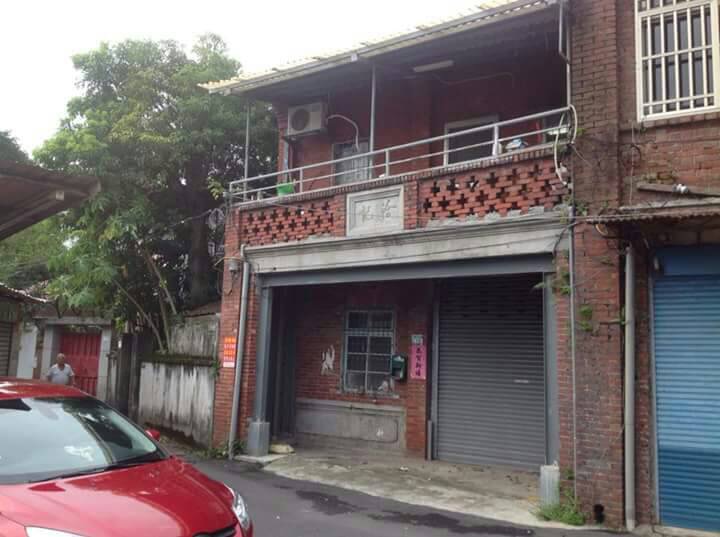
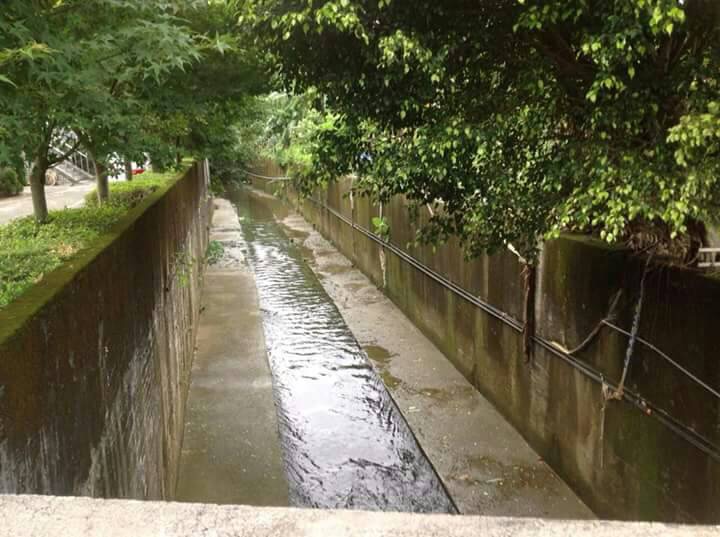
前文提到我們50年在新店安坑地區租的房子老舊安全堪慮,今日上午我特地到該屋探訪發現過了54年它依然完好(如留言版)不同的是二樓陽台加裝塑膠頂棚一樓大門從原本兩扇對開的老式木門改為電動鐵捲門,門前一條清澈的小河溝加蓋停了汽車。 我剛搬到台北時突然失去了眷村大批玩伴心情非常低落,回想在南部十幾年的歡樂成長過程竟有些許思鄉之情,尤其聼到收音機播放的歌曲〈留戀〉"我想起月下我想起花前,多少的往事留在我心田⋯"常常勾起我的回憶,父親為安撫我的心情某日下班時買回一付鈎竿及配件,我見到兩支粗細不等約一公尺長的竹棍心想這要如何釣魚,只見父親從較粗的那支竹棍中倒出一段黑色實心的細竹尖端有彈性插入較細的竹棍再將細棍插入粗棍便組合成一支三公尺長的釣竿,次日下午房東與我同年紀的兒子便帶我到附近灌溉碧潭西岸安坑中和地區農田的水圳釣魚,水圳深度及寛度與我在南部戲水的水圳相同只不過水質清澈見底,還有農民架了一座像麾天輪形狀的水車利用附著的數十隻竹筒將水帶起倒入一長條木製水槽再流入小渠及附近農田,因圳中是流動的水我站在岸邊將釣餌向上游拋雙眼緊盯白色通心草浮標只要它一沉入水中立刻收竿,如此反覆收回及往前拋,第一天便釣到近20尾身型細長銀白色的溪哥魚,同時也下水消暑一番,後來那條水圳幾乎是我每天必玩的地方,今日上午再回到當年釣魚戲水的舊地發現水車已不見了,原本兩岸的草地及細沙的圳底已砌成水泥結構,圳面寛度僅有原來的三分之一深度也僅有20公分左右,值得欣慰的是水質仍舊清澈見底(如留言版),不像碧潭東岸早年清澈的瑠公圳如今水質污濁,每次經過新店中華路時看見圳水污染都感到很難過,因為那水圳也是我曾經戱水摸蜆仔的地方。
懷舊篇-45
在南部的永芳國小及初一時班上同學經常唱的是台語歌,轉學至新店文山中學後全班都會唱關家倩主演的電影「蘇絲黃的世界」(The World of Suzie Wong)主題曲The Ding Dong Song,簡直就是班歌,我也跟著學會唱了,那也是我會唱的第一首英文歌,當年關家倩(母親為美國人)搭配威廉赫頓成為首位在西方電影界成名的亞洲女演員,後來又主演歌舞劇「花鼓歌」也很賣座,但早期的西方電影中都將華人女性塑造成外國男性情色之附庸以滿足他們心中的渴求,而華人男性則多半留著長辮子長相猥瑣貪小便宜又怕死之徒(除了李小龍、成龍、李連杰、周潤發),日前觀看「侏羅紀世界」片中飾演只知培育特異物種吸引觀衆入場妄顧生態危機角色之人好像又是華人或越南人,好來嗚永遠不缺的是爛製作人。 升上初三之後編入戊班同學們則迷上英國貓王克利夫理查(Cliff Richard)據瞭解他是英國流行音樂史上最受歡迎和演藝生涯最長(45年)的藝人,人人都會唱他當年的排行冠軍曲"l can’t Stop loving You"我自此開始喜愛上西洋流行歌曲,後來有了電唱機便經常至中華商場後面鐡道附近的峨嵋街唱片行購買〈學生之音〉及〈冠軍集錦〉的黑膠唱片,每片15元,收錄許多排行冠軍曲,隨著著作權法通過,方知當年我們年輕人買的唱片都是盜版的,那家唱片行現已不見了改為訂製學生制服的店家。
懷舊篇-46
50年底我們遷入印製廠旁的員工眷舍文山新村,又回到竹籬笆的生活,父親擔任村長,各戶有前後院,全村有三棟公廁均位於週邊,眷村三面全是稻田,向西穿過大片水田則是立法院宿舍「光明新村」再向西隔著大片水田是軍方眷村「炎明新村」,沒有三民路、中正路、中華路、崇光女中、調查局,從眷村可以看到與北新路平行的鐵路上的火車經過及北新路兩旁的油加利樹,瑠公圳兩岸是青草坡水質清澈見底,印製廠及眷村聯外道路是沿著瑠公圳邊的一條碎石路西側為陸軍砲兵部隊,沒有圍牆大操場排列許多大砲,有一座籃球場但是地面是泥土的,我們經常和阿兵哥們打籃球弄得混身泥土,後來該營區由統一通信指揮部進駐並加蓋圍牆,碎石路跨越瑠公圳及鐵路平交道後即到達北新路。我們在學校降旗完畢後立即排好放學路隊,計分為自行車、火車、汽車、步行四個梯隊,每個同學上衣口袋上方都要別一個彩色的壓克力徽章,上面印有自行車、火車、汽車、行人等圖案,我們自行車隊最先離校出了校門便是大下坡的文中路,火車隊的同學歩行至新店光明街的新店火車站 ,搭乘新店至萬華的區間火車,以蒸氣車頭為動力,客貨運列車各佔一半,貨運主要是運煤,碧潭上游礦埸採的煤以手搖大船運到下游瑠公圳入水口附近攔水壩堆置岸邊以輸送帶送至貨車車斗內再送至各地,火車沿線有許多學校學生上車(滬江、南強、平民、開南......等)在車上難免有打架情形,各校教官每天都在車站掌握狀況。汽車隊同學則至光明街公路局車站搭乘新店至台北班車,如今每次經過狹窄的光明街都不敢想像當年的公路局巴士是如何通行的,出了光明街之後銜接兩線道的北新路沿線兩旁沒有房子而是高大的油加利樹(桉樹)每棵樹幹離地面一人高的部分都漆成白色以防止人車夜間撞上,後來新店萬華線鐡路拆除整條北新路拓寬為八線道,沿路商家建築林立逐年發展成如今様貌,瑠公圳在中華路以南改為水泥結構,過了中華路則加蓋成了瑠公公園,附近民眾早晚都到此運動散步方便許多。
懷舊篇-47
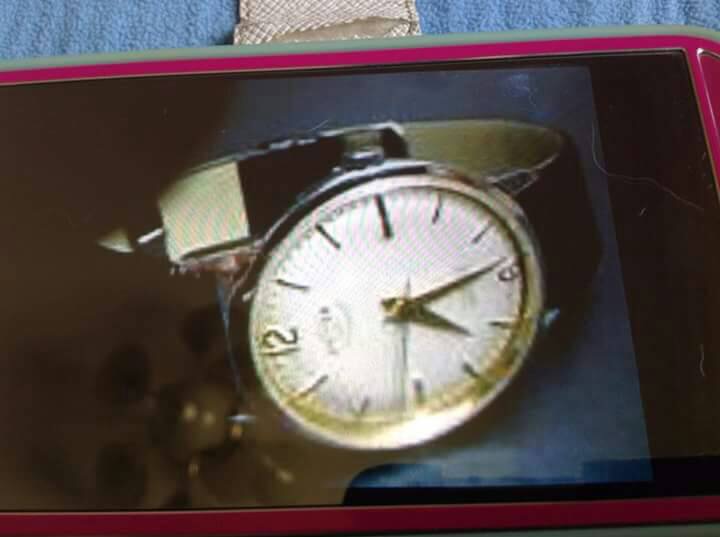
我們搬到新店文山新村約半年後某日我的堂叔來訪並帶來兩只手錶聲明是在當舗買的,送給我和大妹各一只,我們都很高興擁有第一只手錶,我的錶是瑞士老牌(創始於1854年)英〇格(ENlCAR)黑色皮表帶,每晚睡前要上表鏈,我曾用圓規打開錶蓋發現每個齒輪的軸心都是紅色發亮的,同學說那是紅寶石,不知是否屬實,它的透明錶蓋是塑膠材質極易受刮傷而模糊,我曾經至錶店換過三次錶蓋,剛換完新的頓時覺得看時間特別清晰,後來我進軍校便將它留在家中,同時市面上推出自動上鏈(錶殼較厚只要手部動作內部某金屬片跟著旋轉產生上鏈功用)錶,我也買了配帶,久了之後也忘記那只手錶了,昨日上網搜尋該品牌古董錶竟然看見和我當年一模一樣的手錶(如留言版)連錶帶也同樣黑色的,不免有些惋惜未能妥善保管古物。 當年我們每天都要帶便當上學,講台旁有一麻繩編的大網每人進教室第一件事就是將自己的便當放入網中,並未堆叠整齊,第二節下課時負責輪值的兩名同學便將網口綁好抬著一大團便當飛奔蒸飯間,只見幾十個便當在網中碰撞翻滾,湯汁也沿路滴落,那盛裝便當的大網經常是被油湯滋潤的五味雜陳,為何要飛奔的原因就是要搶先一步放在較下層的蒸箱蒸出的飯較熱,也常發生運送途中便當蓋鬆脫飯菜散落情況,此時同學們都會愛心捐飯菜給那位不幸者,有些同學刻意不蒸便當而在三四節上課時趁機偷吃便當,為何不在下課時吃,後來我才知道怕同學們伸手撈他一塊。總之學生帶便當的趣事真是回味無窮。
懷舊篇-48
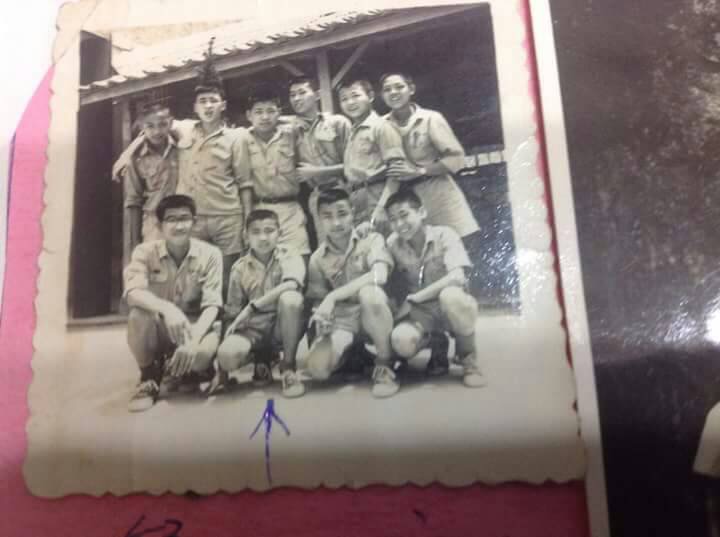
初三時結交了班上一票死黨(我個頭163在前排左二,左手尚戴著古董錶)有些變坯但又不是太坯,中午吃完便當其他同學午休時我們便從童軍活動中心旁沒有圍牆的大斜坡(約五米高)溜出校園至北宜路再走五分鐘到碧潭划船,當年只有手划的單人槳、雙人槳木船及可乘八人有船伕操大槳的有棚蓋大船,我們都租單人槳船一小時1元5角,從吊橋下的碼頭划向上游比賽誰快,也常用船槳撥打水仗,熟練的雙手可以反方向划使船隻原地旋轉360度,甚至坐在船的尖頭處使船尾略離水面雙手執一支槳划行,當年沒有救生衣,回想起來實在危險,一個多小時後上岸循原路線爬(陡坡)回學校上課,一年下來手臂結實有力,握拳彎曲小臂時大臂內側會突起如饅頭狀的肌肉。 當年碧潭的船家一大批年輕人是一股沒人敢說惹的勢力,可他們卻不敢招惹安坑附近民眾通稱「二廳」(國防部情報次長室前身)的阿兵哥,他們通常騎著帥氣的單車座墊拉得很高,人也高大挺拔載著與一般士兵不同的高挺草綠軍帽,一看就知道他的身份,聼說他們常要到匪區當情報員,每次見到他們經過我都會報以崇拜的眼神,另外還有一批人駐在炎明新村附近的小營區據說是幹訓班的,每天還未天亮就聽到他們在外面跑步及唱軍歌答數,某次我見到隊伍經過約有五十餘人其中還有四、五名女生,全都穿草綠色軍服,感覺很新奇,如今那小營區(位於新店中正路)己拆除改為民間收費停車場了。至於我們當年爬的大斜坡現己完全挖除興建為文山國中綜合大樓就在過了新店捷運總站往宜蘭方向左側200公尺處。
懷舊篇-49
前文提及中午至碧潭划船,而每天放學後則有四種安排,首先是班上夏國治及周丕才同學經常放學後到導師王啟東先生位於學校附近的家中恊助改考卷因需增加人手乃要求平時交情不錯的我加入,我們三人大約六點左右離開老師家返回家中晚餐,其次是約一票同學到學校東邊的後山採摘野生百香果及金狗毛(蕨類植物的莖部有金色絨毛中醫有止血功效),百香果很多而金狗毛難尋,某日最後一節課老師沒來教務處通知改為自習,有同學提議至後山採果我們一大半同學都提早離校上山,結果教務處來教室點名,我們全被記曠課一次,不久之後曠課通知單寄逹家中,被母親訓斥一頓,晚餐後立馬乖乖看書做功課(放棄每日必聽的廣播劇)。第三種是到眷村附近的砲兵營區和阿兵哥打籃球,球場很簡陋泥土地面沒有籃網,投進空心球也沒有"刷"的一聲,一個多小時下來也逹到運動效果,打了一年籃球我的身高從163長到173,教室座位也不再是最前排了。第四種則是到砲兵營區位於新店溪堤防內側一排福利社的撞球部打撞球,全部是司諾克球枱,有些老舊,白色母球撞久了都凹凸不平,有一局一元及一分鐘一毛兩種計價方式供選擇,我們技術不高一局通常打十二分鐘以上故採一局一元制,有的同學一局七八分鐘結束則採一分鐘一毛制,枱旁有一小桌及小黑板由一位大姐姐負責用粉筆記分,有時缺人我們便自己記,撞球大約一週才打一次,打了兩三個月覺得環境及空氣不好(有許多人抽煙)便不再去了。當年放學後雖有各種活動基本上都會按時返家與家人共進晚餐,因為那是一天中全家人唯一聚在一起的時間,我們都很重視,一律在餐桌用餐不得端著碗離開去聼收音機或至別處吃,直至現在我們兄妹返回陪母親用餐也是關掉電視,一起禱告(主禱文或詩篇23篇)後開動,十分正式。
懷舊篇-50
早年新店有碧潭及新店兩家戲院,碧潭戲院位於新店路往南過了吊橋頭後右側一百米左右一楝建築的二樓,一樓是菜市場,放映中西影片票價一元五角,我們經常全家來此。新店戲院位於光明街新店火車站斜対面,50年重新裝璜為大舞台大銀幕的伊士曼大戲院,銀幕前還有電動天藍色布簾,唱國歌前緩緩向兩側打開,感覺非常現代化,重新開張第一部片子好像是林黛及關山主演的黑白片〈不了情〉林黛且因此片得到亞洲影后,片中插曲〈不了情〉及〈夢〉都是大家愛聼的歌曲,三十餘年之後由黃鬱作詞、鮑比達作曲的〈新不了情〉更是受到民眾喜愛。 民國52年我們至伊士曼戲院觀賞轟動全台的彩色黃梅調電影〈梁山伯與祝英台〉由凌波與樂蒂主演,飾演梁山伯的凌波因在〈紅樓夢〉片中幕後代唱賈寶玉受李翰祥導演賞識找她反串梁兄哥而一舉成名,當年曾有許多阿姨從早進場連看四五場,後來凌波訪台期間造成一股旋風,收音機從早到晚都在播放該片插曲,我們兄妹都會唱了,接著又有一連串的黃梅調電影如魚美人、秦香蓮、七仙女、白蛇傳⋯等熱賣達十年之久。同時期我們也到碧潭戲院觀賞由寇克道格拉斯、勞倫斯奧立佛及珍西蒙絲主演的西片〈萬夫莫敵〉及卻爾登希斯頓演的〈賓漢〉都是大場面大成本片長三小時以上的鉅作,只是聲光效果與現在的影片相比差太遠了,寇克之子邁克道格拉斯後來也成了巨星拍了數十部影片,成就不亞於其父。 伊士曼戲院75年改為國賓戲院,99年歇業,101年元月12日重新開業,九個多月之後終於不敵數位科技及DVD發展,使二輪片業者難以生存,於10月21日正式結束,如今每次經過該鐵門拉下的院門前都會懷念曾經扮演半個世紀新店地區的娛樂場所,不免有些惋惜。
懷舊篇-51
文山中學因為有高中部設有軍訓教官三員,主任教官吉鈞中校很有威嚴在校內經常手持一片課椅拆下的木條巡視校園,見到不守校規的學生立馬打手心或打屁股,大家稱呼他"阿吉",另一男性少校教官身材略胖小腹微凸,軍褲腰帶常繋得老高快到胸部了,感覺有些土氣,被稱為"土教官",還有一名女教官不苟言笑常板著一張臉,長得與後來電視群星會女歌星吳靜嫻有點像,訓導主任錢星橋先生原本是籃球校隊教練,帶領球隊勇奪全國高中籃球賽冠軍(當年文中出了許多籃球國手)只是既無電台轉播又無電視,與如今的高中聯賽HBL受重視的程度無法相比,某日升旗典禮時教練及球隊將很重要兩個人抬的黑色三腳古鼎形狀冠軍獎杯呈給校長,所有同學都覺得很光榮,錢教練後來便升為錢主任了。 我們班上調皮搗蛋學生不少被列為重點督導班級,由於福利社及廁所都在靠教室窗戶那邊,若從教室門出去耍繞行較遠,大家都習慣直接從窗戶進出,最常買的零食是油炸的麵粉做的小圓球有一裂口稱做"開口笑" 。校方為防止我們爬窗戶特地將三扇窗戶外用鐵片材料的鐵窗封住,可沒幾天就被同學用小鋸片鋸出一個大洞剛好可供一個人穿過。某日降旗典禮時我輪到值日生打掃教室,仍有三四個同學留在教室未參加降旗,突然見到吉教官怒氣衝衝地手拿木條從門口進來心想這下可是甕中捉鱉了,他們見苗頭不對立即很熟練地從那鐵窗缺口逃走了,把教官氣得冒煙,三天之後便有工人來換了新的鐵窗,導師也鄭重宣布再有破坯者立馬開除,這狠招果然有效地保住了鐵窗,只是大家要上廁所及福利社較不方便了。
懷舊篇-52
當年我們對童軍課都很感興趣,童軍團長李子貴老師在我某日中午吃完便當與同學玩官兵捉強盜時我為逃避官兵從約兩米高平台往下跳雙腳勾住平台邊緣花叢致頭部向下倒栽,我本能反應用雙手先撑地導致右手掌脫臼(手掌與小臂呈Z字狀)左手小臂其中一隻大骨斷裂,左臉輕微擦傷時立即率兩位同學送我到光明街的外科醫院急診,並通知母親趕來,因小診所設傋不足乃立即轉送北市廣卅街的陸軍第一醫院,先將右大臂固定再用綿繩將右手大姆指綁緊後以機器將棉繩拉扯將手掌拉回原位再將雙手打上石膏只露出十隻指頭,一週後回院照X光片檢查若無異狀二十天後可拆石膏,這是我三歲時臉部栽入熱湯鍋中後遇到的第二次災難,所幸雙手替腦袋擋了力道,否則小命肯定不保。 在家養傷期間導師及李團長均來家中慰問,令我永難忘懷,每隔三五天都會有一些同學來探視並告知我課程進度。 二十天之後終於拆掉石膏只是雙手仍然不敢用力,大約過了一個多月才恢復正常,從此再也不玩官兵抓強盜了。 學校的童軍活動安排三天兩夜的露營,地點就在碧潭攔水壩下游東岸堤防外溪邊的一大片草地(如今已闢建為收費停車場)六人分配一頂帳篷,取用新店溪水烹煮,每天一大早溪邊很多主婦蹲或坐著洗衣服每人用手中特製有握把的木棍敲打放在大石塊上的衣服而流出肥皂泡沫,再將衣服置入流動的溪水中漂洗,非常辛苦,可她們有說有笑似乎很快樂,或許這正是他們一天之中難得的聚會,我們負責打水的同學都會多走幾步到她們洗衣的上游取水,母親每天早上從眷村沿著泥土路面的堤防走到碧潭吊橋附近的菜場買菜來回要兩小時(堤防已擴建為數倍寛的環河路)每次經過露營區都要停下腳步直到看見我並揮手打招呼後才離開。三天兩夜的露營活動很快便結束了,我們也學到許多童軍技能,那也是我學生時代唯一的露營,印象非常深刻。
懷舊篇-53
當年我較差的學科為數理方面,幾何圖形還行、數學方程式及化學平衡公式總令我頭痛,英文成績平平,國文及史地較佳,尤以歷史、地理兩科幾乎每次都全班最高分,還有多次滿分,我在課本上畫的重點幾乎都命中考題,於是每次月考前我的史地課本都會被借用傳閲參考,要一直追查下落才能找回課本。 班上有一位全校最矮的同學(似乎罹患侏儒症)個性內向,幾乎沒有朋友,可他和我很投緣,經常放學後載他回我們家玩,若是有畫地圖的作業(他最怕的)便協助他一同完成,吃完飯再騎車送他回到碧潭西岸的家中,父母親也都很喜歡他,在校內下課時他也總是和我一起,我覺得很多生理上有缺陷的人其實內心都很善良,不應該嫌棄或歧視他們,反而更應多接近關懷付出愛心。
懷舊篇-54
我國小六年級幾乎整年都在為升學考試作準備,且循規蹈矩,畢業後考上還算理想的學校,可中學生涯玩心太重根本未將高中聯招當回事,我誠正國小同班的唐姓同學和我一同考入省鳳初中,他父親在印製廠任少校指導員,和我同時搬到台北,他轉學到建國中學,住進眷村分配在我家隔壁,每天一大早天剛亮便拿著英文課本出門到新店溪堤防背英文,父親見狀也將我叫醒比照辦理,晚上我十點左右上床睡覺又被父親拉著至他家窗外看他還在寫作業,那段時間我的壓力很大,大妹也是同樣被要求一大早至田野背書,母親則認為晚上不宜太晚睡,引發父親大怒,後來我研判當年父親求好心切,狠鐵不成鋼的心情完全可以理解。 畢業後參加公立高中聯招落榜,分發至景美的私立滬江中學(學號3083)高一仁班(總共三班,忠班是女生、孝班仁班是男生)它是教會學校開學典禮還有一項禱告儀式,校長臧美徒先生要求嚴格每天升旗完畢後還要抽籤耍學生上台背誦指定的英文或國文課文,大家每天都禱告不要被抽中,我的導師唐元乘先生畢業於陸軍理工學院退伍後轉任學校數學老師,我每天仍騎車上學由眷村旁田間泥土小路(寬僅供牛車通行,現為新店三民路)騎至七張過平交道沿北新路往景美方向經常和平行的火車比賽誰先到景美(當年北新路上汽車不多),學校操場有小型足球場及田徑跑道,我參加足球校隊選拔通過加入校隊,每天中午午休時踢一個多小時(班際對抗)外放學後還耍留下練球一個多小時,學校的中校教官每天也和我們一起練球甚至兼球隊教練,還帶隊到陸軍財務學校比賽,當年的足球校隊沒啥名氣,可後來的高中女籃可是拿過全國HBL冠軍的。
懷舊篇-55
由於每天中午及放學後都踢足球,我的黑球鞋(同學們都愛買「中國強」牌子的,這個品名如今肯定很多人不能接受,許多同學另外還有白球鞋,我也買了一雙回力牌的高統白球鞋放假外出穿,有同學將白鞋放書包中待放學離開校門立馬換上白鞋感覺比較帥氣,曾有白目的同學穿著白鞋進校門被訓導主任以紅墨水潑成紅鞋,欲哭無淚)鞋面前緣白色半圓形橡膠皮與黑布面交接處很快裂開,為不想一直向母親拿錢買新鞋我乃用縫衣針穿上透明的釣魚線手指套著母親縫被面用的頂針(寛的金屬戒指上面佈滿小凹洞)很仔細地將裂縫補好至少可多撐幾個月,我且將此獨門技術傳授其他同學,他們紛紛比照處理,只是縫合技術顯然較差(我可是花了功夫的)。中午午休時間踢球在夏日的下午課容易昏昏欲睡,某日下午上國文課時我才閉眼打嗑睡立馬被女老師發現令我拿著書本到教室外的走廊罰站, 好死不死快要下課時有一整班女生從音樂教室提早下課從我面前經過回到教室,只見她們個個掩嘴偷笑,還聼到小聲的交談"為何罰站啊""一定是上課搗蛋的坯學生"我真恨不得有個地洞鑽進去,作家侯文詠有一部小說〈危險心靈〉(Dangerous Mind)中叛逆的青少年每次上課都遭老師處罰將課桌椅搬到走廊聽課,不禁讓我想起我當年的遭遇,後來我下午上課都打起精神直到下課。
懷舊篇-56
我們隔壁的唐伯伯有三個兒子,老大唐雄飛經常愛唱貓王的歌,不僅歌聲很像還特別將髪型吹成貓王頭前額披下一小撮頭髮載歌載舞(扭扭舞)令我們極為崇拜,他後來進入政校12期(村中第一位軍校生)69年我曾與他同在陸總政戰部服務(他在政一我在政三)且同為部籃球代表隊,後來他晉升到三軍大學中將政戰主任。 老二唐宗英和我鳯山誠正國小同班同學讀完省鳯初一後來台北轉學建國中學,建國高中畢業後進入中原大學畢業後赴美麻省理工學院深造,現仍旅居美國,去年曾經返台參加小學同學會和他聊了很多在眷村的趣事。 老三唐德普是我的玩伴,當年我在村中是孩子王,同夥有十幾個小男生,隨著我到小碧潭游泳、到光明新村(立法院宿舍)看露天電影、到瑠公圳摸蜆戲水、到附近水田釣青蛙⋯整個暑假行程滿檔大家都過得很快樂,每天晩上幾乎村中所有小孩都出來在廣場玩各種遊戲就像遊樂場一樣熱鬧,後來眷村改建為樓房後便再也沒有如此場景了。
懷舊篇-57
當年班上同學都迷上了由約翰藍儂、保羅麥卡尼、林哥史達、喬治哈里遜等四人組長成的披頭合唱團(The Beatles)他們在美國連續稱王七週的成名曲〈 l Want To Hold Your Hand 〉更是人人會唱,另外我特別喜愛另一樂團赫曼賀密斯五隠士(Herman‘s Hermits)以圓形的西部吉他伴奏的聲音及好聽的歌〈There‘s a Kind of Hush〉,同時期還有一首巴比維(Bobby Vee)唱的〈More Than l Can Say〉更是男女老幼都會唱上幾句。 高一忠班有一位女生陳〇〇一入學便奪得校花頭銜,在校內總是吸引許多目光而她卻抬頭挺胸目不斜視,同學覺得她有些高傲,某日我們仁班與忠班在忠班教室合併同樂會,我們將自己課椅拿到她們教室安插在課桌通道,女生們坐在自己原位,每位表演完的同學可指定下一位表演者,有唱歌、講笑話、吹口琴⋯等,陳〇〇被點名上台後表示什麼也不會撑了許久才一鞠躬下台,她後來進入演藝圈逐漸走紅,多年後常在中視花系列電視劇中飾演利害的婆婆,在大陸古裝劇中飾演皇后或皇太后,相信大部分好友都看過她演的劇,不知誰能最先猜出?
懷舊篇-58
我們當年的體育成績以籃球運球上籃、百公尺跑歩測速及拉單槓引體向上(雙手握槓曲肘引體至下巴超過橫槓再回復原狀為一次),我百公尺成績全班排第二名(12秒2),單槓項目大家都看好班上某余姓肌肉男,平常比腕力(阿秋把)無人能敵,身材健壯如健美選手,測驗開始後一般同學平均六至七個少有超過十個的,也有人吊在那全身掙扎卻一個也拉不上去,肌肉男漲紅了臉做了十三個,輪到我上槓後收緊小腹雙腿夾緊雙臂用力配合呼吸竟然完成了十六個(全班最多)跌破大家眼鏡, 後來我想可能是初中時每天中午到碧潭划船練出了臂力加上我的體重遠不及肌肉男佔了些便宜,從此我也確定之前我雙手脫臼及骨折事件完全沒有後遺症了。 五月五日是校慶日,校方舉辦運動會,各班都要訂製啦啦隊服(僅有上衣),本班訂製蘋果綠T恤,當天一早我穿著新衣騎車出門在往七張途中的田間泥土路上迎面來了一台牛車,我靠邊停車譲他通過,不料右腳踩的路旁草叢過於鬆軟連人帶車跌入右側水田,右半身衣褲全是泥水(失事地點在現在調查局西側門位置)火速回家換上乾淨長褲,上衣只好洗洗濘乾穿在身上再度出發,幸好及時趕到學校上衣也乾了一半。 運動會非常熱鬧各班級通過司令台繞場一週高呼加油口號(事先演練好的),田徑比賽競爭激烈,為刺激選手成績校方還邀請金陵女中田徑隊加入比賽,真可謂不是猛龍不過江,這批上門踢舘的娘子軍幾乎全都奪得獎牌。大會壓軸項目是大隊接力賽跑每班派20名選手每人跑200公尺,我排在倒數第二棒,八個隊競爭激烈互有領先落後,我接棒時排第四名拼力衝刺後在交棒前超越兩名選手成為第二,最終本班以第二名收場,為期兩天的運動會最後圓滿閉幕,這也是我入學以來參加的第一個校運會,留下美好回憶。
懷舊篇-59
之前曾提及至小碧潭游泳,我在南部時只能在灌溉的水圳戲水,大夥都沒有泳褲穿著一般短褲頭下水,之後等褲子乾了再返家,到台北後見同學都穿泳褲(當年似乎沒有體育用品店也沒有伸縮布料的現成泳褲可買,他們都是訂做較厚布料三角形狀但右側可打開縫有四粒纽扣)我也至光明街某西服店訂製一條藏青色卡及布料同形式的泳褲,它的優點是我們多半在碧潭或小碧潭游,野外沒有更衣室,而那種泳褲可直接先套入左腳拉至定位後將右邊前後兩片扣上鈕扣再脫掉外褲即可,游畢也是先穿外褲再脫泳褲,發明者真是貼心令人佩服。 小碧潭位於現在的美河市社區對面的新店溪水域,當年水質清澈水深及膝,但靠近岸邊蛇籠處有許多採砂石業留下的大坑,直徑十米深兩米像是天然的泳池,透明見底,我們經常在此游泳潛水,我還和隔壁的小學同學唐宗英玩一種游戲即兩人同時潛入水中每人說一段五個字以內的話(都呈氣泡狀)上岸後再答出對方所說的,通常都能答出,可見人體也具備聲納接收功能。小碧潭這可愛的地方伴隨我們渡過兩三個快樂的暑假。
懷舊篇-60
就讀私立高中學雜費並不便宜,因此我在課業成績上較以往重視許多,每次考前數日均熬夜苦讀至凌晨兩三點,母親不斷摧促我早點睡,我則把各科所有重點摘録於筆記本便於翻閲複習,後來發現效果不錯,整個學年下來總平均成績列全班第六名(全班40餘人),可我向父母表示想要報考軍校,不準備繼續升高二,父母詢問原因,我答說早就嚮往過團體生活,軍校較符合我的志趣,他們終於同意,當我向導師報告後他希望我能繼續留在班上,若是經濟因素他可向校方爭取讓我分期繳交學費,經我說明原因後他便祝我順利考上,學期最後一天我向他鄭重道別感謝他一年來的關懷與教晦,從他的眼神中看到了幾許不捨,所謂「一日為師終身為父」,唐元乘老師是我就學過程中永難忘記的恩師。 我報考陸軍官校預傋學生班第十期獲得錄取,那是接受高中三年課程採取軍事管理的班隊,三年畢業後可進入官校正期班接受四年的大學教育,官校畢業後授予理學士學位及少尉官階(59年起授予中尉軍階)。預備班第一至第八期是從三年級開始招收(在文學校謮完高一高二)只讀一年便升入官校,第九期開始招收初中畢業生,我小學同班同学田念湘及初中同班同學黃漢生便考入預九期,第一次放寒假時穿著艾森豪夾克的泥料軍服,頭戴船型帽手戴白手套,腳穿皮底皮跟鞋加上太陽眼鏡到眷村來拜訪我,村中小孩都跟在後面造成一股轟動,不可否認這也是我報考軍校的因素之一。54年整個暑假我都在期待入學報到的日子,也很好奇未來的軍校生活究竟是啥景象?
原 PDF 有 224 个字因字体缺字而无法显示,本页已根据上下文补上,可能有出入。
本文保留原文的繁体字。
Contents目錄目录 (20)
懷舊篇-41
開學半個月左右的某日上午學校通知所有同學暫停上課全部到校門外高雄至鳯山的省道兩旁列隊等待,約莫二十分鐘之後由高雄方向駛來五六輛軍用吉普車,第一輛車上站著榮獲第十七屆羅馬奧運男子十項銀牌的楊傳廣先生(49年9月6日在羅馬賽完最後一項1500公尺以8334分落後同門師兄美國的強森58分屈居銀牌,賽後強森累癱扶在楊傳廣的肩上,現場觀衆感動的高喊"兩個人都發給金牌"。民國52年楊傳廣在美國聖安東尼運動會創下了9121的世界紀錄,當時世人公認9千分是不可能突破的極限,他可稱為體育界第一個台灣之光,民國96年元月他病逝於洛杉磯享年74歲走完傳奇的一生,留下世人對他永遠的懷念)我們熱烈鼓掌向為國爭光的英雄致敬,車隊全部通過後我們才返回教室上課。 父親某次從台北的工作單位返回大寮家中休假時,停在家門口的三輪車上放了一台電風扇及收音機,那是家中第一批電器用品,大家都很興奮,收音機是真空管調幅(AM)的,比現今的微波爐還大許多,轉動選台鈕時常會發出尖銳的聲音,除了聼流行歌曲外最常聼的就是廣播劇,每次開場都會播報崔小萍導播、李林配音、唐翔錄音,而崔小萍是台灣第一位將話劇形式運用在廣播劇上他使用各種聲音效果追求藝術化的呈現因而奠定了廣播劇的形態,在中廣16餘年製作700多部廣播劇。
懷舊篇-42
南部的夏天非常酷熱,每天下午四點多放學騎車回家總是會滿身大汗,在經過鳯山大橋後馬路右側靠近黃埔新村大門口(如今已成了加油站)有兩三個西瓜攤販,我常會停下車來以五毛錢(我一天的零用錢)買一大片約一斤重的西瓜解渴,吃完後很滿足地踏上歸途,過了陸官校前的黃埔路口上坡不遠右轉沿官校北面圍牆是一條約兩公里的泥土路,表面坑坑洞洞很不好騎,但路的最右邊緊鄰大排水溝有寛約五十公分的路面尚稱平坦,一般單車族均沿此前行,但是路邊沒有護欄曾經有人不慎連人帶車摔落大排水溝中,我每次經過都特別謹慎小心,走完泥土路便接上往林園的鳳林公路再次接受一番震撼教育。 由於路況不佳我的愛車經常輪胎漏氣(鉄釘或玻璃碎片刺破),至單車店補胎要價兩元,立馬飛掉了四大片西瓜很是心痛,決定嘗試自己搞定,仔細觀查修補過程後找了一大片廢內胎皮買了一小罐強力膠水及一鋼鋸片,後來遇到漏氣便向鄰居借用打氣筒將內胎剝出打氣後逐段壓入水盆中找到冒泡的破孔擦乾再用鋼鋸歯刷毛小孔週圍,再剪一片麻將牌大小內胎皮將一面刷毛與破孔處同時塗上膠水靜待五分鐘左右膠水將凝固時貼上破口以鎯頭擊打便告完成。 有時氣門嘴裏面像通心麵形狀的黃色橡皮軟管老化變質也會漏氣,找車店老板修一次五毛錢,我便一次買十幾段傋用,省了不少錢(如今單車打氣孔構造不同已沒有橡皮軟管了)在那個物質缺乏的年代人人都學會精打細算能省則省,鮮少與人攀比,過著滿足而快樂的生活。
懷舊篇-43
父親任職位於新店的陸軍印製廠蒙上級撥款在廠區旁興建小型眷村供員工眷屬居住,但是需待50年11月才能完工進住,父母為了我們的學藉問題便提前於7月舉家搬來台北新店,臨時在安康路下城里一處民間磚造兩層樓的二樓分租一間五坪大房間屋內僅有一兩坪多大通舗,月租200元(僅租四個月很難找到合適的)廚房在一樓與房東共用,小院中有一手壓抽水井,房東以大灶燒木材煮飯,母親以炭爐燒焦煤,廚房中經常煙霧瀰漫,初到台北母親極不適應附近的迷你小市場每樣菜都比南部貴上許多幾乎買不下手,各式水果也是一樣,每天都為全家三餐伙食煩惱。我們兄妹的學藉均以轉學方式辦理,我轉至台北縣立文山中學(現新店捷運總站附近)初二庚班學號95488導師常汝葵女老師,仍然以單車通學,當年碧潭有一座狹窄的水泥橋且沒有護欄非常危險我上下學都經由吊橋(那時橋上可以騎車,後來中央架設鐵籠僅餘兩側供行人步行,近幾年又將鐵籠拆除恢復原本橋面),每天晩上做完功課後全家便聚在大通舖收聽廣播連續劇〈怪指紋〉偵探懸疑劇情緊張刺激,父親和我則常收聽警廣記者王化臻轉播的籃球賽,他連珠炮似的播報賽況令我們父子倆全神貫注有如身臨其境,我記得當年的國手有羅継然、張均、蔡伯圳⋯等人,菲律賓甲組球隊如伊戈、伊士美等也常來台友誼賽。 來台北兩個月之後的9月12日晚間強烈颱風波米拉席捲全台,北部受創最重,我們承租的房子像是地震般晃動,薄木板門承不住強風幾乎倒下雨水灌入屋內,父親和我輪流以身體在內頂住木門直至天亮混身濕透了,那驚險景象至今仍然難忘,後來不久又有一更強的歐泊颱風來襲,我們全家至新店街上某家旅舍住了一晚(顧慮老房子不安全),結果虛驚一場可能是臨時轉向了。
懷舊篇-44
前文提到我們50年在新店安坑地區租的房子老舊安全堪慮,今日上午我特地到該屋探訪發現過了54年它依然完好(如留言版)不同的是二樓陽台加裝塑膠頂棚一樓大門從原本兩扇對開的老式木門改為電動鐵捲門,門前一條清澈的小河溝加蓋停了汽車。 我剛搬到台北時突然失去了眷村大批玩伴心情非常低落,回想在南部十幾年的歡樂成長過程竟有些許思鄉之情,尤其聼到收音機播放的歌曲〈留戀〉"我想起月下我想起花前,多少的往事留在我心田⋯"常常勾起我的回憶,父親為安撫我的心情某日下班時買回一付鈎竿及配件,我見到兩支粗細不等約一公尺長的竹棍心想這要如何釣魚,只見父親從較粗的那支竹棍中倒出一段黑色實心的細竹尖端有彈性插入較細的竹棍再將細棍插入粗棍便組合成一支三公尺長的釣竿,次日下午房東與我同年紀的兒子便帶我到附近灌溉碧潭西岸安坑中和地區農田的水圳釣魚,水圳深度及寛度與我在南部戲水的水圳相同只不過水質清澈見底,還有農民架了一座像麾天輪形狀的水車利用附著的數十隻竹筒將水帶起倒入一長條木製水槽再流入小渠及附近農田,因圳中是流動的水我站在岸邊將釣餌向上游拋雙眼緊盯白色通心草浮標只要它一沉入水中立刻收竿,如此反覆收回及往前拋,第一天便釣到近20尾身型細長銀白色的溪哥魚,同時也下水消暑一番,後來那條水圳幾乎是我每天必玩的地方,今日上午再回到當年釣魚戲水的舊地發現水車已不見了,原本兩岸的草地及細沙的圳底已砌成水泥結構,圳面寛度僅有原來的三分之一深度也僅有20公分左右,值得欣慰的是水質仍舊清澈見底(如留言版),不像碧潭東岸早年清澈的瑠公圳如今水質污濁,每次經過新店中華路時看見圳水污染都感到很難過,因為那水圳也是我曾經戱水摸蜆仔的地方。
懷舊篇-45
在南部的永芳國小及初一時班上同學經常唱的是台語歌,轉學至新店文山中學後全班都會唱關家倩主演的電影「蘇絲黃的世界」(The World of Suzie Wong)主題曲The Ding Dong Song,簡直就是班歌,我也跟著學會唱了,那也是我會唱的第一首英文歌,當年關家倩(母親為美國人)搭配威廉赫頓成為首位在西方電影界成名的亞洲女演員,後來又主演歌舞劇「花鼓歌」也很賣座,但早期的西方電影中都將華人女性塑造成外國男性情色之附庸以滿足他們心中的渴求,而華人男性則多半留著長辮子長相猥瑣貪小便宜又怕死之徒(除了李小龍、成龍、李連杰、周潤發),日前觀看「侏羅紀世界」片中飾演只知培育特異物種吸引觀衆入場妄顧生態危機角色之人好像又是華人或越南人,好來嗚永遠不缺的是爛製作人。 升上初三之後編入戊班同學們則迷上英國貓王克利夫理查(Cliff Richard)據瞭解他是英國流行音樂史上最受歡迎和演藝生涯最長(45年)的藝人,人人都會唱他當年的排行冠軍曲"l can’t Stop loving You"我自此開始喜愛上西洋流行歌曲,後來有了電唱機便經常至中華商場後面鐡道附近的峨嵋街唱片行購買〈學生之音〉及〈冠軍集錦〉的黑膠唱片,每片15元,收錄許多排行冠軍曲,隨著著作權法通過,方知當年我們年輕人買的唱片都是盜版的,那家唱片行現已不見了改為訂製學生制服的店家。
懷舊篇-46
50年底我們遷入印製廠旁的員工眷舍文山新村,又回到竹籬笆的生活,父親擔任村長,各戶有前後院,全村有三棟公廁均位於週邊,眷村三面全是稻田,向西穿過大片水田則是立法院宿舍「光明新村」再向西隔著大片水田是軍方眷村「炎明新村」,沒有三民路、中正路、中華路、崇光女中、調查局,從眷村可以看到與北新路平行的鐵路上的火車經過及北新路兩旁的油加利樹,瑠公圳兩岸是青草坡水質清澈見底,印製廠及眷村聯外道路是沿著瑠公圳邊的一條碎石路西側為陸軍砲兵部隊,沒有圍牆大操場排列許多大砲,有一座籃球場但是地面是泥土的,我們經常和阿兵哥們打籃球弄得混身泥土,後來該營區由統一通信指揮部進駐並加蓋圍牆,碎石路跨越瑠公圳及鐵路平交道後即到達北新路。我們在學校降旗完畢後立即排好放學路隊,計分為自行車、火車、汽車、步行四個梯隊,每個同學上衣口袋上方都要別一個彩色的壓克力徽章,上面印有自行車、火車、汽車、行人等圖案,我們自行車隊最先離校出了校門便是大下坡的文中路,火車隊的同學歩行至新店光明街的新店火車站 ,搭乘新店至萬華的區間火車,以蒸氣車頭為動力,客貨運列車各佔一半,貨運主要是運煤,碧潭上游礦埸採的煤以手搖大船運到下游瑠公圳入水口附近攔水壩堆置岸邊以輸送帶送至貨車車斗內再送至各地,火車沿線有許多學校學生上車(滬江、南強、平民、開南......等)在車上難免有打架情形,各校教官每天都在車站掌握狀況。汽車隊同學則至光明街公路局車站搭乘新店至台北班車,如今每次經過狹窄的光明街都不敢想像當年的公路局巴士是如何通行的,出了光明街之後銜接兩線道的北新路沿線兩旁沒有房子而是高大的油加利樹(桉樹)每棵樹幹離地面一人高的部分都漆成白色以防止人車夜間撞上,後來新店萬華線鐡路拆除整條北新路拓寬為八線道,沿路商家建築林立逐年發展成如今様貌,瑠公圳在中華路以南改為水泥結構,過了中華路則加蓋成了瑠公公園,附近民眾早晚都到此運動散步方便許多。
懷舊篇-47
我們搬到新店文山新村約半年後某日我的堂叔來訪並帶來兩只手錶聲明是在當舗買的,送給我和大妹各一只,我們都很高興擁有第一只手錶,我的錶是瑞士老牌(創始於1854年)英〇格(ENlCAR)黑色皮表帶,每晚睡前要上表鏈,我曾用圓規打開錶蓋發現每個齒輪的軸心都是紅色發亮的,同學說那是紅寶石,不知是否屬實,它的透明錶蓋是塑膠材質極易受刮傷而模糊,我曾經至錶店換過三次錶蓋,剛換完新的頓時覺得看時間特別清晰,後來我進軍校便將它留在家中,同時市面上推出自動上鏈(錶殼較厚只要手部動作內部某金屬片跟著旋轉產生上鏈功用)錶,我也買了配帶,久了之後也忘記那只手錶了,昨日上網搜尋該品牌古董錶竟然看見和我當年一模一樣的手錶(如留言版)連錶帶也同樣黑色的,不免有些惋惜未能妥善保管古物。 當年我們每天都要帶便當上學,講台旁有一麻繩編的大網每人進教室第一件事就是將自己的便當放入網中,並未堆叠整齊,第二節下課時負責輪值的兩名同學便將網口綁好抬著一大團便當飛奔蒸飯間,只見幾十個便當在網中碰撞翻滾,湯汁也沿路滴落,那盛裝便當的大網經常是被油湯滋潤的五味雜陳,為何要飛奔的原因就是要搶先一步放在較下層的蒸箱蒸出的飯較熱,也常發生運送途中便當蓋鬆脫飯菜散落情況,此時同學們都會愛心捐飯菜給那位不幸者,有些同學刻意不蒸便當而在三四節上課時趁機偷吃便當,為何不在下課時吃,後來我才知道怕同學們伸手撈他一塊。總之學生帶便當的趣事真是回味無窮。
懷舊篇-48
初三時結交了班上一票死黨(我個頭163在前排左二,左手尚戴著古董錶)有些變坯但又不是太坯,中午吃完便當其他同學午休時我們便從童軍活動中心旁沒有圍牆的大斜坡(約五米高)溜出校園至北宜路再走五分鐘到碧潭划船,當年只有手划的單人槳、雙人槳木船及可乘八人有船伕操大槳的有棚蓋大船,我們都租單人槳船一小時1元5角,從吊橋下的碼頭划向上游比賽誰快,也常用船槳撥打水仗,熟練的雙手可以反方向划使船隻原地旋轉360度,甚至坐在船的尖頭處使船尾略離水面雙手執一支槳划行,當年沒有救生衣,回想起來實在危險,一個多小時後上岸循原路線爬(陡坡)回學校上課,一年下來手臂結實有力,握拳彎曲小臂時大臂內側會突起如饅頭狀的肌肉。 當年碧潭的船家一大批年輕人是一股沒人敢說惹的勢力,可他們卻不敢招惹安坑附近民眾通稱「二廳」(國防部情報次長室前身)的阿兵哥,他們通常騎著帥氣的單車座墊拉得很高,人也高大挺拔載著與一般士兵不同的高挺草綠軍帽,一看就知道他的身份,聼說他們常要到匪區當情報員,每次見到他們經過我都會報以崇拜的眼神,另外還有一批人駐在炎明新村附近的小營區據說是幹訓班的,每天還未天亮就聽到他們在外面跑步及唱軍歌答數,某次我見到隊伍經過約有五十餘人其中還有四、五名女生,全都穿草綠色軍服,感覺很新奇,如今那小營區(位於新店中正路)己拆除改為民間收費停車場了。至於我們當年爬的大斜坡現己完全挖除興建為文山國中綜合大樓就在過了新店捷運總站往宜蘭方向左側200公尺處。
懷舊篇-49
前文提及中午至碧潭划船,而每天放學後則有四種安排,首先是班上夏國治及周丕才同學經常放學後到導師王啟東先生位於學校附近的家中恊助改考卷因需增加人手乃要求平時交情不錯的我加入,我們三人大約六點左右離開老師家返回家中晚餐,其次是約一票同學到學校東邊的後山採摘野生百香果及金狗毛(蕨類植物的莖部有金色絨毛中醫有止血功效),百香果很多而金狗毛難尋,某日最後一節課老師沒來教務處通知改為自習,有同學提議至後山採果我們一大半同學都提早離校上山,結果教務處來教室點名,我們全被記曠課一次,不久之後曠課通知單寄逹家中,被母親訓斥一頓,晚餐後立馬乖乖看書做功課(放棄每日必聽的廣播劇)。第三種是到眷村附近的砲兵營區和阿兵哥打籃球,球場很簡陋泥土地面沒有籃網,投進空心球也沒有"刷"的一聲,一個多小時下來也逹到運動效果,打了一年籃球我的身高從163長到173,教室座位也不再是最前排了。第四種則是到砲兵營區位於新店溪堤防內側一排福利社的撞球部打撞球,全部是司諾克球枱,有些老舊,白色母球撞久了都凹凸不平,有一局一元及一分鐘一毛兩種計價方式供選擇,我們技術不高一局通常打十二分鐘以上故採一局一元制,有的同學一局七八分鐘結束則採一分鐘一毛制,枱旁有一小桌及小黑板由一位大姐姐負責用粉筆記分,有時缺人我們便自己記,撞球大約一週才打一次,打了兩三個月覺得環境及空氣不好(有許多人抽煙)便不再去了。當年放學後雖有各種活動基本上都會按時返家與家人共進晚餐,因為那是一天中全家人唯一聚在一起的時間,我們都很重視,一律在餐桌用餐不得端著碗離開去聼收音機或至別處吃,直至現在我們兄妹返回陪母親用餐也是關掉電視,一起禱告(主禱文或詩篇23篇)後開動,十分正式。
懷舊篇-50
早年新店有碧潭及新店兩家戲院,碧潭戲院位於新店路往南過了吊橋頭後右側一百米左右一楝建築的二樓,一樓是菜市場,放映中西影片票價一元五角,我們經常全家來此。新店戲院位於光明街新店火車站斜対面,50年重新裝璜為大舞台大銀幕的伊士曼大戲院,銀幕前還有電動天藍色布簾,唱國歌前緩緩向兩側打開,感覺非常現代化,重新開張第一部片子好像是林黛及關山主演的黑白片〈不了情〉林黛且因此片得到亞洲影后,片中插曲〈不了情〉及〈夢〉都是大家愛聼的歌曲,三十餘年之後由黃鬱作詞、鮑比達作曲的〈新不了情〉更是受到民眾喜愛。 民國52年我們至伊士曼戲院觀賞轟動全台的彩色黃梅調電影〈梁山伯與祝英台〉由凌波與樂蒂主演,飾演梁山伯的凌波因在〈紅樓夢〉片中幕後代唱賈寶玉受李翰祥導演賞識找她反串梁兄哥而一舉成名,當年曾有許多阿姨從早進場連看四五場,後來凌波訪台期間造成一股旋風,收音機從早到晚都在播放該片插曲,我們兄妹都會唱了,接著又有一連串的黃梅調電影如魚美人、秦香蓮、七仙女、白蛇傳⋯等熱賣達十年之久。同時期我們也到碧潭戲院觀賞由寇克道格拉斯、勞倫斯奧立佛及珍西蒙絲主演的西片〈萬夫莫敵〉及卻爾登希斯頓演的〈賓漢〉都是大場面大成本片長三小時以上的鉅作,只是聲光效果與現在的影片相比差太遠了,寇克之子邁克道格拉斯後來也成了巨星拍了數十部影片,成就不亞於其父。 伊士曼戲院75年改為國賓戲院,99年歇業,101年元月12日重新開業,九個多月之後終於不敵數位科技及DVD發展,使二輪片業者難以生存,於10月21日正式結束,如今每次經過該鐵門拉下的院門前都會懷念曾經扮演半個世紀新店地區的娛樂場所,不免有些惋惜。
懷舊篇-51
文山中學因為有高中部設有軍訓教官三員,主任教官吉鈞中校很有威嚴在校內經常手持一片課椅拆下的木條巡視校園,見到不守校規的學生立馬打手心或打屁股,大家稱呼他"阿吉",另一男性少校教官身材略胖小腹微凸,軍褲腰帶常繋得老高快到胸部了,感覺有些土氣,被稱為"土教官",還有一名女教官不苟言笑常板著一張臉,長得與後來電視群星會女歌星吳靜嫻有點像,訓導主任錢星橋先生原本是籃球校隊教練,帶領球隊勇奪全國高中籃球賽冠軍(當年文中出了許多籃球國手)只是既無電台轉播又無電視,與如今的高中聯賽HBL受重視的程度無法相比,某日升旗典禮時教練及球隊將很重要兩個人抬的黑色三腳古鼎形狀冠軍獎杯呈給校長,所有同學都覺得很光榮,錢教練後來便升為錢主任了。 我們班上調皮搗蛋學生不少被列為重點督導班級,由於福利社及廁所都在靠教室窗戶那邊,若從教室門出去耍繞行較遠,大家都習慣直接從窗戶進出,最常買的零食是油炸的麵粉做的小圓球有一裂口稱做"開口笑" 。校方為防止我們爬窗戶特地將三扇窗戶外用鐵片材料的鐵窗封住,可沒幾天就被同學用小鋸片鋸出一個大洞剛好可供一個人穿過。某日降旗典禮時我輪到值日生打掃教室,仍有三四個同學留在教室未參加降旗,突然見到吉教官怒氣衝衝地手拿木條從門口進來心想這下可是甕中捉鱉了,他們見苗頭不對立即很熟練地從那鐵窗缺口逃走了,把教官氣得冒煙,三天之後便有工人來換了新的鐵窗,導師也鄭重宣布再有破坯者立馬開除,這狠招果然有效地保住了鐵窗,只是大家要上廁所及福利社較不方便了。
懷舊篇-52
當年我們對童軍課都很感興趣,童軍團長李子貴老師在我某日中午吃完便當與同學玩官兵捉強盜時我為逃避官兵從約兩米高平台往下跳雙腳勾住平台邊緣花叢致頭部向下倒栽,我本能反應用雙手先撑地導致右手掌脫臼(手掌與小臂呈Z字狀)左手小臂其中一隻大骨斷裂,左臉輕微擦傷時立即率兩位同學送我到光明街的外科醫院急診,並通知母親趕來,因小診所設傋不足乃立即轉送北市廣卅街的陸軍第一醫院,先將右大臂固定再用綿繩將右手大姆指綁緊後以機器將棉繩拉扯將手掌拉回原位再將雙手打上石膏只露出十隻指頭,一週後回院照X光片檢查若無異狀二十天後可拆石膏,這是我三歲時臉部栽入熱湯鍋中後遇到的第二次災難,所幸雙手替腦袋擋了力道,否則小命肯定不保。 在家養傷期間導師及李團長均來家中慰問,令我永難忘懷,每隔三五天都會有一些同學來探視並告知我課程進度。 二十天之後終於拆掉石膏只是雙手仍然不敢用力,大約過了一個多月才恢復正常,從此再也不玩官兵抓強盜了。 學校的童軍活動安排三天兩夜的露營,地點就在碧潭攔水壩下游東岸堤防外溪邊的一大片草地(如今已闢建為收費停車場)六人分配一頂帳篷,取用新店溪水烹煮,每天一大早溪邊很多主婦蹲或坐著洗衣服每人用手中特製有握把的木棍敲打放在大石塊上的衣服而流出肥皂泡沫,再將衣服置入流動的溪水中漂洗,非常辛苦,可她們有說有笑似乎很快樂,或許這正是他們一天之中難得的聚會,我們負責打水的同學都會多走幾步到她們洗衣的上游取水,母親每天早上從眷村沿著泥土路面的堤防走到碧潭吊橋附近的菜場買菜來回要兩小時(堤防已擴建為數倍寛的環河路)每次經過露營區都要停下腳步直到看見我並揮手打招呼後才離開。三天兩夜的露營活動很快便結束了,我們也學到許多童軍技能,那也是我學生時代唯一的露營,印象非常深刻。
懷舊篇-53
當年我較差的學科為數理方面,幾何圖形還行、數學方程式及化學平衡公式總令我頭痛,英文成績平平,國文及史地較佳,尤以歷史、地理兩科幾乎每次都全班最高分,還有多次滿分,我在課本上畫的重點幾乎都命中考題,於是每次月考前我的史地課本都會被借用傳閲參考,要一直追查下落才能找回課本。 班上有一位全校最矮的同學(似乎罹患侏儒症)個性內向,幾乎沒有朋友,可他和我很投緣,經常放學後載他回我們家玩,若是有畫地圖的作業(他最怕的)便協助他一同完成,吃完飯再騎車送他回到碧潭西岸的家中,父母親也都很喜歡他,在校內下課時他也總是和我一起,我覺得很多生理上有缺陷的人其實內心都很善良,不應該嫌棄或歧視他們,反而更應多接近關懷付出愛心。
懷舊篇-54
我國小六年級幾乎整年都在為升學考試作準備,且循規蹈矩,畢業後考上還算理想的學校,可中學生涯玩心太重根本未將高中聯招當回事,我誠正國小同班的唐姓同學和我一同考入省鳳初中,他父親在印製廠任少校指導員,和我同時搬到台北,他轉學到建國中學,住進眷村分配在我家隔壁,每天一大早天剛亮便拿著英文課本出門到新店溪堤防背英文,父親見狀也將我叫醒比照辦理,晚上我十點左右上床睡覺又被父親拉著至他家窗外看他還在寫作業,那段時間我的壓力很大,大妹也是同樣被要求一大早至田野背書,母親則認為晚上不宜太晚睡,引發父親大怒,後來我研判當年父親求好心切,狠鐵不成鋼的心情完全可以理解。 畢業後參加公立高中聯招落榜,分發至景美的私立滬江中學(學號3083)高一仁班(總共三班,忠班是女生、孝班仁班是男生)它是教會學校開學典禮還有一項禱告儀式,校長臧美徒先生要求嚴格每天升旗完畢後還要抽籤耍學生上台背誦指定的英文或國文課文,大家每天都禱告不要被抽中,我的導師唐元乘先生畢業於陸軍理工學院退伍後轉任學校數學老師,我每天仍騎車上學由眷村旁田間泥土小路(寬僅供牛車通行,現為新店三民路)騎至七張過平交道沿北新路往景美方向經常和平行的火車比賽誰先到景美(當年北新路上汽車不多),學校操場有小型足球場及田徑跑道,我參加足球校隊選拔通過加入校隊,每天中午午休時踢一個多小時(班際對抗)外放學後還耍留下練球一個多小時,學校的中校教官每天也和我們一起練球甚至兼球隊教練,還帶隊到陸軍財務學校比賽,當年的足球校隊沒啥名氣,可後來的高中女籃可是拿過全國HBL冠軍的。
懷舊篇-55
由於每天中午及放學後都踢足球,我的黑球鞋(同學們都愛買「中國強」牌子的,這個品名如今肯定很多人不能接受,許多同學另外還有白球鞋,我也買了一雙回力牌的高統白球鞋放假外出穿,有同學將白鞋放書包中待放學離開校門立馬換上白鞋感覺比較帥氣,曾有白目的同學穿著白鞋進校門被訓導主任以紅墨水潑成紅鞋,欲哭無淚)鞋面前緣白色半圓形橡膠皮與黑布面交接處很快裂開,為不想一直向母親拿錢買新鞋我乃用縫衣針穿上透明的釣魚線手指套著母親縫被面用的頂針(寛的金屬戒指上面佈滿小凹洞)很仔細地將裂縫補好至少可多撐幾個月,我且將此獨門技術傳授其他同學,他們紛紛比照處理,只是縫合技術顯然較差(我可是花了功夫的)。中午午休時間踢球在夏日的下午課容易昏昏欲睡,某日下午上國文課時我才閉眼打嗑睡立馬被女老師發現令我拿著書本到教室外的走廊罰站, 好死不死快要下課時有一整班女生從音樂教室提早下課從我面前經過回到教室,只見她們個個掩嘴偷笑,還聼到小聲的交談"為何罰站啊""一定是上課搗蛋的坯學生"我真恨不得有個地洞鑽進去,作家侯文詠有一部小說〈危險心靈〉(Dangerous Mind)中叛逆的青少年每次上課都遭老師處罰將課桌椅搬到走廊聽課,不禁讓我想起我當年的遭遇,後來我下午上課都打起精神直到下課。
懷舊篇-56
我們隔壁的唐伯伯有三個兒子,老大唐雄飛經常愛唱貓王的歌,不僅歌聲很像還特別將髪型吹成貓王頭前額披下一小撮頭髮載歌載舞(扭扭舞)令我們極為崇拜,他後來進入政校12期(村中第一位軍校生)69年我曾與他同在陸總政戰部服務(他在政一我在政三)且同為部籃球代表隊,後來他晉升到三軍大學中將政戰主任。 老二唐宗英和我鳯山誠正國小同班同學讀完省鳯初一後來台北轉學建國中學,建國高中畢業後進入中原大學畢業後赴美麻省理工學院深造,現仍旅居美國,去年曾經返台參加小學同學會和他聊了很多在眷村的趣事。 老三唐德普是我的玩伴,當年我在村中是孩子王,同夥有十幾個小男生,隨著我到小碧潭游泳、到光明新村(立法院宿舍)看露天電影、到瑠公圳摸蜆戲水、到附近水田釣青蛙⋯整個暑假行程滿檔大家都過得很快樂,每天晩上幾乎村中所有小孩都出來在廣場玩各種遊戲就像遊樂場一樣熱鬧,後來眷村改建為樓房後便再也沒有如此場景了。
懷舊篇-57
當年班上同學都迷上了由約翰藍儂、保羅麥卡尼、林哥史達、喬治哈里遜等四人組長成的披頭合唱團(The Beatles)他們在美國連續稱王七週的成名曲〈 l Want To Hold Your Hand 〉更是人人會唱,另外我特別喜愛另一樂團赫曼賀密斯五隠士(Herman‘s Hermits)以圓形的西部吉他伴奏的聲音及好聽的歌〈There‘s a Kind of Hush〉,同時期還有一首巴比維(Bobby Vee)唱的〈More Than l Can Say〉更是男女老幼都會唱上幾句。 高一忠班有一位女生陳〇〇一入學便奪得校花頭銜,在校內總是吸引許多目光而她卻抬頭挺胸目不斜視,同學覺得她有些高傲,某日我們仁班與忠班在忠班教室合併同樂會,我們將自己課椅拿到她們教室安插在課桌通道,女生們坐在自己原位,每位表演完的同學可指定下一位表演者,有唱歌、講笑話、吹口琴⋯等,陳〇〇被點名上台後表示什麼也不會撑了許久才一鞠躬下台,她後來進入演藝圈逐漸走紅,多年後常在中視花系列電視劇中飾演利害的婆婆,在大陸古裝劇中飾演皇后或皇太后,相信大部分好友都看過她演的劇,不知誰能最先猜出?
懷舊篇-58
我們當年的體育成績以籃球運球上籃、百公尺跑歩測速及拉單槓引體向上(雙手握槓曲肘引體至下巴超過橫槓再回復原狀為一次),我百公尺成績全班排第二名(12秒2),單槓項目大家都看好班上某余姓肌肉男,平常比腕力(阿秋把)無人能敵,身材健壯如健美選手,測驗開始後一般同學平均六至七個少有超過十個的,也有人吊在那全身掙扎卻一個也拉不上去,肌肉男漲紅了臉做了十三個,輪到我上槓後收緊小腹雙腿夾緊雙臂用力配合呼吸竟然完成了十六個(全班最多)跌破大家眼鏡, 後來我想可能是初中時每天中午到碧潭划船練出了臂力加上我的體重遠不及肌肉男佔了些便宜,從此我也確定之前我雙手脫臼及骨折事件完全沒有後遺症了。 五月五日是校慶日,校方舉辦運動會,各班都要訂製啦啦隊服(僅有上衣),本班訂製蘋果綠T恤,當天一早我穿著新衣騎車出門在往七張途中的田間泥土路上迎面來了一台牛車,我靠邊停車譲他通過,不料右腳踩的路旁草叢過於鬆軟連人帶車跌入右側水田,右半身衣褲全是泥水(失事地點在現在調查局西側門位置)火速回家換上乾淨長褲,上衣只好洗洗濘乾穿在身上再度出發,幸好及時趕到學校上衣也乾了一半。 運動會非常熱鬧各班級通過司令台繞場一週高呼加油口號(事先演練好的),田徑比賽競爭激烈,為刺激選手成績校方還邀請金陵女中田徑隊加入比賽,真可謂不是猛龍不過江,這批上門踢舘的娘子軍幾乎全都奪得獎牌。大會壓軸項目是大隊接力賽跑每班派20名選手每人跑200公尺,我排在倒數第二棒,八個隊競爭激烈互有領先落後,我接棒時排第四名拼力衝刺後在交棒前超越兩名選手成為第二,最終本班以第二名收場,為期兩天的運動會最後圓滿閉幕,這也是我入學以來參加的第一個校運會,留下美好回憶。
懷舊篇-59
之前曾提及至小碧潭游泳,我在南部時只能在灌溉的水圳戲水,大夥都沒有泳褲穿著一般短褲頭下水,之後等褲子乾了再返家,到台北後見同學都穿泳褲(當年似乎沒有體育用品店也沒有伸縮布料的現成泳褲可買,他們都是訂做較厚布料三角形狀但右側可打開縫有四粒纽扣)我也至光明街某西服店訂製一條藏青色卡及布料同形式的泳褲,它的優點是我們多半在碧潭或小碧潭游,野外沒有更衣室,而那種泳褲可直接先套入左腳拉至定位後將右邊前後兩片扣上鈕扣再脫掉外褲即可,游畢也是先穿外褲再脫泳褲,發明者真是貼心令人佩服。 小碧潭位於現在的美河市社區對面的新店溪水域,當年水質清澈水深及膝,但靠近岸邊蛇籠處有許多採砂石業留下的大坑,直徑十米深兩米像是天然的泳池,透明見底,我們經常在此游泳潛水,我還和隔壁的小學同學唐宗英玩一種游戲即兩人同時潛入水中每人說一段五個字以內的話(都呈氣泡狀)上岸後再答出對方所說的,通常都能答出,可見人體也具備聲納接收功能。小碧潭這可愛的地方伴隨我們渡過兩三個快樂的暑假。
懷舊篇-60
就讀私立高中學雜費並不便宜,因此我在課業成績上較以往重視許多,每次考前數日均熬夜苦讀至凌晨兩三點,母親不斷摧促我早點睡,我則把各科所有重點摘録於筆記本便於翻閲複習,後來發現效果不錯,整個學年下來總平均成績列全班第六名(全班40餘人),可我向父母表示想要報考軍校,不準備繼續升高二,父母詢問原因,我答說早就嚮往過團體生活,軍校較符合我的志趣,他們終於同意,當我向導師報告後他希望我能繼續留在班上,若是經濟因素他可向校方爭取讓我分期繳交學費,經我說明原因後他便祝我順利考上,學期最後一天我向他鄭重道別感謝他一年來的關懷與教晦,從他的眼神中看到了幾許不捨,所謂「一日為師終身為父」,唐元乘老師是我就學過程中永難忘記的恩師。 我報考陸軍官校預傋學生班第十期獲得錄取,那是接受高中三年課程採取軍事管理的班隊,三年畢業後可進入官校正期班接受四年的大學教育,官校畢業後授予理學士學位及少尉官階(59年起授予中尉軍階)。預備班第一至第八期是從三年級開始招收(在文學校謮完高一高二)只讀一年便升入官校,第九期開始招收初中畢業生,我小學同班同学田念湘及初中同班同學黃漢生便考入預九期,第一次放寒假時穿著艾森豪夾克的泥料軍服,頭戴船型帽手戴白手套,腳穿皮底皮跟鞋加上太陽眼鏡到眷村來拜訪我,村中小孩都跟在後面造成一股轟動,不可否認這也是我報考軍校的因素之一。54年整個暑假我都在期待入學報到的日子,也很好奇未來的軍校生活究竟是啥景象?
Translated from the Chinese by AI (Claude) in November 2026. Not yet reviewed by the author. The PDF lost 224 characters its font couldn’t show; they were filled in from context before translating.
Contents目錄目录 (20)
- Nostalgic Piece 41
- Nostalgic Piece 42
- Nostalgic Piece 43
- Nostalgic Piece 44
- Nostalgic Piece 45
- Nostalgic Piece 46
- Nostalgic Piece 47
- Nostalgic Piece 48
- Nostalgic Piece 49
- Nostalgic Piece 50
- Nostalgic Piece 51
- Nostalgic Piece 52
- Nostalgic Piece 53
- Nostalgic Piece 54
- Nostalgic Piece 55
- Nostalgic Piece 56
- Nostalgic Piece 57
- Nostalgic Piece 58
- Nostalgic Piece 59
- Nostalgic Piece 60
Nostalgic Piece 41
About half a month after school started, one morning the school told all the students that classes were suspended and that everyone was to go outside the school gate and line up on both sides of the provincial highway from Kaohsiung to Fengshan to wait. About twenty minutes later five or six military jeeps came from the direction of Kaohsiung. Standing in the first one was Mr. C. K. Yang (Yang Chuan-kwang), who had won the silver medal in the men's decathlon at the 17th Olympic Games in Rome. (On September 6, 1960, in Rome, after the last event, the 1,500 meters, he finished with 8,334 points, 58 points behind his training mate, the American Johnson, and had to settle for silver. After the competition Johnson, utterly exhausted, leaned on C. K. Yang's shoulder, and the moved spectators shouted, "Give them both gold medals!" In 1963 (year 52 of the Republic), at the San Antonio games in the United States, C. K. Yang set a world record of 9,121 points, when the whole world held 9,000 points to be an impossible limit. He can be called the first "Pride of Taiwan" in the world of sport. In January 2007 (year 96 of the Republic) he died of illness in Los Angeles at the age of 74, ending a legendary life and leaving the world to remember him forever.) We applauded warmly to salute the hero who had brought glory to our country, and only after the whole motorcade had passed did we go back to our classrooms. Once, when my father came home to Daliao on leave from his workplace in Taipei, the pedicab that stopped at our door carried an electric fan and a radio. They were the first electrical appliances our family owned, and we were all very excited. The radio was an AM vacuum-tube set, much bigger than today's microwave ovens, and it often gave out a shrill squeal when you turned the tuning knob. Besides popular songs, what we listened to most were radio dramas. Each one opened with the announcement "directed by Cui Xiaoping (崔小萍), voices by Li Lin (李林), recording by Tang Xiang (唐翔)." Cui Xiaoping was the first in Taiwan to bring the form of spoken stage drama to radio drama. She used all kinds of sound effects in pursuit of an artistic presentation, and so set the form of the radio drama. In more than 16 years at the Broadcasting Corporation of China she produced over 700 radio dramas.
Nostalgic Piece 42
Summers in the south were scorching. Every day after school let out a little past four in the afternoon, I rode my bicycle home and was always drenched in sweat. Past the Fengshan Bridge, on the right side of the road near the main gate of Huangpu New Village (the spot is now a petrol station), there were two or three watermelon stalls. I often stopped and spent fifty cents (my whole day's pocket money) on a big slice of watermelon weighing about a jin to quench my thirst, and when I had finished it I set off home again, very content. After the Huangpu Road junction in front of the Army Academy, a short way up the slope, I turned right onto a dirt road about two kilometres long that ran along the academy's northern wall. Its surface was full of potholes and very hard to ride on, but at the far right edge, right beside a big drainage ditch, there was a strip about fifty centimetres wide that was fairly smooth, and cyclists generally rode along it. There was no railing along the edge, though, and people had been known to tumble into the ditch, bicycle and all, so I was especially careful every time I passed. At the end of the dirt road I joined the Fenglin Highway towards Linyuan and got yet another round of "shock training." Because the roads were so bad, my beloved bicycle often had flat tyres (punctured by nails or broken glass). Having a tyre patched at the bicycle shop cost two dollars, four big slices of watermelon gone just like that, which really hurt, so I decided to try doing it myself. After carefully watching how the repair was done, I found a big piece of a discarded inner tube and bought a small can of strong glue and a hacksaw blade. From then on, whenever I had a flat, I borrowed a pump from a neighbour, pulled out the inner tube, pumped it up and pressed it into a basin of water section by section until I found the hole where bubbles came out. I dried it and roughened the area around the hole with the teeth of the hacksaw blade, then cut a piece of inner tube about the size of a mahjong tile, roughened one side of it, spread glue on it and on the hole at the same time, waited about five minutes until the glue was nearly set, pressed the patch over the hole and tapped it with a hammer, and the job was done. Sometimes the yellow rubber tube inside the valve, shaped like a piece of macaroni, would age and perish and let the air out too. The bicycle shop owner charged fifty cents to fix it, so I bought a dozen or so pieces at a time to keep on hand, which saved me a good deal of money (bicycle valves are built differently now and no longer have that rubber tube). In those years of scarcity, everyone learned to count every penny and save wherever they could. People seldom tried to keep up with others, and lived contented and happy lives.
Nostalgic Piece 43
My father worked at the Army Printing Plant in Xindian, and his superiors had granted funds to build a small military dependents' village beside the plant to house the families of its staff. It would not be ready to move into until November 1961 (year 50 of the Republic), however, so for the sake of our school enrollment my parents moved the whole family to Xindian, Taipei, early, in July. As a stopgap we sublet one room on the upper floor of a privately owned two-storey brick house in Xiacheng Village (下城里) on Ankang Road (安康路). The room was five ping, and inside it there was only a large shared sleeping platform of a little over one or two ping. The rent was 200 dollars a month (a suitable place was hard to find for only four months). The kitchen was on the ground floor and shared with the landlord, and in the small courtyard there was a hand-pumped well. The landlord cooked on a big stove fired with wood, while my mother burned coke in a charcoal stove, so the kitchen was often full of smoke. When we first came to Taipei, my mother found it very hard to adjust. At the tiny market nearby, every kind of vegetable cost much more than in the south, so much that she could hardly bring herself to buy anything, and all kinds of fruit were the same, so every day she worried over the family's three meals. My brothers, sisters and I were all enrolled as transfer students. I transferred to Taipei County Wenshan Junior High School (near today's Xindian MRT terminal), second-year Class Geng, student number 95488, with Miss Chang Rukui (常汝葵) as my homeroom teacher, and I still rode my bicycle to school. In those days the bridge at Bitan was a narrow concrete one with no railings and very dangerous, so going to and from school I always took the suspension bridge (back then you could ride a bicycle across it; later an iron cage was built down the middle, leaving only the two sides for pedestrians, and in recent years the cage was taken down and the original deck restored). Every evening after I finished my homework, the whole family gathered on the big sleeping platform to listen to the radio serial The Strange Fingerprint (怪指紋), a detective mystery full of suspense and thrills. My father and I also often listened to basketball games broadcast by Wang Huazhen (王化臻), a reporter for the Police Broadcasting Service. His rapid-fire commentary held the two of us spellbound, as if we were there in person. I remember that the national players of the time included Luo Jiran, Zhang Jun, Cai Bozhen and others, and that top-division teams from the Philippines, such as YCO and Ysmael, often came to Taiwan for friendly matches. On the night of September 12, two months after we came to Taipei, the powerful Typhoon Pamela swept across the whole of Taiwan, and the north was hit hardest. The house we were renting shook as if in an earthquake. The thin wooden door could not hold against the wind and nearly gave way, and rain poured into the room. My father and I took turns bracing the door from inside with our bodies until daybreak, and we were soaked through. I still cannot forget how frightening it was. Not long afterwards an even stronger typhoon, Opal, struck, and the whole family spent a night at a hostel on Xindian's main street (worried that the old house was unsafe). In the end it was a false alarm; perhaps the storm changed course at the last moment.
Nostalgic Piece 44
I mentioned earlier that the house we rented in 1961 (year 50 of the Republic) in the Ankeng area of Xindian was old and possibly unsafe. This morning I went specially to visit it and found that, 54 years on, it is still standing and in good shape (as shown on the message board). The differences are that a plastic canopy has been added over the balcony on the upper floor, the old-fashioned double wooden doors at the front on the ground floor have been replaced with an electric iron roller shutter, and the clear little stream in front of the house has been covered over and cars park on it. When I first moved to Taipei, I had suddenly lost the crowd of playmates from the military dependents' village and felt very low. Thinking back on the happy years of growing up in the south for more than ten years, I even felt a little homesick. In particular, whenever I heard the song "Lingering Love" (留戀) on the radio, "I think of the moonlight, I think of the flowers, so many memories stay in my heart…" (我想起月下我想起花前,多少的往事留在我心田), it often stirred up my memories. To cheer me up, my father one day came home from work with a fishing rod and its fittings. When I saw two bamboo sticks of different thickness, each about a metre long, I wondered how anyone could fish with those. Then I watched my father tip a slender, solid black piece of bamboo with a springy tip out of the thicker stick, fit it into the thinner stick, and fit the thinner stick into the thicker one, and they made a single rod three metres long. The next afternoon the landlord's son, who was my age, took me fishing in the irrigation canal nearby that watered the farmland of Ankeng and Zhonghe on the west bank of Bitan. The canal was as deep and as wide as the ones I used to play in back in the south, except that its water was so clear you could see the bottom. Farmers had also set up a waterwheel shaped like a Ferris wheel, with dozens of bamboo tubes attached to it that scooped up water and poured it into a long wooden trough, from which it flowed into small channels and the nearby fields. Because the water in the canal was flowing, I stood on the bank and cast my bait upstream, my eyes fixed on the white pith float, and the moment it sank I pulled the rod in. I did this over and over, reeling in and casting again, and on the very first day I caught nearly 20 slender, silvery pale chub (溪哥). I also got into the water to cool off. After that, the canal became the place I went to play almost every day. This morning I went back to the old spot where I used to fish and play in the water, and found that the waterwheel is gone. The grassy banks and the fine sandy bed have been replaced with concrete, the canal is only a third as wide as it was, and it is only about 20 centimetres deep. Happily, the water is still clear to the bottom (as shown on the message board). It is not like the Liugong Canal on the east bank of Bitan, once crystal clear and now murky. Every time I pass along Zhonghua Road in Xindian and see the polluted water in the canal, I feel very sad, because that canal too was a place where I once played in the water and felt about for clams.
Nostalgic Piece 45
At Yongfang Elementary School in the south and in my first year of junior high, the songs my classmates usually sang were in Taiwanese. After I transferred to Wenshan Junior High School in Xindian, the whole class could sing "The Ding Dong Song," the theme song of the film The World of Suzie Wong (蘇絲黃的世界), starring Nancy Kwan. It was practically our class song, and I learned to sing it too. It was the first English song I could sing. Back then Nancy Kwan (whose mother was American), playing opposite William Holden, became the first Asian actress to win fame in Western cinema, and later she starred in the musical Flower Drum Song (花鼓歌), which was also a box-office hit. In early Western films, however, Chinese women were always cast as erotic accessories to foreign men, to satisfy the men's longings, while Chinese men were mostly shown with long queues, as shifty-looking types who grabbed at petty gains and were afraid of death (except for Bruce Lee, Jackie Chan, Jet Li and Chow Yun-fat). The other day I watched Jurassic World (侏羅紀世界), and the character who cares only about breeding freak species to draw in audiences, heedless of the ecological danger, seems once again to be played by a Chinese or Vietnamese actor. The one thing Hollywood never runs short of is bad producers. When I moved up to the third year I was placed in Class Wu, where my classmates were crazy about Cliff Richard, the "British Elvis." From what I understand, he is the most popular artist in the history of British pop music and the one with the longest career (45 years). Everyone could sing his chart-topping hit of the time, "I Can't Stop Loving You," and from then on I loved Western pop songs. Later, once we had a record player, I often went to the record shop on Emei Street (峨嵋街), near the railway tracks behind the Chung Hwa Market, to buy vinyl records of Voice of Students (學生之音) and Champion Hits Collection (冠軍集錦). They cost 15 dollars each and contained many chart-topping hits. Only after the copyright law was passed did I learn that all the records we young people bought back then were pirated. That record shop is gone now; it has become a shop that makes school uniforms to order.
Nostalgic Piece 46
At the end of 1961 we moved into Wenshan New Village, the dependents' housing for staff beside the printing plant, and were back to life behind bamboo fences. My father served as village head. Every household had a front yard and a back yard, and the village had three public toilets, all on its edges. On three sides the village was surrounded by rice paddies. To the west, across a wide stretch of paddy fields, lay Guangming New Village (光明新村), the Legislative Yuan's staff housing, and further west, beyond another wide stretch of paddies, was the military dependents' village Yanming New Village (炎明新村). There was no Sanmin Road, Zhongzheng Road or Zhonghua Road yet, no Chongguang Girls' High School and no Investigation Bureau. From the village we could see the trains passing on the railway that ran parallel to Beixin Road (北新路), and the eucalyptus trees lining both sides of that road. The banks of the Liugong Canal were grassy slopes, and the water was clear to the bottom. The road connecting the printing plant and the village to the outside world was a gravel road along the canal. On its west side was an Army artillery unit, with no wall around it and many big guns lined up on the large parade ground. There was a basketball court, but its surface was dirt, and we often played basketball with the soldiers and came away covered in mud. Later the Unified Communications Command moved into that camp and built a wall around it. The gravel road crossed the Liugong Canal and a level crossing over the railway, and then reached Beixin Road. At school, as soon as the flag-lowering ceremony was over, we formed up in our homeward groups, which were divided into four contingents: bicycle, train, bus and on foot. Every student had to pin a coloured acrylic badge above his shirt pocket, printed with a picture of a bicycle, a train, a bus or a pedestrian. Our bicycle contingent was the first to leave, and right outside the school gate was Wenzhong Road, which ran steeply downhill. The students in the train contingent walked to Xindian railway station on Guangming Street in Xindian and took the local train from Xindian to Wanhua. It was pulled by a steam locomotive, and the train was half passenger cars and half freight cars. The freight was mainly coal: coal dug at the mines upstream of Bitan was carried downstream in big hand-rowed boats to the dam near the intake of the Liugong Canal, piled on the bank, and loaded by conveyor belt into freight wagons to be sent everywhere. Students from many schools along the line (Hujiang, Nanqiang, Pingmin, Kainan and others) got on the train, and fights on board were inevitable, so instructors from each school kept watch at the stations every day. The students in the bus contingent went to the Highway Bureau bus station on Guangming Street to catch the bus from Xindian to Taipei. Every time I pass along narrow Guangming Street today, I cannot imagine how the Highway Bureau buses ever got through. Guangming Street led onto Beixin Road, which had two lanes then and no houses along either side, only tall eucalyptus trees (桉樹), each trunk painted white up to a man's height so that people and vehicles would not run into them at night. Later the Xindian–Wanhua railway line was dismantled and the whole of Beixin Road was widened to eight lanes. Shops and buildings sprang up all along it, and year by year it grew into what it is today. South of Zhonghua Road the Liugong Canal was rebuilt in concrete, and beyond Zhonghua Road it was covered over to become Liugong Park, which is much handier for local residents, who come there morning and evening to exercise and stroll.
Nostalgic Piece 47
About half a year after we moved to Wenshan New Village in Xindian, my father's cousin came to visit one day. He brought two wristwatches, which he said he had bought at a pawnshop, and gave one each to me and my eldest younger sister. We were both delighted to own our first watches. Mine was an old Swiss brand, Enicar (ENICAR, founded in 1854), with a black leather strap, and I had to wind it every night before bed. Once I opened the back with a pair of compasses and found that the axle of every gear was a shiny red. My classmates said those were rubies; I never knew if that was true. Its clear crystal was plastic, which scratched very easily and turned cloudy, and I had it replaced three times at a watch shop. Each time, right after the new one went on, telling the time suddenly seemed especially clear. Later, when I entered military academy, I left it at home. Around the same time, self-winding watches came on the market (the case was thicker, and any movement of the hand made a metal piece inside rotate and wind the watch), so I bought one and wore that, and after a while I forgot all about the old watch. Yesterday I searched online for antique watches of that brand and, to my surprise, saw one exactly like mine (as shown on the message board), even with the same black strap. I could not help feeling some regret that I had not taken good care of such an old treasure. In those days we all had to bring a lunch box to school every day. Beside the teacher's platform hung a large net woven of hemp rope, and the first thing everyone did on entering the classroom was put his lunch box into the net, not stacked neatly at all. When the second period ended, the two students on duty tied the net shut and ran off to the steaming room carrying the big bundle of lunch boxes between them. You could see dozens of lunch boxes knocking and tumbling about inside the net, with juices dripping all along the way, so the net was always soaked with grease and a jumble of smells. The reason for running was to get there first and put our boxes on the lower trays of the steamer, where the rice came out hotter. Quite often a lid came loose on the way and the food spilled out; then the classmates would kindly donate rice and dishes to the unlucky one. Some classmates deliberately did not have their lunch boxes steamed, and instead sneaked bites during the third and fourth periods. Why not eat during the break? Later I found out: they were afraid classmates would reach over and grab a piece. In short, the funny stories of students and their lunch boxes are a pleasure to recall again and again.
Nostalgic Piece 48
In my third year of junior high I made a gang of close buddies in my class (I was 163 cm tall, second from the left in the front row, still wearing the antique watch on my left wrist). We were a little wayward, but not too bad. At noon, after finishing our lunch boxes, while the other students took their midday rest, we slipped out of school down the big slope (about five metres high) beside the Scout activity centre, where there was no wall, onto Beiyi Road, and walked five more minutes to Bitan to go boating. In those days there were only hand-rowed wooden boats for one or two rowers, and large covered boats that held eight people, with a boatman working a big oar. We always rented the one-person rowing boats, one yuan fifty an hour, and raced from the landing under the suspension bridge upstream to see who was fastest. We often had water fights too, splashing with the oars. With practised hands you could row in opposite directions and spin the boat 360 degrees on the spot, or even sit on the pointed bow so the stern rose slightly out of the water and row with one oar held in both hands. There were no life jackets then; looking back, it was truly dangerous. After an hour or so we went ashore and climbed (the steep slope) back the same way to school for class. After a year of this my arms were firm and strong, and when I made a fist and bent my forearm, the inside of my upper arm bulged with a muscle shaped like a steamed bun. Back then the boat operators at Bitan, a big crowd of young men, were a force nobody dared to provoke. But they themselves did not dare provoke the soldiers whom the people around Ankeng called the "Second Department" (the forerunner of the Ministry of National Defense's Office of the Vice Minister for Intelligence). These men usually rode smart bicycles with the seats raised high; they were tall and upright and wore high, stiff olive-green caps unlike those of ordinary soldiers, so you could tell at a glance who they were. I heard they often went into the "bandit areas" as intelligence agents, and every time I saw them pass I gazed at them in admiration. There was also another group stationed in a small camp near Yanming New Village, said to be a cadre training class. Every day before dawn we heard them running outside, singing army songs and calling cadence. Once I saw their column pass, about fifty-some people, including four or five women, all in olive-green uniforms, which struck me as quite novel. Today that small camp (on Zhongzheng Road in Xindian) has been torn down and turned into a private paid car park. As for the big slope we used to climb, it has been completely dug away, and the Wenshan Junior High School general building now stands there, about 200 metres on the left past the Xindian MRT terminal station, heading toward Yilan.
Nostalgic Piece 49
I mentioned above going boating at Bitan at noon; after school each day there were four kinds of plans. The first: my classmates Xia Guozhi (夏國治) and Zhou Picai (周丕才) often went after school to the home of our homeroom teacher, Mr. Wang Qidong (王啟東), near the school, to help mark exam papers. Because more hands were needed, they asked me to join, since we were usually on good terms. The three of us left the teacher's home around six and went home for dinner. The second: getting a group of classmates together to go to the hills east of the school to pick wild passion fruit and golden hair-fern (the stem of this fern has golden down, which Chinese medicine uses to stop bleeding). There was plenty of passion fruit, but the fern was hard to find. One day the teacher did not come for the last period and the academic affairs office told us it would be self-study instead. Someone suggested going to pick fruit on the hill, and most of the class left school early and went up. Then the academic affairs office came to the classroom to take roll call, and we were all recorded as truant once. Soon afterward a truancy notice was mailed home, and my mother gave me a good scolding; after dinner I obediently studied and did my homework right away (giving up the radio drama I listened to every day). The third: playing basketball with the soldiers at the artillery camp near the village. The court was very crude, with a dirt surface and no nets, so even a clean shot gave no "swish," but an hour or so of it still gave us good exercise. After a year of basketball I grew from 163 cm to 173 cm, and my seat in the classroom was no longer in the front row. The fourth: playing billiards in the billiards room of the row of canteens on the inner side of the Xindian River embankment at the artillery camp. The tables were all snooker tables, somewhat old, and the white cue ball had become dented and uneven from long use. There were two ways to pay: one yuan a game or ten cents a minute. We were not very skilled and a game usually took us over twelve minutes, so we paid by the game; some classmates who finished a game in seven or eight minutes paid by the minute. Beside the table was a little desk and a small blackboard, where a big-sister type kept score in chalk; when she wasn't there we kept score ourselves. We played billiards only about once a week, and after two or three months we found the surroundings and the air bad (many people smoked), so we stopped going. Although there were all kinds of activities after school back then, we basically always got home on time to have dinner with the family, because that was the only time in the day the whole family was together, and we all valued it greatly. We always ate at the table; no one was allowed to carry his bowl away to listen to the radio or eat elsewhere. To this day, when my siblings and I go back to eat with our mother, we turn off the television and pray together (the Lord's Prayer or Psalm 23) before we start. It is quite formal.
Nostalgic Piece 50
In the early years Xindian had two cinemas, the Bitan Theater and the Xindian Theater. The Bitan Theater was on the second floor of a building about a hundred metres on the right as you went south along Xindian Road past the end of the suspension bridge; the ground floor was a food market. It showed Chinese and Western films, and tickets were one yuan fifty. Our whole family often went there. The Xindian Theater was on Guangming Street, diagonally across from Xindian railway station. In 1961 (year 50 of the Republic) it was refurbished into the Eastman Theater, with a big stage and a big screen, and an electric sky-blue curtain in front of the screen that slowly parted to both sides before the national anthem. It felt very modern. I think the first film after the reopening was the black-and-white Love Without End (不了情), starring Lin Dai and Kwan Shan, for which Lin Dai won Best Actress in Asia. The songs in the film, "Love Without End" and "Dream (夢)," were favourites with everyone, and more than thirty years later "Endless Love (新不了情)," with lyrics by Huang Yu and music by Chris Babida, became hugely popular. In 1963 (year 52 of the Republic) we went to the Eastman Theater to see the colour Huangmei opera film Liang Shanbo and Zhu Yingtai (梁山伯與祝英台), which caused a sensation all over Taiwan, starring Ivy Ling Po and Betty Loh Ti. Ivy Ling Po, who played Liang Shanbo, had dubbed the singing for Jia Baoyu in Dream of the Red Chamber (紅樓夢); director Li Han-hsiang was impressed and cast her, a woman, as "Brother Liang," and she became famous overnight. Back then many aunties went in in the morning and watched four or five showings in a row. Later, when Ivy Ling Po visited Taiwan, she set off a whirlwind; the radio played the film's songs from morning to night, and my siblings and I all learned to sing them. A whole string of Huangmei opera films followed, The Mermaid (魚美人), Qin Xianglian, The Seven Fairies (七仙女), Legend of the White Snake and others, and they sold well for a good ten years. In the same period we also went to the Bitan Theater to see the Western films Spartacus, starring Kirk Douglas, Laurence Olivier and Jean Simmons, and Ben-Hur, with Charlton Heston: big-budget epics with grand scenes, each over three hours long, though their sound and visual effects fall far short of today's films. Kirk's son Michael Douglas later became a big star too and made dozens of films, with achievements no less than his father's. In 1986 (year 75 of the Republic) the Eastman Theater became the Ambassador Theater; it closed in 2010 (year 99 of the Republic) and reopened on January 12, 2012 (year 101 of the Republic). Just over nine months later it finally gave way to digital technology and DVDs, which made it hard for second-run cinemas to survive, and it closed for good on October 21. Now, every time I pass its entrance with the iron shutter pulled down, I think fondly of the place that served as Xindian's entertainment venue for half a century, and I can't help feeling some regret.
Nostalgic Piece 51
Because Wenshan Junior High School had a senior high section, it had three military training instructors. The chief instructor, Lieutenant Colonel Ji Jun (吉鈞), carried great authority. He often patrolled the campus holding a wooden slat taken off a classroom chair, and whenever he saw a student breaking school rules he would immediately strike his palm or his backside. Everyone called him "Ah Ji." Another instructor, a male major, was a bit plump with a slightly protruding belly, and wore his army trouser belt so high it nearly reached his chest; he seemed rather rustic, so he was called "Instructor Bumpkin." There was also a female instructor who never smiled and always kept a straight face; she looked a little like Wu Jingxian (吳靜嫻), the woman singer later on the TV show Stars Gather (群星會). The dean of discipline, Mr. Qian Xingqiao (錢星橋), had originally been coach of the school basketball team and led it to win the national senior high school basketball championship (Wenshan produced many national basketball players in those years). But there was no radio broadcast and no television, so it could not compare with the attention today's high school league, the HBL, receives. One day at the flag-raising ceremony, the coach and the team presented the principal with the championship trophy, a heavy black three-legged ancient-tripod-shaped cup that took two people to carry, and all of us felt very proud. Coach Qian was later promoted to Dean Qian. Our class had quite a few naughty troublemakers and was listed as a class needing special supervision. Since the canteen and the toilets were both on the side by the classroom windows, and going out through the classroom door meant a longer way round, everyone got used to going in and out through the windows. The snack we bought most often was a small deep-fried dough ball with a split in it, called "smiling mouths" (開口笑). To stop us climbing through the windows, the school had three of the windows sealed on the outside with iron bars made of metal strips, but within a few days a classmate had sawn a big hole in them with a small saw blade, just big enough for one person to get through. One day during the flag-lowering ceremony it was my turn on duty to clean the classroom, and three or four classmates were still in the room, skipping the ceremony. Suddenly Instructor Ji came storming in through the door, slat in hand. I thought, now it's like catching a turtle in a jar (甕中捉鱉). But seeing things were bad, they promptly and very skilfully escaped through the gap in the bars, leaving the instructor fuming. Three days later workers came and put in new bars, and our homeroom teacher solemnly announced that anyone who damaged them again would be expelled on the spot. This harsh measure did protect the bars, but going to the toilet and the canteen became less convenient for everyone.
Nostalgic Piece 52
In those days we were all very keen on Scouting class. One day at noon, after finishing my lunch box, I was playing "soldiers and bandits" with classmates. To escape the "soldiers," I jumped down from a platform about two metres high, but my feet caught in the bushes along its edge and I pitched head first toward the ground. By instinct I put both hands out to the ground first, which dislocated my right hand (the hand and forearm formed a Z shape) and broke one of the large bones of my left forearm, with a slight scrape on my left cheek. Our scoutmaster, Mr. Li Zigui (李子貴), at once had two classmates help him take me to the emergency room of a surgical clinic on Guangming Street, and sent word to my mother to come quickly. Because the small clinic was not well equipped, I was immediately transferred to the Army No. 1 Hospital on Guangzhou Street in Taipei. There they first fixed my right upper arm in place, then tied a cotton cord tightly around my right thumb and used a machine to pull the cord until the hand went back into place, and then put both arms in plaster, leaving only my ten fingers showing. A week later I went back for X-rays; if all was well, the plaster could come off after twenty days. This was my second calamity, after falling face first into a pot of hot soup when I was three. Luckily my two hands took the force for my head; otherwise I would surely have lost my life. While I was recovering at home, both my homeroom teacher and Scoutmaster Li came to see me, which I will never forget, and every three to five days some classmates came to visit and tell me how far the lessons had got. After twenty days the plaster finally came off, but I still did not dare use my hands with any force, and it was over a month before they were back to normal. I never played soldiers and bandits again. The school's Scout activities included a three-day, two-night camp, held on a large stretch of grass by the river outside the embankment on the east bank, downstream of the Bitan weir (it has since been turned into a paid car park). Six of us were assigned to each tent, and we cooked with water from the Xindian River. Early every morning, many housewives squatted or sat by the river doing laundry. Each beat the clothes laid on big stones with a specially made wooden club with a handle, until soap suds flowed out, then rinsed the clothes in the running water. It was very hard work, yet they chatted and laughed and seemed quite happy; perhaps this was their one rare chance in the day to get together. Those of us in charge of fetching water would always walk a few extra steps upstream of where they were washing to draw it. Every morning my mother walked from the village along the dirt embankment to the market near the Bitan suspension bridge to buy groceries, two hours there and back (the embankment has since been widened several times over into Huanhe Road). Each time she passed the campsite she would stop and not leave until she had spotted me and waved hello. The three-day, two-night camp was soon over, and we learned many Scouting skills. It was also the only camp of my student days, and it left a very deep impression on me.
Nostalgic Piece 53
Back then my weaker subjects were math and science. Geometry was all right, but algebraic equations and balancing chemical equations always gave me a headache. My English grades were average. I did better in Chinese, history and geography, especially history and geography, where I got the highest score in the class almost every time and full marks many times. The key points I marked in my textbooks nearly always turned up on the exams, so before every monthly exam my history and geography textbooks were borrowed and passed around, and I had to keep tracking them down to get them back. In our class there was a boy who was the shortest in the whole school (he seemed to have dwarfism). He was introverted and had almost no friends, but he and I got along very well. I often gave him a ride to our house after school to play, and if there was a map-drawing assignment (which he dreaded most), I helped him finish it. After dinner I rode him back to his home on the west bank of Bitan. My parents liked him very much too, and at school during breaks he was always with me. I feel that many people with physical disabilities are actually very kind at heart. We should not shun or discriminate against them; rather, we should get closer to them, care for them and show them love.
Nostalgic Piece 54
In sixth grade I spent almost the whole year preparing for the entrance exam and behaved myself, and after graduating I got into a fairly good school. But in junior high I was far too fond of play and did not take the joint senior high school entrance exam seriously at all. A classmate of mine from Chengzheng Elementary School, surnamed Tang, got into Provincial Fengshan Junior High with me. His father was a major and political instructor at the Army Printing Plant, and his family moved to Taipei at the same time as mine. He transferred to Chien Kuo High School (建國中學), and his family moved into the military dependents' village and was assigned the house next to ours. Every morning at first light he went out with his English textbook to the Xindian River embankment to memorize English. Seeing this, my father woke me up too and had me do the same. At night, when I went to bed around ten, my father would pull me over to the window of their house to show me that he was still doing his homework. I was under great pressure during that time. My eldest younger sister was likewise made to go out to the fields early in the morning to memorize her lessons. My mother felt we should not stay up too late at night, which made my father furious. Later I came to see that my father was simply eager for me to do well, frustrated like someone "resenting iron for not becoming steel" (恨鐵不成鋼), a feeling I can fully understand. After graduating I took the joint entrance exam for public senior high schools and failed, and was assigned to the private Hujiang High School (滬江中學) in Jingmei (student number 3083), Class Ren of the first year of senior high (there were three classes in all: Class Zhong was girls, and Classes Xiao and Ren were boys). It was a church school, and the opening ceremony included a prayer. The principal, Mr. Zang Meitu (臧美徒), was strict: every day after the flag-raising, lots were drawn to call a student up on stage to recite an assigned English or Chinese text, and every day we all prayed not to be picked. My homeroom teacher, Mr. Tang Yuancheng (唐元乘), had graduated from the Army College of Science and Engineering and, after leaving the army, became the school's math teacher. I still rode my bicycle to school every day, along the dirt path through the fields beside the village (just wide enough for an oxcart; it is now Sanmin Road in Xindian) to Qizhang, across the level crossing, and along Beixin Road toward Jingmei, often racing the train running alongside to see who would reach Jingmei first (there weren't many cars on Beixin Road then). The school's sports ground had a small soccer field and a running track. I tried out for the school soccer team and made it. Every day during the noon break we played for more than an hour (inter-class matches), and after school we also stayed for more than an hour of practice. The school's instructor, a lieutenant colonel, practiced with us every day and even served as the team's coach, and he took us to play a match at the Army Finance School. Our school soccer team was not well known back then, but the school's girls' basketball team later won the national HBL championship.
Nostalgic Piece 55
Because I played soccer every day at noon and after school, my black sneakers (my classmates all liked to buy the "China Strong" (中國強) brand, a name many people today surely could not accept; many classmates also had white sneakers, and I bought a pair of Warrior (回力) high-top white sneakers to wear when going out on holidays; some classmates kept their white shoes in their schoolbags and changed into them the moment they were out of the school gate, feeling it looked cooler; one clueless classmate once wore his white shoes through the school gate, and the dean of discipline splashed them red with red ink, leaving him wanting to cry but with no tears to shed) soon split where the white semicircle of rubber at the toe met the black canvas. Not wanting to keep asking my mother for money for new shoes, I threaded a sewing needle with clear fishing line and, with my mother's thimble on my finger (the one she used for sewing quilt covers, a wide metal ring covered with little dimples), carefully stitched up the cracks, which kept the shoes going for at least a few more months. I also passed this secret skill on to other classmates, and they followed suit, though their stitching was clearly worse (I had really put effort into mine). Playing soccer during the noon break made it easy to get drowsy in summer afternoon classes. One afternoon in Chinese class, I had only just closed my eyes and nodded off when the woman teacher caught me and made me take my book and stand in the corridor outside the classroom as punishment. As bad luck would have it, just before the end of the period a whole class of girls was let out of the music room early and walked past me on their way back to their classroom. Every one of them covered her mouth and giggled, and I heard them whispering: "Why is he being made to stand there?" "He must be a bad student who made trouble in class." I truly wished there were a hole I could crawl into. The writer Hou Wenyong (侯文詠) has a novel, Dangerous Mind (危險心靈), in which a rebellious teenager is punished by his teacher in every class by having to move his desk and chair out into the corridor to listen to the lesson, and it couldn't help reminding me of what happened to me back then. After that I kept myself alert in afternoon classes right up to the bell.
Nostalgic Piece 56
Uncle Tang next door had three sons. The eldest, Tang Hsiung-Fei (唐雄飛), loved to sing Elvis songs. Not only did his voice sound a lot like Elvis, he even blow-dried his hair into an Elvis style with a little lock falling over his forehead, and he sang and danced (the twist), and we idolized him. He later entered the 12th class of the Political Warfare Cadres Academy (the first military academy cadet from our village). In 1980 (year 69 of the Republic) I served with him in the Political Warfare Department of Army Headquarters (he in the First Division, I in the Third), and we were both on the department's basketball team. He was later promoted to lieutenant general and director of political warfare at the Armed Forces University. The second son, James Tang (唐宗英), was my classmate at Chengzheng Elementary School in Fengshan. After finishing the first year at Provincial Fengshan Junior High he came to Taipei and transferred to Chien Kuo High School. After graduating from Chien Kuo High School he entered Chung Yuan University, and after graduating he went to the United States for advanced study at MIT. He still lives in the US. Last year he came back to Taiwan for our elementary school class reunion, and we talked a lot about the fun we had in the village. The third son, Tang Depu (唐德普), was my playmate. Back then I was the leader of the village kids, with a gang of a dozen or so little boys following me to swim at Little Bitan, to watch open-air movies at Guangming New Village (the Legislative Yuan dormitories), to feel for clams and splash about in the Liugong Canal, to catch frogs in the nearby paddy fields... The whole summer vacation was packed, and everyone had a wonderful time. Almost every evening nearly all the children in the village came out to play all kinds of games in the open square, as lively as an amusement park. After the village was rebuilt into apartment buildings, such scenes were never seen again.
Nostalgic Piece 57
Back then my classmates were all crazy about the Beatles, the group made up of John Lennon, Paul McCartney, Ringo Starr and George Harrison. Everyone could sing their hit "I Want To Hold Your Hand," which reigned at number one in the US for seven straight weeks. I also especially loved another band, Herman's Hermits, with the sound of their round-bodied western guitar accompaniment and their lovely song "There's a Kind of Hush." From the same period there was also "More Than I Can Say," sung by Bobby Vee, of which men and women, young and old, could all sing a few lines. There was a girl in first-year Class Zhong, Chen XX (陳〇〇), who won the title of school beauty as soon as she enrolled. At school she always drew many eyes, yet she held her head high and looked straight ahead, and classmates thought her a bit haughty. One day our Class Ren and Class Zhong held a joint party in Class Zhong's classroom. We carried our own chairs over to their classroom and fitted them into the aisles between the desks, while the girls sat in their own seats. Each person who finished performing could name the next performer; there was singing, joke-telling, harmonica playing, and so on. When Chen XX was called up, she said she couldn't do anything, held out for a long time, and finally just bowed and stepped down. She later went into show business and gradually became famous. Years later she often played formidable mothers-in-law in CTV's "Flower" series of TV dramas, and empresses or empresses dowager in mainland costume dramas. I'm sure most of my friends have seen her dramas. I wonder who will be the first to guess who she is?
Nostalgic Piece 58
Our PE grades back then were based on dribbling and lay-ups in basketball, a timed 100-meter run, and pull-ups on the horizontal bar (gripping the bar, bending the elbows and pulling up until the chin is above the bar, then lowering back down counts as one). My 100-meter time was second best in the class (12.2 seconds). For the bar, everyone was betting on a muscleman in our class surnamed Yu. Nobody could beat him at arm wrestling, and he was built like a bodybuilder. Once the test began, ordinary classmates averaged six or seven, few managed more than ten, and some just hung there struggling with their whole body without getting up even once. The muscleman, red in the face, did thirteen. When my turn came, I pulled in my stomach, squeezed my legs together, and worked my arms in time with my breathing, and to my own surprise I completed sixteen (the most in the class), which astonished everyone. Later I figured it was probably because rowing at Bitan every noon in junior high had built up my arm strength, and because I weighed far less than the muscleman, which gave me something of an advantage. From then on I was also sure that my earlier dislocation and fracture had left no aftereffects at all. May 5 was the school's anniversary, and the school held a sports meet. Every class had to have cheering-squad outfits made (just tops), and our class ordered apple-green T-shirts. Early that morning I set out on my bike in my new shirt, and on the dirt path through the fields on the way to Qizhang an oxcart came toward me. I pulled over to let it pass, but the grass at the roadside where I put my right foot down was too soft, and I fell, bike and all, into the paddy field on the right. The whole right side of my clothes was covered in muddy water (the spot where it happened is where the west side gate of the Investigation Bureau is now). I rushed home and changed into clean trousers; the shirt I had no choice but to wash, wring out and put back on before setting off again. Luckily I reached school in time, and the shirt was half dry by then. The sports meet was very lively. Each class marched past the reviewing stand on a lap of the field, shouting cheers (rehearsed in advance). The track and field events were fiercely contested. To spur our athletes on, the school even invited the track team of Jinling Girls' High School to compete. Truly, as the saying goes, "only a fierce dragon dares cross the river" (不是猛龍不過江): this band of women warriors who came to challenge us on our own ground took medals in nearly every event. The finale was the big relay race: each class sent 20 runners, each running 200 meters. I ran the second-to-last leg. The eight teams battled hard, the lead changing back and forth. When I took the baton we were in fourth place; I sprinted all out and passed two runners before handing off, moving us into second, and in the end our class finished second. The two-day sports meet came to a successful close. It was the first school sports meet I had taken part in since enrolling, and it left me with fond memories.
Nostalgic Piece 59
I mentioned earlier swimming at Little Bitan. When I lived in the south I could only splash around in irrigation ditches; none of us had swimming trunks, so we went in wearing ordinary shorts and waited for them to dry before going home. After coming to Taipei I saw that my classmates all wore swimming trunks (back then there seemed to be no sporting goods stores, and no ready-made trunks of stretch fabric to buy; they all had theirs made to order from fairly thick cloth, triangular in shape, with the right side able to open and four buttons sewn on). I too had a pair of the same style made of navy-blue khaki at a tailor's on Guangming Street. Their advantage was this: we mostly swam at Bitan or Little Bitan, out in the open with no changing rooms, and with this kind of trunks you could first slip your left leg in, pull them into place, button the front and back flaps together on the right side, and then take off your outer trousers. After swimming, you likewise put your outer trousers on first and then took the trunks off. The inventor was truly thoughtful, and I admire him. Little Bitan is in the Xindian River, opposite today's Meiheshi community. Back then the water was clear and knee-deep, but near the gabions along the bank there were many large pits left by sand and gravel quarrying, about ten meters across and two meters deep, like natural swimming pools, so clear you could see the bottom. We often swam and dived there. I also played a game with my elementary school classmate next door, James Tang: the two of us would dive under the water at the same time, each say a phrase of no more than five characters (which all came out as bubbles), and then, after coming back up, each tell what the other had said. We could usually get it right, which shows that the human body also has a built-in sonar receiver. That lovely place, Little Bitan, kept us company through two or three happy summer vacations.
Nostalgic Piece 60
Tuition and fees at a private high school were not cheap, so I took my schoolwork far more seriously than before. For several days before every exam I stayed up studying until two or three in the morning, while my mother kept urging me to get to bed earlier. I copied all the key points of every subject into notebooks so I could leaf through them for review, and the method worked well: for the whole school year my overall average placed me sixth in a class of more than 40. Even so, I told my parents that I wanted to apply to a military school and did not plan to go on to the second year of high school. When they asked why, I said I had long wanted to live a life in a group and that a military school suited my aspirations better. In the end they agreed. When I told my homeroom teacher, he hoped I would stay in his class, and said that if money was the problem he could ask the school to let me pay the fees in installments. Once I had explained my reasons, he wished me success in the entrance exam. On the last day of term I formally said goodbye to him and thanked him for his care and teaching over the year, and in his eyes I saw a touch of reluctance to let me go. As the saying goes, "A teacher for a day is a father for life" (一日為師終身為父). Mr. Tang Yuancheng (唐元乘) is a teacher I will never forget from all my years of schooling. I applied to the 10th class of the preparatory school of the Republic of China Military Academy and was admitted. It was a unit that took the three-year high school curriculum under military discipline; after graduating in three years, students could enter the Academy's regular course for four years of university education, and Academy graduates received a Bachelor of Science degree and the rank of second lieutenant (from 1970 (year 59 of the Republic) onward, the rank of first lieutenant). The 1st through 8th preparatory classes had recruited students at the third-year level (they had finished the first and second years at ordinary high schools) and studied only one year before moving up to the Academy; from the 9th class on, they recruited junior high graduates. My elementary school classmate Tian Nianxiang (田念湘) and my junior high classmate Huang Hansheng (黃漢生) had passed into the 9th preparatory class. During their first winter vacation they came to the military dependents' village to visit me in wool uniforms with Eisenhower jackets, garrison caps on their heads, white gloves on their hands, leather-soled, leather-heeled shoes on their feet, and sunglasses besides. All the village children trailed after them, and it caused quite a sensation; I can't deny that this was one of the reasons I applied to military school. All through the summer of 1965 (year 54 of the Republic) I looked forward to the day I would report for enrollment, and I was very curious what military school life would really be like.