
Home首頁首页 · Memoirs回憶錄回忆录 · 李翊民(偉傑)回憶錄
Part 5 of 10第 5 部分,共 10 部分
陸軍官校的預備生三年洗禮Three Years of Baptism as a Preparatory Cadet at the Republic of China Military Academy
原 PDF 有 224 個字因字型缺字而無法顯示,本頁已依上下文補上,或有出入。
Contents目錄目录 (40)
懷舊篇-61
(軍校生活) 去年八月曾P0文報告至陸官報到入學情景,唯新加好友可能未及點閲故今日再依原意重述以免劇情脱節,還請看過的好友見諒。 54年9月10日(中秋節)我揮別家人乘坐對號快火車(對號入座有白色椅套及一杯茶水,服務員定時會提一大茶壺加水,單手中指食指夾開杯蓋其餘三指握住茶杯很迅速注入熱水蓋上杯蓋放回原位,整個過程不超過四秒鐘)到達高雄再轉公路局高雄往屏東的班車在陸官校站下車進入校門依指示牌方向報到,見到許多面帶笑容的預九期教育班長引導我們理髪(剔成三分頭)領取個人裝備(棉被、軍毯、蚊帪、被套、床單、軍服、內衣褲、鞋襪、腰帶、綁腿⋯等)新的白平布被套顏色像全麥饅頭,我還很喜歡聞那味道,後來越洗越白,當我們全部換上軍服後那些班長突然都變得很兇(翻臉比翻書還快)嚇得我們這些菜鳥手足無措,變得苯手苯腳,我們預二營轄有四、五、六連,我編入的第六連僅有一個排,連長是31期林猷堂中尉(工兵)、輔導長是政校9期鄔允良中尉(美術系),實習副連長是35期四年級學長、實習排長是36期三年級學長,實習班長則是預九期學長。 晚餐時要求木質長凳只能坐二分之一寛度、左手拿碗(有兩握環的鋁碗)雙臂夾緊以碗就口,咀嚼時閉口、離座至通道乘湯走路要90度轉向不可東張西望、盤中飯菜必須吃光⋯雖然上面有吊扇但一頓飯吃下來仍然滿身大汗(緊張的)。晚上在營房前草地集合每人發一塊月餅三片文旦賞月同樂會(不知是那個天才參謀訂的報到日期),每位入伍生自我介紹完,有三、四位同學唱歌表演後大家也無心賞月草草結束晚會,晚上十點就寢也是上上下下來回十幾次才熄燈,大家都過了一個最緊張而難忘的中秋節。
懷舊篇-62
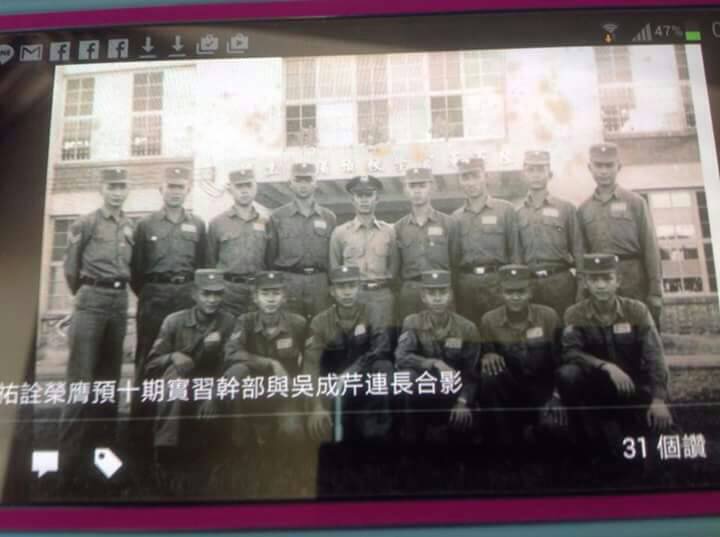
原本9月10日組成的預六連只有一個第四排(10、11、12三個班)我編入第十班,班長潘預秦學長(已病逝令人惋惜)班員記得的有銭光東、謝朝武(以上兩位都是我誠正國小同班同學)王冠于、馮堅範、曾勵仁、朱心培、閵立屏(最排尾擔任洗衣公差,全班要洗的軍服及洗好的軍服床單被套等都由他負責送去及領回),9月16日連上又來了一批傋取生及由預四預五兩連調撥部分同學加入組成四個排每排三個班的完整預六連。預九期屬於預一營轄預一預二預三連,每連各派出十分之一較為優秀的同學(十餘名)至預十期的四、五、六連擔任實習班長,我們六連的班長是由預二連派來的,個個內務整齊,尤其是棉被雪白摺的像豆腐干般方正,動作口令非常標準,記得的人名有任達重、周樹森、喬川洞、侯啟泰、劉百強、潘預秦、王小齊、吳梓敬⋯等學長(照片如留言版,感謝任達重學長提供)。我們的營長是段書立中校,騎兵科的口令宏亮要求嚴格,副營長寧發鼎少校喜歡碎碎唸,同學私下叫他"寧婆婆"。班主任周興全上校每次集合講話都要強調預傋班的精神口號"年少志氣高、處處有禮貎、事事守規矩、人人誇讚好",對我們不斷教導做人處事要領,是令我們敬重的好長官。
懷舊篇-63
我們新生除了觀看著裝、內務規則、軍人禮節⋯等一系列的示範外,還要學唱校歌及多首軍歌(包括早點名唱的"打倒俄寇反共產反共產"我小學時就會的歌),早上五點半起床後便忙著摺蚊帳、棉被、著裝、盥洗,全部動作要在20分鐘內完成,早點名由連長主持,隨後晨操、跑歩、基本教練、打掃清潔區,07:30早餐有豆漿或稀飯配饅頭,至今我仍覺得還是當年在軍校的饅頭最好吃(真正老麵的手工饅頭)。每天八節課除了每週五下午兩小時基本教練大會操外完全和一般高中一樣,第八節課我們最喜愛球類活動,但是為了十月下旬歸國華僑蒞校參觀,除了正期生的閲兵分列外就是我們預傋班的八趟拳表演,體育教官韓上尉為誘使我們認真學習,聲稱日後會帶我們到台北表演,有機會回家探視,大家信以為真,結果每年表演完(第二年以後換成波浪舞)後也從未到過台北表演,同學們私下給他取個外號"韓騙子",可見做不到的事絕不能亂開支票。我們新生第一個月不放假,十月十日國慶日首度可以外出,因為黃色特多龍的夏季軍便服尚未撥發,我們乃穿著平時的草綠軍服外出,當時我們比照上等兵一個月薪水85元扣除洗衣費及理髮(每週一次由理髪部派兩位小姐來連上,中山室放兩把椅子各坐一名同學,兩位小姐同時動工一位剃刀加裝三分厚套子專剃頭頂,另一位專剃兩側及後腦,不到數秒後兩人很熟練地交換位置,一顆頭經過兩位髪姐接力剃好且只需30秒左右,二者的施工交界處也不難看,真是令我們大開眼界)費僅餘55元,第一個月因校方代購許多日用品於報到時發給我們,要從薪水中扣除,歸墊之後大家已無錢可領,上級特別借每人50元譲我們休假外出之用以後再由月薪中分期扣還,連長還規定每人要在學校郵局開戶每月都要存款,還真是艱難的任務。第一次放假外出後我首先到官校對面黃埔新村西一巷父親的好友陳伯伯(陸軍團長)家中代父親問候他,他比我小三歲的大女兒見到我這穿著軍服的毛頭小子覺得很新奇,一直大笑,直到我出門後還聼到她大聲說"好好笑喔",令我感到有些不悅,覺得她是少見多怪。當年放假外出一般是到高雄看場電影,票價7元(首輪的)公路局來回車票3元,再加上用餐或至冰果室吃冰品,約需花費20元左右,因此大家都精打細算省著花用,沒錢時便留在學校打球游泳吃免費的中晚餐。
懷舊篇-64
我們入學時的校長是第八任的張立夫中將(浙江嵊縣人、黃埔八期,54年3月一59年3月)接替他前任四期的學長艾靉中將(50年1月一54年3月),張校長氣宇軒昂有大將之風,同學們都極為崇拜,每週一上午第一節為全校集合週會,每個月有一次兩個小時的大週會,都是在校部大操場站著聽訓,校長學識淵博講詞頗具深度,校方定期集結成冊列檔。每週校長固定會至我們預傋班餐廳共進一次午餐,由值星的中校營長發立正口令後全場寂靜無聲,只聼到校長的皮跟鞋走路叩叩的聲音,待全體坐下後他便指著某一排餐桌要求將最後一位同學的餐盤拿上來與原本為他傋好的餐盤交換,如果菜色差異過大便當場指責相関幹部,他的目的是長官與學生的伙食不能有差別待遇。 校長經常以「你是國家、國家是你」八個字期勉我們,譲我們時時刻刻體認雙肩的責任,自民國13年建校以來先期學長完成東征北伐等重要戰役,後來的抗日、戡亂、古寧頭、一江山、八二三等戰役都有學長們可歌可泣的事蹟,令我們粛然起敬。校部正期生及我們預備班的每一棟營舍都是以為國捐軀的革命烈士命名,希望後期學弟永遠懷念及效法。
懷舊篇-65
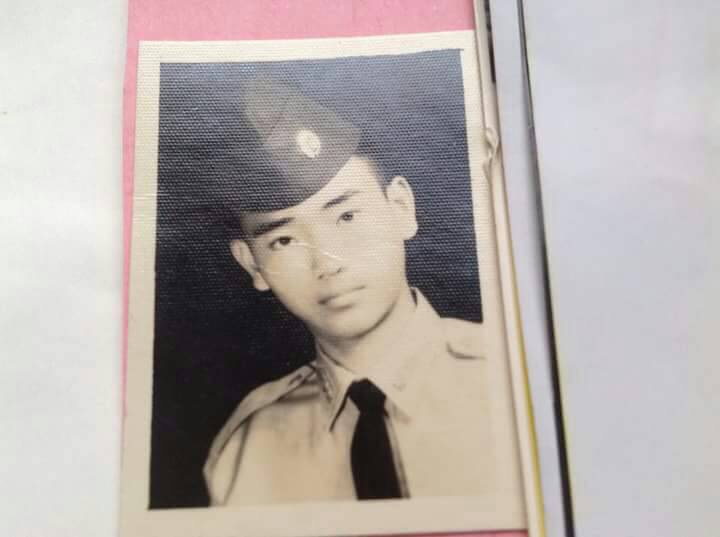
十月下旬我們領到新的黃色特多龍夏季外出服及船型帽,同學們都穿著新軍服拍照留念,我也拍了一張半身照留存至今,此照片也是我進入軍校後拍的第一張,看上去似乎有些青澀,可我們都像班主任說的"年少志氣高"對未來充滿希望。 預備學生班的足球代表隊隨著部分隊員畢業需要補充新血,某日在校部足球場實施新隊員選拔,預八期及我們預十期數十名報名者逐一運球射門及控球、停球後由教練及校隊學長完成評估,我及黃可夫、王漢平、黃東蓀、劉如惠、趙德運等六名預十期加上預八期數名學長獲選加入班代表隊,原本預九期的隊員則有何立邦、黃振興、孫錦生、楊六生、井龍海、李政華、關先煌⋯等學長。球隊組成後撥發球衣、球鞋等裝備每天第八節課到校部足球場練球及體能訓練,有時與校代表隊的學長一同訓練,記得有唐玉貴(35期)孫寶鐸(36期)周洲(37期)譚漢生(37期)戴長生(38期)及後來39期的頼宗男及冦耀南學長。在教練及學長認真指導下加以場地標準我的球技大有進歩,在初中時看亞洲盃足球賽電視轉播(至父親任職的印製廠中正廳看黑白電視)由香港一批甲組球員代表中華隊奪得冠軍,我極為崇拜其中踢前鋒右輔位置球衣背號九號的球員張子岱(他的弟弟張子慧也是國腳)我加入班隊後正好擔任右輔分到九號球衣,當晚幾乎興奮得睡不著覺,後來這九號便一直屬於我直到七年後官校畢業為止。
懷舊篇-66
10月31日 總統七秩晉九華誕,一大早天未亮値星班長便吹哨命大家起床,迅速盥洗後在連集合埸集合,連長宣布耍至後山「晨呼」,我們隨即沿著營房與南面的步槍靶場之間僅寛三米蜿蜒向東的小徑登上612高地(海拔61·2公尺),當時頂端空無一物,後來以鋼筋混凝土建了一棟只有支柱及平頂的野外教室,我們在那裏高唱〈領袖萬歲歌〉"領袖領袖偉大的領袖,您是大革命的導師,您是大時代的舵手,讓我們服從您的領導⋯⋯"及呼口號"蔣總統萭歲"待日出後才沿原路返回營區,此刻我想起在讀誠正國小時每逢這一天校方會把一間教室佈置成壽堂,各班輪流入內拜壽,還有壽麵可吃。 我們回營區後打掃環境、早餐後經內務檢查合格便可放假外出,至於前一天晚間的祝壽晚會是由軍中國劇隊在校部司令台演出平劇(我們最不感興趣的)。晚餐後至教室帶著課椅右手穿過靠背空隙握住椅腳間橫桿,椅面貼著前胸,四隻椅腳向前,成連行進縱隊通過化龍橋至大操場集合觀賞,一開場鑼鼓齊鳴我們也跟著鼓掌吆喝(電影中戲園子裏都如此)沒多久便有一大半同學提前就寢了,約莫過了三個小時(平劇通常最久)表演完畢演員謝幕時喧天的鑼鼓聲加上嗚立哇嗚立哇的管樂聲吵醒了大夥,再度爆出叫好及熱烈掌聲,此時已經十點左右,回程途中許多同學閉著眼走在隊伍中若遇前面突然停止前進便會聽到許多椅子追撞的聲音,這種情景在往後的兩年多經帶發生。只能說年輕人需要睡眠,早上五點半起床出操上課累了一整天,中午一個小時午休,內務不合格的同學還要帶著棉被蚊帳等到籃球埸烈日下出棉被操,結果果是越操越慘,棉被曬得更膨鬆,永遠弄不成豆腐乾反而像是海綿大蛋糕,有些同學經常為了內務不及格(一週內有三個x以上)而遭到禁假處分,他們心中肯定是恨透了那床蓋起來非常溫暖的大棉被。
懷舊篇-67
54年11月 總統親臨本校主持三軍官校及空軍飛行學校(51年成立、57年併入空官校)聯合畢業典禮,所有畢業生及夲校在校正期生均穿著閲兵服在操場閱兵線就位,我們預傋班學生則在東西看台旁列隊觀禮,當總統座車進入校門時號兵吹立正號全場立正,總統抵達司令台時樂隊奏樂,35期實習團長曾長海學長指揮部隊向 總統敬禮後恭請閱兵, 總統乘閱兵車經過受校部隊時各實習連長發敬禮口令所有人員向右轉頭行扶槍禮目迎 總統至正前方不再目送,閱兵完畢 總統回到司令台此時實習團長持刀禮後大聲報告"閱兵完畢,分列式開始"並向後轉面向部隊下達口令"分列式開始、拖槍、向右轉、齊步走"樂隊同時演奏分列式曲,司令台前煤渣跑道旁有四名站在標兵台上姿式標準的標兵,部隊通過第一標兵時開始由齊步變為正步,第二標兵時全體向右看注視大閲官,第三標兵時向前看,第四標兵時改為齊歩走,每一階段都要聼各實習營、連長口令。所有部隊分列完畢後回到閱兵線, 聽口令成聼訓隊型集合,此時最壯觀的景象是所有隊旗向中央集中成一長排很整齊的向司令台前跑步前進,我們也從看台兩側跑到分配之定位,這可是我第一次親眼見到 蔣總統及聼他訓話,內心相當激動,浙江奉化的鄉音約可聼懂七成。聼訓過程中我們不能有任何手部動作,縱使汗水流進眼睛也不能擦,司令台頂部有專人監看,凡有亂動者記下單位及所站位置事後追查人名予以嚴懲,典禮禮成前全體高唱〈領袖萬歲歌〉當唱到"領袖萬歲、領袖萬歲"時 總統以金色權杖答禮,我突然激動的全身起了雞皮疙瘩。中午在校部大餐廳由 總統主持會餐,我們預傋班每個連派兩名代表參加會餐,我被連長選中代表預六連出席會餐,那可是我入校以來最為豐盛的一餐,餐畢 總統要離開前特別至每個長條餐桌間通道巡視學生,我們起立鼓掌,他經過我身後時相距不到一米,我轉頭發現這位近代史上的偉人滿面紅光兩眼有神步伐穩健,頻頻向我們點頭致意,那是我此生最為接近 蔣總統的一次經驗。
懷舊篇-68
當年我們的個人裝備與官校正期生的差別是少了大盤帽、鋼盔、夏季軍常服、冬季軍常服、閱兵服、閲兵帽及團體裝備Ml步槍,多了一頂船型帽及一件艾森豪夾克(短版的),剛入學的我們沒有訂製運動服,華僑來校參觀時我們穿著公發的白平布長褲(像一般年長者穿的腰間有繩子的睡褲)上身穿白汗衫胸前印有紅色大大的陸軍两個字,腳穿黑色布面及鞋底膠鞋, 同學們都覺得土到家了,穿這樣還能在上千外賓面前表演,現場還有很多記者拍攝,如此扮像後來還表演了許多場次,直到第一學期末放寒假時每人領到春節雙餉及放假期間的止伙費才全期統一訂製一件牛仔布短褲及短袖白色上衣,許多同學也到高雄光復戲院附近的西服店訂製便服,當時流行的是AB褲(喇叭褲已落伍)褲管較窄較短還會露出一截白襪,褲管兩邊外側接縫處還刻意凸出一條半公分寬的布邊(稱為單邊褲)兩年後又流行雙邊褲。鞋子則是黑色皮底皮跟的尖頭叩叩鞋,因為公發的大頭皮鞋實在太土,且多少留有甸伏前進磨損的傷痕,幾乎每個同學都訂製或買了較為帥氣的新皮鞋,寒假外出時搭配冬季艾森豪夾克軍服顯擺一番,平常例假日則還是乖乖地穿著圓頭大皮鞋,否則遭校外糾察登記違紀便等著受處分。 連上的實習幹部(預九期)為訓練我們著裝速度及緊急應變能力有時會在半夜吹哨緊急集合,嚇得我們從床上彈跳下來,穿衣褲鞋襪都還不難,最麻煩的是每人都配發一付草綠色布質10公分寬一公尺長尾端連有兩公分寬30公分長布條(記憶中的大約數據)的綁腿,平時捲成兩圓筒狀,此時需用它將軍褲管下端緊緊的綁好,常有同學採高跪姿綁某隻褲管時放在一旁圓筒狀的另一支綁腿混亂中遭人踢不見了(不能開燈)或是踢散開了要重新捲成筒狀才行,部隊集合完畢後常見有人只綁了一支綁腿的,那畫面有點好笑,軍事管理就是嚴格的訓練,著裝不及格或集合遅到者便被罰做伏地挺身或交互蹲跳(後來改稱開合跳)也同時可鍛鍊臂力及腿力。
懷舊篇-69
當我要離開家赴陸官校報到之前父親叮嚀我務必照顧好自己的身體,耍聼從長官及學長的教晦及每十天要寫一封家書報平安,我也答應父親一定做到,爾後在軍校的七年中我均能按約定寫家書報平安,因特別原因而延誤幾天的狀況不超過十次,總計寫了約兩百封家書,內容不外乎長官學長對我們都很照顧、伙食不錯、身體安好、己完全適應軍校生活、問候家人⋯等,避免家人擔憂,父親也是按時回信,有時延誤回覆必定一開頭便致歉,內容多為家人安好勿念、天候變化要注意衣著、要德、智、體、群四育併進⋯等,以草書文言文方式書寫,剛開始約有一成的字不易辨識,後來便漸能認出,父親最為推崇的歷史人物是同為湖南湘鄉的曾國藩(與李鴻章、左宗堂、張之洞並稱「晚淸四大名臣」,諡文正),後來有機會拜讀「曾文正公家書」後發覺父親的家書似有相同的期許。 我在初中時以理科較弱,進軍校後特別加強理科研習,後來連上推行小老師制度,除了各科專任老師正常授課外,晚自習時指定各科成績較優的同學擔任各教授班(每排編成一班)小老師上台解題或協助同學複習重點,我很榮幸被指定為物理小老師,經常耍在黑板上以粉筆解說試題,也讓我為課前準備更加努力,相對獲益。我們預傋班的教室是一梀兩層樓L型建築(分別面東及面南)我的教授班位於面東向的一樓,教室東面有一大片草地,其中設罝一座單槓場地,某週六下午大掃除完畢後全連集合至單槓場測驗引體向上,我在滬江高一時曾拉過全班最多的16個,心想此次能否再創佳績,由於加入足球隊後每天練球時都有加強體能訓練,包括臂力、腰力、腿力等,測驗結果我拉了21個為全連(140餘人)最高,較一年前又進歩了5個,真是要感謝軍校的鍛練譲我變得更強。
懷舊篇-70
當年內務不整的同學會被出內務操,多為中午午休時間在營房西側的籃球場,而不守紀律的同學(如集合遲到、不守餐廳及課堂秩序、見學長不敬禮、頂撞或不服學長、偷抽煙、打架⋯⋯等)則參加軍紀操(又稱特別操)多利用晚點名之後至熄燈之前在籃球場南側沙石地或靶場草地。當時16、17歳的年少輕狂毛頭小子正值叛逆期,要人人都符合班主任周上校期望的「事事守規矩」幾乎很困難,因此每天脕上都有軍紀操出現,被操者僅著內衣褲隨著學長口令快跑前進、臥倒、甸伏前進、起立、交互蹲跳、伏地挺身⋯等一連串的操練弄得精疲力盡,手掌、手肘及膝蓋破皮,大凡被操過的同學都會乖個一段期間,有時學長也會選擇營房南邊的步槍靶場草地出操,被操的同學心中暗喜不在沙石地爬手腳不會破皮,誰知人算不如天算,該片草地中混雜了許多有刺的含羞草(南台灣盛產,我們稱為黃埔草)黑漆媽鳥的也無法閃避,一番操練後雙臂及雙腿留下一條條刮痕,後來大家看到那片暗藏危險的草地都心生畏懼,一學期下來全連未嘗過軍紀操的同學屈指可數,我也在草地及沙石地各體驗一次,人生總是會歷經各種磨練才能成長,從一年級下學期開始直至官校畢業前便再也未接受軍紀操了。
懷舊篇-71
當年我們看到官校四年級(35期)擔任學生實習團長的曾長海學長穿著帥氣的閲兵服揮舞指揮刀號令兩千多名學生部隊時真是崇拜的不得了,有次他特別走到我們面前用低沉而中氣十足的聲音問我們是幾期的、多大年齡,並且拍拍我們肩膀説"好好加油"譲我們非常興奮,也令其他同學羨慕不已,就像追星族能跟心目中的偶像近距離接觸一樣。 我們每週有兩次晚點名後班長會帶我們至靶場大聲練習口令,直到熄燈前才回寢室,每個人都使勁地大喊,後山曠野全無居民故無擾民之虞,班長每次還會讓有意繼續練習的人留下多練十五分鐘,我每次都是留下的兩三人之一,往往次日說話沙啞但隔兩三天正常之後再練習立馬發覺音量變大一些,如此反覆十數次之後便不再沙啞,喊口令也宏亮許多,大嗓門就是這樣練出來的,難怪唱平劇的每天都要吊嗓子。我們在寢室有時趁休息時間將上舖床腳上附著的鈻質蚊帳桿取下握在右手當成指揮刀模仿實習團長喊口令、報告人數、撇刀敬禮、收刀⋯⋯等,輪流表演,自得其樂,也算是我們的餘興節目。 第一個學期結束隨著便是我們日夜盼望的寒假,家住台南以北的同學好幾個月都沒有見到家人,都非常想家,由於放假前發放春節雙餉及寒假期間伙食費,每個人都有五、六百元,之前我曾提過至高雄訂製便服之事,也有許多同學為家人採購禮物,放假的前一天大夥都幾乎興奮得睡不著覺,第二天上午每人背著行李包(黑色方型)集合,連長宣布休假注意事項(不得酗酒、賭博、進入不正當場所、要按時返校⋯等)後我們便暫時揮別了生活四個多月的營區,走路經過黃埔四村五村到達前庒搭乘公路局班車到高雄再乘坐往台北的平快火車(柴油車頭,有電扇沒冷氣)最後幾節車廂幾乎被我們包了,人人興高釆烈,平快車幾乎站站都停中午用餐時間我們向列車服務員買了鋁質圓盒的鐵路便當,菜色及味道都不錯,沿途月台上也有許多賣便當的小販喊著"扁冬扁冬、休A扁冬"(台語)。我們將吃完的空盒置於座椅下面,約半小時後便有一服務員拿著一支三尺長的鉄勾一路蹲著很熟練的將空盒一一掏出拿走,數年後改為紙盒便當便再也見不到這些場景了。車行途中陸續有同學下車但都是零星幾位,最大批的還是我們住台北的,大約晃盪了六個多小時於下午四點多經過中華商場,平交道噹噹的警鈴聲告訴我們即將抵達台北站,有同學帶頭唱起校歌,頓時最後兩三節車廂全部大合唱,停在平交道旁的民眾都覺得很奇怪,抵達台北車站後大家拜個早年互道珍重便各自返家。
懷舊篇-72
由於我先前已寫信告知家人大約會在下午五點半之前到家,待我乘台北往新店公路局車下車往眷村的碎石路時,村中五六個小兄弟四保、小毛、黑皮⋯等早已在砲兵營區附近等候多時,立馬前呼後擁陪同我走回眷村,我心想不過是讀軍校放個寒假返家而已,怎麼弄得像是從前線打勝仗歸來的陣仗,回到村中也是許多鄰居都來圍觀我這個少年兵,見到久違的家人格外開心,母親早已傋好豐盛的晚餐,妹妹說我的臉怎麼黑黑的,我用衛生紙擦後全變黑了,原來柴油車頭冒的黑煙,我將臉湊近窗口觀看沿途風光燻了六個多小時的結果,洗完臉後坐上餐桌見三個妹妹鬼鬼祟祟地拿出一個自製的鮮花花圈套在我頭上,全家爆笑不已,我便帶著花圏及一股暖意享用回家的第一餐,可我的用餐姿式令家人看呆了,椅子坐三分之一,腰桿挺直,雙臂夾緊,挾菜吃飯像是機器人的動作,母親驚訝地說進軍校幾個月像是換了個人。飯後全家共敍天倫,我將傋好的刮鬍刀、手套、女孩的項鍊飾品等分送家人並分享我軍校的生活趣事,全都聼得津津有味,直到很晚才就寢熄燈。
懷舊篇-73
返家的第一晚睡得很舒適,次日晨間六點左右我便起床將白色棉被摺的方方正正還拉出稜線稜角,盥洗後便至院中晨操及伏地挺身,母親見狀問道為何不多睡一會兒(以往假日我都睡到八點以後),我答説習慣早起了,稍後妹妹們陸續起床看到我床上像豆腐乾的棉被驚呼連連,她們的玩伴來家中時也帶她們參觀奇景。 放寒假前的聖誕節前我至書局挑選了三張精美圖案附有亮粉的聖誕卡片寄給三個妹妹,結果只有大妹、二妹收到卡片,國小四年級的小妹心中極為不爽,當天晚餐都不想吃,母親則安慰她說一定是郵局出了問題哥哥不可能漏寄妳的卡片,果然兩天之後小妹也收到了卡片,聖誕卡片的風波終於落幕,可令我不解的是為何同時寄出的卡片會有兩天的時差。 我在軍校期間父親曾攜家人至西門町的地標建築中的世界酒店(七樓是七重天歌廰後改成真善美戲院、一樓後來是新世界戲院及麥當勞)吃了一次自助餐,舞台上還有表演(唱歌、跳舞、魔術⋯等)每客55元(含小費),在當年已算高檔消費,家人都很滿意,父親說等我放寒假時一定要請我去吃一次。 某日我們全家至該酒店用餐,我第一次嘗試自助餐(把費),一張長枱擺滿40多道菜肴,還有飲料、甜點及各式水果,讓我吃得飽飽的,表演的節目也很精彩,可是一客55元的價位正是我一個月85元薪水扣去理髮及洗衣費剩下的錢,實在太貴了,後來我們便再也沒去吃那種大餐了。
懷舊篇-74
某日我邀請同連的徐景平、高箴⋯等同學至我家吃母親拿手的手撖麵片,用家中最大的鍋子煮了滿滿一鍋,竟然全部吃完,徐景平是全連的帥哥,一口標準國語、風度翩翩,與母親是東北老鄉,二人談得很投緣,可徐兄後來卻在某車站月台不慎遭火車輾斃,令人震驚及難過。當年台北東區尚未發展,更沒有信義計劃區及其他商圈,我們最常逛的就是中華商埸及西門町,中華商場分為忠、孝、仁、愛、信、義、和、平等八棟建築,我們買皮鞋、服飾多在前排一樓、音響零件則在後排面臨鐵道一樓,最醒目的招牌便是愛棟頂部與新生大樓遙遙相對的國際牌電器的巨大霓虹燈了,招牌美食則有後排一樓的徐卅啥活、信棟一樓的點心世界及二樓的真北平。過了鐡道有經常光顧的峨嵋街唱片行以15元買學生之音或冠軍集錦等西洋歌曲排行榜黑膠唱片,通常可在該區塊消磨一個下午。
懷舊篇-75
之前艾中將任官校校長時校方模仿西點軍校定期舉辦舞會,學生穿著有領結的禮服攜女伴參加,一年級生則擔任服務人員,張校長接任後取消此項傳統(以上係聽學長說的),我們放寒假後連上喜愛跳舞的同學晚間攜女友至北市延平南路的三軍軍官俱樂部購買門票入內(勝利廳)跳舞,還有樂隊伴奏,也曾邀請我一起參加,我以沒有女友及不太會跳舞原因婉拒了,後來三官也停辦舞會不知是否因經國先生任行政院長推動公務人員十大革新運動所致已不可考。一個多月愉快的寒假很快便結束了,當我要乘夜班火車南下時三個妹妹全都到台北車站送我,我坐在靠近月台窗口與她們話別,當火車起動後望著她們依依不捨的表情逐漸模糊至消失在視線中,我竟也濕了眼眶, 從小我與家中姊妹感情一直很好,記憶中從未有爭吵翻臉情形,為避免再見令人感傷的場景, 後來我便要求她們不必再送我到車站了,直接在家中道別即可。回到學校開始一年級下學期的生活,收假當晚連長主持了一個小時的「收心操」基本教練,希望我們儘快忘掉那五光十色的花花世界,回到軍校這現實環境專心學習,其他預四及預五連也同時有「收心操」的節目。雖然第一晩大家都經歷了收心操但第一個禮拜同學們仍然心情不好,常發生不服管教等情緒性反應,後來便逐漸恢復正常了。新的學期在實習幹部方面做了調整,原本由官校四年級擔任的實習副連長及三年級擔任的實習排長,改由預九期學長擔任,原預九期擔任的實習班長由我們同期同學中挑選擔任,我奉命擔任第三排第九班實習班長,左手臂袖子外套上布質臂章,實習排長有陳體端、吳子敬、王小齊、劉百強、羅世昌、任達重⋯等學長(中途有輪調)實習副連長為吳永傑學長,他皮膚黝黑、說話重低音發自丹田,有些像35期實習團長曾長海學長,頗有威嚴,是同學們崇拜的偶像,才十八、九歳就當了副連長,我心中暗想是否日後也能有此際遇。我們第三排的實習排長任達重學長表情嚴肅要求嚴格,他還會武術的拳法及棍法,經常在連上團康活動時應要求出場表演博得如雷掌聲。實習排長們個個口令及基本動作相當標準,我們不斷觀察學習獲益不少。
懷舊篇-76
當年學校的教育長黃烈少將與校長張中將同為軍校八期同學,身材高大,學識淵博(美國陸軍汽車學校、輜重兵學校、指參大學43年班)在我們印象中是慈祥和藹的長官,可後來預傋班發生兩件違反校規的事情讓他動怒了,其一是某位學生因好奇將校史館中展示的古董槍枝偷出去把玩遭到憲兵查獲,另外是有學生至牛肉場觀賞節目遭校外糾察抓到。 某日教育長在全校週會時用他的鄕音平淡的說出"宇杯班滴蕭捧又"七個字,隔了數秒後臉色一沉大聲吼出"透搶、砍打推誤"(原意譯為:預傋班的小朋友,偷槍、看大腿舞),為此足足訓斥了半個小時,後來我們連上的李鴻智同學經常模仿這個片段,聲音表情都極為傳神,犯錯的學生都受到嚴厲的處分。 每年的三月二十九日青年節照例要舉辦校運會,我代表預六連參加四百公尺賽跑、四百及一千六百公尺接力等三個項目,為了買雙釘鞋我事先存了些錢,某日我至 鳳山的體育用品店買釘鞋時,店員拿出一雙鞋説190元,我覺得太貴,他立馬說不然你買台釘的只要120元,我問為何那雙耍190元,他說那是日本製的釘子較耐用,後來我還是買了一雙台釘的(因錢不夠)它的釘子長度較日釘長上許多,但是一場運動會(含平時練習)下來釘子變得比日釘還短,我不免感嘆為何一隻小小的鐡釘都要比日本貨差?幸好後來國家全面工業升級,MIT的商品成為品質的保證(除了一些黑心食品外)。
懷舊篇-77
當年我們的餐桌是長方型的,每張桌子五人,十幾張桌子接成一長排,每人有固定的位置,用餐前食勤士官會將菜肴分裝在自助餐盤內,進入餐廳就座後會發覺運氣的差異,例如香酥鴨則以鴨腿最好、鴨胸次之,鴨尾最不受喜愛(有股怪味),豬肉排有整片瘦的,也有整片肥的没人愛。同學們正値成長階段飯量很大,兩桌交界處有一木質飯筒供十人食用,很快便見底了,有的同學將空筒故意放在中間走道地上讓台上長官看見以暗示他們沒飯了,此時輪值辦伙的連輔導長立馬到處調撥解決,我們使用的飯碗是鋁質附有兩環狀握把,容量相當於一般家用瓷飯碗三碗,有飯量大的同學第一次只盛半碗開動後快速吃光立馬再添上滿滿一碗慢慢享用,我曾見班上兩名同學比賽誰吃得快,兩人各盛滿滿一碗還冒出頭的白飯,開動後埋頭猛吃,結果由一名謝姓同學以47秒勝出,成為紀錄保持者。 午餐及晚餐都傋有湯,用大桶放在走道,一般都是豆腐丁、蛋花、漂幾片青菜,打撈時需有技巧,大夥興趣缺缺,但若是某餐有香酥鴨時,湯桶前則會出現排隊現象,因為鴨子耍先煮再炸,當天則有鴨湯可吃。由於菜肴均事先分配好,餐廳雖有紗門窗仍免不了有蒼蠅入內,各連均挑選數名「打蒼蠅公差」一下課便直接提前到餐廳打蒼蠅,古代俠客背上背著寶劍,他們則是經常背後褲口袋插著一支蒼蠅拍,有的學長規定每天要打上百隻的「業績」,在餐廳中很難完成任務,某日中午午休時我見到本排的打蒼蠅公差從外面滿頭大汗卻很興奮的回來,手中的小紙盒裝滿了死蒼蠅,好像挖到寶藏似的說他跑到三公里外靶場後面的養豬場隨便揮舞拍子便打到一堆蒼蠅,真是「業績」逼人!軍校的伙食使原本一般身高的同學變化不大,可許多排尾的洗衣公差卻像冒筍子似的幾年下來長高許多,甚至擔任掌旗兵(身材高大威武者),相信各期學生都有相同的現象。
懷舊篇-78
為準傋三月二十九日校運會競賽項目,連上參加的選手一個月前即展開練習,除了釘鞋與煤渣跑道的適應狀況,還有接力賽跑各選手的交接棒練習(尤其是400接力分秒必爭),團體項目還有拔河、爬竿接力、大隊接力賽跑、游泳大隊接力等項目,均以連為單位競賽,我參加爬竿及大隊接力賽跑兩項。校運會三天期間校區開放,同學們都像在校內渡假,沒有參賽的同學帶著親人或女友逛校區、參觀校史舘、至黃埔湖照像⋯等,我們參賽者則在校方分配看台兩側大樹下的休息區待命檢錄報到,所有項目分為軍官組、學生組及預傋學生組,學生組包括35至38期學長及專修班學生,預傋學生組則含預8、9、10期的學生,我們預六連參加400公尺接力一至四棒為我、劉偉琪、樊永生(已過世)朱忠信。1600公尺接力一至四棒為馮堅範、鍾雪屏(己過世)、祝成雄、我,以上兩項及我個人參加的400公尺賽跑後來均無緣奪牌,幾乎大半獎牌均落入學長之手,我們只有藉此機會吸取比賽經驗,畢竟還有六次運動會來日方長,也因為傋戰競賽項目而練習了一個月在體力及速度方面均有進步且達到健身效果,還是有收穫的。預傋學生組的最大贏家耍屬趙振鵬學長(拳擊校隊,後來在銘傳商專任軍訓教官時被國民黨徴召參選北市區域立委當選)擔任連長的預八期第八連,所有項目的競賽都可見他在現場聲嘶力竭的吶喊加油,部隊指揮官親臨前缐是鼓舞士氣的最佳方法,加上旺盛的企圖心及嚴格的訓練才能收到好的成效。當年的趙學長確實給我們這些小老弟上了重要的一課。
懷舊篇-79
我們預十期第四、五、六連連長楊作川、李學珠、林猷唐三位學長均為期內百中挑一品學兼優幹部(預五連後來換為苑景崑學長)上級特別指派他們來培養我們這一批革命的苗子,力求確實紮穩根基,我們六連連長林中尉是工兵科,看似文弱書生型卻極有威嚴,雙眼幾能看透我們的心思,同學們均畏懼三分,他駡人的口頭禪是"窩囊一鼻屎"至今我仍然不懂是啥意思,他經常在早晚點名後要全連唱一首軍歌〈老兵〉,其實這也是我最喜愛的軍歌,它的歌詞的確將老兵的心境刻劃得很傳神。發音後大夥齊聲高唱"飄揚的旗幟 嘹亮的號角 戰鬥的行列是他快樂的家 一心一意熱愛著祖國 更把生命獻給了他 道不完南征北討的往事 數不盡一身光榮的瘡疤 那怕白了少年頭 報國的心意 就像一朵不凋零的鮮花"連長有很強的求勝心,為訓練連上的拔河隊,到靶場將繩子一端綁住一群竹子樹幹,命選手死命拉扯,竹子的彈力產生相反的力道藉此強化選手的握力、腰力及腿力,爬竿賽也是每天抽空反覆操練至手掌都磨破了皮,其他各項比賽也豪不鬆懈地密集訓練,當然也沒忽略課業、軍紀、環境內務⋯等。連輔導長鄔允良中尉(政校九期美術系)身材高瘦,心思縝密,調皮搗蛋同學心中的小九九都被他事先料中,他常到廁所抓偷抽煙的學生,廁所是半人高隔牆,只要見到某一間冒出煙來他立馬衝上前由上方老鷹抓小雞般活逮。晚自習期間有時同學們吵鬧不看書,輔導長騎車至教室查堂,只要一聽到腳踏車架車發出的聲響大夥立馬乖乖看書,某日他竟然無聲無息地出現在教室當場抓到幾個吵鬧者到走廊罰站,他們才發覺輔導長的車並未架好而是倒在教室前的草地上,真是服了他。還有一次月底慶生會加莱,我負責監廚任務,下午四點左右全連在教室前集合準備帶隊前往校部運動,我向輔導長報告要留三名同學下來協助分菜,立馬有一大票志願者舉手,結果值星官挑了三人隨我回到餐廳,輔導長騎著車隨部隊往校部出發,慶生會(每月一次)菜色豐盛,三名公差很興奮地分菜偶爾也會吃上一兩塊,此時突然見到輔導長衝進餐廰大喊"不准動"他們都嚇呆了,我們四人被叫到餐廳外面逐一審問"有沒有偷吃"我們均回答沒有並同時張大嘴巴以示清白,可最後一位潘〇同學(個子最矮站排尾)被問到時並未回答僅搖頭表示未偷吃,輔導長大怒摘下頭上的船型帽重撃潘兄頭頂大駡"你還不老實説"此刻潘兄口中突然掉出一粒鵪鶉蛋在地上滾動,我們見狀只能咬牙不敢笑出來,此事足以見證輔導長的機智,至於他的美術長才也在校內得以發揮,南營區體操館外牆上兩層樓高的巨型人體運動姿式立體浮雕便是他辛苦了一個多月的傑作,每天弄得灰頭土臉的那一陣子比較沒空管我們。上個月旅居美國沙加勉度的潘〇兄回台在新店38期學長開的蘇〇餐廳聚餐時我提到這一段49年前的往事他仍然記得,他說他最怕的人就是鄔輔導長,我們也聊了許多當年連上趣事,非常愉快。
懷舊篇-80
54年下半年父親任職位於新店的陸軍印製廠廠長徐上校退伍,父親以中校副廠長代理廠長職務,某日上午八時左右家住新店北宜路(新店國小附近)的陸軍總司令高魁元上將(54年8月一56年6月第十任)突然蒞臨視察(當年陸總部位於北市上海路現中正紀念堂位置),父親陪同他巡視各廠房及報告作業流程、生產進度⋯等,令他相當滿意,対廠區環境整齊清潔也加以讚賞(父親在家中經常要求我們整理環境,玻璃窗絕不能有污點)。回到總部後召見人事主管詢問新廠長人事案作業狀況並當場指示不必簽報三位候選人員直接簽報我父親一人即可(事後人事官告知父親上情),55年元月丨日父親晉升上校及真除廠長職務,直至60年元月退休,後來在友人經營的瓷土廠(北投政校附近)任廠長,每天由新店搭乘往淡水的公路局班車要站兩個小時左右(很擁擠)才能到達,回程也是一樣,非常辛苦(現在有捷運方便多了),大約做了七、八年後才退休在家陪伴母親,每天一大早起床拖地、洗衣曬衣、做好早餐後走到母親床前輕呼"寶寶、起床了"(母親拉拔五個子女長大很是辛苦,父親不想讓她操勞)早餐後兩人一起上菜場買菜,中餐也是父親負責(煮麵、米粉、河粉、炒飯⋯等),晚餐則由父親洗好切好(含配料蔥薑蒜)再由母親下鍋調味拌炒,分工明確,飯後由父親洗碗,晩間一起看連續劇,十點左右將母親送上床睡好再回房間就寢,如此平淡而溫馨的過了二十餘年,民國97年某日晨間父親在後陽台洗衣時不慎跌倒致小腿骨折打石膏,此後便遭到一連串的病痛(帶狀皰疹、膽結石開刀)經常住院,行動不便要坐輪椅,病魔折騰了兩年終於在99年6月2日上午早餐時突然休克,母親打電話給我時我聼到印尼看護瑪利亞哭號的聲音,我火速十分鐘趕到時見119人員將已斷氣的父親置於客廰地上,要我們辦理後事,那段期間我雖然每天回去陪父母吃午餐,但是父親臨終時未能見最後一面深感遺憾,父母於87年受洗成為基督徒,父親的喪禮在教堂以追思禮拜方式遵父親遺命不發訃文不收奠儀,以電話告知親友,結果小教堂坐得滿滿的,原印製廠的老部下來了40餘人,父親的骨灰罈上刻有生前最喜愛的聖經詩篇23篇"我們在天上的父 願人都遵袮的名為聖 願袮的國降臨⋯⋯",想到父親從小對我們的照顧教晦,為七口之家的生活勞祿奔波,晚年還要受病痛折磨,內心極為不忍,今日適逢父親節,願在天家的父親安息在耶和華的殿中直到永遠。
懷舊篇-81
老天爺是否在想説"父親節就是要刮颱風 不然要幹嘛?"。昨天的蘇迪勒颱風造成全台多人死傷,洪水沖毀家園,農作物損失慘重,也毀了許多辛苦父親期待的家庭聚餐,98年8月8日莫拉克颱風造成的水災重創南部各縣市,某政府高官因為陪同父親吃個飯而被駡翻了,最後丟了官,數年前妻參加的婦女合唱團邀請海南島婦女合唱團來台安排於8月8日赴高雄聯合演出也因颱風來襲而取消行程。早在民國48年的八七水災也是父親節期間,多次的時間巧合還真令人不解。 回想我們在預傋班時某次颱風來襲連日豪雨,整個營區汪洋一片,寢室、餐廳、教室(高出地面30公分)全部進水,我們只能穿著運動短褲光腳涉水走到教室上課,不禁讓我想起小學六年級在大寮的國小赤腳上學的日子。連長、輔導長也顧不了尊嚴捲起褲管加入赤腳部隊,至餐廳用餐也是光著腳去,同學們都覺得很新鮮蠻喜歡那種感覺,可等到黃色泥水退去後大夥要清除寢室、教室、餐廳地面的淤泥卻費了不少功夫,偏偏又遇到停水,只有拿臉盆至附近的黃埔湖取水。晚上沒水洗澡,我們獲准分批至黃埔湖簡單沖洗,因天色昏暗連上有四位調皮的同學拿了一頂蚊帳各抓一角下水網魚,除了枯枝樹葉啥也沒撈到,不知那蚊帳的主人當晚是如何睡覺的,至於那次颱風淹水是不是父親節期間已經記不得了。
懷舊篇-82
55年1月8日中共一艘海軍登陸艇投誠於凌晨抵達馬祖,全國媒體大肆報導,三名義士吳文獻、吳珍加、吳春富受到軍民熱烈歡迎,當日下午我們全部學生都到校部大操場會操,某位長官至司令台上用麥克風很興奮地宣布這項消息,所有在場學生都大聲歡呼並將帽子摘下拋向空中。後來安排接送單位忽略行動保密,派出一架水陸兩用飛機載多名將校人員、記者赴馬祖接義士返台,當地民衆還放鞭炮歡送豪無警覺,結果飛機起飛不久即遭共軍米格機追蹤擊落,無人生還,事後多名失職人員受到懲處。真是樂極生悲的典型例子。 陸軍總司令高魁元上將(接任劉安褀上將)上任以後要求全軍發揚陸軍新精神,強調忠誠軍風,人人苦幹實幹,除了將陸軍原有的軟塌的草綠野戰帽改為高挺小帽外,也要求全軍操練緣於韓國的跆拳道,並將其更名為「莒拳道」,從此只要課餘時便由體育教官從蹲馬步、正拳攻擊開始到各型,後來也成了我們在華僑及外賓面前表演的項目,校方也在校區內設置許多半人高的木椿上面纏繞麻繩供我們作為手刀及正拳練習的靶子,經常可看見同學對著靶子猛砍猛K,不知是真要苦練功夫還是發洩情緒就不得而知了。
懷舊篇-83
連上有十多位同學參加了黃埔合唱團,經常利用晚自習時間至黃埔俱樂部與正期學長的其他團員一起練習,據說是準備和高雄女中合唱團聯合公演,他們個個都很興奮,每天一有空就拿著歌本在寢室、教室練唱,十來首歌每天反覆聼得我們也會唱了,記得有一首歌詞是〈到黃埔去 到黃埔去 愛國男兒當自強⋯〉,後來好像真的和雄女合演了,不像教我們打八趟拳的韓教官騙我們説要到台北表演,結果是空頭支票,同學背地裏稱他「韓騙子」。某日課外活動時體育教官集合我們連與另一連在大操場拿出一顆黑色橡膠材質直徑一公尺多的大球,教官說是籠球,那是我從未玩過的,操場兩端各劃一條線,兩連人員分散各處,教官將球在中場拋向空中後所有人奮力將球向對方拍打,大球在衆人頭頂上忽東忽覀,若落地則從落地處重新拋球,是一項講求團隊合作的運動,參予人數很多,非常熱鬧好玩,後來還正式舉辦各連的籠球比賽。 六月十六日建校42週年校慶,照例由總統親臨主持,閱兵分列後集合聽訓,總統多次以濃重的鄕音提到"往舗俊搖"(黃埔軍校),最後在恭讀軍人讀訓時大約僅聼懂一半,呼口號時喊到"蔣總統萬歳"時同學們都放聲大喊,非常激動,中午在校部餐廳的大會餐,我們各連派七名代表參加,我很榮幸奉派參加。 校慶後的某週一上午全校在大操場週會,校長張中將問說在校慶典禮中總統訓話有幾次提到"黃埔"二字。許多學生紛紛舉手,有答八次、十次⋯等都不正確,最後有一位正期生學長答說"十七次"。校長立馬說"答對了,發獎金170元"我們大為驚訝,那可是我們上兵學生兩個月的薪水耶!(每月85元),同時也佩服那位學長的心思縝密。六月下旬以後漸漸進入一年級下學期末,除了準備期末考外也意味著大家盼望的暑假即將到來。
懷舊篇-84
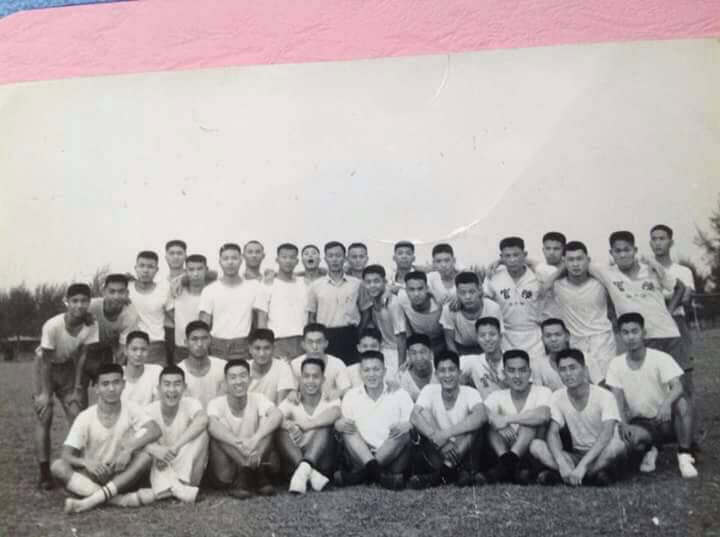
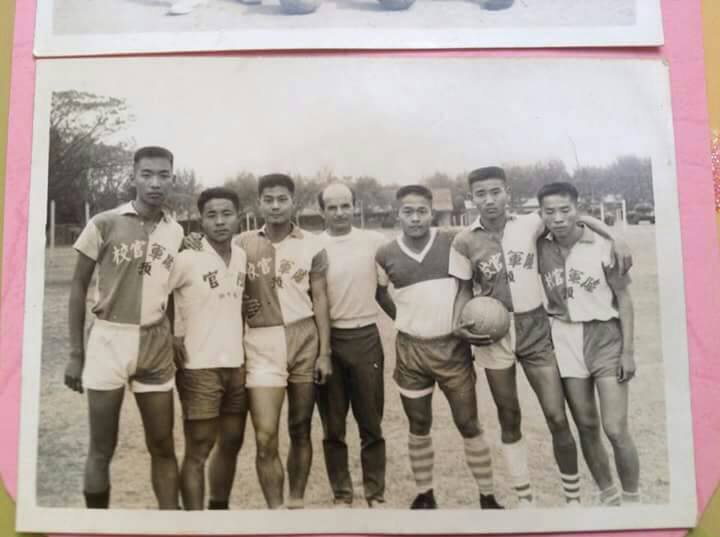
我們當年是以一個排編為一個教授班,此照片是本教授班至校部足球場上體育課時所拍,我在第一排最左邊,教官在後排中央位置,同學們都很喜愛上足球課,練完基本動作後可以分邊比賽。住宿的寢室也是每個排一間大寢室,連上每天會公佈一張內務檢查表,上有全連名字,表上列有棉被、蚊帳、床單、內務櫃、臉盆⋯等項目,負責輪值的實習幹部將檢查結果以"0或X"註記在每人下面的空格內,凡一週累積一定數量的X時便要受禁假處分,反之獲得一定數量的0便可享有榮譽假(週日晚上九時收假,一般人七點半收假),每週還會統計各班總0X數,評定名次,身為實習班長自然感受壓力,經常利用上午未檢查前的下課十分鐘由教室跑回寢室針對全班內務再檢視一番,有不足處加以改進,上課前再趕回教室,目的就是不希望週末公佈內務成績時太過難看。我們寢室地面是水泥鋪面以伸縮縫分割成許多大方塊,平時掃地是以竹葉或棕櫚掃把清除雜物,但週末大掃除時則需蹲或跪著用皮鞋刷一塊塊刷,伸縮縫中的灰塵也全清除(包括走廊),打掃完經學長檢查合格後才能自由活動。
懷舊篇-85
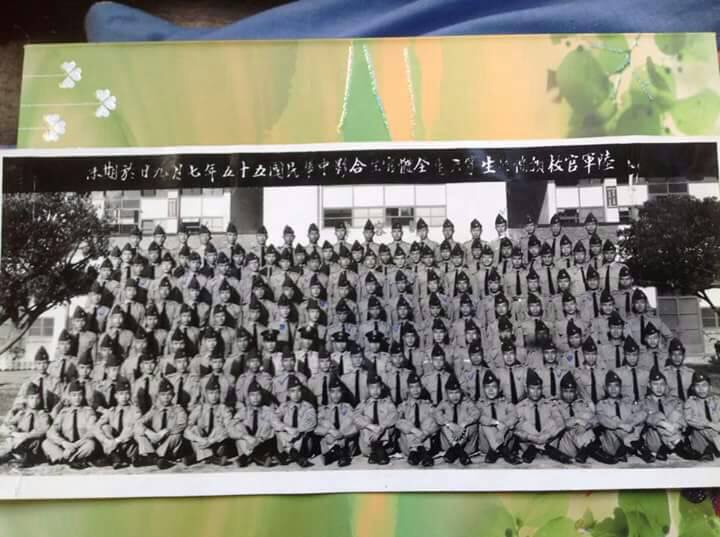
我們非常期盼的暑假終於到了,放假前連長集合全連(55年7月9日)在預二營營房前拍大合照(我在第六排右七),其中也有數名預九期實習幹部,放假前上級突然宣布要我們提前一個月收假接受暑期軍事訓練,原本兩個月的暑假被砍了一半大夥都很鬱卒。一個月的暑假很快便結束了,收假返校當天照例要接受收心操,同時每個人制服右臂上的年級臂章多了一道V字,成為二年級生,暑訓期間我們每人分配一支M1903春田步槍(Springfield rifle)為旋轉後拉式槍機步槍,俗稱「30歩槍」是美軍在一戰及二戰的制式步槍,每打完一發後要將拉柄上提後拉退殼再往前推到底下壓完成第二發子彈上膛,當年多供做各民間高中軍訓課之用(我在滬江高一時曾用它打靶過),我們先接受基本的分解接合訓練,接著每天都排有持槍基本教練,某日全營出操時副營長寧發鼎少校(24期)認為隊伍零亂下令全營以右手持槍(握住槍囗下方護木槍托離地)繞操場跑五圈,前三圈還勉強握得住槍枝,後來漸漸抓不住沉重的槍枝,許多同學的槍掉落地面而受到處分,跑完五圈後感覺右手掌已經不聽使喚了,後來我們才知道跑歩時應該採用雙手端槍在胸前十公分上下擺動才對,單手持槍長途跑歩是否故意要整學生就不得而知,總之我們都對那次罰跑步事件印象深刻。二年級上學期開學之後連上選派了12名同學至預11期(一年級)第九連擔任實習班長,我擔任第三排第十班班長,實習排長為預九期陳明寬學長(排球代表隊),連長為王書毅上尉、輔導長為王德一上尉(鄉音很重),因新營舍尚未完工,暫駐步校附近的磚牆瓦頂平房,我們實習幹部每天上午要長途跋涉繞經黃埔湖東岸到教室上課,中午回去用餐略為休息又要趕到教室上課,每天四趟走下來運動量確實不少。
懷舊篇-86
回想在我們入學報到時,剛理完頭髮換上軍服預九期學長立馬變得很兇,讓我們這批菜鳥相當震撼,時隔一年後預十一期新生報到同樣演出相同戲碼,這應該是各期學長們留下的傳統,目的就是耍新生知道軍校的紀律嚴明,不可打混擺爛,皮要繃緊一些,看到理著三分頭穿著不太合身軍服的學弟每天生活在緊張中有時會感到不忍,但是我們實習幹部的責任就是要將他們訓練成能吃苦耐勞的革命軍人,本著領導者「作’之君 作之師 作之親」的原則勤教嚴管兼關懷照顧方能達成上級交付之任務。 預十一期營房完工後我們進駐新營房,餐廳也有三個營同時用餐,預傋班九、十、十一期終於在同一營區生活訓練,班主任集合訓話時三個營九個連一千多名學生將小操場站得滿滿的,我們實習幹部也不必每天來回奔波於兩個營區之間。本排預九期實習排長陳明寬學長幾乎每天晚點名解散後都會宣布"第三排留下"然後不厭其煩地教晦作人道理、注意軍紀、加強內務、顧好身體及課業⋯等,排上學生覺得他有些碎碎唸,其實他不過是責任心強求好心切而已,在我心目中他屬於非常稱職的實習排長。
懷舊篇-87
前文提及入學新生多半穿著不合身軍服其原因在於當初係以套量方式,其型號分為一甲、二甲、三甲、一乙、二乙、三乙、一丙、二丙、三丙⋯等,陸軍經理單位列有各型服裝各部份尺寸明細表,正確做法應該先量各部位尺寸再從各型號中找到最合適的,然而新生報到時間緊湊,多半由學長目視後拿一件上衣或一條褲子穿上,因後面還有很多人排隊等候,新生多半不敢挑三撿四只有接受那並不合身的軍服,它們普遍的特徵是褲檔過長、褲腿特肥,穿在身上雖然舒適但顯得鬆垮垮的,升上二年級之後同學們立馬至營房一樓角落附設的縫紉部將軍服修改得較為合身,縫紉部還接受同學訂製游泳褲,幾乎每個人都訂製了一條厚布料前面有拉鍊的四角形泳褲,絕大多數是淺藍色的,其次為紅色的,因為校部有標準的游泳池,假日不想外出的同學則可留在校內打籃球、游泳、進圖書館看書⋯等,每週五連上會統計週日留校午餐及晚餐名單,採買及伙房則依據人數買菜及煮飯避免浪費,假日用餐時値星官會點名,若登記要吃而未到者會受到處分,通常月初發薪水的假日留下用餐的同學較少,而月底則有很多人留校用餐(口袋沒錢了)。
懷舊篇-88
預九連第十班的成員除了實習班長的我之外計有李掁邦、王漢基、于又新、王義忠、高蓉山、謝怡萬、常季中、賴榮禎、李仲懋、李樂義、解克浪等學弟,其中于又新及李樂義各有一名孿生兄弟于日新及李樂仁分在同連其他班上,他們除了一兩位略有叛逆性格外均循規蹈矩克守本份使我在管教上輕鬆許多。本學期的重要事項有國慶歸國華僑參觀、慶祝 總統八秩華誕、三軍四校聯合畢業典禮等,華僑參觀除了正期生的閲兵分列外預傋班的表演由前一年的「八趟拳」改為「波浪運動」(後來改名黃埔怒潮運動),另外還有專修學生班的「枕木運動」,大會播報司儀分别以國語及粵語報告表演內容。 總統誕辰校方以連為單位舉辦壁報比賽,輔導長詢問全連有無美工專長同學,本班王漢基學弟自告奮勇表示學過美工,輔導長乃命我負責督導王老弟製作本連壁報參賽,結果獲得優等獎(過程之前曾P0在我的動態中)。 三軍四校畢業典禮照例由總統親臨主持,本校35期學長畢業頒授陸軍少尉軍階,36期由王宗智學長擔任實習團長負責爾後學生部隊閲兵分列的指揮任務及督導各實習營部加強軍紀、環境內務之要求。
懷舊篇-89
由於我初中時不太用功,玩心太重未能考上理想的高中,令父母相當失望,而同村住我家隔壁小學同班和我同時考上省鳯初中的唐姓同學卻考上建國中學,那段日子我在父親面前頭都抬不起來,心中憋屈的很,相信父親也有同樣感受。進入軍校後決心努力用功,每門科目都勤作筆記,本來較弱的數理科也大有進步,史地依然维持領先,當時校方規定每次月考完畢後各教授班依名次重新編排座位,第一排進門的第一個位置是全班第一名座位,課桌漆成紅色,最後一排最後一個位置是倒數第一名座位,課桌漆成黑色,其餘同學由前向後按名次坐,課桌維持原本黃色,我的成績通常在前三名之內,有坐過紅課桌多次經驗,當然也常遭人輪替,我當時心中的目標是力拼預十期三年畢業總成績前十名(全期400多人)以不負父親對我德、智、體、群四育併進的期望(全期有九個教授班,如果能常保班上第一或第二,則極有機會進入前十名)。 預11期一年級下學期起(放完寒假回來)預九期不再派員擔任實習排長,由我們預10期四、五、六連分別指派葛修邦、但昭強及我擔任預11期七、八、九連的實習副連長,另外再各派一名實習行政士及三名實習排長,我們六連派至九連的行政士為馮堅範,三名排長為朱忠信、程智民、劉水靈同學,連長及輔導長除參加早晚點名外將連上所有事務(軍紀管理、環境內務、經理補給、經費支出、基本教練⋯等)都全權交由我們管理,我們五名幹部經常開會討論如何管好連隊,彼此協調配合運作良好,雖然有些學弟很皮但整學期下來並未發生不當管教情形,我們在一年級時相當崇拜連上的實習副連長吴永傑學長(預九期),此刻我深知自己肯定也是學弟注意的目標,一言一行都必須格外謹慎,其他四位實習幹部也自律甚嚴,務求給全連學弟一個好的榜樣。我們幹部寢室的門經常是開著的,內務保持整整齊齊,起床比學弟早、就寢比學弟晚,一天忙碌超過17個小時,夜晚還要抽空查哨(每連夜間有一名學生擔任衛兵,一小時輪換)我們認為上級指派擔任實習幹部負責管理100多名學生就應該盡力完成任務,不能敷衍打混損害六連甚至全預十期的形象。
懷舊篇-90
我們預十期54年入學時有400多人,經過三年下來陸續離開了許多同學,畢業時約有300多人,有些人讀了一段期間發現志趣不合,有些是家中發生變故、有些是生涯規劃產生變化、也有極少數是吃不了苦的,因而採取轉換跑道或是改搭其他班車,既然我們曾經同在黃埔的大家庭中共同生活過也算是一種緣份,應該尊重他們的選擇而給予祝福,我們預六連的龐祥麟同學離校之後初期曾在高雄藍寶石歌廳舞台秀擔任配角靠搞笑取悅觀眾,我們曾經結伴給他捧場,他很感嘆地說為了混口飯吃只好不顧尊嚴委屈求全,可後來他勤學台語磨鍊演技終於在演藝圈闖出一片天,叧一位預四連的孫建平同學有音樂天份,經常在康樂活動中彈吉他唱歌,離校後朝音樂界發展,組成「音樂磁場」團體紅極一時,與當時的民歌同受大衆喜愛,還有許多同學離校後也都有不錯的際遇,將近半個世紀後陸續歸隊加入夲期同學會及LiNE群組,有如多年失散的兄弟又回到大家庭中,令人欣慰。 56年329校運會我仍然代表我的原建制單位預六連參加400公尺單項、400公尺接力及1600公尺接力等三個項目,接力搭檔仍為原班人馬(詳懷舊篇之七十八),結果400公尺賽跑金牌由預11期學弟奪得,我得銀牌,本連的400公尺接力得到銅牌,比起第一年的零獎牌成績算是小有收穫,但是心中仍有遺憾,畢竟金牌才是所有運動員最終的目標,在奧運獎牌排行榜上若是沒有金牌的國家就算得再多的銀牌銅牌其排名永遠落在只有一面金牌國家的後面,因此我下定決心繼續練習下次非拼個金牌不可。
懷舊篇-91
預備班每個營有一間浴室,室內有兩個水池,室外一個水池,外加洗臉台四、五十個水龍頭,沒有蓮蓬頭可淋浴,每天晚餐後至晚自習前的時段是洗澡時間,二、三年級生還可利用晚點名後至熄燈前的時段洗澡,一年級生晚點名後通常各班帶開基夲教練,因蓄水池容量有限,晚到者便無水可用,因此每次晚餐班主任離開後營値星官宣布事情時大夥己蓄勢待衝,甚至己將一隻腳跨出長椅外,當聼到"下餐廳"口令時,二、三年級生火速奪門而出朝寢室狂奔(一年級生最後離開)坐在餐廳靠近門口者較佔優勢,住在一樓的六連不需爬樓梯也較方便,四、五兩連學生飛奔上樓速度奇快無比,到寢室後立馬卸裝穿著皮鞋(沒有拖鞋)內衣褲,從床下拿出臉盆將潄口杯牙刷牙膏置於床下僅留一香皂(瑪利或美琪),取下床頭掛的毛巾帶著洗浄的內衣褲(洗衣工廠的勤務士官每天下午都會將晒乾的內衣褲摺好連同襪子放在每位同學的床上)衝向浴室,那情景有點像信眾搶頭香,大夥穿著內褲圍著水池以臉盆取水從頭淋下接著從頭到腳打肥皂(沒有洗髪精及淋浴乳)略為搓洗後立馬又取水往身上潑,一些身材矮小的同學擠不近池邊,乃想到妙招,將全身擦好肥皂後緊貼前排大個身後,大個拼命搲水從頭潑下其實有一半的水潑在身後,可說是一人潑水兩人洗淨,擠不到蓄水池的同學則利用洗臉台水龍頭注入臉盆以毛巾擦洗,水量不大不如在蓄水池洗的痛快,大約不到十分鐘幾個水池便已見底,只聼到鈻質臉盆刮到池底的聲音,洗完澡後換上乾浄衣褲,穿上皮鞋回到寢室將換下的內衣褲丟入牆角的大竹籃內,兩隻襪子用附有編號小竹牌的棉繩綁好丟入另一竹籃,次日上午洗衣工廠派人收去清洗,我們每個月支付不到30元的洗衣費,除了每天的換洗衣物外還包括每週一次的外出服(燙得筆挺)草綠操作服、白床單、棉被套⋯等,實在太便宜了。當年我們各項球類代表隊第八節課至校部練球回到連上時隊伍已進餐廳,我們便很從容地洗澡(完全不用搶水)待隊伍下餐廳後我們再進入用餐,各連都會預留飯菜只可惜都涼掉了。
懷舊篇-92
我們預十期的營長段書立騎兵中校調離後由同為官校24期步科的閻志龍中校接任,那段時期各營多半由24期畢業學長擔任營長,24期是民國39年陸官校在台復校的第一期,當時由羅友倫將軍擔任第四任校長,我曾經拜讀他的回憶録,書中描述參加抗日戰爭西南戰場醫藥物質缺乏,環境惡劣,官兵仍誓死完成任務的事蹟,官校教物理的一位24期畢業鮑孟拯學長説當年羅校長規定他們學生放假外出時腰間配掛刺刀,神氣極了,他們也非常崇拜校長,羅將軍後來陸續擔任海軍陸戰隊司令、憲兵司令、總政戰部主任、外放大使等職務,而他的公子羅文山將軍任六軍團中將司令時於80年國慶閱兵典禮「華統演習」任部隊總指揮,可謂將門虎子。官校從27期起參考美國西點軍校採四年制,學長管理學弟,配發閲兵服裝,冬季軍常服長褲外側由腰部至褲腳底部附有一條約五公分寛黑色的「榮譽帶」(後來不知何原因取消了)四年畢業後授予陸軍少尉軍階及理學士學位,被稱為新制官校的第一期,今年暑假後陸官84期的學弟就要畢業任官,不免令人感嘆時間過得真快!
懷舊篇-93
當年我們預備班學生放假外出時都是由營區沿著校部東面圍牆外道路經過黃埔四村、五村走鳯林路到達鳯屏路上的工協新村站(約需20分鐘)搭乘往高雄的公路局班車(很少到屏東去玩的),學長已經交待乘車時要讓座老弱婦孺及高年級學長、長官,一年級新生上車後通常有空位也不坐,學長坐好之後下一站到達陸官校站上來一票正期生,車廂內預備學生立馬同時起立讓座,許多乘客還搞不清怎麼回事,待正期學長坐定後車抵下一站鳳山市區內的鳳山站又上來幾位臂上掛著四條槓的四年級大學長,車內又上演一番讓座情景,有的學長會掏出筆將讓座的學弟單位姓名記下列為校外優良事蹪可獲得榮譽假一次獎勵。校方還規定不准打雨傘及乘坐人力三輪車,高雄及鳯山市區都有許多校部負責軍紀的參謀劉少校派出的糾察隊學長經常神出鬼沒地冒出來登記違紀學生(如二人未齊步、船型帽夾肩帶下或拿手中、吃口香糖、與女生挽手逛街、走路未抬頭挺胸......等不勝枚舉)凡被登記校外違紀則肯定會受禁足處分,嚴重者還要給予軍紀操。當年我們都嫌公發的白汗衫太土氣,集體洗滌後不夠潔白,便至福利社自購合身的BVD汗衫專供放假外出時穿,回校後自己用手洗凈收好留待下次放假再穿,很少交由洗衣工廠大鍋洗,每次收假後大夥都要把外出服上面的領章(陸軍官校及預備學生各一為鋁質鍍金)兵籍名牌(銅質黑底金字、後來改為藍底白字)及榮譽徽、各代表隊徽章取下收好,各班排尾的洗衣公差(個頭最矮)將全班的衣服(約十套)集中送至連中山室交由洗衣工廠人員運走清洗,每週日如此已成為一種S0P了。
懷舊篇-94
升上三年級之後我不再擔任預11期實習副連長,回到預六連擔任實習班長,各連的排長均由軍官擔任,預11期第九連有位排長馬凱南學長作風獨特,經常梳著和毛澤東一樣的中分頭,擔任値星官時手中總拿著一支指揮棒,帶隊行進不在部隊左側而是夾在隊伍中,因為他個子高大(約高出一個頭)仍可掌控全連行進狀況,一般部隊將手中木質板凳放下時均要求不能發出聲嚮,若有聲音則全連重新再放直至完全無聲,而馬排長則是要求發出重嚮,聲音不夠大要再重放直至滿意為止,部隊洗澡時他爬到浴室頂坐在水泥的雨庇上居高臨下監督洗澡秩序嚴禁搶水,還會大聲倒數計時,馬學長堪稱官校生中之異類。 我們預六連分派到35期的郝懐生學長及36期的劉衛中學長(其父親劉安祺上將曾任陸軍第九任總司令)他們均耐心管教少有怒斥學生情事,劉學長是我們第三排排長(他送我的照片如留言版)某日晚點名後叫我留下單獨談話,勉勵我多練習口令及基本動作,爭取課業成績,切勿過於自負⋯,令我醒悟不少知道自己仍有許多不足之處。 我參加的預傋班足球隊於預11期入學後選入洪克荊、鍾肇琼、胡敏玲三位老弟(均為預七連)洪、鍾二位身材威武把守後衛、胡則踢前鋒(已過世,甚憾)預12期則選入張興華、孫徽台、左錫安、畢蔚一等學弟,我奉命接任隊長職務協助教練負責球隊管理及一般行政事宜。某次位於左營的海軍官校校慶,我們球隊受邀與海官預傋班足球隊友誼賽並於賽後至大餐廰會餐,當値星官發立正口令我們球隊人員正準備起立時只看見全場學生端坐位子以右腳皮鞋重踏地板發出震耳巨響,嚇我們一跳,原來海軍的操典可以坐著完成立正指令,可能是與工作環境(船艙狹小高度不足)有関。
懷舊篇-95
當年預備班決定組成鼓號樂隊,由各期徵求各式樂器愛好者約一百餘位同學編成,聘請空軍幼校畢業的倪敏然先生擔任教練,從樂曲吹奏、鼓手花式動作、隊型變化⋯等均耗費功夫調教,我們經常在營房中都可以聽到他的破鑼嗓大聲喊叫指揮隊伍走位,他穿著很隨性,經常一條短褲配上一雙大皮鞋不穿襪子,看起來有點散漫,可他教學極為認真幾乎是風雨無阻,大雨天仍然在雨中操練,令我們不得不欽佩他的兢業態度,正式表演那天所有隊員穿著紅上衣白長褲制服頭戴黑色高絨帽,配合各首軍樂演奏行進間變換不同隊型,中鼓手鼓棒以繩子套在手掌每打擊一下便將鼓棒在頭頂轉動一圈,數十名鼓手動作整齊劃一甚為壯觀,鏘鈸手每撞擊一次也同様將鏘鈸舉高旋轉一圈,每項動作都能配合樂曲準確到位,真是一炮而紅,從此校內所有慶典及華僑參觀列為必演項目,甚至還赴校外表演。 倪先生後來於57年進入台視公司基本演員,錄製許多相聲唱片,73年主持「黃金拍檔」以〈七先生〉造型短劇走紅,90年更以〈倪副總統〉扮像獲得提名最佳綜藝節目主持人獎,91年還參加央視春晩演出,可惜後來因憂鬱症於94年5月1日遭人發現在宜蘭頭城山區的一棵蓮霧樹自縊身亡,得年59歳,當電視上播出懷念他生前演出的節目時,我腦中懷念的是當年他日曬雨淋辛苦操練鼓號樂隊的身影,感謝倪老哥的貢獻與付出,我的父親也在99年6月進入「福田妙國」與您為鄰。相信當年被您教導的所有鼓號樂隊的隊員都會永遠懷念您的。
懷舊篇-96
軍歌比賽 從幼童開始我便有站在台上表演的慾望,鄰居的阿姨叔叔們經常起哄說"毛毛快演講"(毛毛是我的乳名)我便立馬拿張板凳站上去雙手背在後面大聲說"從小我便離開了老家東奔西走⋯"(永遠都是相同的開場白),小學時期每逢班會開完的剩餘時間同學們都會拱我這年紀及個頭都最小的上台唱流行歌曲,且一連唱兩三首(母親及大姊教的),我覺得這是否天生遺傳的因子,因為大姊從小也是教妹妹及鄰居小孩跳舞還擬出節目表開同樂會公開表演,至今她仍然經常在教會自編動作帶動唱,偶爾到台北回娘家還應邀到大妹的景美教會帶動唱頗受歡迎,讓她很有成就感,大妹國小老師退休後仍定期擔任志工媽媽教小朋友歌舞並至各偏遠校園巡迴演出,尤其耶誕節之前更是忙碌。 某次本連準備參加班部舉辦的軍歌比賽,連長詢問誰會擔任指揮,我立馬自告奮勇接下此任務,接下來每天都在琢磨指揮的手勢及如何以手勢取代口令,為了構想部隊進埸及停止間唱完改唱行進間歌曲時隊型如何變化還失眠了,待全部設計好之後我們全連不斷演練力求零失誤,比賽當天在班部前大操場由班主任親自主持,九個連按照抽韱順序出場,輪到本連時我戴著白手套先至場中登上木製小平台,部隊各分一半在左右兩側,我喊"第六連 跑步~走"部隊立即整齊地跑向場中在我面前會合,我喊"立定、向左向右轉"部隊全部轉為面向我,此後便完全以我手勢取代口令,包括圍成圓弧型、稍息、立正、恢復原隊型等。停止間各連一律演唱由何志浩作詞、樊燮華作曲的陸軍軍歌〈風雲起山河動⋯〉我發音後全連依我指揮手勢開唱,由於指揮也列入成績評比項目,若按每小節四拍節奏上下左右指揮過於單調無奇,必須設計一些誇張動作,時而雙手揮舞(連草綠小帽沿都震動)時而像輕彈鋼琴般,完成停止間歌曲後部隊出發模仿儀隊各列交叉前進繞行操場,演唱一首指定曲及一首自選曲,比賽結果本連成績第幾名已經不記得了,只記得連長及輔導長都很滿意我們的表現,後來在官校的數年中我又多次擔任軍歌比賽的指揮任務。
懷舊篇-97
總統八秩晉一誕辰前校部照例舉行祝壽晚會,由軍中國劇隊在校部司令台演出平劇,晚餐後洗完澡全連至教室拿課椅集合清點人數後由值星排長帶隊往校部出發,隊伍行經黃埔湖旁道路時有三位同學趁著夜暗跳過路旁半人高的紅花樹叢躲藏,待隊伍走遠後他們便回到連上自由活動三個小時,非常快樂,完全不知此舉己闖下大禍了,祝壽晚會結束後輔導長指示當場清點人數立馬發現少了三人,回到連上之後連夜約談他們三人並製作筆錄,問了許多問題,事後據他們描述曾被問說"你為何故意不參加祝壽晚會?你對領袖有什麼不滿?"那三名倒霉者若是平常一般晚會開溜則罪行肯定不大,可偏偏不參加祝壽晚會那可是代誌大條了,軍中有句順口溜〈不打勤 不打懶 專打不長眼〉,他們後來接受應有的處分,算是逃過一刼,換作是在北韓可能立馬拉出去槍斃了。從那次事件之後大夥都乖乖地去看晚會沒人敢再開溜了。 三年級下學期是我們在預備班六個學期的最後一學期,對於即將升上官校正期生並接受嚴格的入伍訓練是既期待又怕受傷害,在預備班我們手臂上三條槓代表最高年級,一旦成為官校入伍生立馬剃成三分頭又回到菜鳥生活,想必又需要經過一段適應期。 3月29日校運會我仍然參加400公尺單項、400及1600公尺接力等三個項目,由於之前一、二年級兩次的校運會均未能奪得金牌,此次我們特別加強訓練,我向連長報備於校運會前一個月開始不參加早點名,每天拜託衛兵天不亮就叫我起床(不能用閙鐘)穿上球鞋沿營房南側小路往後山跑步登上612高地後剛好日出及吹起床號,我完成一些體能訓練後沿著原路回到連上換裝後與大夥共進早餐,下午第八節課我要參加足球隊練球,接力練習則是利用晚自習時間至校部田徑場於月光下反覆演練,同時段也有許多其他連選手在練習很是熱鬧,400公尺接力各連選手速度基本上差不多,関鍵在於交接棒是否流暢,更不能失誤,為此我們四人(我、劉偉琪、樊永生、朱忠信)演練了不下百次最後做到交棒瞬間仍然能維持原本速度接棒者不必回頭看只需將手向後伸掌心向上,為免影響速度接到棒後不能換手,即我第一棒以左手握棒交給第二棒的右手,第二棒交給第三棒的左手,三棒交給四棒右手。 校運會正式比賽結果我終於圓了金牌夢,在400公尺賽跑奪得金牌,而上屆冠軍的預11期學弟則是銀牌未能衛冕,400公尺接力我聞槍聲後立刻衝出在圓弧型的彎道右手擺動遠大於左手(為抵抗離心力)結果我們各棒交接順利終於奪得金牌,我此次獲得兩面金牌全是因為平時的苦練結果,所謂「天道酬勤」,一分耕耘一分收穫,的確是至理名言。
懷舊篇-98
我們忙完了6月16日建校44週年校慶後接著便是畢業考試(最後一次期末考),考完後距離放暑假還有半個月的時間,那可是我們進入軍校以來最愉快的日子,每天上午在教室看自己喜愛的書籍(沒有排課)下午在校內自由活動,我們多半先到健身教室(原先為一長棟瓦頂平房西側有一排大樹,後來拆除改建為中正堂)練肌肉然後再到黃埔俱樂部東側的游泳池游泳,也有同學打籃球、踢足球,我們預二營營房一樓北面角落有一間體育器材室,裏面有各種球類,由我們第六連的陳地狼同學(官校畢業後改名陳振旅)負責管理,他有些龜毛,每次向他借球都要簽名,借出籃、排、足球後他仍不放心地在走廊看著生怕我們會把球吃掉似的,只要時間一到他立馬催促大家還球,教官找他保管體育器材還真是找對人了,保證幾年下來一顆球都不會少,他後來和我同樣選了工兵科,官校三、四年級又同在一連,七年中有五年同連,畢業後抽韱分發單位,他又和我及徐志行、張尉爾等四人抽中新竹軍工兵群一起至関東橋報到,後來我們調職後便多年沒有連絡,直到半年前在Fb上成了臉友,經常問候請安。 我們的畢業典禮因父母遠在台北便由家住商協新村的姊夫(空軍上尉,機校畢業)及大姊代表家長身份參加中午還在大餐廳會餐,我畢業總成績未達到我原先的前十名目標,排全期第十五名,父親安慰我說他已經很滿意了。接著便是預備班期間的最後一次暑假,可是校方從德國請來一名足球教練克拉瑪先生,官校及我們預備班的足球隊員全部要留校實施十天的足球集訓。
懷舊篇-99
經常有好友詢問我每天貼的文是否事先已有書面原稿或者日記之類,其實完全沒有,都是當天憑記憶邊想邊寫,大致上按時間先後順序報導,通常在晚間打完羽球洗完澡(約21時)後開始寫,有時要到12點以後才完成,非常感謝許多好友深夜點閲按讚,現在已成為我固定的宿題作業,總覺得若是偷懶一天致懷舊篇開了天窗會對不起好友,因此每天晚上再忙也要抽空完成任務。另外也有好友說我有些同學(陸官41期)不認得我,其實我學生時期名為「偉傑」61年官校畢業後因與某長官同名而奉令改名,謹在此統一答覆。 德國來的克拉瑪教練身材不髙動作靈活可以用身體各部位操控足球不落地,他是1966年在英國舉行的世足賽德國隊教練帶領德國打入決賽最後不敵英國屈居亞軍,後來該屆比賽拍成電影〈世界足球大賽〉我們足球隊由教練帶隊至鳯山戲院觀賞,英國後來便再也未拿到世界杯冠軍了,至今已長達49年之久。 克拉瑪先生要求我們每天都要操練他設計的八節操分別為靱力加強法、伏地挺身、膝部運動、腰力訓練、彈力訓練、腿部運動、胸部運動、腿力訓練。其中第四第六第八節是以臀部著地身體及腿部成V字型做完30次動作後維持V字型靜止30秒,我們幾乎都撑不下去,可校部體育組長韓上校非常較真,全程在旁監看沒人敢偷懶,八節操做完後大夥如釋重負,基本訓練有運球、停球、傳球、頂球、射門、閃身過人⋯等。為訓練我們頂球技巧,校方事先依他設計以粗鋼管製作高達兩層樓的丅型架,兩端各以繩索懸吊一顆打足氣的生牛皮足球,一顆離地約220公分將球擺盪後我們跑向前跳起以前額頂撞皮球,感覺像撞到木頭一般,一場訓練下來每人的前額都紅通通的,叧一顆球離地約40公分訓練我們停球及凌空抽射。數十年之後我在家中偶爾犯糊塗時妻總會消譴地說"你一定是當年頂球太賣力了,腦子撞坯了"。我們當年是和官校足球校隊一同集訓,教練也教了許多團隊戰術,我們最常用的是四三三陣法,即四名前鋒、中鋒及後衛各三名,他也加入我們的分邊比賽現場示範各種動作。十天集訓下來受益不少,結訓當晚全體球員在校部招待所會餐歡送教練,從他身上能感受到德國人訓練嚴格的一面,他們成為世界足球強國拿過多次世界冠軍,去年還在巴西世足賽擊敗阿根廷奪冠確是有其原因的。
懷舊篇-100
我們足球隊完成集訓與德國教練會餐後便開始放暑假,父親向上級爭取經費在印製廠區內建了一座籃球場並由廠內喜好籃球的員工組成一支籃球隊每人製發球衣,每天下午下班後至球場運動,我們眷村內一批學生也組成球隊,剛好我放暑假也加入,我們經常和父親的印製廠球隊友誼賽,父親有空時會至埸邊為印製廠隊加油,那一年的暑假多半在籃球場上渡過,感覺很愉快。結束了假期後便是面臨三個月的入伍訓練,我們預備班畢業同學直升官校一年級與海、空軍官校及政戰學校(政校首次參加)一年级生聯合入伍,編成入伍生團,下轄三個營十五個連,陸、海官預備班、空軍幼校畢業生與各校軍校聯招生(政校全為聯招生)全部混合編連,每個班中都包含四個學校入伍生,陸官人數最多,政校次多,依序為海官、空官,以每個班十人為例其人數分別為4:3:2:1之比率。在預備班三年都擔任我們第六連連長的林猷唐上尉也同時調至入伍生團第十五連連長,我們連上編入十五連的同學除我之外記得還有馬鈞、錢光東、黃可夫、張玉華、翁弘彥、邢本孝⋯等八、九位同學,我和馬鈞及錢光東均編入第一班(共三排,每排四個班)我們入伍生團營房位於官校南營區每連一棟磚牆瓦頂平房,裏面是上下兩層大通舖,我分配在上舖。 入伍生團團長是邱中岳上校要求嚴格,我們營長是高峰中校,連上軍官還有副連長(後官班畢業)輔導長、及三位排長,我們第一排是35期卞和民學長、第二排不記得了、第三排是36期閻斌漢學長(照片如留言版),實習班長全為38期四年級學長,我們第一班班長周金柱學長(已過世,令人惋惜)其他班長我記得的有鄭寧東、朱夢華、勞鎮冰、李國勝、林平渝等學長(鄭、朱、勞三位學長目前是臉友)實習士官長是殷嘉平學長。我們原本的服裝及經理裝備全部收繳,到入伍生團領取新裝備一切從頭開始,原本潔白的豆乾棉被換成淺米黃色的大麵包棉被,合身的軍服換成寛鬆的,頭髮剃成三分頭(接近光頭)每人配發一支M1半自動步槍含刺刀,它成了我們日後三個月最親密的伙伴,基本教練、打野外、踢正步、刺槍術⋯等都少不了它。
原 PDF 有 224 个字因字体缺字而无法显示,本页已根据上下文补上,可能有出入。
本文保留原文的繁体字。
Contents目錄目录 (40)
懷舊篇-61
(軍校生活) 去年八月曾P0文報告至陸官報到入學情景,唯新加好友可能未及點閲故今日再依原意重述以免劇情脱節,還請看過的好友見諒。 54年9月10日(中秋節)我揮別家人乘坐對號快火車(對號入座有白色椅套及一杯茶水,服務員定時會提一大茶壺加水,單手中指食指夾開杯蓋其餘三指握住茶杯很迅速注入熱水蓋上杯蓋放回原位,整個過程不超過四秒鐘)到達高雄再轉公路局高雄往屏東的班車在陸官校站下車進入校門依指示牌方向報到,見到許多面帶笑容的預九期教育班長引導我們理髪(剔成三分頭)領取個人裝備(棉被、軍毯、蚊帪、被套、床單、軍服、內衣褲、鞋襪、腰帶、綁腿⋯等)新的白平布被套顏色像全麥饅頭,我還很喜歡聞那味道,後來越洗越白,當我們全部換上軍服後那些班長突然都變得很兇(翻臉比翻書還快)嚇得我們這些菜鳥手足無措,變得苯手苯腳,我們預二營轄有四、五、六連,我編入的第六連僅有一個排,連長是31期林猷堂中尉(工兵)、輔導長是政校9期鄔允良中尉(美術系),實習副連長是35期四年級學長、實習排長是36期三年級學長,實習班長則是預九期學長。 晚餐時要求木質長凳只能坐二分之一寛度、左手拿碗(有兩握環的鋁碗)雙臂夾緊以碗就口,咀嚼時閉口、離座至通道乘湯走路要90度轉向不可東張西望、盤中飯菜必須吃光⋯雖然上面有吊扇但一頓飯吃下來仍然滿身大汗(緊張的)。晚上在營房前草地集合每人發一塊月餅三片文旦賞月同樂會(不知是那個天才參謀訂的報到日期),每位入伍生自我介紹完,有三、四位同學唱歌表演後大家也無心賞月草草結束晚會,晚上十點就寢也是上上下下來回十幾次才熄燈,大家都過了一個最緊張而難忘的中秋節。
懷舊篇-62
原本9月10日組成的預六連只有一個第四排(10、11、12三個班)我編入第十班,班長潘預秦學長(已病逝令人惋惜)班員記得的有銭光東、謝朝武(以上兩位都是我誠正國小同班同學)王冠于、馮堅範、曾勵仁、朱心培、閵立屏(最排尾擔任洗衣公差,全班要洗的軍服及洗好的軍服床單被套等都由他負責送去及領回),9月16日連上又來了一批傋取生及由預四預五兩連調撥部分同學加入組成四個排每排三個班的完整預六連。預九期屬於預一營轄預一預二預三連,每連各派出十分之一較為優秀的同學(十餘名)至預十期的四、五、六連擔任實習班長,我們六連的班長是由預二連派來的,個個內務整齊,尤其是棉被雪白摺的像豆腐干般方正,動作口令非常標準,記得的人名有任達重、周樹森、喬川洞、侯啟泰、劉百強、潘預秦、王小齊、吳梓敬⋯等學長(照片如留言版,感謝任達重學長提供)。我們的營長是段書立中校,騎兵科的口令宏亮要求嚴格,副營長寧發鼎少校喜歡碎碎唸,同學私下叫他"寧婆婆"。班主任周興全上校每次集合講話都要強調預傋班的精神口號"年少志氣高、處處有禮貎、事事守規矩、人人誇讚好",對我們不斷教導做人處事要領,是令我們敬重的好長官。
懷舊篇-63
我們新生除了觀看著裝、內務規則、軍人禮節⋯等一系列的示範外,還要學唱校歌及多首軍歌(包括早點名唱的"打倒俄寇反共產反共產"我小學時就會的歌),早上五點半起床後便忙著摺蚊帳、棉被、著裝、盥洗,全部動作要在20分鐘內完成,早點名由連長主持,隨後晨操、跑歩、基本教練、打掃清潔區,07:30早餐有豆漿或稀飯配饅頭,至今我仍覺得還是當年在軍校的饅頭最好吃(真正老麵的手工饅頭)。每天八節課除了每週五下午兩小時基本教練大會操外完全和一般高中一樣,第八節課我們最喜愛球類活動,但是為了十月下旬歸國華僑蒞校參觀,除了正期生的閲兵分列外就是我們預傋班的八趟拳表演,體育教官韓上尉為誘使我們認真學習,聲稱日後會帶我們到台北表演,有機會回家探視,大家信以為真,結果每年表演完(第二年以後換成波浪舞)後也從未到過台北表演,同學們私下給他取個外號"韓騙子",可見做不到的事絕不能亂開支票。我們新生第一個月不放假,十月十日國慶日首度可以外出,因為黃色特多龍的夏季軍便服尚未撥發,我們乃穿著平時的草綠軍服外出,當時我們比照上等兵一個月薪水85元扣除洗衣費及理髮(每週一次由理髪部派兩位小姐來連上,中山室放兩把椅子各坐一名同學,兩位小姐同時動工一位剃刀加裝三分厚套子專剃頭頂,另一位專剃兩側及後腦,不到數秒後兩人很熟練地交換位置,一顆頭經過兩位髪姐接力剃好且只需30秒左右,二者的施工交界處也不難看,真是令我們大開眼界)費僅餘55元,第一個月因校方代購許多日用品於報到時發給我們,要從薪水中扣除,歸墊之後大家已無錢可領,上級特別借每人50元譲我們休假外出之用以後再由月薪中分期扣還,連長還規定每人要在學校郵局開戶每月都要存款,還真是艱難的任務。第一次放假外出後我首先到官校對面黃埔新村西一巷父親的好友陳伯伯(陸軍團長)家中代父親問候他,他比我小三歲的大女兒見到我這穿著軍服的毛頭小子覺得很新奇,一直大笑,直到我出門後還聼到她大聲說"好好笑喔",令我感到有些不悅,覺得她是少見多怪。當年放假外出一般是到高雄看場電影,票價7元(首輪的)公路局來回車票3元,再加上用餐或至冰果室吃冰品,約需花費20元左右,因此大家都精打細算省著花用,沒錢時便留在學校打球游泳吃免費的中晚餐。
懷舊篇-64
我們入學時的校長是第八任的張立夫中將(浙江嵊縣人、黃埔八期,54年3月一59年3月)接替他前任四期的學長艾靉中將(50年1月一54年3月),張校長氣宇軒昂有大將之風,同學們都極為崇拜,每週一上午第一節為全校集合週會,每個月有一次兩個小時的大週會,都是在校部大操場站著聽訓,校長學識淵博講詞頗具深度,校方定期集結成冊列檔。每週校長固定會至我們預傋班餐廳共進一次午餐,由值星的中校營長發立正口令後全場寂靜無聲,只聼到校長的皮跟鞋走路叩叩的聲音,待全體坐下後他便指著某一排餐桌要求將最後一位同學的餐盤拿上來與原本為他傋好的餐盤交換,如果菜色差異過大便當場指責相関幹部,他的目的是長官與學生的伙食不能有差別待遇。 校長經常以「你是國家、國家是你」八個字期勉我們,譲我們時時刻刻體認雙肩的責任,自民國13年建校以來先期學長完成東征北伐等重要戰役,後來的抗日、戡亂、古寧頭、一江山、八二三等戰役都有學長們可歌可泣的事蹟,令我們粛然起敬。校部正期生及我們預備班的每一棟營舍都是以為國捐軀的革命烈士命名,希望後期學弟永遠懷念及效法。
懷舊篇-65
十月下旬我們領到新的黃色特多龍夏季外出服及船型帽,同學們都穿著新軍服拍照留念,我也拍了一張半身照留存至今,此照片也是我進入軍校後拍的第一張,看上去似乎有些青澀,可我們都像班主任說的"年少志氣高"對未來充滿希望。 預備學生班的足球代表隊隨著部分隊員畢業需要補充新血,某日在校部足球場實施新隊員選拔,預八期及我們預十期數十名報名者逐一運球射門及控球、停球後由教練及校隊學長完成評估,我及黃可夫、王漢平、黃東蓀、劉如惠、趙德運等六名預十期加上預八期數名學長獲選加入班代表隊,原本預九期的隊員則有何立邦、黃振興、孫錦生、楊六生、井龍海、李政華、關先煌⋯等學長。球隊組成後撥發球衣、球鞋等裝備每天第八節課到校部足球場練球及體能訓練,有時與校代表隊的學長一同訓練,記得有唐玉貴(35期)孫寶鐸(36期)周洲(37期)譚漢生(37期)戴長生(38期)及後來39期的頼宗男及冦耀南學長。在教練及學長認真指導下加以場地標準我的球技大有進歩,在初中時看亞洲盃足球賽電視轉播(至父親任職的印製廠中正廳看黑白電視)由香港一批甲組球員代表中華隊奪得冠軍,我極為崇拜其中踢前鋒右輔位置球衣背號九號的球員張子岱(他的弟弟張子慧也是國腳)我加入班隊後正好擔任右輔分到九號球衣,當晚幾乎興奮得睡不著覺,後來這九號便一直屬於我直到七年後官校畢業為止。
懷舊篇-66
10月31日 總統七秩晉九華誕,一大早天未亮値星班長便吹哨命大家起床,迅速盥洗後在連集合埸集合,連長宣布耍至後山「晨呼」,我們隨即沿著營房與南面的步槍靶場之間僅寛三米蜿蜒向東的小徑登上612高地(海拔61·2公尺),當時頂端空無一物,後來以鋼筋混凝土建了一棟只有支柱及平頂的野外教室,我們在那裏高唱〈領袖萬歲歌〉"領袖領袖偉大的領袖,您是大革命的導師,您是大時代的舵手,讓我們服從您的領導⋯⋯"及呼口號"蔣總統萭歲"待日出後才沿原路返回營區,此刻我想起在讀誠正國小時每逢這一天校方會把一間教室佈置成壽堂,各班輪流入內拜壽,還有壽麵可吃。 我們回營區後打掃環境、早餐後經內務檢查合格便可放假外出,至於前一天晚間的祝壽晚會是由軍中國劇隊在校部司令台演出平劇(我們最不感興趣的)。晚餐後至教室帶著課椅右手穿過靠背空隙握住椅腳間橫桿,椅面貼著前胸,四隻椅腳向前,成連行進縱隊通過化龍橋至大操場集合觀賞,一開場鑼鼓齊鳴我們也跟著鼓掌吆喝(電影中戲園子裏都如此)沒多久便有一大半同學提前就寢了,約莫過了三個小時(平劇通常最久)表演完畢演員謝幕時喧天的鑼鼓聲加上嗚立哇嗚立哇的管樂聲吵醒了大夥,再度爆出叫好及熱烈掌聲,此時已經十點左右,回程途中許多同學閉著眼走在隊伍中若遇前面突然停止前進便會聽到許多椅子追撞的聲音,這種情景在往後的兩年多經帶發生。只能說年輕人需要睡眠,早上五點半起床出操上課累了一整天,中午一個小時午休,內務不合格的同學還要帶著棉被蚊帳等到籃球埸烈日下出棉被操,結果果是越操越慘,棉被曬得更膨鬆,永遠弄不成豆腐乾反而像是海綿大蛋糕,有些同學經常為了內務不及格(一週內有三個x以上)而遭到禁假處分,他們心中肯定是恨透了那床蓋起來非常溫暖的大棉被。
懷舊篇-67
54年11月 總統親臨本校主持三軍官校及空軍飛行學校(51年成立、57年併入空官校)聯合畢業典禮,所有畢業生及夲校在校正期生均穿著閲兵服在操場閱兵線就位,我們預傋班學生則在東西看台旁列隊觀禮,當總統座車進入校門時號兵吹立正號全場立正,總統抵達司令台時樂隊奏樂,35期實習團長曾長海學長指揮部隊向 總統敬禮後恭請閱兵, 總統乘閱兵車經過受校部隊時各實習連長發敬禮口令所有人員向右轉頭行扶槍禮目迎 總統至正前方不再目送,閱兵完畢 總統回到司令台此時實習團長持刀禮後大聲報告"閱兵完畢,分列式開始"並向後轉面向部隊下達口令"分列式開始、拖槍、向右轉、齊步走"樂隊同時演奏分列式曲,司令台前煤渣跑道旁有四名站在標兵台上姿式標準的標兵,部隊通過第一標兵時開始由齊步變為正步,第二標兵時全體向右看注視大閲官,第三標兵時向前看,第四標兵時改為齊歩走,每一階段都要聼各實習營、連長口令。所有部隊分列完畢後回到閱兵線, 聽口令成聼訓隊型集合,此時最壯觀的景象是所有隊旗向中央集中成一長排很整齊的向司令台前跑步前進,我們也從看台兩側跑到分配之定位,這可是我第一次親眼見到 蔣總統及聼他訓話,內心相當激動,浙江奉化的鄉音約可聼懂七成。聼訓過程中我們不能有任何手部動作,縱使汗水流進眼睛也不能擦,司令台頂部有專人監看,凡有亂動者記下單位及所站位置事後追查人名予以嚴懲,典禮禮成前全體高唱〈領袖萬歲歌〉當唱到"領袖萬歲、領袖萬歲"時 總統以金色權杖答禮,我突然激動的全身起了雞皮疙瘩。中午在校部大餐廳由 總統主持會餐,我們預傋班每個連派兩名代表參加會餐,我被連長選中代表預六連出席會餐,那可是我入校以來最為豐盛的一餐,餐畢 總統要離開前特別至每個長條餐桌間通道巡視學生,我們起立鼓掌,他經過我身後時相距不到一米,我轉頭發現這位近代史上的偉人滿面紅光兩眼有神步伐穩健,頻頻向我們點頭致意,那是我此生最為接近 蔣總統的一次經驗。
懷舊篇-68
當年我們的個人裝備與官校正期生的差別是少了大盤帽、鋼盔、夏季軍常服、冬季軍常服、閱兵服、閲兵帽及團體裝備Ml步槍,多了一頂船型帽及一件艾森豪夾克(短版的),剛入學的我們沒有訂製運動服,華僑來校參觀時我們穿著公發的白平布長褲(像一般年長者穿的腰間有繩子的睡褲)上身穿白汗衫胸前印有紅色大大的陸軍两個字,腳穿黑色布面及鞋底膠鞋, 同學們都覺得土到家了,穿這樣還能在上千外賓面前表演,現場還有很多記者拍攝,如此扮像後來還表演了許多場次,直到第一學期末放寒假時每人領到春節雙餉及放假期間的止伙費才全期統一訂製一件牛仔布短褲及短袖白色上衣,許多同學也到高雄光復戲院附近的西服店訂製便服,當時流行的是AB褲(喇叭褲已落伍)褲管較窄較短還會露出一截白襪,褲管兩邊外側接縫處還刻意凸出一條半公分寬的布邊(稱為單邊褲)兩年後又流行雙邊褲。鞋子則是黑色皮底皮跟的尖頭叩叩鞋,因為公發的大頭皮鞋實在太土,且多少留有甸伏前進磨損的傷痕,幾乎每個同學都訂製或買了較為帥氣的新皮鞋,寒假外出時搭配冬季艾森豪夾克軍服顯擺一番,平常例假日則還是乖乖地穿著圓頭大皮鞋,否則遭校外糾察登記違紀便等著受處分。 連上的實習幹部(預九期)為訓練我們著裝速度及緊急應變能力有時會在半夜吹哨緊急集合,嚇得我們從床上彈跳下來,穿衣褲鞋襪都還不難,最麻煩的是每人都配發一付草綠色布質10公分寬一公尺長尾端連有兩公分寬30公分長布條(記憶中的大約數據)的綁腿,平時捲成兩圓筒狀,此時需用它將軍褲管下端緊緊的綁好,常有同學採高跪姿綁某隻褲管時放在一旁圓筒狀的另一支綁腿混亂中遭人踢不見了(不能開燈)或是踢散開了要重新捲成筒狀才行,部隊集合完畢後常見有人只綁了一支綁腿的,那畫面有點好笑,軍事管理就是嚴格的訓練,著裝不及格或集合遅到者便被罰做伏地挺身或交互蹲跳(後來改稱開合跳)也同時可鍛鍊臂力及腿力。
懷舊篇-69
當我要離開家赴陸官校報到之前父親叮嚀我務必照顧好自己的身體,耍聼從長官及學長的教晦及每十天要寫一封家書報平安,我也答應父親一定做到,爾後在軍校的七年中我均能按約定寫家書報平安,因特別原因而延誤幾天的狀況不超過十次,總計寫了約兩百封家書,內容不外乎長官學長對我們都很照顧、伙食不錯、身體安好、己完全適應軍校生活、問候家人⋯等,避免家人擔憂,父親也是按時回信,有時延誤回覆必定一開頭便致歉,內容多為家人安好勿念、天候變化要注意衣著、要德、智、體、群四育併進⋯等,以草書文言文方式書寫,剛開始約有一成的字不易辨識,後來便漸能認出,父親最為推崇的歷史人物是同為湖南湘鄉的曾國藩(與李鴻章、左宗堂、張之洞並稱「晚淸四大名臣」,諡文正),後來有機會拜讀「曾文正公家書」後發覺父親的家書似有相同的期許。 我在初中時以理科較弱,進軍校後特別加強理科研習,後來連上推行小老師制度,除了各科專任老師正常授課外,晚自習時指定各科成績較優的同學擔任各教授班(每排編成一班)小老師上台解題或協助同學複習重點,我很榮幸被指定為物理小老師,經常耍在黑板上以粉筆解說試題,也讓我為課前準備更加努力,相對獲益。我們預傋班的教室是一梀兩層樓L型建築(分別面東及面南)我的教授班位於面東向的一樓,教室東面有一大片草地,其中設罝一座單槓場地,某週六下午大掃除完畢後全連集合至單槓場測驗引體向上,我在滬江高一時曾拉過全班最多的16個,心想此次能否再創佳績,由於加入足球隊後每天練球時都有加強體能訓練,包括臂力、腰力、腿力等,測驗結果我拉了21個為全連(140餘人)最高,較一年前又進歩了5個,真是要感謝軍校的鍛練譲我變得更強。
懷舊篇-70
當年內務不整的同學會被出內務操,多為中午午休時間在營房西側的籃球場,而不守紀律的同學(如集合遲到、不守餐廳及課堂秩序、見學長不敬禮、頂撞或不服學長、偷抽煙、打架⋯⋯等)則參加軍紀操(又稱特別操)多利用晚點名之後至熄燈之前在籃球場南側沙石地或靶場草地。當時16、17歳的年少輕狂毛頭小子正值叛逆期,要人人都符合班主任周上校期望的「事事守規矩」幾乎很困難,因此每天脕上都有軍紀操出現,被操者僅著內衣褲隨著學長口令快跑前進、臥倒、甸伏前進、起立、交互蹲跳、伏地挺身⋯等一連串的操練弄得精疲力盡,手掌、手肘及膝蓋破皮,大凡被操過的同學都會乖個一段期間,有時學長也會選擇營房南邊的步槍靶場草地出操,被操的同學心中暗喜不在沙石地爬手腳不會破皮,誰知人算不如天算,該片草地中混雜了許多有刺的含羞草(南台灣盛產,我們稱為黃埔草)黑漆媽鳥的也無法閃避,一番操練後雙臂及雙腿留下一條條刮痕,後來大家看到那片暗藏危險的草地都心生畏懼,一學期下來全連未嘗過軍紀操的同學屈指可數,我也在草地及沙石地各體驗一次,人生總是會歷經各種磨練才能成長,從一年級下學期開始直至官校畢業前便再也未接受軍紀操了。
懷舊篇-71
當年我們看到官校四年級(35期)擔任學生實習團長的曾長海學長穿著帥氣的閲兵服揮舞指揮刀號令兩千多名學生部隊時真是崇拜的不得了,有次他特別走到我們面前用低沉而中氣十足的聲音問我們是幾期的、多大年齡,並且拍拍我們肩膀説"好好加油"譲我們非常興奮,也令其他同學羨慕不已,就像追星族能跟心目中的偶像近距離接觸一樣。 我們每週有兩次晚點名後班長會帶我們至靶場大聲練習口令,直到熄燈前才回寢室,每個人都使勁地大喊,後山曠野全無居民故無擾民之虞,班長每次還會讓有意繼續練習的人留下多練十五分鐘,我每次都是留下的兩三人之一,往往次日說話沙啞但隔兩三天正常之後再練習立馬發覺音量變大一些,如此反覆十數次之後便不再沙啞,喊口令也宏亮許多,大嗓門就是這樣練出來的,難怪唱平劇的每天都要吊嗓子。我們在寢室有時趁休息時間將上舖床腳上附著的鈻質蚊帳桿取下握在右手當成指揮刀模仿實習團長喊口令、報告人數、撇刀敬禮、收刀⋯⋯等,輪流表演,自得其樂,也算是我們的餘興節目。 第一個學期結束隨著便是我們日夜盼望的寒假,家住台南以北的同學好幾個月都沒有見到家人,都非常想家,由於放假前發放春節雙餉及寒假期間伙食費,每個人都有五、六百元,之前我曾提過至高雄訂製便服之事,也有許多同學為家人採購禮物,放假的前一天大夥都幾乎興奮得睡不著覺,第二天上午每人背著行李包(黑色方型)集合,連長宣布休假注意事項(不得酗酒、賭博、進入不正當場所、要按時返校⋯等)後我們便暫時揮別了生活四個多月的營區,走路經過黃埔四村五村到達前庒搭乘公路局班車到高雄再乘坐往台北的平快火車(柴油車頭,有電扇沒冷氣)最後幾節車廂幾乎被我們包了,人人興高釆烈,平快車幾乎站站都停中午用餐時間我們向列車服務員買了鋁質圓盒的鐵路便當,菜色及味道都不錯,沿途月台上也有許多賣便當的小販喊著"扁冬扁冬、休A扁冬"(台語)。我們將吃完的空盒置於座椅下面,約半小時後便有一服務員拿著一支三尺長的鉄勾一路蹲著很熟練的將空盒一一掏出拿走,數年後改為紙盒便當便再也見不到這些場景了。車行途中陸續有同學下車但都是零星幾位,最大批的還是我們住台北的,大約晃盪了六個多小時於下午四點多經過中華商場,平交道噹噹的警鈴聲告訴我們即將抵達台北站,有同學帶頭唱起校歌,頓時最後兩三節車廂全部大合唱,停在平交道旁的民眾都覺得很奇怪,抵達台北車站後大家拜個早年互道珍重便各自返家。
懷舊篇-72
由於我先前已寫信告知家人大約會在下午五點半之前到家,待我乘台北往新店公路局車下車往眷村的碎石路時,村中五六個小兄弟四保、小毛、黑皮⋯等早已在砲兵營區附近等候多時,立馬前呼後擁陪同我走回眷村,我心想不過是讀軍校放個寒假返家而已,怎麼弄得像是從前線打勝仗歸來的陣仗,回到村中也是許多鄰居都來圍觀我這個少年兵,見到久違的家人格外開心,母親早已傋好豐盛的晚餐,妹妹說我的臉怎麼黑黑的,我用衛生紙擦後全變黑了,原來柴油車頭冒的黑煙,我將臉湊近窗口觀看沿途風光燻了六個多小時的結果,洗完臉後坐上餐桌見三個妹妹鬼鬼祟祟地拿出一個自製的鮮花花圈套在我頭上,全家爆笑不已,我便帶著花圏及一股暖意享用回家的第一餐,可我的用餐姿式令家人看呆了,椅子坐三分之一,腰桿挺直,雙臂夾緊,挾菜吃飯像是機器人的動作,母親驚訝地說進軍校幾個月像是換了個人。飯後全家共敍天倫,我將傋好的刮鬍刀、手套、女孩的項鍊飾品等分送家人並分享我軍校的生活趣事,全都聼得津津有味,直到很晚才就寢熄燈。
懷舊篇-73
返家的第一晚睡得很舒適,次日晨間六點左右我便起床將白色棉被摺的方方正正還拉出稜線稜角,盥洗後便至院中晨操及伏地挺身,母親見狀問道為何不多睡一會兒(以往假日我都睡到八點以後),我答説習慣早起了,稍後妹妹們陸續起床看到我床上像豆腐乾的棉被驚呼連連,她們的玩伴來家中時也帶她們參觀奇景。 放寒假前的聖誕節前我至書局挑選了三張精美圖案附有亮粉的聖誕卡片寄給三個妹妹,結果只有大妹、二妹收到卡片,國小四年級的小妹心中極為不爽,當天晚餐都不想吃,母親則安慰她說一定是郵局出了問題哥哥不可能漏寄妳的卡片,果然兩天之後小妹也收到了卡片,聖誕卡片的風波終於落幕,可令我不解的是為何同時寄出的卡片會有兩天的時差。 我在軍校期間父親曾攜家人至西門町的地標建築中的世界酒店(七樓是七重天歌廰後改成真善美戲院、一樓後來是新世界戲院及麥當勞)吃了一次自助餐,舞台上還有表演(唱歌、跳舞、魔術⋯等)每客55元(含小費),在當年已算高檔消費,家人都很滿意,父親說等我放寒假時一定要請我去吃一次。 某日我們全家至該酒店用餐,我第一次嘗試自助餐(把費),一張長枱擺滿40多道菜肴,還有飲料、甜點及各式水果,讓我吃得飽飽的,表演的節目也很精彩,可是一客55元的價位正是我一個月85元薪水扣去理髮及洗衣費剩下的錢,實在太貴了,後來我們便再也沒去吃那種大餐了。
懷舊篇-74
某日我邀請同連的徐景平、高箴⋯等同學至我家吃母親拿手的手撖麵片,用家中最大的鍋子煮了滿滿一鍋,竟然全部吃完,徐景平是全連的帥哥,一口標準國語、風度翩翩,與母親是東北老鄉,二人談得很投緣,可徐兄後來卻在某車站月台不慎遭火車輾斃,令人震驚及難過。當年台北東區尚未發展,更沒有信義計劃區及其他商圈,我們最常逛的就是中華商埸及西門町,中華商場分為忠、孝、仁、愛、信、義、和、平等八棟建築,我們買皮鞋、服飾多在前排一樓、音響零件則在後排面臨鐵道一樓,最醒目的招牌便是愛棟頂部與新生大樓遙遙相對的國際牌電器的巨大霓虹燈了,招牌美食則有後排一樓的徐卅啥活、信棟一樓的點心世界及二樓的真北平。過了鐡道有經常光顧的峨嵋街唱片行以15元買學生之音或冠軍集錦等西洋歌曲排行榜黑膠唱片,通常可在該區塊消磨一個下午。
懷舊篇-75
之前艾中將任官校校長時校方模仿西點軍校定期舉辦舞會,學生穿著有領結的禮服攜女伴參加,一年級生則擔任服務人員,張校長接任後取消此項傳統(以上係聽學長說的),我們放寒假後連上喜愛跳舞的同學晚間攜女友至北市延平南路的三軍軍官俱樂部購買門票入內(勝利廳)跳舞,還有樂隊伴奏,也曾邀請我一起參加,我以沒有女友及不太會跳舞原因婉拒了,後來三官也停辦舞會不知是否因經國先生任行政院長推動公務人員十大革新運動所致已不可考。一個多月愉快的寒假很快便結束了,當我要乘夜班火車南下時三個妹妹全都到台北車站送我,我坐在靠近月台窗口與她們話別,當火車起動後望著她們依依不捨的表情逐漸模糊至消失在視線中,我竟也濕了眼眶, 從小我與家中姊妹感情一直很好,記憶中從未有爭吵翻臉情形,為避免再見令人感傷的場景, 後來我便要求她們不必再送我到車站了,直接在家中道別即可。回到學校開始一年級下學期的生活,收假當晚連長主持了一個小時的「收心操」基本教練,希望我們儘快忘掉那五光十色的花花世界,回到軍校這現實環境專心學習,其他預四及預五連也同時有「收心操」的節目。雖然第一晩大家都經歷了收心操但第一個禮拜同學們仍然心情不好,常發生不服管教等情緒性反應,後來便逐漸恢復正常了。新的學期在實習幹部方面做了調整,原本由官校四年級擔任的實習副連長及三年級擔任的實習排長,改由預九期學長擔任,原預九期擔任的實習班長由我們同期同學中挑選擔任,我奉命擔任第三排第九班實習班長,左手臂袖子外套上布質臂章,實習排長有陳體端、吳子敬、王小齊、劉百強、羅世昌、任達重⋯等學長(中途有輪調)實習副連長為吳永傑學長,他皮膚黝黑、說話重低音發自丹田,有些像35期實習團長曾長海學長,頗有威嚴,是同學們崇拜的偶像,才十八、九歳就當了副連長,我心中暗想是否日後也能有此際遇。我們第三排的實習排長任達重學長表情嚴肅要求嚴格,他還會武術的拳法及棍法,經常在連上團康活動時應要求出場表演博得如雷掌聲。實習排長們個個口令及基本動作相當標準,我們不斷觀察學習獲益不少。
懷舊篇-76
當年學校的教育長黃烈少將與校長張中將同為軍校八期同學,身材高大,學識淵博(美國陸軍汽車學校、輜重兵學校、指參大學43年班)在我們印象中是慈祥和藹的長官,可後來預傋班發生兩件違反校規的事情讓他動怒了,其一是某位學生因好奇將校史館中展示的古董槍枝偷出去把玩遭到憲兵查獲,另外是有學生至牛肉場觀賞節目遭校外糾察抓到。 某日教育長在全校週會時用他的鄕音平淡的說出"宇杯班滴蕭捧又"七個字,隔了數秒後臉色一沉大聲吼出"透搶、砍打推誤"(原意譯為:預傋班的小朋友,偷槍、看大腿舞),為此足足訓斥了半個小時,後來我們連上的李鴻智同學經常模仿這個片段,聲音表情都極為傳神,犯錯的學生都受到嚴厲的處分。 每年的三月二十九日青年節照例要舉辦校運會,我代表預六連參加四百公尺賽跑、四百及一千六百公尺接力等三個項目,為了買雙釘鞋我事先存了些錢,某日我至 鳳山的體育用品店買釘鞋時,店員拿出一雙鞋説190元,我覺得太貴,他立馬說不然你買台釘的只要120元,我問為何那雙耍190元,他說那是日本製的釘子較耐用,後來我還是買了一雙台釘的(因錢不夠)它的釘子長度較日釘長上許多,但是一場運動會(含平時練習)下來釘子變得比日釘還短,我不免感嘆為何一隻小小的鐡釘都要比日本貨差?幸好後來國家全面工業升級,MIT的商品成為品質的保證(除了一些黑心食品外)。
懷舊篇-77
當年我們的餐桌是長方型的,每張桌子五人,十幾張桌子接成一長排,每人有固定的位置,用餐前食勤士官會將菜肴分裝在自助餐盤內,進入餐廳就座後會發覺運氣的差異,例如香酥鴨則以鴨腿最好、鴨胸次之,鴨尾最不受喜愛(有股怪味),豬肉排有整片瘦的,也有整片肥的没人愛。同學們正値成長階段飯量很大,兩桌交界處有一木質飯筒供十人食用,很快便見底了,有的同學將空筒故意放在中間走道地上讓台上長官看見以暗示他們沒飯了,此時輪值辦伙的連輔導長立馬到處調撥解決,我們使用的飯碗是鋁質附有兩環狀握把,容量相當於一般家用瓷飯碗三碗,有飯量大的同學第一次只盛半碗開動後快速吃光立馬再添上滿滿一碗慢慢享用,我曾見班上兩名同學比賽誰吃得快,兩人各盛滿滿一碗還冒出頭的白飯,開動後埋頭猛吃,結果由一名謝姓同學以47秒勝出,成為紀錄保持者。 午餐及晚餐都傋有湯,用大桶放在走道,一般都是豆腐丁、蛋花、漂幾片青菜,打撈時需有技巧,大夥興趣缺缺,但若是某餐有香酥鴨時,湯桶前則會出現排隊現象,因為鴨子耍先煮再炸,當天則有鴨湯可吃。由於菜肴均事先分配好,餐廳雖有紗門窗仍免不了有蒼蠅入內,各連均挑選數名「打蒼蠅公差」一下課便直接提前到餐廳打蒼蠅,古代俠客背上背著寶劍,他們則是經常背後褲口袋插著一支蒼蠅拍,有的學長規定每天要打上百隻的「業績」,在餐廳中很難完成任務,某日中午午休時我見到本排的打蒼蠅公差從外面滿頭大汗卻很興奮的回來,手中的小紙盒裝滿了死蒼蠅,好像挖到寶藏似的說他跑到三公里外靶場後面的養豬場隨便揮舞拍子便打到一堆蒼蠅,真是「業績」逼人!軍校的伙食使原本一般身高的同學變化不大,可許多排尾的洗衣公差卻像冒筍子似的幾年下來長高許多,甚至擔任掌旗兵(身材高大威武者),相信各期學生都有相同的現象。
懷舊篇-78
為準傋三月二十九日校運會競賽項目,連上參加的選手一個月前即展開練習,除了釘鞋與煤渣跑道的適應狀況,還有接力賽跑各選手的交接棒練習(尤其是400接力分秒必爭),團體項目還有拔河、爬竿接力、大隊接力賽跑、游泳大隊接力等項目,均以連為單位競賽,我參加爬竿及大隊接力賽跑兩項。校運會三天期間校區開放,同學們都像在校內渡假,沒有參賽的同學帶著親人或女友逛校區、參觀校史舘、至黃埔湖照像⋯等,我們參賽者則在校方分配看台兩側大樹下的休息區待命檢錄報到,所有項目分為軍官組、學生組及預傋學生組,學生組包括35至38期學長及專修班學生,預傋學生組則含預8、9、10期的學生,我們預六連參加400公尺接力一至四棒為我、劉偉琪、樊永生(已過世)朱忠信。1600公尺接力一至四棒為馮堅範、鍾雪屏(己過世)、祝成雄、我,以上兩項及我個人參加的400公尺賽跑後來均無緣奪牌,幾乎大半獎牌均落入學長之手,我們只有藉此機會吸取比賽經驗,畢竟還有六次運動會來日方長,也因為傋戰競賽項目而練習了一個月在體力及速度方面均有進步且達到健身效果,還是有收穫的。預傋學生組的最大贏家耍屬趙振鵬學長(拳擊校隊,後來在銘傳商專任軍訓教官時被國民黨徴召參選北市區域立委當選)擔任連長的預八期第八連,所有項目的競賽都可見他在現場聲嘶力竭的吶喊加油,部隊指揮官親臨前缐是鼓舞士氣的最佳方法,加上旺盛的企圖心及嚴格的訓練才能收到好的成效。當年的趙學長確實給我們這些小老弟上了重要的一課。
懷舊篇-79
我們預十期第四、五、六連連長楊作川、李學珠、林猷唐三位學長均為期內百中挑一品學兼優幹部(預五連後來換為苑景崑學長)上級特別指派他們來培養我們這一批革命的苗子,力求確實紮穩根基,我們六連連長林中尉是工兵科,看似文弱書生型卻極有威嚴,雙眼幾能看透我們的心思,同學們均畏懼三分,他駡人的口頭禪是"窩囊一鼻屎"至今我仍然不懂是啥意思,他經常在早晚點名後要全連唱一首軍歌〈老兵〉,其實這也是我最喜愛的軍歌,它的歌詞的確將老兵的心境刻劃得很傳神。發音後大夥齊聲高唱"飄揚的旗幟 嘹亮的號角 戰鬥的行列是他快樂的家 一心一意熱愛著祖國 更把生命獻給了他 道不完南征北討的往事 數不盡一身光榮的瘡疤 那怕白了少年頭 報國的心意 就像一朵不凋零的鮮花"連長有很強的求勝心,為訓練連上的拔河隊,到靶場將繩子一端綁住一群竹子樹幹,命選手死命拉扯,竹子的彈力產生相反的力道藉此強化選手的握力、腰力及腿力,爬竿賽也是每天抽空反覆操練至手掌都磨破了皮,其他各項比賽也豪不鬆懈地密集訓練,當然也沒忽略課業、軍紀、環境內務⋯等。連輔導長鄔允良中尉(政校九期美術系)身材高瘦,心思縝密,調皮搗蛋同學心中的小九九都被他事先料中,他常到廁所抓偷抽煙的學生,廁所是半人高隔牆,只要見到某一間冒出煙來他立馬衝上前由上方老鷹抓小雞般活逮。晚自習期間有時同學們吵鬧不看書,輔導長騎車至教室查堂,只要一聽到腳踏車架車發出的聲響大夥立馬乖乖看書,某日他竟然無聲無息地出現在教室當場抓到幾個吵鬧者到走廊罰站,他們才發覺輔導長的車並未架好而是倒在教室前的草地上,真是服了他。還有一次月底慶生會加莱,我負責監廚任務,下午四點左右全連在教室前集合準備帶隊前往校部運動,我向輔導長報告要留三名同學下來協助分菜,立馬有一大票志願者舉手,結果值星官挑了三人隨我回到餐廳,輔導長騎著車隨部隊往校部出發,慶生會(每月一次)菜色豐盛,三名公差很興奮地分菜偶爾也會吃上一兩塊,此時突然見到輔導長衝進餐廰大喊"不准動"他們都嚇呆了,我們四人被叫到餐廳外面逐一審問"有沒有偷吃"我們均回答沒有並同時張大嘴巴以示清白,可最後一位潘〇同學(個子最矮站排尾)被問到時並未回答僅搖頭表示未偷吃,輔導長大怒摘下頭上的船型帽重撃潘兄頭頂大駡"你還不老實説"此刻潘兄口中突然掉出一粒鵪鶉蛋在地上滾動,我們見狀只能咬牙不敢笑出來,此事足以見證輔導長的機智,至於他的美術長才也在校內得以發揮,南營區體操館外牆上兩層樓高的巨型人體運動姿式立體浮雕便是他辛苦了一個多月的傑作,每天弄得灰頭土臉的那一陣子比較沒空管我們。上個月旅居美國沙加勉度的潘〇兄回台在新店38期學長開的蘇〇餐廳聚餐時我提到這一段49年前的往事他仍然記得,他說他最怕的人就是鄔輔導長,我們也聊了許多當年連上趣事,非常愉快。
懷舊篇-80
54年下半年父親任職位於新店的陸軍印製廠廠長徐上校退伍,父親以中校副廠長代理廠長職務,某日上午八時左右家住新店北宜路(新店國小附近)的陸軍總司令高魁元上將(54年8月一56年6月第十任)突然蒞臨視察(當年陸總部位於北市上海路現中正紀念堂位置),父親陪同他巡視各廠房及報告作業流程、生產進度⋯等,令他相當滿意,対廠區環境整齊清潔也加以讚賞(父親在家中經常要求我們整理環境,玻璃窗絕不能有污點)。回到總部後召見人事主管詢問新廠長人事案作業狀況並當場指示不必簽報三位候選人員直接簽報我父親一人即可(事後人事官告知父親上情),55年元月丨日父親晉升上校及真除廠長職務,直至60年元月退休,後來在友人經營的瓷土廠(北投政校附近)任廠長,每天由新店搭乘往淡水的公路局班車要站兩個小時左右(很擁擠)才能到達,回程也是一樣,非常辛苦(現在有捷運方便多了),大約做了七、八年後才退休在家陪伴母親,每天一大早起床拖地、洗衣曬衣、做好早餐後走到母親床前輕呼"寶寶、起床了"(母親拉拔五個子女長大很是辛苦,父親不想讓她操勞)早餐後兩人一起上菜場買菜,中餐也是父親負責(煮麵、米粉、河粉、炒飯⋯等),晚餐則由父親洗好切好(含配料蔥薑蒜)再由母親下鍋調味拌炒,分工明確,飯後由父親洗碗,晩間一起看連續劇,十點左右將母親送上床睡好再回房間就寢,如此平淡而溫馨的過了二十餘年,民國97年某日晨間父親在後陽台洗衣時不慎跌倒致小腿骨折打石膏,此後便遭到一連串的病痛(帶狀皰疹、膽結石開刀)經常住院,行動不便要坐輪椅,病魔折騰了兩年終於在99年6月2日上午早餐時突然休克,母親打電話給我時我聼到印尼看護瑪利亞哭號的聲音,我火速十分鐘趕到時見119人員將已斷氣的父親置於客廰地上,要我們辦理後事,那段期間我雖然每天回去陪父母吃午餐,但是父親臨終時未能見最後一面深感遺憾,父母於87年受洗成為基督徒,父親的喪禮在教堂以追思禮拜方式遵父親遺命不發訃文不收奠儀,以電話告知親友,結果小教堂坐得滿滿的,原印製廠的老部下來了40餘人,父親的骨灰罈上刻有生前最喜愛的聖經詩篇23篇"我們在天上的父 願人都遵袮的名為聖 願袮的國降臨⋯⋯",想到父親從小對我們的照顧教晦,為七口之家的生活勞祿奔波,晚年還要受病痛折磨,內心極為不忍,今日適逢父親節,願在天家的父親安息在耶和華的殿中直到永遠。
懷舊篇-81
老天爺是否在想説"父親節就是要刮颱風 不然要幹嘛?"。昨天的蘇迪勒颱風造成全台多人死傷,洪水沖毀家園,農作物損失慘重,也毀了許多辛苦父親期待的家庭聚餐,98年8月8日莫拉克颱風造成的水災重創南部各縣市,某政府高官因為陪同父親吃個飯而被駡翻了,最後丟了官,數年前妻參加的婦女合唱團邀請海南島婦女合唱團來台安排於8月8日赴高雄聯合演出也因颱風來襲而取消行程。早在民國48年的八七水災也是父親節期間,多次的時間巧合還真令人不解。 回想我們在預傋班時某次颱風來襲連日豪雨,整個營區汪洋一片,寢室、餐廳、教室(高出地面30公分)全部進水,我們只能穿著運動短褲光腳涉水走到教室上課,不禁讓我想起小學六年級在大寮的國小赤腳上學的日子。連長、輔導長也顧不了尊嚴捲起褲管加入赤腳部隊,至餐廳用餐也是光著腳去,同學們都覺得很新鮮蠻喜歡那種感覺,可等到黃色泥水退去後大夥要清除寢室、教室、餐廳地面的淤泥卻費了不少功夫,偏偏又遇到停水,只有拿臉盆至附近的黃埔湖取水。晚上沒水洗澡,我們獲准分批至黃埔湖簡單沖洗,因天色昏暗連上有四位調皮的同學拿了一頂蚊帳各抓一角下水網魚,除了枯枝樹葉啥也沒撈到,不知那蚊帳的主人當晚是如何睡覺的,至於那次颱風淹水是不是父親節期間已經記不得了。
懷舊篇-82
55年1月8日中共一艘海軍登陸艇投誠於凌晨抵達馬祖,全國媒體大肆報導,三名義士吳文獻、吳珍加、吳春富受到軍民熱烈歡迎,當日下午我們全部學生都到校部大操場會操,某位長官至司令台上用麥克風很興奮地宣布這項消息,所有在場學生都大聲歡呼並將帽子摘下拋向空中。後來安排接送單位忽略行動保密,派出一架水陸兩用飛機載多名將校人員、記者赴馬祖接義士返台,當地民衆還放鞭炮歡送豪無警覺,結果飛機起飛不久即遭共軍米格機追蹤擊落,無人生還,事後多名失職人員受到懲處。真是樂極生悲的典型例子。 陸軍總司令高魁元上將(接任劉安褀上將)上任以後要求全軍發揚陸軍新精神,強調忠誠軍風,人人苦幹實幹,除了將陸軍原有的軟塌的草綠野戰帽改為高挺小帽外,也要求全軍操練緣於韓國的跆拳道,並將其更名為「莒拳道」,從此只要課餘時便由體育教官從蹲馬步、正拳攻擊開始到各型,後來也成了我們在華僑及外賓面前表演的項目,校方也在校區內設置許多半人高的木椿上面纏繞麻繩供我們作為手刀及正拳練習的靶子,經常可看見同學對著靶子猛砍猛K,不知是真要苦練功夫還是發洩情緒就不得而知了。
懷舊篇-83
連上有十多位同學參加了黃埔合唱團,經常利用晚自習時間至黃埔俱樂部與正期學長的其他團員一起練習,據說是準備和高雄女中合唱團聯合公演,他們個個都很興奮,每天一有空就拿著歌本在寢室、教室練唱,十來首歌每天反覆聼得我們也會唱了,記得有一首歌詞是〈到黃埔去 到黃埔去 愛國男兒當自強⋯〉,後來好像真的和雄女合演了,不像教我們打八趟拳的韓教官騙我們説要到台北表演,結果是空頭支票,同學背地裏稱他「韓騙子」。某日課外活動時體育教官集合我們連與另一連在大操場拿出一顆黑色橡膠材質直徑一公尺多的大球,教官說是籠球,那是我從未玩過的,操場兩端各劃一條線,兩連人員分散各處,教官將球在中場拋向空中後所有人奮力將球向對方拍打,大球在衆人頭頂上忽東忽覀,若落地則從落地處重新拋球,是一項講求團隊合作的運動,參予人數很多,非常熱鬧好玩,後來還正式舉辦各連的籠球比賽。 六月十六日建校42週年校慶,照例由總統親臨主持,閱兵分列後集合聽訓,總統多次以濃重的鄕音提到"往舗俊搖"(黃埔軍校),最後在恭讀軍人讀訓時大約僅聼懂一半,呼口號時喊到"蔣總統萬歳"時同學們都放聲大喊,非常激動,中午在校部餐廳的大會餐,我們各連派七名代表參加,我很榮幸奉派參加。 校慶後的某週一上午全校在大操場週會,校長張中將問說在校慶典禮中總統訓話有幾次提到"黃埔"二字。許多學生紛紛舉手,有答八次、十次⋯等都不正確,最後有一位正期生學長答說"十七次"。校長立馬說"答對了,發獎金170元"我們大為驚訝,那可是我們上兵學生兩個月的薪水耶!(每月85元),同時也佩服那位學長的心思縝密。六月下旬以後漸漸進入一年級下學期末,除了準備期末考外也意味著大家盼望的暑假即將到來。
懷舊篇-84
我們當年是以一個排編為一個教授班,此照片是本教授班至校部足球場上體育課時所拍,我在第一排最左邊,教官在後排中央位置,同學們都很喜愛上足球課,練完基本動作後可以分邊比賽。住宿的寢室也是每個排一間大寢室,連上每天會公佈一張內務檢查表,上有全連名字,表上列有棉被、蚊帳、床單、內務櫃、臉盆⋯等項目,負責輪值的實習幹部將檢查結果以"0或X"註記在每人下面的空格內,凡一週累積一定數量的X時便要受禁假處分,反之獲得一定數量的0便可享有榮譽假(週日晚上九時收假,一般人七點半收假),每週還會統計各班總0X數,評定名次,身為實習班長自然感受壓力,經常利用上午未檢查前的下課十分鐘由教室跑回寢室針對全班內務再檢視一番,有不足處加以改進,上課前再趕回教室,目的就是不希望週末公佈內務成績時太過難看。我們寢室地面是水泥鋪面以伸縮縫分割成許多大方塊,平時掃地是以竹葉或棕櫚掃把清除雜物,但週末大掃除時則需蹲或跪著用皮鞋刷一塊塊刷,伸縮縫中的灰塵也全清除(包括走廊),打掃完經學長檢查合格後才能自由活動。
懷舊篇-85
我們非常期盼的暑假終於到了,放假前連長集合全連(55年7月9日)在預二營營房前拍大合照(我在第六排右七),其中也有數名預九期實習幹部,放假前上級突然宣布要我們提前一個月收假接受暑期軍事訓練,原本兩個月的暑假被砍了一半大夥都很鬱卒。一個月的暑假很快便結束了,收假返校當天照例要接受收心操,同時每個人制服右臂上的年級臂章多了一道V字,成為二年級生,暑訓期間我們每人分配一支M1903春田步槍(Springfield rifle)為旋轉後拉式槍機步槍,俗稱「30歩槍」是美軍在一戰及二戰的制式步槍,每打完一發後要將拉柄上提後拉退殼再往前推到底下壓完成第二發子彈上膛,當年多供做各民間高中軍訓課之用(我在滬江高一時曾用它打靶過),我們先接受基本的分解接合訓練,接著每天都排有持槍基本教練,某日全營出操時副營長寧發鼎少校(24期)認為隊伍零亂下令全營以右手持槍(握住槍囗下方護木槍托離地)繞操場跑五圈,前三圈還勉強握得住槍枝,後來漸漸抓不住沉重的槍枝,許多同學的槍掉落地面而受到處分,跑完五圈後感覺右手掌已經不聽使喚了,後來我們才知道跑歩時應該採用雙手端槍在胸前十公分上下擺動才對,單手持槍長途跑歩是否故意要整學生就不得而知,總之我們都對那次罰跑步事件印象深刻。二年級上學期開學之後連上選派了12名同學至預11期(一年級)第九連擔任實習班長,我擔任第三排第十班班長,實習排長為預九期陳明寬學長(排球代表隊),連長為王書毅上尉、輔導長為王德一上尉(鄉音很重),因新營舍尚未完工,暫駐步校附近的磚牆瓦頂平房,我們實習幹部每天上午要長途跋涉繞經黃埔湖東岸到教室上課,中午回去用餐略為休息又要趕到教室上課,每天四趟走下來運動量確實不少。
懷舊篇-86
回想在我們入學報到時,剛理完頭髮換上軍服預九期學長立馬變得很兇,讓我們這批菜鳥相當震撼,時隔一年後預十一期新生報到同樣演出相同戲碼,這應該是各期學長們留下的傳統,目的就是耍新生知道軍校的紀律嚴明,不可打混擺爛,皮要繃緊一些,看到理著三分頭穿著不太合身軍服的學弟每天生活在緊張中有時會感到不忍,但是我們實習幹部的責任就是要將他們訓練成能吃苦耐勞的革命軍人,本著領導者「作’之君 作之師 作之親」的原則勤教嚴管兼關懷照顧方能達成上級交付之任務。 預十一期營房完工後我們進駐新營房,餐廳也有三個營同時用餐,預傋班九、十、十一期終於在同一營區生活訓練,班主任集合訓話時三個營九個連一千多名學生將小操場站得滿滿的,我們實習幹部也不必每天來回奔波於兩個營區之間。本排預九期實習排長陳明寬學長幾乎每天晚點名解散後都會宣布"第三排留下"然後不厭其煩地教晦作人道理、注意軍紀、加強內務、顧好身體及課業⋯等,排上學生覺得他有些碎碎唸,其實他不過是責任心強求好心切而已,在我心目中他屬於非常稱職的實習排長。
懷舊篇-87
前文提及入學新生多半穿著不合身軍服其原因在於當初係以套量方式,其型號分為一甲、二甲、三甲、一乙、二乙、三乙、一丙、二丙、三丙⋯等,陸軍經理單位列有各型服裝各部份尺寸明細表,正確做法應該先量各部位尺寸再從各型號中找到最合適的,然而新生報到時間緊湊,多半由學長目視後拿一件上衣或一條褲子穿上,因後面還有很多人排隊等候,新生多半不敢挑三撿四只有接受那並不合身的軍服,它們普遍的特徵是褲檔過長、褲腿特肥,穿在身上雖然舒適但顯得鬆垮垮的,升上二年級之後同學們立馬至營房一樓角落附設的縫紉部將軍服修改得較為合身,縫紉部還接受同學訂製游泳褲,幾乎每個人都訂製了一條厚布料前面有拉鍊的四角形泳褲,絕大多數是淺藍色的,其次為紅色的,因為校部有標準的游泳池,假日不想外出的同學則可留在校內打籃球、游泳、進圖書館看書⋯等,每週五連上會統計週日留校午餐及晚餐名單,採買及伙房則依據人數買菜及煮飯避免浪費,假日用餐時値星官會點名,若登記要吃而未到者會受到處分,通常月初發薪水的假日留下用餐的同學較少,而月底則有很多人留校用餐(口袋沒錢了)。
懷舊篇-88
預九連第十班的成員除了實習班長的我之外計有李掁邦、王漢基、于又新、王義忠、高蓉山、謝怡萬、常季中、賴榮禎、李仲懋、李樂義、解克浪等學弟,其中于又新及李樂義各有一名孿生兄弟于日新及李樂仁分在同連其他班上,他們除了一兩位略有叛逆性格外均循規蹈矩克守本份使我在管教上輕鬆許多。本學期的重要事項有國慶歸國華僑參觀、慶祝 總統八秩華誕、三軍四校聯合畢業典禮等,華僑參觀除了正期生的閲兵分列外預傋班的表演由前一年的「八趟拳」改為「波浪運動」(後來改名黃埔怒潮運動),另外還有專修學生班的「枕木運動」,大會播報司儀分别以國語及粵語報告表演內容。 總統誕辰校方以連為單位舉辦壁報比賽,輔導長詢問全連有無美工專長同學,本班王漢基學弟自告奮勇表示學過美工,輔導長乃命我負責督導王老弟製作本連壁報參賽,結果獲得優等獎(過程之前曾P0在我的動態中)。 三軍四校畢業典禮照例由總統親臨主持,本校35期學長畢業頒授陸軍少尉軍階,36期由王宗智學長擔任實習團長負責爾後學生部隊閲兵分列的指揮任務及督導各實習營部加強軍紀、環境內務之要求。
懷舊篇-89
由於我初中時不太用功,玩心太重未能考上理想的高中,令父母相當失望,而同村住我家隔壁小學同班和我同時考上省鳯初中的唐姓同學卻考上建國中學,那段日子我在父親面前頭都抬不起來,心中憋屈的很,相信父親也有同樣感受。進入軍校後決心努力用功,每門科目都勤作筆記,本來較弱的數理科也大有進步,史地依然维持領先,當時校方規定每次月考完畢後各教授班依名次重新編排座位,第一排進門的第一個位置是全班第一名座位,課桌漆成紅色,最後一排最後一個位置是倒數第一名座位,課桌漆成黑色,其餘同學由前向後按名次坐,課桌維持原本黃色,我的成績通常在前三名之內,有坐過紅課桌多次經驗,當然也常遭人輪替,我當時心中的目標是力拼預十期三年畢業總成績前十名(全期400多人)以不負父親對我德、智、體、群四育併進的期望(全期有九個教授班,如果能常保班上第一或第二,則極有機會進入前十名)。 預11期一年級下學期起(放完寒假回來)預九期不再派員擔任實習排長,由我們預10期四、五、六連分別指派葛修邦、但昭強及我擔任預11期七、八、九連的實習副連長,另外再各派一名實習行政士及三名實習排長,我們六連派至九連的行政士為馮堅範,三名排長為朱忠信、程智民、劉水靈同學,連長及輔導長除參加早晚點名外將連上所有事務(軍紀管理、環境內務、經理補給、經費支出、基本教練⋯等)都全權交由我們管理,我們五名幹部經常開會討論如何管好連隊,彼此協調配合運作良好,雖然有些學弟很皮但整學期下來並未發生不當管教情形,我們在一年級時相當崇拜連上的實習副連長吴永傑學長(預九期),此刻我深知自己肯定也是學弟注意的目標,一言一行都必須格外謹慎,其他四位實習幹部也自律甚嚴,務求給全連學弟一個好的榜樣。我們幹部寢室的門經常是開著的,內務保持整整齊齊,起床比學弟早、就寢比學弟晚,一天忙碌超過17個小時,夜晚還要抽空查哨(每連夜間有一名學生擔任衛兵,一小時輪換)我們認為上級指派擔任實習幹部負責管理100多名學生就應該盡力完成任務,不能敷衍打混損害六連甚至全預十期的形象。
懷舊篇-90
我們預十期54年入學時有400多人,經過三年下來陸續離開了許多同學,畢業時約有300多人,有些人讀了一段期間發現志趣不合,有些是家中發生變故、有些是生涯規劃產生變化、也有極少數是吃不了苦的,因而採取轉換跑道或是改搭其他班車,既然我們曾經同在黃埔的大家庭中共同生活過也算是一種緣份,應該尊重他們的選擇而給予祝福,我們預六連的龐祥麟同學離校之後初期曾在高雄藍寶石歌廳舞台秀擔任配角靠搞笑取悅觀眾,我們曾經結伴給他捧場,他很感嘆地說為了混口飯吃只好不顧尊嚴委屈求全,可後來他勤學台語磨鍊演技終於在演藝圈闖出一片天,叧一位預四連的孫建平同學有音樂天份,經常在康樂活動中彈吉他唱歌,離校後朝音樂界發展,組成「音樂磁場」團體紅極一時,與當時的民歌同受大衆喜愛,還有許多同學離校後也都有不錯的際遇,將近半個世紀後陸續歸隊加入夲期同學會及LiNE群組,有如多年失散的兄弟又回到大家庭中,令人欣慰。 56年329校運會我仍然代表我的原建制單位預六連參加400公尺單項、400公尺接力及1600公尺接力等三個項目,接力搭檔仍為原班人馬(詳懷舊篇之七十八),結果400公尺賽跑金牌由預11期學弟奪得,我得銀牌,本連的400公尺接力得到銅牌,比起第一年的零獎牌成績算是小有收穫,但是心中仍有遺憾,畢竟金牌才是所有運動員最終的目標,在奧運獎牌排行榜上若是沒有金牌的國家就算得再多的銀牌銅牌其排名永遠落在只有一面金牌國家的後面,因此我下定決心繼續練習下次非拼個金牌不可。
懷舊篇-91
預備班每個營有一間浴室,室內有兩個水池,室外一個水池,外加洗臉台四、五十個水龍頭,沒有蓮蓬頭可淋浴,每天晚餐後至晚自習前的時段是洗澡時間,二、三年級生還可利用晚點名後至熄燈前的時段洗澡,一年級生晚點名後通常各班帶開基夲教練,因蓄水池容量有限,晚到者便無水可用,因此每次晚餐班主任離開後營値星官宣布事情時大夥己蓄勢待衝,甚至己將一隻腳跨出長椅外,當聼到"下餐廳"口令時,二、三年級生火速奪門而出朝寢室狂奔(一年級生最後離開)坐在餐廳靠近門口者較佔優勢,住在一樓的六連不需爬樓梯也較方便,四、五兩連學生飛奔上樓速度奇快無比,到寢室後立馬卸裝穿著皮鞋(沒有拖鞋)內衣褲,從床下拿出臉盆將潄口杯牙刷牙膏置於床下僅留一香皂(瑪利或美琪),取下床頭掛的毛巾帶著洗浄的內衣褲(洗衣工廠的勤務士官每天下午都會將晒乾的內衣褲摺好連同襪子放在每位同學的床上)衝向浴室,那情景有點像信眾搶頭香,大夥穿著內褲圍著水池以臉盆取水從頭淋下接著從頭到腳打肥皂(沒有洗髪精及淋浴乳)略為搓洗後立馬又取水往身上潑,一些身材矮小的同學擠不近池邊,乃想到妙招,將全身擦好肥皂後緊貼前排大個身後,大個拼命搲水從頭潑下其實有一半的水潑在身後,可說是一人潑水兩人洗淨,擠不到蓄水池的同學則利用洗臉台水龍頭注入臉盆以毛巾擦洗,水量不大不如在蓄水池洗的痛快,大約不到十分鐘幾個水池便已見底,只聼到鈻質臉盆刮到池底的聲音,洗完澡後換上乾浄衣褲,穿上皮鞋回到寢室將換下的內衣褲丟入牆角的大竹籃內,兩隻襪子用附有編號小竹牌的棉繩綁好丟入另一竹籃,次日上午洗衣工廠派人收去清洗,我們每個月支付不到30元的洗衣費,除了每天的換洗衣物外還包括每週一次的外出服(燙得筆挺)草綠操作服、白床單、棉被套⋯等,實在太便宜了。當年我們各項球類代表隊第八節課至校部練球回到連上時隊伍已進餐廳,我們便很從容地洗澡(完全不用搶水)待隊伍下餐廳後我們再進入用餐,各連都會預留飯菜只可惜都涼掉了。
懷舊篇-92
我們預十期的營長段書立騎兵中校調離後由同為官校24期步科的閻志龍中校接任,那段時期各營多半由24期畢業學長擔任營長,24期是民國39年陸官校在台復校的第一期,當時由羅友倫將軍擔任第四任校長,我曾經拜讀他的回憶録,書中描述參加抗日戰爭西南戰場醫藥物質缺乏,環境惡劣,官兵仍誓死完成任務的事蹟,官校教物理的一位24期畢業鮑孟拯學長説當年羅校長規定他們學生放假外出時腰間配掛刺刀,神氣極了,他們也非常崇拜校長,羅將軍後來陸續擔任海軍陸戰隊司令、憲兵司令、總政戰部主任、外放大使等職務,而他的公子羅文山將軍任六軍團中將司令時於80年國慶閱兵典禮「華統演習」任部隊總指揮,可謂將門虎子。官校從27期起參考美國西點軍校採四年制,學長管理學弟,配發閲兵服裝,冬季軍常服長褲外側由腰部至褲腳底部附有一條約五公分寛黑色的「榮譽帶」(後來不知何原因取消了)四年畢業後授予陸軍少尉軍階及理學士學位,被稱為新制官校的第一期,今年暑假後陸官84期的學弟就要畢業任官,不免令人感嘆時間過得真快!
懷舊篇-93
當年我們預備班學生放假外出時都是由營區沿著校部東面圍牆外道路經過黃埔四村、五村走鳯林路到達鳯屏路上的工協新村站(約需20分鐘)搭乘往高雄的公路局班車(很少到屏東去玩的),學長已經交待乘車時要讓座老弱婦孺及高年級學長、長官,一年級新生上車後通常有空位也不坐,學長坐好之後下一站到達陸官校站上來一票正期生,車廂內預備學生立馬同時起立讓座,許多乘客還搞不清怎麼回事,待正期學長坐定後車抵下一站鳳山市區內的鳳山站又上來幾位臂上掛著四條槓的四年級大學長,車內又上演一番讓座情景,有的學長會掏出筆將讓座的學弟單位姓名記下列為校外優良事蹪可獲得榮譽假一次獎勵。校方還規定不准打雨傘及乘坐人力三輪車,高雄及鳯山市區都有許多校部負責軍紀的參謀劉少校派出的糾察隊學長經常神出鬼沒地冒出來登記違紀學生(如二人未齊步、船型帽夾肩帶下或拿手中、吃口香糖、與女生挽手逛街、走路未抬頭挺胸......等不勝枚舉)凡被登記校外違紀則肯定會受禁足處分,嚴重者還要給予軍紀操。當年我們都嫌公發的白汗衫太土氣,集體洗滌後不夠潔白,便至福利社自購合身的BVD汗衫專供放假外出時穿,回校後自己用手洗凈收好留待下次放假再穿,很少交由洗衣工廠大鍋洗,每次收假後大夥都要把外出服上面的領章(陸軍官校及預備學生各一為鋁質鍍金)兵籍名牌(銅質黑底金字、後來改為藍底白字)及榮譽徽、各代表隊徽章取下收好,各班排尾的洗衣公差(個頭最矮)將全班的衣服(約十套)集中送至連中山室交由洗衣工廠人員運走清洗,每週日如此已成為一種S0P了。
懷舊篇-94
升上三年級之後我不再擔任預11期實習副連長,回到預六連擔任實習班長,各連的排長均由軍官擔任,預11期第九連有位排長馬凱南學長作風獨特,經常梳著和毛澤東一樣的中分頭,擔任値星官時手中總拿著一支指揮棒,帶隊行進不在部隊左側而是夾在隊伍中,因為他個子高大(約高出一個頭)仍可掌控全連行進狀況,一般部隊將手中木質板凳放下時均要求不能發出聲嚮,若有聲音則全連重新再放直至完全無聲,而馬排長則是要求發出重嚮,聲音不夠大要再重放直至滿意為止,部隊洗澡時他爬到浴室頂坐在水泥的雨庇上居高臨下監督洗澡秩序嚴禁搶水,還會大聲倒數計時,馬學長堪稱官校生中之異類。 我們預六連分派到35期的郝懐生學長及36期的劉衛中學長(其父親劉安祺上將曾任陸軍第九任總司令)他們均耐心管教少有怒斥學生情事,劉學長是我們第三排排長(他送我的照片如留言版)某日晚點名後叫我留下單獨談話,勉勵我多練習口令及基本動作,爭取課業成績,切勿過於自負⋯,令我醒悟不少知道自己仍有許多不足之處。 我參加的預傋班足球隊於預11期入學後選入洪克荊、鍾肇琼、胡敏玲三位老弟(均為預七連)洪、鍾二位身材威武把守後衛、胡則踢前鋒(已過世,甚憾)預12期則選入張興華、孫徽台、左錫安、畢蔚一等學弟,我奉命接任隊長職務協助教練負責球隊管理及一般行政事宜。某次位於左營的海軍官校校慶,我們球隊受邀與海官預傋班足球隊友誼賽並於賽後至大餐廰會餐,當値星官發立正口令我們球隊人員正準備起立時只看見全場學生端坐位子以右腳皮鞋重踏地板發出震耳巨響,嚇我們一跳,原來海軍的操典可以坐著完成立正指令,可能是與工作環境(船艙狹小高度不足)有関。
懷舊篇-95
當年預備班決定組成鼓號樂隊,由各期徵求各式樂器愛好者約一百餘位同學編成,聘請空軍幼校畢業的倪敏然先生擔任教練,從樂曲吹奏、鼓手花式動作、隊型變化⋯等均耗費功夫調教,我們經常在營房中都可以聽到他的破鑼嗓大聲喊叫指揮隊伍走位,他穿著很隨性,經常一條短褲配上一雙大皮鞋不穿襪子,看起來有點散漫,可他教學極為認真幾乎是風雨無阻,大雨天仍然在雨中操練,令我們不得不欽佩他的兢業態度,正式表演那天所有隊員穿著紅上衣白長褲制服頭戴黑色高絨帽,配合各首軍樂演奏行進間變換不同隊型,中鼓手鼓棒以繩子套在手掌每打擊一下便將鼓棒在頭頂轉動一圈,數十名鼓手動作整齊劃一甚為壯觀,鏘鈸手每撞擊一次也同様將鏘鈸舉高旋轉一圈,每項動作都能配合樂曲準確到位,真是一炮而紅,從此校內所有慶典及華僑參觀列為必演項目,甚至還赴校外表演。 倪先生後來於57年進入台視公司基本演員,錄製許多相聲唱片,73年主持「黃金拍檔」以〈七先生〉造型短劇走紅,90年更以〈倪副總統〉扮像獲得提名最佳綜藝節目主持人獎,91年還參加央視春晩演出,可惜後來因憂鬱症於94年5月1日遭人發現在宜蘭頭城山區的一棵蓮霧樹自縊身亡,得年59歳,當電視上播出懷念他生前演出的節目時,我腦中懷念的是當年他日曬雨淋辛苦操練鼓號樂隊的身影,感謝倪老哥的貢獻與付出,我的父親也在99年6月進入「福田妙國」與您為鄰。相信當年被您教導的所有鼓號樂隊的隊員都會永遠懷念您的。
懷舊篇-96
軍歌比賽 從幼童開始我便有站在台上表演的慾望,鄰居的阿姨叔叔們經常起哄說"毛毛快演講"(毛毛是我的乳名)我便立馬拿張板凳站上去雙手背在後面大聲說"從小我便離開了老家東奔西走⋯"(永遠都是相同的開場白),小學時期每逢班會開完的剩餘時間同學們都會拱我這年紀及個頭都最小的上台唱流行歌曲,且一連唱兩三首(母親及大姊教的),我覺得這是否天生遺傳的因子,因為大姊從小也是教妹妹及鄰居小孩跳舞還擬出節目表開同樂會公開表演,至今她仍然經常在教會自編動作帶動唱,偶爾到台北回娘家還應邀到大妹的景美教會帶動唱頗受歡迎,讓她很有成就感,大妹國小老師退休後仍定期擔任志工媽媽教小朋友歌舞並至各偏遠校園巡迴演出,尤其耶誕節之前更是忙碌。 某次本連準備參加班部舉辦的軍歌比賽,連長詢問誰會擔任指揮,我立馬自告奮勇接下此任務,接下來每天都在琢磨指揮的手勢及如何以手勢取代口令,為了構想部隊進埸及停止間唱完改唱行進間歌曲時隊型如何變化還失眠了,待全部設計好之後我們全連不斷演練力求零失誤,比賽當天在班部前大操場由班主任親自主持,九個連按照抽韱順序出場,輪到本連時我戴著白手套先至場中登上木製小平台,部隊各分一半在左右兩側,我喊"第六連 跑步~走"部隊立即整齊地跑向場中在我面前會合,我喊"立定、向左向右轉"部隊全部轉為面向我,此後便完全以我手勢取代口令,包括圍成圓弧型、稍息、立正、恢復原隊型等。停止間各連一律演唱由何志浩作詞、樊燮華作曲的陸軍軍歌〈風雲起山河動⋯〉我發音後全連依我指揮手勢開唱,由於指揮也列入成績評比項目,若按每小節四拍節奏上下左右指揮過於單調無奇,必須設計一些誇張動作,時而雙手揮舞(連草綠小帽沿都震動)時而像輕彈鋼琴般,完成停止間歌曲後部隊出發模仿儀隊各列交叉前進繞行操場,演唱一首指定曲及一首自選曲,比賽結果本連成績第幾名已經不記得了,只記得連長及輔導長都很滿意我們的表現,後來在官校的數年中我又多次擔任軍歌比賽的指揮任務。
懷舊篇-97
總統八秩晉一誕辰前校部照例舉行祝壽晚會,由軍中國劇隊在校部司令台演出平劇,晚餐後洗完澡全連至教室拿課椅集合清點人數後由值星排長帶隊往校部出發,隊伍行經黃埔湖旁道路時有三位同學趁著夜暗跳過路旁半人高的紅花樹叢躲藏,待隊伍走遠後他們便回到連上自由活動三個小時,非常快樂,完全不知此舉己闖下大禍了,祝壽晚會結束後輔導長指示當場清點人數立馬發現少了三人,回到連上之後連夜約談他們三人並製作筆錄,問了許多問題,事後據他們描述曾被問說"你為何故意不參加祝壽晚會?你對領袖有什麼不滿?"那三名倒霉者若是平常一般晚會開溜則罪行肯定不大,可偏偏不參加祝壽晚會那可是代誌大條了,軍中有句順口溜〈不打勤 不打懶 專打不長眼〉,他們後來接受應有的處分,算是逃過一刼,換作是在北韓可能立馬拉出去槍斃了。從那次事件之後大夥都乖乖地去看晚會沒人敢再開溜了。 三年級下學期是我們在預備班六個學期的最後一學期,對於即將升上官校正期生並接受嚴格的入伍訓練是既期待又怕受傷害,在預備班我們手臂上三條槓代表最高年級,一旦成為官校入伍生立馬剃成三分頭又回到菜鳥生活,想必又需要經過一段適應期。 3月29日校運會我仍然參加400公尺單項、400及1600公尺接力等三個項目,由於之前一、二年級兩次的校運會均未能奪得金牌,此次我們特別加強訓練,我向連長報備於校運會前一個月開始不參加早點名,每天拜託衛兵天不亮就叫我起床(不能用閙鐘)穿上球鞋沿營房南側小路往後山跑步登上612高地後剛好日出及吹起床號,我完成一些體能訓練後沿著原路回到連上換裝後與大夥共進早餐,下午第八節課我要參加足球隊練球,接力練習則是利用晚自習時間至校部田徑場於月光下反覆演練,同時段也有許多其他連選手在練習很是熱鬧,400公尺接力各連選手速度基本上差不多,関鍵在於交接棒是否流暢,更不能失誤,為此我們四人(我、劉偉琪、樊永生、朱忠信)演練了不下百次最後做到交棒瞬間仍然能維持原本速度接棒者不必回頭看只需將手向後伸掌心向上,為免影響速度接到棒後不能換手,即我第一棒以左手握棒交給第二棒的右手,第二棒交給第三棒的左手,三棒交給四棒右手。 校運會正式比賽結果我終於圓了金牌夢,在400公尺賽跑奪得金牌,而上屆冠軍的預11期學弟則是銀牌未能衛冕,400公尺接力我聞槍聲後立刻衝出在圓弧型的彎道右手擺動遠大於左手(為抵抗離心力)結果我們各棒交接順利終於奪得金牌,我此次獲得兩面金牌全是因為平時的苦練結果,所謂「天道酬勤」,一分耕耘一分收穫,的確是至理名言。
懷舊篇-98
我們忙完了6月16日建校44週年校慶後接著便是畢業考試(最後一次期末考),考完後距離放暑假還有半個月的時間,那可是我們進入軍校以來最愉快的日子,每天上午在教室看自己喜愛的書籍(沒有排課)下午在校內自由活動,我們多半先到健身教室(原先為一長棟瓦頂平房西側有一排大樹,後來拆除改建為中正堂)練肌肉然後再到黃埔俱樂部東側的游泳池游泳,也有同學打籃球、踢足球,我們預二營營房一樓北面角落有一間體育器材室,裏面有各種球類,由我們第六連的陳地狼同學(官校畢業後改名陳振旅)負責管理,他有些龜毛,每次向他借球都要簽名,借出籃、排、足球後他仍不放心地在走廊看著生怕我們會把球吃掉似的,只要時間一到他立馬催促大家還球,教官找他保管體育器材還真是找對人了,保證幾年下來一顆球都不會少,他後來和我同樣選了工兵科,官校三、四年級又同在一連,七年中有五年同連,畢業後抽韱分發單位,他又和我及徐志行、張尉爾等四人抽中新竹軍工兵群一起至関東橋報到,後來我們調職後便多年沒有連絡,直到半年前在Fb上成了臉友,經常問候請安。 我們的畢業典禮因父母遠在台北便由家住商協新村的姊夫(空軍上尉,機校畢業)及大姊代表家長身份參加中午還在大餐廳會餐,我畢業總成績未達到我原先的前十名目標,排全期第十五名,父親安慰我說他已經很滿意了。接著便是預備班期間的最後一次暑假,可是校方從德國請來一名足球教練克拉瑪先生,官校及我們預備班的足球隊員全部要留校實施十天的足球集訓。
懷舊篇-99
經常有好友詢問我每天貼的文是否事先已有書面原稿或者日記之類,其實完全沒有,都是當天憑記憶邊想邊寫,大致上按時間先後順序報導,通常在晚間打完羽球洗完澡(約21時)後開始寫,有時要到12點以後才完成,非常感謝許多好友深夜點閲按讚,現在已成為我固定的宿題作業,總覺得若是偷懶一天致懷舊篇開了天窗會對不起好友,因此每天晚上再忙也要抽空完成任務。另外也有好友說我有些同學(陸官41期)不認得我,其實我學生時期名為「偉傑」61年官校畢業後因與某長官同名而奉令改名,謹在此統一答覆。 德國來的克拉瑪教練身材不髙動作靈活可以用身體各部位操控足球不落地,他是1966年在英國舉行的世足賽德國隊教練帶領德國打入決賽最後不敵英國屈居亞軍,後來該屆比賽拍成電影〈世界足球大賽〉我們足球隊由教練帶隊至鳯山戲院觀賞,英國後來便再也未拿到世界杯冠軍了,至今已長達49年之久。 克拉瑪先生要求我們每天都要操練他設計的八節操分別為靱力加強法、伏地挺身、膝部運動、腰力訓練、彈力訓練、腿部運動、胸部運動、腿力訓練。其中第四第六第八節是以臀部著地身體及腿部成V字型做完30次動作後維持V字型靜止30秒,我們幾乎都撑不下去,可校部體育組長韓上校非常較真,全程在旁監看沒人敢偷懶,八節操做完後大夥如釋重負,基本訓練有運球、停球、傳球、頂球、射門、閃身過人⋯等。為訓練我們頂球技巧,校方事先依他設計以粗鋼管製作高達兩層樓的丅型架,兩端各以繩索懸吊一顆打足氣的生牛皮足球,一顆離地約220公分將球擺盪後我們跑向前跳起以前額頂撞皮球,感覺像撞到木頭一般,一場訓練下來每人的前額都紅通通的,叧一顆球離地約40公分訓練我們停球及凌空抽射。數十年之後我在家中偶爾犯糊塗時妻總會消譴地說"你一定是當年頂球太賣力了,腦子撞坯了"。我們當年是和官校足球校隊一同集訓,教練也教了許多團隊戰術,我們最常用的是四三三陣法,即四名前鋒、中鋒及後衛各三名,他也加入我們的分邊比賽現場示範各種動作。十天集訓下來受益不少,結訓當晚全體球員在校部招待所會餐歡送教練,從他身上能感受到德國人訓練嚴格的一面,他們成為世界足球強國拿過多次世界冠軍,去年還在巴西世足賽擊敗阿根廷奪冠確是有其原因的。
懷舊篇-100
我們足球隊完成集訓與德國教練會餐後便開始放暑假,父親向上級爭取經費在印製廠區內建了一座籃球場並由廠內喜好籃球的員工組成一支籃球隊每人製發球衣,每天下午下班後至球場運動,我們眷村內一批學生也組成球隊,剛好我放暑假也加入,我們經常和父親的印製廠球隊友誼賽,父親有空時會至埸邊為印製廠隊加油,那一年的暑假多半在籃球場上渡過,感覺很愉快。結束了假期後便是面臨三個月的入伍訓練,我們預備班畢業同學直升官校一年級與海、空軍官校及政戰學校(政校首次參加)一年级生聯合入伍,編成入伍生團,下轄三個營十五個連,陸、海官預備班、空軍幼校畢業生與各校軍校聯招生(政校全為聯招生)全部混合編連,每個班中都包含四個學校入伍生,陸官人數最多,政校次多,依序為海官、空官,以每個班十人為例其人數分別為4:3:2:1之比率。在預備班三年都擔任我們第六連連長的林猷唐上尉也同時調至入伍生團第十五連連長,我們連上編入十五連的同學除我之外記得還有馬鈞、錢光東、黃可夫、張玉華、翁弘彥、邢本孝⋯等八、九位同學,我和馬鈞及錢光東均編入第一班(共三排,每排四個班)我們入伍生團營房位於官校南營區每連一棟磚牆瓦頂平房,裏面是上下兩層大通舖,我分配在上舖。 入伍生團團長是邱中岳上校要求嚴格,我們營長是高峰中校,連上軍官還有副連長(後官班畢業)輔導長、及三位排長,我們第一排是35期卞和民學長、第二排不記得了、第三排是36期閻斌漢學長(照片如留言版),實習班長全為38期四年級學長,我們第一班班長周金柱學長(已過世,令人惋惜)其他班長我記得的有鄭寧東、朱夢華、勞鎮冰、李國勝、林平渝等學長(鄭、朱、勞三位學長目前是臉友)實習士官長是殷嘉平學長。我們原本的服裝及經理裝備全部收繳,到入伍生團領取新裝備一切從頭開始,原本潔白的豆乾棉被換成淺米黃色的大麵包棉被,合身的軍服換成寛鬆的,頭髮剃成三分頭(接近光頭)每人配發一支M1半自動步槍含刺刀,它成了我們日後三個月最親密的伙伴,基本教練、打野外、踢正步、刺槍術⋯等都少不了它。
Translated from the Chinese by AI (Claude) in November 2026. Not yet reviewed by the author. The PDF lost 224 characters its font couldn’t show; they were filled in from context before translating.
Contents目錄目录 (40)
- Nostalgic Piece 61
- Nostalgic Piece 62
- Nostalgic Piece 63
- Nostalgic Piece 64
- Nostalgic Piece 65
- Nostalgic Piece 66
- Nostalgic Piece 67
- Nostalgic Piece 68
- Nostalgic Piece 69
- Nostalgic Piece 70
- Nostalgic Piece 71
- Nostalgic Piece 72
- Nostalgic Piece 73
- Nostalgic Piece 74
- Nostalgic Piece 75
- Nostalgic Piece 76
- Nostalgic Piece 77
- Nostalgic Piece 78
- Nostalgic Piece 79
- Nostalgic Piece 80
- Nostalgic Piece 81
- Nostalgic Piece 82
- Nostalgic Piece 83
- Nostalgic Piece 84
- Nostalgic Piece 85
- Nostalgic Piece 86
- Nostalgic Piece 87
- Nostalgic Piece 88
- Nostalgic Piece 89
- Nostalgic Piece 90
- Nostalgic Piece 91
- Nostalgic Piece 92
- Nostalgic Piece 93
- Nostalgic Piece 94
- Nostalgic Piece 95
- Nostalgic Piece 96
- Nostalgic Piece 97
- Nostalgic Piece 98
- Nostalgic Piece 99
- Nostalgic Piece 100
Nostalgic Piece 61
(Military school life) Last August I posted about reporting for enrollment at the Academy, but newly added friends may not have had a chance to read it, so today I am retelling it as originally written so that the story doesn't skip a beat. My apologies to friends who have already read it. On September 10, 1965 (the Mid-Autumn Festival), I said goodbye to my family and took the reserved-seat express train. (Reserved seats had white seat covers and a cup of tea; at set times an attendant came round with a big kettle to add water. With one hand, his middle and index fingers flipped open the cup lid while the other three fingers held the cup; he swiftly poured in hot water, closed the lid and put the cup back in its place, and the whole process took no more than four seconds.) I arrived in Kaohsiung, changed to the Highway Bureau bus from Kaohsiung to Pingtung, got off at the Army Academy stop, went in through the gate and followed the signs to report. There we met many smiling squad leaders from the 9th preparatory class, who led us to get haircuts (shaved down to a short crew cut) and to collect our personal equipment (quilt, army blanket, mosquito net, quilt cover, bed sheet, uniforms, underwear, shoes and socks, belt, puttees, etc.). The new white plain-cotton quilt cover was the colour of a whole-wheat steamed bun, and I rather liked its smell; later it grew whiter the more it was washed. As soon as we had all changed into uniform, those squad leaders suddenly turned very fierce (they turned faster than you can turn a page), which frightened us greenhorns so much that we didn't know what to do with our hands and feet and became all clumsy. Our 2nd Preparatory Battalion had the 4th, 5th and 6th companies under it. The 6th Company, to which I was assigned, had only one platoon. The company commander was First Lieutenant Lin Youtang (林猷堂) of the 31st class (engineers), and the political officer was First Lieutenant Wu Yunliang (鄔允良) of the 9th class of the Political Staff College (fine arts department). The trainee deputy company commander was a fourth-year senior classmate of the 35th class, the trainee platoon leader a third-year senior classmate of the 36th class, and the trainee squad leaders were senior classmates of the 9th preparatory class. At dinner we were required to sit on only half the width of the wooden bench, hold the bowl (an aluminum bowl with two ring handles) in the left hand with both arms pressed tight and bring the bowl to the mouth, chew with the mouth closed, make 90-degree turns when leaving our seats to fetch soup in the aisle without looking around, and finish every bit of food on the tray... Although there were ceiling fans overhead, by the end of the meal we were still drenched in sweat (from nerves). In the evening we assembled on the lawn in front of the barracks, and each of us was given one mooncake and three slices of pomelo for a moon-viewing party (I don't know which genius of a staff officer picked that reporting date). After every new cadet had introduced himself and three or four classmates had sung songs, no one was in any mood to admire the moon, and the party was wrapped up hastily. We went to bed at ten that night, but only after getting up and lying down a dozen times or more did the lights go out. We all spent a Mid-Autumn Festival that was the most nerve-racking and unforgettable of our lives.
Nostalgic Piece 62
The 6th Preparatory Company formed on September 10 originally had only one platoon, the 4th (squads 10, 11 and 12). I was put in the 10th squad, whose squad leader was senior classmate Pan Yuqin (潘預秦) (sadly, he has since died of illness). Squad members I remember include Qian Guangdong (銭光東) and Xie Chaowu (謝朝武) (both my classmates at Chengzheng Elementary School), Wang Guanyu (王冠于), Feng Jianfan (馮堅範), Zeng Liren (曾勵仁), Zhu Xinpei (朱心培) and Lin Liping (閵立屏) (the last in line, who served as the laundry orderly: he was responsible for taking the whole squad's uniforms to be washed and bringing back the clean uniforms, sheets, quilt covers and so on). On September 16 another group arrived at the company, made up of wait-listed admittees and some classmates transferred from the 4th and 5th preparatory companies, forming a complete 6th Preparatory Company of four platoons with three squads each. The 9th preparatory class belonged to the 1st Preparatory Battalion, which had the 1st, 2nd and 3rd preparatory companies. Each company sent its best tenth or so of classmates (a dozen or more) to the 4th, 5th and 6th companies of the 10th class to serve as trainee squad leaders. The squad leaders of our 6th Company were sent from the 2nd Preparatory Company. Every one of them kept his quarters immaculate, especially his snow-white quilt folded as square as a block of dried tofu, and their movements and commands were perfectly by the book. The names I remember include senior classmates Ren Dazhong (任達重), Zhou Shusen (周樹森), Qiao Chuandong (喬川洞), Hou Qitai (侯啟泰), Liu Baiqiang (劉百強), Pan Yuqin, Wang Xiaoqi (王小齊), Wu Zijing (吳梓敬) and others (photo in the comments; thanks to senior classmate Ren Dazhong for providing it). Our battalion commander was Lieutenant Colonel Duan Shuli (段書立), a cavalryman with a booming voice for commands and strict standards. The deputy battalion commander, Major Ning Fading (寧發鼎), liked to nag, and classmates privately called him "Granny Ning." The head of the preparatory school, Colonel Zhou Xingquan (周興全), stressed the school's motto every time he addressed an assembly: "Young in years and high in spirit; courteous everywhere; following the rules in everything; praised by everyone" (年少志氣高、處處有禮貎、事事守規矩、人人誇讚好). He was constantly teaching us the essentials of how to conduct ourselves and deal with others, and he was a fine superior whom we respected.
Nostalgic Piece 63
Besides watching a series of demonstrations on dress, rules for our quarters, military courtesy and so on, we new cadets also had to learn the school song and a number of army songs (including one sung at morning roll call, "Down with the Russian invaders, oppose Communism, oppose Communism," a song I had known since elementary school). After reveille at 5:30 a.m. we rushed to fold mosquito nets and quilts, dress and wash, and all of it had to be done within 20 minutes. Morning roll call was led by the company commander, followed by morning exercises, running, basic drill and cleaning our assigned areas. Breakfast at 07:30 was soy milk or rice porridge with steamed buns, and to this day I still think the steamed buns at military school back then were the best I have ever eaten (genuine handmade buns raised with old dough). We had eight class periods a day, exactly like an ordinary high school apart from a two-hour mass drill of basic exercises every Friday afternoon. In the eighth period we loved ball games best, but because overseas Chinese returning to the homeland were to visit the school in late October, there was, besides the regular cadets' parade and march-past, a performance of Bataquan (the Eight-Routine Fist form) by us preparatory cadets. To coax us into learning it properly, our physical education instructor, Captain Han, claimed he would later take us to Taipei to perform, which would give us a chance to visit home. We all believed him, but although we performed every year (from the second year on it was changed to a wave dance), we never once went to Taipei to perform, and classmates privately nicknamed him "Han the Liar." It goes to show that you must never make promises you can't keep. We new cadets had no leave in the first month; National Day on October 10 was the first time we could go out. Because the yellow Dacron summer service uniforms had not yet been issued, we went out in our ordinary olive-green uniforms. At the time we were paid the same as a private first class, 85 dollars a month. After deductions for laundry and haircuts, we had only 55 dollars left. (Haircuts were once a week: the barbershop sent two young women to the company, and two chairs were set up in the Zhongshan Room with a classmate in each. The two women worked at the same time, one with clippers fitted with a guard of a short crew-cut length doing only the top of the head, the other doing only the sides and back. After just a few seconds the two would expertly swap places, so that each head was finished by two barber ladies working in relay in only about 30 seconds, and the seam where their work met didn't look bad either. It was a real eye-opener for us.) In the first month, because the school had bought many daily necessities on our behalf and issued them to us when we reported, the cost had to be deducted from our pay, and after that repayment none of us had any money left to collect. Our superiors specially lent each of us 50 dollars for our leave, to be paid back later in installments from our monthly pay. The company commander also required each of us to open an account at the school post office and make a deposit every month, which was truly a tough assignment. On my first leave I went first to the home of my father's good friend Uncle Chen (an army regiment commander) on West Lane 1 of Huangpu New Village, across from the Academy, to pass on my father's regards. His elder daughter, three years younger than me, found this wet-behind-the-ears kid in uniform a great novelty and kept laughing; even after I had gone out the door I could still hear her saying loudly, "So funny!" That annoyed me a little; I thought she was making a fuss over nothing. In those days going out on leave usually meant seeing a film in Kaohsiung, with tickets at 7 dollars (for first-run films) and the Highway Bureau round-trip bus fare at 3 dollars; add a meal or some shaved ice at an ice-and-fruit shop, and it came to about 20 dollars. So everyone budgeted carefully and spent sparingly, and when we ran out of money we stayed at school to play ball, swim, and eat the free lunch and dinner.
Nostalgic Piece 64
When we enrolled, the superintendent was the eighth, Lieutenant General Zhang Lifu (張立夫) (from Sheng County, Zhejiang; Whampoa 8th class; March 1965 – March 1970), who had succeeded his predecessor, Lieutenant General Ai Ai (艾靉), a senior alumnus of the 4th class (January 1961 (year 50 of the Republic) – March 1965). Superintendent Zhang had an imposing bearing, the air of a great commander, and we classmates idolized him. The first period every Monday morning was the school-wide weekly assembly, and once a month there was a big two-hour assembly; at all of them we stood on the main parade ground at headquarters listening to the address. The superintendent was a man of broad learning whose speeches had real depth, and the school regularly compiled them into volumes for its files. Once every week the superintendent would come to our preparatory school dining hall to have lunch with us. When the lieutenant colonel battalion commander on duty gave the command "Attention!", the whole hall fell completely silent, and all you could hear was the click-clack of the superintendent's leather heels. After everyone had sat down, he would point to one row of tables and have the tray of the last cadet in the row brought up and swapped with the tray prepared for him. If the dishes differed too much, he would reprimand the cadre responsible on the spot; his point was that officers and students must not be fed differently. The superintendent often exhorted us with the eight characters "You are the nation, and the nation is you" (你是國家、國家是你), so that we would always be aware of the responsibility on our shoulders. Since the school's founding in 1924 (year 13 of the Republic), the earliest alumni had fought in such important campaigns as the Eastern Expedition and the Northern Expedition, and in the later War of Resistance against Japan, the war against the Communist rebellion, and the battles of Guningtou, Yijiangshan and the August 23 bombardment, our senior alumni wrote stirring, heart-rending deeds that filled us with reverence. Every barracks building of the regular cadets at headquarters and of our preparatory school was named after a revolutionary martyr who gave his life for the nation, in the hope that later junior classmates would forever remember and emulate them.
Nostalgic Piece 65
In late October we were issued our new yellow Dacron summer dress uniforms and garrison caps, and the classmates all had photos taken in their new uniforms as keepsakes. I too had a half-length portrait taken, which I have kept to this day. It was also the first photo taken of me after entering military school; I look a bit callow in it, but we were all, as the head of the school said, "young in years and high in spirit," and full of hope for the future. As some members of the preparatory school's football team graduated, the team needed new blood, and one day tryouts for new members were held on the football field at headquarters. Several dozen applicants from the 8th preparatory class and our 10th class took turns dribbling and shooting, controlling and trapping the ball, and the coach and senior classmates from the Academy team made their assessments. Six of us from the 10th class, Huang Kefu (黃可夫), Wang Hanping (王漢平), Huang Dongsun (黃東蓀), Liu Ruhui (劉如惠), Zhao Deyun (趙德運) and I, together with several senior classmates from the 8th class, were chosen for the preparatory school team; the existing members from the 9th class included senior classmates He Libang (何立邦), Huang Zhenxing (黃振興), Sun Jinsheng (孫錦生), Yang Liusheng (楊六生), Jing Longhai (井龍海), Li Zhenghua (李政華), Guan Xianhuang (關先煌) and others. Once the team was formed we were issued jerseys, football boots and other gear, and every day in the eighth period we went to the football field at headquarters for practice and fitness training, sometimes training alongside the senior classmates of the Academy team. I remember senior classmates Tang Yugui (唐玉貴) (35th class), Sun Baoduo (孫寶鐸) (36th class), Zhou Zhou (周洲) (37th class), Tan Hansheng (譚漢生) (37th class), Dai Changsheng (戴長生) (38th class), and later Lai Zongnan (頼宗男) and Kou Yaonan (冦耀南) of the 39th class. Under the earnest coaching of the coach and senior classmates, and on a regulation field, my skills improved greatly. In junior high I had watched the television broadcast of the Asian Cup football tournament (on the black-and-white set in the Zhongzheng Hall of the Army Printing Plant where my father worked), in which a group of Hong Kong first-division players representing the Republic of China team won the championship. I idolized one of them, the inside right forward wearing the number nine shirt, Cheung Chi-doy (張子岱) (his younger brother Cheung Chi-wai (張子慧) also played for the national team). When I joined the preparatory school team, I happened to play inside right and was given the number nine shirt. That night I was so excited I could hardly sleep, and from then on number nine was always mine, right up until I graduated from the Academy seven years later.
Nostalgic Piece 66
October 31 was the President's seventy-ninth birthday. Early in the morning, before it was light, the duty squad leader blew his whistle to get everyone up. We washed quickly and assembled at the company assembly area, and the company commander announced that we would go up the hill behind the camp for a "dawn cheer." We set off along a winding path, only three meters wide, that ran east between the barracks and the rifle range to the south, and climbed Hill 612 (61.2 meters above sea level). At that time there was nothing at all on the top; later an open-air classroom of reinforced concrete was built there, just pillars and a flat roof. Up there we sang "Long Live the Leader" (領袖萬歲歌) at the top of our voices: "Leader, leader, great leader, you are the mentor of the great revolution, you are the helmsman of a great age, let us follow your leadership..." We also shouted the slogan "Long live President Chiang!" Only after the sun had risen did we return to camp the way we had come. At that moment I remembered how, when I was at Chengzheng Elementary School, the school would decorate a classroom as a birthday hall on this day each year, and the classes took turns going in to pay their birthday respects, and there were longevity noodles to eat. Back at camp we cleaned up the area, had breakfast, and once we passed barracks inspection we were free to go out on leave. As for the birthday gala the evening before, it was Peking opera performed by an army opera troupe on the reviewing stand at the academy headquarters (the thing we were least interested in). After dinner we went to our classrooms to fetch our chairs: you put your right hand through the gap in the backrest and gripped the crossbar between the legs, with the seat pressed against your chest and the four legs pointing forward. Then we marched in company column across Hualong Bridge to the main parade ground to assemble and watch. When the gongs and drums all struck up at the start, we clapped and cheered along (that was how it was done in the theaters in the movies), but before long more than half of us had gone to sleep early. About three hours later (Peking opera always runs the longest) the performance ended, and as the actors took their bows, the deafening gongs and drums together with the wu-li-wa, wu-li-wa wail of the wind instruments woke everyone up, and there was another burst of cheers and warm applause. By then it was about ten o'clock. On the way back, many of us walked in the ranks with our eyes closed, and whenever the column in front suddenly stopped, you would hear a lot of chairs crashing into one another. This scene happened often over the next two years and more. All I can say is that young people need their sleep. We got up at five-thirty in the morning for drill and classes and were worn out by the end of the day. There was a one-hour rest at noon, but those who failed barracks inspection had to take their quilts and mosquito nets to the basketball court and do "quilt drill" under the blazing sun. The result was that the more they drilled, the worse it got: the sun made the quilts even fluffier, so they could never be folded into a neat block like dried tofu and looked more like big sponge cakes instead. Some classmates were often restricted from leave for failing inspection (three or more X marks in a week). In their hearts they must have utterly hated that big quilt, so warm to sleep under.
Nostalgic Piece 67
In November 1965 (year 54 of the Republic), the President came to our academy in person to preside over the joint graduation ceremony of the three service academies and the Air Force Flight School (founded in 1962, merged into the Air Force Academy in 1968). All the graduates and the regular cadets of our academy, in parade uniform, took their places on the review line on the parade ground, while we preparatory students lined up beside the east and west stands to watch. When the President's car entered the academy gate, the bugler sounded attention and the whole ground stood to attention; when the President reached the reviewing stand, the band played. Senior classmate Zeng Changhai (曾長海) of Class 35, the cadet regiment commander, led the troops in saluting the President and respectfully invited him to review them. As the President rode past the formations in the review vehicle, each cadet company commander gave the order to salute, and everyone turned their heads to the right with rifles at the shoulder in salute, following the President with their eyes until he was directly in front, but no further. When the review was over and the President had returned to the reviewing stand, the cadet regiment commander gave the sword salute and reported loudly, "Review complete, march past begins!" Then he turned about to face the troops and gave the commands: "March past begins! Trail arms! Right face! Quick march!" At the same moment the band struck up the march-past music. Beside the cinder track in front of the reviewing stand stood four markers on marker platforms, in perfect posture. As the troops passed the first marker they changed from quick march to parade step; at the second marker everyone turned eyes right toward the reviewing officer; at the third they turned eyes front; and at the fourth they changed back to quick march. Each stage was done on the commands of the cadet battalion and company commanders. When all the troops had marched past, they returned to the review line and, on command, assembled in formation to hear the address. The most magnificent sight came now: all the unit flags gathered toward the center into one long line and ran forward in perfect order to the front of the reviewing stand. We also ran from both sides of the stands to our assigned positions. This was the first time I had seen President Chiang with my own eyes and heard him speak, and I was deeply moved. I could understand about seventy percent of his Fenghua, Zhejiang accent. While listening to the address we were not allowed to move our hands at all; even if sweat ran into our eyes we could not wipe it. There were people on top of the reviewing stand watching, and anyone who moved had his unit and position noted down, and afterwards his name was tracked down and he was severely punished. Before the ceremony ended, everyone sang "Long Live the Leader," and when we reached "Long live the leader, long live the leader," the President returned the salute with his golden baton. Suddenly I was so moved that I had goose bumps all over. At noon the President presided over a banquet in the large dining hall at the academy headquarters. Each company of our preparatory class sent two representatives, and I was chosen by the company commander to represent the 6th Preparatory Company. It was the richest meal I had had since entering the academy. After the meal, before leaving, the President made a point of walking along the aisles between the long dining tables to look at the students. We stood up and applauded. When he passed behind me he was less than a meter away. I turned my head and saw that this great man of modern history had a ruddy glowing face, bright eyes and a steady stride, and he kept nodding to us in greeting. That was the closest I have ever been to President Chiang in my life.
Nostalgic Piece 68
In those days, the difference between our personal equipment and that of the regular academy cadets was that we had no peaked service cap, steel helmet, summer service uniform, winter service uniform, parade uniform or parade cap, and no M1 rifles as unit equipment; instead we had a garrison cap and an Eisenhower jacket (the short kind). When we first enrolled we had no sportswear made for us. When overseas Chinese visited the academy, we wore the issued white plain-cotton long trousers (like the drawstring pajama trousers older people wear), white undershirts with the two big red characters for "Army" printed on the chest, and black canvas shoes with rubber soles. We all thought we looked utterly hick, and yet we had to perform dressed like that in front of more than a thousand foreign visitors, with lots of reporters taking pictures. We performed in this getup many more times after that. Only at the end of the first semester, at winter break, when each of us received double pay for the Spring Festival and the meal allowance for the holiday, did the whole class have a pair of denim shorts and a short-sleeved white top made to a single pattern. Many classmates also had civilian clothes made at the tailor shops near the Guangfu Theater in Kaohsiung. What was in fashion then was "AB trousers" (bell-bottoms were already out of style): the legs were narrower and shorter and showed a strip of white sock, and along the outer side seams of each leg a half-centimeter-wide strip of cloth was deliberately made to stand out (these were called single-piped trousers); two years later double-piped trousers came into fashion. The shoes were pointed black "click-clack" shoes with leather soles and heels, because the issued round-toed leather shoes were really too hick and more or less all bore the scuff marks of crawling. Almost every classmate had a smarter pair of new shoes made or bought, to show off with the winter Eisenhower jacket uniform when going out over winter break. On ordinary weekend leave, though, we obediently wore the big round-toed shoes; otherwise, if an off-campus patrol wrote you up for a violation, you could expect to be punished. To train our dressing speed and ability to respond to emergencies, the cadet leaders of our company (Preparatory Class 9) would sometimes blow the whistle for an emergency assembly in the middle of the night, which made us leap out of bed in fright. Putting on our clothes, shoes and socks was not hard; the real nuisance was the puttees. Each of us was issued a pair of olive-drab cloth puttees, 10 centimeters wide and one meter long, with a cloth strip 2 centimeters wide and 30 centimeters long attached at the end (these are approximate figures from memory). Normally they were rolled up into two cylinders, and now we had to use them to bind the bottoms of our trouser legs tightly. Often, while someone was kneeling up to bind one trouser leg, the other rolled puttee lying beside him would get kicked away in the confusion (we could not turn on the lights), or kicked loose so that it had to be rolled up again. After the unit had assembled, you would often see someone with only one leg bound, which looked a little funny. Military management is strict training: anyone improperly dressed or late for assembly was made to do push-ups or alternating squat jumps (later called jumping jacks), which at the same time built up arm and leg strength.
Nostalgic Piece 69
Before I left home to report to the Army Academy, my father urged me to take good care of my health, to heed the teachings of my superiors and senior classmates, and to write a letter home every ten days to let the family know I was well. I promised my father I would, and in the seven years at the military academy I kept to this, writing home to say I was safe. Fewer than ten times was a letter delayed by a few days for some special reason, and in all I wrote about two hundred letters home. They said little more than that our superiors and senior classmates looked after us well, the food was good, I was in good health, I had fully adjusted to academy life, and greetings to the family, and so on, so that the family would not worry. My father also replied regularly, and whenever his reply was late he would always apologize at the very beginning. His letters mostly said that the family was well and I need not worry about them, that I should dress for the changing weather, that I should develop morally, intellectually, physically and socially all at once, and so on. They were written in classical Chinese in cursive script; at first about one character in ten was hard for me to make out, but gradually I learned to read them. The historical figure my father admired most was Zeng Guofan (曾國藩), who was also from Xiangxiang in Hunan (he is counted, with Li Hongzhang (李鴻章), Zuo Zongtang (左宗堂) and Zhang Zhidong (張之洞), among the "Four Great Ministers of the Late Qing," and his posthumous title is Wenzheng). Later, when I had the chance to read Family Letters of Zeng Wenzheng (曾文正公家書), I found that my father's letters seemed to carry the same hopes. In junior high school I had been weaker in science, so after entering the academy I worked especially hard at it. Later our company introduced a student tutor system: besides the regular classes taught by each subject's teachers, during evening study classmates with better grades in each subject were assigned as student tutors for the teaching sections (each platoon formed one section), going up to the front to work through problems or helping classmates review the key points. I was honored to be appointed physics tutor and often had to explain test problems on the blackboard with chalk, which also made me work harder at preparing before class, and I benefited from it in turn. Our preparatory class's classrooms were in a two-story L-shaped building (one wing facing east, the other south). My teaching section was on the ground floor of the east-facing wing, and to the east of the classroom was a large lawn with a horizontal bar area. One Saturday afternoon, after the big cleanup, the whole company assembled at the horizontal bars for a pull-up test. In my first year at Hujiang High School I had done 16, the most in my class, and I wondered whether I could do even better this time. Since joining the soccer team I had been doing extra physical training at every daily practice, including arm, waist and leg strength. In the test I did 21, the highest in the whole company (more than 140 people), five more than a year before. I really have to thank the academy's training for making me stronger.
Nostalgic Piece 70
In those days, classmates whose barracks were not in order were given barracks-inspection drill, mostly during the noon rest period on the basketball court on the west side of the barracks. Classmates who broke discipline (such as being late for assembly, not keeping order in the dining hall or classroom, not saluting senior classmates, talking back to or defying senior classmates, smoking in secret, fighting, and so on) took part in discipline drill (also called special drill), mostly held between evening roll call and lights-out on the gravel ground south of the basketball court or on the grass of the rifle range. Back then, as reckless sixteen- and seventeen-year-old youngsters in our rebellious years, it was almost impossible for everyone to live up to the hope of our class director, Colonel Zhou, that we "follow the rules in everything," so there was discipline drill every evening. Those being drilled, wearing only their underwear, followed the senior classmates' commands to run forward, drop flat, crawl forward, stand up, do alternating squat jumps, do push-ups and so on, a whole series of exercises that left them utterly exhausted, with the skin scraped off their palms, elbows and knees. Generally, anyone who had been drilled behaved himself for a while afterwards. Sometimes the senior classmates would choose the grass of the rifle range south of the barracks for the drill instead, and those being drilled would secretly rejoice that they would not be crawling on gravel and would not scrape their hands and feet. But man proposes and heaven disposes: that stretch of grass was mixed with a lot of thorny mimosa (it grows everywhere in southern Taiwan; we called it "Whampoa grass"), and in the pitch dark there was no way to avoid it. After a round of drill, their arms and legs were covered in scratches. Later everyone dreaded the sight of that grass with its hidden dangers. Over one semester, the classmates in the whole company who had never tasted discipline drill could be counted on one's fingers. I experienced it once on the grass and once on the gravel. In life one always has to go through all kinds of hardship in order to grow. From the second semester of my first year until I graduated from the academy, I never had discipline drill again.
Nostalgic Piece 71
Back then, when we saw senior classmate Zeng Changhai (曾長海), a fourth-year cadet at the academy (Class 35) serving as cadet regiment commander, in his smart parade uniform, flourishing his sabre and commanding more than two thousand cadets, we worshipped him. Once he came right up to us and, in a deep, powerful voice, asked which class we were in and how old we were, then patted us on the shoulder and said, "Keep up the good work." We were thrilled, and the other classmates were terribly envious, just like fans who get close to their idol. Twice a week after evening roll call, our squad leader took us to the rifle range to practise shouting commands at full voice, and we went back to the barracks only just before lights-out. Everyone shouted with all his might; the open hills behind the camp had no residents, so there was no worry about disturbing anyone. Each time the squad leader also let those who wanted to keep practising stay another fifteen minutes, and I was always one of the two or three who stayed. Often my voice was hoarse the next day, but once it had recovered after two or three days and I practised again, I would immediately find it a little louder. After a dozen or more rounds of this I no longer went hoarse, and my commands rang out much louder. That is how my big voice was trained, and no wonder Peking opera singers do voice exercises every day. In the barracks we sometimes used our rest time to take down the aluminium mosquito-net poles fixed to the posts of the upper bunks, hold one in the right hand as a sabre, and imitate the cadet regiment commander: shouting commands, reporting numbers, saluting with the sword, sheathing it, and so on. We took turns performing and amused ourselves; it was our own little variety show. The end of the first semester brought the winter break we had longed for day and night. Classmates whose homes were north of Tainan had not seen their families for months and were very homesick. Because double pay for the Spring Festival and the meal allowance for the winter break were handed out before the holiday, everyone had five or six hundred NT dollars. I mentioned earlier having civilian clothes made to order in Kaohsiung, and many classmates also bought presents for their families. On the night before the break nearly all of us were too excited to sleep. The next morning everyone assembled with his travel bag (black and square) on his back. After the company commander announced the rules for leave (no heavy drinking, no gambling, no going into improper places, return to the academy on time, and so on), we bid a temporary farewell to the camp where we had lived for over four months. We walked past Whampoa Villages No. 4 and No. 5 to Qianzhuang, took the Highway Bureau bus to Kaohsiung, and then boarded the ordinary express train to Taipei (a diesel locomotive, with electric fans but no air conditioning). We practically had the last few carriages to ourselves, and everyone was in high spirits. The ordinary express stopped at nearly every station. At lunchtime we bought railway lunch boxes in round aluminium tins from the train attendant; the dishes and the taste were quite good. On the platforms along the way there were also many vendors calling out "Piān-tong, piān-tong, sio-ê piān-tong!" (Taiwanese: "Lunch boxes, lunch boxes, hot lunch boxes!"). We put the empty tins under our seats, and about half an hour later an attendant came along with a three-foot iron hook and, squatting the whole way, deftly fished out the empty tins one by one and took them away. A few years later the lunch boxes were changed to paper ones, and such scenes were never seen again. Along the way classmates got off one after another, but only a few at a time; the largest group was still those of us who lived in Taipei. After rattling along for over six hours, at a little past four in the afternoon we passed the Chung Hwa Market, and the clanging bells of the level crossing told us we were about to arrive at Taipei Station. One classmate started singing the academy song, and at once the last two or three carriages broke into a full chorus. The people waiting at the level crossing found it very strange. When we reached Taipei Station we wished one another an early Happy New Year, told each other to take care, and went our separate ways home.
Nostalgic Piece 72
I had written to my family beforehand that I would be home by about half past five in the afternoon. When I got off the Highway Bureau bus from Taipei to Xindian and set off down the gravel road to the military dependents' village, five or six of the little boys from the village, Sibao, Xiaomao, Heipi and others, had long been waiting near the artillery camp. At once they crowded around me in front and behind and escorted me back to the village. I thought to myself: I'm only a military-school student home for the winter break, so why is this like a hero returning victorious from the front? Back in the village, many neighbours also came round to look at me, the boy soldier. I was especially happy to see my family after so long. My mother had already prepared a lavish dinner. My younger sister asked why my face was so black; I wiped it with toilet paper and the paper turned completely black. It turned out to be the black smoke from the diesel locomotive: I had kept my face close to the window to watch the scenery and had been smoked for over six hours. After I washed my face and sat down at the table, my three younger sisters sneakily brought out a homemade wreath of fresh flowers and put it on my head, and the whole family roared with laughter. So, wearing the wreath and feeling a warm glow, I enjoyed my first meal back home. But my way of eating left the family staring: I sat on only the front third of the chair, back straight, arms held tight to my sides, picking up food and eating rice like a robot. My mother said in surprise that a few months at the academy had made me a different person. After dinner the whole family enjoyed being together. I handed out the presents I had brought, a razor, gloves, necklaces and trinkets for the girls, and shared funny stories of academy life. Everyone listened with relish, and we did not turn out the lights and go to bed until very late.
Nostalgic Piece 73
I slept very comfortably my first night home. The next morning I got up at about six, folded my white quilt into a neat square, even pulling out its edges and corners, washed, and went into the yard for morning exercises and push-ups. Seeing this, my mother asked why I didn't sleep a bit longer (on holidays I used to sleep until after eight), and I answered that I had got used to getting up early. A little later my sisters got up one after another and kept exclaiming at the quilt on my bed, which looked like a cake of dried tofu; when their playmates came over, they brought them in to see the marvel too. Before the winter break, ahead of Christmas, I had gone to a bookshop, picked out three beautiful Christmas cards with glitter on them, and mailed them to my three sisters. But only my eldest and second sisters received their cards. My youngest sister, in the fourth grade of primary school, was most upset and did not even want to eat dinner that day. My mother comforted her, saying it must be a problem at the post office, since her brother could not possibly have forgotten to send her card. Sure enough, two days later my youngest sister received her card too, and the Christmas card storm was finally over. What puzzled me, though, was why cards mailed at the same time arrived two days apart. While I was at the academy, my father had taken the family for a buffet at the World Hotel, in a landmark building in Ximending (the seventh floor was the Seventh Heaven song hall, later turned into the Zhenshanmei Theater; the ground floor later became the New World Theater and a McDonald's). There were also performances on stage (singing, dancing, magic and so on), and it cost NT$55 a person (tip included), which counted as high-end spending in those days. The family were all very pleased, and my father said that when I came home for the winter break he would certainly take me there once. One day our whole family went to eat at that hotel. It was the first time I had tried a buffet ("ba-fei"). One long table was laid with more than forty dishes, along with drinks, desserts and all kinds of fruit, and I ate until I was full. The shows were wonderful too. But the price of NT$55 a person was exactly what was left of my monthly pay of NT$85 after haircuts and laundry. It was really too expensive, and afterwards we never went back for that kind of feast.
Nostalgic Piece 74
One day I invited Xu Jingping (徐景平), Gao Zhen (高箴) and other classmates from my company to my home to eat my mother's speciality, hand-rolled noodle squares. She cooked a full pot in the biggest pot in the house, and to our surprise we finished it all. Xu Jingping was the handsome one of our company, spoke perfect standard Mandarin and had elegant manners. He and my mother were both from Northeast China, and the two of them got along very well. Later, though, Xu was accidentally run over and killed by a train on a station platform, which shocked and saddened us. In those days the east of Taipei had not yet been developed, and there was no Xinyi Planning District or the other shopping areas. The places we went most often were the Chung Hwa Market and Ximending. The Chung Hwa Market consisted of eight buildings named Zhong, Xiao, Ren, Ai, Xin, Yi, He and Ping (Loyalty, Filial Piety, Benevolence, Love, Faith, Righteousness, Harmony and Peace). We mostly bought leather shoes and clothes on the ground floor of the front row, and audio parts on the ground floor of the back row facing the railway. The most eye-catching sign was the huge neon sign for National brand electrical goods on top of the Ai building, facing the Xinsheng Building across the way. The signature eateries were Xuzhou Shaguo on the ground floor of the back row, Dim Sum World on the ground floor of the Xin building, and Zhen Peiping on its second floor. Across the railway was the record shop on Emei Street we often visited, where we paid NT$15 for LPs of Western pop charts such as Voice of Students (學生之音) or Champion Collection (冠軍集錦). We could usually pass a whole afternoon in that area.
Nostalgic Piece 75
Earlier, when Lieutenant General Ai was superintendent of the academy, the school had imitated West Point and held dances regularly; cadets wore formal uniforms with bow ties and brought female partners, while first-year cadets served as staff. After Superintendent Zhang took over, this tradition was abolished (all this I heard from senior classmates). After the winter break began, classmates in our company who liked dancing took their girlfriends in the evening to the Armed Forces Officers' Club on Yanping South Road in Taipei, bought tickets and went in (to the Victory Hall) to dance, with a band playing. They invited me to come along too, but I declined, saying I had no girlfriend and couldn't really dance. Later the Officers' Club also stopped holding dances; whether this was because Chiang Ching-kuo, as premier of the Executive Yuan, was promoting the Ten Reform Measures for civil servants can no longer be verified. The more than a month of happy winter break was soon over. When I was to take the night train south, all three of my sisters came to Taipei Station to see me off. I sat by the window next to the platform saying goodbye to them. As the train pulled out, I watched their reluctant faces grow blurred until they disappeared from sight, and my own eyes grew wet. Since childhood I had always been very close to my sisters; I don't remember us ever quarrelling or falling out. To avoid any more sad scenes of parting, I later asked them not to see me off at the station again, and to say goodbye at home instead. Back at the academy, the second semester of first year began. On the evening we returned from leave, the company commander led an hour of basic drill called the "settle-your-mind drill," hoping we would quickly forget the dazzling, glittering world outside and return to the reality of the academy and concentrate on our studies. The Prep 4th and 5th Companies held their own "settle-your-mind drill" at the same time. Although everyone went through the drill on the first night, classmates were still in a bad mood during the first week, and emotional reactions such as defying orders were common, but things gradually returned to normal. In the new semester the cadet leaders were reshuffled: the cadet deputy company commander, formerly a fourth-year cadet at the academy, and the cadet platoon leaders, formerly third-year cadets, were now senior classmates from Prep Class 9, and the cadet squad leaders, formerly from Prep Class 9, were chosen from among our own class. I was ordered to serve as cadet squad leader of the 9th Squad, 3rd Platoon, with a cloth armband over the left sleeve. The cadet platoon leaders were senior classmates Chen Tiduan (陳體端), Wu Zijing (吳子敬), Wang Xiaoqi (王小齊), Liu Baiqiang (劉百強), Luo Shichang (羅世昌), Ren Dazhong (任達重) and others (with rotations midway). The cadet deputy company commander was senior classmate Wu Yongjie (吳永傑). He had dark skin and a deep bass voice that came from the gut, rather like senior classmate Zeng Changhai, the cadet regiment commander from Class 35. He had real authority and was an idol to our classmates. He was a deputy company commander at only eighteen or nineteen, and I secretly wondered whether I might one day have the same chance. Our 3rd Platoon's cadet platoon leader, senior classmate Ren Dazhong, had a stern expression and was very demanding. He also knew martial arts, both fist forms and staff forms, and at company recreation events he was often asked to perform, winning thunderous applause. The cadet platoon leaders all gave commands and did basic movements to a very high standard, and by constantly watching and learning from them we gained a great deal.
Nostalgic Piece 76
At that time the academy's dean, Major General Huang Lie (黃烈), had been a classmate of Lieutenant General Zhang, the superintendent, in Class 8 of the military academy. He was tall and very learned (the US Army motor school and transportation school, and the Command and Staff College class of 1954, year 43 of the Republic), and in our minds he was a kind and genial superior. But later two violations of academy rules in the preparatory school made him angry. In one, a cadet out of curiosity stole an antique gun displayed in the academy history museum to play with and was caught by the military police; in the other, cadets went to watch a show at a "beef house" (a strip show) and were caught by the off-campus patrol. One day at the all-school weekly assembly, the dean said calmly in his home accent seven syllables, "Yu bei ban di xiao peng you." After a few seconds his face darkened, and he roared, "Tou qiang, kan da tui wu!" (meaning: "You little kids of the preparatory school: stealing guns, watching leg shows!"). He scolded us over this for a full half hour. Later our company's Li Hongzhi (李鴻智) often imitated this scene, capturing the voice and expression perfectly. The cadets who had done wrong were all severely punished. Every year on March 29, Youth Day, the academy held its sports meet. I represented the Prep 6th Company in three events: the 400 metres, and the 400-metre and 1,600-metre relays. To buy a pair of spikes I had saved up some money in advance. One day when I went to a sporting goods shop in Fengshan to buy spikes, the shop assistant brought out a pair and said NT$190. I thought it was too expensive, and he immediately said, "Then buy the ones with Taiwanese spikes, only NT$120." I asked why that pair cost NT$190, and he said its spikes were made in Japan and lasted longer. In the end I bought a pair with Taiwanese spikes (because I didn't have enough money). Their spikes were much longer than the Japanese ones, but after one sports meet (including the usual practice) they were shorter than the Japanese spikes. I couldn't help lamenting: why should even a tiny iron spike be worse than the Japanese product? Fortunately the country later upgraded its industry across the board, and MIT goods became a guarantee of quality (apart from some tainted foods).
Nostalgic Piece 77
Back then our dining tables were rectangular, five people to a table, with a dozen or so tables joined into one long row, and everyone had a fixed seat. Before each meal the mess NCOs portioned the food onto cafeteria trays, and once we came into the dining hall and sat down, we found out how our luck had gone that day. With crispy fried duck, for example, the leg was the best, the breast came next, and the tail was the least wanted (it had a strange smell); the pork chops might be all lean, or all fat, which nobody wanted. We were all at the age of growing and ate enormous amounts of rice. Where two tables met there was a wooden rice tub to feed ten people, and it was soon empty. Some classmates would deliberately set the empty tub on the floor in the middle aisle so that the officers up on the platform would see it and know they had run out of rice, and the company political officer on mess duty that rotation would rush around to find more. Our rice bowls were aluminium, with two ring-shaped handles, and each held about as much as three ordinary porcelain rice bowls at home. Some of the big eaters would fill theirs only halfway the first time, wolf it down as soon as we were allowed to start, then immediately fill it to the brim and enjoy the second bowl at leisure. I once saw two classmates in our squad race to see who could eat faster. Each filled a bowl with a heap of rice rising above the rim, and when the meal began they buried their heads and ate furiously. A classmate surnamed Xie won in 47 seconds and became the record holder. Both lunch and dinner came with soup, set in big buckets in the aisle. Usually it was diced tofu and egg drop with a few leaves of greens floating in it, and getting anything out took some skill, so nobody was very interested. But whenever a meal had crispy fried duck, a line would form in front of the soup bucket, because the duck had to be boiled before it was fried, and that day there would be duck soup. Since the food was all portioned out in advance, flies still got in even though the dining hall had screen doors and windows. Each company chose a few "fly-swatting details," who went straight to the dining hall as soon as class let out to swat flies. Swordsmen of old carried swords on their backs; these men always had a flyswatter stuck in their back trouser pocket. Some senior classmates set them a daily "quota" of a hundred flies, which was hard to meet inside the dining hall. One day during the noon rest period I saw our platoon's fly-swatter come back from outside drenched in sweat but very excited, with a small paper box full of dead flies in his hand. As if he had dug up treasure, he told us he had run to the pig farm behind the firing range three kilometres away, and just by waving his swatter around he had killed a whole pile of flies. The "quota" really drove people! The academy's food did not change much in classmates who were of average height to begin with, but many of the short ones at the end of the line, the ones on laundry duty, shot up like bamboo shoots over the years, and some even became flag bearers (a job for the tall and imposing). I believe every class of cadets saw the same thing.
Nostalgic Piece 78
To prepare for the events at the sports meet on March 29, the company's athletes began training a month in advance. Besides getting used to spiked shoes and the cinder track, the relay runners practised their baton exchanges (especially in the 400-metre relay, where every split second counts). The team events also included tug-of-war, the pole-climbing relay, the team relay race and the team swimming relay, all contested company against company. I took part in two of them, the pole-climbing and the team relay race. During the three days of the sports meet the campus was open to visitors, and it was like a holiday on campus for us. Classmates who were not competing took relatives or girlfriends around the grounds, visited the academy history museum, took photos at Whampoa Lake, and so on. Those of us competing waited on call in the rest areas the academy had set aside under the big trees on both sides of the stands, ready to check in for our events. All events were divided into an officers' division, a cadets' division and a preparatory cadets' division. The cadets' division included senior classmates of classes 35 to 38 and the students of the special course, and the preparatory cadets' division included preparatory classes 8, 9 and 10. In the 400-metre relay our 6th preparatory company ran, from first leg to fourth, me, Liu Weiqi, Fan Yongsheng (now deceased) and Zhu Zhongxin. In the 1,600-metre relay the four legs were Feng Jianfan (馮堅範), Zhong Xueping (鍾雪屏) (now deceased), Zhu Chengxiong (祝成雄) and me. In those two events, and in the 400-metre race I ran myself, we won no medals; nearly all the medals went to the senior classmates. All we could do was use the occasion to gain racing experience; after all, there were six more sports meets to come, and plenty of time ahead. And since we had trained for a month to prepare for the events, our stamina and speed had improved and we had got fitter, so we still came away with something. The biggest winner in the preparatory cadets' division had to be the 8th company of the 8th preparatory class, whose company commander was senior classmate Zhao Zhenpeng (on the academy boxing team; later, while a military training instructor at Ming Chuan Junior College of Commerce, he was nominated by the Kuomintang to run for the Legislative Yuan in a Taipei City district, and he won). At every event he could be seen on the spot, shouting himself hoarse to cheer his men on. A commander coming to the front line in person is the best way to lift morale, and together with strong ambition and strict training, it brings good results. Senior Zhao really did teach us younger fellows an important lesson back then.
Nostalgic Piece 79
The company commanders of the 4th, 5th and 6th companies of our 10th preparatory class, senior classmates Yang Zuochuan, Li Xuezhu and Lin Youtang, were cadre picked one in a hundred from their class, excellent in both character and studies (in the 5th preparatory company, senior classmate Yuan Jingkun later took over as commander). Our superiors had specially assigned them to bring up our batch of revolutionary seedlings and to make sure we were given a solid foundation. Our 6th company commander, First Lieutenant Lin, was from the engineers. He looked like a frail scholar but had great authority; his eyes could almost see right through our thoughts, and all of us were a little afraid of him. His favourite phrase when he scolded us was "wonang yi bishi" (窩囊一鼻屎), and to this day I still don't understand what it means. He often had the whole company sing a military song, "The Old Soldier" (老兵), after morning and evening roll call. It was in fact my own favourite military song, and its lyrics truly capture an old soldier's state of mind. Once the note was given, we all sang out together: "Fluttering banners, ringing bugles, the ranks of battle are his happy home; with all his heart he loves the motherland, and has given his life to it as well; endless are the tales of campaigns south and north, countless the glorious scars upon his body; even though his youthful head turns white, his will to serve his country is like a fresh flower that never fades." The company commander had a strong will to win. To train the company's tug-of-war team, he went to the firing range, tied one end of the rope to a clump of bamboo stalks, and ordered the team to pull with all their might; the spring of the bamboo pulled back the other way, and this built up the team's grip, back and leg strength. For the pole-climbing race, too, we found time every day to drill again and again until the skin on our palms wore through, and every other event was trained hard with no letting up, without neglecting our studies, military discipline, and keeping our quarters and surroundings in order. The company political officer, First Lieutenant Wu Yunliang (9th class of the Political Warfare College, Fine Arts Department), was tall and thin and very sharp; he saw through the little schemes of the mischief-makers before they even tried them. He often went to the toilets to catch cadets sneaking a smoke. The toilet stalls had walls only half a person high, and the moment he saw smoke rising from one of them, he rushed up and caught the culprit red-handed from above, like an eagle snatching a chick. During evening study hall, classmates sometimes made noise instead of reading, and the political officer would ride his bicycle over to check the classroom; as soon as we heard the sound of a bicycle kickstand, everyone was right back at their books. One day he appeared in the classroom without a sound and caught several noisemakers on the spot, sending them out to stand in the corridor as punishment. Only then did they find that he had not put the bicycle on its stand but had let it fall onto the grass in front of the classroom. We really had to hand it to him. Another time there was a birthday party with extra dishes at the end of the month, and I was in charge of supervising the kitchen. At about four in the afternoon the whole company assembled in front of the classroom to march to the main campus for exercise. I reported to the political officer that I needed to keep three classmates behind to help portion out the food, and at once a big crowd of volunteers raised their hands. The duty officer picked three of them to go back to the dining hall with me, and the political officer rode off on his bicycle with the company toward the main campus. The birthday party (held once a month) had a rich spread, and the three on detail happily divided up the food, now and then eating a piece or two. Suddenly the political officer burst into the dining hall shouting "Nobody move!" They were all frozen with fright. The four of us were called outside the dining hall and questioned one by one: "Did you sneak any food?" We all answered no, opening our mouths wide at the same time to prove our innocence. But when the last one, classmate Pan 〇 (the shortest, who stood at the end of the line), was asked, he did not answer and only shook his head to say he hadn't eaten anything. The political officer flew into a rage, pulled the garrison cap off his head, smacked Brother Pan hard on the top of his head and shouted, "Still won't tell the truth?" At that moment a quail egg suddenly dropped out of Brother Pan's mouth and rolled across the ground. Seeing this, we had to clench our teeth not to laugh out loud. The incident shows just how clever the political officer was. As for his artistic talent, it too found an outlet at the academy: the huge two-story-high relief of human figures in athletic poses on the outer wall of the gymnasium in the south camp was his masterpiece, which took him more than a month of hard work. During that period he came back covered in dust every day and had less time to keep an eye on us. Last month, when Brother Pan 〇, who now lives in Sacramento in the US, came back to Taiwan and we had a get-together at the Su 〇 restaurant in Xindian run by a senior classmate from class 38, I brought up this episode from 49 years ago, and he still remembered it. He said the person he feared most was Political Officer Wu. We also talked about many other funny things from our company days, and had a very happy time.
Nostalgic Piece 80
In the second half of 1965 (year 54 of the Republic), Colonel Xu (徐), director of the Army Printing Plant in Xindian where my father worked, retired, and my father, a lieutenant colonel and the deputy director, took over as acting director. One day at about eight in the morning, the Army Commander-in-Chief, General Kao Kuei-yuan (the tenth holder of the post, August 1965 to June 1967 (year 56 of the Republic)), who lived on Beiyi Road in Xindian (near Xindian Elementary School), suddenly arrived for an inspection (Army Headquarters was then on Shanghai Road in Taipei, where the Chiang Kai-shek Memorial Hall now stands). My father accompanied him around the workshops and briefed him on the workflow, production progress and so on, which pleased him greatly, and he also praised how neat and clean the plant grounds were (at home my father always made us keep things tidy; the window glass could never have a single spot on it). Back at headquarters, he summoned the head of personnel, asked how the appointment of a new director was going, and directed on the spot that there was no need to submit three candidates; it would be enough to submit my father's name alone (the personnel officer told my father about this afterwards). On January 1, 1966 (year 55 of the Republic), my father was promoted to colonel and formally appointed director, and he served until he retired in January 1971 (year 60 of the Republic). Afterwards he became manager of a porcelain clay factory run by a friend (near the Political Warfare College in Beitou). Every day he took the Highway Bureau bus from Xindian toward Tamsui and had to stand for about two hours (it was very crowded) to get there, and the same on the way back. It was very hard (with the MRT now it is much more convenient). After about seven or eight years he retired and stayed home to keep my mother company. Every day he got up early, mopped the floor, washed and hung out the laundry, made breakfast, and then went to my mother's bedside and called softly, "Baobao [darling], time to get up" (my mother had worked very hard raising five children, and my father did not want her to wear herself out). After breakfast the two of them went to the market together to buy groceries. Lunch was also my father's job (noodles, rice vermicelli, flat rice noodles, fried rice and so on). For dinner my father washed and cut everything (including the garnishes, scallion, ginger and garlic), and then my mother did the cooking and seasoning in the wok, a clear division of labour. After dinner my father washed the dishes, and in the evening they watched TV serials together. Around ten he would help my mother into bed and settle her before going back to his own room to sleep. They lived like this, plainly and warmly, for more than twenty years. One morning in 2008 (year 97 of the Republic), while doing the laundry on the back balcony, my father slipped and fell, breaking his lower leg, which had to be put in a cast. After that came a whole series of illnesses (shingles, surgery for gallstones); he was often in hospital, could hardly get around, and needed a wheelchair. After two years of torment from illness, on the morning of June 2, 2010 (year 99 of the Republic), at breakfast, he suddenly collapsed. When my mother phoned me, I could hear Maria, the Indonesian caregiver, wailing. I rushed over in ten minutes and found the 119 emergency crew had laid my father, who had already stopped breathing, on the living room floor; they told us to make the funeral arrangements. Although I had gone back every day during that time to have lunch with my parents, I deeply regret that I could not see my father one last time before he died. My parents were baptised and became Christians in 1998 (year 87 of the Republic). My father's funeral was held in the church as a memorial service, and in keeping with his wishes we sent no obituary notices and accepted no funeral gifts, only telling relatives and friends by phone. Even so, the small church was filled to the last seat, and more than forty of his old subordinates from the printing plant came. On my father's urn is carved his favourite passage of the Bible, Psalm 23: "Our Father in heaven, may all hold your name holy, may your kingdom come……" When I think of how my father cared for us and taught us from childhood, how he toiled and rushed about to support a family of seven, and how in his old age he still had to suffer the torment of illness, my heart aches. Today happens to be Father's Day. May my father, now in our heavenly home, rest in the house of the LORD forever.
Nostalgic Piece 81
Was Heaven thinking, "Father's Day has to have a typhoon, or what's the point?" Yesterday Typhoon Soudelor left many dead and injured across Taiwan; floods swept away homes, crops suffered heavy losses, and many family dinners that hard-working fathers had been looking forward to were ruined. On August 8, 2009 (year 98 of the Republic), the flooding from Typhoon Morakot devastated the counties and cities of the south, and a senior government official who had gone out to dinner with his father was roundly condemned and in the end lost his post. Some years ago, the women's choir my wife sang in invited a women's choir from Hainan Island to Taiwan and arranged a joint performance in Kaohsiung on August 8, but that trip was cancelled too because a typhoon struck. Back in 1959 (year 48 of the Republic), the August 7 Flood also came around Father's Day. So many coincidences of timing really are hard to understand. I remember that in the preparatory class, a typhoon once brought days of torrential rain and the whole camp became a sea of water. The dormitories, the mess hall and even the classrooms (raised 30 centimetres above the ground) were all flooded, and we could only wade barefoot to class in our gym shorts, which reminded me of the days in sixth grade when I went barefoot to primary school in Daliao. The company commander and the political officer set their dignity aside, rolled up their trouser legs and joined the barefoot troops, and we went barefoot to the mess hall for meals too. My classmates found it all a novelty and rather liked the feeling, but once the yellow floodwater receded, it took a lot of work to clear the mud from the floors of the dormitories, classrooms and mess hall. As luck would have it, the water supply was cut off, so we had to carry washbasins to nearby Whampoa Lake to fetch water. At night there was no water for showers, and we were allowed to go to Whampoa Lake in groups to rinse off. Since it was dark, four mischievous classmates in our company took a mosquito net, each grabbed a corner, and went into the water to net fish. Apart from dead twigs and leaves they caught nothing at all, and I have no idea how the owner of that mosquito net slept that night. As for whether that typhoon flood happened around Father's Day, I no longer remember.
Nostalgic Piece 82
On January 8, 1966 (year 55 of the Republic), a Chinese Communist navy landing craft defected and arrived at Matsu in the early hours. The media all over the country covered it heavily, and the three righteous defectors, Wu Wenxian (吳文獻), Wu Zhenjia (吳珍加) and Wu Chunfu (吳春富), were warmly welcomed by soldiers and civilians alike. That afternoon all of us students were assembled for a combined drill on the academy's main parade ground. An officer went up to the reviewing stand and excitedly announced the news over the microphone, and every student there cheered loudly and threw his cap into the air. Later the unit arranging the transfer neglected operational secrecy and sent an amphibious plane carrying several generals and officers and reporters to Matsu to bring the defectors back to Taiwan. The local people even set off firecrackers to see them off, with no sense of caution at all. Not long after takeoff, the plane was tracked and shot down by Communist army MiGs, and no one survived. Afterwards several officers who had failed in their duties were punished. It was a textbook case of joy turning to sorrow. After Army Commander-in-Chief General Kao Kuei-yuan (高魁元) took office (succeeding General Liu An-chi), he called on the whole army to promote a new Army spirit, emphasizing a culture of loyalty and hard, practical work from everyone. Besides replacing the Army's old floppy olive-green field cap with a small, stiff, upright cap, he required the whole army to train in taekwondo, which came from Korea, and renamed it "Juquandao" (莒拳道). From then on, whenever we had time outside class, the PE instructors took us from the horse stance and straight punches up through the various forms, and it later became one of the items we performed for overseas Chinese and foreign guests. The academy also set up many half-man-high wooden posts around the grounds, wrapped in hemp rope, as targets for practising knife-hand strikes and straight punches. You could often see classmates chopping and pounding away at those targets, though whether they really meant to train hard or were just letting off steam, no one could say.
Nostalgic Piece 83
More than ten classmates in our company joined the Whampoa Chorus and often used evening study time to go to the Whampoa Club and rehearse with the other members, senior classmates from the regular course. They were said to be preparing a joint public performance with the choir of Kaohsiung Girls' Senior High School. Every one of them was thrilled, and whenever they had a spare moment they took out their songbooks and practised in the dormitory and the classroom. After hearing those ten or so songs over and over every day, we could sing them too. I remember one song had the words "To Whampoa, to Whampoa, patriotic young men must strive to be strong…" (到黃埔去 到黃埔去 愛國男兒當自強⋯). Later it seems they really did perform together with the Kaohsiung girls, unlike Instructor Han, who taught us Eight-Routine Fist (八趟拳) and fooled us by saying we would perform in Taipei. That turned out to be an empty promise, and behind his back the classmates called him "Han the Swindler." One day during extracurricular activities, the PE instructor assembled our company and another company on the main parade ground and brought out a big black rubber ball more than a metre across. He said it was a cageball, something I had never played. A line was drawn at each end of the field, and the two companies spread out all over. The instructor tossed the ball into the air at midfield, and everyone strained to bat it toward the other side. The big ball veered east and west above everyone's heads; if it touched the ground, it was tossed up again from where it fell. It was a sport that depended on teamwork and involved a great many players, lively and great fun, and later there were even formal cageball competitions between the companies. On June 16 came the 42nd anniversary of the academy's founding. As usual, the President attended in person to preside. After the review and march-past, we assembled to hear his address. Several times the President mentioned, in his heavy home-town accent, "Wang-pu-jun-yao" (往舗俊搖, that is, 黃埔軍校, the Whampoa Military Academy). At the end, during the solemn reading of the Soldier's Creed, we understood only about half of it. When the slogans were called and we reached "Long live President Chiang!", my classmates all shouted at the top of their voices, deeply moved. For the grand banquet at noon in the academy mess hall, each company sent seven representatives, and I was honoured to be chosen as one. One Monday morning after the anniversary, at the weekly assembly of the whole academy on the main parade ground, the Superintendent, Lieutenant General Zhang (張), asked how many times the President had said the word "Whampoa" in his address at the anniversary ceremony. Many students raised their hands and answered eight times, ten times and so on, all wrong. Finally a senior classmate from the regular course answered, "Seventeen times." The Superintendent said at once, "Correct! A prize of 170 dollars!" We were astonished: that was two months' pay for us student privates first class (85 dollars a month)! We also admired how attentive that senior classmate was. From late June on, we gradually came to the end of the second semester of the first year. Besides preparing for final exams, it also meant the summer vacation we had all been longing for was about to arrive.
Nostalgic Piece 84
In those days each platoon was organized into one instruction class. This photo was taken when our class went to the academy's football field for PE. I am at the far left of the front row, and the instructor is in the middle of the back row. My classmates all loved football class, because after practising the basic moves we could split into sides and play a match. For sleeping quarters, each platoon also had one big dormitory. Every day the company posted a barracks inspection chart listing the names of the whole company, with items such as quilt, mosquito net, bed sheet, locker and washbasin. The cadet leader on duty marked the results with an "O" or an "X" in the boxes under each person's name. Anyone who piled up a certain number of X's in a week was punished by having his leave cancelled; on the other hand, earning a certain number of O's brought honour leave (returning at nine o'clock on Sunday evening, while everyone else had to be back at half past seven). Each week the total O's and X's of every squad were also tallied and ranked. As a cadet squad leader I naturally felt the pressure, and I often used the ten-minute morning break before inspection to run from the classroom back to the dormitory, check the whole squad's bedding and lockers once more and fix anything that fell short, then dash back to the classroom before class started, all so that our housekeeping score wouldn't look too bad when it was posted at the weekend. The floor of our dormitory was cement, divided into many large squares by expansion joints. For everyday sweeping we cleared away debris with bamboo-leaf or palm brooms, but for the big weekend cleaning we had to squat or kneel and scrub square by square with shoe brushes, clearing every bit of dust out of the expansion joints as well (the corridor included). Only after the senior classmates inspected it and passed us were we free.
Nostalgic Piece 85
The summer vacation we had been so eagerly awaiting finally arrived. Before the break, the company commander assembled the whole company (July 9, 1966) for a big group photo in front of the barracks of the 2nd Preparatory Battalion (I am seventh from the right in the sixth row); several cadet leaders from prep class 9 are in it too. Just before the break, our superiors suddenly announced that we would return a month early for summer military training. Our two-month vacation had been cut in half, and everyone was glum. The one-month vacation was soon over. On the day we returned to the academy, as usual, we had to go through drills to get our minds back on track, and at the same time the class insignia on the right sleeve of everyone's uniform gained another V-shaped stripe: we were now second-year students. During summer training each of us was issued an M1903 Springfield rifle, a turn-bolt, pull-back rifle commonly called the ".30 rifle," the US Army's standard rifle in the First and Second World Wars. After each shot you had to lift the bolt handle, pull it back to eject the casing, then push it all the way forward and press it down to chamber the next round. In those days it was mostly used for military training classes at civilian senior high schools (I had fired it at target practice in my first year at Hujiang High School (滬江高中)). We first trained in field-stripping and reassembly, and after that we had basic rifle drill every day. One day, when the whole battalion was out drilling, the deputy battalion commander, Major Ning Fading (class 24), decided our ranks were sloppy and ordered the whole battalion to run five laps of the parade ground holding the rifle in the right hand (gripping the handguard below the muzzle, with the butt off the ground). For the first three laps we could just about hold on, but gradually we could no longer grip the heavy rifles, and many classmates dropped theirs on the ground and were punished. After the five laps my right hand felt as if it no longer obeyed me. Only later did we learn that when running we should have carried the rifle in both hands in front of the chest, moving it up and down about ten centimetres. Whether making us run a long way with the rifle in one hand was meant to put the students through the wringer, no one could say; in any case, that punishment run left a deep impression on all of us. After the first semester of the second year began, our company selected 12 classmates to serve as cadet squad leaders in the 9th Company of prep class 11 (first-years). I was leader of the 10th Squad of the 3rd Platoon. The cadet platoon leader was senior classmate Chen Mingkuan of prep class 9 (on the volleyball team), the company commander was Captain Wang Shuyi, and the political officer was Captain Wang Deyi (who had a very heavy accent). Because the new barracks were not yet finished, the company was temporarily housed in brick-walled, tile-roofed bungalows near the Army Infantry School. Every morning we cadet leaders had to make the long trek around the east shore of Whampoa Lake to get to class, go back at noon for lunch and a short rest, and then hurry to the classroom again. Four trips a day really added up to a good deal of exercise.
Nostalgic Piece 86
Thinking back to when we reported for enrolment: the moment we had our hair cut and changed into uniform, the senior classmates of prep class 9 turned fierce, which gave us greenhorns quite a shock. A year later, when the new cadets of prep class 11 reported, the same drama played out again. This must have been a tradition handed down by the senior classes, meant to let the new cadets know that discipline at a military academy is strict, that there is no slacking or goofing off, and that they had better keep on their toes. Seeing the junior classmates with their crew cuts and ill-fitting uniforms living in constant tension every day, I sometimes felt sorry for them, but our responsibility as cadet leaders was to train them into revolutionary soldiers who could endure hardship and toil. Only by following the principle that a leader should "be their ruler, be their teacher, be their parent" (作之君 作之師 作之親), teaching diligently, supervising strictly and also caring for them, could we accomplish the task our superiors had given us. Once the barracks for prep class 11 were completed, we moved into the new barracks, where the mess hall also served three battalions at the same time. Prep classes 9, 10 and 11 were at last living and training in the same camp. When the head of the preparatory program assembled us for an address, the more than one thousand students of three battalions and nine companies filled the small parade ground, and we cadet leaders no longer had to shuttle back and forth between two camps every day. Our platoon's cadet platoon leader from prep class 9, senior classmate Chen Mingkuan, almost every day after evening roll call was dismissed would announce, "3rd Platoon, stay behind," and then tirelessly instruct us on how to conduct ourselves, mind military discipline, keep our quarters in better order, look after our health and our studies, and so on. The students in the platoon thought he nagged a bit, but really he simply had a strong sense of responsibility and wanted things done well. In my eyes he was a very capable cadet platoon leader.
Nostalgic Piece 87
I mentioned earlier that most new cadets wore ill-fitting uniforms. The reason was that uniforms were issued by trying on standard sizes, graded 1A, 2A, 3A, 1B, 2B, 3B, 1C, 2C, 3C and so on. The Army quartermaster units kept a detailed chart of the measurements of each part of every size. The proper way would have been to measure each part of the body first and then find the best-fitting size, but time was tight when the new cadets reported, so mostly a senior classmate would size you up by eye and hand you a jacket or a pair of trousers to put on. With many people queuing behind, most new cadets didn't dare to be picky and simply accepted uniforms that didn't fit. They commonly had too long a crotch and extra-baggy legs; comfortable to wear, but they looked sloppy. As soon as we became second-years, my classmates went straight to the tailor shop in a corner of the ground floor of the barracks and had their uniforms altered to fit better. The tailor shop also took orders for swimming trunks, and almost everyone ordered a pair of thick-cloth boxer-style trunks with a zip in front, most of them light blue and the next most common red, because the academy had a standard swimming pool. On holidays, classmates who didn't want to go out could stay on campus to play basketball, swim, read in the library and so on. Every Friday the company drew up a list of who would stay at the academy for lunch and dinner on Sunday, and the purchasers and the kitchen bought food and cooked according to the numbers to avoid waste. At holiday meals the duty officer took roll call, and anyone who had signed up to eat but didn't show up was punished. Usually, on holidays at the start of the month, when pay had just been issued, fewer classmates stayed to eat, while at the end of the month many stayed at the academy for meals (their pockets were empty).
Nostalgic Piece 88
Besides me as cadet squad leader, Squad 10 of Preparatory Company 9 was made up of my junior classmates Li Zhenbang (李掁邦), Wang Hanji (王漢基), Yu Youxin (于又新), Wang Yizhong (王義忠), Gao Rongshan (高蓉山), Xie Yiwan (謝怡萬), Chang Jizhong (常季中), Lai Rongzhen (賴榮禎), Li Zhongmao (李仲懋), Li Leyi (李樂義) and Xie Kelang (解克浪). Yu Youxin and Li Leyi each had a twin brother, Yu Rixin (于日新) and Li Leren (李樂仁), who were in other squads of the same company. Apart from one or two with a slightly rebellious streak, they all followed the rules and kept to their duties, which made discipline much easier for me. The main events of that semester were the visit of overseas Chinese who had come home for National Day, the celebration of the President's eightieth birthday, and the joint graduation ceremony of the four academies of the three services. For the overseas Chinese visit, besides the parade and march-past of the regular cadets, the preparatory school's performance was changed from the previous year's "Eight-Routine Boxing" to the "Wave Exercise" (later renamed the "Whampoa Raging Tide Exercise"), and there was also the "Railway Sleeper Exercise" by the specialized-course students; the master of ceremonies announced each item in both Mandarin and Cantonese. For the President's birthday, the school held a wall-newspaper contest company by company. The political officer asked whether anyone in the company had a talent for art and design, and Wang Hanji of my squad volunteered that he had studied it, so the political officer put me in charge of supervising young Wang in making our company's wall newspaper for the contest, and it won a top prize (I posted the story of how it was made on my feed earlier). As usual, the President came in person to preside over the graduation of the four academies. Our academy's senior classmates of the 35th class graduated and were commissioned as second lieutenants in the Army, and from the 36th class, senior classmate Wang Zongzhi (王宗智) became cadet regiment commander, responsible from then on for commanding the cadet corps in parades and march-pasts and for making sure each cadet battalion headquarters tightened up military discipline and the standards for the grounds and barracks.
Nostalgic Piece 89
Because I did not study very hard in junior high and was far too fond of play, I failed to get into a good senior high school, which greatly disappointed my parents. Meanwhile a classmate named Tang, who lived next door to us in the same village, had been in my class in primary school and had got into Provincial Fengshan Junior High School at the same time as I did, passed the exam for Chien Kuo High School. In those days I could not hold my head up in front of my father and felt terribly frustrated inside, and I believe my father felt the same. After entering the military school I resolved to work hard. I took careful notes in every subject, my weaker subjects, mathematics and science, improved a great deal, and I stayed at the top in history and geography. At that time the school required each class section to rearrange its seating by ranking after every monthly exam. The first seat of the first row, by the door, belonged to the top student of the class, and that desk was painted red; the last seat of the last row belonged to the bottom student, and that desk was painted black; everyone else sat from front to back in order of rank at desks left their original yellow. My results were usually in the top three, and I sat at the red desk many times, though of course I was often displaced by others too. My goal at the time was to fight my way into the top ten in the overall three-year graduation results of the 10th preparatory class (more than 400 students in all), so as to live up to my father's hope that I would advance together in the four aspects of education: moral, intellectual, physical and social. (There were nine class sections in our year, so if I could stay first or second in my class, I had a very good chance of making the top ten.) From the second semester of the 11th preparatory class's first year (after the winter break), the 9th preparatory class no longer sent people to serve as their cadet platoon leaders. Instead, from our 10th preparatory class, Companies 4, 5 and 6 appointed Ge Xiubang (葛修邦), Dan Zhaoqiang (但昭強) and me as cadet deputy company commanders of the 11th class's Companies 7, 8 and 9, and each also sent a cadet administrative NCO and three cadet platoon leaders. The administrative NCO our Company 6 sent to Company 9 was Feng Jianfan (馮堅範), and the three platoon leaders were my classmates Zhu Zhongxin (朱忠信), Cheng Zhimin (程智民) and Liu Shuiling (劉水靈). Apart from attending the morning and evening roll calls, the company commander and the political officer handed all company affairs (discipline, grounds and barracks, supplies, expenses, basic drill and so on) entirely over to us. The five of us cadres often met to discuss how to run the company well, and we coordinated and worked together smoothly. Although some of the junior classmates were very mischievous, not a single case of improper discipline occurred during the whole semester. In our own first year we had greatly admired our company's cadet deputy company commander, senior classmate Wu Yongjie (吴永傑) of the 9th preparatory class, and now I knew very well that I too must be someone the juniors watched, so I had to be especially careful in every word and deed. The other four cadet leaders were also very strict with themselves, determined to set a good example for the whole company. The door of our cadres' room was usually left open and kept neat and tidy inside. We got up earlier than the juniors and went to bed later, and were busy more than 17 hours a day, and at night we still had to find time to check the sentries (each company had one student on guard at night, changing every hour). We felt that since our superiors had appointed us cadet leaders responsible for more than 100 students, we should do our utmost to fulfil the task, and could not muddle through and damage the image of Company 6, or even of the whole 10th preparatory class.
Nostalgic Piece 90
When our 10th preparatory class enrolled in 1965 (year 54 of the Republic) there were more than 400 of us. Over the three years many classmates left one after another, and at graduation there were about 300-odd. Some found after a while that the life did not suit their interests, some had upheavals at home, some changed their career plans, and a very few could not take the hardship, so they switched tracks or caught a different train. Since we had once lived together in the big Whampoa family, that too was a kind of bond, and we should respect their choices and give them our blessing. Pang Xianglin (龐祥麟) of our Preparatory Company 6, after leaving the school, at first worked as a supporting player in the stage show at the Sapphire song hall in Kaohsiung, making the audience laugh with comic routines. A group of us once went together to cheer him on, and he sighed that to earn a living he had to set his dignity aside and swallow his pride. But later he worked hard at learning Taiwanese and honed his acting, and in the end made a name for himself in show business. Another classmate, Sun Jianping (孫建平) of Preparatory Company 4, had a gift for music and often played the guitar and sang at recreational events. After leaving the school he went into music and formed the group "Music Magnetic Field", which was hugely popular for a time and was loved by the public alongside the folk songs of that era. Many other classmates also did well after leaving, and nearly half a century later they have been coming back one by one to join our class association and LINE group, like long-lost brothers returning to the big family, which is very heartening. At the 29 March academy sports meet of 1967 (year 56 of the Republic), I again represented my original unit, Preparatory Company 6, in three events: the individual 400 metres, the 400-metre relay and the 1,600-metre relay, with the same relay teammates as before (see Nostalgic Piece 78). The gold medal in the 400 metres went to a junior classmate of the 11th preparatory class and I took the silver, and our company's 400-metre relay won the bronze. Compared with the first year's zero medals that was a modest gain, but I still had regrets: after all, gold is every athlete's ultimate goal. On the Olympic medal table, a country with no gold, however many silvers and bronzes it wins, always ranks behind a country with just one gold. So I made up my mind to keep training and win a gold medal next time, no matter what.
Nostalgic Piece 91
Each battalion of the preparatory school had one bathhouse, with two water tanks inside and one outside, plus washbasins with forty or fifty taps, but no showers. The time between supper and evening study each day was bath time; second- and third-year students could also bathe between evening roll call and lights-out, while first-year students usually had basic drill by squads after evening roll call. Because the tanks held only so much water, latecomers had none left to use. So every evening at supper, after the class adviser had left the mess hall and the battalion duty officer was making announcements, everyone was already poised to dash off, some even with one leg already over the bench. As soon as they heard the command "Leave the mess hall!", the second- and third-year students shot out of the door and raced for the barracks (the first-year students left last). Those sitting near the mess hall door had the advantage, and Company 6, on the ground floor, did not have to climb stairs, which also helped, while the students of Companies 4 and 5 flew up the stairs at incredible speed. Back in the room you would strip off your uniform at once, leaving on your leather shoes (we had no slippers) and your underwear, pull your washbasin out from under the bed, put your mug, toothbrush and toothpaste under the bed and keep only a bar of soap (Mali or Meiqi brand), take down the towel hanging at the head of the bed, grab your clean underwear (every afternoon the duty NCO from the laundry folded the dried underwear and put it, together with socks, on each student's bed) and rush to the bathhouse. The scene was a bit like worshippers scrambling to place the first incense stick. Everyone, in their underpants, crowded round the tanks, scooped water with their basins and poured it over their heads, then soaped themselves from head to toe (there was no shampoo or shower gel), gave a quick scrub, and immediately splashed more water over themselves. Some of the shorter classmates who could not squeeze up to the edge of the tank came up with a clever trick: they soaped themselves all over and pressed up close behind a big fellow in the front row. As the big fellow scooped up water furiously and poured it over his head, half of it actually splashed on the one behind him, so you could say one man poured the water and two got clean. Those who could not get to a tank filled their basins from the washbasin taps and washed with a towel, but there was little water and it was not nearly as satisfying as washing at the tanks. In under ten minutes the tanks were already empty, and all you could hear was the scraping of aluminium basins on the bottom. After bathing we changed into clean clothes, put our shoes back on, returned to the room and tossed the dirty underwear into a big bamboo basket in the corner, and tied our two socks together with a cotton string carrying a small numbered bamboo tag and tossed them into another basket. The next morning the laundry sent people to collect them for washing. We paid less than 30 yuan a month for laundry, which covered not only our daily change of clothes but also our going-out uniform once a week (pressed razor-sharp), our olive-green work uniforms, white sheets, quilt covers and so on. It was really cheap. In those days, when those of us on the various ball-game teams came back to the company from practice at the main campus after eighth period, the company was already in the mess hall, so we bathed at our leisure (no need to scramble for water at all), and went in to eat after the company had left the mess hall. Every company saved food for us; the only pity was that it had gone cold.
Nostalgic Piece 92
After our 10th preparatory class's battalion commander, Lieutenant Colonel Duan Shuli (段書立) of the cavalry, was transferred, he was succeeded by Lieutenant Colonel Yan Zhilong (閻志龍), also a graduate of the Military Academy's 24th class, from the infantry branch. In that period most battalions were commanded by senior graduates of the 24th class. The 24th class was the first class after the Military Academy was re-established in Taiwan in 1950 (year 39 of the Republic), when General Lo Yu-lun (羅友倫) was its fourth superintendent. I once read his memoirs, which describe how on the southwestern front of the War of Resistance against Japan, despite a lack of medicine and supplies and harsh conditions, officers and men were still determined to accomplish their missions at the cost of their lives. Bao Mengzheng (鮑孟拯), a senior graduate of the 24th class who taught physics at the academy, said that Superintendent Lo had required them as cadets to wear bayonets at their waists when going out on leave, which made them look terrific, and that they deeply admired the superintendent. General Lo later served in turn as Commandant of the ROC Marine Corps, Commander of the Military Police, Director of the General Political Warfare Department, and ambassador abroad. His son, General Luo Wenshan (羅文山), as lieutenant general commanding the Sixth Army Corps, was overall commander of the troops in the "Huatong Exercise" National Day parade of 1991 (year 80 of the Republic), truly a tiger son from a general's house. From the 27th class onward, the academy adopted a four-year system modelled on West Point in the United States: senior classmates supervised juniors, parade uniforms were issued, and on the outer side of the trousers of the winter service uniform there ran, from waist to hem, a black "honour stripe" about five centimetres wide (later abolished, for reasons I do not know). On graduating after four years, cadets were commissioned as second lieutenants in the Army and awarded a Bachelor of Science degree, and that class was called the first class of the new-system academy. After this summer the junior classmates of the academy's 84th class will graduate and be commissioned, and one cannot help sighing at how quickly time flies!
Nostalgic Piece 93
In those days, when we preparatory students went out on leave, we walked from our barracks along the road outside the east wall of the main campus, past Whampoa Village 4 and Village 5, along Fenglin Road to the Gongxie New Village stop on Fengping Road (about 20 minutes), and caught the Highway Bureau bus to Kaohsiung (we rarely went to Pingtung for fun). Our senior classmates had already told us that on the bus we must give our seats to the elderly, the weak, women and children, and to senior classmates of higher years and superiors, so first-year students usually did not sit down even when there were empty seats. Once the senior classmates had sat down, at the next stop, the Military Academy stop, a crowd of regular cadets got on, and all the preparatory students in the bus stood up at once to give up their seats, leaving many passengers baffled as to what was going on. When the regular cadets had settled in, the bus reached the next stop, Fengshan station in the town of Fengshan, and several fourth-year seniors with four stripes on their sleeves got on, and the whole seat-giving scene was played out once more. Some seniors would take out a pen and write down the unit and name of the junior who gave up his seat, recording it as good conduct off campus, which could earn a reward of one honour leave. The school also forbade us to carry umbrellas or ride pedicabs. In both Kaohsiung and Fengshan, senior classmates of the disciplinary patrols sent out by Major Liu, the staff officer in charge of military discipline at the main campus, were always popping up out of nowhere to take down the names of students breaking the rules (two walking together out of step, a garrison cap tucked under the shoulder strap or held in the hand, chewing gum, walking arm in arm with a girl, not walking with head up and chest out, and countless other offences). Anyone booked for a breach of discipline off campus was sure to be confined to base, and serious cases also got punishment drill. In those days we all thought the white undershirts issued to us were too unfashionable, and after being washed in bulk they were never white enough, so we bought well-fitting BVD undershirts at the PX to wear only when going out on leave. Back at school we washed them by hand, put them away and saved them for the next leave, and seldom gave them to the laundry's big vats. Every time we came back from leave, we all had to take the collar insignia (one for the Military Academy and one for the preparatory students, both gold-plated aluminium), the name tag (brass, gold letters on black, later changed to white letters on blue), the honour badge and the badges of the various teams off our going-out uniforms and put them away. The laundry orderly at the tail end of each squad (the shortest man) gathered the whole squad's uniforms (about ten sets) and took them to the company's Zhongshan room, where the laundry staff took them away to be cleaned. It was like this every Sunday, and it became a kind of SOP.
Nostalgic Piece 94
After I moved up to the third year I no longer served as trainee deputy company commander for Prep Class 11, and I went back to the 6th Company of the preparatory school as a trainee squad leader. The platoon leaders of each company were all officers. In the 9th Company of Prep Class 11 there was a platoon leader, senior classmate Ma Kainan, who had a style all his own. He often wore his hair parted down the middle, just like Mao Zedong. When he was duty officer he always carried a baton, and when he led the unit on the march he walked not on its left side but in the middle of the ranks. Because he was so tall (about a head taller than everyone else), he could still keep the whole company's march under control. In ordinary units, when the men set down the wooden stools they carried, no sound was allowed; if there was any noise, the whole company had to set them down again until it was completely silent. Platoon Leader Ma, on the other hand, demanded a loud bang, and if it was not loud enough they had to do it again until he was satisfied. When the unit showered, he climbed onto the roof of the bathhouse and sat on the concrete rain canopy, overseeing the order of the showers from above and strictly forbidding anyone to fight over the water, and he would count down the time at the top of his voice. Senior classmate Ma could truly be called an oddity among the academy cadets. Our 6th Company was assigned senior classmates Hao Huaisheng of Class 35 and Liu Weizhong of Class 36 (his father, General Liu An-chi, had been the ninth Army Commander-in-Chief). Both were patient in their discipline and rarely shouted at the students. Senior classmate Liu was the platoon leader of our 3rd Platoon (the photo he gave me is shown on the message board). One evening after roll call he asked me to stay behind for a private talk. He encouraged me to practise my commands and basic drill more, to work for good grades, and not to be too full of myself…. It woke me up considerably, and I realized I still had many shortcomings. After Prep Class 11 enrolled, the preparatory school football team I played on took in three junior classmates, Hong Kejing (洪克荊), Zhong Zhaoqiong (鍾肇琼) and Hu Minling (胡敏玲) (all of the 7th Company). Hong and Zhong, both powerfully built, held the defence, and Hu played forward (he has since passed away, which is a great pity). From Prep Class 12 the team took in junior classmates Zhang Xinghua, Sun Huitai, Zuo Xi'an, Bi Weiyi and others. I was ordered to take over as team leader, assisting the coach and handling team management and general administrative matters. Once, on the anniversary of the Naval Academy in Zuoying, our team was invited to play a friendly match against the football team of the Naval Academy's preparatory school, and after the game we went to the big dining hall for a banquet. When the duty officer gave the command to stand at attention, and our team members were just about to rise, we saw all the students in the hall stay seated and stamp the floor hard with their right leather shoes, making a deafening crash. It gave us quite a fright. It turned out that under the navy's drill regulations the command to stand at attention could be carried out sitting down, probably because of the working environment (cramped ship compartments without enough headroom).
Nostalgic Piece 95
In those days the preparatory school decided to form a drum and bugle band. About a hundred or more students who loved playing all sorts of instruments were recruited from each class, and Mr. Ni Min-jan, a graduate of the Air Force Preparatory School, was engaged as instructor. From playing the music to the drummers' fancy moves and the changes of formation…, he put great effort into training us. In the barracks we could often hear his cracked, gong-like voice shouting as he directed the band into position. He dressed very casually, often in a pair of shorts with big leather shoes and no socks, and looked a bit sloppy, but he taught with the utmost seriousness, almost come rain or shine. Even on days of heavy rain he still drilled out in the downpour, and we could not help admiring his dedication. On the day of the official performance all the band members wore uniforms of red jackets and white trousers, with tall black plush hats on their heads. In step with each piece of military music they changed formations while marching. The tenor drummers had their drumsticks tied to their palms with cords, and after every stroke they spun the sticks once above their heads. Dozens of drummers moving in perfect unison made a magnificent sight. The cymbal players likewise raised their cymbals high and spun them around once after every clash. Every move matched the music precisely, and the band became an instant hit. From then on it was a must at every ceremony on campus and every visit by overseas Chinese, and it even went off campus to perform. Mr. Ni later joined Taiwan Television in 1968 (year 57 of the Republic) as a contract actor and recorded many comic crosstalk albums. In 1984 (year 73 of the Republic) he hosted "Golden Partners" (黃金拍檔) and became famous for his sketches as "Mr. Seven" (七先生). In 2001 (year 90 of the Republic) his impersonation of "Vice President Ni" (倪副總統) earned him a nomination for the award for best variety show host, and in 2002 (year 91 of the Republic) he even performed in the CCTV Spring Festival Gala. Sadly, he later suffered from depression, and on May 1, 2005 (year 94 of the Republic) he was found to have hanged himself from a wax apple tree in the hills of Toucheng, Yilan. He was 59. When the television stations broadcast programmes in his memory, what came to my mind was the figure of him in those years, out in the sun and rain, toiling away at drilling our drum and bugle band. Thank you, brother Ni, for your contribution and devotion. My father, too, came to rest at Futian Miaoguo cemetery (福田妙國) in June 2010 (year 99 of the Republic), as your neighbour. I believe that every member of the drum and bugle band you once taught will always remember you.
Nostalgic Piece 96
The military song contest. Ever since I was a small child I have had the urge to stand up on a stage and perform. The aunties and uncles in the neighbourhood would often egg me on: "Maomao, give us a speech!" (Maomao was my childhood nickname), and I would immediately grab a stool, climb onto it, put my hands behind my back and announce loudly, "Ever since I was little I left my old home and wandered east and west…" (always the same opening line). In primary school, whenever there was time left over after a class meeting, my classmates would push me, the youngest and smallest in the class, up to the front to sing popular songs, and I would sing two or three in a row (taught to me by my mother and my eldest sister). I wonder whether this is something inherited, because my eldest sister, too, from a young age taught our younger sisters and the neighbourhood children to dance, and even drew up a programme and held parties with public performances. To this day she still often makes up her own movements and leads action songs at her church, and occasionally, when she comes back to Taipei to visit our family, she is invited to lead action songs at my eldest younger sister's church in Jingmei, where she is well received, which gives her a great sense of achievement. My eldest younger sister, after retiring as a primary school teacher, still regularly volunteers as a "volunteer mom" teaching children songs and dances, and tours remote schools to perform, and she is especially busy before Christmas. Once our company was preparing to take part in a military song contest held by the preparatory school headquarters, and the company commander asked who could serve as conductor. I immediately volunteered and took on the task. From then on I spent every day working out conducting gestures and how to replace spoken commands with hand signals. I even lost sleep trying to devise how the formation would change as the unit marched in, and when it finished singing at the halt and switched to the marching song. Once everything was designed, our whole company rehearsed over and over, aiming for zero mistakes. On the day of the contest, held on the large parade ground in front of the preparatory school headquarters and presided over by the head of the preparatory school himself, the nine companies went out in the order drawn by lot. When our turn came, I wore white gloves and went first to the middle of the field and mounted a small wooden platform, with the unit split in half on my left and right. I called, "Sixth Company, at the double, march!" and the unit immediately ran neatly to the middle of the field and joined up in front of me. I called, "Halt! Left and right, face!" and the whole unit turned to face me. From then on my hand signals entirely replaced spoken commands, including forming an arc, stand at ease, attention, and returning to the original formation. At the halt every company sang the Army Song, "The Winds and Clouds Rise, the Mountains and Rivers Stir…" (風雲起山河動), with lyrics by He Zhihao and music by Fan Xiehua. I gave the starting note, and the whole company began singing following my conducting gestures. Because conducting was also one of the scoring categories, simply beating four to a bar up, down, left and right would have been too dull and ordinary, so I had to design some exaggerated movements: at times I waved both arms (so hard that even the brim of my little olive-green cap shook), at times I moved as if lightly playing the piano. After finishing the song at the halt, the unit set off, imitating an honour guard with the ranks crossing as they advanced around the parade ground, and sang one required song and one song of our own choosing. I no longer remember what place our company came in; I only remember that the company commander and the political officer were very pleased with our performance. Later, in my years at the academy, I served as conductor in military song contests many more times.
Nostalgic Piece 97
Before the President's eighty-first birthday, the academy headquarters held its customary birthday celebration evening, with the army's Peking opera troupe performing Peking opera on the reviewing stand at headquarters. After dinner and our showers, the whole company went to the classrooms to fetch our class chairs and assembled for a head count, and then the duty platoon leader led us off to headquarters. As the column passed along the road beside Whampoa Lake, three classmates took advantage of the darkness to jump over the waist-high hedge of red-flowered shrubs by the roadside and hide. Once the column had gone a good way off, they went back to the company and did as they pleased for three hours, very happily, with no idea that they had already got themselves into big trouble. When the birthday evening ended, the political officer ordered a head count on the spot, and the three missing men were discovered at once. Back at the company, the three of them were interviewed that very night and statements were taken, with a great many questions asked. Afterwards, according to their own account, they had been asked: "Why did you deliberately skip the birthday celebration? What grievance do you have against the Leader?" If those three unlucky fellows had slipped away from an ordinary evening show, their offence would surely not have been serious, but skipping the birthday celebration, of all things, was a really big deal. There is a jingle in the army: "They don't punish the diligent, they don't punish the lazy, they only punish the ones with no eyes in their heads" (不打勤 不打懶 專打不長眼). They later received the punishment due, and could count themselves lucky to have escaped worse; had it been North Korea, they might have been dragged out and shot on the spot. After that incident everyone obediently went to watch the evening shows, and no one dared slip away again. The second semester of the third year was the last of our six semesters in the preparatory school. As for moving up to become regular cadets at the academy and going through the rigorous new-cadet training, we were both eager and afraid of getting hurt. In the preparatory school, the three stripes on our arms marked us as the most senior class, but as soon as we became new cadets at the academy we would immediately have our heads shaved to a crew cut and go back to being rookies, and no doubt we would need another period of adjustment. At the school sports meet on March 29 I again entered three events: the individual 400 metres and the 400- and 1600-metre relays. Because we had failed to win a gold medal at the two previous sports meets in our first and second years, this time we trained especially hard. I reported to the company commander that for a month before the sports meet I would skip morning roll call. Every day I asked the sentry to wake me before dawn (I could not use an alarm clock); I put on my sneakers and ran along the path on the south side of the barracks up the hill behind, and by the time I reached Hill 612 the sun was just rising and reveille was sounding. After finishing some physical training I ran back the same way to the company, changed, and had breakfast with everyone. In the eighth period in the afternoon I had football practice, and relay practice took place during evening study hours, when we went to the headquarters athletics field and drilled over and over in the moonlight. Many runners from other companies were practising at the same time, so it was quite lively. In the 400-metre relay the runners of the various companies were basically about equally fast; the key lay in whether the baton exchanges went smoothly, and there could be no mistakes. To this end the four of us (myself, Liu Weiqi, Fan Yongsheng and Zhu Zhongxin) practised no fewer than a hundred times, until at last we could keep our original speed at the moment of the handover, and the receiver did not need to look back but only had to reach his hand back, palm up. So as not to lose speed, no one could switch hands after taking the baton: as first runner I held the baton in my left hand and passed it to the second runner's right hand, the second passed it to the third runner's left hand, and the third passed it to the fourth runner's right hand. In the actual competition at the sports meet I finally fulfilled my dream of a gold medal, winning gold in the 400-metre race, while the junior classmate from Prep Class 11 who had been champion the year before took silver and failed to defend his title. In the 400-metre relay I shot off at the sound of the gun, swinging my right arm much more than my left on the curve of the bend (to counter the centrifugal force), and in the end all our handovers went smoothly and we finally won gold. The two gold medals I won this time were entirely the result of hard practice day after day. The saying "Heaven rewards the diligent" (天道酬勤), and that you reap as much as you sow, is truly a profound truth.
Nostalgic Piece 98
When we had finished with the academy's 44th anniversary celebrations on June 16, next came the graduation examinations (our last final exams). After the exams there was still half a month before summer vacation, and those were the happiest days we had had since entering the military academy. Every morning we read books of our own choosing in the classrooms (no classes were scheduled), and in the afternoons we were free to do as we liked on campus. Most of us went first to the gym (originally a long, single-storey tile-roofed building with a row of big trees along its west side, later torn down and rebuilt as Chungcheng Hall) to build muscle, and then to the swimming pool on the east side of the Whampoa Club for a swim; some classmates played basketball or football. In the northern corner of the ground floor of our Prep 2nd Battalion barracks there was a sports equipment room holding all kinds of balls, managed by Chen Dilang of our 6th Company (who changed his name to Chen Zhenlu after graduating from the academy). He was a bit fussy: every time we borrowed a ball from him we had to sign for it, and even after lending out a basketball, volleyball or football he still kept anxious watch from the corridor, as though afraid we might eat the ball. The moment time was up he would hurry everyone to return the balls. The instructor had certainly picked the right person to look after the sports equipment; you could be sure that after several years not a single ball would be missing. Later he chose the engineers just as I did, and in our third and fourth years at the academy we were again in the same company, so that in seven years we were in the same company for five. After graduation, when assignments were drawn by lot, he, Xu Zhixing, Zhang Wei'er and I, four of us, all drew the corps engineer group in Hsinchu and reported together at Guandongqiao (関東橋). Later, after we were transferred, we lost touch for many years, until half a year ago we became friends on Facebook, and now we often send each other greetings. Since my parents were far away in Taipei, my brother-in-law (an Air Force Captain, a graduate of the Air Force Technical School) and my eldest sister, who lived in Shangxie New Village, attended our graduation ceremony on behalf of my family, and at noon we had a banquet in the big dining hall. My overall graduation results fell short of my original goal of the top ten; I ranked fifteenth in my class. My father consoled me, saying he was already very satisfied. Next came the last summer vacation of my preparatory school years, but the academy had brought in a football coach from Germany, Mr. Kramer (克拉瑪), and all the football players of the academy and of our preparatory school had to stay at school for ten days of intensive football training.
Nostalgic Piece 99
Friends often ask whether the pieces I post each day are written out in advance, or drawn from a diary or something similar. In fact they are not. Each one is written on the day, from memory, as I think back, and I tell things roughly in the order they happened. I usually start writing in the evening after badminton and a shower (around 9 p.m.), and sometimes I don't finish until after midnight. I am very grateful to the many friends who read and click "like" late at night. Writing has now become my regular homework, and I always feel that if I were lazy for a single day and left a blank where the nostalgic piece should be, I would be letting my friends down. So every evening, however busy I am, I make time to get it done. Some friends have also told me that a few of my classmates (Military Academy class 41) don't recognize me. The reason is that as a student my name was "Wei-Jie"; after I graduated from the Military Academy in 1972 (year 61 of the Republic), I was ordered to change my name because it was the same as that of a certain senior officer. Let this serve as a reply to everyone at once. Our coach from Germany, Mr. Cramer, was not tall but very nimble, and could keep a football in the air with every part of his body. He had been the coach of the German team at the 1966 World Cup, held in England, and had led Germany into the final, where they lost to England and took second place. That tournament was later made into a film, The World Cup Tournament (世界足球大賽), and our coach took our football team to the Fengshan Theater to see it. England has never won the World Cup again since then, a span of 49 years now. Mr. Cramer required us to practise every day an eight-part exercise routine he had designed: toughness-building exercise, push-ups, knee exercises, waist-strength training, spring training, leg exercises, chest exercises and leg-strength training. In parts four, six and eight we sat on our buttocks with body and legs forming a V, did the movement 30 times, and then held the V still for 30 seconds. Almost none of us could hold out, but the academy's sports section chief, Colonel Han, was a real stickler and watched from the side the whole time, so no one dared to slack off. When the eight parts were done we all felt as if a weight had been lifted. The basic drills included dribbling, trapping, passing, heading, shooting, feinting past opponents, and so on. To train our heading technique, the academy had built to his design a T-shaped frame of thick steel pipe, two storeys high, with a fully inflated rawhide football hung by a rope from each end. One ball hung about 220 centimetres off the ground; it was set swinging, and we ran forward, jumped, and butted it with our foreheads. It felt like hitting a piece of wood, and after one session everyone's forehead was bright red. The other ball hung about 40 centimetres off the ground, for practising trapping and volleys. Decades later, whenever I do something muddle-headed at home, my wife teases me: "You must have headed the ball too hard back then and damaged your brain." We trained together with the Military Academy's varsity football team, and the coach also taught us many team tactics. The one we used most was the 4-3-3 formation, that is, four forwards, with three each of centres and backs. He also joined in our practice matches between the two sides, demonstrating all kinds of moves on the spot. We gained a great deal from those ten days of training. On the evening it ended, all the players held a dinner at the academy headquarters guesthouse to see the coach off. Through him we could feel how strict the Germans are in training. There really is a reason why they have become a world football power, have won the world title several times, and last year beat Argentina to win the World Cup in Brazil.
Nostalgic Piece 100
Once our football team had finished training and had dinner with the German coach, our summer vacation began. My father had obtained funds from his superiors to build a basketball court inside the Army Printing Plant grounds, and the plant's basketball-loving employees formed a team, each issued a team jersey; every afternoon after work they went to the court to play. A group of students from our military dependents' village also formed a team, and since I was on summer vacation I joined it. We often played friendly games against my father's Printing Plant team, and when my father had time he would come to the sidelines to cheer for the Printing Plant. That summer I spent most of my time on the basketball court, and it was a very happy time. When the vacation ended, three months of basic training lay ahead. Those of us who had graduated from the preparatory school moved straight into the first year of the Military Academy and went through basic training jointly with the first-year students of the Naval Academy, the Air Force Academy and the Political Warfare College (taking part for the first time). Together we formed a new-cadet regiment of three battalions and fifteen companies. Graduates of the Army and Naval Academy preparatory schools and the Air Force Preparatory School, together with each academy's joint-exam entrants (the Political Warfare College's cadets were all joint-exam entrants), were mixed together in every company, and each squad contained new cadets from all four schools. The Army Academy had the most, the Political Warfare College the next most, followed by the Naval Academy and then the Air Force Academy; in a squad of ten, for example, the ratio was 4:3:2:1. Captain Lin Youtang, who had been company commander of our 6th company for all three years at the preparatory school, was at the same time transferred to be company commander of the 15th company of the new-cadet regiment. Besides me, the classmates from our company placed in the 15th company included, as I recall, Ma Jun, Qian Guangdong, Huang Kefu, Zhang Yuhua, Weng Hongyan, Xing Benxiao and others, eight or nine in all. Ma Jun, Qian Guangdong and I were all put in the 1st squad (there were three platoons, with four squads in each). The new-cadet regiment's barracks were in the Military Academy's south compound, one single-storey brick building with a tiled roof for each company, fitted inside with long two-tier sleeping platforms; I was assigned an upper berth. The regiment commander of the new-cadet regiment, Colonel Qiu Zhongyue, was very strict. Our battalion commander was Lieutenant Colonel Gao Feng. The company's officers also included a deputy company commander (a graduate of the reserve officers' course), a political officer and three platoon leaders. Our 1st platoon leader was senior classmate Bian Hemin of class 35; I don't remember the 2nd platoon's; the 3rd platoon leader was senior classmate Yan Binhan of class 36 (photo as in the comments). The cadet squad leaders were all fourth-year senior classmates of class 38. Our 1st squad leader was senior classmate Zhou Jinzhu (who has since passed away, sadly). Among the other squad leaders I remember senior classmates Zheng Ningdong, Zhu Menghua, Lao Zhenbing, Li Guosheng and Lin Pingyu (Zheng, Zhu and Lao are now my Facebook friends). The cadet sergeant major was senior classmate Yin Jiaping. All our old uniforms and quartermaster gear were handed in, and at the new-cadet regiment we drew new equipment and started everything from scratch. Our spotless white quilts, folded square as a block of tofu, were replaced by pale beige quilts like big loaves of bread; our well-fitting uniforms were swapped for baggy ones; our hair was cropped to a very short crew cut (almost shaven). Each of us was issued an M1 semi-automatic rifle with bayonet, and it became our closest companion for the next three months; basic drill, field exercises, goose-stepping, bayonet fighting and everything else were impossible without it.