Home首頁首页 · Memoirs回憶錄回忆录 · 李翊民(偉傑)回憶錄
Part 3 of 10第 3 部分,共 10 部分
大时代下的童年A Childhood in Turbulent Times
原 PDF 有 224 個字因字型缺字而無法顯示,本頁已依上下文補上,或有出入。
Contents目錄目录 (40)
懷舊篇-1
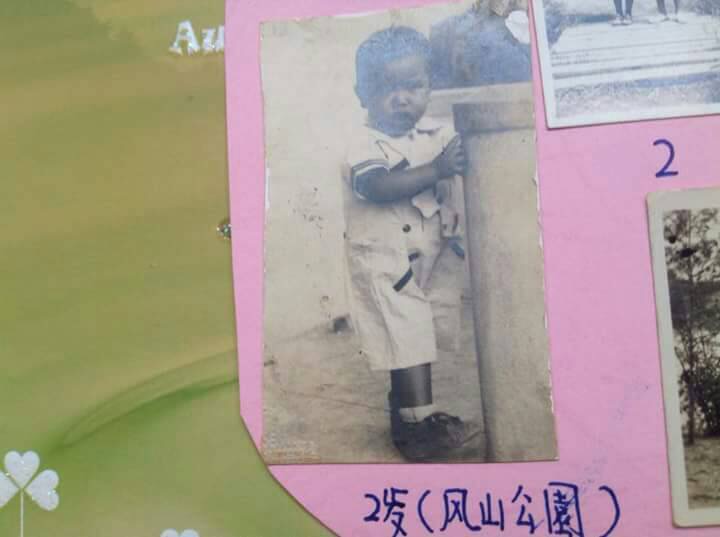
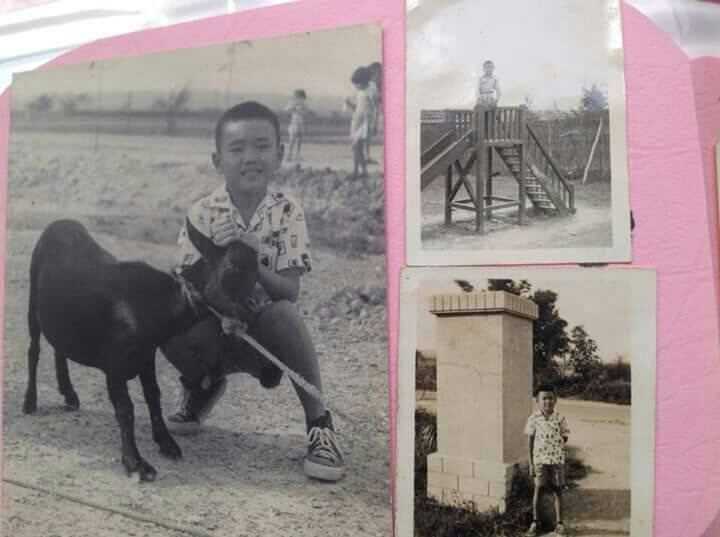
我是37年底出生於蘇州市(江蘇吳縣)養育巷,此照片是我珍藏最久的一張,十年前曾陪同父母赴上海探視二妹順便至蘇州杭州一遊,晚間我獨自離開蘇州的飯店至我的出生地養育巷探訪(好奇它究竟是何面貌)可它卻已成了車水馬龍的六線大道,令我懷古的心情有些失落,後來又逛到一條路名為「桃花源大道」卻是僅約八米寬路面鋪設石板的古樸道路,當地的道路命名還真奇怪。回到主題,我一出生便遭遇戰亂坐火車乘船來到高雄鳳山時尚不滿週歳,大姊不滿五歲,居無定所,父親(民國7年生,湖南湘鄉人,軍校17期武岡分校畢業,寫得一手好字)後來在陸軍總司令孫立人將軍(第七任接替顧祝同上將)轄下的總務處運輸科任上尉參謀,全家遷往鳳山大橋上遊約一百米的一座小橋(東福橋)穿過古城門(東便門)後的打鐡街租屋居住(均已列為古蹟),後因環境太吵再遷往鳯山南台戲院後面地主在農地上蓋了四排簡陋房舍約20戶,沒有水電,空地上有一座手壓水井全體共同、每戶約八坪左右隔成兩間、沒有浴室,用大盆在臥室內洗澡,地面是泥土地每次洗完澡地面泥濘濕滑,床鋪是竹子製成床下還會長出許多半尺高黃色的小草,廁所是附近空地蓋的電話亭大小的茅房(木板牆木板地面中央有一長方形開口下面有一大坑,頂部還真是蓋上茅草),廚房則利用兩排房舍中間的通道放木材火爐烹煮、牆壁是以竹片組成再敷以泥土混合稻草(跆拳道好手可能一拳打穿),房租每月要五斗米,房客全為大陸來台家庭,父親每月薪俸尚不足付一個月房租,只有靠母親變賣金飾支付,我覺得那地主是在發國難財。當年我僅三歲喜愛到處跑,父親上班大姊上學母親做家事為防止我走失每天父親用軍用長綁腿兩條連接一頭綁在我腰際另一頭綁在餐桌腳上,餐桌距前後門等距,我每次走到前門口即受限無法踏出家門再走到後門囗也是一樣,後來我雖覺得此舉有欠妥當但以當年沒有托兒所安親班的條件下也能諒解父母的苦衷。
懷舊篇-2
母親今年高齢90,瀋陽市人她的祖父(我的太公)當年在瀋陽開設頗具規模的印刷廠,張作霖大帥府的文書印刷全交該廠承印,她幼年生活優渥家中擁有私人黃包車,後因東北戰亂便隨著姊姊入関在各省飄泊,我們提到某個大城市時她都能述說她住過的經驗及民情風俗,25年12月 12日西安事變當天,年僅 11歳的她正好在西安目睹街頭的戒傋狀況,她到過的城市計有北平、天津、鄭州、上海、長沙、楊州、蘇州、長沙、西安、廈門⋯等。母親雖自小離家但是卻會做很多北方的麵食如包子、饅頭、花捲、葱油餅、韮菜盒(圓形的而非一般常見的半圓形,外縁且揑出花邊)、麵片、窩窩頭(用包穀粉)、手撖皮水餃蒸餃⋯等,我自小也在廚房習得韮菜盒、麵片、手撖皮水餃等麵食,她還會自己製作衣服,我三個妹妹童年時穿的連身洋裝就是在布店買回各色花布用縫紉機做的,她們很高興的穿著出門,村中其他小朋友都很羨慕。 三歲時的我乳名「毛毛」從不哭鬧,不舒適時均能忍耐(母親說的),湖南籍的父親喜吃辣,每餐均有辣椒莱(重辣的)我也跟著吃完後張嘴大口呼吸,直至今日我仍然喜歡在涼拌莱中加入辣椒。某日鄰居阿姨徵得母親同意帶我去她家玩,她和其他阿姨聊天時我從後門走出到戶外小巷,那是各家煮飯的地方,天色昏暗我不慎跌倒往前撲下時整個臉正好栽入某家火爐上的一鍋牛肉湯中,整鍋湯也打翻了,阿姨急忙將我送至診所救治,父母聞訉趕至診所時我整個腦袋已被白紗布包得像木乃伊只露出兩眼及口鼻,靜靜地坐在椅子上像沒事人一般,父親極為不滿從此不再搭理那位阿姨,這也是我人生中遇到的第一場災禍,幸好那鍋湯可能尚未煮沸,否則後果不堪設想。
懷舊篇-3
40年10月家中第三個小孩我的大妹誕生,在當年的居住環境下大妹的成長過程顯然欠理想,加上老天作弄,41年大妹未滿週歲之時遭遇到貝絲強烈颱風侵襲,我們居住的這批房子屋頂全被掀了,雨水灌入室內一家五口渡過難熬的一夜,後來過了一週房東才勉強將房子修復,其實當年家中也無啥家當受損最貴重的物品就是一只保溫熱水瓶鐵皮外殻帶有彩色花繪圖案打開鉄蓋內有玻璃內膽,每當有地震來時母親便立馬將它抱在懷中護好,若是內膽破了則要花不少錢去更換新內膽。 有次大姊帶我上街見到穿著水兵服的美國人乘軍車通過便教我豎起右手拇指高喊0K,車上的老美也回以同樣動作,一路上其他小孩也都如此,後來我才知道美國在40年實施對台軍事及經濟援助,運送大批軍事裝備及民生物質來台,包括麵粉、奶粉、罐頭、牛油⋯等,有些小朋友還穿著麵粉袋改製的衣服上面寫著"中美合作"字樣,但是20多年之後的67年12月27日美國特使克里斯多福來台宣示中美斷交遭到民衆丟雞蛋抗議,反差也太大了。 當年經常有防空演習,母親帶著我們躲到附近的竹林中一兩個小時才能返回家中,也常看到雙層機翼的輕航機在空中表演翻滾特技(機場就在鳳山往高雄的省道左側現在國軍醫院位置),也常見軍機空投各種顏色的傳單,小朋友們都到田野中追逐撿拾,內容多為一些反共標語,大家都很羨慕那些撿得很多的小朋友,不知道如今若有空投傳單還會不會有小朋友追撿。
懷舊篇-4
當年大姊放學後或假日都會和附近的農家女童玩跳繩,我在一旁觀看,兩人揮動一條七、八尺長比姆指粗以稻草編的繩子另一人在中間跳動,三人同時配合節拍唱著日語童謠,跳繩者忽而指天忽而摸地忽而雙手叉腰,唱些什麼我一句也聽不懂,那草繩幾乎每兩三天就會磨斷,她們總是會一直拿出新的草繩,想必那年代小朋友跟本沒錢買粗的麻繩。 我和大姊都沒有上過幼稚園,父親用硬紙板寫了很多字塊由母親教我們認字,基本上在入學前已經認識不少字了,但是ABC倒是不會(當年並不重視)。某日中午大姊經母親同意帶我一起到黃埔新村內的誠正小學(教室不足三年級以下分上下午班)玩,也是我第一次走那麼遠,當上課鈴響大姊進教室後只剩我一人在校園內感覺很無趣便憑記憶沿著原路走回家中,晚餐時分父母及我坐在門前巷子的餐桌(住戶們都在室外巷子晩餐)等了很久才見遠處的大姊邊走邊哭的走來説"弟弟弄丢了"待見到我端坐餐桌後大為驚喜,不過此事後來經常被大姊提出來批判,我也自認有錯不該放她鴿子。 平常睌餐後左鄰右舍都會在室外巷道邊乘涼,那些叔叔阿姨們就會起哄說"毛毛快演講"我便取來一小板凳站上去雙手背在後面上身像電扇擺頭一般左右轉動(當年各家都沒有電扇)地說"從小我便離開了老家東奔西走⋯⋯"每次的開場白就是這一句,後面說些什麼已經記不清了,反正把大家都逗得很樂,可後來我的學生時期卻從未參加過演講比賽,實在太埋沒了我的天份(請包涵)。
懷舊篇-5
子曰:一簞食、一瓢飲、居陋巷、人不堪其憂,回也不改其樂。 然而通常一家之主但凡能力所及都會想方設法譲妻小的生活環境舒適安逸。42年父親晉升少校後打報告奉上級核准在黃埔新村西七巷緊臨誠正小學圍牆邊空地(約40坪)自建住宅,母親將所有金飾變賣購買建材雇工興建約20坪半磚瓦頂房屋,有一客廳及一主臥室外加一間木地板房類似和式屋,後院中另建一小廚房兼浴室,還有一小間廁所(不是抽水馬桶,需定期找人來清理),前後院一様大緊臨竹籬笆內種有一排紅花樹,前後院共有六棵木瓜樹後來幾乎天天吃木瓜,大門外的大水溝搭建一座小木板橋(之前大姊和我照像所站的位置)供家人出入,西七巷是一條泥土巷道每天早上是莱市場各地莱販挑担置於路旁,全村住户都來此買菜,小販們均使用一根圓木棍上有刻度一端懸一鐵鈎掛上物品後移動枰鉈看出重量,肉、魚及蔬菜都用稻草捆綁拎在手中(完全沒有塑膠袋),買油要帶空瓶子套上漏斗加入,買鹽是裝入牛皮紙袋其中常夾雜稻草等雜物(是粗鹽)。搬到新家後每週日我和大姊要分工打掃擦玻璃窗掃院子拔雜草,經父親檢查合格後才能出去玩,當年沒有穩潔等清潔用品,玻璃窗上有污點時便用嘴哈氣後即可擦拭乾淨。 家中煮飯用的是燒木材的爐子,父親事先傋好許多一呎長碗口粗的雜廢木,我則負責用斧頭將它們劈成四至六片置於大鐵桶中傋用,剛開始時不得耍領,後來先將圓木段立好雙手高舉斧頭雙腳蹲馬步對準中央用力砍下咬住木頭後再反覆提起砍下直至劈成兩半,後來我覺得自己成了劈材高手,若有兒童劈材比賽我肯定能獲佳績。
懷舊篇-6
初搬入新家五歲的我對附近環境非常好奇,經常出門閒晃,村中西六巷中兩座防空洞是我喜愛的景點常和其他小朋友在內逗留玩耍,我們住的西七巷大門向左約20米左側有一寛僅三米小巷巷內右手邊第一家低矮平房有位老杯杯賣的甜酒釀很有名,附近眷村居民都常來買,它還賣糯米粉及醋(我們包湯圓時也來買),五年前我們小學同學會回到母校(誠正國小)舉辦畢業50週年聚會,以前的教室已改為教職員宿舍,我特別回到西七巷原住處探訪,但是它已不是我童年時的模樣,我想到連戰先生回到西安母校時一群迎接的小學生朗誦的歡迎詞"爺爺啊爺爺母校已經變了模樣⋯"連先生當時的心情我可以體會。巷內賣甜酒釀的己遷至緊鄰的王生明路(44年王生明將軍率官兵792名死守一江山以最後一顆手榴彈壯烈成仁、為紀念烈士於45年將路名更改)一樓店面。 回到主題,當年我逛到賣甜酒釀店前見兩位阿姨正用手推石磨磨糯米漿,一人推磨另一人則將大盆中泡過水的糥米用一長勺很準確地倒入轉動中磨盤上的小洞,同時週邊流出的白色米漿用一白布袋接住,裝滿之後封口放在一長木櫈上再用一根扁擔壓在布袋上兩頭用繩子固定將水擠壓出來,最後打開布袋裏面就是我們包湯圓買的糯米粉了,我全程在旁觀看才知道在家中吃得很愉快的湯圓竟然如此費工夫,當然如今一切都有機器代勞,那具石磨也進了文物館展示,但是仍然有許多食品強調純手工製作,畢竟人們懷念的古早味是無法被大量生產的食品取代。
懷舊篇-7
前文提及賣甜酒釀的小巷是我常逛的地方,往下走右側是一條水溝溝邊有竹林再往下的右側土堤爬滿了牽牛花(屬於旋花科俗稱喇叭花,日本人稱為朝顔,常被人譏為上不了枱面的花,我們常將它的藤莖剪成小段以架在姆指及食指上的橡皮筋彈射出去攻擊玩伴)左側為一排民房,有天我看見三位阿姨摘了一大堆牽牛花的葉子放在一盆水中蹲在地上三人六隻手不斷在盆中搓揉葉子我很好奇在旁觀看,不久盆中水成為綠色黏液狀,她們將葉渣撈出後輪流將頭髮浸入盆中並用十指來回抓頭,最後再用清水沖乾淨,我當時十分納悶心想不過是洗個頭唄為啥要將那黏呼呼有點噁心的東西抹在頭上(當年尚無洗髪精),過了幾十年後我在市面上看到某廠商推出一種標榜純天然葉綠素的洗髮精,它的顏色正是那些阿姨們用手搓出來的綠色,只是它肯定添加化學顏料及香料,真正純天然的還是那些阿姨們自製的產品,女人真是利害,早就知道用葉綠素來保養自己的秀髮。 當年家中有三種肥皂,香皂是用來洗臉的,淺褐色肥皂(像是目前的〇僑肥皂)是洗頭洗澡用、深咖啡色像月餅的圓形皂則用來洗碗盤。一般家庭廁所中仍使用的像是冥紙般的草紙,後來進歩到較薄土褐色一面較為光滑的厠紙,某天有位同學帶了白色的衛 生 紙到學校大家都覺得很新奇,他還拿出一張來變魔術用手搓一下便分開成兩張,大家當時還真被嗁住了(其實就是太薄了兩張貼在一起看著像是一張)隨著生活水準逐年提高,不斷有新的日用品投入市場,增進不少便利。
懷舊篇-8
43年2月父親離開了任職四年的陸軍總部運輸科奉調至位於鳯山陸軍步校內的陸軍印刷所任少校副所長,所長是徐中校,上班地點由陸軍官校營區改為歩校均離家不遠,他的老長官孫立人上將亦於同年6月調任總統府參軍長,44年爆發「孫立人事件」遭到軟禁直至77年5月重獲自由,79年11月19日病逝於台中向上路總務局列管的眷舍(我正巧任總務局眷管組長,39年父親在陸總時歸他管,40年之後他住的眷舍歸我管,還真是一段奇妙的緣份)享年89歲,91年7月台中市政府將該眷舍指定為歷史建築,99年11月開放為「孫立人將軍紀念館」。 43年3月家中的第六名成員我的二妹誔生,由助產士(古代叫產婆)來家中接生,父親那段時間很是辛苦,我們姊弟也幫忙部分家事,二妹滿月時父親還在家中請了一桌同事吃滿月酒。 43年8月我報名申請就讀一牆之隔的誠正小學(學生均為黃埔新村、二村及三村子女,類似陸軍子弟小學)入學前需先經過口試,口試當天我和另一黃姓女童同時在教室內受測,她是父親在陸總同一辦公室同事的女兒,我瞧見母親和黃伯伯在教室窗囗焦急的眼神,老師拿出一些數字、圖片、字塊讓我辨認均正確答出,後來我及她均通過入學囗試我編入一年甲班她則編入乙班(一年級只有兩班),兩個月前在台北的小學同學會還曾和她見面回憶往事。 我在班上個頭最小坐在第一排進門第一個位置,一張課桌分配男女同學各一名,我鄰座是全班個頭最小的姜姓女生,放學時每班面對司令台成兩路縱隊我總是被排在最前面,全校唱完"功課完畢要回家去⋯⋯"後便列隊魚貫離開校門。
懐舊篇-9
我每天都很期待上學,完全沒有適應不良的問題,導師鄒〇(女)第一天便教我們唱歌,她還會彈風琴,対我們関心照顧未曾見她責駡同學,開學發新書時大家都很興奮,我特喜歡打開書本聞那油墨的香味,還有女生們愛用的香水鉛筆、橡皮的味道,削鉛筆的小刀片可折疊收入鉄片的刀鞘內,父親教我先將鉛筆刻出記號再沿此線削去多餘木頭,如此便切口整齊,父親削出的鉛筆有如削筆機般美觀,我練習了很久才勉強合格,後來市面有一種塑膠製的套子上面裝有刀片將鉛筆插入圓孔中轉動即可刨出整齊好看的切面。父親每學期開學時都會將我們姊弟的每一本新書以牛皮紙做為封套加以保護,外面再以毛筆寫上書名,後來許多同學也比照辦理。當年學校上下課沒有電鈴更沒有音樂鐘而是由一位老校工拿鉄錘敲打懸掛在走廊靠近福利社橫樑上一段兩呎長的鉄軌,噹噹 噹噹⋯為上課,噹 噹⋯為下課。五年前我們 回母校辦同學會時我特地去査看但當年懸掛的鉄軌已經不見了,心中有少許失落。每節課下課十分鐘男生們便奪門而出衝到操場踼足球,其實是一顆像足球大小紅藍色的橡皮球,第一節下課時便由全班最高的張振聲及楊祖和兩位同學任雙方隊長猜拳贏的先從我們中挑一位隊員,猜一次選一位。我個頭最小總是最後剩下的那一人,然後每節下課時就以原先分配的隊伍pK,上課鐘響時大家便跑回教室滿身大汗,後來由於我在場上表現的速度及敏捷力,被選中的順位也逐日往前提升,我後來加入陸官校足球校隊或許是童年時略有基礎吧。
懷舊篇-10
學校操埸南側有一大片水田,再過去就是步兵學校大門,水田中有一池塘,我常於’假日與同伴至此釣魚,用住家附近竹林砍的細竹竿綁上母親縫棉被面的缐(當年沒有附拉鏈的被套,需用大針粗棉缐將白色被裏及花色被面缝合,非常麻煩)及大頭針彎成的魚鈎穿上蚯蚓為鉺,浮標則是池中現採的布袋蓮球莖,由於不是制式裝備很少釣到大魚,卻不斷釣上非常嘴饞的大~肚魚(不到兩吋長),只得丟回池中。有時兩人一組在田中灌溉的約兩尺寬的小水溝中一人以竹片製的畚箕封住下游另一人從上游下水往下游走且不斷用腳撥動溝邊雜草待走到畚箕前時便快速提起畚箕,常可撈到一些泥鰍、鯽魚、吳郭魚⋯等,有一次居然撈到一條水蛇,嚇得我們趕緊回家。 學校操場週邊有一整排的鳯凰木(屬豆科,別名紅花楹樹或火樹,原產地南洋群島,因鮮紅或橙色花朶配合鮮綠色的羽狀複葉被譽為世上最色彩鮮豔的樹木之一,多見於南部的校園中,我現在住家附近的新店高中校園中居然有一棵,每次經過時都會多看兩眼)我幾乎爬遍了每一棵樹,摘下它黑褐色約兩寸寛兩尺長的種子莢當劍把玩,或將它剖開取出其中數十粒種子收藏,校園內還有一棵紅豆樹(南部特有)豆莢乾了之後取出其中如心形的紅豆(即相思豆)可串成手環及項鏈,當年的學校就是我們的遊樂區也伴我渡過愉快的童年。
懷舊篇-11
前文提到我們攀爬校園內的鳳凰樹,但是每次都由一位膽子小不敢爬的同伴在地面把風監視操場東北角校門口旁的傳達室,只要老校工從傳達室出來往操場方向走他便立馬發出警告,我們火速從樹上跳下逃離,根本忘了離地面的高度,他會在後面追趕大駡,同伴們都說他有精神病,禁止爬樹是為了安全顧慮,當年他只是盡他的職責而已,不知我們的行為算不算是頑童。 我們的課餘時間除了踢足球外還有踼毽子,用福利社兩毛銭買的兩粒橄欖有韌性的包裝紙將中央有一小方孔的銅錢(如乾隆通寶)捲在中間再將中央小孔部份的紙戳穿把兩端的紙扭成細條後由小孔中穿至另一面再將兩股約五公分的紙捲打開用手撕(或用剪刀)成許多細條便完成了,另外一種較耐用的雞毛毽子則較為費工但是穩定度高變換花様較易,我們除了比賽誰踢得多之外最常玩的就是一人先完成鞋面停毽、跨、跪、跳等連串招式後另一人必須比照完成若失敗則罰吊球,又分大吊小吊,敗者輕拋毽給勝者先以腳內側踢起一次再用另一腳從後交叉猛力踢出(稱為跳)敗者需盡力接住不可落地(像外野手接高飛球)若失敗便一直罰吊。說了一大堆可能只有玩過的好友才聼得懂。
懷舊篇-12
母親及大姊在家中很喜愛唱歌尤其是老歌及電影中的插曲,大姊也教我唱許多歌曲,印象中我沒學過什麼兒歌,綠島小夜曲(43年由周藍萍作曲潘英傑作詞原唱胡以衡)是我常唱的,另外抗戰時期的「白雲故鄉」也是招牌歌(另一首「松花江上」則沒學到),還有「長城謠」(劉雪庵作曲潘孑農作詞,26年77事變後在上海創作)、「杜鵑花」(30年黃友棣作曲燕軍作詞)、「小小羊兒要回家」(41年姚敏作詞曲、張露原唱),44年以電影「桃花江」一炮而紅的小野貓鍾情(22年出生於湖南湘潭,原名張玲麟)是伯伯(父親的二哥)的偶像(伯伯是湖南湘鄉人,或許有地緣因素),他常対我們說"我最喜歡看登情的電影"(湖南囗音把〈鍾〉唸成〈登〉)。大姊有編舞天份(直至今日仍在高雄及台北的教會帶動唱)常教大妺二妹及鄰居女童配合她的主唱伴舞,且於年節舉辦同樂晚會還備有節目表,小演員們為配合不同的歌曲還要換服裝,父母及鄰居阿姨叔叔們為觀眾,我則客串演唱兩三首招牌歌(家庭同樂晚會直到我們50年搬到新店的眷村後還持續了三年),由於我沒事常在教室哼唱老歌及電影插曲,每次開完班會離下課還有空閒時,導師就叫我上台唱歌墊檔,基本上我可能屬於愛表現的類型(進入軍校後每次軍歌比賽我都自告奮勇擔任指揮還設計進出場隊型)每次都完成導師交待的任務。
懷舊篇-13
45年9月家中第七位成員小妹誕生,一家七囗父母、大姊、我及三個妹妹全員到齊,父親的少校月俸維持全家開支甚為不易,母親持家精打細算,但是從未忽略我們的營養,直至今日仍然懷念當年她煮的美味菜肴,同樣的菜色味道就是不如童年時所吃媽媽的味道,相信很多好友也會有同樣的體會。 三年級時導師換成聞人倩女老師為鼓勵我們用功學習凡是月考成績有100分的同學頒發一張鳳山戲院的電影票(票價一元五角)我也曾得過好幾張票。有次大姊買了一張半票帶我們三個免票的弟妹到鳯山戲院看日本片「原子恐龍」,是黑白片聲光效果及剪接技巧完全不能與現代同類型電影相比,但當年我們可是看得津津有味。 軍方的政戰部門大約每十天會派電影隊到村中播放電影,村中小朋友都會在巷內高喊"今晩有電影"我們便提前晚餐及洗澡然後每人帶張小凳到場卡位,工作人員在村中主幹道架起白色布幕,用一台放咉機播放影片中途要換影帶而中斷四至五次,有些掃興,有時風把布幕吹的忽前忽後,劇中人物也跟著變形大夥反覺得有趣,有時正面人太多我們便到布幕背面看,景像稍差些但是字幕是左右顛倒的,反正多半是國語片對白也聼的懂倒也無妨。後來在村中東一巷北側空地興建一座復興台,含舞台及台前廣場,定期有軍中康樂隊來演出,盛況空前。當年影歌星也常組團至陸官校勞軍演出,母親會和鄰居阿姨們成群前往在下午兩三點的烈日下的大操場站兩三個鐘頭回來還説値得,這票人可算是追星族的始祖了。
懷舊篇-14
三年級時加入了學校的童軍團,配發一頂卡及布船型帽,制服雙肩配掛「誠正小學」四個大字的肩帶(當年是與「誠正中學」同一校區,我們是利用中學藍底白字的肩帶將中字上方的透明膠套用刀劃開再以藍筆將中字横線部分塗成藍色便成為小)胸前口袋上方縫一「中國童子軍」布條,還有一條深綠色領巾以藍白紅三色塑膠圓環在胸前固定,當年覺得很神氣,擔任糾察隊時在各班教室窗外巡視早讀期間若有不守秩序的學生則以小本子記下班別座號交給老師處理,我還是較為喜愛放學時手持木質與身高相同的童軍棍站在校門囗維持秩序,若有老師經過則發敬禮口令,待所有同學離校後方可收隊。 學校放寒暑假期間常有陸軍演習部隊借住教室,我們也常到學校看阿兵哥們操練,他們會分送一些不用的30步槍彈匣(黑色兩公分寛十公分長可裝五發子彈)給我們把玩,每天幾乎都在學校玩,寒暑假作業總是要到開學前三天才加緊趕工,每個同學幾乎都是如此,有時一天要寫好幾百個大楷毛筆字,手都快抽筋了,後悔沒有每天按時寫,但是到下次放寒暑假時又演出同樣戲碼。真是玩心太重。
懷舊篇-15
前文提到寫毛筆字,我官校周姓、彭姓同學及好友殳老師可是寫的一手好書法,甚至遠赴大陸添購名筆、墨、硯後如獲至寶,他們的心情我可以體會,就如喜愛打羽球的朋友買到一支順手的好球拍一樣。 小學時最愛的毛筆是七紫三羊,紫毫七成羊毫三成,一般筆尖用紫毫,筆頭錶面圍以羊毫適合寫小楷,買回後用熱水泡開使用,也有人習慣僅泡開筆尖部分,我覺得那樣每寫幾個字就必須蘸墨水太麻煩了,墨則喜愛雨花臺的墨頂有三個小圓圈,磨起來不僅滑潤且帶有一股墨香,後來同學們都改用墨盒(圓形塑膠盒內有棉花加入墨汁即可使用)而墨及硯台便逐漸從教室中消失,文房四寶突然少了兩寶,喜愛書法的好友肯定不能接受。 大姊十三歲進入誠正中學後中午耍帶便當,母親為譲她能吃到當天現做的飯菜,便約好中午用餐時間大姊在圍牆邊出聲,母親便在牆邊站在小凳上將熱便當從牆頭上遞給大姊(大姊那頭有個小木梯),住在學校隔壁還真是方便不少。 早上上學時我常用兩毛錢在家門口的市場買一顆成人拳頭大的水煮地瓜當早餐偶爾也會買個上面有葱花的花捲,上面塗抹許多紅色的醬料(像是現今的甜辣醬),近年來以地瓜為早餐被視為養生吃法,那麼我從小便一直享用養生早餐打下好的底子,直至今日未曾有住院紀錄(敲三下),唯一躺在病床上的經驗是在總務局服務時有次感冒發燒到醫務所打點滴兩個小時,早年健保卡背面就診後蓋一個章我通常一年不超過三個章,這或許也是我熱愛多項運動增加了體耐力,另外幾十年來我每天都必吃生大蒜頭兩粒,非常有效,好友們不妨一試(有許多方法可消除異味)。
懷舊篇-16
升上四年級那一年我就讀的「誠正小學」改制為「誠正國民小學」正式納入義務教育單位,班上轉來了五、六位過埤里農家本省子弟,下課時他們常聚在一起玩,久了之後慢慢也打成一片成為朋友,午餐時間同學們都回到附近眷村家中吃飯,他們則拿出早上從家中帶來的便當用餐(因為家住較遠)。我升上五年級的那年父親獲正式配住大寮商協新村乙種眷舍,因不夠住乃在後院加蓋兩小間後舉家遷往大寮,村中眷戶多為小港被服廠官士員工,鄰居王伯伯家外路邊停靠一輛十輪軍用卡車,車尾掛一鐵梯供人上下,那是廠中員工交通車,王伯伯是司機,每天早晨我們便搭便車到鳯山黃埔新村大門口下車再由村中南北主巷道進入學校,放學時則沿著陸官校北面圍牆外的泥土路接鳯林公路(鳳山一林圓)走回大寮眷村,全程約需兩小時,一年下來腿力增強不少,中午我則拿出上學時帶來的便當和那幾位同學共進午餐,他們很喜歡我便當內的配菜,經常互換嚐鮮,他們的便當普遍少油缺乏配色,不過我很喜歡吃他們帶的黃豆醬及地瓜簽飯,導師王善傑先生經常過來查看我們的便當內容及坐在教室看我們用餐並閒話家常,感覺他是一位慈祥的好老師,可惜我只被他教了一年,六年級時我便轉學到大寮鄕的永芳國小,離開相處五年的同學及生活的校園心中實在不捨。
懷舊篇-17
前文提到我們已經遷居至大寮眷村,可日前仍有許多黃埔新村往事不斷湧現,且容我將時光拉回,請見諒。 童年時許多玩具多半自己製作,父親有空時也為我製作難度較高的玩具,我經常拿出家中的工具箱,其中有鋸子、鐵錘、老虎鉗、鉄釘、鉄絲⋯等配合家中廢木料製作汽車、小船、戰車⋯等模型玩具,父親則用竹片幫我製成如餐桌般大的風箏,需用粗的棉繩用力拉著。每年元宵節一般小朋友都買現成的紙製伸縮圓筒狀燈籠裏面中央插一小紅蠟燭,常有蠟燭倒下燒毀燈籠狀況,父親則用竹子削成如打毛線針般細長條編成各式骨架再用文具店買的各色透明玻璃紙包覆成別具特色的燈籠,吸引許多小朋友圍觀。有一年國慶日父親用一整天時間削竹片、編骨架、包紙、彩繪為我製作一條長四尺粗一尺的大魚燈籠,用一段三尺長竹棍舉著,內有蠟燭魚尾尚可左右擺動,母親當晚帶我沿王生明路過鳳山大橋到鳳山戲院前的馬路旁等著看提燈遊行,一路上我舉著栩栩如生的大魚燈籠,沿街路人及二樓窗口都有小朋友指著燈籠大叫"夷啊 夷啊"(台語)。我覺得不好意思且深怕看遊行人潮擁擠損傷燈籠乃請母親將它暫寄放於某文具店中。等待看遊行的民眾站滿了鳯山主要街道(當年的縱貫路)引頸盼望,約一小時後聼到樂隊鼓號聲大夥都興奮起來,首先是省鳯及縣鳯的學生樂隊、旗隊,數十名同學每人高舉一張大的國父遺像及蔣總統照片、學生火把隊、鳯山鎮各機關團體隊伍一路高呼口號、民間舞龍舞獅、踩高蹺、跑旱船,還有二三十人每人以一條長約六尺的繩子兩端各繋一網狀鉃絲製圓球內裝燒紅的木炭,全體甩動鉄球飛出無數紅色火星充滿整條街甚為壯觀,這也是每次遊行最受歡迎的單元,全部過程約一個半小時結束。母親和我取回燈籠很滿意的打道回府。
懷舊篇-18
家中院子種的果樹除了木瓜外後院尚有一棵芭樂樹長得很茂盛果實不大是紅心的。某日見一男童把玩Y字形樹叉製的彈弓,特向他借來瞭解如何製作,他特別強調最好是用芭樂樹枝既堅固又耐用,我心中一喜,立馬回家到樹下看中一枝完美的Y形樹叉取出工具箱中的鋸子將它鋸斷並砍掉多餘枝葉把現埸清理乾淨,向自行車店要了廢內胎皮再至修皮鞋店找了一小片牛皮完成自製的彈弓,出門時掛在脖子上十分得意,可沒多久父親便發現芭樂樹被砍了一段樹枝,我雖然坦承罪行仍然遭到訓斥,為何書本上說華盛頓砍了櫻桃樹勇於承認反而受到他父親讚揚?晚間做完功課後我常糾集巷中鄰居六、七位比我年幼的小男生由我帶隊肩上扛著用香蕉葉柄作槍杔木瓜葉柄為槍管的玩具步槍(香蕉樹就是大姊與我合照身後那棵,木瓜葉柄則出自家中)成一路縱隊唱歌行進繞行村中巷道,每次總是唱那幾首歌,記得有一首是"打倒俄冦反共產反共產,消滅朱毛殺漢奸⋯"(怎料後來我進入軍校每天早上一起床早點名時還是唱這首歌),另外一首是"反攻反攻反攻大陸去,大陸是我們的國土大陸是我們的彊域⋯"唱完歌還有答數,操練一個多小時後才解散各自返家,這就是當年我們的娛樂活動。
懷舊篇-19
很多好友童年時都玩過四大童玩即尪仔仙、尪仔標、彈珠及橡皮筋,一年之中每隔幾個月就會自動換班,也不知是誰統一下達指示,就像服裝換季一樣,從未見兩種童玩同時出現的場景。尪仔仙是硬質塑膠製扁平小玩意,有動物、水果、寶塔、人物⋯等形狀,除人物較大(可達成人巴掌大)有彩色外餘多為單一色,小雜貨店中一張比月曆還大的硬紙板上掛滿了一行行大大小小的尪仔仙(薄紙片黏住每個尪仔仙上面的綿線)其中最大的一枚(第一特獎)通常是十八手觀音或是關公騎馬像可抵一千仙,其他還有十幾個大小不一的分別可抵50至500仙(有意收藏的小朋友拿普通的小尪仔仙交換大的),每枚尪仔仙都有一個編號(從1-500)用一毛錢抽一張小紙捲打開対號取物(後來演進為打開兩張黏在一起的小紙片),我曾抽到過一枚關平騎馬的可抵500仙,最基本獎就是一枚一寸大小的尪仔仙,一般玩法是在一定距離投向前方劃的橫線以離線最近的得勝(贏得所有尪仔仙),或是兩人各放一枚於地面不斷移動靠近,其中一人認為有把握時則將尪仔仙対準対方尪仔仙丟去若落在対方姆指加小指拉直距離內則得勝,通常我們都會以寶塔形狀的做為武器,因它較重且穩定度高。每枚尪仔仙不論大小只要上面繫棉缐的小圈圈缺損了便視同廢物,每個小朋友在嬴得戰利品時都會仔細檢查的。
懷舊篇-20
小學時曾玩過比名片略大些的長方形彩色人物紙牌,或是將廢紙摺成三角形的厚紙板來玩,50一59年小朋友玩一種圓牌(尪仔標),紙製杯口大小上層貼有三國、水滸、西遊記、歷史人物⋯等彩色圖像紙,牌面角落尚印有十二生肖及象棋中的將士象馬車包⋯等,紙牌周圍有鋸齒狀,其玩法多達十餘種,最常見的是二至四人每人拿出同様數量的牌疊在一起指定一張為王牌插入其中(多半在中央位置),每人輪流用手中的圓牌敲打牌堆,誰先將指定之王牌打離牌堆即贏得所有圓牌,為增加攻擊力度每人都將手中主攻牌邊缘磨得很厚及在背面塗上蠟燭油增加重量,身材高大者手掌也大猛力揮撃帶動的掌風有如秋風掃落葉般佔了不少優勢。 另外一種童玩「彈珠」粵語稱「波子」或「彈子」,中國北方部分地區稱為「溜溜」,用玻璃製成的小球,早期的彈珠顏色混濁且不夠圓後來逐漸改進但其中仍有許多小氣泡,可汽水瓶中的彈珠既圓又清晰透明無汽泡很受喜愛,被稱為「汽水彈」,後來又推出裏面有五彩花瓣或楊桃形狀稱為「花彈」及「楊桃彈」,一般是在泥土地面劃一長方格大小如九吋愛配(台北則是劃正三角形)每人放入等數彈珠後各自輪流用一粒母彈撞擊格中珠群撞出格外的便可入袋,另外還有用姆食中三隻指尖將手中弾珠対準目標丟擲(如射飛鏢)的玩法在大寮地區的眷村中較為普遍,當年穿的短褲制服口袋常因裝了太多彈珠而被撐破,令我印象深刻。
懷舊篇-21
橡皮筋也是當年的童玩要角之一目前仍有綁頭髮、便當⋯等用途,可在文具店及十元商店買到,其他童玩均已走入歷史只能在少數懷舊的矸仔店才可買到,橡皮筋在教室課桌上可搓成小團狀兩人輪流用手指搓壓一次誰能將它搓成原本的圓形即得勝,玩久了之後大家都知道在那種形狀下從那個方向下手一搓便立馬變成原狀,另外就是以左手姆指勾住後端右手食指頂住前端拉長後瞄準対方置於地面的橡皮筋若撃中則嬴了,我當年在村中可是數一數二的高手,至今仍保有八成功力,家中天花板上若有蒼蠅及蚊子時我便用它一招斃命,令妻大為驚訝,我還有一招是將橡皮筋勾在小指上手掌比成手槍狀橡皮筋繞過大姆指跟部後套在食指尖上(上下兩條鬆緊不同)鬆開小指往前方約三米的地面射出,它著地後會立馬倒退滾回我腳邊,這和女子體操選手拋環原理相同,利用圓形物體之旋轉力。 村中女生則用橡皮筋串成一長條玩跳高或是有節奏地繞過小腿跳動並齊聲唱著"小皮球香蕉油滿地開花二十一⋯"的童謠,我的三個妹妹們每天玩得滿身大汗不亦樂乎。
懷舊篇-22
早年父親擁有一台狗頭牌腳踏車那不僅是上下班之用,假日載我們出去玩也靠它,後擋泥板上裝有鐵片卡槽,每次出門前父親都要拿出一塊上印有國字號碼的鐵片插入卡槽,原來當年腳踏車也要掛牌照,若未掛牌上路將吃罰單,每次出門時車龍頭與座墊之間的鉄桿便是我的座位,面向左側坐好後雙手握住龍頭中央位置,由於不夠舒適一路上需不斷調整坐姿,由於左右有父親雙手擋著沒有跌落車下之虞,有次父親載我從黃埔新村騎到鳥松鄕玩,回到家後屁股都有點麻了,但下次仍然央求父親載我去玩。當年腳踏車很稀少眷村小朋友幾乎都沒有車,我直到五年級還不會騎車只會幫父親洗車擦車,直到六年級轉學到大寮的永芳國小同班同學多為農村子弟住處偏遠沒有客運車均以小型腳踏車代步,經同學用他的車教我(抓住車尾跟著跑)兩天終於學會,此後便經常在中午休息時借用同學的車在操場練習直至自認可以騎車上路為止。
懷舊篇-23
小學時男生除了踢足球之外最常玩的戶外遊戲就是騎馬打仗及開線了,前者又分小馬及大馬,小馬為一人背負另一人與其他組合拉扯落地或馬跌倒者遭到淘汰,大馬為前面一人為馬頭後面兩人右方出左手左方出右手搭在前立者雙肩上,前立者雙手向後與後方兩人左右手緊握做為馬蹬,騎馬者跨坐在兩隻手臂上雙腳踏在馬蹬與他組騎士拉扯,騎士落地或馬隻解體便遭淘汰(危險動作請勿模仿),幸好操場地面有深及腳踝的長草加以小朋友身材不高未見有受傷情形。 開線為地面上劃有相鄰的兩片約一坪大小方塊各有一出入口每隊三至五人守在各自陣地或衝入対方陣地奪走雙方交界線中央的寶物(通常為一石塊代表)再回到自己陣地放回原處即得勝,過程中雙方推擠拉扯推出格外或踩線者即出局(像是日本的相撲),以上被稱為「中國開線」後來到北部則玩的是另一種方式稱為「美國開線」講求閃躲計巧較少肢體接觸。
懷舊篇-24
童年時沒有開放的泳池及水上遊樂區盛夏時我們就到黃埔二村南邊的農業水圳戲水,它是由高屏溪攔水壩以抽水機導入灌溉用水圳,該處又分大河及小河,大河寛約四米深約一米半水流湍急,多為中學生及水性較好的小朋友在玩,他們不斷由兩米高的岸上跳入水中隨波而下再爬上岸回到原處再次跳下,樂此不疲,小河是由大河向西垂直分出的支流寛約一米半水深及腰(我們的身高,類似現今的兒童池)流速平緩,我們幾乎都用狗爬式順流而下,小腦袋瓜露出水面兩手像小狗的前爪交互划水,雙腳胡亂踢水,大約兩三個小時後才結束戲水穿著濕的短褲沿小河邊往下游走兩邊全是台糖公司製糖的原料白甘蔗田,步行約一公里後抵達一座鋼構跨越鳳山溪的過水橋,橋身塗有紅色防銹的紅丹漆,大家都稱它為「紅橋」,小河經由箱涵式的紅橋継續流向遠方,我們在紅橋停留約半小時此時褲子也風吹日曬乾了,便各自回家,到家沒多久村中便傳出小朋友的哭聲,原來眷村的媽媽們有一套檢查小孩有無戱水的撇步,即用指甲在手臂上一刮若出現一條白色痕跡則肯定是偷偷玩過水,立馬祭出大菜「竹筍炒肉」(家法伺候),幾乎每次都有同伴回家後遭到修理,我非常幸運從未遭母親刮皮檢查及修理。 50多年之後的小學同學會還提到紅橋,每個人都說曾經到過,対黃埔新村及二村的眷村子弟而言,它不僅是歷史古蹟(日據時代建造)也是大家共同的回憶,後來我進入陸官才知道足球場南邊的水圳通過校史館後面轉往步校大門北面通過的水圳就是我們童年時玩的水圳,練球時若足球滾落圳中因水流很快,大夥立馬用長竹竿在岸邊追趕攔截撈起,否則就要損失一顆球了。
懷舊篇-25
每個小朋友都無法抗拒糖果的誘惑,當年一般小朋友的零用錢很少,商家特別推出許多平價零食,我記得最早自己去購買的零食就是一毛錢買兩粒大圓糖,上小學之後零食種類多様化有之前我提到的一張棉紙包兩粒橄欖、有做成像一支紅辣椒的糖吃起來涼涼的、有3X10公分的桂樹皮(略帶辣味)、有各種顏色的糖紙(浸過桂皮味道、嚼完之後將紙喳吐掉)、有小氣球灌入糖水色素後凍成網球大小的冰球(吃完後將氣球灌水當水球玩)、有各種粗細不等的玻璃管內裝果凍(價格不同,將果凍吸出呑下後玻璃管作為吸管用,如今這種零食肯定禁止販售給兒童,太危險了)、有鳯梨罐頭工廠剔除圓柱形的鳯梨心切成小段、有騎單車的小販賣冰淇淋後座有一機器上面如時鐘的圓盤劃有大中小等不同刻度,12點位置劃有天霸王,將一毛硬幣投入投幣口後盤面指針即快速轉動最後停的位置便是可獲得的冰淇淋大小,小販傋有大中小不同口徑的圓勺,不過多半指針都停在小的刻度(像是一般摸彩的幸運獎),有次我見一小朋友中了天霸王,用兩片圓碟形餠乾夾住三大球冰淇淋就像是超大漢堡(也只見過一次),也有小販用手轉動上有刻度的木質圓盤後由小朋友用飛鏢射,依他射中的大小領取冰淇淋,村中也常有小販以扁擔挑著豆花叫賣,我們便從家中拿出大碗去買,時至今日總覺得還是當年的古早味豆花好吃,還有小販單車後座載一木質層櫃內有各式醬菜,經由玻璃門可供顧客選購,每次拉動懸掛的銅鈴告知住戶。另常有外省伯伯騎單車載著包子饅頭在村中高喊"保之麻偷"(山東口音),近幾個月每次週六去母親新店行政街的住處時竟然也常聽到和五十多年前同様的"保之麻偷"叫賣聲,令我感到時空錯亂,後來一想可能是第二代接替者,但是那個聲音實在是太像了。 童年的我們愛吃甘蔗,偶爾會到蔗田折根台糖的白甘蔗以門牙撕皮後享用(當年的行為實在不當,在此自我批評),我們去賣黑皮甘蔗的攤子時都會買一截不削皮的甘蔗(約一尺長)然後用牙齒慢慢啃食,也從小磨鍊了一口好牙,至今仍每週買一包甘蔗(一百元)回味,日前在網路上得知甘蔗含鐵量甚高,吃甘蔗不僅可清潔牙齒還可使牙床更為堅固,不知是否真是如此?
懷舊篇-26
47年823砲戰爆發後共軍在往後的44天內向金門地區發射了48萬發砲彈但是戰地軍民意志堅強並未被擊潰,後來美國援助了八吋榴砲使共軍轉為劣勢提議單打雙不打,直至68年美共建交後才完全停火,台海戰役期間我空軍主力為F86軍刀式戰機對上共軍的米格15及17型戰機,經常有擊落共機的消息傳來,每天一大早我便打開信箱取出報紙若頭版頭報導我空軍健兒擊落匪米格機消息立馬大聲告知全家,大家都興奮不已,當天上學心情也特別好,幾乎每隔三五天都有捷報,最終台海空戰我們是以31比1的懸殊比數嬴得勝利,正因當年三軍官兵英勇奮戰確保了台灣往後五十餘年的和平安定及經濟發展。但是海峽對岸隨著改革開放後全力推動建設,主辦亞運、奧運、世博⋯等,並耀升為全球第二大經濟體,在世界上成為舉足輕重的角色,反觀國內有一批人只會搞破坯,充滿意識型態,阻撓各種經貿協定使台灣孤立於國際各主要貿易體之外,斷送企業生機,拆了幾座銅像便洋洋得意,正是人在做天在看,多行不義必自斃。非常抱歉今天有些偏離懷舊主題,請好友們見諒。
懷舊篇-27
記得小時候家中餐桌上若是有一條紅燒魚(多半是成人巴掌大的吳郭魚),母親總是只吃那約十公分長的背鰭及兩片胸鰭,根本就沒什麼肉只是用舌頭剔除魚刺上附著的肉渣,她還不斷強調最喜歡吃這部位,我們信以為真地將那條魚吃光光,不僅湯汁拌飯好吃連配料的蔥段也美味,冬天時我們刻意留些湯汁待次日凝結成果凍狀的魚凍(沒有冰箱故夏天不宜)我們極為喜愛。過了十多年我們長大後才知道其實母親最喜歡吃魚背部的肉只是當年家中七口人她為了先生及子女謊稱最愛吃魚鰭。 我曾看過一篇類似的文章「魚頭的故事」描述一位病危的老母親躺在病床,子女們送來她愛吃的魚頭,她頓時含著眼涙說她從來就不喜愛魚頭只是想把魚肉留給先生及孩子們享用而假裝愛吃魚頭。偉大的母愛總是把最好吃的留給子女,各位好友不妨回想一下您的母親當年是否也是只吃魚身最沒有肉的部位。
懷舊篇-28
當年母親會買回各種顏色的毛線為我們編織毛衣,用三支細竹材質的毛線針很熟練地操作,我曾見到鄰居阿姨用鈻製不同顏色的毛缐針可母親仍然偏愛竹製的,隨著我們長高原有毛衣不合身時便需拆除重織,母親找出線頭後我負責將毛線從毛衣上扯開母親則將線纏繞成如壘球般大小的毛線球,再添購一些新的毛線重新編製,每件毛衣還用不同顏色的毛線織出各種圖案,想必是花了一番心思的。 我們當年常兩人用一段四尺長的毛線兩端連接套在掌心相對的兩手背上用中指勾出交叉形狀再由另一人以雙手撥弄其中幾根線後接替架住,如此不斷交互接手變化各式花樣,也有單人以一條或兩條橡皮筋利用十指變化各種圖形,都是訓練手指靈巧的遊戲,同學之間還會比賽看誰變的花樣較多。
懷舊篇-29
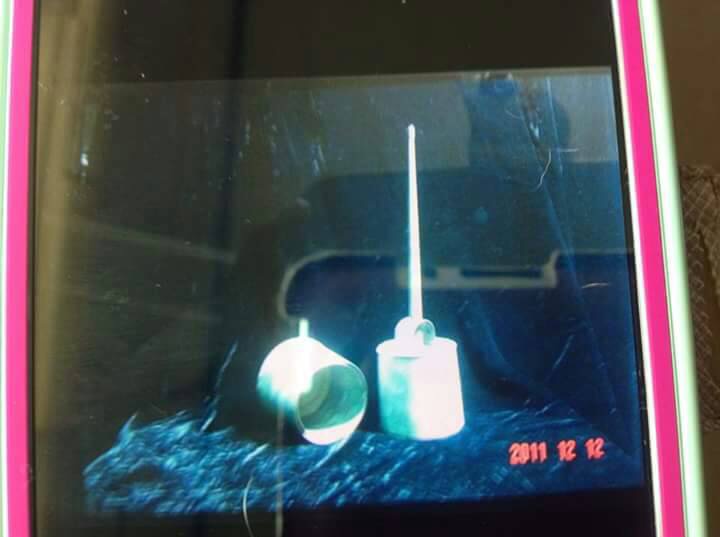
當年暑假期間晚間家中悶熱除了和家人在院中乘涼外有時會獨自沿王生明路往鳯山大橋方向逛街,対沿途商家及路邊小販均感好奇,小街上開有許多彈子房(今稱為撞球場)常見一些大哥哥在大枱子上用長木桿推圓球去撞別的球,枱子長方形沒有囗袋裏面有四顆不同色的球,枱旁坐有大姊姊負責記分,父親説那是不好的埸所,我在旁觀看時他們會說"小朋友快回家去"。長大之後我才知道當年流行的是「開侖」(Carom)打法,其玩法有四球及三球競賽、自由球、障礙球及三顆星等,民國50幾年國內開始流行司諾克(Snooker)有15顆紅球7顆色球球枱有六個袋口,近20幾年又轉為流行花式撞球,有八號球、九號球及14一1等玩法,其中尤以九號球最為風行我國許多男女好手經常在國際賽中奪冠,每年在台灣都會舉辦「安麗盃」女子九號球大賽,母親從不錯過實況轉播,對國內男女撞球好手都能叫出名字,記憶力超強。王生明路西邊有一片很大的農場也是我們白天常去玩的地方,晚間農場前的路旁有許多水果攤販使用一種電土加水產生可燃氣體的電土(碳化鈣CaC2)燈又稱為電石燈、乙炔燈,老一輩的人叫它水火燈來照明較煤油燈光缐強多了,其火苗可高達四五吋(照片如留言版),目前電土巳沒人用來照明而是果農用來催熟水果。因為具有危險性並不是很容易買到,就像昨晚八仙樂園的粉塵爆炸事件,那些有危險性的彩色粉末原料即麼加強管制不得用在群眾聚集場合,希望那些傷者都能化險為夷平安康復才好。
懷舊篇-30
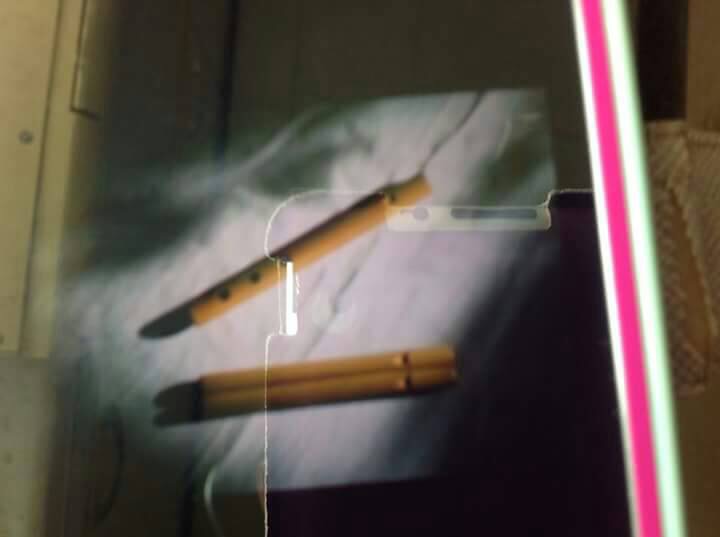
當年在晚上逛街時常會見到有盲人沿街吹著按摩笛(如留言版)每一小段音符約四至五秒反覆吹奏以吸引顧容,也有賣麵茶(炒麵粉)的手推車上面一壺煮沸的水發出氣笛聲,不過我從未買過,因為母親都會在冬天時自己炒一些麵粉沖泡給我們吃,加些白糖便是美味的點心,可那是小火慢慢炒出來的還挺費功夫的。 街道上充滿著木屐撞擊地面的聲音,當年民眾普遍穿著木屐,通稱木底鞋是我國一種民俗用品,北方人叫"嘎拉板"我們稱"拖板鞋",著木屐是潮汕人的傳統風俗,據說木屐始於晉文公,晉國貴族介子推背老母隱居綿山後晉文公帶人尋找不見其蹤跡,有人建議說介子推是孝子如果放火燒山他肯定會背老母出山的,文公從之誰知燒山後介子推母子並没有出山相反抱樹而死,晉文公見狀甚為憐之遂在綿山建祠紀念介子推又命工匠將那樹根刨起做成一双木屐不時套在腳上,呼為"悲夫,足下"以示敬之,由於木屐確有很大的實用價值所以到了兩漢木屐已相當流行,晉、南北朝時代木屐不但得到廣泛的利用,其製作也不斷得到改革。記得我在四年級以前都是穿著木屐,鞋面上的寛繫帶斷了我還會自己修復,女生則穿著有腰身漆有彩色的木屐,直到我五年級搬到大寮眷村才和村中其他小朋友一樣穿著白底藍色人字繫帶的夾腳拖(Shoe plus)稱為史力把(可能是日本人唸英文發音斬釘截鐵)從此鞋腳合一奔跑起來輕快許多,不像以前要跑之前需先蹲下將拖板鞋拎在手中,只是夏天穿久了之後雙腳背面上都會有一白色的人字記號。
懷舊篇-31
之前提過鳳山王生明路西側有一片大農場,通往農場的道路兩旁樹木結滿了青果(橄欖),我常帶大妹二妹及數名玩伴至農場採摘青果(小妹太小在家留守),由身手靈活的我爬上樹梢摘取青果後往下拋,為免果粒破損妹妹們用雙手拉起裙子接住,初期常有漏接致青果掉落地面或K中腦袋,久了之後便能準確地落入裙中極少失誤,帶回家一堆深綠色的青果生吃有些酸澀,用水煮過後表皮變成黃色果肉較軟略帶酸味成為我們的零嘴,如今每次陪老伴晚間至碧潭散步時在吊橋東橋頭階梯旁的小販竟然有賣和我們當年吃的一模樣水煮青果,每次經過都不免會勾起兒時回憶有時會説給老伴聽,她卻立馬回說"已經聽了幾十遍了"兜了一頭冷水。 村中常有一騎單車前面掛兩個大布袋裝著回收的破銅爛鐵,車後小鐡桶中裝著凝固的麥芽糖,用手搖空竹筒發出的嘎嘎聲通知村民,小朋友們紛紛將家中的破鍋,空罐⋯等拿出,小販則用手揑一團麥芽糖附在小竹籤上交換,糖球大小視收取資源價值而定,鋁質的小小牙膏空瓶卻可換一大球糖(當年鋁較為值銭吧?)小朋友們都很滿意地享用意外的收穫,可有次鄰居小朋友被打得哇哇大哭,原來是他偷偷將家中有用的鐵器拿去換糖吃了。 村中也常有原住民朋友(男女都有)兩三人一組頭上頂著大竹籃裏面裝有鳳梨、小米等逐戶詢問有無交換意願,母親每次都沒讓他們失望,依行情以一滿飯碗白米換一顆鳯梨,他們很高興的離去我們也吃到甜美的鳯梨,後來搬到大寮的眷村就沒再見到如此以物易物的場景,還真有些懷念。
懷舊篇-32
五年級時舉家遷至大寮的商協新村,之前已提過早上搭村中交通車到黃埔新村下車再步行至誠正國小上學,放學時出校門右轉眷村東六巷穿過黃埔路沿陸官校圍牆通過大門至鳯屏路右轉往屏東方向上坡後轉入右側土路沿官校北側圍牆走到鳯林公路往林園方向,道路兩旁全是稻田,上了一段長坡後右側小山丘為一大片公墓接著是一座磚窯廠過了窯廠右側即為商協新村大門(照片即在大門口拍的)後來磚廠與公墓之間又陸續興建了影劇五村及七村兩眷村,商協的東側則建了果協新村,再往大寮方向的右側又陸續建了兩三個眷村,我們經常到磚廠看製磚過程,先將調水的黏土倒入大的攪拌機器中一旁的磚頭長寛的出口慢慢吐出泥條,一名工人以手壓下兩條鋼絲的鍘刀切出兩塊磚坯另一人負責將磚坯裝上手推車運至廣埸排好風乾,再將風乾的磚坯送入窯中以煤炭加熱燒成紅磚,待窯孔中完全冷卻後才能入內取出成品,原來那麼不起眼的紅磚製造過程竟然如此繁複費工。
懷舊篇-33
眷村靠近鳯林路有三個大池塘假日常有村中小朋友在此垂釣,某次月考我成績不錯雙親於週末晚上帶我至鳯山看電影(片名不記得了)散場後又至街上的釣具店買了一根約七、八尺長的竹製釣魚竿及魚線、魚鈎、浮標、鉛錘等配件後從鳳山乘三輪車返回大寮眷村,我將魚竿立在車後座踏腳處不時把玩我的第一根制式釣魚竿(以前都是隨便砍隻細竹或樹枝),父親叮嚀我要愛惜使用避免碰撞折斷。 次日下午約了幾位玩伴到大池塘釣魚才坐下十分鐘左右便衝來一名大漢怒駡我們偷釣他養的魚並快速搶走我們的釣竿當場折斷,真是天外飛來橫禍,我期盼許久的第一根釣竿竟然不到24小時便夭折了,事先我們完全不知那是有主的魚塘且四週也未見告示牌,垂頭喪氣地回到家中將經過告知母親,晚餐也沒胃口,父親下班回家後並未責駡我反而安撫我的情緖。後來仍然有許多人在該處釣魚,據瞭解那些池塘是眷村中的無主池塘(即任何人均可垂釣),那天算我們倒霉遇到瘋子了。後來父親又買了一根新釣竿給我,讓我消磨了一個暑假。一年之後軍方派推土機將三座池塘填平,我們在旁不捨地看著它們一個個被泥土呑澨,整平後的空地分别作為露天電影院、菜市場、打煤球場之用,露天戲院係用竹籬芭圍起前有木板搭的小舞台及銀幕座位是以兩根碗口粗的圓竹合併架在兩根木樁上,約有二十多排,設有售票口,票價五毛錢,放映一些二輪中西片,附近流動攤販晚間也聚集附近成為眷村中的閙區。
懷舊篇-34
民國48年我們全家到鳯山戲院觀賞由李翰祥導演林黛趙雷主演的古裝片「江山美人」,該片堪稱黃梅調電影之開山始祖,根據民間故事〈游龍戲鳯〉改編,獲得第六屆亞太影展最佳影片、導演、男女主角配角、編劇、彩色攝影、剪輯、音樂、錄音、藝術設計等獎項,是當年最轟動的電影,此後村中每天都可以聽到住戶家中收音機播出的該片歌曲,連三歳小孩都會唱上幾句,至今它的招牌曲〈戲鳯〉仍然常被KTV客人點唱。另外當年最常聼到的流行歌曲則有〈晚霞〉〈花外流鶯〉〈紅花襟上插〉⋯等幾乎人人會唱。 六年級時我轉學至大寮的永芳國小,搭乘高雄客運車上學,卡式月票每天有兩小格,班次不多經常擠不上車,眼明手快的車掌小姐總能在混亂中準確地用鐵剪卡中當天如米粒般的小空格,令人佩服。永芳國小學生多為大寮地區農家子弟,升旗典禮時幾乎全校同學都是赤腳只有我及不到十名同學穿著鞋子,常被投以異樣眼光,我所屬的六年和班也只有我和另一名董姓同學(僅有我們兩個外省子弟)穿鞋子上學,但是三天之後我決定入境隨俗也改為赤腳上學,剛開始不太習慣,踩到小石子會痛走在太陽下的柏油路會感覺燙,久了之後便能適應了,我觀查同學們的腳底板幾乎都像多了一層車胎皮般,就算細小的玻璃碎片嵌入也沒感覺,最近見某報導指出若是經常光腳踩在泥土地或草地吸收地氣對身體有益,突然覺得我當年的決定是正確的。
懷舊篇-35
我們六年級七個班的一排教室靠近小山坡東西兩側全是水田東側還有一約20坪的池塘池邊有一座雙人腳踩的水車,我們下課時都喜歡踩著玩,教室南側一大片菜園種植四季豆我們常將停在菜葉上的金龜子抓來用五尺長的線綁住牠的後腳讓牠飛舞像放風箏般,菜園旁有一條小路通往小山坡山上全是松樹樹上有許多黑褐色的柴龜蟲也被抓來玩,也可在地上撿到很多松果。雖然教室週邊環境很好玩但是我們六年級的課業壓力很重,幾乎每科都有課外參考書,數學有兩本比課本厚三、四倍的參考書,每天八節課上完後晚上還要留在教室補習三個小時,有時我會向同學借單車騎回家吃完晚飯再回校補習,單車非常陽春沒有擋泥板、車燈、煞車,他説只耍用腳後跟底磨擦前輪就可減速,感情是把腳底板當成活的煞車皮了,從眷村回學校有一段長的下坡路我用腳底磨擦輪胎皮還不到五十公尺腳底便燙得受不了只好下車用牽的到平路再騎。班導師莊金桂先生要求甚嚴全班48名同學依程度分為八行座位每行六人每兩行12人為一組分為60,70、80、及90分四組,凡是平時考、模擬考、月考、期末考成績未達標準者在唱名發考卷的同時差幾分就用一支四尺長的藤條打幾下手心,有時差太多分就手心及屁股各分擔一半,每到發卷日同學們都備好酒精、萭金油、老薑等減痛秘方,頓時教室中充滿了各種氣味,我編入90分小組,但是人有失神馬有失蹄也常有考差了被打經驗,只要被抽打十幾下回座位後要好一陣子手掌才恢復知覺,有些同學打一下便收手猛甩或藏在背後,導師下令伸出才慢慢呑呑伸出待導師用藤條將手掌由下托高後立馬打下他又收手重演一遍,待全班試卷發完及打完大約需半節課時間,我們也曾向其他班同學打聼都是一樣被打,當年導師的說法是請我們吃鰻魚,可我們都不喜歡吃這種鰻魚。
懷舊篇-36
五年級以前在鳳山誠正國小班上同學平時都哼唱一些國語流行歌曲或電影插曲,而在永芳國小同學們則常唱〈媽媽請妳也保重〉〈打拼的工人〉⋯等台語歌曲,我不久之後也學會了好幾首台語歌,〈媽媽請妳也保重〉是我學的第一首台語歌,覺得文夏的歌詞寫的很感人,它也是我數十年之後仍然還會唱的歌曲。 導師為提昇同學們作文能力規定大家開始每天寫日記第二天交給他檢查,我在四年級時父親便給我一日記本規定每天寫日記,某日導師很生氣的説"你們寫的日記全是胡扯一通,什麼起床、吃飯、上學、放學、睡覺⋯,全班只有李偉傑(我的原名)的日記還有些內容"我且奉命上台唸了一篇日記供大家參考至今仍印象深刻,在永芳的一整學年大家拼的首要目標就是考上省立鳯山中學(不敢期望雄中),每次月考或期考我總是屈居第二名,而第一名總是那位董姓同學(全班唯一穿鞋子上學者)當年的確有「既生渝何生亮」之感,不過後來想想他若不是真有實力也不可能每次拿第一名,只能怪自己不夠努力。
懷舊篇-37
村中原有三座池塘填平後除了作為露天戲院、菜市場另外三分之一的土地成了打煤球場,村內各家燒水煮飯幾乎都以煤球為燃料,煤球場一位五十歲左右的伯伯光著上身皮膚黑得發亮在烈日下將碎生煤加水及泥土混和倒入圓柱型模具內加上鉄蓋以大木槌重擊五六下後即可從模具中取出一粒圓柱型內有19個通氣孔高約30公分的煤球,交錯排列架高晒乾後即可依村民叫貨送至各戶,另外也有一種約15公分高的煤球適合家中人口較少的住戶選購,煤球爐以水泥製成內徑恰好容納煤球(如留言版)下方有一通氣孔以活動拉門控制火力大小,要將煤球點燃頗費功夫,一般都是睌間不再用爐火且煤球未滅前取一粒新球疊在上面我們稱為「接煤球」動作不難但是氣味嗆人,父母親寧願自己忍受也不讓我們動手。祖籍湖南的父親喜愛辣椒(屬於茄科,它的維生素C含量在蔬菜中首屈一指,人稱營養辣袋,其辣味來自"辣椒堿"適量食用可以刺激味蕾增進食慾促進消化,但胃病、高血壓眼疾患者應禁食)我們常將生的青辣椒小心地丟入爐子下方的通風口內待它鼓漲爆裂後以鐡絲一一掏出用冷開水漂洗乾淨加入醬油麻油醋拌勻作為開胃小菜,父親稱它為"煨辣椒"全家都愛吃,滋味遠勝過目前市售瓶裝的剝皮辣椒。 當年眷村還發放一些美援物資如麵粉、包穀粉、牛油、營養餅(如五十元硬幣大小的黃色藥片煮飯時加一片便煮出整鍋黃色的飯,母親說較有營養,可能是類似維他命的功用),自治會每天早上煮一大鍋脫脂奶,我拎著小茶壼去領回後搭配早餐食用,母親也常用包穀粉做成北方的窩窩頭、煎餅、煮粥都很美味,至今仍然使我們懐念不已,曾到市面上買材料回來作,但卻總覺得不是當年那個味。
懷舊篇-38
六年級的班導師負責盡職,每天早上七點鐘便到教室督導我們早自習,當年導師幾乎包辦所有課程,晚上還要補習到九點,一天工作超過十四小時,某次月考全班成績都很差,在發完試卷及賞過鰻魚大餐(以籐條打手心)後導師忍不住落淚,那是一個恨鐵不成鋼的感傷,不久之後便病倒了但第三天即拖著病體継續站上講台,某位同學家長建議服用一種草根熬煮的湯汁有治療功效,次日十幾名同學上學時將鋤頭綁在單車上帶到教室,中午吃完便當後全班出動到教室南面的小山上挖掘一種白色長條像筷子般粗的草根,不到一小時便挖到一大包由班長交給導師帶回家,過了幾天之後導師精神氣色明顯好轉,不知是否草根發揮了功效? 一年苦讀之後終於從國小畢業,我報考省立鳳山中學,入學考試的前一天晚上晚餐後父親叫我不要再看書了坐上他的單車帶我到鳯山看電影,他要我儘量放鬆心情,可我坐在戲院中心裏仍想到次日的大考,演些什麼毫無印象。次日上午帶著准考證、鋼筆及一瓶墨水到達省鳯考場見到烏鴨鴨的一片家長及考生,心中不斷提醒自己不要緊張放鬆心情。完成各科測驗後回到家中父母問說還需不需耍再報名縣立鳳中以免省鳯落榜後無校可謮,我說不用了一定沒問題的,從此完全拋開書本開心地過暑假,後來放榜結果我在錄取名單中,我們那一班除我之外還有一黃姓同學考上省鳳,我五年級在誠正的同班同學中也有班長唐宗英及湯仁彬、林紹琛入榜(初一共有甲、乙、丙、丁、戊、己、庚、辛等八個班,其中甲、乙兩班為女生班,林在乙班、我在丁班、唐在辛班),至於每次考第一名的董姓同學則考上了台南一中。 不久之後父親便兌現了他的承諾,只要我考上省鳯便送我一台單車,那是用550元向他的友人買的九成新單車,配件齊全,龍頭及鋼圈閃閃發亮,晚上出門便將後輪旁支架上的鋼製小瓶(磨電池)頂端小滾輪緊貼後車胎當車子前進時小鋼瓶即可發電經由導電線傳至車頭電燈發光照明。 當年父親中校月俸不到千元,為了我的獎品便用掉了七囗之家半個月薪水,我心中有些過意不去,或許這便是為人父母者鼓勵子女好學上進往往不計代價的。
懷舊篇-39
父親服務的陸軍印刷所原位於步校營區內廠區狹小設傋老舊隨著日漸增加的印刷任務乃於台北新店擇地建廠升格為陸軍印製廠,廠區大了許多倍設備更新,中校所長升為上校廠長,父親為中校副廠長,49年八月父親北上至新廠上班,每個月返回大寮家中三天,從此我們每天都吃各式各樣麵食(父親愛吃米飯),我也跟著學會一些如麵片、麵疙瘩、韮菜盒、手撖皮水餃、蔥油餅等,如今市面上常可買到味道不錯的麵食,但是麵片及麵疙瘩這兩樣我仍然愛吃自己做的。 暑假期間村中男生最愛戲水,每天下午我們便揪團(以手指比暗號或用暗語)出眷村大門沿著鳯林路北面農地(多為黃皮香瓜田)中一條台糖小火車軌道向西行約兩公里有一水圳(其實那就是我之前住黃埔新村時常去歩校西邊水圳的上游)水深及胸圳底細沙中還可摸到蜆仔,有一兩位較皮的男生為顯擺膽量故意站在鐵道橋上待台糖小火車不斷鳴笛直至逼近數公尺時才縱身往下跳入水中,氣得火車司機伸出頭來大駡,他們覺得很刺激好玩。 村中有一小雜貨店兼營漫畫書出租,我們常租牛哥(李費蒙,因牛年出生故筆名牛哥)的牛伯伯打游擊、牛小妹、大偵探胡老鴨⋯及劉興欽的阿三哥與大嬸婆,但當年最熱門的要屬葉宏甲的諸葛四郎系列漫畫,從47年的漫畫大王連載到後來改為漫畫週刊,因為畫風簡單劇情緊湊深受小朋友喜愛,每週四出刋小店只進貨三夲,大家都事先掛號預約輪到者只能在他不到三坪的小院中坐在小板凳上看,一旁接替者排排坐著等候,我從諸葛四郎大戰魔鬼黨、黑蛇團、雙假面(笑鉄面、哭鉄面)到山嶽城都沒錯過,之後初中二年級搬到台北便沒再看漫畫書了,相信那些漫畫都令三、四年級的好友們留下難忘的童年記憶,早年有一首民歌〈童年〉歌詞中也有提到漫畫的情節,每當聽到這首歌時總是會想起當年擠在小院中看漫畫的情景。
懷舊篇-40
當年的軍眷實物補給有米、油、鹽等由聯勤派兩名老兵用牛車送到村中,各戶憑眷補証附的大、中、小口票卷帶著米袋、空瓶前往牛車停放處領取,我們都愛圍觀那頭大黃牛,只見牠的大牛眼四處觀望嘴巴不停的咀嚼流出白色的涶液,後來換成馬達三輪車送補給品而我們也失去看牛的樂趣。愉快的暑假很快過去了,成為初一新生的我以單車通學,從大寮眷村一沿鳯林路經過鳯山市區後往高雄方向的右邊即為學校大門,車程約五十分鐘,當年的鳳林公路柏油舖面不寛遇有汽車經過便需閃避至碎石路肩前進,尤其常有海軍陸戰隊的高底盤大卡車呼嘨而過捲起大片塵土,或是突然按下氣動喇叭震耳欲聾,那一段路程有如一場震撼教育,早上還有許多農民單車前輪兩側各掛一大竹籮後座載物架上也綁一更大竹籮都裝滿了高麗菜或大白菜魚貫往鳳山方向行駛急著趕往市場出售,上坡路段則下來推車很是辛苦(三籮筐的菜至少有上百公斤),相較之下我便顯得輕鬆不少也沒啥好抱怨的。 學校從初一到高三分六個年級,校長鄭先生總是西裝革履,我編入初一丁班學號9637,導師林勁植先生負責教數學,我們的制服是白短袖上衣黃卡及短褲黑球鞋(現今青少年愛穿的復古鞋)頭戴像大甲蓆材質的寬邊草帽附有棉繩繋在下巴防止被吹走,在南部的夏天烈日環境,那頂草帽可真是貼心的設計,只不過淋了幾場雨之後會變得老舊下垂,我則用亮光漆塗刷一遍立馬煥然一新。 中學開始有英文課,從26個字母及音標開始學,如今的小孩流行雙語教學 ,前幾天在公園見一女老師帶一群三四歳的幼童戶外活動,她全程說英語,小朋友也用英語回答,令我訝異。數學課不再是什麼流水、植樹、時鐘、相當問題及雞兔同籠(當年傷腦筋時常會抱怨為何要把雞和兔子關在同一籠子)而是XY等方程式,加上理化、國文、歷史、地理、公民、美術、勞作、音樂、體育等每週課表排得滿滿,且 常有隨堂測驗,課業壓力仍然不小。
原 PDF 有 224 个字因字体缺字而无法显示,本页已根据上下文补上,可能有出入。
本文保留原文的繁体字。
Contents目錄目录 (40)
懷舊篇-1
我是37年底出生於蘇州市(江蘇吳縣)養育巷,此照片是我珍藏最久的一張,十年前曾陪同父母赴上海探視二妹順便至蘇州杭州一遊,晚間我獨自離開蘇州的飯店至我的出生地養育巷探訪(好奇它究竟是何面貌)可它卻已成了車水馬龍的六線大道,令我懷古的心情有些失落,後來又逛到一條路名為「桃花源大道」卻是僅約八米寬路面鋪設石板的古樸道路,當地的道路命名還真奇怪。回到主題,我一出生便遭遇戰亂坐火車乘船來到高雄鳳山時尚不滿週歳,大姊不滿五歲,居無定所,父親(民國7年生,湖南湘鄉人,軍校17期武岡分校畢業,寫得一手好字)後來在陸軍總司令孫立人將軍(第七任接替顧祝同上將)轄下的總務處運輸科任上尉參謀,全家遷往鳳山大橋上遊約一百米的一座小橋(東福橋)穿過古城門(東便門)後的打鐡街租屋居住(均已列為古蹟),後因環境太吵再遷往鳯山南台戲院後面地主在農地上蓋了四排簡陋房舍約20戶,沒有水電,空地上有一座手壓水井全體共同、每戶約八坪左右隔成兩間、沒有浴室,用大盆在臥室內洗澡,地面是泥土地每次洗完澡地面泥濘濕滑,床鋪是竹子製成床下還會長出許多半尺高黃色的小草,廁所是附近空地蓋的電話亭大小的茅房(木板牆木板地面中央有一長方形開口下面有一大坑,頂部還真是蓋上茅草),廚房則利用兩排房舍中間的通道放木材火爐烹煮、牆壁是以竹片組成再敷以泥土混合稻草(跆拳道好手可能一拳打穿),房租每月要五斗米,房客全為大陸來台家庭,父親每月薪俸尚不足付一個月房租,只有靠母親變賣金飾支付,我覺得那地主是在發國難財。當年我僅三歲喜愛到處跑,父親上班大姊上學母親做家事為防止我走失每天父親用軍用長綁腿兩條連接一頭綁在我腰際另一頭綁在餐桌腳上,餐桌距前後門等距,我每次走到前門口即受限無法踏出家門再走到後門囗也是一樣,後來我雖覺得此舉有欠妥當但以當年沒有托兒所安親班的條件下也能諒解父母的苦衷。
懷舊篇-2
母親今年高齢90,瀋陽市人她的祖父(我的太公)當年在瀋陽開設頗具規模的印刷廠,張作霖大帥府的文書印刷全交該廠承印,她幼年生活優渥家中擁有私人黃包車,後因東北戰亂便隨著姊姊入関在各省飄泊,我們提到某個大城市時她都能述說她住過的經驗及民情風俗,25年12月 12日西安事變當天,年僅 11歳的她正好在西安目睹街頭的戒傋狀況,她到過的城市計有北平、天津、鄭州、上海、長沙、楊州、蘇州、長沙、西安、廈門⋯等。母親雖自小離家但是卻會做很多北方的麵食如包子、饅頭、花捲、葱油餅、韮菜盒(圓形的而非一般常見的半圓形,外縁且揑出花邊)、麵片、窩窩頭(用包穀粉)、手撖皮水餃蒸餃⋯等,我自小也在廚房習得韮菜盒、麵片、手撖皮水餃等麵食,她還會自己製作衣服,我三個妹妹童年時穿的連身洋裝就是在布店買回各色花布用縫紉機做的,她們很高興的穿著出門,村中其他小朋友都很羨慕。 三歲時的我乳名「毛毛」從不哭鬧,不舒適時均能忍耐(母親說的),湖南籍的父親喜吃辣,每餐均有辣椒莱(重辣的)我也跟著吃完後張嘴大口呼吸,直至今日我仍然喜歡在涼拌莱中加入辣椒。某日鄰居阿姨徵得母親同意帶我去她家玩,她和其他阿姨聊天時我從後門走出到戶外小巷,那是各家煮飯的地方,天色昏暗我不慎跌倒往前撲下時整個臉正好栽入某家火爐上的一鍋牛肉湯中,整鍋湯也打翻了,阿姨急忙將我送至診所救治,父母聞訉趕至診所時我整個腦袋已被白紗布包得像木乃伊只露出兩眼及口鼻,靜靜地坐在椅子上像沒事人一般,父親極為不滿從此不再搭理那位阿姨,這也是我人生中遇到的第一場災禍,幸好那鍋湯可能尚未煮沸,否則後果不堪設想。
懷舊篇-3
40年10月家中第三個小孩我的大妹誕生,在當年的居住環境下大妹的成長過程顯然欠理想,加上老天作弄,41年大妹未滿週歲之時遭遇到貝絲強烈颱風侵襲,我們居住的這批房子屋頂全被掀了,雨水灌入室內一家五口渡過難熬的一夜,後來過了一週房東才勉強將房子修復,其實當年家中也無啥家當受損最貴重的物品就是一只保溫熱水瓶鐵皮外殻帶有彩色花繪圖案打開鉄蓋內有玻璃內膽,每當有地震來時母親便立馬將它抱在懷中護好,若是內膽破了則要花不少錢去更換新內膽。 有次大姊帶我上街見到穿著水兵服的美國人乘軍車通過便教我豎起右手拇指高喊0K,車上的老美也回以同樣動作,一路上其他小孩也都如此,後來我才知道美國在40年實施對台軍事及經濟援助,運送大批軍事裝備及民生物質來台,包括麵粉、奶粉、罐頭、牛油⋯等,有些小朋友還穿著麵粉袋改製的衣服上面寫著"中美合作"字樣,但是20多年之後的67年12月27日美國特使克里斯多福來台宣示中美斷交遭到民衆丟雞蛋抗議,反差也太大了。 當年經常有防空演習,母親帶著我們躲到附近的竹林中一兩個小時才能返回家中,也常看到雙層機翼的輕航機在空中表演翻滾特技(機場就在鳳山往高雄的省道左側現在國軍醫院位置),也常見軍機空投各種顏色的傳單,小朋友們都到田野中追逐撿拾,內容多為一些反共標語,大家都很羨慕那些撿得很多的小朋友,不知道如今若有空投傳單還會不會有小朋友追撿。
懷舊篇-4
當年大姊放學後或假日都會和附近的農家女童玩跳繩,我在一旁觀看,兩人揮動一條七、八尺長比姆指粗以稻草編的繩子另一人在中間跳動,三人同時配合節拍唱著日語童謠,跳繩者忽而指天忽而摸地忽而雙手叉腰,唱些什麼我一句也聽不懂,那草繩幾乎每兩三天就會磨斷,她們總是會一直拿出新的草繩,想必那年代小朋友跟本沒錢買粗的麻繩。 我和大姊都沒有上過幼稚園,父親用硬紙板寫了很多字塊由母親教我們認字,基本上在入學前已經認識不少字了,但是ABC倒是不會(當年並不重視)。某日中午大姊經母親同意帶我一起到黃埔新村內的誠正小學(教室不足三年級以下分上下午班)玩,也是我第一次走那麼遠,當上課鈴響大姊進教室後只剩我一人在校園內感覺很無趣便憑記憶沿著原路走回家中,晚餐時分父母及我坐在門前巷子的餐桌(住戶們都在室外巷子晩餐)等了很久才見遠處的大姊邊走邊哭的走來説"弟弟弄丢了"待見到我端坐餐桌後大為驚喜,不過此事後來經常被大姊提出來批判,我也自認有錯不該放她鴿子。 平常睌餐後左鄰右舍都會在室外巷道邊乘涼,那些叔叔阿姨們就會起哄說"毛毛快演講"我便取來一小板凳站上去雙手背在後面上身像電扇擺頭一般左右轉動(當年各家都沒有電扇)地說"從小我便離開了老家東奔西走⋯⋯"每次的開場白就是這一句,後面說些什麼已經記不清了,反正把大家都逗得很樂,可後來我的學生時期卻從未參加過演講比賽,實在太埋沒了我的天份(請包涵)。
懷舊篇-5
子曰:一簞食、一瓢飲、居陋巷、人不堪其憂,回也不改其樂。 然而通常一家之主但凡能力所及都會想方設法譲妻小的生活環境舒適安逸。42年父親晉升少校後打報告奉上級核准在黃埔新村西七巷緊臨誠正小學圍牆邊空地(約40坪)自建住宅,母親將所有金飾變賣購買建材雇工興建約20坪半磚瓦頂房屋,有一客廳及一主臥室外加一間木地板房類似和式屋,後院中另建一小廚房兼浴室,還有一小間廁所(不是抽水馬桶,需定期找人來清理),前後院一様大緊臨竹籬笆內種有一排紅花樹,前後院共有六棵木瓜樹後來幾乎天天吃木瓜,大門外的大水溝搭建一座小木板橋(之前大姊和我照像所站的位置)供家人出入,西七巷是一條泥土巷道每天早上是莱市場各地莱販挑担置於路旁,全村住户都來此買菜,小販們均使用一根圓木棍上有刻度一端懸一鐵鈎掛上物品後移動枰鉈看出重量,肉、魚及蔬菜都用稻草捆綁拎在手中(完全沒有塑膠袋),買油要帶空瓶子套上漏斗加入,買鹽是裝入牛皮紙袋其中常夾雜稻草等雜物(是粗鹽)。搬到新家後每週日我和大姊要分工打掃擦玻璃窗掃院子拔雜草,經父親檢查合格後才能出去玩,當年沒有穩潔等清潔用品,玻璃窗上有污點時便用嘴哈氣後即可擦拭乾淨。 家中煮飯用的是燒木材的爐子,父親事先傋好許多一呎長碗口粗的雜廢木,我則負責用斧頭將它們劈成四至六片置於大鐵桶中傋用,剛開始時不得耍領,後來先將圓木段立好雙手高舉斧頭雙腳蹲馬步對準中央用力砍下咬住木頭後再反覆提起砍下直至劈成兩半,後來我覺得自己成了劈材高手,若有兒童劈材比賽我肯定能獲佳績。
懷舊篇-6
初搬入新家五歲的我對附近環境非常好奇,經常出門閒晃,村中西六巷中兩座防空洞是我喜愛的景點常和其他小朋友在內逗留玩耍,我們住的西七巷大門向左約20米左側有一寛僅三米小巷巷內右手邊第一家低矮平房有位老杯杯賣的甜酒釀很有名,附近眷村居民都常來買,它還賣糯米粉及醋(我們包湯圓時也來買),五年前我們小學同學會回到母校(誠正國小)舉辦畢業50週年聚會,以前的教室已改為教職員宿舍,我特別回到西七巷原住處探訪,但是它已不是我童年時的模樣,我想到連戰先生回到西安母校時一群迎接的小學生朗誦的歡迎詞"爺爺啊爺爺母校已經變了模樣⋯"連先生當時的心情我可以體會。巷內賣甜酒釀的己遷至緊鄰的王生明路(44年王生明將軍率官兵792名死守一江山以最後一顆手榴彈壯烈成仁、為紀念烈士於45年將路名更改)一樓店面。 回到主題,當年我逛到賣甜酒釀店前見兩位阿姨正用手推石磨磨糯米漿,一人推磨另一人則將大盆中泡過水的糥米用一長勺很準確地倒入轉動中磨盤上的小洞,同時週邊流出的白色米漿用一白布袋接住,裝滿之後封口放在一長木櫈上再用一根扁擔壓在布袋上兩頭用繩子固定將水擠壓出來,最後打開布袋裏面就是我們包湯圓買的糯米粉了,我全程在旁觀看才知道在家中吃得很愉快的湯圓竟然如此費工夫,當然如今一切都有機器代勞,那具石磨也進了文物館展示,但是仍然有許多食品強調純手工製作,畢竟人們懷念的古早味是無法被大量生產的食品取代。
懷舊篇-7
前文提及賣甜酒釀的小巷是我常逛的地方,往下走右側是一條水溝溝邊有竹林再往下的右側土堤爬滿了牽牛花(屬於旋花科俗稱喇叭花,日本人稱為朝顔,常被人譏為上不了枱面的花,我們常將它的藤莖剪成小段以架在姆指及食指上的橡皮筋彈射出去攻擊玩伴)左側為一排民房,有天我看見三位阿姨摘了一大堆牽牛花的葉子放在一盆水中蹲在地上三人六隻手不斷在盆中搓揉葉子我很好奇在旁觀看,不久盆中水成為綠色黏液狀,她們將葉渣撈出後輪流將頭髮浸入盆中並用十指來回抓頭,最後再用清水沖乾淨,我當時十分納悶心想不過是洗個頭唄為啥要將那黏呼呼有點噁心的東西抹在頭上(當年尚無洗髪精),過了幾十年後我在市面上看到某廠商推出一種標榜純天然葉綠素的洗髮精,它的顏色正是那些阿姨們用手搓出來的綠色,只是它肯定添加化學顏料及香料,真正純天然的還是那些阿姨們自製的產品,女人真是利害,早就知道用葉綠素來保養自己的秀髮。 當年家中有三種肥皂,香皂是用來洗臉的,淺褐色肥皂(像是目前的〇僑肥皂)是洗頭洗澡用、深咖啡色像月餅的圓形皂則用來洗碗盤。一般家庭廁所中仍使用的像是冥紙般的草紙,後來進歩到較薄土褐色一面較為光滑的厠紙,某天有位同學帶了白色的衛 生 紙到學校大家都覺得很新奇,他還拿出一張來變魔術用手搓一下便分開成兩張,大家當時還真被嗁住了(其實就是太薄了兩張貼在一起看著像是一張)隨著生活水準逐年提高,不斷有新的日用品投入市場,增進不少便利。
懷舊篇-8
43年2月父親離開了任職四年的陸軍總部運輸科奉調至位於鳯山陸軍步校內的陸軍印刷所任少校副所長,所長是徐中校,上班地點由陸軍官校營區改為歩校均離家不遠,他的老長官孫立人上將亦於同年6月調任總統府參軍長,44年爆發「孫立人事件」遭到軟禁直至77年5月重獲自由,79年11月19日病逝於台中向上路總務局列管的眷舍(我正巧任總務局眷管組長,39年父親在陸總時歸他管,40年之後他住的眷舍歸我管,還真是一段奇妙的緣份)享年89歲,91年7月台中市政府將該眷舍指定為歷史建築,99年11月開放為「孫立人將軍紀念館」。 43年3月家中的第六名成員我的二妹誔生,由助產士(古代叫產婆)來家中接生,父親那段時間很是辛苦,我們姊弟也幫忙部分家事,二妹滿月時父親還在家中請了一桌同事吃滿月酒。 43年8月我報名申請就讀一牆之隔的誠正小學(學生均為黃埔新村、二村及三村子女,類似陸軍子弟小學)入學前需先經過口試,口試當天我和另一黃姓女童同時在教室內受測,她是父親在陸總同一辦公室同事的女兒,我瞧見母親和黃伯伯在教室窗囗焦急的眼神,老師拿出一些數字、圖片、字塊讓我辨認均正確答出,後來我及她均通過入學囗試我編入一年甲班她則編入乙班(一年級只有兩班),兩個月前在台北的小學同學會還曾和她見面回憶往事。 我在班上個頭最小坐在第一排進門第一個位置,一張課桌分配男女同學各一名,我鄰座是全班個頭最小的姜姓女生,放學時每班面對司令台成兩路縱隊我總是被排在最前面,全校唱完"功課完畢要回家去⋯⋯"後便列隊魚貫離開校門。
懐舊篇-9
我每天都很期待上學,完全沒有適應不良的問題,導師鄒〇(女)第一天便教我們唱歌,她還會彈風琴,対我們関心照顧未曾見她責駡同學,開學發新書時大家都很興奮,我特喜歡打開書本聞那油墨的香味,還有女生們愛用的香水鉛筆、橡皮的味道,削鉛筆的小刀片可折疊收入鉄片的刀鞘內,父親教我先將鉛筆刻出記號再沿此線削去多餘木頭,如此便切口整齊,父親削出的鉛筆有如削筆機般美觀,我練習了很久才勉強合格,後來市面有一種塑膠製的套子上面裝有刀片將鉛筆插入圓孔中轉動即可刨出整齊好看的切面。父親每學期開學時都會將我們姊弟的每一本新書以牛皮紙做為封套加以保護,外面再以毛筆寫上書名,後來許多同學也比照辦理。當年學校上下課沒有電鈴更沒有音樂鐘而是由一位老校工拿鉄錘敲打懸掛在走廊靠近福利社橫樑上一段兩呎長的鉄軌,噹噹 噹噹⋯為上課,噹 噹⋯為下課。五年前我們 回母校辦同學會時我特地去査看但當年懸掛的鉄軌已經不見了,心中有少許失落。每節課下課十分鐘男生們便奪門而出衝到操場踼足球,其實是一顆像足球大小紅藍色的橡皮球,第一節下課時便由全班最高的張振聲及楊祖和兩位同學任雙方隊長猜拳贏的先從我們中挑一位隊員,猜一次選一位。我個頭最小總是最後剩下的那一人,然後每節下課時就以原先分配的隊伍pK,上課鐘響時大家便跑回教室滿身大汗,後來由於我在場上表現的速度及敏捷力,被選中的順位也逐日往前提升,我後來加入陸官校足球校隊或許是童年時略有基礎吧。
懷舊篇-10
學校操埸南側有一大片水田,再過去就是步兵學校大門,水田中有一池塘,我常於’假日與同伴至此釣魚,用住家附近竹林砍的細竹竿綁上母親縫棉被面的缐(當年沒有附拉鏈的被套,需用大針粗棉缐將白色被裏及花色被面缝合,非常麻煩)及大頭針彎成的魚鈎穿上蚯蚓為鉺,浮標則是池中現採的布袋蓮球莖,由於不是制式裝備很少釣到大魚,卻不斷釣上非常嘴饞的大~肚魚(不到兩吋長),只得丟回池中。有時兩人一組在田中灌溉的約兩尺寬的小水溝中一人以竹片製的畚箕封住下游另一人從上游下水往下游走且不斷用腳撥動溝邊雜草待走到畚箕前時便快速提起畚箕,常可撈到一些泥鰍、鯽魚、吳郭魚⋯等,有一次居然撈到一條水蛇,嚇得我們趕緊回家。 學校操場週邊有一整排的鳯凰木(屬豆科,別名紅花楹樹或火樹,原產地南洋群島,因鮮紅或橙色花朶配合鮮綠色的羽狀複葉被譽為世上最色彩鮮豔的樹木之一,多見於南部的校園中,我現在住家附近的新店高中校園中居然有一棵,每次經過時都會多看兩眼)我幾乎爬遍了每一棵樹,摘下它黑褐色約兩寸寛兩尺長的種子莢當劍把玩,或將它剖開取出其中數十粒種子收藏,校園內還有一棵紅豆樹(南部特有)豆莢乾了之後取出其中如心形的紅豆(即相思豆)可串成手環及項鏈,當年的學校就是我們的遊樂區也伴我渡過愉快的童年。
懷舊篇-11
前文提到我們攀爬校園內的鳳凰樹,但是每次都由一位膽子小不敢爬的同伴在地面把風監視操場東北角校門口旁的傳達室,只要老校工從傳達室出來往操場方向走他便立馬發出警告,我們火速從樹上跳下逃離,根本忘了離地面的高度,他會在後面追趕大駡,同伴們都說他有精神病,禁止爬樹是為了安全顧慮,當年他只是盡他的職責而已,不知我們的行為算不算是頑童。 我們的課餘時間除了踢足球外還有踼毽子,用福利社兩毛銭買的兩粒橄欖有韌性的包裝紙將中央有一小方孔的銅錢(如乾隆通寶)捲在中間再將中央小孔部份的紙戳穿把兩端的紙扭成細條後由小孔中穿至另一面再將兩股約五公分的紙捲打開用手撕(或用剪刀)成許多細條便完成了,另外一種較耐用的雞毛毽子則較為費工但是穩定度高變換花様較易,我們除了比賽誰踢得多之外最常玩的就是一人先完成鞋面停毽、跨、跪、跳等連串招式後另一人必須比照完成若失敗則罰吊球,又分大吊小吊,敗者輕拋毽給勝者先以腳內側踢起一次再用另一腳從後交叉猛力踢出(稱為跳)敗者需盡力接住不可落地(像外野手接高飛球)若失敗便一直罰吊。說了一大堆可能只有玩過的好友才聼得懂。
懷舊篇-12
母親及大姊在家中很喜愛唱歌尤其是老歌及電影中的插曲,大姊也教我唱許多歌曲,印象中我沒學過什麼兒歌,綠島小夜曲(43年由周藍萍作曲潘英傑作詞原唱胡以衡)是我常唱的,另外抗戰時期的「白雲故鄉」也是招牌歌(另一首「松花江上」則沒學到),還有「長城謠」(劉雪庵作曲潘孑農作詞,26年77事變後在上海創作)、「杜鵑花」(30年黃友棣作曲燕軍作詞)、「小小羊兒要回家」(41年姚敏作詞曲、張露原唱),44年以電影「桃花江」一炮而紅的小野貓鍾情(22年出生於湖南湘潭,原名張玲麟)是伯伯(父親的二哥)的偶像(伯伯是湖南湘鄉人,或許有地緣因素),他常対我們說"我最喜歡看登情的電影"(湖南囗音把〈鍾〉唸成〈登〉)。大姊有編舞天份(直至今日仍在高雄及台北的教會帶動唱)常教大妺二妹及鄰居女童配合她的主唱伴舞,且於年節舉辦同樂晚會還備有節目表,小演員們為配合不同的歌曲還要換服裝,父母及鄰居阿姨叔叔們為觀眾,我則客串演唱兩三首招牌歌(家庭同樂晚會直到我們50年搬到新店的眷村後還持續了三年),由於我沒事常在教室哼唱老歌及電影插曲,每次開完班會離下課還有空閒時,導師就叫我上台唱歌墊檔,基本上我可能屬於愛表現的類型(進入軍校後每次軍歌比賽我都自告奮勇擔任指揮還設計進出場隊型)每次都完成導師交待的任務。
懷舊篇-13
45年9月家中第七位成員小妹誕生,一家七囗父母、大姊、我及三個妹妹全員到齊,父親的少校月俸維持全家開支甚為不易,母親持家精打細算,但是從未忽略我們的營養,直至今日仍然懷念當年她煮的美味菜肴,同樣的菜色味道就是不如童年時所吃媽媽的味道,相信很多好友也會有同樣的體會。 三年級時導師換成聞人倩女老師為鼓勵我們用功學習凡是月考成績有100分的同學頒發一張鳳山戲院的電影票(票價一元五角)我也曾得過好幾張票。有次大姊買了一張半票帶我們三個免票的弟妹到鳯山戲院看日本片「原子恐龍」,是黑白片聲光效果及剪接技巧完全不能與現代同類型電影相比,但當年我們可是看得津津有味。 軍方的政戰部門大約每十天會派電影隊到村中播放電影,村中小朋友都會在巷內高喊"今晩有電影"我們便提前晚餐及洗澡然後每人帶張小凳到場卡位,工作人員在村中主幹道架起白色布幕,用一台放咉機播放影片中途要換影帶而中斷四至五次,有些掃興,有時風把布幕吹的忽前忽後,劇中人物也跟著變形大夥反覺得有趣,有時正面人太多我們便到布幕背面看,景像稍差些但是字幕是左右顛倒的,反正多半是國語片對白也聼的懂倒也無妨。後來在村中東一巷北側空地興建一座復興台,含舞台及台前廣場,定期有軍中康樂隊來演出,盛況空前。當年影歌星也常組團至陸官校勞軍演出,母親會和鄰居阿姨們成群前往在下午兩三點的烈日下的大操場站兩三個鐘頭回來還説値得,這票人可算是追星族的始祖了。
懷舊篇-14
三年級時加入了學校的童軍團,配發一頂卡及布船型帽,制服雙肩配掛「誠正小學」四個大字的肩帶(當年是與「誠正中學」同一校區,我們是利用中學藍底白字的肩帶將中字上方的透明膠套用刀劃開再以藍筆將中字横線部分塗成藍色便成為小)胸前口袋上方縫一「中國童子軍」布條,還有一條深綠色領巾以藍白紅三色塑膠圓環在胸前固定,當年覺得很神氣,擔任糾察隊時在各班教室窗外巡視早讀期間若有不守秩序的學生則以小本子記下班別座號交給老師處理,我還是較為喜愛放學時手持木質與身高相同的童軍棍站在校門囗維持秩序,若有老師經過則發敬禮口令,待所有同學離校後方可收隊。 學校放寒暑假期間常有陸軍演習部隊借住教室,我們也常到學校看阿兵哥們操練,他們會分送一些不用的30步槍彈匣(黑色兩公分寛十公分長可裝五發子彈)給我們把玩,每天幾乎都在學校玩,寒暑假作業總是要到開學前三天才加緊趕工,每個同學幾乎都是如此,有時一天要寫好幾百個大楷毛筆字,手都快抽筋了,後悔沒有每天按時寫,但是到下次放寒暑假時又演出同樣戲碼。真是玩心太重。
懷舊篇-15
前文提到寫毛筆字,我官校周姓、彭姓同學及好友殳老師可是寫的一手好書法,甚至遠赴大陸添購名筆、墨、硯後如獲至寶,他們的心情我可以體會,就如喜愛打羽球的朋友買到一支順手的好球拍一樣。 小學時最愛的毛筆是七紫三羊,紫毫七成羊毫三成,一般筆尖用紫毫,筆頭錶面圍以羊毫適合寫小楷,買回後用熱水泡開使用,也有人習慣僅泡開筆尖部分,我覺得那樣每寫幾個字就必須蘸墨水太麻煩了,墨則喜愛雨花臺的墨頂有三個小圓圈,磨起來不僅滑潤且帶有一股墨香,後來同學們都改用墨盒(圓形塑膠盒內有棉花加入墨汁即可使用)而墨及硯台便逐漸從教室中消失,文房四寶突然少了兩寶,喜愛書法的好友肯定不能接受。 大姊十三歲進入誠正中學後中午耍帶便當,母親為譲她能吃到當天現做的飯菜,便約好中午用餐時間大姊在圍牆邊出聲,母親便在牆邊站在小凳上將熱便當從牆頭上遞給大姊(大姊那頭有個小木梯),住在學校隔壁還真是方便不少。 早上上學時我常用兩毛錢在家門口的市場買一顆成人拳頭大的水煮地瓜當早餐偶爾也會買個上面有葱花的花捲,上面塗抹許多紅色的醬料(像是現今的甜辣醬),近年來以地瓜為早餐被視為養生吃法,那麼我從小便一直享用養生早餐打下好的底子,直至今日未曾有住院紀錄(敲三下),唯一躺在病床上的經驗是在總務局服務時有次感冒發燒到醫務所打點滴兩個小時,早年健保卡背面就診後蓋一個章我通常一年不超過三個章,這或許也是我熱愛多項運動增加了體耐力,另外幾十年來我每天都必吃生大蒜頭兩粒,非常有效,好友們不妨一試(有許多方法可消除異味)。
懷舊篇-16
升上四年級那一年我就讀的「誠正小學」改制為「誠正國民小學」正式納入義務教育單位,班上轉來了五、六位過埤里農家本省子弟,下課時他們常聚在一起玩,久了之後慢慢也打成一片成為朋友,午餐時間同學們都回到附近眷村家中吃飯,他們則拿出早上從家中帶來的便當用餐(因為家住較遠)。我升上五年級的那年父親獲正式配住大寮商協新村乙種眷舍,因不夠住乃在後院加蓋兩小間後舉家遷往大寮,村中眷戶多為小港被服廠官士員工,鄰居王伯伯家外路邊停靠一輛十輪軍用卡車,車尾掛一鐵梯供人上下,那是廠中員工交通車,王伯伯是司機,每天早晨我們便搭便車到鳯山黃埔新村大門口下車再由村中南北主巷道進入學校,放學時則沿著陸官校北面圍牆外的泥土路接鳯林公路(鳳山一林圓)走回大寮眷村,全程約需兩小時,一年下來腿力增強不少,中午我則拿出上學時帶來的便當和那幾位同學共進午餐,他們很喜歡我便當內的配菜,經常互換嚐鮮,他們的便當普遍少油缺乏配色,不過我很喜歡吃他們帶的黃豆醬及地瓜簽飯,導師王善傑先生經常過來查看我們的便當內容及坐在教室看我們用餐並閒話家常,感覺他是一位慈祥的好老師,可惜我只被他教了一年,六年級時我便轉學到大寮鄕的永芳國小,離開相處五年的同學及生活的校園心中實在不捨。
懷舊篇-17
前文提到我們已經遷居至大寮眷村,可日前仍有許多黃埔新村往事不斷湧現,且容我將時光拉回,請見諒。 童年時許多玩具多半自己製作,父親有空時也為我製作難度較高的玩具,我經常拿出家中的工具箱,其中有鋸子、鐵錘、老虎鉗、鉄釘、鉄絲⋯等配合家中廢木料製作汽車、小船、戰車⋯等模型玩具,父親則用竹片幫我製成如餐桌般大的風箏,需用粗的棉繩用力拉著。每年元宵節一般小朋友都買現成的紙製伸縮圓筒狀燈籠裏面中央插一小紅蠟燭,常有蠟燭倒下燒毀燈籠狀況,父親則用竹子削成如打毛線針般細長條編成各式骨架再用文具店買的各色透明玻璃紙包覆成別具特色的燈籠,吸引許多小朋友圍觀。有一年國慶日父親用一整天時間削竹片、編骨架、包紙、彩繪為我製作一條長四尺粗一尺的大魚燈籠,用一段三尺長竹棍舉著,內有蠟燭魚尾尚可左右擺動,母親當晚帶我沿王生明路過鳳山大橋到鳳山戲院前的馬路旁等著看提燈遊行,一路上我舉著栩栩如生的大魚燈籠,沿街路人及二樓窗口都有小朋友指著燈籠大叫"夷啊 夷啊"(台語)。我覺得不好意思且深怕看遊行人潮擁擠損傷燈籠乃請母親將它暫寄放於某文具店中。等待看遊行的民眾站滿了鳯山主要街道(當年的縱貫路)引頸盼望,約一小時後聼到樂隊鼓號聲大夥都興奮起來,首先是省鳯及縣鳯的學生樂隊、旗隊,數十名同學每人高舉一張大的國父遺像及蔣總統照片、學生火把隊、鳯山鎮各機關團體隊伍一路高呼口號、民間舞龍舞獅、踩高蹺、跑旱船,還有二三十人每人以一條長約六尺的繩子兩端各繋一網狀鉃絲製圓球內裝燒紅的木炭,全體甩動鉄球飛出無數紅色火星充滿整條街甚為壯觀,這也是每次遊行最受歡迎的單元,全部過程約一個半小時結束。母親和我取回燈籠很滿意的打道回府。
懷舊篇-18
家中院子種的果樹除了木瓜外後院尚有一棵芭樂樹長得很茂盛果實不大是紅心的。某日見一男童把玩Y字形樹叉製的彈弓,特向他借來瞭解如何製作,他特別強調最好是用芭樂樹枝既堅固又耐用,我心中一喜,立馬回家到樹下看中一枝完美的Y形樹叉取出工具箱中的鋸子將它鋸斷並砍掉多餘枝葉把現埸清理乾淨,向自行車店要了廢內胎皮再至修皮鞋店找了一小片牛皮完成自製的彈弓,出門時掛在脖子上十分得意,可沒多久父親便發現芭樂樹被砍了一段樹枝,我雖然坦承罪行仍然遭到訓斥,為何書本上說華盛頓砍了櫻桃樹勇於承認反而受到他父親讚揚?晚間做完功課後我常糾集巷中鄰居六、七位比我年幼的小男生由我帶隊肩上扛著用香蕉葉柄作槍杔木瓜葉柄為槍管的玩具步槍(香蕉樹就是大姊與我合照身後那棵,木瓜葉柄則出自家中)成一路縱隊唱歌行進繞行村中巷道,每次總是唱那幾首歌,記得有一首是"打倒俄冦反共產反共產,消滅朱毛殺漢奸⋯"(怎料後來我進入軍校每天早上一起床早點名時還是唱這首歌),另外一首是"反攻反攻反攻大陸去,大陸是我們的國土大陸是我們的彊域⋯"唱完歌還有答數,操練一個多小時後才解散各自返家,這就是當年我們的娛樂活動。
懷舊篇-19
很多好友童年時都玩過四大童玩即尪仔仙、尪仔標、彈珠及橡皮筋,一年之中每隔幾個月就會自動換班,也不知是誰統一下達指示,就像服裝換季一樣,從未見兩種童玩同時出現的場景。尪仔仙是硬質塑膠製扁平小玩意,有動物、水果、寶塔、人物⋯等形狀,除人物較大(可達成人巴掌大)有彩色外餘多為單一色,小雜貨店中一張比月曆還大的硬紙板上掛滿了一行行大大小小的尪仔仙(薄紙片黏住每個尪仔仙上面的綿線)其中最大的一枚(第一特獎)通常是十八手觀音或是關公騎馬像可抵一千仙,其他還有十幾個大小不一的分別可抵50至500仙(有意收藏的小朋友拿普通的小尪仔仙交換大的),每枚尪仔仙都有一個編號(從1-500)用一毛錢抽一張小紙捲打開対號取物(後來演進為打開兩張黏在一起的小紙片),我曾抽到過一枚關平騎馬的可抵500仙,最基本獎就是一枚一寸大小的尪仔仙,一般玩法是在一定距離投向前方劃的橫線以離線最近的得勝(贏得所有尪仔仙),或是兩人各放一枚於地面不斷移動靠近,其中一人認為有把握時則將尪仔仙対準対方尪仔仙丟去若落在対方姆指加小指拉直距離內則得勝,通常我們都會以寶塔形狀的做為武器,因它較重且穩定度高。每枚尪仔仙不論大小只要上面繫棉缐的小圈圈缺損了便視同廢物,每個小朋友在嬴得戰利品時都會仔細檢查的。
懷舊篇-20
小學時曾玩過比名片略大些的長方形彩色人物紙牌,或是將廢紙摺成三角形的厚紙板來玩,50一59年小朋友玩一種圓牌(尪仔標),紙製杯口大小上層貼有三國、水滸、西遊記、歷史人物⋯等彩色圖像紙,牌面角落尚印有十二生肖及象棋中的將士象馬車包⋯等,紙牌周圍有鋸齒狀,其玩法多達十餘種,最常見的是二至四人每人拿出同様數量的牌疊在一起指定一張為王牌插入其中(多半在中央位置),每人輪流用手中的圓牌敲打牌堆,誰先將指定之王牌打離牌堆即贏得所有圓牌,為增加攻擊力度每人都將手中主攻牌邊缘磨得很厚及在背面塗上蠟燭油增加重量,身材高大者手掌也大猛力揮撃帶動的掌風有如秋風掃落葉般佔了不少優勢。 另外一種童玩「彈珠」粵語稱「波子」或「彈子」,中國北方部分地區稱為「溜溜」,用玻璃製成的小球,早期的彈珠顏色混濁且不夠圓後來逐漸改進但其中仍有許多小氣泡,可汽水瓶中的彈珠既圓又清晰透明無汽泡很受喜愛,被稱為「汽水彈」,後來又推出裏面有五彩花瓣或楊桃形狀稱為「花彈」及「楊桃彈」,一般是在泥土地面劃一長方格大小如九吋愛配(台北則是劃正三角形)每人放入等數彈珠後各自輪流用一粒母彈撞擊格中珠群撞出格外的便可入袋,另外還有用姆食中三隻指尖將手中弾珠対準目標丟擲(如射飛鏢)的玩法在大寮地區的眷村中較為普遍,當年穿的短褲制服口袋常因裝了太多彈珠而被撐破,令我印象深刻。
懷舊篇-21
橡皮筋也是當年的童玩要角之一目前仍有綁頭髮、便當⋯等用途,可在文具店及十元商店買到,其他童玩均已走入歷史只能在少數懷舊的矸仔店才可買到,橡皮筋在教室課桌上可搓成小團狀兩人輪流用手指搓壓一次誰能將它搓成原本的圓形即得勝,玩久了之後大家都知道在那種形狀下從那個方向下手一搓便立馬變成原狀,另外就是以左手姆指勾住後端右手食指頂住前端拉長後瞄準対方置於地面的橡皮筋若撃中則嬴了,我當年在村中可是數一數二的高手,至今仍保有八成功力,家中天花板上若有蒼蠅及蚊子時我便用它一招斃命,令妻大為驚訝,我還有一招是將橡皮筋勾在小指上手掌比成手槍狀橡皮筋繞過大姆指跟部後套在食指尖上(上下兩條鬆緊不同)鬆開小指往前方約三米的地面射出,它著地後會立馬倒退滾回我腳邊,這和女子體操選手拋環原理相同,利用圓形物體之旋轉力。 村中女生則用橡皮筋串成一長條玩跳高或是有節奏地繞過小腿跳動並齊聲唱著"小皮球香蕉油滿地開花二十一⋯"的童謠,我的三個妹妹們每天玩得滿身大汗不亦樂乎。
懷舊篇-22
早年父親擁有一台狗頭牌腳踏車那不僅是上下班之用,假日載我們出去玩也靠它,後擋泥板上裝有鐵片卡槽,每次出門前父親都要拿出一塊上印有國字號碼的鐵片插入卡槽,原來當年腳踏車也要掛牌照,若未掛牌上路將吃罰單,每次出門時車龍頭與座墊之間的鉄桿便是我的座位,面向左側坐好後雙手握住龍頭中央位置,由於不夠舒適一路上需不斷調整坐姿,由於左右有父親雙手擋著沒有跌落車下之虞,有次父親載我從黃埔新村騎到鳥松鄕玩,回到家後屁股都有點麻了,但下次仍然央求父親載我去玩。當年腳踏車很稀少眷村小朋友幾乎都沒有車,我直到五年級還不會騎車只會幫父親洗車擦車,直到六年級轉學到大寮的永芳國小同班同學多為農村子弟住處偏遠沒有客運車均以小型腳踏車代步,經同學用他的車教我(抓住車尾跟著跑)兩天終於學會,此後便經常在中午休息時借用同學的車在操場練習直至自認可以騎車上路為止。
懷舊篇-23
小學時男生除了踢足球之外最常玩的戶外遊戲就是騎馬打仗及開線了,前者又分小馬及大馬,小馬為一人背負另一人與其他組合拉扯落地或馬跌倒者遭到淘汰,大馬為前面一人為馬頭後面兩人右方出左手左方出右手搭在前立者雙肩上,前立者雙手向後與後方兩人左右手緊握做為馬蹬,騎馬者跨坐在兩隻手臂上雙腳踏在馬蹬與他組騎士拉扯,騎士落地或馬隻解體便遭淘汰(危險動作請勿模仿),幸好操場地面有深及腳踝的長草加以小朋友身材不高未見有受傷情形。 開線為地面上劃有相鄰的兩片約一坪大小方塊各有一出入口每隊三至五人守在各自陣地或衝入対方陣地奪走雙方交界線中央的寶物(通常為一石塊代表)再回到自己陣地放回原處即得勝,過程中雙方推擠拉扯推出格外或踩線者即出局(像是日本的相撲),以上被稱為「中國開線」後來到北部則玩的是另一種方式稱為「美國開線」講求閃躲計巧較少肢體接觸。
懷舊篇-24
童年時沒有開放的泳池及水上遊樂區盛夏時我們就到黃埔二村南邊的農業水圳戲水,它是由高屏溪攔水壩以抽水機導入灌溉用水圳,該處又分大河及小河,大河寛約四米深約一米半水流湍急,多為中學生及水性較好的小朋友在玩,他們不斷由兩米高的岸上跳入水中隨波而下再爬上岸回到原處再次跳下,樂此不疲,小河是由大河向西垂直分出的支流寛約一米半水深及腰(我們的身高,類似現今的兒童池)流速平緩,我們幾乎都用狗爬式順流而下,小腦袋瓜露出水面兩手像小狗的前爪交互划水,雙腳胡亂踢水,大約兩三個小時後才結束戲水穿著濕的短褲沿小河邊往下游走兩邊全是台糖公司製糖的原料白甘蔗田,步行約一公里後抵達一座鋼構跨越鳳山溪的過水橋,橋身塗有紅色防銹的紅丹漆,大家都稱它為「紅橋」,小河經由箱涵式的紅橋継續流向遠方,我們在紅橋停留約半小時此時褲子也風吹日曬乾了,便各自回家,到家沒多久村中便傳出小朋友的哭聲,原來眷村的媽媽們有一套檢查小孩有無戱水的撇步,即用指甲在手臂上一刮若出現一條白色痕跡則肯定是偷偷玩過水,立馬祭出大菜「竹筍炒肉」(家法伺候),幾乎每次都有同伴回家後遭到修理,我非常幸運從未遭母親刮皮檢查及修理。 50多年之後的小學同學會還提到紅橋,每個人都說曾經到過,対黃埔新村及二村的眷村子弟而言,它不僅是歷史古蹟(日據時代建造)也是大家共同的回憶,後來我進入陸官才知道足球場南邊的水圳通過校史館後面轉往步校大門北面通過的水圳就是我們童年時玩的水圳,練球時若足球滾落圳中因水流很快,大夥立馬用長竹竿在岸邊追趕攔截撈起,否則就要損失一顆球了。
懷舊篇-25
每個小朋友都無法抗拒糖果的誘惑,當年一般小朋友的零用錢很少,商家特別推出許多平價零食,我記得最早自己去購買的零食就是一毛錢買兩粒大圓糖,上小學之後零食種類多様化有之前我提到的一張棉紙包兩粒橄欖、有做成像一支紅辣椒的糖吃起來涼涼的、有3X10公分的桂樹皮(略帶辣味)、有各種顏色的糖紙(浸過桂皮味道、嚼完之後將紙喳吐掉)、有小氣球灌入糖水色素後凍成網球大小的冰球(吃完後將氣球灌水當水球玩)、有各種粗細不等的玻璃管內裝果凍(價格不同,將果凍吸出呑下後玻璃管作為吸管用,如今這種零食肯定禁止販售給兒童,太危險了)、有鳯梨罐頭工廠剔除圓柱形的鳯梨心切成小段、有騎單車的小販賣冰淇淋後座有一機器上面如時鐘的圓盤劃有大中小等不同刻度,12點位置劃有天霸王,將一毛硬幣投入投幣口後盤面指針即快速轉動最後停的位置便是可獲得的冰淇淋大小,小販傋有大中小不同口徑的圓勺,不過多半指針都停在小的刻度(像是一般摸彩的幸運獎),有次我見一小朋友中了天霸王,用兩片圓碟形餠乾夾住三大球冰淇淋就像是超大漢堡(也只見過一次),也有小販用手轉動上有刻度的木質圓盤後由小朋友用飛鏢射,依他射中的大小領取冰淇淋,村中也常有小販以扁擔挑著豆花叫賣,我們便從家中拿出大碗去買,時至今日總覺得還是當年的古早味豆花好吃,還有小販單車後座載一木質層櫃內有各式醬菜,經由玻璃門可供顧客選購,每次拉動懸掛的銅鈴告知住戶。另常有外省伯伯騎單車載著包子饅頭在村中高喊"保之麻偷"(山東口音),近幾個月每次週六去母親新店行政街的住處時竟然也常聽到和五十多年前同様的"保之麻偷"叫賣聲,令我感到時空錯亂,後來一想可能是第二代接替者,但是那個聲音實在是太像了。 童年的我們愛吃甘蔗,偶爾會到蔗田折根台糖的白甘蔗以門牙撕皮後享用(當年的行為實在不當,在此自我批評),我們去賣黑皮甘蔗的攤子時都會買一截不削皮的甘蔗(約一尺長)然後用牙齒慢慢啃食,也從小磨鍊了一口好牙,至今仍每週買一包甘蔗(一百元)回味,日前在網路上得知甘蔗含鐵量甚高,吃甘蔗不僅可清潔牙齒還可使牙床更為堅固,不知是否真是如此?
懷舊篇-26
47年823砲戰爆發後共軍在往後的44天內向金門地區發射了48萬發砲彈但是戰地軍民意志堅強並未被擊潰,後來美國援助了八吋榴砲使共軍轉為劣勢提議單打雙不打,直至68年美共建交後才完全停火,台海戰役期間我空軍主力為F86軍刀式戰機對上共軍的米格15及17型戰機,經常有擊落共機的消息傳來,每天一大早我便打開信箱取出報紙若頭版頭報導我空軍健兒擊落匪米格機消息立馬大聲告知全家,大家都興奮不已,當天上學心情也特別好,幾乎每隔三五天都有捷報,最終台海空戰我們是以31比1的懸殊比數嬴得勝利,正因當年三軍官兵英勇奮戰確保了台灣往後五十餘年的和平安定及經濟發展。但是海峽對岸隨著改革開放後全力推動建設,主辦亞運、奧運、世博⋯等,並耀升為全球第二大經濟體,在世界上成為舉足輕重的角色,反觀國內有一批人只會搞破坯,充滿意識型態,阻撓各種經貿協定使台灣孤立於國際各主要貿易體之外,斷送企業生機,拆了幾座銅像便洋洋得意,正是人在做天在看,多行不義必自斃。非常抱歉今天有些偏離懷舊主題,請好友們見諒。
懷舊篇-27
記得小時候家中餐桌上若是有一條紅燒魚(多半是成人巴掌大的吳郭魚),母親總是只吃那約十公分長的背鰭及兩片胸鰭,根本就沒什麼肉只是用舌頭剔除魚刺上附著的肉渣,她還不斷強調最喜歡吃這部位,我們信以為真地將那條魚吃光光,不僅湯汁拌飯好吃連配料的蔥段也美味,冬天時我們刻意留些湯汁待次日凝結成果凍狀的魚凍(沒有冰箱故夏天不宜)我們極為喜愛。過了十多年我們長大後才知道其實母親最喜歡吃魚背部的肉只是當年家中七口人她為了先生及子女謊稱最愛吃魚鰭。 我曾看過一篇類似的文章「魚頭的故事」描述一位病危的老母親躺在病床,子女們送來她愛吃的魚頭,她頓時含著眼涙說她從來就不喜愛魚頭只是想把魚肉留給先生及孩子們享用而假裝愛吃魚頭。偉大的母愛總是把最好吃的留給子女,各位好友不妨回想一下您的母親當年是否也是只吃魚身最沒有肉的部位。
懷舊篇-28
當年母親會買回各種顏色的毛線為我們編織毛衣,用三支細竹材質的毛線針很熟練地操作,我曾見到鄰居阿姨用鈻製不同顏色的毛缐針可母親仍然偏愛竹製的,隨著我們長高原有毛衣不合身時便需拆除重織,母親找出線頭後我負責將毛線從毛衣上扯開母親則將線纏繞成如壘球般大小的毛線球,再添購一些新的毛線重新編製,每件毛衣還用不同顏色的毛線織出各種圖案,想必是花了一番心思的。 我們當年常兩人用一段四尺長的毛線兩端連接套在掌心相對的兩手背上用中指勾出交叉形狀再由另一人以雙手撥弄其中幾根線後接替架住,如此不斷交互接手變化各式花樣,也有單人以一條或兩條橡皮筋利用十指變化各種圖形,都是訓練手指靈巧的遊戲,同學之間還會比賽看誰變的花樣較多。
懷舊篇-29
當年暑假期間晚間家中悶熱除了和家人在院中乘涼外有時會獨自沿王生明路往鳯山大橋方向逛街,対沿途商家及路邊小販均感好奇,小街上開有許多彈子房(今稱為撞球場)常見一些大哥哥在大枱子上用長木桿推圓球去撞別的球,枱子長方形沒有囗袋裏面有四顆不同色的球,枱旁坐有大姊姊負責記分,父親説那是不好的埸所,我在旁觀看時他們會說"小朋友快回家去"。長大之後我才知道當年流行的是「開侖」(Carom)打法,其玩法有四球及三球競賽、自由球、障礙球及三顆星等,民國50幾年國內開始流行司諾克(Snooker)有15顆紅球7顆色球球枱有六個袋口,近20幾年又轉為流行花式撞球,有八號球、九號球及14一1等玩法,其中尤以九號球最為風行我國許多男女好手經常在國際賽中奪冠,每年在台灣都會舉辦「安麗盃」女子九號球大賽,母親從不錯過實況轉播,對國內男女撞球好手都能叫出名字,記憶力超強。王生明路西邊有一片很大的農場也是我們白天常去玩的地方,晚間農場前的路旁有許多水果攤販使用一種電土加水產生可燃氣體的電土(碳化鈣CaC2)燈又稱為電石燈、乙炔燈,老一輩的人叫它水火燈來照明較煤油燈光缐強多了,其火苗可高達四五吋(照片如留言版),目前電土巳沒人用來照明而是果農用來催熟水果。因為具有危險性並不是很容易買到,就像昨晚八仙樂園的粉塵爆炸事件,那些有危險性的彩色粉末原料即麼加強管制不得用在群眾聚集場合,希望那些傷者都能化險為夷平安康復才好。
懷舊篇-30
當年在晚上逛街時常會見到有盲人沿街吹著按摩笛(如留言版)每一小段音符約四至五秒反覆吹奏以吸引顧容,也有賣麵茶(炒麵粉)的手推車上面一壺煮沸的水發出氣笛聲,不過我從未買過,因為母親都會在冬天時自己炒一些麵粉沖泡給我們吃,加些白糖便是美味的點心,可那是小火慢慢炒出來的還挺費功夫的。 街道上充滿著木屐撞擊地面的聲音,當年民眾普遍穿著木屐,通稱木底鞋是我國一種民俗用品,北方人叫"嘎拉板"我們稱"拖板鞋",著木屐是潮汕人的傳統風俗,據說木屐始於晉文公,晉國貴族介子推背老母隱居綿山後晉文公帶人尋找不見其蹤跡,有人建議說介子推是孝子如果放火燒山他肯定會背老母出山的,文公從之誰知燒山後介子推母子並没有出山相反抱樹而死,晉文公見狀甚為憐之遂在綿山建祠紀念介子推又命工匠將那樹根刨起做成一双木屐不時套在腳上,呼為"悲夫,足下"以示敬之,由於木屐確有很大的實用價值所以到了兩漢木屐已相當流行,晉、南北朝時代木屐不但得到廣泛的利用,其製作也不斷得到改革。記得我在四年級以前都是穿著木屐,鞋面上的寛繫帶斷了我還會自己修復,女生則穿著有腰身漆有彩色的木屐,直到我五年級搬到大寮眷村才和村中其他小朋友一樣穿著白底藍色人字繫帶的夾腳拖(Shoe plus)稱為史力把(可能是日本人唸英文發音斬釘截鐵)從此鞋腳合一奔跑起來輕快許多,不像以前要跑之前需先蹲下將拖板鞋拎在手中,只是夏天穿久了之後雙腳背面上都會有一白色的人字記號。
懷舊篇-31
之前提過鳳山王生明路西側有一片大農場,通往農場的道路兩旁樹木結滿了青果(橄欖),我常帶大妹二妹及數名玩伴至農場採摘青果(小妹太小在家留守),由身手靈活的我爬上樹梢摘取青果後往下拋,為免果粒破損妹妹們用雙手拉起裙子接住,初期常有漏接致青果掉落地面或K中腦袋,久了之後便能準確地落入裙中極少失誤,帶回家一堆深綠色的青果生吃有些酸澀,用水煮過後表皮變成黃色果肉較軟略帶酸味成為我們的零嘴,如今每次陪老伴晚間至碧潭散步時在吊橋東橋頭階梯旁的小販竟然有賣和我們當年吃的一模樣水煮青果,每次經過都不免會勾起兒時回憶有時會説給老伴聽,她卻立馬回說"已經聽了幾十遍了"兜了一頭冷水。 村中常有一騎單車前面掛兩個大布袋裝著回收的破銅爛鐵,車後小鐡桶中裝著凝固的麥芽糖,用手搖空竹筒發出的嘎嘎聲通知村民,小朋友們紛紛將家中的破鍋,空罐⋯等拿出,小販則用手揑一團麥芽糖附在小竹籤上交換,糖球大小視收取資源價值而定,鋁質的小小牙膏空瓶卻可換一大球糖(當年鋁較為值銭吧?)小朋友們都很滿意地享用意外的收穫,可有次鄰居小朋友被打得哇哇大哭,原來是他偷偷將家中有用的鐵器拿去換糖吃了。 村中也常有原住民朋友(男女都有)兩三人一組頭上頂著大竹籃裏面裝有鳳梨、小米等逐戶詢問有無交換意願,母親每次都沒讓他們失望,依行情以一滿飯碗白米換一顆鳯梨,他們很高興的離去我們也吃到甜美的鳯梨,後來搬到大寮的眷村就沒再見到如此以物易物的場景,還真有些懷念。
懷舊篇-32
五年級時舉家遷至大寮的商協新村,之前已提過早上搭村中交通車到黃埔新村下車再步行至誠正國小上學,放學時出校門右轉眷村東六巷穿過黃埔路沿陸官校圍牆通過大門至鳯屏路右轉往屏東方向上坡後轉入右側土路沿官校北側圍牆走到鳯林公路往林園方向,道路兩旁全是稻田,上了一段長坡後右側小山丘為一大片公墓接著是一座磚窯廠過了窯廠右側即為商協新村大門(照片即在大門口拍的)後來磚廠與公墓之間又陸續興建了影劇五村及七村兩眷村,商協的東側則建了果協新村,再往大寮方向的右側又陸續建了兩三個眷村,我們經常到磚廠看製磚過程,先將調水的黏土倒入大的攪拌機器中一旁的磚頭長寛的出口慢慢吐出泥條,一名工人以手壓下兩條鋼絲的鍘刀切出兩塊磚坯另一人負責將磚坯裝上手推車運至廣埸排好風乾,再將風乾的磚坯送入窯中以煤炭加熱燒成紅磚,待窯孔中完全冷卻後才能入內取出成品,原來那麼不起眼的紅磚製造過程竟然如此繁複費工。
懷舊篇-33
眷村靠近鳯林路有三個大池塘假日常有村中小朋友在此垂釣,某次月考我成績不錯雙親於週末晚上帶我至鳯山看電影(片名不記得了)散場後又至街上的釣具店買了一根約七、八尺長的竹製釣魚竿及魚線、魚鈎、浮標、鉛錘等配件後從鳳山乘三輪車返回大寮眷村,我將魚竿立在車後座踏腳處不時把玩我的第一根制式釣魚竿(以前都是隨便砍隻細竹或樹枝),父親叮嚀我要愛惜使用避免碰撞折斷。 次日下午約了幾位玩伴到大池塘釣魚才坐下十分鐘左右便衝來一名大漢怒駡我們偷釣他養的魚並快速搶走我們的釣竿當場折斷,真是天外飛來橫禍,我期盼許久的第一根釣竿竟然不到24小時便夭折了,事先我們完全不知那是有主的魚塘且四週也未見告示牌,垂頭喪氣地回到家中將經過告知母親,晚餐也沒胃口,父親下班回家後並未責駡我反而安撫我的情緖。後來仍然有許多人在該處釣魚,據瞭解那些池塘是眷村中的無主池塘(即任何人均可垂釣),那天算我們倒霉遇到瘋子了。後來父親又買了一根新釣竿給我,讓我消磨了一個暑假。一年之後軍方派推土機將三座池塘填平,我們在旁不捨地看著它們一個個被泥土呑澨,整平後的空地分别作為露天電影院、菜市場、打煤球場之用,露天戲院係用竹籬芭圍起前有木板搭的小舞台及銀幕座位是以兩根碗口粗的圓竹合併架在兩根木樁上,約有二十多排,設有售票口,票價五毛錢,放映一些二輪中西片,附近流動攤販晚間也聚集附近成為眷村中的閙區。
懷舊篇-34
民國48年我們全家到鳯山戲院觀賞由李翰祥導演林黛趙雷主演的古裝片「江山美人」,該片堪稱黃梅調電影之開山始祖,根據民間故事〈游龍戲鳯〉改編,獲得第六屆亞太影展最佳影片、導演、男女主角配角、編劇、彩色攝影、剪輯、音樂、錄音、藝術設計等獎項,是當年最轟動的電影,此後村中每天都可以聽到住戶家中收音機播出的該片歌曲,連三歳小孩都會唱上幾句,至今它的招牌曲〈戲鳯〉仍然常被KTV客人點唱。另外當年最常聼到的流行歌曲則有〈晚霞〉〈花外流鶯〉〈紅花襟上插〉⋯等幾乎人人會唱。 六年級時我轉學至大寮的永芳國小,搭乘高雄客運車上學,卡式月票每天有兩小格,班次不多經常擠不上車,眼明手快的車掌小姐總能在混亂中準確地用鐵剪卡中當天如米粒般的小空格,令人佩服。永芳國小學生多為大寮地區農家子弟,升旗典禮時幾乎全校同學都是赤腳只有我及不到十名同學穿著鞋子,常被投以異樣眼光,我所屬的六年和班也只有我和另一名董姓同學(僅有我們兩個外省子弟)穿鞋子上學,但是三天之後我決定入境隨俗也改為赤腳上學,剛開始不太習慣,踩到小石子會痛走在太陽下的柏油路會感覺燙,久了之後便能適應了,我觀查同學們的腳底板幾乎都像多了一層車胎皮般,就算細小的玻璃碎片嵌入也沒感覺,最近見某報導指出若是經常光腳踩在泥土地或草地吸收地氣對身體有益,突然覺得我當年的決定是正確的。
懷舊篇-35
我們六年級七個班的一排教室靠近小山坡東西兩側全是水田東側還有一約20坪的池塘池邊有一座雙人腳踩的水車,我們下課時都喜歡踩著玩,教室南側一大片菜園種植四季豆我們常將停在菜葉上的金龜子抓來用五尺長的線綁住牠的後腳讓牠飛舞像放風箏般,菜園旁有一條小路通往小山坡山上全是松樹樹上有許多黑褐色的柴龜蟲也被抓來玩,也可在地上撿到很多松果。雖然教室週邊環境很好玩但是我們六年級的課業壓力很重,幾乎每科都有課外參考書,數學有兩本比課本厚三、四倍的參考書,每天八節課上完後晚上還要留在教室補習三個小時,有時我會向同學借單車騎回家吃完晚飯再回校補習,單車非常陽春沒有擋泥板、車燈、煞車,他説只耍用腳後跟底磨擦前輪就可減速,感情是把腳底板當成活的煞車皮了,從眷村回學校有一段長的下坡路我用腳底磨擦輪胎皮還不到五十公尺腳底便燙得受不了只好下車用牽的到平路再騎。班導師莊金桂先生要求甚嚴全班48名同學依程度分為八行座位每行六人每兩行12人為一組分為60,70、80、及90分四組,凡是平時考、模擬考、月考、期末考成績未達標準者在唱名發考卷的同時差幾分就用一支四尺長的藤條打幾下手心,有時差太多分就手心及屁股各分擔一半,每到發卷日同學們都備好酒精、萭金油、老薑等減痛秘方,頓時教室中充滿了各種氣味,我編入90分小組,但是人有失神馬有失蹄也常有考差了被打經驗,只要被抽打十幾下回座位後要好一陣子手掌才恢復知覺,有些同學打一下便收手猛甩或藏在背後,導師下令伸出才慢慢呑呑伸出待導師用藤條將手掌由下托高後立馬打下他又收手重演一遍,待全班試卷發完及打完大約需半節課時間,我們也曾向其他班同學打聼都是一樣被打,當年導師的說法是請我們吃鰻魚,可我們都不喜歡吃這種鰻魚。
懷舊篇-36
五年級以前在鳳山誠正國小班上同學平時都哼唱一些國語流行歌曲或電影插曲,而在永芳國小同學們則常唱〈媽媽請妳也保重〉〈打拼的工人〉⋯等台語歌曲,我不久之後也學會了好幾首台語歌,〈媽媽請妳也保重〉是我學的第一首台語歌,覺得文夏的歌詞寫的很感人,它也是我數十年之後仍然還會唱的歌曲。 導師為提昇同學們作文能力規定大家開始每天寫日記第二天交給他檢查,我在四年級時父親便給我一日記本規定每天寫日記,某日導師很生氣的説"你們寫的日記全是胡扯一通,什麼起床、吃飯、上學、放學、睡覺⋯,全班只有李偉傑(我的原名)的日記還有些內容"我且奉命上台唸了一篇日記供大家參考至今仍印象深刻,在永芳的一整學年大家拼的首要目標就是考上省立鳯山中學(不敢期望雄中),每次月考或期考我總是屈居第二名,而第一名總是那位董姓同學(全班唯一穿鞋子上學者)當年的確有「既生渝何生亮」之感,不過後來想想他若不是真有實力也不可能每次拿第一名,只能怪自己不夠努力。
懷舊篇-37
村中原有三座池塘填平後除了作為露天戲院、菜市場另外三分之一的土地成了打煤球場,村內各家燒水煮飯幾乎都以煤球為燃料,煤球場一位五十歲左右的伯伯光著上身皮膚黑得發亮在烈日下將碎生煤加水及泥土混和倒入圓柱型模具內加上鉄蓋以大木槌重擊五六下後即可從模具中取出一粒圓柱型內有19個通氣孔高約30公分的煤球,交錯排列架高晒乾後即可依村民叫貨送至各戶,另外也有一種約15公分高的煤球適合家中人口較少的住戶選購,煤球爐以水泥製成內徑恰好容納煤球(如留言版)下方有一通氣孔以活動拉門控制火力大小,要將煤球點燃頗費功夫,一般都是睌間不再用爐火且煤球未滅前取一粒新球疊在上面我們稱為「接煤球」動作不難但是氣味嗆人,父母親寧願自己忍受也不讓我們動手。祖籍湖南的父親喜愛辣椒(屬於茄科,它的維生素C含量在蔬菜中首屈一指,人稱營養辣袋,其辣味來自"辣椒堿"適量食用可以刺激味蕾增進食慾促進消化,但胃病、高血壓眼疾患者應禁食)我們常將生的青辣椒小心地丟入爐子下方的通風口內待它鼓漲爆裂後以鐡絲一一掏出用冷開水漂洗乾淨加入醬油麻油醋拌勻作為開胃小菜,父親稱它為"煨辣椒"全家都愛吃,滋味遠勝過目前市售瓶裝的剝皮辣椒。 當年眷村還發放一些美援物資如麵粉、包穀粉、牛油、營養餅(如五十元硬幣大小的黃色藥片煮飯時加一片便煮出整鍋黃色的飯,母親說較有營養,可能是類似維他命的功用),自治會每天早上煮一大鍋脫脂奶,我拎著小茶壼去領回後搭配早餐食用,母親也常用包穀粉做成北方的窩窩頭、煎餅、煮粥都很美味,至今仍然使我們懐念不已,曾到市面上買材料回來作,但卻總覺得不是當年那個味。
懷舊篇-38
六年級的班導師負責盡職,每天早上七點鐘便到教室督導我們早自習,當年導師幾乎包辦所有課程,晚上還要補習到九點,一天工作超過十四小時,某次月考全班成績都很差,在發完試卷及賞過鰻魚大餐(以籐條打手心)後導師忍不住落淚,那是一個恨鐵不成鋼的感傷,不久之後便病倒了但第三天即拖著病體継續站上講台,某位同學家長建議服用一種草根熬煮的湯汁有治療功效,次日十幾名同學上學時將鋤頭綁在單車上帶到教室,中午吃完便當後全班出動到教室南面的小山上挖掘一種白色長條像筷子般粗的草根,不到一小時便挖到一大包由班長交給導師帶回家,過了幾天之後導師精神氣色明顯好轉,不知是否草根發揮了功效? 一年苦讀之後終於從國小畢業,我報考省立鳳山中學,入學考試的前一天晚上晚餐後父親叫我不要再看書了坐上他的單車帶我到鳯山看電影,他要我儘量放鬆心情,可我坐在戲院中心裏仍想到次日的大考,演些什麼毫無印象。次日上午帶著准考證、鋼筆及一瓶墨水到達省鳯考場見到烏鴨鴨的一片家長及考生,心中不斷提醒自己不要緊張放鬆心情。完成各科測驗後回到家中父母問說還需不需耍再報名縣立鳳中以免省鳯落榜後無校可謮,我說不用了一定沒問題的,從此完全拋開書本開心地過暑假,後來放榜結果我在錄取名單中,我們那一班除我之外還有一黃姓同學考上省鳳,我五年級在誠正的同班同學中也有班長唐宗英及湯仁彬、林紹琛入榜(初一共有甲、乙、丙、丁、戊、己、庚、辛等八個班,其中甲、乙兩班為女生班,林在乙班、我在丁班、唐在辛班),至於每次考第一名的董姓同學則考上了台南一中。 不久之後父親便兌現了他的承諾,只要我考上省鳯便送我一台單車,那是用550元向他的友人買的九成新單車,配件齊全,龍頭及鋼圈閃閃發亮,晚上出門便將後輪旁支架上的鋼製小瓶(磨電池)頂端小滾輪緊貼後車胎當車子前進時小鋼瓶即可發電經由導電線傳至車頭電燈發光照明。 當年父親中校月俸不到千元,為了我的獎品便用掉了七囗之家半個月薪水,我心中有些過意不去,或許這便是為人父母者鼓勵子女好學上進往往不計代價的。
懷舊篇-39
父親服務的陸軍印刷所原位於步校營區內廠區狹小設傋老舊隨著日漸增加的印刷任務乃於台北新店擇地建廠升格為陸軍印製廠,廠區大了許多倍設備更新,中校所長升為上校廠長,父親為中校副廠長,49年八月父親北上至新廠上班,每個月返回大寮家中三天,從此我們每天都吃各式各樣麵食(父親愛吃米飯),我也跟著學會一些如麵片、麵疙瘩、韮菜盒、手撖皮水餃、蔥油餅等,如今市面上常可買到味道不錯的麵食,但是麵片及麵疙瘩這兩樣我仍然愛吃自己做的。 暑假期間村中男生最愛戲水,每天下午我們便揪團(以手指比暗號或用暗語)出眷村大門沿著鳯林路北面農地(多為黃皮香瓜田)中一條台糖小火車軌道向西行約兩公里有一水圳(其實那就是我之前住黃埔新村時常去歩校西邊水圳的上游)水深及胸圳底細沙中還可摸到蜆仔,有一兩位較皮的男生為顯擺膽量故意站在鐵道橋上待台糖小火車不斷鳴笛直至逼近數公尺時才縱身往下跳入水中,氣得火車司機伸出頭來大駡,他們覺得很刺激好玩。 村中有一小雜貨店兼營漫畫書出租,我們常租牛哥(李費蒙,因牛年出生故筆名牛哥)的牛伯伯打游擊、牛小妹、大偵探胡老鴨⋯及劉興欽的阿三哥與大嬸婆,但當年最熱門的要屬葉宏甲的諸葛四郎系列漫畫,從47年的漫畫大王連載到後來改為漫畫週刊,因為畫風簡單劇情緊湊深受小朋友喜愛,每週四出刋小店只進貨三夲,大家都事先掛號預約輪到者只能在他不到三坪的小院中坐在小板凳上看,一旁接替者排排坐著等候,我從諸葛四郎大戰魔鬼黨、黑蛇團、雙假面(笑鉄面、哭鉄面)到山嶽城都沒錯過,之後初中二年級搬到台北便沒再看漫畫書了,相信那些漫畫都令三、四年級的好友們留下難忘的童年記憶,早年有一首民歌〈童年〉歌詞中也有提到漫畫的情節,每當聽到這首歌時總是會想起當年擠在小院中看漫畫的情景。
懷舊篇-40
當年的軍眷實物補給有米、油、鹽等由聯勤派兩名老兵用牛車送到村中,各戶憑眷補証附的大、中、小口票卷帶著米袋、空瓶前往牛車停放處領取,我們都愛圍觀那頭大黃牛,只見牠的大牛眼四處觀望嘴巴不停的咀嚼流出白色的涶液,後來換成馬達三輪車送補給品而我們也失去看牛的樂趣。愉快的暑假很快過去了,成為初一新生的我以單車通學,從大寮眷村一沿鳯林路經過鳯山市區後往高雄方向的右邊即為學校大門,車程約五十分鐘,當年的鳳林公路柏油舖面不寛遇有汽車經過便需閃避至碎石路肩前進,尤其常有海軍陸戰隊的高底盤大卡車呼嘨而過捲起大片塵土,或是突然按下氣動喇叭震耳欲聾,那一段路程有如一場震撼教育,早上還有許多農民單車前輪兩側各掛一大竹籮後座載物架上也綁一更大竹籮都裝滿了高麗菜或大白菜魚貫往鳳山方向行駛急著趕往市場出售,上坡路段則下來推車很是辛苦(三籮筐的菜至少有上百公斤),相較之下我便顯得輕鬆不少也沒啥好抱怨的。 學校從初一到高三分六個年級,校長鄭先生總是西裝革履,我編入初一丁班學號9637,導師林勁植先生負責教數學,我們的制服是白短袖上衣黃卡及短褲黑球鞋(現今青少年愛穿的復古鞋)頭戴像大甲蓆材質的寬邊草帽附有棉繩繋在下巴防止被吹走,在南部的夏天烈日環境,那頂草帽可真是貼心的設計,只不過淋了幾場雨之後會變得老舊下垂,我則用亮光漆塗刷一遍立馬煥然一新。 中學開始有英文課,從26個字母及音標開始學,如今的小孩流行雙語教學 ,前幾天在公園見一女老師帶一群三四歳的幼童戶外活動,她全程說英語,小朋友也用英語回答,令我訝異。數學課不再是什麼流水、植樹、時鐘、相當問題及雞兔同籠(當年傷腦筋時常會抱怨為何要把雞和兔子關在同一籠子)而是XY等方程式,加上理化、國文、歷史、地理、公民、美術、勞作、音樂、體育等每週課表排得滿滿,且 常有隨堂測驗,課業壓力仍然不小。
Translated from the Chinese by AI (Claude) in November 2026. Not yet reviewed by the author. The PDF lost 224 characters its font couldn’t show; they were filled in from context before translating.
Contents目錄目录 (40)
- Nostalgic Piece 1
- Nostalgic Piece 2
- Nostalgic Piece 3
- Nostalgic Piece 4
- Nostalgic Piece 5
- Nostalgic Piece 6
- Nostalgic Piece 7
- Nostalgic Piece 8
- Nostalgic Piece 9
- Nostalgic Piece 10
- Nostalgic Piece 11
- Nostalgic Piece 12
- Nostalgic Piece 13
- Nostalgic Piece 14
- Nostalgic Piece 15
- Nostalgic Piece 16
- Nostalgic Piece 17
- Nostalgic Piece 18
- Nostalgic Piece 19
- Nostalgic Piece 20
- Nostalgic Piece 21
- Nostalgic Piece 22
- Nostalgic Piece 23
- Nostalgic Piece 24
- Nostalgic Piece 25
- Nostalgic Piece 26
- Nostalgic Piece 27
- Nostalgic Piece 28
- Nostalgic Piece 29
- Nostalgic Piece 30
- Nostalgic Piece 31
- Nostalgic Piece 32
- Nostalgic Piece 33
- Nostalgic Piece 34
- Nostalgic Piece 35
- Nostalgic Piece 36
- Nostalgic Piece 37
- Nostalgic Piece 38
- Nostalgic Piece 39
- Nostalgic Piece 40
Nostalgic Piece 1
I was born at the end of 1948 on Yangyu Lane in Suzhou (Wu County, Jiangsu). This photo is the one I have kept the longest. Ten years ago I went with my parents to Shanghai to visit my second younger sister, and we took the chance to visit Suzhou and Hangzhou. One evening I left our hotel in Suzhou alone to look for Yangyu Lane, where I was born (curious to see what it actually looked like), but it had become a busy six-lane avenue full of traffic, which left my nostalgic mood somewhat deflated. Later I wandered onto a road named "Paradise Avenue" (桃花源大道), yet it was a quaint old road only about eight meters wide and paved with flagstones; the way they name roads there is really odd. To return to my subject: I met war the moment I was born, and by the time we had come by train and ship to Fengshan in Kaohsiung I was not yet a year old and my elder sister not yet five, and we had no fixed home. My father (born in 1918 (year 7 of the Republic), a native of Xiangxiang in Hunan, a graduate of the Wugang branch of the 17th class of the Military Academy, with beautiful handwriting) later served as a captain and staff officer in the transport section of the General Affairs Department under the Army Commander-in-Chief, General Sun Li-jen (the seventh to hold the post, succeeding General Ku Chu-tung). The whole family moved to a rented place on Blacksmith Street, reached by crossing a small bridge (Dongfu Bridge) about a hundred meters upstream of the Fengshan Bridge and passing through the old city gate (Dongbian Gate) (both are now listed as historic sites). Later, because the surroundings were too noisy, we moved again, behind the Nantai Theater in Fengshan, where a landowner had put up four rows of crude houses, about 20 units, on his farmland. There was no water or electricity. In the open ground there was a single hand-pumped well shared by everyone. Each unit was about eight ping [about 26 square meters], divided into two rooms, with no bathroom; we bathed in a big basin in the bedroom. The floor was bare earth, so after every bath it was muddy and slippery. The beds were made of bamboo, and under them grew lots of little yellow weeds half a foot tall. The toilet was an outhouse the size of a telephone booth on a nearby patch of empty ground (wooden walls, a wooden floor with a rectangular opening in the middle over a big pit, and a roof that really was thatched). For a kitchen, we cooked on wood-burning stoves in the passage between two rows of houses. The walls were made of strips of bamboo plastered with mud mixed with straw (a good taekwondo fighter could probably have punched through one). The rent was five dou [pecks] of rice a month, and all the tenants were families who had come over from the mainland. My father's monthly pay was not even enough to cover a month's rent, so we got by only because my mother sold off her gold jewelry to pay it. I felt that landlord was profiting from the nation's misfortune. I was only three then and loved to run all over the place. With my father at work, my sister at school and my mother busy with the housework, to keep me from wandering off my father would tie two long army puttees together every day, fastening one end around my waist and the other to a leg of the dining table. The table stood the same distance from the front and back doors, so every time I reached the front door I was pulled up short and could not step out of the house, and the same happened at the back door. Later I felt this had not been quite the right thing to do, but given that there were no nurseries or after-school centers in those days, I can understand my parents' difficulty.
Nostalgic Piece 2
My mother is 90 this year. She is a native of Shenyang. Her grandfather (my great-grandfather) ran a printing works of considerable size in Shenyang in those days, and all the document printing for Marshal Zhang Zuolin's headquarters was contracted to it. She lived a comfortable life as a child, and her family even had its own private rickshaw. Later, because of the war in Northeast China, she followed her elder sister south of the Great Wall and drifted from province to province. Whenever we mention some big city, she can tell us about her time living there and the local customs. On 12 December 1936 (year 25 of the Republic), the day of the Xi'an Incident, she was just eleven and happened to be in Xi'an, where she saw the security cordons in the streets with her own eyes. The cities she has been to include Peiping, Tianjin, Zhengzhou, Shanghai, Changsha, Yangzhou, Suzhou, Changsha, Xi'an, Xiamen, and others. Although she left home young, she can make many northern wheat dishes: baozi (filled steamed buns), mantou (plain steamed buns), huajuan (flower rolls), scallion pancakes, chive pockets (round ones, not the usual half-moon shape, with the edges pinched into a decorative border), flat noodle pieces, wowotou (cornmeal buns), and boiled and steamed dumplings with hand-rolled wrappers. Growing up in the kitchen, I learned to make chive pockets, flat noodle pieces, hand-rolled dumplings and other such dishes myself. She could also make clothes. The one-piece dresses my three younger sisters wore as children were sewn by her on a sewing machine from colorful printed cloth bought at the fabric shop; they wore them out happily, and the other children in the village envied them greatly. At three, I went by the childhood name "Maomao," and I never cried or fussed; when something was uncomfortable I simply put up with it (so my mother says). My father, being from Hunan, loved spicy food, and every meal had a chili dish (a very hot one). I ate it too, and afterwards would sit there gasping with my mouth wide open; to this day I still like to put chili in cold dressed dishes. One day a neighbor auntie got my mother's permission to take me to her house to play. While she was chatting with the other aunties, I went out the back door into the alley outside, where each household did its cooking. It was getting dark, and I tripped and fell forward, and my whole face landed in a pot of beef soup on someone's stove; the entire pot tipped over as well. The auntie rushed me to a clinic for treatment. When my parents heard and hurried to the clinic, my whole head had already been wrapped in white gauze like a mummy, with only my eyes, nose and mouth showing, and I was sitting quietly on a chair as if nothing had happened. My father was so angry that he never spoke to that auntie again. This was the first disaster of my life. Luckily the soup was probably not yet boiling, or the consequences would have been unthinkable.
Nostalgic Piece 3
In October 1951 (year 40 of the Republic) the third child in our family, my eldest younger sister, was born. Living as we did then, her early years were clearly far from ideal. On top of that, fate played a cruel trick: in 1952 (year 41 of the Republic), before she was even a year old, the severe Typhoon Bess struck, and the roofs of every house in our row were torn off. Rain poured inside, and the five of us got through a terrible night. Only a week later did the landlord grudgingly get the houses repaired. In truth, the family had nothing much to be damaged in those days. Our most valuable possession was a vacuum flask with a tin outer case painted with colorful flowers; when you opened the tin lid there was a glass liner inside. Whenever an earthquake came, my mother would immediately clutch it to her chest to protect it, because if the liner broke it cost a good deal of money to replace. Once, when my elder sister took me out on the street, we saw Americans in sailor uniforms riding past in a military vehicle, and she taught me to raise my right thumb and shout "OK!" The Americans in the vehicle gave the same sign back, and all the other children along the way did it too. Only later did I learn that in 1951 the United States had begun military and economic aid to Taiwan, shipping in large quantities of military equipment and everyday supplies, including flour, powdered milk, canned food, butter and so on. Some children even wore clothes made from flour sacks printed with the words "Sino-American Cooperation." Yet a little over twenty years later, on 27 December 1978 (year 67 of the Republic), when the US envoy Warren Christopher came to Taiwan to announce the severing of diplomatic relations, he was pelted with eggs by protesting crowds. The contrast could hardly have been greater. In those days there were frequent air-raid drills, and my mother would take us to hide in a nearby bamboo grove for an hour or two before we could go home. We often saw light biplanes performing rolls and stunts in the sky (the airfield was on the left side of the provincial highway from Fengshan to Kaohsiung, where the armed forces hospital is now), and we often saw military planes dropping leaflets of every color. The children would all run into the fields chasing after them and picking them up; most of them carried anti-Communist slogans, and everyone envied the children who collected the most. I wonder whether, if leaflets were dropped from the air today, any children would still chase after them.
Nostalgic Piece 4
In those days, after school or on holidays, my elder sister would skip rope with the farm girls who lived nearby while I watched from the side. Two of them swung a rope of braided rice straw, seven or eight feet long and thicker than a thumb, while the third jumped in the middle. All three sang Japanese children's songs in time with the rhythm, and the jumper would point at the sky, then touch the ground, then put both hands on her hips. I could not understand a single word of what they sang. The straw rope wore through almost every two or three days, and they always brought out a new one; children in those days surely had no money to buy thick hemp rope. Neither my elder sister nor I ever went to kindergarten. My father wrote many characters on pieces of cardboard and my mother taught us to read them, so before we started school we already knew quite a few characters, though we did not know our ABCs (they were not emphasized back then). One day at noon, with my mother's permission, my elder sister took me along to play at Chengzheng Primary School in Huangpu New Village (there were not enough classrooms, so grades three and below were split into morning and afternoon sessions). It was the farthest I had ever walked. When the bell rang and my sister went into her classroom, I was left alone in the schoolyard. Finding it dull, I walked home from memory along the way we had come. At dinnertime my parents and I sat at the table in the lane in front of our door (all the residents ate dinner outdoors in the lane) and waited a long time before we saw my sister in the distance, walking toward us in tears, saying, "I lost my little brother." When she saw me sitting at the table she was overjoyed. Still, she often brought the incident up afterward to criticize me, and I admit I was in the wrong to leave her in the lurch. Usually after dinner the neighbors on both sides sat out in the lane to enjoy the cool evening air, and the uncles and aunties would egg me on: "Maomao, give us a speech!" I would fetch a little stool and stand on it with my hands clasped behind my back, my upper body swinging left and right like an oscillating electric fan (back then no family had an electric fan), and say, "Since I was little, I have been away from my old home, wandering east and west…" Every time, that was my opening line. I no longer remember what came after, but anyway it kept everyone highly amused. Yet later, in my student days, I never once entered a speech contest, a real waste of my talent (please bear with me).
Nostalgic Piece 5
The Master said: "A single bamboo dish of rice, a single gourd of drink, living in a mean alley: others could not bear such hardship, yet Hui never lost his joy." (子曰:一簞食、一瓢飲、居陋巷、人不堪其憂,回也不改其樂。) Even so, the head of a household, so far as his means allow, will usually do all he can to make life comfortable for his wife and children. In 1953 (year 42 of the Republic), after my father was promoted to major, he submitted a request and received his superiors' approval to build a house himself on a vacant lot (about 40 ping) on West Seventh Lane in Huangpu New Village, right against the wall of Chengzheng Primary School. My mother sold all her gold jewelry to buy building materials and hire workers, and they built a house of about 20 ping, half brick, with a tiled roof. It had a living room and a master bedroom, plus a room with a wooden floor, something like a Japanese-style room. In the backyard a small kitchen that doubled as a bathroom was built separately, along with a small toilet (not a flush toilet; someone had to be hired from time to time to clean it out). The front and back yards were the same size. Along the inside of the bamboo fence grew a row of red-flowering trees, and there were six papaya trees in the front and back yards together, so later we ate papaya almost every day. A little wooden-plank bridge was built over the big ditch outside the front gate (the spot where my sister and I stood when we had our photo taken earlier) so the family could come and go. West Seventh Lane was a dirt lane. Every morning it turned into a vegetable market: vendors from all around set their carrying-pole baskets down by the roadside, and residents from the whole village came here to buy their groceries. The vendors all used a round wooden rod marked with graduations, with an iron hook hanging from one end; they hung the goods on the hook and slid the counterweight along the rod to read the weight. Meat, fish and vegetables were all tied up with rice straw and carried by hand (there were no plastic bags at all). To buy cooking oil you brought an empty bottle, and the oil was poured in through a funnel. Salt came in brown kraft-paper bags and was often mixed with bits of straw and other debris (it was coarse salt). After we moved into the new house, every Sunday my sister and I had to share the cleaning: wiping the glass windows, sweeping the yard and pulling weeds. Only after my father inspected our work and passed it could we go out to play. In those days there were no cleaning products like Windex; if there was a spot on the window glass, you breathed on it and it wiped right off. At home we cooked on a wood-burning stove. My father would get a lot of scrap wood ready ahead of time, pieces a foot long and as thick as the mouth of a bowl, and it was my job to split them with an axe into four to six pieces each and store them in a big iron drum. At first I could not get the knack. Later I learned to stand the log on end, raise the axe high with both hands, squat in a horse stance, aim at the center and bring it down hard; once the blade bit into the wood, I lifted and struck again and again until the log split in two. In the end I considered myself an expert wood-splitter; if there had been a children's wood-splitting contest, I would surely have done well.
Nostalgic Piece 6
When we first moved into the new house, I was five and very curious about everything around me, and I often wandered out. The two air-raid shelters on West Sixth Lane were my favorite spots, and I often lingered and played in them with other children. About 20 meters to the left of our front door on West Seventh Lane, on the left side, was a little lane only three meters wide. In the first low, single-story house on its right lived an old uncle whose sweet fermented rice was famous; residents of the nearby military dependents' villages often came to buy it. He also sold glutinous rice flour and vinegar (we came here to buy flour when we made tangyuan [glutinous rice balls]). Five years ago our primary school class went back to our alma mater (Chengzheng Primary School) to hold a reunion for the 50th anniversary of our graduation. The old classrooms had been turned into staff dormitories. I made a special trip back to our old home on West Seventh Lane, but it no longer looked the way it had in my childhood. I thought of the time Mr. Lien Chan returned to his old school in Xi'an, and the welcome recited by the group of schoolchildren who greeted him: "Grandpa, oh Grandpa, our school has changed its look…" I can understand how Mr. Lien felt at that moment. The sweet fermented rice shop in the lane has since moved to a ground-floor storefront on nearby Wangshengming Road (in 1955, year 44 of the Republic, General Wang Sheng-ming led 792 officers and men in a fight to the death defending Yijiangshan and died a hero's death with his last hand grenade; the road was renamed in 1956 in memory of the martyr). But back to my story. In those days, when I wandered up to the sweet fermented rice shop, I saw two aunties grinding glutinous rice paste with a hand-turned stone mill. One turned the mill while the other used a long ladle to pour soaked glutinous rice from a big basin, very accurately, into the small hole in the turning millstone. Meanwhile the white rice paste flowing out around the edge was caught in a white cloth bag. When the bag was full, it was tied shut and laid on a long wooden bench, and a carrying pole was laid across it and tied down with rope at both ends to press out the water. Finally, when the bag was opened, inside was the glutinous rice flour we bought for making tangyuan. I watched the whole process from beginning to end, and only then did I realize how much work went into the tangyuan we enjoyed so much at home. Of course, machines do all of this today, and that stone mill has gone into a museum for display. Still, many foods proudly advertise that they are made entirely by hand. After all, the old-time flavors people miss cannot be replaced by mass-produced food.
Nostalgic Piece 7
As I mentioned in the previous piece, the little lane with the sweet fermented rice shop was a place I often roamed. Farther down it, on the right, ran a ditch with bamboo along its edge, and farther still, the earthen bank on the right was covered with morning glories. (They belong to the bindweed family and are commonly called trumpet flowers; the Japanese call them asagao, and people often sneer at them as a flower not fit for display. We used to cut their vines into short pieces and shoot them at our playmates with rubber bands stretched between thumb and index finger.) On the left stood a row of houses. One day I saw three aunties who had picked a big heap of morning glory leaves and put them in a basin of water. Squatting on the ground, the three of them, six hands in all, kept rubbing and kneading the leaves in the basin. I was curious and watched from the side. Before long the water in the basin turned into a green, slimy liquid. They fished out the leaf pulp, then took turns dipping their hair into the basin and scrubbing back and forth with all ten fingers, and finally rinsed it clean with fresh water. At the time I was quite puzzled. It was only washing your hair, I thought, so why smear that sticky, slightly disgusting stuff on your head? (There was no shampoo in those days.) Decades later I saw a shampoo put on the market by a manufacturer that boasted of pure natural chlorophyll, and its color was exactly the green those aunties had rubbed out by hand. Only, it surely had chemical dyes and fragrances added; the truly all-natural product was the one those aunties made themselves. Women are really something: they knew long ago how to use chlorophyll to care for their beautiful hair. Back then we had three kinds of soap at home. Scented soap was for washing your face; a light-brown soap (like today's 〇僑 brand soap) was for washing hair and bathing; and a dark-brown round soap shaped like a mooncake was for washing the dishes. In ordinary homes the toilet still had coarse straw paper, rather like joss paper; later this improved to a thinner, earth-brown toilet paper that was smoother on one side. One day a classmate brought white toilet tissue to school, and everyone thought it a great novelty. He even took out a sheet and did a magic trick: one little rub with his fingers and it came apart into two sheets. We were all really taken in at the time (in fact it was just so thin that two sheets stuck together looked like one). As living standards rose year after year, new household goods kept coming onto the market and made life a good deal easier.
Nostalgic Piece 8
In February 1954 (year 43 of the Republic), my father left the transportation section of Army Headquarters, where he had served for four years, and was transferred to the Army Printing Office inside the Army Infantry School in Fengshan as its deputy director, with the rank of major. The director was Lieutenant Colonel Xu (徐). His workplace moved from the Republic of China Military Academy compound to the Infantry School; neither was far from home. His old superior, General Sun Li-jen, was also transferred in June of that year, to be Chief of Military Staff at the Presidential Office. In 1955 the "Sun Li-jen affair" broke out, and he was held under house arrest until he regained his freedom in May 1988 (year 77 of the Republic). He died of illness on November 19, 1990 (year 79 of the Republic), at the age of 89, in dependents' housing on Xiangshang Road in Taichung managed by the General Affairs Bureau. (As it happened, I was then chief of the Bureau's Dependents' Housing Section. In 1950 (year 39 of the Republic), when my father was at Army Headquarters, he served under General Sun; forty years later the dependents' housing General Sun lived in came under me. It was truly a remarkable twist of fate.) In July 2002 (year 91 of the Republic) the Taichung City Government designated the house a historic building, and in November 2010 (year 99 of the Republic) it opened as the "General Sun Li-jen Memorial Hall." In March 1954 the sixth member of our family, my second younger sister, was born. A midwife (in old times called a "birth granny") came to our home to deliver her. My father had a very hard time during that period, and we children helped with some of the housework. When my second sister was a month old, my father even hosted a table of his colleagues at home for her full-month banquet. In August 1954 I applied to attend Chengzheng Primary School, just on the other side of our wall (all the pupils were children from Huangpu New Village, Village Two and Village Three, so it was something like a school for army children). Before admission we had to pass an oral exam. On the day of the exam I was tested in a classroom together with a girl surnamed Huang, the daughter of a colleague who worked in the same office as my father at Army Headquarters. I could see the anxious eyes of my mother and Uncle Huang at the classroom window. The teacher brought out numbers, pictures and character cards for me to identify, and I got them all right. In the end we both passed the entrance exam; I was placed in first-grade Class A and she in Class B (first grade had only two classes). Two months ago, at a primary school reunion in Taipei, I met her again and we talked over old times. I was the smallest in my class and sat in the front row, in the first seat by the door. Each desk was shared by one boy and one girl, and my deskmate was a girl surnamed Jiang (姜), the smallest in the whole class. At the end of the day each class lined up in two columns facing the reviewing stand, and I was always put at the very front. After the whole school sang "Our lessons are done, now it's time to go home…", we filed out of the school gate in line.
Nostalgic Piece 9
I looked forward to school every day and had no trouble at all fitting in. Our homeroom teacher, Ms. Zou 〇 (鄒〇), taught us to sing on the very first day; she could also play the organ. She cared for us and looked after us, and I never once saw her scold a pupil. When the new books were handed out at the start of term, everyone was excited. I especially loved opening a book and smelling the ink, and also the scent of the perfumed pencils and erasers the girls liked so much. The little pencil-sharpening blade folded away into a sheath of sheet iron. My father taught me first to score a line around the pencil and then pare away the extra wood up to that line, so the cut came out neat. The pencils my father sharpened looked as handsome as if a sharpener had done them; I practiced a long time before I just barely passed muster. Later a plastic sleeve with a blade fitted to it came on the market: you stuck the pencil into the round hole and twisted it, and it shaved out a neat, good-looking point. At the start of every term my father covered each of our new books with kraft paper to protect it and wrote the title on the outside with a brush; later many classmates did the same. In those days the school had no electric bell for the start and end of class, let alone a musical chime. Instead, an old janitor struck, with an iron hammer, a two-foot length of railway rail hanging from a crossbeam in the corridor near the school store: "clang-clang, clang-clang…" meant class was starting, and "clang… clang…" meant class was over. Five years ago, when we went back to our old school for the reunion, I made a point of looking for it, but the rail that used to hang there was gone, and I felt a little wistful. At every ten-minute break the boys burst out the door and dashed to the playground to play soccer, though the ball was really a red-and-blue rubber ball about the size of a soccer ball. At the first break the two tallest boys in the class, Zhang Zhensheng (張振聲) and Yang Zuhe (楊祖和), were the two team captains. They played rock-paper-scissors, and the winner picked a player from among the rest of us, one pick per round. Being the smallest, I was always the last one left. After that, at every break we played it out in the teams picked that first time, and when the bell rang we all ran back to the classroom dripping with sweat. Later, because of the speed and agility I showed on the field, I got picked a little earlier each day. Perhaps that childhood start gave me some grounding for joining the Republic of China Military Academy's varsity soccer team later on.
Nostalgic Piece 10
On the south side of the school playground lay a broad stretch of paddy fields, and beyond them was the main gate of the Army Infantry School. In the paddies there was a pond, and on holidays I often went there to fish with my friends. Our rods were thin bamboo canes cut from the bamboo grove near our homes, tied with the thread my mother used to sew quilt covers (in those days there were no zippered duvet covers; the white lining and the flowered top had to be stitched together with a big needle and thick cotton thread, which was a great nuisance). The hook was a bent pin, baited with an earthworm, and the float was a bulb of water hyacinth picked right from the pond. Since none of it was proper tackle, we rarely caught a big fish, but we kept pulling up the greedy little bi~g-belly fish (less than two inches long), which we could only throw back. Sometimes we worked in pairs in the irrigation ditches, about two feet wide, that ran through the fields. One of us blocked the downstream end with a dustpan-shaped scoop woven from bamboo strips, while the other stepped into the water upstream and walked down, stirring the weeds along the banks with his feet. When he reached the scoop, it was lifted out fast, and we would often catch loaches, crucian carp, tilapia and the like. Once we actually scooped up a water snake, which scared us straight home. All around the school playground stood a row of flame trees (a member of the pea family, also called the royal poinciana or "fire tree", native to the islands of Southeast Asia; with their bright red or orange flowers set against fresh green feathery leaves they are counted among the most colorful trees in the world, and they are common on school grounds in the south. To my surprise there is one on the campus of Xindian High School near where I live now, and I always take a second look whenever I pass). I climbed nearly every one of those trees, picking their dark brown seed pods, about two inches wide and two feet long, to play with as swords, or splitting them open to collect the dozens of seeds inside. The school grounds also had a red-bean tree (found only in the south). When its pods dried, we took out the heart-shaped red beans inside (the so-called "love beans") and strung them into bracelets and necklaces. The school of those days was our playground, and it saw me through a happy childhood.
Nostalgic Piece 11
I mentioned earlier that we climbed the flame trees on the school grounds. Each time, one friend who was too timid to climb stayed on the ground as lookout, watching the gatehouse beside the school gate at the northeast corner of the playground. The moment the old school janitor came out of the gatehouse and headed toward the playground, he gave the warning, and we leapt down from the trees and fled, completely forgetting how high off the ground we were. The janitor would chase after us, shouting and cursing, and my friends all said he was crazy. Climbing was forbidden for safety reasons; he was only doing his job, and I wonder whether what we did counts as being little rascals. Besides football, we spent our free time kicking the shuttlecock. To make one, you took the tough wrapping paper from two preserved olives bought at the co-op for twenty cents and rolled it around a copper coin with a small square hole in the middle (a Qianlong Tongbao, for example). Then you poked through the paper over the hole, twisted the paper at both ends into thin strands, threaded them through the hole to the other side, opened up the two twists of paper, about five centimeters long, and tore them by hand (or cut them with scissors) into many thin strips, and it was done. Another kind, made of chicken feathers, lasted longer and took more work, but it flew more steadily and made fancy moves easier. Besides competing to see who could kick the most, our favorite game went like this: one player first completed a series of moves, such as stopping the shuttlecock on the top of his shoe, kicking it with a leg crossed over, kneeling and jumping, and the other had to match them all; if he failed, he was punished with "lobs", which came in big lobs and small lobs. The loser tossed the shuttlecock gently to the winner, who first kicked it up once with the inside of his foot and then, crossing the other foot behind, kicked it hard (this was called the "jump"). The loser had to do his utmost to catch it before it hit the ground (like an outfielder catching a fly ball), and as long as he failed, the lobs went on. I have rambled on at length, and probably only friends who played it themselves will follow.
Nostalgic Piece 12
At home my mother and my elder sister loved to sing, especially old songs and songs from films, and my elder sister taught me many of them. As I remember it, I never learned any children's songs. "Green Island Serenade" (綠島小夜曲; 1954 (year 43 of the Republic), music by Chou Lan-ping, lyrics by Pan Yingjie, first sung by Hu Yiheng (胡以衡)) was one I often sang, and "Homeland of White Clouds" (白雲故鄉), from the War of Resistance against Japan, was another of my signature songs (I never learned the other one, "On the Songhua River" (松花江上)). There were also "Ballad of the Great Wall" (長城謠; music by Liu Xue'an, lyrics by Pan Jienong, written in Shanghai after the Marco Polo Bridge Incident of July 7, 1937 (year 26 of the Republic)), "Azalea" (杜鵑花; 1941 (year 30 of the Republic), music by Huang You-di, lyrics by Yan Jun), and "The Little Lamb Wants to Go Home" (小小羊兒要回家; 1952 (year 41 of the Republic), words and music by Yao Min, first sung by Zhang Lu). "Little Wildcat" Zhong Qing (鍾情), who shot to fame in 1955 (year 44 of the Republic) with the film Peach Blossom River (桃花江) (born in 1933 (year 22 of the Republic) in Xiangtan, Hunan; real name Zhang Linglin (張玲麟)), was the idol of my uncle (my father's second elder brother). (My uncle was from Xiangxiang, Hunan, so perhaps the shared home province had something to do with it.) He often told us, "I like Deng Qing's films best" (in his Hunan accent, "Zhong" came out as "Deng"). My elder sister had a gift for choreography (to this day she still leads action songs at churches in Kaohsiung and Taipei). She often taught my first and second younger sisters and the neighbor girls to dance as backup while she sang the lead, and at the New Year and other festivals she put on family variety evenings, complete with a program; the little performers even changed costumes to suit the different songs. Our parents and the neighbor aunties and uncles were the audience, and I made guest appearances singing two or three of my signature songs. (The family variety evenings went on for three more years after we moved to the military dependents' village in Xindian in 1961 (year 50 of the Republic).) Because I was always humming old songs and film songs in the classroom, whenever a class meeting ended with time to spare before the bell, my homeroom teacher would call me up front to sing and fill the gap. I suppose I was basically the show-off type (after I entered the military academy, at every military song contest I volunteered to be the conductor and even designed our formations for marching on and off), and each time I carried out the task my teacher gave me.
Nostalgic Piece 13
In September 1956 (year 45 of the Republic) the seventh member of the family, my youngest sister, was born, and our family of seven was complete: my parents, my elder sister, me and three younger sisters. It was no easy matter to support the whole family on my father's monthly pay as a major. My mother managed the household with careful budgeting, but she never neglected our nutrition. To this day I miss the delicious dishes she cooked back then; the same dishes never taste quite like the mother's cooking of my childhood, and I believe many friends feel the same. In third grade our homeroom teacher became Ms. Wenren Qian (聞人倩). To encourage us to study hard, she gave every student who scored 100 on a monthly exam a ticket to the Fengshan Theater (the ticket price was one yuan fifty), and I won quite a few of them myself. Once my elder sister bought a half-price ticket and took the three of us younger ones, who got in free, to the Fengshan Theater to see the Japanese film Atomic Dinosaur (原子恐龍). It was in black and white, and its sound, visual effects and editing could not compare at all with modern films of the same kind, but back then we watched it with great relish. About every ten days the army's political warfare department sent a film team to show a movie in our village. The village children would shout through the lanes, "Movie tonight!" and we would eat dinner and bathe early, then each bring a little stool to stake out a spot. The crew put up a white cloth screen on the village's main road and ran the film on a single projector, so the show stopped four or five times to change reels, which was a bit of a letdown. Sometimes the wind blew the screen back and forth and the characters on it went out of shape with it, which we all found rather funny. Sometimes, when too many people were in front, we went around to watch from behind the screen. The picture was a little worse, and the subtitles were reversed left to right, but since most were Mandarin films and we could understand the dialogue, it didn't matter. Later the Fuxing Stage was built on the open ground north of East Lane One in the village, with a stage and a square in front of it, and army entertainment troupes came regularly to perform there to huge crowds. In those days film and singing stars also often came in troupes to perform for the troops at the Military Academy. My mother would go with a crowd of neighbor aunties and stand for two or three hours on the big parade ground under the blazing sun of two or three in the afternoon, and when they came back they still said it was worth it. These ladies could be called the forerunners of today's fan clubs.
Nostalgic Piece 14
In third grade I joined the school's Boy Scout troop. We were issued a khaki cloth garrison cap, and the uniform had shoulder straps on both sides bearing the four large characters 誠正小學, "Chengzheng Primary School." (In those days we shared one campus with Cheng-Zheng Middle School, so we took the middle school's blue-and-white shoulder straps, slit open the clear plastic cover over the character 中, "middle," with a knife, and colored the horizontal strokes of 中 blue with a pen so that it became 小, "primary.") Above the breast pocket was sewn a cloth strip reading "Boy Scouts of China," and a dark green neckerchief was fastened at the chest with a plastic ring in blue, white and red. I felt very smart in it back then. When I served on the monitor squad, we patrolled outside the classroom windows during morning reading, and if any students were misbehaving, we wrote down their class and seat number in a little notebook and handed it to the teacher to deal with. But I much preferred standing at the school gate after school, holding a wooden scout staff as tall as I was, keeping order; if a teacher passed, I called out the command to salute, and only after all the students had left could we fall out. During the winter and summer vacations, army units on exercises often stayed in the classrooms, and we often went to the school to watch the soldiers drill. They would give us some spare clips for .30-caliber rifles (black, two centimeters wide and ten centimeters long, holding five rounds) to play with. We played at the school almost every day, and our vacation homework always had to be rushed in the last three days before school started; nearly every classmate was the same. Sometimes I had to write several hundred large characters with the brush in a single day, until my hand nearly cramped, and I regretted not writing a few every day as I should have. But the next vacation, the same drama played out all over again. I really was far too fond of play.
Nostalgic Piece 15
I mentioned brush writing earlier. My Military Academy classmates surnamed Zhou and Peng, and my good friend Teacher Shu (殳老師), all write beautiful calligraphy. They have even travelled to the mainland to buy famous brushes, ink sticks and inkstones, and treasured them as if they had found a great prize. I can understand how they feel; it is like a badminton lover finding a racket that suits his hand perfectly. In primary school my favorite brush was the "seven purple, three goat," seventy percent purple rabbit hair and thirty percent goat hair; usually the tip is purple hair and the outside of the head is wrapped in goat hair, which suits small regular script. After buying one, you soaked it open in hot water before use. Some people were in the habit of softening only the tip, but I found that meant dipping for ink every few characters, which was too much trouble. For ink I liked the Yuhuatai brand, with three little circles on the top of the stick; it ground smoothly and gave off a fragrance of ink. Later my classmates all switched to ink boxes (round plastic boxes with cotton inside; you just added bottled ink and they were ready to use), and ink sticks and inkstones gradually disappeared from the classroom. The Four Treasures of the Study suddenly lost two of their treasures, something my calligraphy-loving friends surely cannot accept. When my elder sister entered Cheng-Zheng Middle School at thirteen, she had to bring a lunchbox. So that she could eat food freshly cooked that day, my mother arranged with her that at lunchtime my sister would call out by the school wall, and my mother, standing on a little stool on our side, would pass the hot lunchbox over the top of the wall to her (on my sister's side there was a small wooden ladder). Living right next to the school was certainly a great convenience. On my way to school in the morning I often spent twenty cents at the market by our door on a boiled sweet potato as big as a grown man's fist for breakfast. Now and then I would also buy a flower roll with chopped scallions on top, spread with lots of red sauce (something like today's sweet chili sauce). In recent years eating sweet potato for breakfast has come to be seen as a healthy way to eat, so I have been enjoying a healthy breakfast since childhood and laid a good foundation. To this day I have never been hospitalized (knock on wood three times). My only time lying in a hospital bed was once while I was serving in the General Affairs Bureau, when I had a cold with a fever and went to the clinic for a two-hour IV drip. In the early days of the National Health Insurance, the back of the card got a stamp after each doctor's visit, and I usually had no more than three stamps a year. Perhaps this is also because my love of many sports has built up my strength and stamina. Besides that, for decades I have eaten two cloves of raw garlic every day, and it works very well; my friends might like to give it a try (there are many ways to get rid of the smell).
Nostalgic Piece 16
The year I moved up to fourth grade, my school, Chengzheng Primary School, was reorganized as Chengzheng National Primary School and formally became part of compulsory education. Five or six local Taiwanese children from farming families in Guopi Village (過埤里) transferred into our class. At recess they often played together, but over time we gradually mixed and became friends. At lunchtime the rest of us went home to eat in the nearby military dependents' villages, while they took out the lunchboxes they had brought from home that morning (since they lived farther away). The year I moved up to fifth grade, my father was formally assigned Class B dependents' housing in Shangxie New Village in Daliao. It was not big enough for us, so after he added two small rooms in the back yard, the whole family moved to Daliao. Most of the households in the village were officers, NCOs and staff of the Xiaogang uniform factory. Parked by the road outside the home of our neighbor, Uncle Wang, was a ten-wheeled army truck with an iron ladder hung at the tail for people to climb up and down. It was the factory workers' shuttle, and Uncle Wang was the driver. Every morning we hitched a ride to the main gate of Huangpu New Village in Fengshan, got off there, and walked along the village's main north–south lane into school. After school we walked back to the dependents' village in Daliao along the dirt road outside the north wall of the Military Academy, joining the Fenglin Highway (Fengshan–Linyuan). The whole way took about two hours, and after a year of it my legs had grown a good deal stronger. At noon I took out the lunchbox I had brought to school and ate with those few classmates. They loved the side dishes in my lunchbox, and we often swapped for a taste of something different. Their lunches generally had little oil and not much color, but I loved the soybean paste and the rice cooked with shredded sweet potato that they brought. Our homeroom teacher, Mr. Wang Shanjie, often came over to look at what was in our lunchboxes, and sat in the classroom watching us eat and chatting with us about everyday things. He struck me as a kind and good teacher. Sadly, he taught me for only a year: in sixth grade I transferred to Yongfang Primary School in Daliao Township, and it truly pained me to leave the classmates I had spent five years with and the school where I had lived so much of my life.
Nostalgic Piece 17
I mentioned earlier that we had moved to the military dependents' village in Daliao, but lately many memories of Huangpu New Village keep welling up, so allow me to turn the clock back; please bear with me. In my childhood most toys were homemade, and when my father had time he also made more difficult toys for me. I often got out the family toolbox, which held a saw, a hammer, pliers, nails, wire and so on, and used scrap wood from home to make model toys: cars, little boats, tanks and the like. My father made me a kite from strips of bamboo as big as a dining table, which had to be flown on a thick cotton cord pulled hard. Every Lantern Festival most children bought ready-made paper lanterns, round collapsible tubes with a small red candle stuck in the middle, and the candle often fell over and burned the lantern up. My father instead shaved bamboo into long thin strips like knitting needles, wove them into frames of every shape, and covered them with transparent cellophane in various colours from the stationery shop, making lanterns so unusual that crowds of children gathered round to look. One National Day my father spent a whole day shaving bamboo, weaving the frame, pasting the paper and painting it to make me a big fish lantern four feet long and a foot thick, carried on a three-foot bamboo pole, with a candle inside and a tail that could still swing from side to side. That evening my mother took me along Wangshengming Road, across the Fengshan Bridge, to the roadside in front of the Fengshan Theater to wait for the lantern parade. All the way I held up the lifelike fish lantern, and children on the street and at second-floor windows pointed at it and shouted "Hî-ah! Hî-ah!" (Taiwanese) ["Fish! Fish!"]. I felt embarrassed, and was afraid the crowds at the parade would damage the lantern, so I asked my mother to leave it for safekeeping at a stationery shop. People waiting for the parade filled Fengshan's main street (the North–South Highway of those days), craning their necks. After about an hour we heard the drums and bugles of the bands and everyone grew excited. First came the student bands and flag teams of the Provincial Fengshan High School and the County Fengshan Middle School; dozens of students each holding high a large portrait of Sun Yat-sen, the Father of the Nation, and a photograph of President Chiang; student torch teams; contingents from the various agencies and organizations of Fengshan Town shouting slogans all the way; folk dragon and lion dances, stilt walkers and land-boat dancers; and twenty or thirty people each holding a rope about six feet long, with a ball of wire mesh tied to each end and filled with red-hot charcoal. As they all swung the balls, countless red sparks flew out and filled the whole street, a magnificent sight, and this was always the most popular part of every parade. The whole procession took about an hour and a half. My mother and I collected the lantern and went home well satisfied.
Nostalgic Piece 18
Besides the papaya trees in our yard, there was a guava tree in the back yard that grew very lush, with small fruit with red flesh. One day I saw a boy playing with a slingshot made from a Y-shaped forked branch, and I borrowed it to find out how it was made. He stressed that guava branches were best, strong and durable. I was delighted and went straight home, picked out a perfect Y-shaped fork on the tree, took the saw from the toolbox, cut it off, chopped away the extra twigs and leaves, and cleaned up the spot. I asked the bicycle shop for a scrap inner tube, found a small piece of cowhide at the shoe-repair shop, and finished my homemade slingshot. I went out with it hung round my neck, very pleased with myself, but before long my father discovered that a branch had been cut off the guava tree. Although I confessed my crime, I was still scolded. Why did the book say that when Washington chopped down the cherry tree and bravely owned up, his father praised him instead? In the evenings after finishing my homework I often rounded up six or seven younger boys from our lane and led them in single file, singing as we marched around the village lanes, each with a toy rifle on his shoulder whose stock was a banana leaf stalk and whose barrel was a papaya leaf stalk (the banana tree was the one behind my eldest sister and me in our photo, and the papaya stalks came from our own yard). We always sang the same few songs. I remember one went, "Down with the Russian invaders, oppose the Communists, oppose the Communists; wipe out Zhu and Mao, kill the traitors…" (who would have thought that later, at the military academy, we would still sing this song at morning roll call every day as soon as we got up?), and another went, "Counterattack, counterattack, counterattack and go back to the mainland; the mainland is our national soil, the mainland is our territory…" After the songs we also sounded off in cadence, and only after more than an hour of drill did we fall out and go home. That was our entertainment in those days.
Nostalgic Piece 19
Many friends played the four great children's games in childhood: ang-a-sian (尪仔仙, little plastic figures), ang-a-phiau (尪仔標, round picture cards), marbles and rubber bands. Every few months in the year they would change over all by themselves, as if someone had issued a single order, just like changing clothes with the seasons; I never once saw two of these games being played at the same time. Ang-a-sian were small flat things of hard plastic in the shapes of animals, fruit, pagodas, people and so on. Apart from the human figures, which were bigger (up to the size of an adult's palm) and coloured, most were a single colour. In the little grocery shops a stiff board bigger than a wall calendar was hung with rows of figures large and small (a strip of thin paper held down the cotton thread on each one). The biggest of them (the grand prize) was usually an eighteen-armed Guanyin or Lord Guan (Guan Yu) on horseback, worth a thousand figures, and there were a dozen or more others of various sizes worth from 50 to 500 (children who wanted to collect them traded ordinary small figures for the big ones). Every figure had a number (from 1 to 500); for ten cents you drew a little roll of paper, opened it and claimed the figure with the matching number (later this changed to opening two small slips of paper stuck together). I once drew Guan Ping on horseback, worth 500. The most basic prize was a single figure about an inch in size. The usual way to play was to throw them toward a line drawn some distance ahead, and whoever landed closest to the line won (taking all the figures); or two players each put one on the ground and kept moving them closer, and when one felt sure of himself he threw his figure at the other's, and if it landed within the span of his outstretched thumb and little finger he won. We usually used the pagoda-shaped ones as weapons, since they were heavier and more stable. Any figure, big or small, whose little loop for the cotton thread was broken was treated as worthless, and every child checked his spoils carefully when he won.
Nostalgic Piece 20
In elementary school I played with coloured rectangular picture cards a little larger than a business card, or with thick triangles folded from scrap paper. In 1961–1970 (years 50–59 of the Republic) children played with round cards (ang-a-phiau): paper discs about the size of a cup's mouth, with a coloured picture pasted on top of figures from Romance of the Three Kingdoms, Water Margin, Pilgrimage to the West, history and so on, and in the corner of the card the twelve zodiac animals and Chinese chess pieces, general, advisor, elephant, horse, chariot, cannon and the rest, printed as well. The edges of the cards were serrated. There were more than ten ways to play. The most common was for two to four players each to put in the same number of cards, stacked together, with one card named as the king and slipped in among them (usually in the middle). Each player in turn struck the pile with the card in his hand, and whoever first knocked the king card out of the pile won all the cards. To add force, everyone wore the edges of his main attacking card very thick and rubbed candle wax on the back to make it heavier. The big kids had big hands too, and the wind whipped up by their hard swings swept through like an autumn wind through fallen leaves, giving them quite an advantage. Another children's game was marbles, called bōzi (波子) or dànzi (彈子) in Cantonese and liūliu (溜溜) in some parts of northern China: small balls made of glass. Early marbles were cloudy in colour and not quite round; they gradually improved, but still had many tiny bubbles inside. The marbles from soda bottles, though, were round, clear and bubble-free, and were much loved; they were called "soda marbles." Later came marbles with coloured petals inside, or in the shape of a star fruit, called "flower marbles" and "star-fruit marbles." Usually a rectangle about the size of a nine-inch iPad was drawn on the dirt (in Taipei it was an equilateral triangle), everyone put in the same number of marbles, and each in turn used a shooter marble to hit the cluster in the box; any knocked outside it went into your pocket. Another way, more common in the military dependents' villages around Daliao, was to hold the marble with the tips of the thumb, index and middle fingers and throw it at a target (like throwing a dart). I clearly remember how the pockets of the uniform shorts we wore then often burst from holding too many marbles.
Nostalgic Piece 21
Rubber bands were another of the star toys of those days, and they still have uses today, such as tying hair or lunch boxes; you can buy them in stationery shops and ten-dollar stores, while the other toys have all passed into history and can only be found in a few nostalgic kan-a-tiam (矸仔店, old-style little grocery shops). On the classroom desks a rubber band could be rubbed into a little tangle, and two players took turns pressing and rubbing it once with a finger; whoever got it back into its original round shape won. After playing long enough, everyone knew which shape to attack from which direction so that one rub would snap it straight back into shape. Another game was to hook one end on the left thumb, push the other end with the right index finger, stretch it and aim at the other player's rubber band lying on the ground; if you hit it, you won. In those days I was one of the best in the village, and I still have eighty per cent of my old skill: when there is a fly or mosquito on the ceiling at home I kill it with a single shot, which greatly amazes my wife. I have another trick: I hook a rubber band over my little finger, shape my hand like a pistol, run the band round the base of the thumb and loop it over the tip of the index finger (the upper and lower strands at different tension), then let go with the little finger and shoot it at the ground about three metres ahead; as soon as it lands it rolls straight back to my feet. It works on the same principle as the hoop throws of female gymnasts, using the spin of a round object. The girls in the village linked rubber bands into a long string to play high jump, or to jump in rhythm, hooking it round their calves while singing together the nursery rhyme "Little rubber ball, banana oil, flowers blooming everywhere, twenty-one…" My three younger sisters played every day until they were drenched in sweat, having the time of their lives.
Nostalgic Piece 22
In the early years my father had a Dog Head brand bicycle. It was not only for getting to and from work; on holidays it was also how he took us out to play. There was a metal slot on the rear mudguard, and before every outing my father took out a metal plate printed with a number in Chinese characters and slid it into the slot. It turned out that in those days bicycles also had to carry licence plates, and riding without one would get you a ticket. On every outing the metal bar between the handlebars and the saddle was my seat. I sat facing left and held the middle of the handlebars with both hands. It was not very comfortable, and I had to keep shifting all the way, but with my father's arms on either side there was no danger of falling off. Once my father rode me from Huangpu New Village to Niaosong Township to play, and when we got home my bottom was a bit numb, but the next time I still begged him to take me. Bicycles were rare then, and almost none of the children in the military dependents' village had one. Even in fifth grade I could not ride; I could only help my father wash and wipe down his bicycle. Then in sixth grade I transferred to Yongfang Elementary School in Daliao, where most of my classmates were from farming families who lived far out with no bus service, and they all got about on small bicycles. A classmate taught me on his (holding the back of the bike and running alongside), and in two days I finally learned. After that I often borrowed classmates' bicycles during the lunch break to practise on the sports field, until I felt I could ride on the road.
Nostalgic Piece 23
In elementary school, besides playing football, the outdoor games boys played most were horse-and-rider fights and kaixian (開線, the line game). Horse-and-rider fights came in small-horse and big-horse versions. In the small-horse version one boy carried another on his back and grappled with the other pairs; whoever's rider fell to the ground or whose horse fell over was out. In the big-horse version one boy in front was the horse's head, and two behind him put their hands on his shoulders, the one on the right with his left hand and the one on the left with his right. The boy in front reached back and gripped the right and left hands of the two behind to form the stirrups, and the rider sat astride the two arms with his feet in the stirrups and grappled with the riders of the other teams; if the rider fell or the horse came apart, the team was out (dangerous stunt, do not try this at home). Luckily the sports field was covered in long grass up to our ankles, and the children were not very tall, so I never saw anyone hurt. For kaixian, two adjoining squares, each about one ping (about 3.3 square metres) in size and each with an entrance, were drawn on the ground. Each team of three to five players guarded its own ground, or charged into the other side's ground to seize the treasure placed in the middle of the line between them (usually represented by a stone) and carry it back to its own ground, putting it back in its original place to win. Along the way the two sides pushed and pulled, and anyone pushed out of the squares or stepping on a line was out (rather like Japanese sumo). This was called "Chinese kaixian." Later, in the north, another version was played, called "American kaixian," which relied on dodging technique and involved less physical contact.
Nostalgic Piece 24
In my childhood there were no public swimming pools or water parks, so in midsummer we went to play in the farm irrigation channel south of Huangpu Second Village. Its water came from the weir on the Gaoping River (高屏溪) and was pumped into the channel for irrigation. There was a "Big River" and a "Small River." The Big River was about four meters wide and about a meter and a half deep, with a swift current, and it was mostly middle school students and the better swimmers who played there. They jumped again and again from the two-meter-high bank into the water, let the current carry them down, climbed out, walked back to the same spot and jumped in again, and never tired of it. The Small River was a branch that split off from the Big River at a right angle toward the west. It was about a meter and a half wide and waist-deep (for our height then, much like today's children's pools), with a gentle current. Almost all of us drifted downstream doing the doggy paddle, our little heads above the water, our hands paddling in turn like a puppy's front paws and our feet kicking wildly. After two or three hours we would stop and walk downstream along the Small River in our wet shorts. On both sides were fields of white sugarcane, the raw material of the Taiwan Sugar Corporation (台糖公司). After about one kilometer we came to a steel aqueduct bridge over the Fengshan River (鳳山溪). It was painted with red anti-rust red lead paint, and everyone called it "the Red Bridge." The Small River flowed on through the box culvert of the Red Bridge into the distance. We stayed at the Red Bridge for about half an hour, and by then the wind and sun had dried our shorts, so we each went home. Not long after we got home, children's crying would ring out in the village. The mothers of the military dependents' village had a trick for checking whether their children had been playing in the water: they scratched the child's arm with a fingernail, and if a white line appeared, the child had certainly been in the water on the sly. At once the "big dish" came out, "bamboo shoots stir-fried with meat" (a caning, by the household rules). Almost every time, one of my companions got a hiding when he got home. I was very lucky: my mother never once scratch-tested me or punished me. More than 50 years later, at a primary school reunion, the Red Bridge still came up, and everyone said they had been there. For the children of Huangpu New Village and Huangpu Second Village, it is not only a historic monument (built in the Japanese colonial era) but a memory we all share. Later, when I entered the Army Academy, I learned that the irrigation channel south of the football field, which runs behind the school history museum and then turns to pass north of the Army Infantry School's main gate, was the very channel we had played in as children. During football practice, if the ball rolled into the channel, the current was so fast that we all immediately chased it along the bank with long bamboo poles to stop it and fish it out. Otherwise we would lose a ball.
Nostalgic Piece 25
No child can resist the lure of sweets. In those days most children had very little pocket money, so shops made a point of offering many cheap snacks. I remember that the first snack I ever bought on my own was two big round candies for ten cents. After I started primary school the snacks became more varied. There were the two olives wrapped in a sheet of tissue paper that I mentioned before. There was a candy shaped like a red chili pepper that tasted cool in the mouth. There were strips of cinnamon bark 3 by 10 centimeters (slightly spicy). There was candy paper in all colors (soaked in cinnamon flavor; after chewing you spat out the pulp). There were small balloons filled with sugar water and coloring and frozen into ice balls the size of a tennis ball (when you had eaten it, you filled the balloon with water and played with it as a water balloon). There were glass tubes of different thicknesses filled with jelly (at different prices; you sucked out the jelly and swallowed it, then used the glass tube as a straw; today such a snack would certainly be banned from sale to children, it is far too dangerous). There were the cylindrical pineapple cores cut out at the pineapple canneries, sliced into short pieces. There were ice cream vendors on bicycles with a machine on the back seat. On it was a dial like a clock face, marked off into large, medium and small sections, and at the twelve o'clock position was the "Sky King" jackpot. You put a ten-cent coin into the slot, the pointer spun fast, and where it stopped decided the size of ice cream you got. The vendor had round scoops in large, medium and small sizes, but the pointer mostly stopped on small (like the consolation prize in an ordinary lucky draw). Once I saw a boy win the Sky King: three big scoops of ice cream sandwiched between two round wafer biscuits, like a giant hamburger (I only ever saw it once). Some vendors instead spun a marked wooden disc by hand and the child threw a dart at it, getting ice cream according to the size he hit. Vendors often came through the village selling douhua (soft tofu pudding) from a shoulder pole, and we would bring big bowls from home to buy some. To this day I still feel that the old-fashioned douhua of those days tasted best. Another vendor carried a tiered wooden cabinet on the back of his bicycle with all kinds of pickles inside, which customers could look over through the glass doors. Each time he came he pulled a hanging brass bell to let the households know. And an old uncle from the mainland often rode through the village on his bicycle with baozi and mantou, calling out "Bao-zhi ma-tou!" (保之麻偷, "buns and steamed bread" in a Shandong accent). In recent months, every Saturday when I go to my mother's home on Xingzheng Street (行政街) in Xindian, I often hear the very same "Bao-zhi ma-tou!" cry as fifty-odd years ago. It makes me feel as if time and space have got mixed up. Later I thought it might be a second-generation successor, but the voice is really just too similar. As children we loved sugarcane. Now and then we went into the cane fields, broke off a stalk of Taiwan Sugar's white cane, stripped the skin with our front teeth and enjoyed it (that behavior was truly wrong, and I hereby criticize myself for it). When we went to the stalls selling black-skinned sugarcane, we always bought an unpeeled length (about a foot long) and slowly gnawed it with our teeth, which gave us a good set of teeth from childhood. Even now I buy a bag of sugarcane every week (for 100 dollars) to relive the taste. Recently I read online that sugarcane is very high in iron and that eating it not only cleans the teeth but also strengthens the gums. I wonder whether that is really so?
Nostalgic Piece 26
After the August 23 Artillery Battle broke out in 1958 (year 47 of the Republic), the Communist army fired 480,000 shells at the Kinmen area over the next 44 days. But the soldiers and civilians in the war zone held firm and were not broken. Later the United States supplied eight-inch howitzers, which put the Communist army at a disadvantage, and they proposed shelling only on odd-numbered days and not on even ones. The shelling stopped completely only after the United States and Communist China established diplomatic relations in 1979 (year 68 of the Republic). During the Taiwan Strait battles the mainstay of our air force was the F-86 Sabre, up against the Communist army's MiG-15s and MiG-17s, and news often came of Communist planes shot down. Every day, first thing in the morning, I opened the mailbox and took out the newspaper. If the front-page headline reported that our brave airmen had shot down bandit MiGs, I immediately announced it loudly to the whole family. Everyone was thrilled, and I went to school in an especially good mood that day. There was news of a victory almost every three to five days, and in the end we won the air war over the Taiwan Strait by the lopsided score of 31 to 1. It was precisely because the officers and men of the three services fought so bravely in those years that Taiwan was assured the peace, stability and economic development of the fifty-odd years that followed. Across the Strait, however, after reform and opening up they put everything into building, hosted the Asian Games, the Olympics, the World Expo and more, and rose to become the world's second-largest economy and a major player in the world. Here at home, by contrast, there is a group of people who only know how to tear things down. Full of ideology, they obstruct every trade agreement, leaving Taiwan isolated from the world's main trading blocs and choking off business. Tearing down a few bronze statues makes them pleased with themselves. Truly, "people act, and heaven watches" (人在做天在看), and "he who does much evil will bring about his own ruin" (多行不義必自斃). I am very sorry that today I have strayed somewhat from the nostalgic theme. Please forgive me, my friends.
Nostalgic Piece 27
I remember that when I was small, if there was a braised fish on the dinner table (usually a tilapia about the size of a grown-up's palm), my mother always ate only the dorsal fin, about ten centimeters long, and the two pectoral fins. There was hardly any meat on them; she just used her tongue to pick off the scraps of flesh clinging to the bones. She kept insisting that this was her favorite part, and we believed her and ate up the whole fish. Not only was the sauce delicious mixed with rice, even the pieces of scallion cooked with it were tasty. In winter we deliberately saved some of the sauce until the next day, when it set into a fish jelly (we had no refrigerator, so this didn't work in summer), and we loved it. More than ten years later, when we had grown up, we learned that what my mother actually liked best was the meat on the fish's back. With seven people at home, she had pretended to love the fins for the sake of her husband and children. I once read a similar article, "The Story of the Fish Head" (魚頭的故事). It told of a critically ill old mother lying in a hospital bed. Her children brought her the fish head she loved, and with tears in her eyes she told them that she had never liked fish heads at all. She had only pretended to love them so that her husband and children could have the meat. A mother's great love always saves the best for her children. Dear friends, think back for a moment: did your mother, too, only eat the least meaty part of the fish?
Nostalgic Piece 28
In those days my mother bought yarn in all colors and knitted sweaters for us, working three thin bamboo needles with great skill. I saw a neighbor auntie use aluminum needles in different colors, but my mother still preferred bamboo. As we grew taller and our sweaters no longer fit, they had to be unraveled and knitted again. My mother found the end of the yarn, and my job was to pull the yarn off the sweater while she wound it into a ball the size of a softball. Then she bought some new yarn and knitted the sweater afresh. Every sweater had patterns knitted into it in yarn of different colors, which must have taken a good deal of thought. Back then two of us would often take a four-foot length of yarn, tie the ends together, and loop it over the backs of our two hands held palm to palm, hooking it into crossed shapes with our middle fingers. Then the other person plucked a few of the strings with both hands and took the yarn over. We kept passing it back and forth like this, making all sorts of patterns. Some played alone with one or two rubber bands, making all kinds of shapes with their ten fingers. These were all games that trained nimble fingers, and classmates would even compete to see who could make the most patterns.
Nostalgic Piece 29
During the summer holidays it was hot and stuffy at home in the evenings. Besides sitting out in the yard with the family to cool off, I sometimes went for a walk on my own along Wangshengming Road toward the Fengshan Bridge (鳳山大橋), curious about all the shops and street vendors along the way. In the side streets there were many "marble rooms" (彈子房, now called billiard halls). I often saw older boys on big tables pushing a round ball with a long wooden cue to hit the other balls. The tables were rectangular with no pockets, and there were four balls of different colors on them. An older girl sat beside the table keeping score. My father said those were bad places, and when I stood watching, they would say, "Kid, go on home." Only when I grew up did I learn that the game in fashion then was carom, which has four-ball and three-ball games, free ball, obstacle ball, three-cushion and so on. In the 1960s (the fifties of the Republic) snooker became popular in Taiwan, with 15 red balls, 7 colored balls and a table with six pockets. In the past twenty-odd years the fashion has turned to pocket billiards, with eight-ball, nine-ball, 14.1 and other games. Nine-ball is by far the most popular, and many of our men and women players often win international titles. Every year Taiwan holds the "Amway Cup" women's nine-ball tournament, and my mother never misses the live broadcast. She can name all the top men and women players in Taiwan; her memory is amazing. West of Wangshengming Road there was a large farm, which was also a place where we often played during the day. In the evenings, many fruit vendors along the road in front of the farm lit their stalls with carbide (calcium carbide, CaC2) lamps, in which water is added to the carbide to produce a flammable gas. They were also called calcium carbide lamps or acetylene lamps, and the older generation called them "water-fire lamps." They gave a much stronger light than kerosene lamps, and the flame could reach four or five inches high (see the photo in the comments). Nobody uses carbide for lighting anymore; fruit growers now use it to ripen fruit. Because it is dangerous it is not easy to buy. Just as with last night's dust explosion at Formosa Fun Coast (八仙樂園), those dangerous colored powders should be more strictly controlled and must not be used where crowds gather. I hope all the injured will pull through safely and recover.
Nostalgic Piece 30
On those evening walks I often saw blind people walking along the street playing a masseur's flute (see the comments). Each short phrase of notes lasted about four or five seconds and was played over and over to attract customers. There was also a handcart selling miancha (roasted flour), with a kettle of boiling water on top that let out a whistle. I never bought any, though, because in winter my mother roasted flour herself and mixed it with hot water for us. With a little white sugar it made a delicious snack, but it had to be roasted slowly over a low flame, which took quite a lot of work. The streets were full of the clatter of wooden clogs on the ground. In those days people commonly wore clogs, generally called wooden-soled shoes, a traditional Chinese folk item. Northerners call them "galaban" (嘎拉板), and we called them "tuoban shoes" (拖板鞋). Wearing clogs is a traditional custom of the Chaoshan people. It is said that clogs began with Duke Wen of Jin. Jie Zitui, a nobleman of the state of Jin, carried his old mother on his back and went to live in seclusion on Mount Mian (綿山). Duke Wen led men to search for him but found no trace of him. Someone suggested that since Jie Zitui was a filial son, if they set fire to the mountain he would surely carry his old mother out. The Duke followed this advice, but after the mountain was burned, Jie Zitui and his mother did not come out; instead they died with their arms around a tree. Seeing this, Duke Wen was filled with pity. He built a shrine on Mount Mian in memory of Jie Zitui and ordered craftsmen to dig up the roots of that tree and make a pair of clogs from them, which he often wore, crying "Alas, you beneath my feet!" (悲夫,足下) to show his respect. Because clogs were genuinely very useful, by the Han dynasties they were already quite popular, and in the Jin and the Northern and Southern Dynasties they were not only widely worn but their making was steadily improved. I remember wearing wooden clogs until fourth grade, and when the wide strap across the top broke I would fix it myself. Girls wore clogs with a narrowed waist, painted in bright colors. Only in fifth grade, when I moved to the military dependents' village in Daliao, did I start wearing flip-flops like the other children in the village: white soles with blue Y-shaped straps (Shoe plus), which we called "surippa" (史力把) (probably the Japanese pronunciation of the English, clipped and emphatic). From then on shoe and foot were one, and running became much lighter and quicker. Before, you had to crouch down and pick up your clogs in your hand before you could run. The only thing was that after wearing them all summer, the tops of both feet had a white mark shaped like the character 人.
Nostalgic Piece 31
I mentioned earlier that there was a large farm on the west side of Wangshengming Road in Fengshan. The trees along both sides of the road leading to it were loaded with green olives, and I often took my eldest and second younger sisters and a few playmates there to pick them (my youngest sister was too small and stayed home). Being the most agile, I climbed up into the treetops, picked the olives and tossed them down, and to keep the fruit from bruising, my sisters held up their skirts with both hands to catch them. At first they often missed, and the olives fell to the ground or bonked them on the head, but after a while the fruit landed squarely in their skirts and they rarely missed. We brought home piles of dark green olives. Raw, they were a bit sour and astringent; boiled in water, the skins turned yellow and the flesh grew softer with just a hint of sourness, and they became our snack. These days, whenever I go with my wife for an evening walk at Bitan, a vendor beside the steps at the east end of the suspension bridge actually sells boiled olives exactly like the ones we ate back then. Every time we pass, they stir up childhood memories, and sometimes I tell my wife about them, but she immediately replies, "I've heard that dozens of times already," pouring cold water right over my head. In the village there was often a man on a bicycle with two big cloth sacks hanging in front for the scrap metal he collected and a small iron bucket on the back holding hardened maltose candy. He announced himself by shaking a hollow bamboo tube that made a rattling clack-clack sound, and the children would rush to bring out old pots, empty cans and the like from home. In exchange, the vendor pinched off a lump of maltose by hand and stuck it on a little bamboo stick, the size of the candy ball depending on the value of what he collected. A tiny empty aluminum toothpaste tube, though, could fetch a big ball of candy (aluminum must have been worth more back then?). The children happily enjoyed their unexpected treats, but once a neighbor's boy got a beating and howled his head off: it turned out he had secretly traded something made of iron that his family still needed for candy. Indigenous friends (both men and women) also often came to the village in groups of two or three, carrying big bamboo baskets on their heads filled with pineapples, millet and so on, and went from door to door asking whether anyone wanted to trade. My mother never disappointed them; at the going rate, she traded a full rice bowl of white rice for one pineapple. They left happy, and we got to eat sweet pineapple. After we moved to the military dependents' village in Daliao, I never saw that kind of barter again, and I really do miss it a little.
Nostalgic Piece 32
When I was in fifth grade, the whole family moved to Shangxie New Village in Daliao. As I mentioned before, in the mornings I took the village shuttle bus to Huangpu New Village, got off there and walked to Chengzheng Elementary School (誠正國小). After school, I went out the school gate, turned right into Lane 6 East of the military dependents' village, crossed Huangpu Road, followed the wall of the Army Academy past its main gate to Fengping Road, turned right toward Pingtung and went uphill, then turned onto a dirt road on the right and walked along the academy's north wall to the Fenglin Highway, heading toward Linyuan. Both sides of the road were nothing but rice paddies. After a long climb, a small hill on the right was covered by a large public cemetery, followed by a brickworks, and just past the brickworks on the right was the main gate of Shangxie New Village (the photo was taken right at the gate). Later, two more military dependents' villages, Yingju Fifth Village and Yingju Seventh Village, were built one after the other between the brickworks and the cemetery; Guoxie New Village was built on the east side of Shangxie, and further toward Daliao, two or three more villages went up on the right. We often went to the brickworks to watch the bricks being made. First, clay mixed with water was poured into a big mixing machine, and an opening beside it, the length and width of a brick, slowly pushed out a strip of clay. One worker pressed down by hand on a cutter with two steel wires to slice off two brick blanks, while another loaded the blanks onto a handcart and took them to an open yard, where they were laid out in rows to air-dry. The dried blanks were then put into the kiln and fired with coal into red bricks, and only after the kiln chambers had cooled completely could anyone go in to take out the finished bricks. Who would have thought that making such ordinary-looking red bricks was so complicated and laborious.
Nostalgic Piece 33
Near Fenglin Road, the village had three big ponds, where village children often went fishing on holidays. Once, when I did well on a monthly exam, my parents took me to Fengshan on a weekend evening to see a film (I don't remember the title). Afterward we went to a fishing-tackle shop on the street and bought a bamboo fishing rod about seven or eight feet long, along with line, hooks, a float, sinkers and other gear, and then rode a pedicab from Fengshan back to the village in Daliao. I stood the rod up in the footwell of the back seat and kept fiddling with my first real, store-bought fishing rod (before that I had always just cut a thin bamboo stalk or a branch). My father reminded me to take good care of it and not knock it about and break it. The next afternoon I arranged to go fishing at the big pond with a few playmates. We had barely sat down for about ten minutes when a big man charged over, cursing us for stealing the fish he was raising, snatched our rods and snapped them on the spot. It was a disaster out of the blue: my first fishing rod, which I had longed for for so long, died young in less than twenty-four hours. We had had no idea beforehand that the pond belonged to anyone, and there was no sign anywhere around it. I went home crestfallen and told my mother what had happened, and I had no appetite for dinner. When my father came home from work, he did not scold me but comforted me instead. Afterward many people still fished there, and as far as we could find out, the ponds belonged to no one in the village (that is, anyone could fish there); we had just had the bad luck that day to run into a madman. Later my father bought me another new rod, which kept me busy for a whole summer vacation. A year later, the military sent bulldozers to fill in the three ponds, and we stood by, sorry to watch them swallowed up by earth one after another. The leveled ground was used for an open-air cinema, a vegetable market, and a yard for making coal briquettes. The open-air cinema was fenced in with bamboo; at the front was a small stage of wooden planks with a screen, and the seats were pairs of bamboo poles as thick as a rice bowl, laid side by side across two wooden stakes, about twenty-odd rows of them. There was a ticket window, tickets cost fifty cents, and it showed second-run Chinese and Western films. In the evenings, street vendors from around the area gathered nearby too, and it became the liveliest spot in the village.
Nostalgic Piece 34
In 1959 (year 48 of the Republic), our whole family went to the Fengshan Theater to see the costume film The Kingdom and the Beauty (江山美人), directed by Li Han-hsiang and starring Lin Dai and Chao Lei. The film can be called the very first of the Huangmei opera films. Adapted from the folk tale "The Dragon Flirts with the Phoenix" (游龍戲鳯), it won awards at the 6th Asia-Pacific Film Festival for best film, director, actor and actress, supporting roles, screenplay, color cinematography, editing, music, sound recording and art direction, and it was the biggest sensation of that year. After that, every day in the village you could hear its songs playing on the radios in people's homes; even three-year-olds could sing a few lines, and to this day its signature song, "Flirting with the Phoenix" (戲鳯), is still often chosen by KTV customers. The other popular songs we heard most often back then included "Evening Glow" (晚霞), "Orioles Beyond the Flowers" (花外流鶯) and "A Red Flower Pinned to the Lapel" (紅花襟上插), which almost everyone could sing. In sixth grade I transferred to Yongfang Elementary School (永芳國小) in Daliao and rode the Kaohsiung Bus Company bus to school. The monthly pass card had two small boxes for each day. There were few buses, and often I couldn't squeeze on; yet the sharp-eyed, quick-handed conductresses could always, amid the chaos, punch that day's tiny, rice-grain-sized box precisely with their metal clippers, which I admired. Most of the pupils at Yongfang were children of farming families in the Daliao area. At the flag-raising ceremony, almost the whole school was barefoot; only I and fewer than ten others wore shoes, and we often drew odd looks. In my class, Sixth Grade He (和) Class, only I and a classmate surnamed Dong (the only two of us from mainland families) wore shoes to school. But after three days I decided to do as the locals did and started going to school barefoot too. At first I wasn't used to it: stepping on pebbles hurt, and walking on the asphalt in the sun felt scorching, but after a while I adapted. I noticed that the soles of my classmates' feet almost seemed to have an extra layer of tire rubber; even if a tiny sliver of glass got stuck in them, they didn't feel it. Recently I saw a report saying that walking barefoot often on bare earth or grass to absorb the earth's energy is good for the body, and it suddenly struck me that my decision back then was the right one.
Nostalgic Piece 35
The row of classrooms for our seven sixth-grade classes stood near a small hill, with paddy fields on both the east and west sides. On the east side there was also a pond of about 20 ping [about 66 square meters], and beside it a two-person pedal waterwheel that we loved to pedal for fun during breaks. South of the classrooms was a large vegetable garden planted with green beans. We often caught the June beetles resting on the leaves and tied a thread about five feet long to a hind leg, letting them fly around like kites. A little path beside the garden led up the small hill, which was covered with pine trees full of dark brown beetles (柴龜蟲) that we also caught to play with, and we could pick up lots of pine cones from the ground. Though the surroundings of our classrooms were great fun, the pressure of schoolwork in sixth grade was heavy. Almost every subject had supplementary study guides; for math there were two, each three or four times thicker than the textbook. After eight periods of class each day, we had to stay in the classroom for three more hours of cram sessions in the evening. Sometimes I borrowed a classmate's bicycle to ride home for dinner and then came back for the evening session. The bike was bare-bones, with no mudguards, no light and no brakes. He said all you had to do was rub the back of your heel against the front tire to slow down; in other words, the sole of your foot served as a living brake pad. On the way back to school from the village there was a long downhill stretch, and less than fifty meters into rubbing the tire with my sole, my foot got so hot I couldn't bear it, so I had to get off and walk the bike down to level ground before riding again. Our homeroom teacher, Mr. Zhuang Jingui, was very strict. The 48 pupils in the class were seated in eight rows of six according to ability, every two rows of twelve forming a group, making four groups: the 60-, 70-, 80- and 90-point groups. On any quiz, mock exam, monthly exam or final exam, whoever fell short of their group's standard got, as names were called and papers handed back, one stroke on the palm with a four-foot rattan cane for every point they were short; sometimes, when someone was too far short, the strokes were split half on the palm and half on the backside. On days when papers were returned, the pupils came prepared with rubbing alcohol, Tiger Balm, old ginger and other secret pain remedies, and the classroom would suddenly fill with all kinds of smells. I was placed in the 90-point group, but even a person can lose focus and a horse can stumble, and I often did badly and got caned. After a dozen or so strokes, it took quite a while back at my seat before my palms had any feeling again. Some classmates would yank their hands back after one stroke and shake them hard or hide them behind their backs; when the teacher ordered them to hold their hands out, they slowly, reluctantly stretched them out, and when the teacher had propped the palm up from below with the cane and was about to strike, they would pull back again and repeat the whole performance. Handing back the papers and finishing the caning for the whole class took about half a class period. We asked pupils in other classes, and they were all caned the same way. Our teacher's way of putting it back then was that he was treating us to eel, but none of us liked eating that kind of eel.
Nostalgic Piece 36
Before fifth grade, at Chengzheng Elementary in Fengshan, my classmates usually hummed Mandarin pop songs or film songs, whereas at Yongfang my classmates often sang Taiwanese songs such as "Mother, Please Take Care Too" (媽媽請妳也保重) and "The Hardworking Laborer" (打拼的工人). Before long I had learned quite a few Taiwanese songs myself. "Mother, Please Take Care Too" was the first Taiwanese song I learned; I found Wen Hsia's (文夏) lyrics very moving, and it is a song I can still sing decades later. To improve our writing, our teacher required everyone to start keeping a daily diary and hand it in the next day for him to check. My father had already given me a diary in fourth grade and made me write in it every day. One day the teacher said angrily, "What you've all written in your diaries is pure nonsense: got up, ate, went to school, came home, went to bed... In the whole class, only Li Wei-Jie's (my original name) diary has any real content." I was even ordered to go up to the front and read one of my entries aloud as an example for everyone, which I still remember vividly. Throughout the whole school year at Yongfang, everyone's top goal was to get into the Provincial Fengshan Middle School (we didn't dare hope for Kaohsiung Senior High School). In every monthly or term exam I always had to settle for second place, and first place always went to that classmate surnamed Dong (the only one in the class who wore shoes to school). Back then I truly felt what the saying expresses: "Since Heaven made Yu, why did it also have to make Liang?" (既生渝何生亮). But thinking it over later, if he hadn't really been that capable, he could not have come first every time; I could only blame myself for not working hard enough.
Nostalgic Piece 37
The village had once had three ponds. After they were filled in, part of the land became an open-air theater and part a vegetable market, and the remaining third became a yard for making coal briquettes. Nearly every household in the village burned coal briquettes to boil water and cook. At the briquette yard an uncle of about fifty worked under the blazing sun, bare to the waist, his skin so tanned it gleamed. He mixed crushed raw coal with water and mud, poured it into a cylindrical mold, put on an iron lid and struck it five or six times with a big wooden mallet. Then he could lift out of the mold a cylindrical briquette about 30 centimeters tall, with 19 air holes running through it. The briquettes were stacked in staggered rows on raised racks to dry in the sun, then delivered to each household as the villagers ordered them. There was also a smaller briquette, about 15 centimeters tall, for households with fewer people. The briquette stove was made of cement, with an inner diameter just wide enough to hold a briquette (as shown on the message board), and an air vent at the bottom with a sliding door to control how strong the fire was. Lighting a briquette took a good deal of effort, so usually in the evening, when the stove was no longer needed but before the briquette had gone out, a new one was set on top of it. We called this "linking the briquettes." It wasn't hard to do, but the fumes were choking, and my parents would rather put up with them themselves than let us do it. My father, whose family came from Hunan, loved chili peppers. (They belong to the nightshade family, and their vitamin C content is the highest of any vegetable, so people call them a "nutritious spicy pouch." Their heat comes from "capsaicin"; eaten in moderation they stimulate the taste buds, whet the appetite and aid digestion, but people with stomach trouble, high blood pressure or eye conditions should avoid them.) We would often carefully drop raw green chilies into the vent at the bottom of the stove and wait for them to swell and burst. Then we fished them out one by one with a piece of wire, rinsed them clean in cooled boiled water, and tossed them with soy sauce, sesame oil and vinegar to make an appetizer. My father called them "embered chilies." The whole family loved them, and they tasted far better than the bottled peeled chilies sold in shops today. In those days the military dependents' village also handed out some US aid supplies, such as flour, cornmeal, butter and nutrition tablets. (These were yellow tablets about the size of a fifty-dollar coin; add one when cooking rice and the whole pot came out yellow. My mother said it was more nutritious; it probably worked something like a vitamin.) Every morning the village self-governing committee boiled a big pot of skim milk, and I would carry a small teapot over to bring some home to have with breakfast. My mother also often used the cornmeal to make northern-style wowotou (steamed cornbread), pancakes and porridge, all delicious. We still miss them very much today. We have bought the ingredients at the market and made them ourselves, but somehow they never taste the way they did back then.
Nostalgic Piece 38
My sixth-grade homeroom teacher was conscientious and dedicated. Every morning at seven he was already in the classroom supervising our early self-study. In those days the homeroom teacher taught nearly every subject, and in the evening he also held extra tutoring until nine, so he worked more than fourteen hours a day. Once the whole class did badly on a monthly exam. After handing back the papers and treating us all to an "eel feast" (strokes of the rattan cane on our palms), he could not hold back his tears. It was the grief of a teacher who longed for us to do well and saw us fall short. Not long afterward he fell ill, but on the third day he dragged himself back to stand at the front of the classroom again. One classmate's parent suggested that a broth boiled from a certain kind of grass root would cure him. The next day a dozen or so classmates came to school with hoes tied to their bicycles and brought them into the classroom. At noon, after eating our lunchboxes, the whole class went out to the little hill south of the classroom to dig for a white, slender grass root about as thick as a chopstick. In less than an hour we had dug up a big bundle, which the class leader handed to the teacher to take home. A few days later the teacher's spirits and color were clearly much better. Did the grass root really work? I don't know. After a year of hard study I finally graduated from elementary school and sat the entrance exam for the provincial Fengshan Senior High School. The evening before the exam, after dinner, my father told me not to study any more, put me on his bicycle and took me to Fengshan to see a film. He wanted me to relax as much as I could, but as I sat in the theater my mind was still on the big exam the next day, and I have no memory at all of what was showing. The next morning I arrived at the exam site at the provincial school with my admission ticket, a fountain pen and a bottle of ink, and found a dark mass of parents and examinees. I kept reminding myself not to be nervous and to stay relaxed. When I got home after finishing all the subjects, my parents asked whether I should also apply to the county-run Fengshan junior high school, so that I would still have a school to go to if I failed to get into the provincial one. I said there was no need, it would be fine for sure, and from then on I put my books away completely and enjoyed my summer vacation. When the results were posted, my name was on the list of those admitted. Besides me, one other classmate from our class, surnamed Huang, got into the provincial school. Of my fifth-grade classmates at Chengzheng, the class leader James Tang, Tang Renbin (湯仁彬) and Lin Shaochen (林紹琛) also passed. (The first year of junior high had eight classes, Jia, Yi, Bing, Ding, Wu, Ji, Geng and Xin, of which Jia and Yi were girls' classes. Lin was in Yi, I was in Ding and Tang was in Xin.) As for the classmate surnamed Dong who always came first, he got into Tainan First Senior High School. Before long my father kept his promise that if I got into the provincial school he would give me a bicycle. He bought it from a friend of his for 550 dollars. It was nearly new, with all its accessories, and the handlebars and wheel rims gleamed. When I went out at night, I pressed the little roller on top of the small steel bottle (a dynamo) on the bracket beside the rear wheel against the back tire. As the bicycle moved forward, the little steel bottle generated electricity, which ran through a wire to the headlamp and lit the road. At the time my father's monthly pay as a lieutenant colonel was under a thousand dollars, so my prize had cost half a month's wages for a family of seven. I felt rather bad about it. Perhaps this is simply how parents are: to encourage their children to study hard and get ahead, they often spare no cost.
Nostalgic Piece 39
The Army Printing Office where my father served was originally inside the Army Infantry School compound. The plant was cramped and the equipment old, so as the printing work kept growing, a site was chosen in Xindian, Taipei, to build a new plant, and the office was upgraded to the Army Printing Plant. The new plant was many times larger and the equipment was renewed. The director, a lieutenant colonel, became plant director with the rank of colonel, and my father, a lieutenant colonel, became deputy plant director. In August 1960 (year 49 of the Republic) my father went north to work at the new plant, coming home to Daliao for three days each month. From then on we ate all kinds of wheat-flour dishes every day (my father loved rice). I learned to make some of them too, such as hand-torn noodle pieces, dough drops, chive pockets, dumplings with hand-rolled wrappers and scallion pancakes. Nowadays you can easily buy good-tasting flour dishes in the shops, but for noodle pieces and dough drops I still like my own best. During the summer vacation the boys in the village loved nothing more than playing in the water. Every afternoon we would round up a group (with hand signals or code words) and head out the village gate. Along Fenglin Road, through the farmland on its north side (mostly fields of yellow-skinned melons), ran the track of a little Taiwan Sugar train. We followed it west for about two kilometers to an irrigation channel (in fact it was the upper stretch of the channel west of the Infantry School that I often went to when we lived in Huangpu New Village). The water came up to our chests, and we could even feel clams in the fine sand on the bottom. One or two of the naughtier boys liked to show off their nerve by standing on the railway bridge while the little sugar train blew its whistle again and again, and only when it was a few meters away would they leap off into the water. The train driver would stick his head out and curse them furiously, and they thought it was a great thrill. There was a small general store in the village that also rented out comic books. We often rented the comics of Niu Ge (Li Fei-meng, whose pen name "Brother Ox" came from being born in the Year of the Ox): Uncle Niu Fights the Guerrilla War (牛伯伯打游擊), Little Sister Niu (牛小妹), The Great Detective Hu Laoya (大偵探胡老鴨) and so on, and those of Liu Xingqin (劉興欽), Brother A-San (阿三哥) and Big Auntie (大嬸婆). But the most popular of all in those days was Ye Hongjia's (葉宏甲) Zhuge Silang (諸葛四郎) series. It was serialized from 1958 (year 47 of the Republic) in the magazine Comics King (漫畫大王), which later became Comics Weekly (漫畫週刊). With its simple drawing style and fast-moving plots, children adored it. It came out every Thursday, and the little shop only ordered three copies. Everyone signed up in advance, and whoever's turn it was could only read it sitting on a little stool in the shopkeeper's tiny yard of less than three ping (about ten square meters), while the next readers sat in a row beside him, waiting. I didn't miss a single installment, from Zhuge Silang's battles with the Devil Gang, the Black Snake Gang and the Double Masks (Laughing Iron Mask and Crying Iron Mask) all the way to Mountain City. Later, in my second year of junior high, we moved to Taipei and I never read comics again. I am sure those comics left unforgettable childhood memories for all my friends born in the 1940s and 1950s. Years ago there was a folk song, Childhood (童年), whose lyrics also mention scenes from comics, and whenever I hear it I always think of those days crowded into the little yard reading comics.
Nostalgic Piece 40
In those days the rations in kind for military families, such as rice, oil and salt, were brought to the village by ox cart by two old soldiers from the Combined Service Forces. Each household took the large, medium and small "mouth" coupons attached to its dependents' supply certificate, along with rice sacks and empty bottles, to where the ox cart was parked to collect them. We all loved to crowd around and watch the big yellow ox. Its big ox eyes looked all around while its mouth chewed without stopping and white drool ran out. Later the supplies were delivered by motor tricycle instead, and we lost the fun of watching the ox. The happy summer vacation passed quickly, and as a new first-year junior high student I went to school by bicycle. From the military dependents' village in Daliao I rode along Fenglin Road through downtown Fengshan, and the school gate was on the right in the direction of Kaohsiung, about a fifty-minute ride. The asphalt on the Fenglin road was narrow back then, and whenever a car came along I had to swerve onto the gravel shoulder to keep going. Above all there were the high-chassis trucks of the ROC Marine Corps that often roared past, raising great clouds of dust, or suddenly let off their deafening air horns. That stretch of road was like a course of shock training. In the mornings there were also many farmers on bicycles, with a big bamboo basket hanging on each side of the front wheel and an even bigger one tied to the rear rack, all filled with cabbages or napa cabbages, riding one after another toward Fengshan, hurrying to sell them at the market. On the uphill stretches they had to get off and push, which was very hard work (three baskets of vegetables weighed at least a hundred kilograms). Compared with them I had it easy and had nothing to complain about. The school had six grades, from the first year of junior high to the third year of senior high. The principal, Mr. Zheng, was always in a suit and leather shoes. I was placed in Class Ding of the first year, student number 9637. Our homeroom teacher, Mr. Lin Jinzhi (林勁植), taught mathematics. Our uniform was a white short-sleeved shirt, khaki shorts and black sneakers (the retro shoes young people love to wear today), with a wide-brimmed straw hat of a material like Dajia mats on our heads and a cotton string tied under the chin so it wouldn't blow away. In the blazing sun of a southern summer, that straw hat was a truly thoughtful design. The only trouble was that after a few rains it would get shabby and droop, so I brushed it with a coat of varnish and it was instantly as good as new. In junior high we began to have English classes, starting with the 26 letters and the phonetic symbols. These days bilingual teaching is all the rage for children. A few days ago in the park I saw a woman teacher leading a group of three- and four-year-olds in outdoor activities. She spoke English the whole time, and the little ones answered in English too, which amazed me. Mathematics was no longer problems about flowing water, tree planting, clocks, equivalent quantities, or chickens and rabbits in the same cage (back then, when it gave us a headache, we would often complain about why anyone would put chickens and rabbits in the same cage). Instead it was equations with X and Y. Add physics and chemistry, Chinese, history, geography, civics, art, handicrafts, music and physical education, and the weekly timetable was packed full. On top of that there were frequent in-class quizzes, so the pressure of schoolwork was still considerable.