
Home首頁首页 · Memoirs回憶錄回忆录 · 李翊民(偉傑)回憶錄
Part 7 of 10第 7 部分,共 10 部分
從排长,連长,到監察官的戎馬生涯My Military Career: From Platoon Leader to Company Commander to Inspector
原 PDF 有 224 個字因字型缺字而無法顯示,本頁已依上下文補上,或有出入。
Contents目錄目录 (31)
懷舊篇-150
(排長生涯) 前文提及奉令至竹北山區駐地報到任職傾卸車連排長 ,連長及輔導長均為資深軍官,見到我時均眉開眼笑,因為連上唯一的預官排長已經退伍由一位士官長(老芋仔)暫代,他一見有新排長來了立馬脫下肩上紅色的值星官帶交給我,連長同時指派他回駕訓隊任教官,副連長39期徐家銘學長對我很親切並詳細説明連隊任務及人員狀況,由於沒有排長室便分配我與士兵一起睡大通舗,當我在整理舗位時發現士兵們都在打量我這個新排長,因為營區供水時間自06:00-20:00我需待22:00熄燈後才能洗澡,便託採買幫忙買一白色方型小塑膠桶預先傋好水待士兵們就寢後提至浴室洗頭洗澡洗衣服襪子刷牙還要留少許水第二天早上05:30起床洗臉刷牙,洗熱水澡是想都不敢想,打第一天接值星官起逴續八週無人交接,每週六中午集體交接時別的連都是兩人參加,唯獨我隻身前往,交出值星帶的排長一個個高興的休假去了,並對我投以同情的眼光,每天除了白天操課及裝備保養(連長也分配一部傾卸車由我負責)外夜間每隔兩三天還要輪一次營區查哨,六個哨所相距甚遠途中還要經過一片伸手不見五指且有數座墳墓的相思林,靠著手電筒的光線(當時尚無LED)沿著羊腸小徑前行,因為查哨任務不能吹口哨壯膽,只能默唱軍歌"男兒立志在沙場馬革裹屍氣豪壯⋯"。輔導長也指示莒光日教學、軍歌教唱都由我負責,當年沒有電視教學,要先備好圖表教案送群部審查,值星八週後終於來了一位預官排長,我交了値星任務後連長補我三天假(應補八天),從竹北營區搭客運到新竹轉公路局往台北的車走省道(尚無高速公路)到台北後再至開封街搭往新店的公路局車,足足耗掉了半天,見到父母及妹妹們格外興奮,共敍天倫之樂。收假後因副連長調升工兵連長,由我代理副連長但仍睡大通舖,62年5月份全連返回關東橋營區,七月一日連長退伍由39期郭本年學長接任,我也正式任職副連長,結束了五個月的排長生涯,郭學長待我如同兄長,我們都喜歡打籃球及西洋歌曲,詳情容後再述。
懐舊篇-151
(副連長生涯1973.7.1-1974.7.1) 副連長一年的任期共經歷過傾卸車連、陸軍田徑隊、526工兵營一連、三連、工兵群士官隊等五個單位,首先在傾卸車連主要是駐地訓練,連上主要裝備為美軍GMC兩噸半傾卸車,載運砂石及土方時可將車斗升起卸料,唯車齢已久零件缺乏,陸軍後續重要工程乃另行購置五噸傾卸車效率較高,連長郭本年學長喜愛籃球,經常下午操課之餘將官兵組成兩隊,他與我各率一隊対抗,晚間有餘暇時會找我到連長室聼覀洋歌曲(新力手提立體收錄音機)那段日子令我感覺非常愉快,關東橋除了軍部外尚有一新訓師向有訓練嚴格出名,服役過的人都聽過"血洒關東橋、淚洒車曨埔、歡樂滿仁武"的順口溜,軍長張兆聰中將要求門禁甚嚴,軍官若是沒有假條及差假證平時也難跨出大門一步,總機代號「鉄門」倒還真貼切。七月下旬上級發文說國防部將於九三軍人節在台北市立體育場主辦國軍運動會,徴求官兵報名參加陸軍田徑隊,我在官校時參加過陸軍運動會、大專運動會,因此很希望能參加全國軍的盛會,經向連長報告後立即同意,先至中壢龍崗的運動場選拔六軍團的代表、再至陸軍官校選拔陸軍代表均過關(800及1500公尺賽跑前三名)加入陸軍田徑隊擔任隊長,隊員有師大、輔大、文化体育系及省体、北体畢業的預官及大専兵,暫駐龍崗圓環附近的營舍由第十軍副軍長宋敬銘少將任總領隊展開一個月的密集訓練。
懷舊篇-152
(副連長生涯之二) 前文提及加入陸軍田徑隊展開集訓,每天六點起床早點名後暖身操,早餐後八點至龍崗大操埸練習,短跑組由林建昌先生任教練中長距離由王守謙先生負責,上下午各三個小時練習,林教練要求甚嚴,反覆用碼錶測成績,隊員經常體力不支甚至嘔吐,短跑組的人私底下都叫他"魔鬼"有時隊方會開車載我們到海邊赤腳跑沙灘,八月下旬我們到桃園市體育場利用桃園巿運動會800公尺決賽機會徵得大會同意由我及另一隊員共用空出的第八跑道,鳴槍後我只知賣力衝刺結果竟然奪得第一將終點線衝掉了,真是喧賓奪主,事後想想實在対不起那真正的冠軍選手。一個月集訓完畢八月底全隊進駐木柵興隆路的馬明潭營區(原陸軍財經學校遷至中和)當晚傾盆大雨半夜裏有人大喊淹水了,大夥警醒發覺水已經淹到床沿了,臉盆及拖鞋都浮在水面、釘鞋則遭淹沒,費力找到自己的裝備後全部坐在上舗等天亮水退,後來該營區填土墊高後整建為陸軍營區,目前交由海巡單位使用。國軍運動會正式開始各路好手雲集我們隊上有張金全(五千、萬米)戴世然(四百跨欄)蔡登龍(跳遠)⋯等圴為省運會奪冠常客,大會總指揮官為海鹏部隊17師師長廖將軍(軍校17期與家父同學,他的兒子廖鐡鳴與我是41期同學)開幕典礼後还有該師的千人刺槍術表演,競赛結果我表現不盡理想(800公尺第六、1500公尺第八)要和那些體育科系選手競爭的確不易,大會閉幕結算成績我們陸軍獲得總冠軍,返回駐地後獲得嘉獎一次,但是連上官兵幾乎不認得我了,簡直黑得發亮只有眼球和牙齒是白的,經過三個月的駐地訓練後有一天指揮官林筱鳴上校召見我説五二六工兵營要進基地了,第一連副連長之職想派我去,也可磨鍊專業技能,我立即表示遵從上級安排,不久我便奉令調至該連副連長隨同全營南下燕巢工兵基地接受訓練。
懷舊篇-153
(副連長生涯之三,基地訓練) 奉令至五二六營第一連報到,連長是39期王寶源學長,做事考慮周詳心思稹密,不久全營即出發採取鐡路運輸分兩梯次前往高雄燕巢的基地(工兵訓練中心),新竹火車站的平板車皮十幾節停靠在專屬月台,每節車皮可承載兩部大卡車,車皮之間的空隙用兩塊約八十公分寛的厚木板(跳板)舖上,車輪剛好通過,由於看不到下面,前方必須有人指揮方向,為防止意外多指派資深駕駛,車輛停妥後立即用粗麻繩將輪胎固定於車皮上並用粗木棍(攪棒)將麻繩扭緊,全部作業約需三至四小時,經台鐡派員逐節檢查通過後才能開車,到達岡山車站下車皮整隊前往基地報到。基地可以容納四個營同時受訓,中心定期公佈各營成績,營舍係木造魚鱗板外牆,有的單位一來便立即粉刷營舍修補水溝藉此加分,有關課目教官分配,考量三位排長專長及能力,在約二十個課目中我負責地雷、爆破、工事構築、操舟、倍力橋、輕戰術門橋、M4丅6浮橋、木質固定橋等課目教官,白天按表操課,晚間軍歌及土風舞教學多由輔導長負責,但本連預官輔導長拜託我幫忙,由於在工校初級班時曾學過土風舞,立即答應,晚間籃球場土風舞教學及軍歌比賽練習進出場隊型變換時營輔導長盧文龍少校都會在旁觀看並拍我的肩膀說"你辛苦了"有了長官的鼓勵再苦也值得。我擔任教官的課程有輕戰術門橋及屋頂型鐡絲網兩項架設速度經測試打破基地紀錄(當然也會被其他單位再打破)有些人曾抨擊說這種一味求快的訓練不可取,畢竟十二要項雄壯、威武、嚴粛、剛直、安靜、堅強、確實、速捷、沉著、忍耐、機警、勇敢中確實是排在速捷之前的,但是兵貴神速,日前復興航空墜機時五三工兵群架設的機動浮橋便發撣了一定功效。 在基地訓練的末期某天第三連的連長在倍力橋訓練場與某一資深士官長意見不合竟憤而打了他一耳光,立即引起其他十餘名資深士官不滿集體抵制訓練,新竹的群部緊急撤換該連長調回軍部當參謀,電話令我立即至第三連代理連長,第一連副連長之職做不到半年,到了三連後初期那些資深士官対我們這些官校畢業的連長仍然排斥,經我逐一約談開導瞭解其家庭及個人狀況,並協助解決後,全部同意配合操課也順利地完成期末演習返回駐地後,他們偶爾圍爐小聚也會拉我加入,耐心地傾聽他們的訴求,也成為忘年的好友,約兩個月後正式的連長王上尉到任,剛好群部開辦士官隊又令我擔任隊長(仍佔三連副連長缺)副隊長由二連排長䔥一俊中尉(政校19期)擔任,三位教育班長分別是士校畢業的宋應仁上士、淡江的預士侯傑(藝人侯麗芳的胞弟)、政大的預士莊展信。隊員四十名由各連選派展開三個月的訓練畢業後即可晉升下士。非常抱歉此文過於冗長浪費各位好友寶貴時間,容後再述。
懷舊篇-154
(副連長生涯之四,士官隊) 群部調撥一棟在外構工的連隊營舍供士官隊使用,首先要完成的是課程配當,因為不像基地有齊全的裝備,只有框桁橋材(即倍力橋),故就器材考量結果排訂連結、植樁、工事構築、地雷、爆破、操舟、框桁橋⋯等課目分由三名教育班長擔任教官,他們均十分兢業稱職,白天操課七小時,第八節課運動,晚間為團康時間,副隊長安排一系列的帶動唱如潑水歌、好朋友、找朋友⋯等,另將他們組成合唱團團名TNT(工兵使用的黃色炸藥名)分兩部合唱,練了長城謠、綠島小夜曲、茉莉花、丟丢噹⋯等六七首歌,招牌歌是黃友棣教授的杜鵑花(黃大師於數年前病逝,令人惋惜)每天晚間的康樂時間是學生們的最愛,不包括夜間教育。 在基地時有阿公店水庫為操舟訓練場,我則想到了青草湖,排訂了一天的操舟課程申請大卡車將五艘舟及槳、救生衣送達,人員早餐後由營區出發行軍至青草湖,上午在湖邊空地陸上操練,午餐(由營區送來)後下午進行水上操舟,學生們像是划龍舟一般非常興奮,操練結束後將舟具抬上車運回,全隊在草坪上小型團康約一小時,許多遊客在旁圍觀覺得很新奇,只不過那年代尚無手機,結束了一天的操舟課程原路返回營區,相信學生們會永遠記得這段特別的經驗。 士官隊結訓前一天晚間我們備了一些水果、飲料、糕餅點心在集合場惜別晚會互道珍重,把所有練過的歌都唱一遍,許多學生流著涙水唱完,我們五名幹部也紅了眼眶。 結束了士官隊任務後全隊各自歸建原單位,我回到三連副連長之職,經常在營區內遇到士兵敬禮並大喊"隊長好"原來是士官隊的學生,此時心中的感覺特別欣慰,相信當過老師的好友都能體會。 63年7月1日奉令調升五二六營營部連長(中尉佔少校缺)接替36期少校學長之職,結束了一年的副連長生涯也開始了兩年半的連長生涯,同時士官隊的副隊長蕭一俊中尉也由二連排長調升為我的連輔導長(佔上尉缺),上級刻意將我倆送作堆肯定別有用心,詳情容後再述。
懷舊篇-155
(連長生涯,助民收割) 就任連長後,首先瞭解人員狀況,全連共有工兵、裝備、保養、衛生四個排及營部、通信、食勤三個組,官兵130餘人其中資深士官佔21名(含五名士官長、阿兵哥稱作紅標,階級臂章是紅色的),有云家有一老如有一寶,連上這21寶確實發揮不少功效,但後來也產生少許困擾,後事暫且不表。 連長室緊鄰中山室以角材為骨架釘上三分合板隔出三坪空間内罝一木質雙層床、書桌、衣櫃、連旗⋯等、桌上一具EE-8電話機(長方形像喜餅禮盒)側邊有手搖柄,轉動搖柄經過通信組總機轉接群部及軍部,通常轉接三次以上聲音就像蚊子叫了,一通電話下來嗓子都喊啞了,後來陸軍採用地下電鑬狀況改進不少。 官兵浴室及廁所位於五十公尺外的營區邊緣,冬天及大雨的夜裡如廁實在痛苦。 到任三天後上級下令本連7月14日移駐新竹娥眉鄉助民收割(北部的一期稻作)因時間緊廹立即率幹部前往娥眉國小勘查全連住的教室及埋鍋造飯位置,將課桌椅集中堆放牆邊,地面上鋪上大卡車帆布後再用棉被打地舗,共使用四間教室,每天仍然早晚點名,只是除了連上官兵外還多了許多放暑假的小朋友及一隻每天報到聼訓的小黑狗。每天晚上都會依鄕公所提供的次日申請農戶依面積分配兵力編組,每一组均指定資深士官帶隊,第二天早餐後即出發分赴各農地幹活,我則乘吉普車至各助割點暸解作業狀況,每天也會下田割兩個小時左右,第一天僅覺腰酸但次日起床時甚感吃力,到第三天以後便習慣了,割稻用的是月牙形的小鎌刀先將刀架在稻秼離地約十五公分處再用左手抓住稻秼同時右手往回一拉割斷,一般是橫向連續割四秼後放在一旁再往前割,一週後我動作熟練改採一次六秼,效率提高一半,某日一農户女兒見我割稻動作俐落,向我提出挑戰比賽誰快,見她是瘦小女子我表示我採六秼割法PK她的四秼割法,她卻不同意,於是一起用四秼割法比賽結果竟然是她嬴了,真是看走了眼,一旁的弟兄們都笑翻了。 每天早上出發上工的弟兄們心中都期盼能分到乾旱地而稻秼直立的農戶,不希望看到倒在地上一團亂的稻穗,最慘的是都躺在泥濘中的,別人四、五點就可收工休息,而他們却要忙到天黑帶著一身的爛泥回來。 順利完成二十天的助割任務返回駐地,讓我們都體會到平常吃的米飯真是得來不易,後來軍方也改採機械方式雖然效率提昇但是農民的感受大不相同,士兵們也不能體會農民耕作的辛苦。(補遺:將連長移交給我的36期學長失去連絡了39年後成為Fb的好友,非常感謝他當年対我的經驗傳承及提攜)
懷舊篇-156
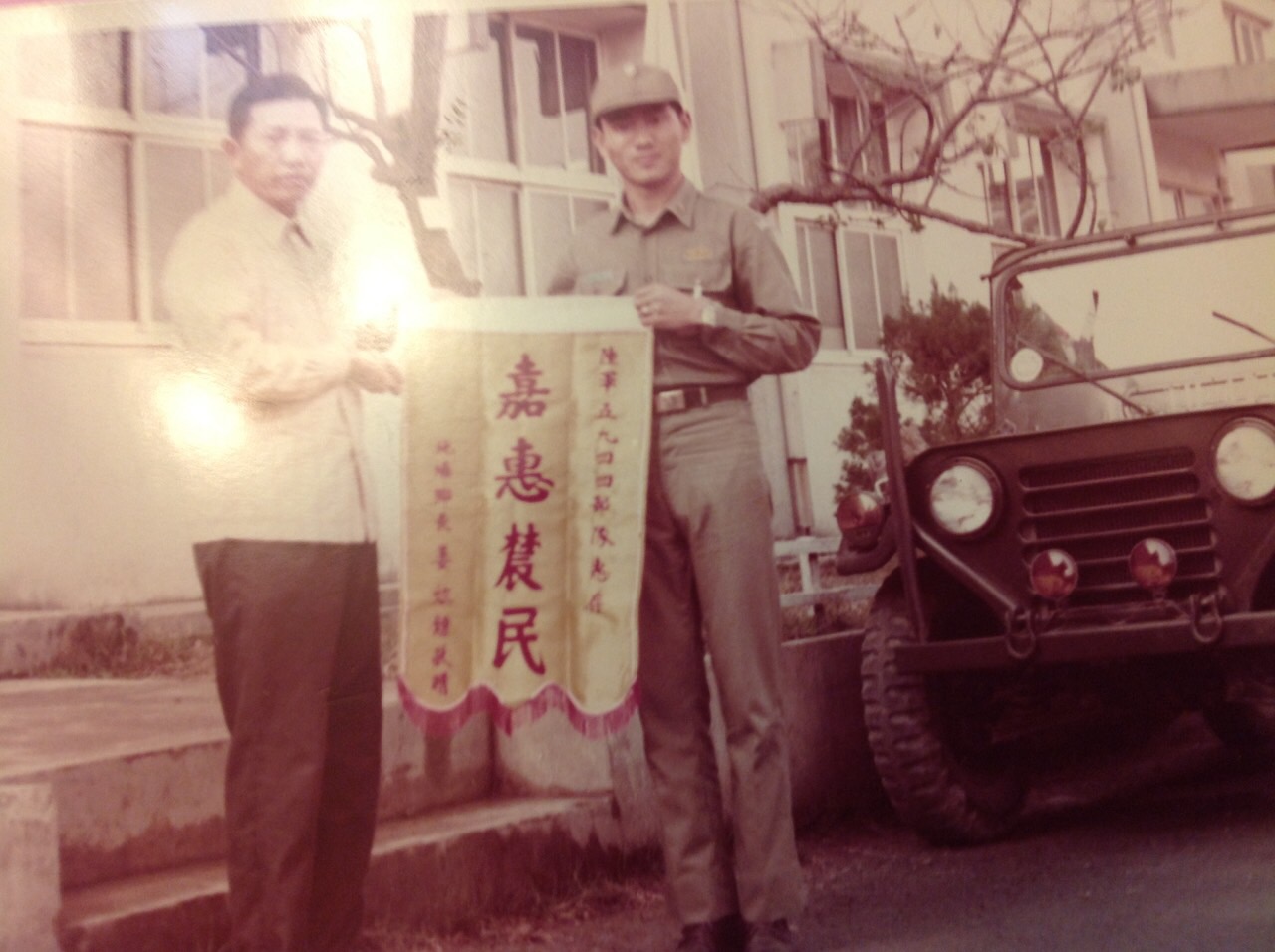
(連長生涯之二) 助民收割後返回関東橋駐地面対的是一連串的測驗及檢查有政治測驗、技勤測驗、戰技體能測驗、裝備檢查⋯等等,軍部兩位少將副軍長分別掌管作戰訓練及人事後勤,經常巡視部隊管訓練的見到我們忙著保養裝備便下令快操練戰技,管後勤的則令我們立即保養裝備,真是無所適從,至今回想他們也是有績效考評的壓力。同時段上級又下令各連隊養豬種菜,除闢建豬舍外並將營房週邊草坪改為菜園廣植蔬菜,後來又陸續推動綠化營區、果化營區但是效果有限,畢竟術業有專功。 新任軍長馮應本少將極重視人員掌握,要求每個連長室掛一大圖板按編制每人有一小名牌掛在所佔職缺處(一個蘿蔔一個坑)名牌用不同顏色區分軍官、資深士官、志願士官、一特、二特、一般兵等,對於連隊人事作業甚有助益。 63年11月奉令率全連至新竹北埔鄉助割北部二期稻作,與峨眉同為客家山城,農民勤儉耐勞待人熱誠,鄉長並致贈錦旗感謝辛勞。 前文曾提及上級刻意將蕭一俊任命爲我的連輔導長,果然在我倆任內本連幾乎包辦了全軍的所有示範項目計有小型康樂、莒光日教學、五大固定分工、作文簿批閱、防空射擊、班防禦、二級廠保養作業、車輛掩體偽裝、外運(澎湖)裝備捆裝及人員著裝⋯⋯等,每項示範都要準備說明資料(當年只有刻鋼板一張張油印)圖表、輔助器材。直到完成示範長官講評鼓勵後心中才如釋重負。
懷舊篇-157
(連長生涯之三) 記得是64年有一天下午本連通信組派去支援陸軍演習的通信下士黃煌武背著無線電向我報告說演習停止了,所有支援人員全部歸建,後來才知道發生了直昇機墜機意外,六軍團司令苟中將、政戰主任張少將及我們軍長馮少將不幸罹難,陸軍總司令于上將傷及腰椎導致下半身癱瘓、他的侍從官高華柱學長(前國防部長)也受到輕傷,據瞭解係因天候不良導致意外,全體官兵極為震驚,突然損失了許多優秀的將領,令人惋惜,數日後上級下令夲連派一輛大卡車負責運送軍長靈柩,我乃選出車況及駕駛技術最好的嚴神生上士接此任務,行前特別叮嚀務必小心駕駛, 事發20年之後我任職國防部掌管官舍修繕曾數次赴于總司令官舍勘查防漏工程,總司令坐在輪椅上很親切地打招呼,想起畢業時他親手為我佩掛中尉軍階,前途大為看好之際怎奈造化弄人不禁令我感傷, 據說事發當天本軍副軍長趙少將因另有事處理未能及時趕上這架直升機而改乘座車前往,如今趙先生亦已退休,我常去的新店民族路汽車保養廠老板正巧是我在當連長時他在軍部連保養場服役負責長官座車保養,他説趙先生現在仍偶爾會到保養廠聊天,聽聞老長官健康安好令人欣慰。 本軍新任軍長由行政院跟過經國先生的蔡新少將接任,從不發怒,説話輕聲細語態度和藹但治軍極為嚴明,全軍上下從副軍長、參謀長到阿兵哥都有深刻體驗。
懷舊篇-158
(連長生涯之四) 新任軍長到差後經常穿著士兵的草綠野戰夾克沒有肩帶可以佩掛軍階至各營區巡視(微服出巡)發掘部隊實況,也常在清晨起床號後到群部及營部軍官小房間逐間問候賴床的軍官讓人嚇得從床上跳起來,有一次半夜到某個連見安全士官趴在桌上睡覺並未當場責駡但是次日上午早餐後全連集合時來了一輌憲兵營的吉普車由兩名憲兵當場將那名士官押走,此事震撼了全軍,衞哨兵都特別警覺不敢懈怠。 軍長在某次連長以上幹部參加的主官會報上説軍官小房間內務太亂等下散會後大家參觀兩位副軍長室務必達到同樣標準,中場休息十分鐘時兩位副軍長急著趕回寢室加強整理一番。 當年正逢石油危機全國推動節約能源,某日清晨我率全連弟兄在營區大門外通往光復路的道路兩旁割草(各單位輪流任務)時,有一輌四分之三噸中型吉普車由大門開出來,士兵們高喊"軍長軍長"我定神一看果然是軍長坐在前座車長位置,草綠野戰帽帶拉下扣在下巴,後座尚有五六位長官,事後得知軍長副軍長參謀長主任等要到軍團開會,軍長指示只派一輌車由他擔任車長,帶頭節約能源令人佩服。 為遵守公務人員十大革新,不論軍團、總部或是國防部的視察督導及測驗小組至軍部用餐時一律供應伙房自製的大鍋菜,後來他到澎湖任司令官時也是如法泡製,海鮮大餐想都別想。 本連因蕭輔導長盡心負責獲得當年度全軍政戰模範連隊,全軍週會時我上台接受軍長頒發大型獎牌一面(裝在玻璃框裏)他同時一直注視我的兵籍名牌,但是接下來的全軍戰技體能測驗也令他対我印象深刻,因為問題就在於本連有21名資深士官(全軍最多)年齡在50餘歲左右。
懷舊篇-159
(連長生涯之五) 軍部參謀長黃幸強上校精明強捍喜愛打籃球,常率領軍部參謀與我們工兵群幹部友誼賽,某日下午軍部來電邀約比賽,我們則由39期郭本年學長、40期李興竹學長、41期本官、42期鄧安國老弟、政校19期羅金剛老弟、溫中明少尉.......等應戰,羅老弟身高190真是名符其實像個大金剛主打中鋒在內線佔有優勢,軍長也親自到場加油軍部連也派出許多阿兵哥在旁加油,參謀長投籃及帶隊切入動作標準,也很少被封蓋火鍋及抄截,當我在場上跑過軍長面前時他居然鼓掌大喊"李翊民加油"令大夥都很驚訝,比賽最終由工兵群勝出。 軍部舉行戰技體能測驗,規定全員參加(包括伙房)資深士官也不能免測、項目有300公尺步槍實彈射撃、投手榴彈、爬竿、單槓引體向上等,上了射撃台迷彩人像靶從覘孔上看只有十公分大小,許多資深士官急的滿頭大汗地"報告連長我看不見靶"我説沒有関係你向前方打完六發子彈就好,爬竿時只見這些年齡與我父親相當的老兵掛在竿上爬不上去雙腿仍然努力踢動最終還是跌回地面,單槓也是同樣狀況,測驗結果本連射擊成績有14個人零分居全軍之冠、其他項目也都很差,我只能承認自己就像任賢齊唱的「心太軟」不忍心逼那些年長的士官達到合格,軍部隨即下令所有射擊零分人員例假日上午由連長帶隊到大操場射撃預習一個月後補測合格者才能放假,本來我們營上 四 個連長例假日只能外出兩個、另外兩個在營休假(即不補假),也就是說一個月只有兩天假,現在那寶貴的兩天也泡湯了,此次挫敗我完全沒有責怪那些資深士官,他們並没有錯,平時在工作崗位上都能獨當一面,針對他們的特性賦予任務他們會覺得被重視而士氣大增,也不會閒的無聊三五人蹲在大樹下看螞蟻上樹,總之我在連長任內有這21個寶的協助支持順利完成許多上級交付的任務,如今他們如果仍然健在也是90高齢以上,衷心祝福他們安享晚年。
懷舊篇-160
(連長生涯之六) 前文曾提及本連奉命擔任多項示範,其中一項步兵班防禦僅有一週的演練時間,我選任反應機敏的裝備排長龍應達(台大預官,文化部長龍應台的胞兄)為示範排長率一班士官兵每日至營區外的戰鬥教練場操演,全程設定十個狀況,副軍長劉少將每日親臨指導且跳入戰壕示範部分動作,示範當天全軍班長以上幹部全部到場參觀,由我擔任說明官,為求演練逼真我們將一輛吉普車用合板包覆成戰車外觀隨進度向陣地攻擊,同時也在陣地前方預先埋設丅N丅炸藥裝上信管連接導電線拉至安全距離,引爆手依我手勢順時針猛轉握把引爆炸藥,由於沒有對講機乃指派本連通信組兩名通信兵各背一部PRC一77無缐電機(像小學生背書包般)一部在我身旁另一部隨著扮演敵軍的假設敵依我的指示往陣地攻擊前進,由於演出逼真,軍長講評時給予肯定,經過此次經驗後來每次看大場面的戰爭片都特別佩服那些導演能夠控制千軍萬馬,炸藥炸得人仰馬翻卻能不使演員受傷。 全部示範狀況演出僅約兩小時,但是示範班、假設敵及龍排長等均辛苦演練了一個禮拜,也要感謝劉迪忠副軍長每天認真指導,使本連順利完成示範任務。
懷舊篇-161
(連長生涯之七) 完成班防禦示範後某一週三晚間散步假時我和蕭一俊輔導長至新竹市區購買卡式錄音帶,他喜愛古典音樂我則偏好西洋歌曲,結果他買了沙拉沙特的流浪者之歌,我買了英藉二重唱賽門葛芬柯的悪水上的大橋、卡本特兄妹專輯,每捲卡帶要120 元以上並不便宜(當時月薪不到兩仟元)。才買完卡帶我便急著返回營區,蕭君說才出來一個多小時還可以再逛一下市區,可我總覺得心裏怪怪的堅持立即返回,待我倆返抵連上時副連長何德榮立即報告說本連食勤組上士季鍚祥(俗稱伙伕頭)晚間七點多時在營門外通往光復路的道路行走時遭到一輛軍用吉普車撞倒頭部重傷不治身亡,真是令我震驚的悪耗,我們向營長報備後即刻趕到醫院見到的是太平間內一具冰冷的屍體,季班長三十八年隨軍來台無親無故大字不識幾個,負責伙房管理從不讓我操心,怎料竟遭此橫禍客死異鄉,無緣返鄉再見到親人,這種劇本幾十年來在兩岸之間不斷上演不知究竟是誰該負責。我選出三位他的同僚負責料理後事,火化後骨灰安置靈骨塔,這是我軍旅生涯中唯一折損的袍澤至今仍記憶深刻。 前文提及本連有十四人射擊零分,怎料此事竟像貼在我頭上撕不掉的標籤,軍長週會時當衆問道有進步嗎?在巡視營區時見到我也要提醒我加強訓練,真是人怕出名猪怕肥。 接下來本軍奉令移防澎湖,上級規定移防三個月前禁止対外寫信,一個月前停止一切休假,不准向親友透露移防消息。移防前十天本連奉命擔任裝備捆裝及人員著裝示範,連上多名有移防經驗的資深士官熟練的用麻繩將公文木箱、洗臉盆、經理裝備⋯等捆綁好,全連全付武裝帶背包至大操埸由我逐項向各單位說明,長官指示各連均需比照辦理。移防前兩天陸軍總司令馬安瀾上將親赴本軍召集全體官兵點名並且訓示移防期間注意安全及軍紀。移防日部隊由新竹搭夜班専列火車次日清晨抵達高雄碼頭登上海軍運輸艦(俗稱開口笑,艙門可打開供車輛上下)往澎湖出發也結束了我新竹關東橋將近三年的軍旅生活。
懷舊篇-162
(連長生涯之八) 從畢業分發到新竹軍是我第一次到新竹,從排長副連長連長將近三年的歲月対風城產生不少懷念,如助割期間客家農戶的勤奮親切、士官隊的訓練過程、連上自己種植茂盛的蔬菜⋯等,後來由於發展經濟的政策將橋材庫及部份營地撥供竹科園區使用,經濟部撥付補償款給陸軍供作裝備零附件庫儲工程之用(後來我在陸總後勤署承辦此業務)隨著竹科不斷的擴展,関東橋的軍營不斷縮小,如今風貎據好友濟翔兄前陣子描述已經完全改觀。 我們移防部隊由高雄港出發後是我來台灣後第一次離開臺灣,航行約五小時後到達馬公海軍基地,人員裝備卸下後即刻前往駐地,我們全營派駐在馬公市區附近的西文里,群部及直屬連則派駐港底營區,防衞部在馬公市區內,軍長身份變成防衛部司令且晉升中將,防衛部除督導轄區內所有部隊外還定期派員檢查馬公市區內的冰果室、小吃店、餐館的環境衛生,並且在防衛部發行的洞庭週報公佈優缺點及排名。司令官同時下令除三害即賭博、髒亂、羊。前兩項顯無疑問,因澎湖土質僅適合栽種花生,而許多退伍老兵飼養羊群放任牠們啃食作物,農民經常向防衞部陳情,上級乃下令每個連的伙食團至少要買三隻羊限期三個月,後來澎湖的野外及農地上似乎見不到羊群了,另一方面上級又發起造林運動,每個連發五百棵木麻黃樹苗,它們看起來乾巴巴地約小指頭粗兩尺長,規定存活率百分之六十,否則議處主官,弟兄們在營區週邊空地費勁地挖掘坑洞(土質堅硬)植入樹苗每日早晚澆水。三個月後防衛部派員驗收成果本連僅存活百分之四十,我因造林不力遭到申誡兩次,其他連長也是同樣命運。一年的駐地訓練很快過去,我的連長任期屆滿兩年半之後於66年元月調任營部作戰官。正式結束了四年的基層連隊生涯,這段期間生活忙碌而充實有壓力及挑戰但是却值得終生回味。
懷舊篇-163
(連長生涯之九) 前文雖已將連長生涯畫上句黑點但仍有部份片段需加補遺,來到澎湖的第一個春節本連正巧輪值戰備待命部隊全連不准放假,官兵們提議除夕夜包水餃,我立馬同意並令傳令購買五支小擀麵棒,因母親是瀋陽人從小就學著母親製各類麵食如韮菜盒、麵片、麵疙瘩、水餃、蔥油餅等唯包子饅頭尚未掌握發麵技術,手擀餃子皮是我拿手活之一,當我問道有誰會擀皮時全連竟然沒有人舉手,只好找了四名願意一試的弟兄當場教學,先將小麵團壓扁以左手輕揑上端右手將擀麵棒向前滾壓麵皮,在麵棒向後退回瞬間左手將麵皮逆時針轉動少許右手再次推動麵棒向前輾壓如此反覆交替只見麵皮逐漸變大成為水餃皮了,當天晚上我率十來名弟兄在廚房忙了約兩小時,端上餐桌的水餃才十分鐘便吃光了,當然還有其他年菜,全連渡過了一個愉快的除夕夜,只是我的右手掌次日起床時略感酸痛。 司令官蔡新中將曾經至營區巡視一次見到我時說"李連長你的籃球打得不錯"司令離開後營長陳鎔中校開玩笑的說"司令官的意思是你其他的都待加強"。在澎湖返台休假一次五天,若是1600離營那必須於五天後的1600返營(5x24小時)似乎太過於斤斤計較了。司令官從軍長到司令官任內作風檢約樸實、要求嚴格、思考週延,從他身上確能學得許多治軍要領,唯一缺失就是對於官兵的休假管制過嚴,因為適度的休假才能更提振工作士氣。民國96年我離開澎湖三十年之後蕭一俊輔導長邀約我一同前往新竹探視老司令官,他住在光復路的一處眷舍,室內擺設樸實但窗明儿淨,下午五點左右他帶我們到新竹一家不錯的自助餐(599吃到飽)用餐,且堅持不准我們付帳,餐後領我們到清大校園対每個景點都要解說它的故事,精神很好,送他回家我們返回臺北後就沒有再見了。我們的老司令官終於在四年前走完了人生的旅途,雖然軍中有部份人對他的作風不甚滿意但是對我來說他永遠是我心中最值得尊敬的長官,在此引用先父最喜愛的聖經詩篇23篇最後一段,希望老司令官住在耶和華的殿中直到永遠。
懷舊篇-164
(連長生涯之十) 昨天上午問老伴説我P0了許多軍中回憶妳有在看嗎?她回答説"每篇都是軍隊的事情寫了一大堆,一點也沒興趣"。之前女兒也説看不懂也沒看,令我有些洩氣,本想就此收手,但昨晚工兵二十餘位同學在台北聚餐有許多同學都鼓勵我継續報導,不能讓長篇連載的故事突然中斷,想到每天仍有上百位好友流覧拙文,決定鼓起勇氣讓大夥繼續看下去。在澎湖駐防期間歷經一次陸總高裝檢查,本連二級保養場作業曾經在新竹時擔任全軍示範,矯士官長山東即墨人認真負責,按460表督促駕駛進埸保養,檢查結果車輛部分全部合格,其他裝備亦無重大缺失,總算放下心中一塊大石。訓練部分司令部派員測驗各連五千公尺跑步成績,由天祥營區後門出去繞營外公路一大圈回到大門正好五千公尺,我要副連長在最後押陣我在最前面帶頭跑,出發前我宣布凡是超越我先抵達終點的人一律放榮譽假一天,出發後阿兵哥個個奮力緊跟著我,最後仍然沒有人超過而且差距很大,本連跑步成績公布結果排名在前。 澎湖的夏天很好玩,我們常在例假日跑步到馬公的觀音亭及金龍頭海邊游泳(防波堤內沒有風浪像是泳池)晩餐時在漁港邊多家海鮮攤從地上擺的大圓鋁盆中現抓活海鮮當場料理,一大盤鮮蝦三十元,活石斑魚一條不到百元,其他小管螃蟹等都新鮮便宜,若是在市區內觀光客去的海鮮餐廳至少要貴三倍以上。至於水果方面就比台灣要貴上許多了。 到了冬天東北季風很強,本連幾乎每週要輪一次夜行軍巡邏防區,晩間十點全付武裝出發繞行半個澎湖至次日清晨五時返回,走在公路上風吹得無法前進沙子打在臉上像是許多小針在刺一般,我令弟兄們側過身子橫著移動以減少風阻方可勉強前行,中途休息時弟兄們累得躺在路邊乾溝中睡了,耍再出發時常由班排長一一將他們拉醒,澎湖冬天的夜巡任務成為大家的夢靨,若是遇上下雨更慘,總之各位好友若要去澎湖旅遊一定要選擇夏天。
懷舊篇-165
(連長生涯之十一) 連上的輔導長蕭一俊在移防前便已經調往軍部政二科,由他的胡姓學弟接任,忠厚老實惜反應慢半拍,交待之事常忘記做,營政戰官羅金剛(政校19期)每次來督導業務都急得大聲糾正學弟的缺失,我在連長室都聼到,想必是愛之深責之切,群部政戰處長來督導時曾対我說要多多費心了,軍歌教唱我採用每天三餐及晚上就寢前用手提錄放音機不斷播放軍歌卡帶,每人發一張歌詞,限期逐一驗收,效果不錯。 在澎湖駐防時某日裝備分組保養,負責刺刀組的班長保養完畢清點裝箱時發現少了一把刺刀,我立即報告營長,不久指揮官張福照上校、政戰處長、保防官都從港底營區趕來,全連從床上床下天花板隔層、庫房、伙房、軍官小房間都搜遍了,只差沒掘地三尺,到了晚間十一點仍找不到,次日上午輔導長在餐廳集合全連逐一約談,我見某士兵胡X(半文盲、智力稍弱、負責養豬工作)神色有異,低著頭不敢看我,我回到連長室思考結果命傳令通知仍在餐廳的胡X到連長室、其他人解散正常操課,胡X當然不承認犯行,我説或許你知道是誰偷的,告訴連長後可以幫你申請一個禮拜榮譽假回台灣玩,他的小腦袋瓜轉了幾圈後呑呑吐吐地說他好像看見一個士兵藏了東西,但是晩上只看到背影,我要他帶路,他領我到營區邊的豬舍先假裝在草䕺中翻看,我説別急再仔細想想,他想了片刻後走向本連豬舍用手掀開兩片瓦果然有把刺刀他正要用手去拿我立馬制止,從褲袋中拿出手帕小心地握住並告訴他上面有指紋不能破壞,回到連長室後我請輔導長將胡X的基本資料帶拿來,內有兵籍表、安全資料、十指指紋⋯等,找來胡X將刺刀及他的指紋資料放在一起宣稱經過鑑定刀上的指紋就是他的無誤(連上根本沒有鑑定能力)如果坦白承認可以從輕發落,他眼見無法抵頼只好承認是別連養豬士兵經常霸凌他他趁著同梯士兵保養刺刀時幫忙順手拿了一把藏在豬舍用來自衛。後來依法將胡X移送,好像是改為禁閉處分,我則受申誡乙次處分,未造成傷害算是不幸中的大幸。
懷舊篇-166
(連長生涯之十二) 在官校時曾受過兩週的駕駛訓練學開大卡車,在工兵學校則學開推土機、平路機,任連長後偶爾會操作連上的機械及駕駛大小車輛,防衛部港指部(運輸單位)舉辦軍官駕照考試時,群內連級軍官幾乎都報名參加,筆試通過後再測埸地駕駛最後是道路駕駛,從白沙至通樑(跨海大橋起點,有棵知名的大榕樹),全部合格領取軍用小型車駕照乙枚(軍官只能考小型車)至88年922退伍時(921大地震次日)赴樹林監理所換領職業小客車駕照,三年後再換照時需檢附體檢表我覺得太麻煩乃改換為自用小客車,櫃台小姐一直問説"你是否考慮好了,太可惜了,不能後悔喔,"我仍然決定換成自用小客車使用迄今。在澎湖的連長任期一直遵循合理的管教原則,新任指揮官某次巡視工地我及另外一位連長向他敬禮後那位連長馬上掏出香煙並幫指揮官點燃,他們聊得很投機,指揮官説"你的煙斗很漂亮(澎湖的黑色海樹材質)"他立刻說連上還有一支送給您,接著又指著指揮官的皮鞋説"您的皮鞋太舊了,我連上有新的給您送去"指揮官亦未拒絕,這一幕譲我太訝異了。不久之後指揮官至我們營區服裝儀容大檢查,本連依照官兵蓄髪規定耳際一公分腦後四公分並不露出帽外。但是那位連長則全連剃成三分頭(像是入伍新兵)剛好在本連旁邊,指揮官大為讚賞同時訓斥我們其他三個連要以那個連為榜樣,事後得知該連士官兵無不抱怨連長過於求表現。總歸我兩年半的連長任期,在新竹的一年半經常擔任示範、兩次助割功獎較多,澎湖的一年績效平平,但是任內未發生重大違紀犯法事件獲得記大功兩次(凡是全年度無重大違紀犯法事件主官管記大功一次)且平安地卸任連長一職調任營部作戰官。
懷舊篇-167
(幕僚生涯之一) 我的幕僚經歷營級、旅級、師級、軍級、總部級、國防部,以營級幕僚屬於工作較輕鬆,大凡下給營級公文也會發給各連,只要適時督導各連執行進度即可,我到營部任職作戰官不久便接到群部公文,基於各連編裝有3·5火箭筒(反裝甲武器)但沒有士兵會操作,全群將組成3·5火箭筒集訓隊由我擔任隊長兼教官,一週後三十餘名隊員報到,由於在官校兵器課程曾經學過,它與無後座力砲同屬目視直射武器,不同的是它的弾體靠內裝的燃料(數十隻像黑色鉛筆形狀的燃料棒)產生推力射向目標,完全靠射手瞄準是否精準一旦發射便無法導引方向,由於沒有供隊員操作裝填彈體的訓練彈,設法找了兩段方木依實彈尺寸至馬公的木工場用車床铇製兩枚外型相同的訓練彈並在尾部加裝與實彈類似的導電線,射擊時兩人一組,射手採跪姿或臥姿左手掌握住弓右手掌向下置於筒體上方(嚴禁握住扳機以免發生意外)裝彈手將彈體小心放入筒內將筒尾卡片卡住弾尾並將導電線接在筒體上方的連接點身體避開筒尾嗊火方向用手輕拍射手鋼盔,此時射手方可將右手移至扳機同時右眼透過瞄準鏡(內有距離及前置量之參考刻度,若是靜止目標則僅注意距離即可)鎖定目標停止呼吸扣引扳機發射。三天集訓後向上級申請一批實彈至靶埸小山坡上以白石灰標示目標,隊員逐一上場發射,幾乎均能命中目標,終於完成上級交付的任務。一個月後上級通知要我到內湖的工兵學校正規班八十四期受訓,到了工校後景物與四年多前並無差異,同學從38期到43期都有,一起過了五個月的學員生活。
懷舊篇-168
(工兵學校正規班) 全班六十餘名同學,由38期學長OO謀任學員長,大家都叫他阿謀學長,他待我們這些老弟和藹親切,且主動負責協調校方調課譲我們可放連假,也爭取改善伙食,40期學長朱0嶺(第二任學員長,負責每週一閱兵分列全校總指揮)牟0青,41有趙O錕、黨O琳、陳0維和我四人,42期劉O承,43期有黨0昌(我田徑校隊隊友)陳0崗、陳0淵、劉0興、彭0華、蔡0仁,還有一些理工學院及陸專同學,中隊長官階中校同學們私下稱他恐龍,每天晚點名總是有訓不完的話經常吹熄燈號了還在講,大夥都被蚊子K慘了。有一天隊長找我說另外一個預官班隊開訓典禮要我去當司儀,因為以前曾經擔任過事先演練一下程序及呼口號便順利完成任務,自此所有班隊開訓結訓我都要向教官請假去當司儀。當時和我們一起受訓的是46期工兵科(尚未畢業接受一般分科教育)小老弟們在校內見到我們均非常有禮貌地敬禮問好。在工校期間每週六中午便可放假返家從內湖乘公車到公舘再轉公路局往新店車,週一上午週會前返校。順利完成正規班訓練後與同學們互道珍重各自返回駐地,我又回到澎湖的營部。
懷舊篇-169
(監察官生涯之一) 在連長一職卸任前曾收到轉任監察幹部的公文為嘗試轉換跑道便申請轉任,不久之後接獲通知赴政戰學校接受一個月的監察班訓練,各軍種政三處長均擔任教官,其中尤以聯勤胡中華及陸總楊培基兩位處長講授案例最受學員歡迎,校長許歷農中將也精神講話期勉大家作好政三工作。結訓後不久接獲國防部通知參加參謀考試,好像是在三軍軍官俱樂部勝利廳有十餘人應試,作文一項是以毛筆書寫。考試過後約一週國防部政三處長宋少將召見,我當時只是小上尉,到高司單位肯定是小菜鳥不免有些惶恐,憂心能力無法勝任,向處長報告希望能從旅級(最基本的)先行歷練,處長亦表同意,工校正規班畢業回到澎湖後便接獲調職命令奉調台北軍五三工兵群(桃園南崁附近)監察官。告別了服務四年多的五九工兵群及澎湖來到桃園新單位接替38期芮學長職務,指揮官曹友萍上校不怒而威,處長林綠松中校處事慎密,同事有作戰官李善基學長(40期)行政官伏進同學、政戰官王聖聰(政校)⋯等,因為保防官受訓我且要代理保防官業務半年之久。指揮官不久之後調職由王無冕上校接任要求嚴格,我幾乎每天都至各單位抽查督導部隊施工散居各地,從淡水、三芝、大片頭到林口、三峽大埔檢查安全士官衛哨執勤及械彈管制、財務抽查並接受官兵申訴。有時下午第八節課會打打籃球,輕裝傋連長李聖偉學弟(43期)常率隊與我們群部軍官友誼賽,當年打球沒有愛X達、耐X等高級籃球鞋,都是穿著白色或淺藍色鞋面短筒橡膠底牛頭或黑豹牌球鞋百來元一雙,有點像現在少年男女穿的復古版膠鞋,在水泥地球場很快就磨破一雙鞋。 保防官結訓回來後心想總算可以稍微輕鬆點不用身兼二職,但不到一個月政戰處長又要受訓半年奉令代理處長且搬到處長室上班,接著軍紀教育月、政戰督考⋯等忙的不得了。在群監察官任內兩次軍紀教育月評比本群均獲得第一名,我因此獲得記大功兩次奬勵,67年9月3日我與交往五年的女友完婚,婚前要附女友體檢表呈報上級核准,某日約好陪她到桃園虎頭山陸軍醫院檢查,從抽血量身高体重視力到某一站一位士官長小聲的問她住在那裏,她答說台北,那士官長便口中唸道"不是聾子不是唖巴"同時連續在兩個欄位打勾通過。我和女友不禁相視而笑。
懷舊篇-170
(監察官生涯之二) 旅級政三工作主要是維護軍紀安全,預防重於查處,強調主官領導統御的重要,不僅要作之君作之師還要作之親,部隊中歷來發生的體罰及暴行犯上多半是領導統御出了問題,故而從定期的官兵心理測驗找出數據進而採取改善措施,官兵申訴中心及心輔室都是預防官兵違法犯紀而設,通常我發現幹部有不當管教情形會先以指正備忘錄加以糾正,並請他將改進情形回覆(類似檢討報告)效果不錯,處長也很讚許這種方式,在營區內與官兵們互動融洽,他們也覺得監察官並不可怕。處長結訓回來後我不必代理職務回到自己的小房間辦公,工作壓力稍減加以軍紀教育月也剛忙完,某日訓練官通知軍部要辦全軍排球比賽,本群要組隊參加希望我能加入,經面報處長同意後我及政戰官王聖聰即率隊先練習兩天後前往中和的軍部比賽,當年軍車進入台北均先經過龜山的管制哨若是車上超過十人則必須事先到台北博愛路的警備總部公関室簽証三聯單方可放行,在場上我擔任攻擊手常在前排左側躍起扣殺,我至今打羽毛球時也習慣跳殺想必是打排球時養成的習慣。比賽結果本群獲得第一名。我也結識了許多愛好運動的好友。
懷舊篇-171
2月17日貼出之任官記中曾提及官校畢業後我們工兵五十六名同學到內湖的工兵學校接受初級班教育,昨天突然想起同學們代表內湖區參加台北市運動會的狀況特向好友補充報告。受訓時校方通知內湖區運動會在西湖商職(現已改名)舉行徴求報名者,我報名八百公尺賽跑,其他同學凑足十五名報名橄欖球,比賽時跑道居然是四方型的直線時全力衝刺遇到轉角全部減速換檔過彎後再加速,由於跑道不足四百公尺好像跑了三圏多才算終點,由我奪得冠軍獎品是一雙四輪溜冰鞋沒有金牌且要代表內湖區參加數日後的台北市運動會,由於橄欖球只有我們一個隊報名因此免試過關直接參加市運會。市運會在市立體育場舉行各區代表不乏市立體專及大學體育系高手,我儘進入決賽未能奪得獎牌,賽後我立即趕至台大操場為同學們的橄欖球賽加油。我們隊員由隊長林文智、梁達海、楊穂民、鍾雪屏(以上四員均巳往生、甚憾)楊暨東、鄧俊緯、陳國榮、黃天保、黃元寧、郭朝坤、岳安邦、林良蘋⋯等(其他想不起來,如果有誤請同學們留言指正及補充)組成,當年北市好像是八個行政區,籤運不好第一場便対上北杸士林區的中國文化學院(現文化大學)校隊體育系的,全身標準配備球鞋底附有突起鞋釘,而我隊則穿著平底球鞋只有隊長林文智是校隊,一開賽便處於劣勢平底鞋在草地上豪無抓地力不僅跑不快在正集團(俗稱鬥牛,每隊派出五人前三後二)爭球時只退不進,最終落敗遭到陶汰。不過在工校受訓的期間能外出活動一下筋骨也讓同學們留下一段美好回憶。
懷舊篇-172
(監察官生涯之三) 群部行政官伏進同學經常猛K英文,詢其故答曰:耍考國軍外語學校將來出國受訓。後來他果然如願並奉派巴拉圭武官娶了當地女孩,退休後仍僑居巴拉圭,兩年前曾攜妻子返台參加工兵同學會,他的人生確是走在自己規劃的道路上。我在群部政三大部分時間都是在外督導檢查,由於工地分散用車機會很多,幾乎每天都耍填派車單,一年三節及國慶元旦等重大節日則必需與各單位主官管同時留值,記得在代理處長期間某日率政戰官劉榮豐、王聖聴及保防官乘吉普車至林口工兵營工地政戰業務聯合輔導,行經產業道路時駕駛為閃避一輛自行車不愼向右滑落已收割後的稻田,一陣劇烈搖晃後仍然四輪著地,駕駛、前座的我及後座三人均端坐原位,因為稻田與路面有約四十公分落差無法回到路面,當年沒有手機只有請駕駛步行至營部(約二十分鐘行程)找人協助,不久來了七八名阿兵哥扛著兩大片木板搭在稻田與道路之間讓車子經木板駛上道路,完成輔導任務後回想之前那一刻若是車子翻覆後果肯定嚴重。在桃園群部服務了將近兩年之後奉令調軍部(中和秀朗橋頭)政三科監察官,離職前輕裝備連李聖偉連長要求與我們群部軍官比賽一場籃球,當我抵達球場時見到埸邊一座圖表架上貼著ㄧ幅大海報「歡送監察官榮調惜別賽」,場邊士兵們熱烈鼓掌,李老弟的安排令人感動。第二天向指揮官、處長及同事們辭行後便離開了桃園的工兵群至軍部報到。
懷舊篇-173
(監察官生涯之四) 在工兵群時還有一位梁鵬同學任工兵營作戰官負責某處工地,每當我至該營軍紀安全督導時他便挺著鮪魚肚說"你又來了,無事不登三寶殿"我立即回說"正是前來突擊檢查貴官有無擅離職守"。同學之間開開玩笑也頗覺有趣,後來七十五年我倆同在國防部後勤次長室五處服務辦公桌緊臨我左側,還真是巧,他退休後僑居美國每天跑三千公尺,前幾日返國參加同學會時已經沒有鮪魚肚了肌肉結實許多。果然多運動才是最佳的養生方式。 我到台北軍報到後首先要瞭解單位特性及業務狀況,軍長柏隆鑎中將耍求甚嚴,參謀長王若愚少將、副參謀長馮濟民上校、政戰主任魯瑞麟少將等長官均優秀幹練,政三科長王祿恆上校很有耐心指導我工作要領,從未大聲指責部屬,另外一位中校監察官負責工程採購監辦,我則負責軍紀安全。軍部幕僚每日仍需留宿營區,按起床號音起床早點名跑步早餐後八點到辦公室,晚間也在辦公室加班或偶爾和劉中校下象棋,科長則看八點檔連續劇(當年只有三台,19吋電視機),晚點名後十點熄燈兩間大寢室每間四十餘人。每週三晚上散步及外宿次日上午八時收假,科長及劉中校均住龍崗我乃自願留値並負責參加週四上午的主管早餐會報(軍長主持科處長參加),經常見一些上校主管被駡得食不下嚥,有時候軍長不主持會報(副軍長代理)那些常被刮的長官個個難掩喜色胃口大開。 我婚後在碧潭永業路三巷購置一戶27坪三樓小公寓(婚前兩人共同在她任職的台灣中小企業銀行每月定存),有時晚間沒事科長便叫我回家一趟次日上午八時返部(每週大約一次算是補散步假),中和到碧潭吊橋西岸並無公車,我買了一輌普通自行車(無變速)過秀朗橋沿著產業道路通過中央新村經新店溪堤防(尚未闢建為環河路)過碧潭橋左轉回家,全程約20分鐘,比起在桃園時及其他中南部甚至外島的同學們我已感到相當滿足了。柏軍長調走之後換羅本立少將接任,他是我們官校四年級時的學生指揮官,治軍嚴明,主任也換為榮宣北少將溫文儒雅,確是很理想的搭配。
懷舊篇-174
(監察官生涯之五) 台北軍轄區從宜蘭、関渡、台北市至桃園下湖均有師級單位,每次出外督導常常一整天才結束任務,儘量能夠每個謍區都不遺漏,連一個最小的班哨據點都有督導紀錄,科長特別指示不必每日呈派車單,一次填一個月的,某日科長早餐會報後指示我立刻至軍長室報到陪同軍長羅少將巡視高砲連(主要是帶路),科長說軍長要第三處派員帶路處長從小餐廳打電話至辦公室居然沒有人知道地點,軍長大為光火,科長立即報告軍長說李監察官知道地點可以帶路。上了軍長座車前座後他問我何時改的名字,我答所官校畢業後奉令改的,他又説政三不要幹太久快去當營長,我心想要和誰去說此事,有點像是求官。當年聯勤兵工廠、陸軍汽基處、台北兵保廠、營管所⋯等單位所在地就是如今的信義計劃區,高砲連位於整個大營區的角落左彎右拐才能到達,我之前曾經來督導過且發佈督導紀錄,軍長巡視完畢後回到軍部指示科長爾後我出外督導檢查要隨身攜帶十個獎金袋上有軍長署名毎袋一千元,凡遇表現機警熟記守則及械彈數量的衛哨兵當場頒發獎金,並且註記於督導紀錄作為結報憑證,若有怠忽職守者一律嚴懲。
懷舊篇-175
(監察官生涯之六) 我雖然獲得充份授權直接頒發奬金但是公帑絶不能濫用,因此採用較嚴的尺度,總計我督導檢查時發出去的獎金僅約十來筆。每年一度的軍紀教育月是我的重點工作之一,軍團不時派員來督導評比,我擬出軍官及士官兵的兩種測驗卷親自刻鋼版後監督文書一張張印好封存並將臘紙銷毀,士官兵採抽測方式軍官採普測,軍部幕僚利用大禮堂莒光日後實施,怎料下課後留下者僅有一半多為低階軍官,考畢後我將各單位成績及缺考人數缺考率列表簽報發佈並明訂補考日期,科長並在早餐會報時提報,軍長大為震怒並指示將議處成績差的單位主管,補考當天果然全部到齊,後來每週都測驗ㄧ次,軍團來抽測時成績不錯。最後評比本軍獲得第一名,要感謝科長的支持及長官的重視,我也獲記大功一次獎勵。 在台北軍任職近一年後接獲陸總部政三處通知去參加參謀考試,題目是「如何強化部隊軍紀安全」,我依照三年來的工作經驗寫了五張稿紙,不久後接到命令奉調至總部政三處監察官。進入黃服單位(制服是黃色的,69年改為湖藍色上衣藏青色長褲迄今)表示可以上下班,我早上五點半起床早餐後從家中步行至碧潭橋頭有輀交通車停在路邊(起站)六點二十開車沿北新路各站陸續有人上車甚至還有站著的,經大漢橋新莊省道桃園中壢龍潭總部大約八點,自此開始了我在總部的參謀生涯。
懷舊篇-176
(監察官生涯之七) 第一天上班首先向行政官歐復興學長(政校16期)報到隨他面見處長趙奠夏上校,他非常親切地垂詢我以往的工作經歷及家庭狀況並且勉勵我做好份內工作,處內同仁成倒金字塔狀,上校最多均為資深軍官,中校次之少校最少含我僅四員,分為綜合、監辦、軍紀、案調四個小組,我納入監辦小組負責營繕工程監辦另一名楊少校負責採購監辦,不久之後又調來我的砲科同學張子能(系統分析碩士)及數名預官成立心理小組專門分析各部隊官兵心理測驗問卷建立數據。惜子能兄退休後在菲律賓投資礦砂生意數年前在南部遭股東謀殺且將屍體裝入鐵桶以水泥封住,震驚社會,令人惋惜。 進入處內不久便奉命實施工程督考,由我及後勤署、工兵署共三人小組至陸軍各重大工程督導查核為期約半個月,由我彙整督導報吿併入全軍定期視察報告裝訂成冊於總部月會時向郝總司令提報,在處內因工作性質平均每個月要出差八至十天不等。因當年總司令嚴禁軍醫在外兼差,我們便必須配合出差時順便到當地的軍醫院抽查値班醫師是否在院及醫師出勤狀況(軍醫的好友們請見諒)。有時也會擔任一些特殊差勤,某晚陸光平劇隊在國軍文藝中心公演,處長指示我下班後至該中心票房查核售票狀況。另外每個月國軍同袍儲蓄卷開獎各軍種均派監察官監看,也成了我的例行任務,某次奉派至阿里山監驗戰備道路工程,我和八軍團承辦人等一行乘小火車上山夜宿活動中心(是我第一次也是僅有的一次到阿里山)次日清晨看完日出後便展開道路驗收作業,完成任務後便乘小火車下山,八軍團監察官林O台學長在山上買了一粒超大的高麗菜一路提回來,見者無不驚呼。我除隨部隊駐防澎湖外並未到過金門馬祖,某日接獲工兵署公文稱馬祖勝利水庫工程及南北竿寬口井、醫院地下化工程完工請派員會同驗收,我奉派前往,晚間在基隆登艦雲台號次日清晨抵達馬祖,我們一行人上岸後軍艦立即離去,要一週後才會有船班來,我們依行程驗收水庫、醫院、寛口井工程用了一整天。接下來的六天著實難熬,沒有報紙電視不清楚、旁邊的小戲院放映老掉牙的國語片,也沒有書籍,直到第七天我們在碼頭看到天際線一個小黑點逐漸變大每個人都興奮不已就像電影中被困在荒島上見到船隻靠近一樣。結果此班船是運輸艦武台號(俗稱開口笑)晚間由馬袓出發風浪很大感覺是進兩步退一步,好不容易次日上午抵達基隆上岸後走在街上仍覺得所有建築都在搖晃,這也是我的馬祖初體驗,回到辦公室待辦的公文及會稿一堆可忙翻了。(註:當年馬祖尚未開放空中交通)
懷舊篇-177
(監察官生涯之八) 陸軍當年已經陸續完成部份老舊營區整建及學校整遷建案進入驗收階段如湖口裝甲旅、成功嶺、工校遷燕巢、官校專科部大樓⋯等,某日奉派至陸官校驗收專科部大樓新建工程位於我三年級時住過的南營區西側,我62年7月回校參加陸軍田徑隊選拔賽七年之後再度回到母校,一草一木都勾起不少回憶。驗收作業由工兵署副署長曹友萍少將主持(正是我66年在桃園工兵群初任監察官時的指揮官退休後曾經擔任台北市政府工務局長)老長官仍然関心我的生活狀況並期勉我繼續努力,我也為老長官的仕途順利而感到欣慰。 陸總每年均會舉辦各署處球類及其他競賽,某日行政室通知各處要組成政戰部籃球隊及游泳隊參加比賽,本處由郭際台學長(40期)及我參加籃球隊,領隊為行政室主任尤結田上校(已往生甚憾)教練兼隊長為一處唐雄飛學長,隊員有蔣濟翔(政校校隊)于茂生、徐錫麟⋯等,比賽結果不記得了重要的是結識了許多愛好運動的朋友,游泳比賽每單位派二十名大隊接力,徐錫麟學弟是政校游泳校隊一直拉我加入,我在陸上賽跑及球類還行入水後蛙式可以但自由式一直抓不到換氣要領常會嗆水,為免拖累全隊成績只好惋拒徐老弟改在池邊當啦啦隊。
懷舊篇-178
(監察官生涯之九) 民國五十七年八月三軍官校及政戰學校的入伍生同在陸官編成入伍生團共十五個連,我編入第十五連第一班,鄰兵政校十八期許擇清同學後來也進入政三處成為我的同事,此事還真是巧。處長趙上校調職前送每位同仁辭源上下冊並親筆提字「知足常樂,惟於學問則不然」(如留言版相片),確是深具意義的禮物,我珍藏至今且時常會用到,處長後來於七十九年在警總少將退休,並且作有「靖園憶往」上下兩集回憶錄,三年前的四月我受邀參加處長任職三三三師主任時之舊部主辨的新書發表暨贈書餐會共有三桌,由曾任國防部政三處長的林強中將主持,餐後還高唱政校及官校校歌,氣氛熱烈感人。本處處長一職由李上校接任,溫文儒雅待人親切惜後來受到輕航飛官李大維駕機叛逃影響而與政四處長王上校同時調職至為可惜。
懷舊篇-179
(監察官生涯之十) 之前曾經提及在總部三處每月平均出差8一10天,有些差輕鬆愉快,陸軍空置之不適用營地移交國產局饻法標售後會先公告底價有意投標者在限期內寄出標單開標當天工兵署五組(管營產的)會通知本處派員至國產局北、中、南辦事處監標(依土地位置),先檢查標單密封狀況再逐一拆封,以出價最高者得標一切公開透明,全部過程不超過半小時,返部後只需簽報開標結果即可,若遇案件調查則不僅逐一約談當事人製作筆錄、撰寫調查報告及懲處建議…等,總是忙上好一陣子才能結案,記得有一個週六上午案調小組四人均已出差中南部,突然接獲通報兵工署所屬土城弾藥庫一名士兵在處理廢棄引信時不愼爆炸致左手掌斷裂,處長命我前往調查,我勘查現埸後約談相關人員得知當時幹部未在場監督確有疏失,利用假日撰寫調查報告週一上午簽呈主任黃威中將核判,事後處長說主任完全贊同所簽意見。 陸軍位於台南烏橋的回除役官兵管理處(簡稱回管處)當年紀律敗坯在當地白吃白喝,百姓不堪其擾,國防部實施「正風專案」裁撤回管處將該批頑劣份子區分為二,情節重大者送往蘭嶼成立「進德班」較輕者送往綠島警總的綠島指揮部內成立「勵德班」原位於宜蘭礁溪的明德班不變。我奉派任先遣任務先到達台東後於凌晨兩點從富崗碼頭乘小船前往蘭嶼,風浪極大,一行人幾乎全都吐了,四小時後抵達蘭嶼勘查營舍等相関設施並與當地幹部推演移送當日之戒護狀況,睌間又從蘭嶼上船前往綠島進入警總綠指部足足等了五天,那批受管訓人員才從左營港乘軍艦送達,綠指部是管收重刑犯及政治犯、黑道大哥的單位,我們著軍服在營區內常可見到配掛腳鐐的受刑人老遠就敬禮高喊長官好,真不敢相信他會是黑道大哥,指揮官說他們都想表現好爭取假釋,我們也進入了新生大隊裏面都是政治犯很多人都白了頭髪每人手中一本政治課本,我心中突然有些感傷,某日到指揮部內的圖書館看書,白髮蒼蒼的管理員竟然是孫立人事件的所謂主謀侍從官郭廷亮少校,他很有禮貌,據說他是志願留在綠島的。我從幼童就會唱的招牌歌綠島小夜曲描述的是很美的情景,真正踏上這片土地感受卻全然不同。
懷舊篇-180
(監察官生涯之十一) 綠島指揮部在警總中算是最重要的單位就像陸軍中的金防部一様,少將指揮官精明幹練能夠確實掌握部內狀況,我們每日三餐與他同桌也獲益不少,在等待的五天中幸好有圖書館可以閲讀書籍,每天僅發電到晚間八點,到時一片漆黑啥也不能做只好就寢,第五天大批憲兵押送管訓人員到部將他們安置好後我們便辭別指揮官離開了綠島,此生僅有一次蘭嶼及第一次綠島的經驗(後來至後勤署服務時又奉派至綠島一次勘察醫院工程)竟然是來出差的。從綠島搭乘十餘人的小飛機回到台東機場後總算完成此次移送任務。 在政三處服務了約一年左右,適逢陸軍計劃自製甲車而成立「陸軍戰甲車發展中心」簡稱戰發中心,由李副總司令兼主任,另設少將執行長上校政戰處長中校監察官、少校保防官及政戰官各一名,營區位於台中水湳附近的陳平,人事部門擬出三位少校監察官人選我排名第三,前兩名都是學長,結果主任批示由我擔任新單位的第一任監察官同時佔中校缺,結束了總部幕僚一年的生涯,這段期間學到很多也到過許多地方結識很多好友,覺得很值。到台中新單位報到後執行長副執行長處長均平易近人,同事們下班回家後我便與幾位愛好籃球的同事打打球,晚間住在營區內的宿舍,來到新單位約五個月後接到人令派我到陸軍第八軍團五二O工程工兵營擔任營長,辭別了中心的好長官們後又背著草綠色的帆布行李袋南下高雄,後來得知軍團私自更改人令改派我到二0三預備師接替39期趙漢隆學長工兵營長一職,而將趙學長改調五二0工兵營長,我猜想可能是軍團擔心我的能力無法承擔工程工兵營的重任吧,心中雖有不滿也只能接受,師部位於屏東山地門附近的龍泉,但是工兵營正好在台南四分子的工兵小型基地整訓(燕巢基地整建中)我從鳳山衛武營搭乘楊副師長的吉普車到達台南完成佈達後即開始了營長生涯。
原 PDF 有 224 个字因字体缺字而无法显示,本页已根据上下文补上,可能有出入。
本文保留原文的繁体字。
Contents目錄目录 (31)
懷舊篇-150
(排長生涯) 前文提及奉令至竹北山區駐地報到任職傾卸車連排長 ,連長及輔導長均為資深軍官,見到我時均眉開眼笑,因為連上唯一的預官排長已經退伍由一位士官長(老芋仔)暫代,他一見有新排長來了立馬脫下肩上紅色的值星官帶交給我,連長同時指派他回駕訓隊任教官,副連長39期徐家銘學長對我很親切並詳細説明連隊任務及人員狀況,由於沒有排長室便分配我與士兵一起睡大通舗,當我在整理舗位時發現士兵們都在打量我這個新排長,因為營區供水時間自06:00-20:00我需待22:00熄燈後才能洗澡,便託採買幫忙買一白色方型小塑膠桶預先傋好水待士兵們就寢後提至浴室洗頭洗澡洗衣服襪子刷牙還要留少許水第二天早上05:30起床洗臉刷牙,洗熱水澡是想都不敢想,打第一天接值星官起逴續八週無人交接,每週六中午集體交接時別的連都是兩人參加,唯獨我隻身前往,交出值星帶的排長一個個高興的休假去了,並對我投以同情的眼光,每天除了白天操課及裝備保養(連長也分配一部傾卸車由我負責)外夜間每隔兩三天還要輪一次營區查哨,六個哨所相距甚遠途中還要經過一片伸手不見五指且有數座墳墓的相思林,靠著手電筒的光線(當時尚無LED)沿著羊腸小徑前行,因為查哨任務不能吹口哨壯膽,只能默唱軍歌"男兒立志在沙場馬革裹屍氣豪壯⋯"。輔導長也指示莒光日教學、軍歌教唱都由我負責,當年沒有電視教學,要先備好圖表教案送群部審查,值星八週後終於來了一位預官排長,我交了値星任務後連長補我三天假(應補八天),從竹北營區搭客運到新竹轉公路局往台北的車走省道(尚無高速公路)到台北後再至開封街搭往新店的公路局車,足足耗掉了半天,見到父母及妹妹們格外興奮,共敍天倫之樂。收假後因副連長調升工兵連長,由我代理副連長但仍睡大通舖,62年5月份全連返回關東橋營區,七月一日連長退伍由39期郭本年學長接任,我也正式任職副連長,結束了五個月的排長生涯,郭學長待我如同兄長,我們都喜歡打籃球及西洋歌曲,詳情容後再述。
懐舊篇-151
(副連長生涯1973.7.1-1974.7.1) 副連長一年的任期共經歷過傾卸車連、陸軍田徑隊、526工兵營一連、三連、工兵群士官隊等五個單位,首先在傾卸車連主要是駐地訓練,連上主要裝備為美軍GMC兩噸半傾卸車,載運砂石及土方時可將車斗升起卸料,唯車齢已久零件缺乏,陸軍後續重要工程乃另行購置五噸傾卸車效率較高,連長郭本年學長喜愛籃球,經常下午操課之餘將官兵組成兩隊,他與我各率一隊対抗,晚間有餘暇時會找我到連長室聼覀洋歌曲(新力手提立體收錄音機)那段日子令我感覺非常愉快,關東橋除了軍部外尚有一新訓師向有訓練嚴格出名,服役過的人都聽過"血洒關東橋、淚洒車曨埔、歡樂滿仁武"的順口溜,軍長張兆聰中將要求門禁甚嚴,軍官若是沒有假條及差假證平時也難跨出大門一步,總機代號「鉄門」倒還真貼切。七月下旬上級發文說國防部將於九三軍人節在台北市立體育場主辦國軍運動會,徴求官兵報名參加陸軍田徑隊,我在官校時參加過陸軍運動會、大專運動會,因此很希望能參加全國軍的盛會,經向連長報告後立即同意,先至中壢龍崗的運動場選拔六軍團的代表、再至陸軍官校選拔陸軍代表均過關(800及1500公尺賽跑前三名)加入陸軍田徑隊擔任隊長,隊員有師大、輔大、文化体育系及省体、北体畢業的預官及大専兵,暫駐龍崗圓環附近的營舍由第十軍副軍長宋敬銘少將任總領隊展開一個月的密集訓練。
懷舊篇-152
(副連長生涯之二) 前文提及加入陸軍田徑隊展開集訓,每天六點起床早點名後暖身操,早餐後八點至龍崗大操埸練習,短跑組由林建昌先生任教練中長距離由王守謙先生負責,上下午各三個小時練習,林教練要求甚嚴,反覆用碼錶測成績,隊員經常體力不支甚至嘔吐,短跑組的人私底下都叫他"魔鬼"有時隊方會開車載我們到海邊赤腳跑沙灘,八月下旬我們到桃園市體育場利用桃園巿運動會800公尺決賽機會徵得大會同意由我及另一隊員共用空出的第八跑道,鳴槍後我只知賣力衝刺結果竟然奪得第一將終點線衝掉了,真是喧賓奪主,事後想想實在対不起那真正的冠軍選手。一個月集訓完畢八月底全隊進駐木柵興隆路的馬明潭營區(原陸軍財經學校遷至中和)當晚傾盆大雨半夜裏有人大喊淹水了,大夥警醒發覺水已經淹到床沿了,臉盆及拖鞋都浮在水面、釘鞋則遭淹沒,費力找到自己的裝備後全部坐在上舗等天亮水退,後來該營區填土墊高後整建為陸軍營區,目前交由海巡單位使用。國軍運動會正式開始各路好手雲集我們隊上有張金全(五千、萬米)戴世然(四百跨欄)蔡登龍(跳遠)⋯等圴為省運會奪冠常客,大會總指揮官為海鹏部隊17師師長廖將軍(軍校17期與家父同學,他的兒子廖鐡鳴與我是41期同學)開幕典礼後还有該師的千人刺槍術表演,競赛結果我表現不盡理想(800公尺第六、1500公尺第八)要和那些體育科系選手競爭的確不易,大會閉幕結算成績我們陸軍獲得總冠軍,返回駐地後獲得嘉獎一次,但是連上官兵幾乎不認得我了,簡直黑得發亮只有眼球和牙齒是白的,經過三個月的駐地訓練後有一天指揮官林筱鳴上校召見我説五二六工兵營要進基地了,第一連副連長之職想派我去,也可磨鍊專業技能,我立即表示遵從上級安排,不久我便奉令調至該連副連長隨同全營南下燕巢工兵基地接受訓練。
懷舊篇-153
(副連長生涯之三,基地訓練) 奉令至五二六營第一連報到,連長是39期王寶源學長,做事考慮周詳心思稹密,不久全營即出發採取鐡路運輸分兩梯次前往高雄燕巢的基地(工兵訓練中心),新竹火車站的平板車皮十幾節停靠在專屬月台,每節車皮可承載兩部大卡車,車皮之間的空隙用兩塊約八十公分寛的厚木板(跳板)舖上,車輪剛好通過,由於看不到下面,前方必須有人指揮方向,為防止意外多指派資深駕駛,車輛停妥後立即用粗麻繩將輪胎固定於車皮上並用粗木棍(攪棒)將麻繩扭緊,全部作業約需三至四小時,經台鐡派員逐節檢查通過後才能開車,到達岡山車站下車皮整隊前往基地報到。基地可以容納四個營同時受訓,中心定期公佈各營成績,營舍係木造魚鱗板外牆,有的單位一來便立即粉刷營舍修補水溝藉此加分,有關課目教官分配,考量三位排長專長及能力,在約二十個課目中我負責地雷、爆破、工事構築、操舟、倍力橋、輕戰術門橋、M4丅6浮橋、木質固定橋等課目教官,白天按表操課,晚間軍歌及土風舞教學多由輔導長負責,但本連預官輔導長拜託我幫忙,由於在工校初級班時曾學過土風舞,立即答應,晚間籃球場土風舞教學及軍歌比賽練習進出場隊型變換時營輔導長盧文龍少校都會在旁觀看並拍我的肩膀說"你辛苦了"有了長官的鼓勵再苦也值得。我擔任教官的課程有輕戰術門橋及屋頂型鐡絲網兩項架設速度經測試打破基地紀錄(當然也會被其他單位再打破)有些人曾抨擊說這種一味求快的訓練不可取,畢竟十二要項雄壯、威武、嚴粛、剛直、安靜、堅強、確實、速捷、沉著、忍耐、機警、勇敢中確實是排在速捷之前的,但是兵貴神速,日前復興航空墜機時五三工兵群架設的機動浮橋便發撣了一定功效。 在基地訓練的末期某天第三連的連長在倍力橋訓練場與某一資深士官長意見不合竟憤而打了他一耳光,立即引起其他十餘名資深士官不滿集體抵制訓練,新竹的群部緊急撤換該連長調回軍部當參謀,電話令我立即至第三連代理連長,第一連副連長之職做不到半年,到了三連後初期那些資深士官対我們這些官校畢業的連長仍然排斥,經我逐一約談開導瞭解其家庭及個人狀況,並協助解決後,全部同意配合操課也順利地完成期末演習返回駐地後,他們偶爾圍爐小聚也會拉我加入,耐心地傾聽他們的訴求,也成為忘年的好友,約兩個月後正式的連長王上尉到任,剛好群部開辦士官隊又令我擔任隊長(仍佔三連副連長缺)副隊長由二連排長䔥一俊中尉(政校19期)擔任,三位教育班長分別是士校畢業的宋應仁上士、淡江的預士侯傑(藝人侯麗芳的胞弟)、政大的預士莊展信。隊員四十名由各連選派展開三個月的訓練畢業後即可晉升下士。非常抱歉此文過於冗長浪費各位好友寶貴時間,容後再述。
懷舊篇-154
(副連長生涯之四,士官隊) 群部調撥一棟在外構工的連隊營舍供士官隊使用,首先要完成的是課程配當,因為不像基地有齊全的裝備,只有框桁橋材(即倍力橋),故就器材考量結果排訂連結、植樁、工事構築、地雷、爆破、操舟、框桁橋⋯等課目分由三名教育班長擔任教官,他們均十分兢業稱職,白天操課七小時,第八節課運動,晚間為團康時間,副隊長安排一系列的帶動唱如潑水歌、好朋友、找朋友⋯等,另將他們組成合唱團團名TNT(工兵使用的黃色炸藥名)分兩部合唱,練了長城謠、綠島小夜曲、茉莉花、丟丢噹⋯等六七首歌,招牌歌是黃友棣教授的杜鵑花(黃大師於數年前病逝,令人惋惜)每天晚間的康樂時間是學生們的最愛,不包括夜間教育。 在基地時有阿公店水庫為操舟訓練場,我則想到了青草湖,排訂了一天的操舟課程申請大卡車將五艘舟及槳、救生衣送達,人員早餐後由營區出發行軍至青草湖,上午在湖邊空地陸上操練,午餐(由營區送來)後下午進行水上操舟,學生們像是划龍舟一般非常興奮,操練結束後將舟具抬上車運回,全隊在草坪上小型團康約一小時,許多遊客在旁圍觀覺得很新奇,只不過那年代尚無手機,結束了一天的操舟課程原路返回營區,相信學生們會永遠記得這段特別的經驗。 士官隊結訓前一天晚間我們備了一些水果、飲料、糕餅點心在集合場惜別晚會互道珍重,把所有練過的歌都唱一遍,許多學生流著涙水唱完,我們五名幹部也紅了眼眶。 結束了士官隊任務後全隊各自歸建原單位,我回到三連副連長之職,經常在營區內遇到士兵敬禮並大喊"隊長好"原來是士官隊的學生,此時心中的感覺特別欣慰,相信當過老師的好友都能體會。 63年7月1日奉令調升五二六營營部連長(中尉佔少校缺)接替36期少校學長之職,結束了一年的副連長生涯也開始了兩年半的連長生涯,同時士官隊的副隊長蕭一俊中尉也由二連排長調升為我的連輔導長(佔上尉缺),上級刻意將我倆送作堆肯定別有用心,詳情容後再述。
懷舊篇-155
(連長生涯,助民收割) 就任連長後,首先瞭解人員狀況,全連共有工兵、裝備、保養、衛生四個排及營部、通信、食勤三個組,官兵130餘人其中資深士官佔21名(含五名士官長、阿兵哥稱作紅標,階級臂章是紅色的),有云家有一老如有一寶,連上這21寶確實發揮不少功效,但後來也產生少許困擾,後事暫且不表。 連長室緊鄰中山室以角材為骨架釘上三分合板隔出三坪空間内罝一木質雙層床、書桌、衣櫃、連旗⋯等、桌上一具EE-8電話機(長方形像喜餅禮盒)側邊有手搖柄,轉動搖柄經過通信組總機轉接群部及軍部,通常轉接三次以上聲音就像蚊子叫了,一通電話下來嗓子都喊啞了,後來陸軍採用地下電鑬狀況改進不少。 官兵浴室及廁所位於五十公尺外的營區邊緣,冬天及大雨的夜裡如廁實在痛苦。 到任三天後上級下令本連7月14日移駐新竹娥眉鄉助民收割(北部的一期稻作)因時間緊廹立即率幹部前往娥眉國小勘查全連住的教室及埋鍋造飯位置,將課桌椅集中堆放牆邊,地面上鋪上大卡車帆布後再用棉被打地舗,共使用四間教室,每天仍然早晚點名,只是除了連上官兵外還多了許多放暑假的小朋友及一隻每天報到聼訓的小黑狗。每天晚上都會依鄕公所提供的次日申請農戶依面積分配兵力編組,每一组均指定資深士官帶隊,第二天早餐後即出發分赴各農地幹活,我則乘吉普車至各助割點暸解作業狀況,每天也會下田割兩個小時左右,第一天僅覺腰酸但次日起床時甚感吃力,到第三天以後便習慣了,割稻用的是月牙形的小鎌刀先將刀架在稻秼離地約十五公分處再用左手抓住稻秼同時右手往回一拉割斷,一般是橫向連續割四秼後放在一旁再往前割,一週後我動作熟練改採一次六秼,效率提高一半,某日一農户女兒見我割稻動作俐落,向我提出挑戰比賽誰快,見她是瘦小女子我表示我採六秼割法PK她的四秼割法,她卻不同意,於是一起用四秼割法比賽結果竟然是她嬴了,真是看走了眼,一旁的弟兄們都笑翻了。 每天早上出發上工的弟兄們心中都期盼能分到乾旱地而稻秼直立的農戶,不希望看到倒在地上一團亂的稻穗,最慘的是都躺在泥濘中的,別人四、五點就可收工休息,而他們却要忙到天黑帶著一身的爛泥回來。 順利完成二十天的助割任務返回駐地,讓我們都體會到平常吃的米飯真是得來不易,後來軍方也改採機械方式雖然效率提昇但是農民的感受大不相同,士兵們也不能體會農民耕作的辛苦。(補遺:將連長移交給我的36期學長失去連絡了39年後成為Fb的好友,非常感謝他當年対我的經驗傳承及提攜)
懷舊篇-156
(連長生涯之二) 助民收割後返回関東橋駐地面対的是一連串的測驗及檢查有政治測驗、技勤測驗、戰技體能測驗、裝備檢查⋯等等,軍部兩位少將副軍長分別掌管作戰訓練及人事後勤,經常巡視部隊管訓練的見到我們忙著保養裝備便下令快操練戰技,管後勤的則令我們立即保養裝備,真是無所適從,至今回想他們也是有績效考評的壓力。同時段上級又下令各連隊養豬種菜,除闢建豬舍外並將營房週邊草坪改為菜園廣植蔬菜,後來又陸續推動綠化營區、果化營區但是效果有限,畢竟術業有專功。 新任軍長馮應本少將極重視人員掌握,要求每個連長室掛一大圖板按編制每人有一小名牌掛在所佔職缺處(一個蘿蔔一個坑)名牌用不同顏色區分軍官、資深士官、志願士官、一特、二特、一般兵等,對於連隊人事作業甚有助益。 63年11月奉令率全連至新竹北埔鄉助割北部二期稻作,與峨眉同為客家山城,農民勤儉耐勞待人熱誠,鄉長並致贈錦旗感謝辛勞。 前文曾提及上級刻意將蕭一俊任命爲我的連輔導長,果然在我倆任內本連幾乎包辦了全軍的所有示範項目計有小型康樂、莒光日教學、五大固定分工、作文簿批閱、防空射擊、班防禦、二級廠保養作業、車輛掩體偽裝、外運(澎湖)裝備捆裝及人員著裝⋯⋯等,每項示範都要準備說明資料(當年只有刻鋼板一張張油印)圖表、輔助器材。直到完成示範長官講評鼓勵後心中才如釋重負。
懷舊篇-157
(連長生涯之三) 記得是64年有一天下午本連通信組派去支援陸軍演習的通信下士黃煌武背著無線電向我報告說演習停止了,所有支援人員全部歸建,後來才知道發生了直昇機墜機意外,六軍團司令苟中將、政戰主任張少將及我們軍長馮少將不幸罹難,陸軍總司令于上將傷及腰椎導致下半身癱瘓、他的侍從官高華柱學長(前國防部長)也受到輕傷,據瞭解係因天候不良導致意外,全體官兵極為震驚,突然損失了許多優秀的將領,令人惋惜,數日後上級下令夲連派一輛大卡車負責運送軍長靈柩,我乃選出車況及駕駛技術最好的嚴神生上士接此任務,行前特別叮嚀務必小心駕駛, 事發20年之後我任職國防部掌管官舍修繕曾數次赴于總司令官舍勘查防漏工程,總司令坐在輪椅上很親切地打招呼,想起畢業時他親手為我佩掛中尉軍階,前途大為看好之際怎奈造化弄人不禁令我感傷, 據說事發當天本軍副軍長趙少將因另有事處理未能及時趕上這架直升機而改乘座車前往,如今趙先生亦已退休,我常去的新店民族路汽車保養廠老板正巧是我在當連長時他在軍部連保養場服役負責長官座車保養,他説趙先生現在仍偶爾會到保養廠聊天,聽聞老長官健康安好令人欣慰。 本軍新任軍長由行政院跟過經國先生的蔡新少將接任,從不發怒,説話輕聲細語態度和藹但治軍極為嚴明,全軍上下從副軍長、參謀長到阿兵哥都有深刻體驗。
懷舊篇-158
(連長生涯之四) 新任軍長到差後經常穿著士兵的草綠野戰夾克沒有肩帶可以佩掛軍階至各營區巡視(微服出巡)發掘部隊實況,也常在清晨起床號後到群部及營部軍官小房間逐間問候賴床的軍官讓人嚇得從床上跳起來,有一次半夜到某個連見安全士官趴在桌上睡覺並未當場責駡但是次日上午早餐後全連集合時來了一輌憲兵營的吉普車由兩名憲兵當場將那名士官押走,此事震撼了全軍,衞哨兵都特別警覺不敢懈怠。 軍長在某次連長以上幹部參加的主官會報上説軍官小房間內務太亂等下散會後大家參觀兩位副軍長室務必達到同樣標準,中場休息十分鐘時兩位副軍長急著趕回寢室加強整理一番。 當年正逢石油危機全國推動節約能源,某日清晨我率全連弟兄在營區大門外通往光復路的道路兩旁割草(各單位輪流任務)時,有一輌四分之三噸中型吉普車由大門開出來,士兵們高喊"軍長軍長"我定神一看果然是軍長坐在前座車長位置,草綠野戰帽帶拉下扣在下巴,後座尚有五六位長官,事後得知軍長副軍長參謀長主任等要到軍團開會,軍長指示只派一輌車由他擔任車長,帶頭節約能源令人佩服。 為遵守公務人員十大革新,不論軍團、總部或是國防部的視察督導及測驗小組至軍部用餐時一律供應伙房自製的大鍋菜,後來他到澎湖任司令官時也是如法泡製,海鮮大餐想都別想。 本連因蕭輔導長盡心負責獲得當年度全軍政戰模範連隊,全軍週會時我上台接受軍長頒發大型獎牌一面(裝在玻璃框裏)他同時一直注視我的兵籍名牌,但是接下來的全軍戰技體能測驗也令他対我印象深刻,因為問題就在於本連有21名資深士官(全軍最多)年齡在50餘歲左右。
懷舊篇-159
(連長生涯之五) 軍部參謀長黃幸強上校精明強捍喜愛打籃球,常率領軍部參謀與我們工兵群幹部友誼賽,某日下午軍部來電邀約比賽,我們則由39期郭本年學長、40期李興竹學長、41期本官、42期鄧安國老弟、政校19期羅金剛老弟、溫中明少尉.......等應戰,羅老弟身高190真是名符其實像個大金剛主打中鋒在內線佔有優勢,軍長也親自到場加油軍部連也派出許多阿兵哥在旁加油,參謀長投籃及帶隊切入動作標準,也很少被封蓋火鍋及抄截,當我在場上跑過軍長面前時他居然鼓掌大喊"李翊民加油"令大夥都很驚訝,比賽最終由工兵群勝出。 軍部舉行戰技體能測驗,規定全員參加(包括伙房)資深士官也不能免測、項目有300公尺步槍實彈射撃、投手榴彈、爬竿、單槓引體向上等,上了射撃台迷彩人像靶從覘孔上看只有十公分大小,許多資深士官急的滿頭大汗地"報告連長我看不見靶"我説沒有関係你向前方打完六發子彈就好,爬竿時只見這些年齡與我父親相當的老兵掛在竿上爬不上去雙腿仍然努力踢動最終還是跌回地面,單槓也是同樣狀況,測驗結果本連射擊成績有14個人零分居全軍之冠、其他項目也都很差,我只能承認自己就像任賢齊唱的「心太軟」不忍心逼那些年長的士官達到合格,軍部隨即下令所有射擊零分人員例假日上午由連長帶隊到大操場射撃預習一個月後補測合格者才能放假,本來我們營上 四 個連長例假日只能外出兩個、另外兩個在營休假(即不補假),也就是說一個月只有兩天假,現在那寶貴的兩天也泡湯了,此次挫敗我完全沒有責怪那些資深士官,他們並没有錯,平時在工作崗位上都能獨當一面,針對他們的特性賦予任務他們會覺得被重視而士氣大增,也不會閒的無聊三五人蹲在大樹下看螞蟻上樹,總之我在連長任內有這21個寶的協助支持順利完成許多上級交付的任務,如今他們如果仍然健在也是90高齢以上,衷心祝福他們安享晚年。
懷舊篇-160
(連長生涯之六) 前文曾提及本連奉命擔任多項示範,其中一項步兵班防禦僅有一週的演練時間,我選任反應機敏的裝備排長龍應達(台大預官,文化部長龍應台的胞兄)為示範排長率一班士官兵每日至營區外的戰鬥教練場操演,全程設定十個狀況,副軍長劉少將每日親臨指導且跳入戰壕示範部分動作,示範當天全軍班長以上幹部全部到場參觀,由我擔任說明官,為求演練逼真我們將一輛吉普車用合板包覆成戰車外觀隨進度向陣地攻擊,同時也在陣地前方預先埋設丅N丅炸藥裝上信管連接導電線拉至安全距離,引爆手依我手勢順時針猛轉握把引爆炸藥,由於沒有對講機乃指派本連通信組兩名通信兵各背一部PRC一77無缐電機(像小學生背書包般)一部在我身旁另一部隨著扮演敵軍的假設敵依我的指示往陣地攻擊前進,由於演出逼真,軍長講評時給予肯定,經過此次經驗後來每次看大場面的戰爭片都特別佩服那些導演能夠控制千軍萬馬,炸藥炸得人仰馬翻卻能不使演員受傷。 全部示範狀況演出僅約兩小時,但是示範班、假設敵及龍排長等均辛苦演練了一個禮拜,也要感謝劉迪忠副軍長每天認真指導,使本連順利完成示範任務。
懷舊篇-161
(連長生涯之七) 完成班防禦示範後某一週三晚間散步假時我和蕭一俊輔導長至新竹市區購買卡式錄音帶,他喜愛古典音樂我則偏好西洋歌曲,結果他買了沙拉沙特的流浪者之歌,我買了英藉二重唱賽門葛芬柯的悪水上的大橋、卡本特兄妹專輯,每捲卡帶要120 元以上並不便宜(當時月薪不到兩仟元)。才買完卡帶我便急著返回營區,蕭君說才出來一個多小時還可以再逛一下市區,可我總覺得心裏怪怪的堅持立即返回,待我倆返抵連上時副連長何德榮立即報告說本連食勤組上士季鍚祥(俗稱伙伕頭)晚間七點多時在營門外通往光復路的道路行走時遭到一輛軍用吉普車撞倒頭部重傷不治身亡,真是令我震驚的悪耗,我們向營長報備後即刻趕到醫院見到的是太平間內一具冰冷的屍體,季班長三十八年隨軍來台無親無故大字不識幾個,負責伙房管理從不讓我操心,怎料竟遭此橫禍客死異鄉,無緣返鄉再見到親人,這種劇本幾十年來在兩岸之間不斷上演不知究竟是誰該負責。我選出三位他的同僚負責料理後事,火化後骨灰安置靈骨塔,這是我軍旅生涯中唯一折損的袍澤至今仍記憶深刻。 前文提及本連有十四人射擊零分,怎料此事竟像貼在我頭上撕不掉的標籤,軍長週會時當衆問道有進步嗎?在巡視營區時見到我也要提醒我加強訓練,真是人怕出名猪怕肥。 接下來本軍奉令移防澎湖,上級規定移防三個月前禁止対外寫信,一個月前停止一切休假,不准向親友透露移防消息。移防前十天本連奉命擔任裝備捆裝及人員著裝示範,連上多名有移防經驗的資深士官熟練的用麻繩將公文木箱、洗臉盆、經理裝備⋯等捆綁好,全連全付武裝帶背包至大操埸由我逐項向各單位說明,長官指示各連均需比照辦理。移防前兩天陸軍總司令馬安瀾上將親赴本軍召集全體官兵點名並且訓示移防期間注意安全及軍紀。移防日部隊由新竹搭夜班専列火車次日清晨抵達高雄碼頭登上海軍運輸艦(俗稱開口笑,艙門可打開供車輛上下)往澎湖出發也結束了我新竹關東橋將近三年的軍旅生活。
懷舊篇-162
(連長生涯之八) 從畢業分發到新竹軍是我第一次到新竹,從排長副連長連長將近三年的歲月対風城產生不少懷念,如助割期間客家農戶的勤奮親切、士官隊的訓練過程、連上自己種植茂盛的蔬菜⋯等,後來由於發展經濟的政策將橋材庫及部份營地撥供竹科園區使用,經濟部撥付補償款給陸軍供作裝備零附件庫儲工程之用(後來我在陸總後勤署承辦此業務)隨著竹科不斷的擴展,関東橋的軍營不斷縮小,如今風貎據好友濟翔兄前陣子描述已經完全改觀。 我們移防部隊由高雄港出發後是我來台灣後第一次離開臺灣,航行約五小時後到達馬公海軍基地,人員裝備卸下後即刻前往駐地,我們全營派駐在馬公市區附近的西文里,群部及直屬連則派駐港底營區,防衞部在馬公市區內,軍長身份變成防衛部司令且晉升中將,防衛部除督導轄區內所有部隊外還定期派員檢查馬公市區內的冰果室、小吃店、餐館的環境衛生,並且在防衛部發行的洞庭週報公佈優缺點及排名。司令官同時下令除三害即賭博、髒亂、羊。前兩項顯無疑問,因澎湖土質僅適合栽種花生,而許多退伍老兵飼養羊群放任牠們啃食作物,農民經常向防衞部陳情,上級乃下令每個連的伙食團至少要買三隻羊限期三個月,後來澎湖的野外及農地上似乎見不到羊群了,另一方面上級又發起造林運動,每個連發五百棵木麻黃樹苗,它們看起來乾巴巴地約小指頭粗兩尺長,規定存活率百分之六十,否則議處主官,弟兄們在營區週邊空地費勁地挖掘坑洞(土質堅硬)植入樹苗每日早晚澆水。三個月後防衛部派員驗收成果本連僅存活百分之四十,我因造林不力遭到申誡兩次,其他連長也是同樣命運。一年的駐地訓練很快過去,我的連長任期屆滿兩年半之後於66年元月調任營部作戰官。正式結束了四年的基層連隊生涯,這段期間生活忙碌而充實有壓力及挑戰但是却值得終生回味。
懷舊篇-163
(連長生涯之九) 前文雖已將連長生涯畫上句黑點但仍有部份片段需加補遺,來到澎湖的第一個春節本連正巧輪值戰備待命部隊全連不准放假,官兵們提議除夕夜包水餃,我立馬同意並令傳令購買五支小擀麵棒,因母親是瀋陽人從小就學著母親製各類麵食如韮菜盒、麵片、麵疙瘩、水餃、蔥油餅等唯包子饅頭尚未掌握發麵技術,手擀餃子皮是我拿手活之一,當我問道有誰會擀皮時全連竟然沒有人舉手,只好找了四名願意一試的弟兄當場教學,先將小麵團壓扁以左手輕揑上端右手將擀麵棒向前滾壓麵皮,在麵棒向後退回瞬間左手將麵皮逆時針轉動少許右手再次推動麵棒向前輾壓如此反覆交替只見麵皮逐漸變大成為水餃皮了,當天晚上我率十來名弟兄在廚房忙了約兩小時,端上餐桌的水餃才十分鐘便吃光了,當然還有其他年菜,全連渡過了一個愉快的除夕夜,只是我的右手掌次日起床時略感酸痛。 司令官蔡新中將曾經至營區巡視一次見到我時說"李連長你的籃球打得不錯"司令離開後營長陳鎔中校開玩笑的說"司令官的意思是你其他的都待加強"。在澎湖返台休假一次五天,若是1600離營那必須於五天後的1600返營(5x24小時)似乎太過於斤斤計較了。司令官從軍長到司令官任內作風檢約樸實、要求嚴格、思考週延,從他身上確能學得許多治軍要領,唯一缺失就是對於官兵的休假管制過嚴,因為適度的休假才能更提振工作士氣。民國96年我離開澎湖三十年之後蕭一俊輔導長邀約我一同前往新竹探視老司令官,他住在光復路的一處眷舍,室內擺設樸實但窗明儿淨,下午五點左右他帶我們到新竹一家不錯的自助餐(599吃到飽)用餐,且堅持不准我們付帳,餐後領我們到清大校園対每個景點都要解說它的故事,精神很好,送他回家我們返回臺北後就沒有再見了。我們的老司令官終於在四年前走完了人生的旅途,雖然軍中有部份人對他的作風不甚滿意但是對我來說他永遠是我心中最值得尊敬的長官,在此引用先父最喜愛的聖經詩篇23篇最後一段,希望老司令官住在耶和華的殿中直到永遠。
懷舊篇-164
(連長生涯之十) 昨天上午問老伴説我P0了許多軍中回憶妳有在看嗎?她回答説"每篇都是軍隊的事情寫了一大堆,一點也沒興趣"。之前女兒也説看不懂也沒看,令我有些洩氣,本想就此收手,但昨晚工兵二十餘位同學在台北聚餐有許多同學都鼓勵我継續報導,不能讓長篇連載的故事突然中斷,想到每天仍有上百位好友流覧拙文,決定鼓起勇氣讓大夥繼續看下去。在澎湖駐防期間歷經一次陸總高裝檢查,本連二級保養場作業曾經在新竹時擔任全軍示範,矯士官長山東即墨人認真負責,按460表督促駕駛進埸保養,檢查結果車輛部分全部合格,其他裝備亦無重大缺失,總算放下心中一塊大石。訓練部分司令部派員測驗各連五千公尺跑步成績,由天祥營區後門出去繞營外公路一大圈回到大門正好五千公尺,我要副連長在最後押陣我在最前面帶頭跑,出發前我宣布凡是超越我先抵達終點的人一律放榮譽假一天,出發後阿兵哥個個奮力緊跟著我,最後仍然沒有人超過而且差距很大,本連跑步成績公布結果排名在前。 澎湖的夏天很好玩,我們常在例假日跑步到馬公的觀音亭及金龍頭海邊游泳(防波堤內沒有風浪像是泳池)晩餐時在漁港邊多家海鮮攤從地上擺的大圓鋁盆中現抓活海鮮當場料理,一大盤鮮蝦三十元,活石斑魚一條不到百元,其他小管螃蟹等都新鮮便宜,若是在市區內觀光客去的海鮮餐廳至少要貴三倍以上。至於水果方面就比台灣要貴上許多了。 到了冬天東北季風很強,本連幾乎每週要輪一次夜行軍巡邏防區,晩間十點全付武裝出發繞行半個澎湖至次日清晨五時返回,走在公路上風吹得無法前進沙子打在臉上像是許多小針在刺一般,我令弟兄們側過身子橫著移動以減少風阻方可勉強前行,中途休息時弟兄們累得躺在路邊乾溝中睡了,耍再出發時常由班排長一一將他們拉醒,澎湖冬天的夜巡任務成為大家的夢靨,若是遇上下雨更慘,總之各位好友若要去澎湖旅遊一定要選擇夏天。
懷舊篇-165
(連長生涯之十一) 連上的輔導長蕭一俊在移防前便已經調往軍部政二科,由他的胡姓學弟接任,忠厚老實惜反應慢半拍,交待之事常忘記做,營政戰官羅金剛(政校19期)每次來督導業務都急得大聲糾正學弟的缺失,我在連長室都聼到,想必是愛之深責之切,群部政戰處長來督導時曾対我說要多多費心了,軍歌教唱我採用每天三餐及晚上就寢前用手提錄放音機不斷播放軍歌卡帶,每人發一張歌詞,限期逐一驗收,效果不錯。 在澎湖駐防時某日裝備分組保養,負責刺刀組的班長保養完畢清點裝箱時發現少了一把刺刀,我立即報告營長,不久指揮官張福照上校、政戰處長、保防官都從港底營區趕來,全連從床上床下天花板隔層、庫房、伙房、軍官小房間都搜遍了,只差沒掘地三尺,到了晚間十一點仍找不到,次日上午輔導長在餐廳集合全連逐一約談,我見某士兵胡X(半文盲、智力稍弱、負責養豬工作)神色有異,低著頭不敢看我,我回到連長室思考結果命傳令通知仍在餐廳的胡X到連長室、其他人解散正常操課,胡X當然不承認犯行,我説或許你知道是誰偷的,告訴連長後可以幫你申請一個禮拜榮譽假回台灣玩,他的小腦袋瓜轉了幾圈後呑呑吐吐地說他好像看見一個士兵藏了東西,但是晩上只看到背影,我要他帶路,他領我到營區邊的豬舍先假裝在草䕺中翻看,我説別急再仔細想想,他想了片刻後走向本連豬舍用手掀開兩片瓦果然有把刺刀他正要用手去拿我立馬制止,從褲袋中拿出手帕小心地握住並告訴他上面有指紋不能破壞,回到連長室後我請輔導長將胡X的基本資料帶拿來,內有兵籍表、安全資料、十指指紋⋯等,找來胡X將刺刀及他的指紋資料放在一起宣稱經過鑑定刀上的指紋就是他的無誤(連上根本沒有鑑定能力)如果坦白承認可以從輕發落,他眼見無法抵頼只好承認是別連養豬士兵經常霸凌他他趁著同梯士兵保養刺刀時幫忙順手拿了一把藏在豬舍用來自衛。後來依法將胡X移送,好像是改為禁閉處分,我則受申誡乙次處分,未造成傷害算是不幸中的大幸。
懷舊篇-166
(連長生涯之十二) 在官校時曾受過兩週的駕駛訓練學開大卡車,在工兵學校則學開推土機、平路機,任連長後偶爾會操作連上的機械及駕駛大小車輛,防衛部港指部(運輸單位)舉辦軍官駕照考試時,群內連級軍官幾乎都報名參加,筆試通過後再測埸地駕駛最後是道路駕駛,從白沙至通樑(跨海大橋起點,有棵知名的大榕樹),全部合格領取軍用小型車駕照乙枚(軍官只能考小型車)至88年922退伍時(921大地震次日)赴樹林監理所換領職業小客車駕照,三年後再換照時需檢附體檢表我覺得太麻煩乃改換為自用小客車,櫃台小姐一直問説"你是否考慮好了,太可惜了,不能後悔喔,"我仍然決定換成自用小客車使用迄今。在澎湖的連長任期一直遵循合理的管教原則,新任指揮官某次巡視工地我及另外一位連長向他敬禮後那位連長馬上掏出香煙並幫指揮官點燃,他們聊得很投機,指揮官説"你的煙斗很漂亮(澎湖的黑色海樹材質)"他立刻說連上還有一支送給您,接著又指著指揮官的皮鞋説"您的皮鞋太舊了,我連上有新的給您送去"指揮官亦未拒絕,這一幕譲我太訝異了。不久之後指揮官至我們營區服裝儀容大檢查,本連依照官兵蓄髪規定耳際一公分腦後四公分並不露出帽外。但是那位連長則全連剃成三分頭(像是入伍新兵)剛好在本連旁邊,指揮官大為讚賞同時訓斥我們其他三個連要以那個連為榜樣,事後得知該連士官兵無不抱怨連長過於求表現。總歸我兩年半的連長任期,在新竹的一年半經常擔任示範、兩次助割功獎較多,澎湖的一年績效平平,但是任內未發生重大違紀犯法事件獲得記大功兩次(凡是全年度無重大違紀犯法事件主官管記大功一次)且平安地卸任連長一職調任營部作戰官。
懷舊篇-167
(幕僚生涯之一) 我的幕僚經歷營級、旅級、師級、軍級、總部級、國防部,以營級幕僚屬於工作較輕鬆,大凡下給營級公文也會發給各連,只要適時督導各連執行進度即可,我到營部任職作戰官不久便接到群部公文,基於各連編裝有3·5火箭筒(反裝甲武器)但沒有士兵會操作,全群將組成3·5火箭筒集訓隊由我擔任隊長兼教官,一週後三十餘名隊員報到,由於在官校兵器課程曾經學過,它與無後座力砲同屬目視直射武器,不同的是它的弾體靠內裝的燃料(數十隻像黑色鉛筆形狀的燃料棒)產生推力射向目標,完全靠射手瞄準是否精準一旦發射便無法導引方向,由於沒有供隊員操作裝填彈體的訓練彈,設法找了兩段方木依實彈尺寸至馬公的木工場用車床铇製兩枚外型相同的訓練彈並在尾部加裝與實彈類似的導電線,射擊時兩人一組,射手採跪姿或臥姿左手掌握住弓右手掌向下置於筒體上方(嚴禁握住扳機以免發生意外)裝彈手將彈體小心放入筒內將筒尾卡片卡住弾尾並將導電線接在筒體上方的連接點身體避開筒尾嗊火方向用手輕拍射手鋼盔,此時射手方可將右手移至扳機同時右眼透過瞄準鏡(內有距離及前置量之參考刻度,若是靜止目標則僅注意距離即可)鎖定目標停止呼吸扣引扳機發射。三天集訓後向上級申請一批實彈至靶埸小山坡上以白石灰標示目標,隊員逐一上場發射,幾乎均能命中目標,終於完成上級交付的任務。一個月後上級通知要我到內湖的工兵學校正規班八十四期受訓,到了工校後景物與四年多前並無差異,同學從38期到43期都有,一起過了五個月的學員生活。
懷舊篇-168
(工兵學校正規班) 全班六十餘名同學,由38期學長OO謀任學員長,大家都叫他阿謀學長,他待我們這些老弟和藹親切,且主動負責協調校方調課譲我們可放連假,也爭取改善伙食,40期學長朱0嶺(第二任學員長,負責每週一閱兵分列全校總指揮)牟0青,41有趙O錕、黨O琳、陳0維和我四人,42期劉O承,43期有黨0昌(我田徑校隊隊友)陳0崗、陳0淵、劉0興、彭0華、蔡0仁,還有一些理工學院及陸專同學,中隊長官階中校同學們私下稱他恐龍,每天晚點名總是有訓不完的話經常吹熄燈號了還在講,大夥都被蚊子K慘了。有一天隊長找我說另外一個預官班隊開訓典禮要我去當司儀,因為以前曾經擔任過事先演練一下程序及呼口號便順利完成任務,自此所有班隊開訓結訓我都要向教官請假去當司儀。當時和我們一起受訓的是46期工兵科(尚未畢業接受一般分科教育)小老弟們在校內見到我們均非常有禮貌地敬禮問好。在工校期間每週六中午便可放假返家從內湖乘公車到公舘再轉公路局往新店車,週一上午週會前返校。順利完成正規班訓練後與同學們互道珍重各自返回駐地,我又回到澎湖的營部。
懷舊篇-169
(監察官生涯之一) 在連長一職卸任前曾收到轉任監察幹部的公文為嘗試轉換跑道便申請轉任,不久之後接獲通知赴政戰學校接受一個月的監察班訓練,各軍種政三處長均擔任教官,其中尤以聯勤胡中華及陸總楊培基兩位處長講授案例最受學員歡迎,校長許歷農中將也精神講話期勉大家作好政三工作。結訓後不久接獲國防部通知參加參謀考試,好像是在三軍軍官俱樂部勝利廳有十餘人應試,作文一項是以毛筆書寫。考試過後約一週國防部政三處長宋少將召見,我當時只是小上尉,到高司單位肯定是小菜鳥不免有些惶恐,憂心能力無法勝任,向處長報告希望能從旅級(最基本的)先行歷練,處長亦表同意,工校正規班畢業回到澎湖後便接獲調職命令奉調台北軍五三工兵群(桃園南崁附近)監察官。告別了服務四年多的五九工兵群及澎湖來到桃園新單位接替38期芮學長職務,指揮官曹友萍上校不怒而威,處長林綠松中校處事慎密,同事有作戰官李善基學長(40期)行政官伏進同學、政戰官王聖聰(政校)⋯等,因為保防官受訓我且要代理保防官業務半年之久。指揮官不久之後調職由王無冕上校接任要求嚴格,我幾乎每天都至各單位抽查督導部隊施工散居各地,從淡水、三芝、大片頭到林口、三峽大埔檢查安全士官衛哨執勤及械彈管制、財務抽查並接受官兵申訴。有時下午第八節課會打打籃球,輕裝傋連長李聖偉學弟(43期)常率隊與我們群部軍官友誼賽,當年打球沒有愛X達、耐X等高級籃球鞋,都是穿著白色或淺藍色鞋面短筒橡膠底牛頭或黑豹牌球鞋百來元一雙,有點像現在少年男女穿的復古版膠鞋,在水泥地球場很快就磨破一雙鞋。 保防官結訓回來後心想總算可以稍微輕鬆點不用身兼二職,但不到一個月政戰處長又要受訓半年奉令代理處長且搬到處長室上班,接著軍紀教育月、政戰督考⋯等忙的不得了。在群監察官任內兩次軍紀教育月評比本群均獲得第一名,我因此獲得記大功兩次奬勵,67年9月3日我與交往五年的女友完婚,婚前要附女友體檢表呈報上級核准,某日約好陪她到桃園虎頭山陸軍醫院檢查,從抽血量身高体重視力到某一站一位士官長小聲的問她住在那裏,她答說台北,那士官長便口中唸道"不是聾子不是唖巴"同時連續在兩個欄位打勾通過。我和女友不禁相視而笑。
懷舊篇-170
(監察官生涯之二) 旅級政三工作主要是維護軍紀安全,預防重於查處,強調主官領導統御的重要,不僅要作之君作之師還要作之親,部隊中歷來發生的體罰及暴行犯上多半是領導統御出了問題,故而從定期的官兵心理測驗找出數據進而採取改善措施,官兵申訴中心及心輔室都是預防官兵違法犯紀而設,通常我發現幹部有不當管教情形會先以指正備忘錄加以糾正,並請他將改進情形回覆(類似檢討報告)效果不錯,處長也很讚許這種方式,在營區內與官兵們互動融洽,他們也覺得監察官並不可怕。處長結訓回來後我不必代理職務回到自己的小房間辦公,工作壓力稍減加以軍紀教育月也剛忙完,某日訓練官通知軍部要辦全軍排球比賽,本群要組隊參加希望我能加入,經面報處長同意後我及政戰官王聖聰即率隊先練習兩天後前往中和的軍部比賽,當年軍車進入台北均先經過龜山的管制哨若是車上超過十人則必須事先到台北博愛路的警備總部公関室簽証三聯單方可放行,在場上我擔任攻擊手常在前排左側躍起扣殺,我至今打羽毛球時也習慣跳殺想必是打排球時養成的習慣。比賽結果本群獲得第一名。我也結識了許多愛好運動的好友。
懷舊篇-171
2月17日貼出之任官記中曾提及官校畢業後我們工兵五十六名同學到內湖的工兵學校接受初級班教育,昨天突然想起同學們代表內湖區參加台北市運動會的狀況特向好友補充報告。受訓時校方通知內湖區運動會在西湖商職(現已改名)舉行徴求報名者,我報名八百公尺賽跑,其他同學凑足十五名報名橄欖球,比賽時跑道居然是四方型的直線時全力衝刺遇到轉角全部減速換檔過彎後再加速,由於跑道不足四百公尺好像跑了三圏多才算終點,由我奪得冠軍獎品是一雙四輪溜冰鞋沒有金牌且要代表內湖區參加數日後的台北市運動會,由於橄欖球只有我們一個隊報名因此免試過關直接參加市運會。市運會在市立體育場舉行各區代表不乏市立體專及大學體育系高手,我儘進入決賽未能奪得獎牌,賽後我立即趕至台大操場為同學們的橄欖球賽加油。我們隊員由隊長林文智、梁達海、楊穂民、鍾雪屏(以上四員均巳往生、甚憾)楊暨東、鄧俊緯、陳國榮、黃天保、黃元寧、郭朝坤、岳安邦、林良蘋⋯等(其他想不起來,如果有誤請同學們留言指正及補充)組成,當年北市好像是八個行政區,籤運不好第一場便対上北杸士林區的中國文化學院(現文化大學)校隊體育系的,全身標準配備球鞋底附有突起鞋釘,而我隊則穿著平底球鞋只有隊長林文智是校隊,一開賽便處於劣勢平底鞋在草地上豪無抓地力不僅跑不快在正集團(俗稱鬥牛,每隊派出五人前三後二)爭球時只退不進,最終落敗遭到陶汰。不過在工校受訓的期間能外出活動一下筋骨也讓同學們留下一段美好回憶。
懷舊篇-172
(監察官生涯之三) 群部行政官伏進同學經常猛K英文,詢其故答曰:耍考國軍外語學校將來出國受訓。後來他果然如願並奉派巴拉圭武官娶了當地女孩,退休後仍僑居巴拉圭,兩年前曾攜妻子返台參加工兵同學會,他的人生確是走在自己規劃的道路上。我在群部政三大部分時間都是在外督導檢查,由於工地分散用車機會很多,幾乎每天都耍填派車單,一年三節及國慶元旦等重大節日則必需與各單位主官管同時留值,記得在代理處長期間某日率政戰官劉榮豐、王聖聴及保防官乘吉普車至林口工兵營工地政戰業務聯合輔導,行經產業道路時駕駛為閃避一輛自行車不愼向右滑落已收割後的稻田,一陣劇烈搖晃後仍然四輪著地,駕駛、前座的我及後座三人均端坐原位,因為稻田與路面有約四十公分落差無法回到路面,當年沒有手機只有請駕駛步行至營部(約二十分鐘行程)找人協助,不久來了七八名阿兵哥扛著兩大片木板搭在稻田與道路之間讓車子經木板駛上道路,完成輔導任務後回想之前那一刻若是車子翻覆後果肯定嚴重。在桃園群部服務了將近兩年之後奉令調軍部(中和秀朗橋頭)政三科監察官,離職前輕裝備連李聖偉連長要求與我們群部軍官比賽一場籃球,當我抵達球場時見到埸邊一座圖表架上貼著ㄧ幅大海報「歡送監察官榮調惜別賽」,場邊士兵們熱烈鼓掌,李老弟的安排令人感動。第二天向指揮官、處長及同事們辭行後便離開了桃園的工兵群至軍部報到。
懷舊篇-173
(監察官生涯之四) 在工兵群時還有一位梁鵬同學任工兵營作戰官負責某處工地,每當我至該營軍紀安全督導時他便挺著鮪魚肚說"你又來了,無事不登三寶殿"我立即回說"正是前來突擊檢查貴官有無擅離職守"。同學之間開開玩笑也頗覺有趣,後來七十五年我倆同在國防部後勤次長室五處服務辦公桌緊臨我左側,還真是巧,他退休後僑居美國每天跑三千公尺,前幾日返國參加同學會時已經沒有鮪魚肚了肌肉結實許多。果然多運動才是最佳的養生方式。 我到台北軍報到後首先要瞭解單位特性及業務狀況,軍長柏隆鑎中將耍求甚嚴,參謀長王若愚少將、副參謀長馮濟民上校、政戰主任魯瑞麟少將等長官均優秀幹練,政三科長王祿恆上校很有耐心指導我工作要領,從未大聲指責部屬,另外一位中校監察官負責工程採購監辦,我則負責軍紀安全。軍部幕僚每日仍需留宿營區,按起床號音起床早點名跑步早餐後八點到辦公室,晚間也在辦公室加班或偶爾和劉中校下象棋,科長則看八點檔連續劇(當年只有三台,19吋電視機),晚點名後十點熄燈兩間大寢室每間四十餘人。每週三晚上散步及外宿次日上午八時收假,科長及劉中校均住龍崗我乃自願留値並負責參加週四上午的主管早餐會報(軍長主持科處長參加),經常見一些上校主管被駡得食不下嚥,有時候軍長不主持會報(副軍長代理)那些常被刮的長官個個難掩喜色胃口大開。 我婚後在碧潭永業路三巷購置一戶27坪三樓小公寓(婚前兩人共同在她任職的台灣中小企業銀行每月定存),有時晚間沒事科長便叫我回家一趟次日上午八時返部(每週大約一次算是補散步假),中和到碧潭吊橋西岸並無公車,我買了一輌普通自行車(無變速)過秀朗橋沿著產業道路通過中央新村經新店溪堤防(尚未闢建為環河路)過碧潭橋左轉回家,全程約20分鐘,比起在桃園時及其他中南部甚至外島的同學們我已感到相當滿足了。柏軍長調走之後換羅本立少將接任,他是我們官校四年級時的學生指揮官,治軍嚴明,主任也換為榮宣北少將溫文儒雅,確是很理想的搭配。
懷舊篇-174
(監察官生涯之五) 台北軍轄區從宜蘭、関渡、台北市至桃園下湖均有師級單位,每次出外督導常常一整天才結束任務,儘量能夠每個謍區都不遺漏,連一個最小的班哨據點都有督導紀錄,科長特別指示不必每日呈派車單,一次填一個月的,某日科長早餐會報後指示我立刻至軍長室報到陪同軍長羅少將巡視高砲連(主要是帶路),科長說軍長要第三處派員帶路處長從小餐廳打電話至辦公室居然沒有人知道地點,軍長大為光火,科長立即報告軍長說李監察官知道地點可以帶路。上了軍長座車前座後他問我何時改的名字,我答所官校畢業後奉令改的,他又説政三不要幹太久快去當營長,我心想要和誰去說此事,有點像是求官。當年聯勤兵工廠、陸軍汽基處、台北兵保廠、營管所⋯等單位所在地就是如今的信義計劃區,高砲連位於整個大營區的角落左彎右拐才能到達,我之前曾經來督導過且發佈督導紀錄,軍長巡視完畢後回到軍部指示科長爾後我出外督導檢查要隨身攜帶十個獎金袋上有軍長署名毎袋一千元,凡遇表現機警熟記守則及械彈數量的衛哨兵當場頒發獎金,並且註記於督導紀錄作為結報憑證,若有怠忽職守者一律嚴懲。
懷舊篇-175
(監察官生涯之六) 我雖然獲得充份授權直接頒發奬金但是公帑絶不能濫用,因此採用較嚴的尺度,總計我督導檢查時發出去的獎金僅約十來筆。每年一度的軍紀教育月是我的重點工作之一,軍團不時派員來督導評比,我擬出軍官及士官兵的兩種測驗卷親自刻鋼版後監督文書一張張印好封存並將臘紙銷毀,士官兵採抽測方式軍官採普測,軍部幕僚利用大禮堂莒光日後實施,怎料下課後留下者僅有一半多為低階軍官,考畢後我將各單位成績及缺考人數缺考率列表簽報發佈並明訂補考日期,科長並在早餐會報時提報,軍長大為震怒並指示將議處成績差的單位主管,補考當天果然全部到齊,後來每週都測驗ㄧ次,軍團來抽測時成績不錯。最後評比本軍獲得第一名,要感謝科長的支持及長官的重視,我也獲記大功一次獎勵。 在台北軍任職近一年後接獲陸總部政三處通知去參加參謀考試,題目是「如何強化部隊軍紀安全」,我依照三年來的工作經驗寫了五張稿紙,不久後接到命令奉調至總部政三處監察官。進入黃服單位(制服是黃色的,69年改為湖藍色上衣藏青色長褲迄今)表示可以上下班,我早上五點半起床早餐後從家中步行至碧潭橋頭有輀交通車停在路邊(起站)六點二十開車沿北新路各站陸續有人上車甚至還有站著的,經大漢橋新莊省道桃園中壢龍潭總部大約八點,自此開始了我在總部的參謀生涯。
懷舊篇-176
(監察官生涯之七) 第一天上班首先向行政官歐復興學長(政校16期)報到隨他面見處長趙奠夏上校,他非常親切地垂詢我以往的工作經歷及家庭狀況並且勉勵我做好份內工作,處內同仁成倒金字塔狀,上校最多均為資深軍官,中校次之少校最少含我僅四員,分為綜合、監辦、軍紀、案調四個小組,我納入監辦小組負責營繕工程監辦另一名楊少校負責採購監辦,不久之後又調來我的砲科同學張子能(系統分析碩士)及數名預官成立心理小組專門分析各部隊官兵心理測驗問卷建立數據。惜子能兄退休後在菲律賓投資礦砂生意數年前在南部遭股東謀殺且將屍體裝入鐵桶以水泥封住,震驚社會,令人惋惜。 進入處內不久便奉命實施工程督考,由我及後勤署、工兵署共三人小組至陸軍各重大工程督導查核為期約半個月,由我彙整督導報吿併入全軍定期視察報告裝訂成冊於總部月會時向郝總司令提報,在處內因工作性質平均每個月要出差八至十天不等。因當年總司令嚴禁軍醫在外兼差,我們便必須配合出差時順便到當地的軍醫院抽查値班醫師是否在院及醫師出勤狀況(軍醫的好友們請見諒)。有時也會擔任一些特殊差勤,某晚陸光平劇隊在國軍文藝中心公演,處長指示我下班後至該中心票房查核售票狀況。另外每個月國軍同袍儲蓄卷開獎各軍種均派監察官監看,也成了我的例行任務,某次奉派至阿里山監驗戰備道路工程,我和八軍團承辦人等一行乘小火車上山夜宿活動中心(是我第一次也是僅有的一次到阿里山)次日清晨看完日出後便展開道路驗收作業,完成任務後便乘小火車下山,八軍團監察官林O台學長在山上買了一粒超大的高麗菜一路提回來,見者無不驚呼。我除隨部隊駐防澎湖外並未到過金門馬祖,某日接獲工兵署公文稱馬祖勝利水庫工程及南北竿寬口井、醫院地下化工程完工請派員會同驗收,我奉派前往,晚間在基隆登艦雲台號次日清晨抵達馬祖,我們一行人上岸後軍艦立即離去,要一週後才會有船班來,我們依行程驗收水庫、醫院、寛口井工程用了一整天。接下來的六天著實難熬,沒有報紙電視不清楚、旁邊的小戲院放映老掉牙的國語片,也沒有書籍,直到第七天我們在碼頭看到天際線一個小黑點逐漸變大每個人都興奮不已就像電影中被困在荒島上見到船隻靠近一樣。結果此班船是運輸艦武台號(俗稱開口笑)晚間由馬袓出發風浪很大感覺是進兩步退一步,好不容易次日上午抵達基隆上岸後走在街上仍覺得所有建築都在搖晃,這也是我的馬祖初體驗,回到辦公室待辦的公文及會稿一堆可忙翻了。(註:當年馬祖尚未開放空中交通)
懷舊篇-177
(監察官生涯之八) 陸軍當年已經陸續完成部份老舊營區整建及學校整遷建案進入驗收階段如湖口裝甲旅、成功嶺、工校遷燕巢、官校專科部大樓⋯等,某日奉派至陸官校驗收專科部大樓新建工程位於我三年級時住過的南營區西側,我62年7月回校參加陸軍田徑隊選拔賽七年之後再度回到母校,一草一木都勾起不少回憶。驗收作業由工兵署副署長曹友萍少將主持(正是我66年在桃園工兵群初任監察官時的指揮官退休後曾經擔任台北市政府工務局長)老長官仍然関心我的生活狀況並期勉我繼續努力,我也為老長官的仕途順利而感到欣慰。 陸總每年均會舉辦各署處球類及其他競賽,某日行政室通知各處要組成政戰部籃球隊及游泳隊參加比賽,本處由郭際台學長(40期)及我參加籃球隊,領隊為行政室主任尤結田上校(已往生甚憾)教練兼隊長為一處唐雄飛學長,隊員有蔣濟翔(政校校隊)于茂生、徐錫麟⋯等,比賽結果不記得了重要的是結識了許多愛好運動的朋友,游泳比賽每單位派二十名大隊接力,徐錫麟學弟是政校游泳校隊一直拉我加入,我在陸上賽跑及球類還行入水後蛙式可以但自由式一直抓不到換氣要領常會嗆水,為免拖累全隊成績只好惋拒徐老弟改在池邊當啦啦隊。
懷舊篇-178
(監察官生涯之九) 民國五十七年八月三軍官校及政戰學校的入伍生同在陸官編成入伍生團共十五個連,我編入第十五連第一班,鄰兵政校十八期許擇清同學後來也進入政三處成為我的同事,此事還真是巧。處長趙上校調職前送每位同仁辭源上下冊並親筆提字「知足常樂,惟於學問則不然」(如留言版相片),確是深具意義的禮物,我珍藏至今且時常會用到,處長後來於七十九年在警總少將退休,並且作有「靖園憶往」上下兩集回憶錄,三年前的四月我受邀參加處長任職三三三師主任時之舊部主辨的新書發表暨贈書餐會共有三桌,由曾任國防部政三處長的林強中將主持,餐後還高唱政校及官校校歌,氣氛熱烈感人。本處處長一職由李上校接任,溫文儒雅待人親切惜後來受到輕航飛官李大維駕機叛逃影響而與政四處長王上校同時調職至為可惜。
懷舊篇-179
(監察官生涯之十) 之前曾經提及在總部三處每月平均出差8一10天,有些差輕鬆愉快,陸軍空置之不適用營地移交國產局饻法標售後會先公告底價有意投標者在限期內寄出標單開標當天工兵署五組(管營產的)會通知本處派員至國產局北、中、南辦事處監標(依土地位置),先檢查標單密封狀況再逐一拆封,以出價最高者得標一切公開透明,全部過程不超過半小時,返部後只需簽報開標結果即可,若遇案件調查則不僅逐一約談當事人製作筆錄、撰寫調查報告及懲處建議…等,總是忙上好一陣子才能結案,記得有一個週六上午案調小組四人均已出差中南部,突然接獲通報兵工署所屬土城弾藥庫一名士兵在處理廢棄引信時不愼爆炸致左手掌斷裂,處長命我前往調查,我勘查現埸後約談相關人員得知當時幹部未在場監督確有疏失,利用假日撰寫調查報告週一上午簽呈主任黃威中將核判,事後處長說主任完全贊同所簽意見。 陸軍位於台南烏橋的回除役官兵管理處(簡稱回管處)當年紀律敗坯在當地白吃白喝,百姓不堪其擾,國防部實施「正風專案」裁撤回管處將該批頑劣份子區分為二,情節重大者送往蘭嶼成立「進德班」較輕者送往綠島警總的綠島指揮部內成立「勵德班」原位於宜蘭礁溪的明德班不變。我奉派任先遣任務先到達台東後於凌晨兩點從富崗碼頭乘小船前往蘭嶼,風浪極大,一行人幾乎全都吐了,四小時後抵達蘭嶼勘查營舍等相関設施並與當地幹部推演移送當日之戒護狀況,睌間又從蘭嶼上船前往綠島進入警總綠指部足足等了五天,那批受管訓人員才從左營港乘軍艦送達,綠指部是管收重刑犯及政治犯、黑道大哥的單位,我們著軍服在營區內常可見到配掛腳鐐的受刑人老遠就敬禮高喊長官好,真不敢相信他會是黑道大哥,指揮官說他們都想表現好爭取假釋,我們也進入了新生大隊裏面都是政治犯很多人都白了頭髪每人手中一本政治課本,我心中突然有些感傷,某日到指揮部內的圖書館看書,白髮蒼蒼的管理員竟然是孫立人事件的所謂主謀侍從官郭廷亮少校,他很有禮貌,據說他是志願留在綠島的。我從幼童就會唱的招牌歌綠島小夜曲描述的是很美的情景,真正踏上這片土地感受卻全然不同。
懷舊篇-180
(監察官生涯之十一) 綠島指揮部在警總中算是最重要的單位就像陸軍中的金防部一様,少將指揮官精明幹練能夠確實掌握部內狀況,我們每日三餐與他同桌也獲益不少,在等待的五天中幸好有圖書館可以閲讀書籍,每天僅發電到晚間八點,到時一片漆黑啥也不能做只好就寢,第五天大批憲兵押送管訓人員到部將他們安置好後我們便辭別指揮官離開了綠島,此生僅有一次蘭嶼及第一次綠島的經驗(後來至後勤署服務時又奉派至綠島一次勘察醫院工程)竟然是來出差的。從綠島搭乘十餘人的小飛機回到台東機場後總算完成此次移送任務。 在政三處服務了約一年左右,適逢陸軍計劃自製甲車而成立「陸軍戰甲車發展中心」簡稱戰發中心,由李副總司令兼主任,另設少將執行長上校政戰處長中校監察官、少校保防官及政戰官各一名,營區位於台中水湳附近的陳平,人事部門擬出三位少校監察官人選我排名第三,前兩名都是學長,結果主任批示由我擔任新單位的第一任監察官同時佔中校缺,結束了總部幕僚一年的生涯,這段期間學到很多也到過許多地方結識很多好友,覺得很值。到台中新單位報到後執行長副執行長處長均平易近人,同事們下班回家後我便與幾位愛好籃球的同事打打球,晚間住在營區內的宿舍,來到新單位約五個月後接到人令派我到陸軍第八軍團五二O工程工兵營擔任營長,辭別了中心的好長官們後又背著草綠色的帆布行李袋南下高雄,後來得知軍團私自更改人令改派我到二0三預備師接替39期趙漢隆學長工兵營長一職,而將趙學長改調五二0工兵營長,我猜想可能是軍團擔心我的能力無法承擔工程工兵營的重任吧,心中雖有不滿也只能接受,師部位於屏東山地門附近的龍泉,但是工兵營正好在台南四分子的工兵小型基地整訓(燕巢基地整建中)我從鳳山衛武營搭乘楊副師長的吉普車到達台南完成佈達後即開始了營長生涯。
Translated from the Chinese by AI (Claude) in November 2026. Not yet reviewed by the author. The PDF lost 224 characters its font couldn’t show; they were filled in from context before translating.
Contents目錄目录 (31)
- Nostalgic Piece 150
- Nostalgic Piece 151
- Nostalgic Piece 152
- Nostalgic Piece 153
- Nostalgic Piece 154
- Nostalgic Piece 155
- Nostalgic Piece 156
- Nostalgic Piece 157
- Nostalgic Piece 158
- Nostalgic Piece 159
- Nostalgic Piece 160
- Nostalgic Piece 161
- Nostalgic Piece 162
- Nostalgic Piece 163
- Nostalgic Piece 164
- Nostalgic Piece 165
- Nostalgic Piece 166
- Nostalgic Piece 167
- Nostalgic Piece 168
- Nostalgic Piece 169
- Nostalgic Piece 170
- Nostalgic Piece 171
- Nostalgic Piece 172
- Nostalgic Piece 173
- Nostalgic Piece 174
- Nostalgic Piece 175
- Nostalgic Piece 176
- Nostalgic Piece 177
- Nostalgic Piece 178
- Nostalgic Piece 179
- Nostalgic Piece 180
Nostalgic Piece 150
(My time as platoon leader) As I mentioned earlier, I was ordered to report to the station in the hills of Zhubei to serve as a platoon leader in the dump truck company. The company commander and the political officer were both senior officers, and they beamed when they saw me, because the company's only platoon leader, a reserve officer, had already been discharged, and a sergeant major (an "old taro", a veteran from the mainland) had been filling in. As soon as he saw a new platoon leader arrive, he took the red duty officer's sash off his shoulder and handed it to me, and at the same time the company commander sent him back to the driver training unit as an instructor. The deputy company commander, our senior classmate Xu Jiaming (徐家銘) of class 39, was very friendly and explained the company's tasks and personnel in detail. As there was no platoon leaders' room, I was assigned to sleep with the soldiers on the big communal sleeping platform. While I was making up my bed, I noticed the soldiers sizing up their new platoon leader. Since water was only supplied in the camp from 06:00 to 20:00 and I could not wash until after lights-out at 22:00, I asked the purchasing clerk to buy me a small square white plastic bucket. I filled it in advance, and once the soldiers had gone to bed I carried it to the washroom to wash my hair, bathe, wash my clothes and socks and brush my teeth, still keeping a little water back to wash my face and brush my teeth when I got up at 05:30 the next morning. A hot bath was something I did not even dare dream of. From my first day as duty officer, no one relieved me for eight weeks in a row. Every Saturday at noon, at the joint handover, the other companies each sent two men, and I alone went by myself. One by one, the platoon leaders who had handed over their sashes went happily off on leave, casting sympathetic glances at me. Besides drills during the day and equipment maintenance (the company commander had also put one dump truck in my charge), every two or three nights I took my turn inspecting the sentries around the camp. The six sentry posts were far apart, and on the way I had to pass through a pitch-dark grove of acacia trees with several graves in it. By the light of a torch (there were no LEDs then) I followed the narrow winding path. Since a sentry inspection is no occasion for whistling to keep your courage up, I could only sing an army song silently in my head: "A man sets his resolve on the battlefield; though wrapped in a horse's hide, his spirit stays bold…" (男兒立志在沙場馬革裹屍氣豪壯⋯). The political officer also put me in charge of the Juguang Day political lessons and teaching army songs. There was no televised teaching then, so I had to prepare charts and lesson plans first and send them to group headquarters for review. After eight weeks as duty officer, a reserve officer platoon leader finally arrived. When I handed over the duty, the company commander gave me three days of make-up leave (it should have been eight). I took a bus from the Zhubei camp to Hsinchu, changed to a Highway Bureau bus to Taipei along the provincial highway (there was no freeway yet), and in Taipei went to Kaifeng Street to catch the Highway Bureau bus to Xindian. It took a full half day. I was especially happy to see my parents and my younger sisters, and we enjoyed the pleasures of family together. When my leave was over, the deputy company commander was promoted to command an engineer company, and I became acting deputy company commander, though I still slept on the communal platform. In May 1973 the whole company returned to the Guandongqiao camp. On 1 July the company commander retired and was succeeded by our senior classmate Guo Bennian (郭本年) of class 39, and I formally became deputy company commander, ending my five months as a platoon leader. Guo treated me like an elder brother. We both loved basketball and Western songs; I will tell more about that later.
Nostalgic Piece 151
(My time as deputy company commander, 1973.7.1–1974.7.1) During my one-year term as deputy company commander I served in five units in all: the dump truck company, the army track and field team, the 1st and 3rd companies of the 526th Engineer Battalion, and the engineer group's NCO unit. In the dump truck company, the work was mainly training at our station. The company's main equipment was the US Army GMC two-and-a-half-ton dump truck, whose bed could be raised to unload sand, gravel or earth. But the trucks were old and spare parts were scarce, so for later major projects the army bought five-ton dump trucks, which were more efficient. The company commander, our senior classmate Guo Bennian, loved basketball. Often, when afternoon drills were done, he divided the officers and men into two teams, and he and I each led one against the other. In the evenings, when he had free time, he would call me to his room to listen to Western songs (on a portable Sony stereo cassette recorder). Those days were very happy for me. Besides the corps headquarters, Guandongqiao also had a recruit training division long famous for its strict training. Anyone who has done military service has heard the jingle: "Blood spilled at Guandongqiao, tears shed at Chelongpu, joy all round at Renwu." The corps commander, Lieutenant General Zhang Zhaocong (張兆聰), kept the gates under very strict control; without a leave slip and a leave or travel pass, even officers could hardly set foot outside the gate on ordinary days. The switchboard's code name, "Iron Gate", was really quite fitting. In late July a notice came down that the Ministry of National Defense would hold the ROC armed forces games at the Taipei Municipal Stadium on Armed Forces Day, 3 September, and officers and men were invited to sign up for the army track and field team. At the academy I had taken part in the army games and the intercollegiate games, so I very much hoped to take part in this great event of the whole armed forces. When I reported to the company commander he agreed at once. I first went to the sports ground at Longgang in Zhongli for the trials to choose the Sixth Army Corps' representatives, and then to the Republic of China Military Academy for the trials to choose the army's representatives, and passed both (finishing in the top three in the 800 and 1,500 metres). I joined the army track and field team as team leader. The members were reserve officers and college-graduate conscripts who had graduated from the physical education departments of National Taiwan Normal University, Fu Jen Catholic University and Chinese Culture University, and from the Taiwan Provincial College of Physical Education and the Taipei Physical Education College. We were temporarily quartered in barracks near the Longgang roundabout, and with the deputy corps commander of the Tenth Corps, Major General Song Jingming (宋敬銘), as chief team manager, we began a month of intensive training.
Nostalgic Piece 152
(My Years as Deputy Company Commander, Part 2) As I said in the last piece, I joined the Army track and field team and began intensive training. Every day we got up at six, had morning roll call and then warm-up exercises, and after breakfast we went at eight to the big Longgang sports ground to train. The sprint group was coached by Mr. Lin Jianchang (林建昌), and Mr. Wang Shouqian (王守謙) was in charge of middle and long distance. We trained three hours in the morning and three in the afternoon. Coach Lin was very strict and timed us again and again with his stopwatch, and team members often ran out of strength and even threw up; behind his back the sprinters all called him "the Devil." Sometimes the team drove us to the seaside to run barefoot on the beach. In late August we went to the Taoyuan City stadium and used the 800-meter final of the Taoyuan City Games as a practice run: with the organizers' permission, another team member and I shared the empty eighth lane. When the gun went off I just ran as hard as I could, and to my surprise I came in first and broke the finish tape. It was truly a case of the guest upstaging the host, and looking back I really owe an apology to the real champion. When the month of training was over, at the end of August, the whole team moved into the Mamingtan camp on Xinglong Road in Muzha (the former Army Finance School, which had moved to Zhonghe). That night it poured, and in the middle of the night someone shouted that we were flooded. We all woke with a start and found the water already up to the edge of our beds, with washbasins and slippers floating on top and our spiked shoes underwater. After struggling to find our gear, we all sat on the upper bunks until dawn, when the water went down. Later that camp was filled in and raised and rebuilt as an army camp; today it is used by the Coast Guard. When the Nationalist army games formally began, top athletes gathered from every unit. Our team had Zhang Jinquan (張金全) (5,000 and 10,000 meters), Dai Shiran (戴世然) (400-meter hurdles), Cai Denglong (蔡登龍) (long jump) and others, all regular champions at the Provincial Games. The chief commander of the games was General Liao (廖), commander of the 17th Division of the Haipeng unit (he was in the 17th class of the Military Academy with my father, and his son Liao Tieming (廖鐡鳴) was my classmate in the 41st class). After the opening ceremony his division put on a bayonet drill display by a thousand men. My own results were disappointing (sixth in the 800 meters, eighth in the 1,500 meters); competing with athletes from physical education departments was really not easy. When the games closed and the scores were totalled, our Army won the overall championship. Back at our station I received one commendation, but the officers and men of my company hardly recognized me: I was so tanned I was nearly shining, with only my eyeballs and teeth still white. After three months of training at our station, one day the commander, Colonel Lin Xiaoming (林筱鳴), called me in and said that the 526th Engineer Battalion was going to the training base, and he wanted to send me as deputy company commander of its 1st Company, where I could also sharpen my professional skills. I immediately said I would follow my superiors' arrangements, and soon afterwards I was ordered to transfer to that company as deputy company commander and went south with the whole battalion to the Yanchao engineer base for training.
Nostalgic Piece 153
(My Years as Deputy Company Commander, Part 3: Base Training) I reported as ordered to the 1st Company of the 526th Battalion. The company commander was my senior classmate Wang Baoyuan (王寶源) of the 39th class, who thought things through carefully and paid close attention to detail. Soon the whole battalion set out by rail in two groups for the base at Yanchao in Kaohsiung (the Engineer Training Center). At Hsinchu railway station a dozen or so flatcars stood at a dedicated platform. Each flatcar could carry two large trucks, and the gap between cars was covered with two thick wooden planks (ramps) about eighty centimeters wide, just wide enough for the wheels. Since the driver could not see below, someone had to stand in front and guide him, and to prevent accidents mostly experienced drivers were assigned. Once a vehicle was in place, its tires were immediately tied to the flatcar with thick hemp rope, and the rope was twisted tight with stout wooden sticks (twisting bars). The whole operation took about three to four hours, and only after the Taiwan Railway staff had inspected and passed every car could the train leave. At Gangshan station we unloaded, formed up and marched to the base to report. The base could hold four battalions in training at once, and the center regularly posted each battalion's scores. The barracks were wooden with clapboard outer walls, and some units, as soon as they arrived, painted their barracks and repaired the drains to earn extra points. In assigning instructors for the subjects, we took into account the strengths and abilities of the three platoon leaders. Of about twenty subjects, I was the instructor for mines, demolitions, field fortifications, boat handling, the Bailey bridge, the light tactical raft, the M4T6 floating bridge and the timber fixed bridge. In the daytime we trained according to the schedule; in the evenings, teaching army songs and folk dancing was usually the political officer's job, but our company's political officer, a reserve officer, asked me to help. Since I had learned folk dancing in the basic course at the Engineer School, I agreed at once. In the evenings, while we taught folk dancing on the basketball court and practiced entering, leaving and changing formations for the army song contest, the battalion political officer, Major Lu Wenlong (盧文龍), would watch from the side, pat me on the shoulder and say, "You've worked hard." With encouragement like that from a superior, any hardship was worth it. In two of the courses I taught, the light tactical raft and the roof-type barbed-wire entanglement, our construction times broke the base records when tested (and of course other units would later break ours). Some people criticized this single-minded pursuit of speed in training as unwise; after all, among the twelve soldierly qualities (vigorous, martial, solemn, upright, quiet, strong, thorough, swift, composed, patient, alert and brave), "thorough" does come before "swift." But speed is precious in war, and recently, when the TransAsia Airways plane crashed, the mobile floating bridge put up by the 53rd Engineer Group proved its worth. Near the end of base training, one day the commander of the 3rd Company had a disagreement with a senior master sergeant at the Bailey bridge training site and angrily slapped him across the face. This at once angered a dozen or so other senior NCOs, who collectively refused to train. Group headquarters in Hsinchu urgently replaced that company commander and sent him back to corps headquarters as a staff officer, and ordered me by telephone to go immediately to the 3rd Company as acting company commander; I had been deputy company commander of the 1st Company for less than six months. When I first arrived at the 3rd Company, those senior NCOs still resented company commanders like us who had graduated from the Military Academy. I talked with each of them one by one, reasoned with them, learned about their families and personal situations and helped solve their problems, after which they all agreed to cooperate with the training, and we smoothly completed the end-of-course exercise. After we returned to our station, when they occasionally gathered around a hot pot, they would pull me in too; I listened patiently to their grievances, and we became good friends despite the difference in age. About two months later the permanent company commander, Captain Wang (王), arrived, and just then group headquarters started an NCO course and ordered me to be its team leader (while still holding the 3rd Company's deputy company commander billet). The deputy team leader was First Lieutenant Xiao Yijun (蕭一俊) (19th class of the Political Warfare School), a platoon leader in the 2nd Company. The three training squad leaders were Sergeant First Class Song Yingren (宋應仁), a graduate of the NCO school; reserve NCO Hou Jie (侯傑) from Tamsui (younger brother of the entertainer Hou Li-fang (侯麗芳)); and reserve NCO Zhuang Zhanxin (莊展信) from National Chengchi University. Forty trainees were selected from the various companies for three months of training, after which they could be promoted to corporal. I am very sorry that this piece has run so long and taken up so much of my good friends' precious time; I will continue another time.
Nostalgic Piece 154
(My Years as Deputy Company Commander, Part 4: The NCO Course) Group headquarters allotted the NCO course the barracks of a company that was away on construction work. The first task was to draw up the curriculum. Since, unlike the base, we did not have a full set of equipment, only panel-truss bridge materials (that is, Bailey bridge), we planned the subjects around the equipment we had: knots and lashings, pile driving, field fortifications, mines, demolitions, boat handling, the panel-truss bridge and so on, divided among the three training squad leaders as instructors. All of them were very dedicated and capable. There were seven hours of training in the daytime, sport in the eighth period, and group recreation in the evening. The deputy team leader arranged a series of action songs such as "The Water-Splashing Song" (潑水歌), "Good Friends" (好朋友) and "Finding Friends" (找朋友), and also formed the trainees into a choir called TNT (the yellow explosive used by the engineers), singing in two parts. They practiced six or seven songs, including "Ballad of the Great Wall" (長城謠), "Green Island Serenade" (綠島小夜曲), "Jasmine Flower" (茉莉花) and "Diu Diu Dang" (丟丢噹), and their signature song was Professor Huang You-di's (黃友棣) "Azalea" (杜鵑花) (Maestro Huang passed away a few years ago, a sad loss). The evening recreation hour, not counting night training, was the trainees' favorite time. At the base we had used the Agongdian Reservoir as our boat-handling training ground; here I thought of Qingcao Lake. We scheduled a full day of boat-handling and requisitioned a large truck to deliver five boats with paddles and life jackets. After breakfast the men marched from the camp to Qingcao Lake. In the morning they drilled on dry land in an open space by the lake, and after lunch (sent over from the camp) they practiced boat handling on the water in the afternoon. The trainees were as excited as if they were racing dragon boats. When the drill was over, we lifted the boats and gear onto the truck to be taken back, and the whole team held a small recreation session on the lawn for about an hour while many tourists gathered round to watch, finding it a novelty; it was just that there were no mobile phones in those days. At the end of the day's boat-handling course we went back to camp the way we had come, and I believe the trainees will always remember this special experience. On the evening before the NCO course ended, we laid out some fruit, drinks, cakes and snacks for a farewell party on the assembly ground, where we wished one another well and sang every song we had practiced. Many trainees were in tears by the end, and the eyes of our five cadre members were red too. When the NCO course was over, everyone returned to his original unit and I went back to my post as deputy company commander of the 3rd Company. I often ran into soldiers in the camp who saluted and shouted "Good day, team leader!" They were trainees from the NCO course, and at those moments I felt especially gratified, as I am sure my friends who have been teachers will understand. On July 1, 1974 (year 63 of the Republic), I was ordered to be promoted to company commander of the 526th Battalion's headquarters company (a first lieutenant filling a major's billet), taking over from a senior classmate of the 36th class, a major. This ended my year as deputy company commander and began my two and a half years as a company commander. At the same time First Lieutenant Xiao Yijun, the deputy team leader of the NCO course, was promoted from platoon leader in the 2nd Company to be my company's political officer (filling a captain's billet). Our superiors had deliberately paired the two of us up, surely with something in mind; I will tell the details another time.
Nostalgic Piece 155
(My Years as Company Commander: Helping the Farmers with the Harvest) After taking over as company commander, I first got to know the state of my personnel. The company had four platoons (engineers, equipment, maintenance and medical) and three sections (battalion headquarters, signals and mess), with over 130 officers and men. Of these, 21 were senior NCOs (including five master sergeants, whom the soldiers called "red labels" because their rank insignia were red). There is a saying that an old person in the family is a treasure in the family, and these 21 treasures in the company really did a great deal of good, though later they also caused some minor trouble; but that comes later. The company commander's room was next to the Zhongshan Room: a frame of timber battens covered with three-fen plywood partitioned off a space of three ping, holding a wooden bunk bed, a desk, a wardrobe, the company flag and so on. On the desk was an EE-8 telephone (rectangular, like a gift box of wedding cakes) with a hand crank on the side. Turning the crank put you through the signals section switchboard to group headquarters and corps headquarters; usually, after three or more transfers, the voice sounded like a mosquito, and by the end of one call your voice was hoarse from shouting. Later the army adopted underground cables and things improved a great deal. The officers' and men's bathhouse and latrines were at the edge of the camp fifty meters away, and going to the toilet on winter nights or nights of heavy rain was truly miserable. Three days after I took over, orders came for our company to move on July 14 to Emei Township in Hsinchu to help the farmers with the harvest (the first rice crop in the north). Time was short, so I immediately took my cadres to Emei Elementary School to inspect the classrooms where the company would sleep and the place where we would set up our cooking pots. We stacked the desks and chairs against the walls, spread truck tarpaulins on the floor and laid our quilts on top to sleep on the floor, using four classrooms in all. We still held morning and evening roll call every day, except that besides the company's officers and men there were also many children on their summer holidays and a little black dog that reported every day to hear the briefing. Every evening, using the list of farm households that had applied for the next day, supplied by the township office, we divided the men into teams according to the size of each farm, with a senior NCO assigned to lead each team. After breakfast the next day they set out to the various fields to work, while I went by jeep to each harvest site to check on the work. Every day I also went into the fields and cut rice for about two hours. On the first day my back merely ached, but getting up the next morning was quite a struggle; from the third day on I got used to it. We harvested with small crescent-shaped sickles: you set the blade against the rice plants about fifteen centimeters above the ground, grasped the plants with your left hand, and at the same time pulled back with your right hand to cut them. Usually you cut four plants in a row sideways, set them aside, and then moved forward to cut more. After a week I was skilled enough to switch to six plants at a time, which raised my output by half. One day the daughter of a farming family, seeing how deftly I cut rice, challenged me to a race to see who was faster. Since she was a slight young woman, I proposed pitting my six-plant method against her four-plant method, but she refused, so we raced each other with the four-plant method, and she actually won. I had really misjudged her, and the brothers watching nearby laughed themselves silly. Every morning, as they set out for work, the brothers all hoped to be assigned to a household with dry fields and upright rice plants; they did not want to see rice stalks lying flattened in a tangled mess, and worst of all was when they were all lying in the mud. Others could finish and rest by four or five o'clock, while they had to toil until dark and came back covered in mud. We completed the twenty-day harvest mission without a hitch and returned to our station, and it made all of us realize how hard-won the rice we normally eat really is. Later the military switched to machines; that was more efficient, but the farmers' feelings were quite different, and the soldiers could no longer appreciate how hard farmers work. (Addendum: The senior classmate of the 36th class who handed the company over to me had been out of touch for 39 years when we became friends on Facebook. I am very grateful to him for passing on his experience to me and supporting me in those days.)
Nostalgic Piece 156
(My Days as Company Commander, Part 2) After the harvest assistance we returned to our base at Guandongqiao, where a whole string of tests and inspections awaited us: political tests, technical service tests, combat skills and physical fitness tests, equipment inspections, and so on. The corps had two deputy corps commanders, both major generals, one in charge of operations and training and the other of personnel and logistics, and both often inspected the units. When the one in charge of training saw us busy maintaining equipment, he would order us to drill combat skills at once; the one in charge of logistics would order us to maintain our equipment immediately. We truly did not know whom to follow. Looking back now, they too were under the pressure of performance evaluations. At the same time, our superiors ordered every company to raise pigs and grow vegetables. Besides building pigsties, we turned the lawns around the barracks into vegetable gardens planted with all kinds of greens. Later came one drive after another to green the camp and to plant it with fruit trees, but the results were limited; after all, every trade has its own specialists (術業有專功). The new corps commander, Major General Feng Yingben, placed great weight on knowing his personnel. He required every company commander's office to hang a large board on which, following the table of organization, each man had a small name tag hung in the slot he filled ("one radish, one hole" (一個蘿蔔一個坑)). The tags came in different colours to distinguish officers, senior NCOs, volunteer NCOs, first-class special soldiers, second-class special soldiers, ordinary soldiers and so on, which was a great help to the company's personnel work. In November 1974 (year 63 of the Republic) I was ordered to lead the whole company to Beipu Township in Hsinchu to help harvest the north's second rice crop. Like Emei, it is a Hakka hill town; the farmers were thrifty, hardworking and warm toward others, and the township head presented us with a silk banner in thanks for our labour. As I mentioned before, our superiors had deliberately appointed Xiao Yijun as my company political officer, and sure enough, during our time together our company handled almost every demonstration item for the whole corps: small-scale recreation, Juguang Day teaching, the five fixed divisions of duty, marking composition notebooks, anti-aircraft firing, squad defense, second-echelon workshop maintenance, camouflage of vehicle revetments, the bundling of equipment and the dress of personnel for shipment overseas (to Penghu), and more. Every demonstration needed explanatory material (in those days this meant cutting stencils on a steel plate and mimeographing them sheet by sheet), charts and training aids. Only when the demonstration was over and the senior officers had given their comments and encouragement did I feel a weight lifted from my heart.
Nostalgic Piece 157
(My Days as Company Commander, Part 3) I remember that one afternoon in 1975 (year 64 of the Republic), Corporal Huang Huangwu (黃煌武), a signalman from our company's signal section who had been sent to support an army exercise, came back with his radio on his back and reported to me that the exercise had been called off and all supporting personnel were returning to their units. Only later did we learn that a helicopter had crashed. The commander of the Sixth Army Corps, Lieutenant General Gou (苟); its political warfare director, Major General Zhang (張); and our own corps commander, Major General Feng, were killed. The Army Commander-in-Chief, General Yu (于), injured his lumbar spine and was left paralysed from the waist down, and his aide-de-camp, my senior classmate Kao Hua-chu (later Minister of National Defense), was slightly injured. As I understand it, the accident was caused by bad weather. All the officers and men were deeply shocked; so many fine generals lost all at once, what a pity it was. A few days later our superiors ordered our company to send a large truck to carry the corps commander's coffin. For the task I picked Sergeant First Class Yan Shensheng, whose truck was in the best condition and whose driving was the best, and before he set off I told him again and again to drive with the greatest care. Twenty years after the accident, when I was at the Ministry of National Defense in charge of repairs to official residences, I went several times to Commander-in-Chief Yu's residence to inspect leak-proofing work. Sitting in his wheelchair, he greeted me very warmly. I remembered how at my graduation he had pinned the first lieutenant's insignia on me with his own hands; just when his future looked so bright, fate played its cruel trick, and I could not help feeling sad. It is said that on the day of the accident our deputy corps commander, Major General Zhao (趙), had other matters to deal with and did not make it to that helicopter in time, so he went by car instead. Mr. Zhao has since retired too. By coincidence, the owner of the car-repair shop on Minzu Road in Xindian that I often go to served, back when I was a company commander, in the maintenance yard of the corps headquarters company, looking after the senior officers' cars. He says Mr. Zhao still drops by the shop now and then to chat, and it is a comfort to hear that my old superior is well. Our corps's new commander was Major General Cai Xin, who had worked under Chiang Ching-kuo at the Executive Yuan. He never lost his temper and spoke softly and kindly, but he ran the corps with great strictness, as everyone from the deputy corps commanders and the chief of staff down to the privates came to know well.
Nostalgic Piece 158
(My Days as Company Commander, Part 4) After taking up his post, the new corps commander often toured the camps wearing a private's olive-green field jacket, which had no shoulder straps for rank insignia (travelling incognito (微服出巡)), to find out how the units really were. He also often came right after reveille to the small officers' rooms at group and battalion headquarters and greeted, room by room, the officers still lying in bed, who leapt out of bed in fright. Once, in the middle of the night, he came to a company and found the duty NCO asleep, slumped over the desk. He did not scold him on the spot, but the next morning after breakfast, when the whole company had fallen in, a jeep from the military police battalion pulled up and two MPs took that NCO away then and there. This shook the whole corps, and the guards and sentries became especially alert and dared not slack off. At one commanders' meeting for company commanders and above, the corps commander said that the officers' small rooms were too untidy, and that when the meeting ended everyone should go and look at the two deputy corps commanders' rooms and bring their own up to the same standard. During the ten-minute break, the two deputy corps commanders hurried back to their quarters to give them a good tidying. Those were the years of the oil crisis, and the whole country was pushing energy conservation. Early one morning, as I was leading the whole company cutting grass along both sides of the road from the camp gate to Guangfu Road (a duty the units took in turns), a three-quarter-ton medium jeep drove out of the gate. The soldiers shouted, "The corps commander! The corps commander!" I looked closely, and sure enough, there was the corps commander in the front seat, the vehicle commander's place, the strap of his olive-green field cap pulled down and fastened under his chin, with five or six senior officers in the back. I learned afterwards that the corps commander, the deputy corps commanders, the chief of staff, the director and others were going to a meeting at army group headquarters, and the corps commander had directed that only one vehicle be sent, with himself as vehicle commander. The way he led by example in saving energy was admirable. To observe the Ten Reforms for public servants, whenever inspection, supervision or testing teams from the army group, Army headquarters or the Ministry of National Defense ate at corps headquarters, they were all served the mess hall's own big-pot dishes. Later, when he became commander in Penghu, he did exactly the same; a seafood banquet was out of the question. Thanks to Political Officer Xiao's dedication, our company was named the corps's model company for political warfare that year. At the corps's weekly assembly I went up on stage to receive a large plaque (in a glass frame) from the corps commander, and all the while he kept looking at the name tag on my uniform. But the corps-wide combat skills and physical fitness test that followed also left him with a deep impression of me, because the trouble was that our company had 21 senior NCOs (the most in the corps), who were in their fifties or so.
Nostalgic Piece 159
(My Days as Company Commander, Part 5) The corps chief of staff, Colonel Huang Hsing-chiang, was sharp, capable and tough, and he loved basketball. He often led the corps headquarters staff officers in friendly games against us officers of the engineer group. One afternoon corps headquarters phoned to challenge us to a game. Our side took the court with my senior classmate Guo Bennian of Class 39, my senior classmate Li Xingzhu of Class 40, myself of Class 41, my junior Deng Anguo (鄧安國) of Class 42, my junior Luo Jingang (羅金剛) of Class 19 of the Political Warfare College, Second Lieutenant Wen Zhongming, and others. Luo stood 190 centimetres tall, a real "King Kong" (金剛), just as his name says; he played centre and dominated inside. The corps commander came in person to cheer, and the corps headquarters company sent many privates to cheer from the sidelines. The chief of staff's shooting and his drives to the basket at the head of his team were textbook, and he was rarely blocked or stripped of the ball. When I ran past the corps commander on the court, he actually clapped and shouted, "Go, Li Yi-Min!", which surprised everyone. In the end the engineer group won. Corps headquarters held a combat skills and physical fitness test that everyone had to take (including the kitchen staff); not even the senior NCOs were exempt. The events were live-fire rifle shooting at 300 metres, grenade throwing, pole climbing, pull-ups on the bar and so on. On the firing line, the camouflaged human-figure target looked only about ten centimetres tall through the peep sight. Many senior NCOs, sweating all over, said anxiously, "Report, Company Commander, I can't see the target!" I said, "Never mind, just fire your six rounds straight ahead." At the pole climb, these old soldiers, about my father's age, hung on the pole unable to climb any higher, their legs still kicking hard, and in the end slid back down to the ground. It was the same on the bar. In the results, 14 men in our company scored zero in shooting, the most in the whole corps, and our other events were very poor too. I can only admit that I was, as the Richie Jen song goes, "Too Soft-Hearted" (心太軟), and could not bear to push those older NCOs to a passing grade. Corps headquarters promptly ordered that everyone who had scored zero in shooting be led by his company commander to the big parade ground on holiday mornings for firing practice, and that only those who passed a retest a month later could go on leave. Originally only two of the four company commanders in our battalion could go out on holidays, while the other two stayed in camp (with no make-up leave), which meant just two days off a month; now even those precious two days were gone. I did not blame those senior NCOs at all for this setback; they had done nothing wrong. In their regular posts each of them could handle a job on his own. Given tasks suited to their strengths, they felt valued and their morale soared, and they were not left idle and bored, squatting in threes and fives under a big tree watching ants climb it. In short, with the help and support of these 21 treasures, I carried out many tasks my superiors assigned me during my time as company commander. If they are still alive today, they are all past ninety, and I wish them with all my heart a peaceful old age.
Nostalgic Piece 160
(My Days as Company Commander, Part 6) As I mentioned earlier, our company was ordered to give a number of demonstrations. For one of them, the infantry squad defense, we had only a week to rehearse. I chose our quick-witted equipment platoon leader Long Yingda (a reserve officer from National Taiwan University and the elder brother of Minister of Culture Lung Ying-tai) as the demonstration platoon leader, and every day he led a squad of NCOs and men to the combat training ground outside the camp to drill. The whole demonstration was laid out in ten situations. The deputy corps commander, Major General Liu, came every day to give guidance and even jumped into the trenches to demonstrate some of the moves himself. On the day of the demonstration, all cadres from squad leader up in the whole corps came to watch, and I served as the narrating officer. To make the exercise realistic, we covered a jeep with plywood to look like a tank, and it advanced on the position as the scenario unfolded. We also buried TNT charges in front of the position beforehand, fitted with fuzes and wired back to a safe distance; at my hand signal, the man on the detonator gave the handle a hard clockwise turn and set off the charges. Since we had no walkie-talkies, I assigned two signalmen from our company's signal section, each carrying a PRC-77 radio set (like a schoolchild carrying a satchel): one stayed beside me, and the other went with the soldiers playing the mock enemy, who advanced on the position as I directed. Because the performance was so realistic, the corps commander praised it in his comments. After that experience, every time I watch a war film with big battle scenes, I especially admire directors who can command thousands of men and horses, with explosions sending men and horses flying, without injuring a single actor. The whole demonstration took only about two hours, but the demonstration squad, the mock enemy and Platoon Leader Long had all rehearsed hard for a week. I must also thank Deputy Corps Commander Liu Dizhong for his conscientious guidance every day, which allowed our company to complete the demonstration successfully.
Nostalgic Piece 161
(My Days as Company Commander, Part 7) After the squad defense demonstration, on one Wednesday evening's walking-out leave, Political Officer Xiao Yijun and I went into Hsinchu city to buy cassette tapes. He loved classical music, while I preferred Western pop songs. In the end he bought Sarasate's Zigeunerweisen (流浪者之歌), and I bought Bridge over Troubled Water (悪水上的大橋) by the British duo Simon & Garfunkel and an album by the brother-and-sister Carpenters. Each tape cost over 120 yuan, which was not cheap (a monthly salary then was under two thousand). As soon as we had bought the tapes, I was anxious to get back to camp. Xiao said we had only been out an hour or so and could look around the city a little more, but something just felt wrong inside me and I insisted on going back at once. When the two of us got back to the company, Deputy Company Commander He Derong (何德榮) reported to me straight away that Sergeant First Class Ji Xixiang of our mess section (commonly called the head cook) had been knocked down by a military jeep at a little after seven that evening while walking along the road from the camp gate to Guangfu Road, and had died of severe head injuries. It was shocking news. After reporting to the battalion commander, we rushed to the hospital, where all we found was a cold body in the morgue. Squad Leader Ji had come to Taiwan with the army in 1949 (year 38 of the Republic), with no family or relatives here and barely able to read a few characters. He ran the mess and never gave me a moment's worry. Who could have imagined he would meet with such a disaster and die far from home, never to return to his hometown and see his family again? Stories like this have played out again and again between the two sides of the Strait for decades, and I wonder who should really bear the responsibility. I chose three of his comrades to handle the funeral arrangements; after cremation, his ashes were placed in a columbarium. He was the only comrade-in-arms I lost in my whole military career, and I still remember it vividly. As I mentioned earlier, fourteen men in our company scored zero in shooting. Who would have thought this would become a label stuck to my head that I could not peel off? At the weekly assembly the corps commander asked in front of everyone, "Any progress?" And whenever he saw me on his camp inspections, he would remind me to step up training. Truly, people fear fame as pigs fear getting fat (人怕出名猪怕肥). Next, our corps was ordered to redeploy to Penghu. Our superiors ruled that from three months before the move no letters could be written to anyone outside, from one month before all leave was stopped, and no one was allowed to reveal the move to family or friends. Ten days before the move, our company was ordered to demonstrate equipment bundling and personnel dress. Several of our senior NCOs who had been through redeployments before deftly tied up wooden document boxes, washbasins, quartermaster equipment and so on with hemp rope, and the whole company, in full kit with packs, assembled on the big parade ground, where I explained everything item by item to the various units. The senior officers directed that every company follow suit. Two days before the move, Army Commander-in-Chief General Ma An-lan came to our corps in person, assembled all the officers and men for a roll call, and instructed us to pay attention to safety and discipline during the move. On the day, the troops took a special overnight train from Hsinchu and early the next morning reached the docks at Kaohsiung, where we boarded a navy transport (nicknamed the "big grin," because its bow doors could open for vehicles to drive on and off) and set out for Penghu. So ended nearly three years of my army life at Guandongqiao in Hsinchu.
Nostalgic Piece 162
(My Years as Company Commander, Part 8) My posting to the Hsinchu corps after graduation was my first time in Hsinchu, and nearly three years there as platoon leader, deputy company commander and company commander left me with many fond memories of the "Windy City": the hard-working, friendly Hakka farming families during the harvest-help periods, the training of the NCO unit, the lush vegetables we grew ourselves in the company, and more. Later, under the policy of economic development, the bridging materials depot and part of the camp were handed over to the Hsinchu Science Park, and the Ministry of Economic Affairs paid the Army compensation to be used for building storage for equipment spare parts and accessories (later, at the Army Headquarters Logistics Department, I was the officer in charge of this very matter). As the Science Park kept expanding, the Guandongqiao barracks kept shrinking, and according to my good friend Brother Jixiang (濟翔), who described it to me not long ago, the place now looks completely different. When our redeploying troops sailed from Kaohsiung Harbor, it was the first time I had left Taiwan since coming to Taiwan. After about five hours at sea we reached the Magong naval base, and once the men and equipment were unloaded we went straight to our station. Our whole battalion was stationed in Xiwen Village (西文里) near the town of Magong, while group headquarters and its directly attached companies were stationed at Gangdi Barracks (港底營區), and the Defense Command was in Magong itself. The corps commander now became commander of the Defense Command and was promoted to lieutenant general. Besides supervising all the units in its area, the Defense Command regularly sent people to inspect the hygiene of the ice-and-fruit shops, snack stalls and restaurants in Magong, and published their good and bad points and rankings in the Defense Command's paper, the Dongting Weekly (洞庭週報). The commander also ordered the elimination of the "three pests": gambling, filth, and goats. The first two need no explanation. As for the goats: the soil of Penghu is suitable only for growing peanuts, and many retired veterans kept flocks of goats and let them graze on the crops, so the farmers often petitioned the Defense Command. Our superiors therefore ordered every company's mess to buy at least three goats within three months, and after that there seemed to be no more flocks of goats in Penghu's open country and farmland. At the same time our superiors launched a tree-planting campaign. Each company was issued five hundred casuarina saplings, dry-looking things about as thick as a little finger and two feet long, and we were required to keep sixty percent of them alive, or the unit commander would be disciplined. The men laboriously dug holes in the open ground around the camp (the soil was very hard), planted the saplings, and watered them every morning and evening. Three months later the Defense Command sent people to inspect the results: only forty percent of our company's had survived, and I received two reprimands for poor tree-planting, as did the other company commanders. The year of training at our station passed quickly. My term as company commander came to an end after two and a half years, and in January 1977 (year 66 of the Republic) I was transferred to battalion headquarters as operations officer. That formally ended my four years in front-line companies, a busy and full time, with pressure and challenges, but one worth savouring for the rest of my life.
Nostalgic Piece 163
(My Years as Company Commander, Part 9) Although I have already put a full stop to my years as company commander, some episodes still need to be added. At our first Spring Festival in Penghu, our company happened to be on duty as the combat-ready standby unit, so no one in the company was allowed leave. The men suggested making dumplings on New Year's Eve, and I agreed at once and had the orderly buy five small rolling pins. Because my mother was from Shenyang, I had learned from her as a child to make all kinds of wheaten food, such as chive pockets, flat noodles, dough drops, dumplings and scallion pancakes; only steamed buns and mantou were beyond me, since I had not mastered leavening the dough. Rolling dumpling wrappers by hand was one of my specialties. When I asked who could roll wrappers, not a single man in the company raised his hand, so I found four men willing to give it a try and taught them on the spot. First you flatten a small ball of dough, pinch the top edge lightly with your left hand, and with your right hand roll the pin forward over the dough. In the instant the pin rolls back, your left hand turns the dough a little anticlockwise, and your right hand pushes the pin forward again. Repeat this back and forth, and the dough grows bigger and bigger until it becomes a dumpling wrapper. That evening I led a dozen or so men in the kitchen for about two hours, and the dumplings we brought to the table were gone in ten minutes. There were other New Year dishes too, of course, and the whole company spent a happy New Year's Eve; only my right palm felt a little sore when I got up the next day. The commander, Lieutenant General Cai Xin, once came to inspect our camp, and when he saw me he said, "Company Commander Li, you play good basketball." After he left, our battalion commander, Lieutenant Colonel Chen Rong, joked, "What the commander meant is that everything else of yours needs improving." Home leave to Taiwan from Penghu was five days at a time: if you left camp at 1600, you had to be back at 1600 five days later (5 x 24 hours), which seemed rather too exacting. From his time as corps commander through his time as commander, he was frugal and plain in his ways, strict in his demands and thorough in his thinking, and I truly learned a great deal about leading troops from him. His one shortcoming was that he controlled the men's leave too strictly, since a reasonable amount of leave is what keeps morale up. In 2007 (year 96 of the Republic), thirty years after I left Penghu, political officer Xiao Yijun invited me to go with him to Hsinchu to visit our old commander. He lived in dependents' housing on Guangfu Road, simply furnished but spotless. Around five in the afternoon he took us to a good buffet restaurant in Hsinchu (all you can eat for NT$599) and insisted that we not pay. After the meal he led us around the Tsinghua University campus, telling us the story of every spot, in very good spirits. We saw him home and returned to Taipei, and never saw him again. Our old commander finally completed his life's journey four years ago. Although some people in the army were not entirely happy with his style, to me he will always be the superior I respect most. Here I borrow the last verse of Psalm 23, my late father's favourite, in the hope that my old commander will dwell in the house of the Lord forever.
Nostalgic Piece 164
(My Years as Company Commander, Part 10) Yesterday morning I asked my wife, "I've posted lots of army memories. Have you been reading them?" She answered, "Every piece is about the army, a whole heap of it. I'm not the least bit interested." Earlier my daughter had also said she couldn't follow them and hadn't read them. I felt a little deflated and thought of stopping there. But last night more than twenty of my engineer classmates had dinner together in Taipei, and many of them encouraged me to keep going and not let a long serialized story suddenly break off. Remembering that more than a hundred good friends still read my humble writing every day, I decided to pluck up my courage and let everyone keep reading. While we were stationed in Penghu we went through a senior-level equipment inspection by Army Headquarters. Our company's second-echelon maintenance shop had served as a demonstration for the whole corps back in Hsinchu. Sergeant Major Jiao (矯), a conscientious man from Jimo in Shandong, made sure the drivers brought their vehicles into the shop for maintenance according to Form 460. In the inspection all our vehicles passed, and the other equipment had no major faults either, so at last a big stone was lifted from my heart. For training, the command sent people to test every company's 5,000-metre run. Going out the back gate of Tianxiang Barracks (天祥營區), round a big loop on the road outside the camp and back to the main gate was exactly 5,000 metres. I had the deputy company commander bring up the rear while I led at the front. Before we set off I announced that anyone who passed me and reached the finish first would get a day's honour leave. Once we started, every one of the soldiers strained to stay close behind me, but in the end no one passed me, and by a wide margin, and our company ranked near the top in the published results. Summer in Penghu was great fun. On days off we often ran to the Guanyin Pavilion (觀音亭) and the shore at Jinlongtou (金龍頭) in Magong to swim (inside the breakwater there were no waves, like a swimming pool). For dinner, at the many seafood stalls by the fishing harbour, you picked live seafood out of big round aluminium basins set on the ground and had it cooked on the spot. A big plate of fresh shrimp was NT$30, a live grouper under a hundred, and the squid, crabs and so on were all fresh and cheap; in the tourist seafood restaurants in town it would have cost at least three times as much. Fruit, on the other hand, was a good deal more expensive than in Taiwan. In winter the northeast monsoon was very strong. Our company had to take its turn at a night march patrolling the defense area almost every week, setting off at ten at night in full combat gear, circling half of Penghu, and returning at five the next morning. On the road the wind blew so hard we could not move forward, and the sand hitting our faces felt like many little needles pricking. I ordered the men to turn sideways and move crabwise to cut the wind resistance, and only then could we struggle forward. During rest breaks the men were so tired they lay down in the dry ditches by the road and fell asleep, and when it was time to move on the squad and platoon leaders often had to shake them awake one by one. The winter night patrols in Penghu became everyone's nightmare, and when it rained it was even worse. In short, my friends, if you go to Penghu as tourists, be sure to choose the summer.
Nostalgic Piece 165
(My Years as Company Commander, Part 11) Our company's political officer, Xiao Yijun, had been transferred to Political Section Two at corps headquarters before the redeployment, and was succeeded by a junior classmate of his surnamed Hu: honest and decent, but unfortunately half a beat slow, and he often forgot to do what he had been told. Whenever the battalion political warfare officer, Luo Jingang (羅金剛) (19th class of the Political Staff College), came to supervise, he would loudly and anxiously correct his junior's mistakes; I could hear it from the company commander's office. No doubt it was a case of strict words from deep care. When the group's political warfare department director came to supervise, he told me I would have to give this extra attention. For teaching army songs, I had a portable cassette recorder play army song tapes over and over at every meal and before lights-out each night, gave everyone a sheet of lyrics, and checked each man one by one by a deadline. It worked well. One day while we were stationed in Penghu, we were doing equipment maintenance in groups. When the squad leader in charge of the bayonet group finished and counted the bayonets back into their crates, one was missing. I reported it to the battalion commander at once, and soon the group commander, Colonel Zhang Fuzhao, the political warfare department director and the security officer all rushed over from Gangdi Barracks. We searched the whole company: on and under the beds, the space above the ceiling, the storerooms, the kitchen, the officers' little rooms, everything short of digging three feet into the ground. By eleven that night it still had not been found. The next morning the political officer assembled the whole company in the mess hall and interviewed them one by one. I noticed that one soldier, Hu X (semi-literate, a little slow, in charge of raising the pigs), looked strange and kept his head down, not daring to look at me. I went back to the company commander's office and thought it over, then had the orderly tell Hu X, who was still in the mess hall, to come to my office, and the others to dismiss and go back to normal training. Hu X of course denied doing it. I said, "Maybe you know who stole it. If you tell me, I can apply for a week's honour leave for you to go and enjoy yourself in Taiwan." His little head turned this over a few times, and then he stammered that he thought he had seen a soldier hiding something, but it was at night and he had only seen him from behind. I told him to lead the way. He took me to the pigsties at the edge of the camp and first pretended to search among the clumps of grass. I said, "Don't rush, think carefully." After a moment's thought he went over to our company's pigsty and lifted two roof tiles, and there was a bayonet. He was about to pick it up with his hand, but I stopped him at once, took the handkerchief from my pocket and carefully held the bayonet with it, telling him there were fingerprints on it that must not be spoiled. Back in my office I asked the political officer to bring Hu X's personal file, which held his service record, security file, ten-finger fingerprints and so on. I called Hu X in, put the bayonet and his fingerprint record side by side, and declared that examination had shown the fingerprints on the blade were definitely his (the company had no capacity at all to examine fingerprints), and that if he confessed frankly he would be dealt with leniently. Seeing that he could not deny it, he admitted that the pig-keeping soldier from another company often bullied him, and that while helping a soldier from his intake with the bayonet maintenance he had slipped one away and hidden it in the pigsty to defend himself. Hu X was later handed over according to the law; I believe the punishment was changed to confinement. I received one reprimand. No one was hurt, which was a great blessing in a bad situation.
Nostalgic Piece 166
(My Years as Company Commander, Part 12) At the military academy I had two weeks of driver training learning to drive big trucks, and at the Army Engineer School I learned to operate bulldozers and graders. As company commander I occasionally operated the company's machinery and drove its vehicles, large and small. When the Defense Command's Port Command (a transport unit) held a driving test for officers, nearly all the company-grade officers in our group signed up. After passing the written test there was a test on the driving course, and finally a road test from Baisha to Tongliang (where the bridge across the sea begins, and where there is a famous big banyan tree). All of us passed and received a military light vehicle licence (officers could only test for light vehicles). When I retired on September 22, 1999 (year 88 of the Republic) (the day after the 921 earthquake), I went to the Shulin motor vehicles office and exchanged it for a professional car licence. Three years later, when it came up for renewal, a medical examination form had to be attached, which I found too much trouble, so I changed it to a private car licence. The young woman at the counter kept asking, "Have you really thought it over? It's such a pity. You can't change your mind, you know!" I still decided to change it to a private car licence, which I use to this day. Throughout my term as company commander in Penghu I kept to the principle of reasonable discipline. Once, when the new group commander was inspecting a work site, another company commander and I saluted him, and that company commander immediately took out cigarettes and lit one for him. They chatted very congenially. The group commander said, "That's a beautiful pipe of yours" (made of Penghu's black sea-tree wood), and he at once said, "There's another one back at the company. I'll give it to you." Then he pointed at the group commander's leather shoes and said, "Your shoes are too old, sir. My company has new ones; I'll send them over to you." The group commander did not refuse either. This scene astonished me. Not long afterwards the group commander came to our camp for a full inspection of dress and grooming. Our company followed the hair regulations for officers and men: one centimetre at the ears, four centimetres at the back, and not showing outside the cap. But that other company commander, whose company happened to be next to ours, had his whole company shaved to crew cuts (like new recruits). The group commander praised it highly and at the same time scolded the other three of us, telling us to take that company as our model. Afterwards I heard that the NCOs and men of that company all complained that their commander was too eager to show off. All in all, in my two and a half years as company commander, during the year and a half in Hsinchu we often served as the demonstration unit and received more commendations for the two harvest-help stints, while my year in Penghu was ordinary in its results. But since there were no serious breaches of discipline or law during my term, I was awarded two major merits (any unit commander whose unit has no serious breach of discipline or law for a whole year receives one major merit), and I left the post of company commander safely and moved to battalion headquarters as operations officer.
Nostalgic Piece 167
(Staff Career, Part 1) My staff career took me through the battalion, brigade, division, corps and headquarters levels and the Ministry of National Defense. Of these, battalion-level staff work was the lightest. Official documents sent down to a battalion generally went to every company as well, so one only had to keep an eye on each company's progress at the right times. Not long after I took up the post of operations officer at battalion headquarters, a document arrived from group headquarters. Each company's table of equipment included 3.5-inch rocket launchers (anti-armor weapons), but no soldier knew how to operate them, so the whole group was to form a 3.5 rocket launcher training team, with me as team leader and instructor. A week later more than thirty trainees reported. I had studied the weapon in the weapons course at the academy. Like the recoilless gun, it is a line-of-sight, direct-fire weapon. The difference is that its round is driven toward the target by thrust from the propellant packed inside it (dozens of propellant sticks shaped like black pencils), so accuracy depends entirely on the gunner's aim, and once fired it cannot be guided. There were no training rounds for the trainees to practice loading, so I found two pieces of square timber and had them turned on a lathe at the woodworking shop in Magong into two training rounds of the same shape and size as live rounds, with an electrical lead fitted at the tail like that of a real round. The weapon is fired by a team of two. The gunner kneels or lies prone, his left hand holding the grip and his right palm resting face down on top of the tube (holding the trigger at this stage is strictly forbidden, to prevent accidents). The loader carefully inserts the round into the tube, engages the latch at the rear of the tube to catch the tail of the round, connects the lead to the contact point on top of the tube, keeps his body clear of the backblast behind the tube, and taps the gunner's helmet. Only then may the gunner move his right hand to the trigger, sight through the scope with his right eye (it has reference marks for range and lead; for a stationary target only the range matters), lock onto the target, hold his breath and squeeze the trigger. After three days of training we requested a batch of live rounds from higher command and marked a target with white lime on a small hillside at the range. The trainees fired one after another, and almost all of them hit the target, so the task assigned by our superiors was at last accomplished. A month later I was notified to attend the 84th Regular Course at the Army Engineer School in Neihu. When I got there, the place looked just as it had a little over four years before. My classmates came from classes 38 through 43, and we spent five months together as students.
Nostalgic Piece 168
(The Army Engineer School Regular Course) There were more than sixty of us in the class. Senior classmate OO Mou of class 38 served as student leader, and everyone called him "Senior Classmate Ah-Mou." He was kind and warm to us younger men, took it upon himself to work with the school on rearranging classes so we could have several days off in a row, and pushed for better food. From class 40 there were senior classmates Zhu O-ling (the second student leader, who served as overall commander of the whole school's parade and march-past every Monday) and Mou O-qing. From class 41 there were four of us: Zhao O-kun, Dang O-lin, Chen O-wei and me. From class 42 there was Liu O-cheng, and from class 43 Dang O-chang (my teammate on the academy track and field team), Chen O-gang, Chen O-yuan, Liu O-xing, Peng O-hua and Cai O-ren, plus some classmates from the Chung Cheng Institute of Technology and the Army junior college. The squadron commander was a lieutenant colonel whom we privately called "the Dinosaur." At evening roll call every day he lectured on endlessly, often still talking after lights-out had sounded, while the mosquitoes ate us alive. One day the team leader told me that another class, a reserve officer course, was holding its opening ceremony and wanted me to act as master of ceremonies. I had done it before, so after rehearsing the order of the ceremony and the slogans I carried it off without a hitch. From then on, for every course's opening and closing ceremony, I had to ask the instructor for leave to serve as master of ceremonies. Training alongside us were the young men of class 46 of the engineer branch (not yet graduated and taking general branch training), who saluted and greeted us very politely whenever they saw us on campus. While I was at the school, we were free to go home every Saturday at noon. I took a bus from Neihu to Gongguan, changed to the Highway Bureau bus to Xindian, and returned on Monday morning before the weekly assembly. After completing the regular course, my classmates and I wished one another well and each returned to his unit, and I went back to battalion headquarters in Penghu.
Nostalgic Piece 169
(Inspector Career, Part 1) Before I stepped down as company commander, I had received a document about transferring to inspection work, and wanting to try a different track, I applied. Soon afterwards I was notified to attend a one-month inspection course at the Political Warfare College. The directors of Political Section 3 from each of the services all taught as instructors, and the most popular with the students were the two directors Hu Zhonghua (胡中華) of the Combined Service Forces and Yang Peiji (楊培基) of Army Headquarters, for the cases they presented. The college president, Lieutenant General Hsu Li-nung, also gave a talk urging us all to do Political Section 3 work well. Not long after the course ended, I was notified by the Ministry of National Defense to sit the staff officer examination. I believe it was held in the Victory Hall of the Armed Forces Officers' Club, with a dozen or so candidates, and the essay had to be written with a brush. About a week later Major General Song (宋), director of Political Section 3 at the Ministry of National Defense, called me in. I was only a junior captain, and at a high command I would certainly be a complete greenhorn. I felt rather daunted and worried that I would not be up to the job, so I told the director that I hoped first to gain experience at brigade level (the most basic level), and he agreed. After I finished the regular course at the Engineer School and returned to Penghu, I received orders transferring me to be inspector of the Taipei corps' 53rd Engineer Group (near Nankan in Taoyuan). I said goodbye to the 59th Engineer Group and to Penghu, where I had served for more than four years, and came to the new unit in Taoyuan to take over from senior classmate Rui (芮) of class 38. The commander, Colonel Cao Youping, commanded respect without raising his voice, and the department director, Lieutenant Colonel Lin Lusong, was meticulous in everything he did. My colleagues included the operations officer, senior classmate Li Shanji (class 40), the administrative officer, my classmate Fu Jin, and the political warfare officer, Wang Shengcong (from the Political Warfare College), among others. Because the security officer was away on training, I also had to cover his duties for a full half year. Before long the commander was transferred and replaced by Colonel Wang Wumian, who was very demanding. Almost every day I went out to the units for spot checks and supervision. The troops were scattered across construction sites, from Tamsui, Sanzhi and Dapiantou to Linkou and Dapu in Sanxia, and I checked the duty NCOs' sentry posts and the control of weapons and ammunition, spot-checked the finances, and heard complaints from officers and men. Sometimes during the eighth period in the afternoon we played basketball. The commander of the light equipment company, junior classmate Li Shengwei (class 43), often brought his team over for friendly games against us officers at group headquarters. In those days there were no high-end basketball shoes like Adi×as or Ni×e. We all wore low-top, rubber-soled shoes with white or light blue uppers, Bull's Head or Black Panther brand, for a hundred-odd dollars a pair, a bit like the retro canvas shoes young people wear today, and on a concrete court we wore through a pair in no time. When the security officer came back from training, I thought I could finally ease off a little and stop doing two jobs. But less than a month later the political warfare department director left for half a year of training, and I was ordered to act as director and moved into his office. Then came military discipline education month, the political warfare inspections and so on, and I was busy beyond words. During my time as group inspector, our group took first place in both military discipline education month evaluations, and I was awarded two major merits for it. On September 3, 1978 (year 67 of the Republic), I married the girlfriend I had been seeing for five years. Before the wedding, I had to submit her health examination form to my superiors for approval. One day I took her to the Army hospital on Hutoushan in Taoyuan for her examination. She went through the blood test, height, weight and eyesight, and at one station a master sergeant quietly asked her where she lived. She said Taipei, and the master sergeant muttered, "Not deaf, not mute," while ticking off two boxes in a row as passed. My girlfriend and I couldn't help looking at each other and laughing.
Nostalgic Piece 170
(Inspector Career, Part 2) Political Section 3 work at brigade level was mainly about maintaining military discipline and security, with prevention put ahead of investigation and punishment. It stressed the importance of the commanding officer's leadership: he must be not only ruler and teacher to his men but also a parent to them ("作之君,作之師,作之親"). The corporal punishment and assaults on superiors that had happened in the forces over the years mostly came down to failures of leadership. So we drew data from the regular psychological tests given to officers and men and took steps to improve matters, and the grievance center and counseling office were both set up to keep officers and men from breaking the law or military discipline. When I found that a cadre was disciplining his men improperly, I usually first corrected him with a memorandum and asked him to reply on how he had improved (something like a self-review report). This worked well, and the director thought highly of the approach. Inside the camp I got along well with the officers and men, and they came to feel that the inspector wasn't so frightening after all. Once the director returned from training, I no longer had to stand in for him and went back to working in my own small office. The pressure eased a little, and military discipline education month had just ended. One day the training officer told me that corps headquarters was holding a corps-wide volleyball tournament and that our group would field a team, and he hoped I would join it. After I got the director's approval in person, political warfare officer Wang Shengcong and I led the team through two days of practice and then went to corps headquarters in Zhonghe for the tournament. In those days military vehicles entering Taipei had to pass the checkpoint at Guishan first, and if there were more than ten people aboard, you had to get a triplicate pass stamped in advance at the public relations office of the Garrison Command on Boai Road in Taipei before you would be let through. On the court I played attacker, often leaping up at the left front to spike. To this day I tend to jump-smash when I play badminton, a habit I must have picked up from volleyball. Our group took first place in the tournament, and I also made many friends who loved sports.
Nostalgic Piece 171
In the piece about my commissioning posted on February 17, I mentioned that after graduating from the academy, the fifty-six of us in the engineers went to the Army Engineer School in Neihu for the basic course. Yesterday I suddenly remembered how my classmates represented Neihu District at the Taipei City Games, so here is a supplementary report for my friends. While we were in training, the school announced that the Neihu District sports meet would be held at Xihu Commercial Vocational School (since renamed) and asked for entrants. I signed up for the 800 meters, and the other classmates scraped together fifteen men to enter the rugby. The running track turned out to be square. We sprinted flat out on the straights, then everyone slowed down and shifted gears at the corners and sped up again after the turn. Since the track was less than 400 meters around, I think we ran a little over three laps to reach the finish. I won, and the prize was a pair of four-wheeled roller skates, no gold medal, plus the duty of representing Neihu District at the Taipei City Games a few days later. As ours was the only team entered in the rugby, we went straight through to the city games without playing a match. The city games were held at the Taipei Municipal Stadium, and the district teams included plenty of top athletes from the Taipei Municipal Physical Education College and university physical education departments. I only made the final and didn't win a medal. After my race I hurried to the National Taiwan University field to cheer on my classmates in their rugby match. Our team was made up of captain Lin Wenzhi, Liang Dahai, Yang Suimin (楊穂民) and Zhong Xueping (鍾雪屏) (all four have since passed away, to my great sorrow), Yang Jidong, Deng Junwei, Chen Guorong, Huang Tianbao, Huang Yuanning, Guo Chaokun, Yue Anbang, Lin Liangping and others (I can't recall the rest; if I have anything wrong, classmates, please leave a comment to correct me or fill in the gaps). I think Taipei had eight administrative districts at the time. We had bad luck in the draw, and in our very first match we faced the Beitou-Shilin district team: the varsity of the Chinese Culture College (now Chinese Culture University), men from the physical education department in full kit, with studded boots. We wore flat-soled sneakers, and only our captain, Lin Wenzhi, played on the academy team. We were at a disadvantage from the kickoff. Our flat soles had no grip at all on the grass, so we couldn't run fast, and in the scrum (commonly called "bullfighting," each side sending in five men, three in front and two behind) we only ever went backward, never forward. In the end we lost and were knocked out. Still, getting out to stretch our muscles during training at the Engineer School left us all with a fond memory.
Nostalgic Piece 172
(Inspector Career, Part 3) My classmate Fu Jin, the administrative officer at group headquarters, was always cramming English. When I asked him why, he said he was going to take the exam for the armed forces foreign language school so he could later go abroad for training. In the end he got his wish: he was posted to Paraguay as military attaché and married a local girl, and after retiring he still lives in Paraguay. Two years ago he brought his wife back to Taiwan for the engineer classmates' reunion. He truly walked the road he had planned for his life. In Political Section 3 at group headquarters, I spent most of my time out supervising and inspecting. Since the worksites were so spread out, I needed a vehicle often and filled out a vehicle dispatch form almost every day. During the three major festivals of the year and big holidays like National Day and New Year's Day, I had to stay on duty along with the unit commanders. I remember that while I was acting director, I took political warfare officers Liu Rongfeng (劉榮豐) and Wang Shengcong and the security officer by jeep one day to the Linkou engineer battalion's worksite for a joint guidance visit on political warfare matters. On a farm road the driver swerved to avoid a bicycle and accidentally slid off to the right into a rice paddy that had already been harvested. After a violent shaking, the jeep was still on all four wheels, and the driver, I in the front seat and the three men in the back all stayed in our seats. The paddy lay about forty centimeters below the road, so we couldn't drive back up. There were no cell phones then, so the driver had to walk to battalion headquarters (about twenty minutes away) for help. Before long seven or eight soldiers arrived carrying two big wooden planks, which they laid between the paddy and the road so the jeep could drive back up onto the road. After we finished the guidance visit, I thought back to that moment: if the jeep had overturned, the consequences would surely have been serious. After nearly two years at group headquarters in Taoyuan, I was transferred to corps headquarters (at the end of Xiulang Bridge in Zhonghe) as inspector in its Political Section 3. Before I left, Li Shengwei, commander of the light equipment company, asked for one more basketball game against us officers at group headquarters. When I got to the court, I saw a big poster on a display stand beside it: "Farewell Match in Honor of the Inspector's Promotion and Transfer," and the soldiers along the sidelines applauded warmly. My young friend Li's arrangement moved me. The next day I said goodbye to the commander, the director and my colleagues, left the engineer group in Taoyuan and reported to corps headquarters.
Nostalgic Piece 173
(My Years as an Inspector, Part 4) At the engineer group there was also my classmate Liang Peng (梁鵬), an operations officer in an engineer battalion who was in charge of a worksite. Whenever I came to his battalion to inspect military discipline and security, he would stick out his tuna belly and say, "Here you are again. You never visit the temple without a reason (無事不登三寶殿)," and I would shoot right back, "Exactly. I'm here on a surprise check to see whether you, sir, have left your post." Joking like this between classmates was good fun. Later, in 1986 (year 75 of the Republic), the two of us both served in the Fifth Department of the Office of the Vice Minister for Logistics at the Ministry of National Defense, and his desk was right next to mine on my left, quite a coincidence. After retiring he settled in the United States and runs three thousand metres every day; when he came back a few days ago for our class reunion, the tuna belly was gone and he was much more solidly muscled. Plenty of exercise really is the best way to stay healthy. When I reported to the Taipei Corps, my first task was to learn the unit's character and the state of its work. The corps commander, Lieutenant General Bai Longxuan (柏隆鑎), was very demanding. The chief of staff, Major General Wang Ruoyu (王若愚), the deputy chief of staff, Colonel Feng Jimin (馮濟民), the political warfare director, Major General Lu Ruilin (魯瑞麟), and the other superiors were all outstanding and capable. The chief of Political Section 3, Colonel Wang Luheng (王祿恆), patiently taught me the essentials of the job and never raised his voice at a subordinate. Another inspector, a lieutenant colonel, oversaw engineering procurement, while I was responsible for military discipline and security. Corps headquarters staff still had to sleep in camp every night: we got up at reveille, stood morning roll call, ran, had breakfast and were in the office by eight. In the evenings we worked overtime in the office, or now and then I played Chinese chess with Lieutenant Colonel Liu, while the section chief watched the eight o'clock serial drama (in those days there were only three channels, on a 19-inch TV). After evening roll call it was lights out at ten, in two large dormitories with more than forty men each. Every Wednesday evening we had our walking-out leave and could stay out overnight, returning by eight the next morning. The section chief and Lieutenant Colonel Liu both lived in Longgang, so I volunteered to stay on duty and to attend the Thursday morning breakfast briefing for unit heads (chaired by the corps commander and attended by section and department heads). I often saw colonels in charge of units scolded so badly they could hardly swallow their food, and on the occasions when the corps commander did not chair the briefing (the deputy corps commander stood in for him), the officers who were regularly dressed down could hardly hide their delight and ate with gusto. After I married, I bought a small 27-ping third-floor apartment in Lane 3, Yongye Road, at Bitan (before the wedding the two of us had made monthly fixed deposits together at the Taiwan Business Bank, where she worked). Sometimes, when nothing was going on in the evening, the section chief would tell me to go home and be back at corps headquarters by eight the next morning (about once a week, as a make-up for my walking-out leave). There was no bus from Zhonghe to the west bank of the Bitan Suspension Bridge, so I bought an ordinary bicycle (no gears) and rode across Xiulang Bridge, along the farm road through Zhongyang New Village, along the Xindian River embankment (not yet built into the Riverside Road), across Bitan Bridge and then left to home, about 20 minutes in all. Compared with my time in Taoyuan, and with classmates posted in central and southern Taiwan or even on the offshore islands, I already felt quite content. After Corps Commander Bai was transferred, Major General Lo Pen-li (羅本立) took over. He had been our cadet commander when we were fourth-year cadets at the academy, and he ran the corps with strict discipline. The political warfare director was also replaced, by Major General Rong Xuanbei (榮宣北), a refined and gentle man. It was truly an ideal pairing.
Nostalgic Piece 174
(My Years as an Inspector, Part 5) The Taipei Corps had division-level units throughout its area, from Yilan, Guandu and the city of Taipei to Xiahu in Taoyuan. Each inspection trip often took a whole day, because I tried not to miss a single camp; even the smallest squad outpost had an inspection record. The section chief specially told me I need not submit a vehicle request every day but could fill one out for a whole month at a time. One day after the breakfast briefing, the section chief told me to report at once to the corps commander's office and accompany the corps commander, Major General Lo, on an inspection of an anti-aircraft artillery company (mainly to show the way). The section chief explained that the corps commander had asked the Third Department to send someone to guide him, and when its department director phoned his office from the small dining room, nobody there knew where the company was. The corps commander was furious, and the section chief immediately told him that Inspector Li knew the place and could lead the way. Once I was in the front seat of his car, he asked me when I had changed my name. I answered that I had been ordered to change it after graduating from the academy. He went on to say that I shouldn't stay in Political Section 3 too long but should go and become a battalion commander soon. I thought to myself: whom would I even speak to about that? It would be rather like begging for a post. In those days the Combined Service Forces arsenal, the Army Motor Vehicle Base Depot, the Taipei Ordnance Maintenance Plant, the Barracks Management Office and other units stood on what is now the Xinyi Planning District. The anti-aircraft company was tucked into a corner of that huge compound and could only be reached after many twists and turns; I had inspected it before and issued an inspection record. When the inspection was over and we were back at corps headquarters, the corps commander instructed the section chief that from then on, whenever I went out on inspections, I was to carry ten bonus envelopes signed by the corps commander, each holding 1,000 yuan. Any sentry who was alert and knew his regulations and the numbers of weapons and rounds by heart was to be given a bonus on the spot, with a note in the inspection record as proof for the accounts, and anyone found neglecting his duty was to be severely punished without exception.
Nostalgic Piece 175
(My Years as an Inspector, Part 6) Although I had full authority to hand out bonuses directly, public money must never be squandered, so I applied a strict standard; all told I gave out only about ten bonuses on my inspections. The annual Military Discipline Education Month was one of my main tasks, and the army group sent people from time to time to inspect and rank the units. I drew up two tests, one for officers and one for NCOs and enlisted men, cut the stencils myself, then supervised the clerk as he printed them sheet by sheet and sealed them away, and destroyed the wax stencils. NCOs and men were tested by sampling and officers were all tested; for the corps headquarters staff the test was held in the main auditorium after the Juguang Day classes. To my surprise, only about half stayed after class, mostly junior officers. After the test I tabulated each unit's scores, the number of absentees and the absence rate, submitted the table for approval, published it, and set a definite date for a make-up test. The section chief also reported it at the breakfast briefing, and the corps commander, enraged, ordered that the heads of units with poor results be disciplined. Sure enough, on the day of the make-up test everyone turned up. After that we held a test every week, and when the army group came to test samples, our scores were good. In the final ranking our corps came first, thanks to the section chief's support and the attention our superiors gave it, and I was awarded a major merit citation. After nearly a year at the Taipei Corps, I was notified by Political Section 3 at Army Headquarters to sit a staff officer examination. The topic was "How to Strengthen Military Discipline and Security in the Troops" (如何強化部隊軍紀安全), and drawing on three years of experience on the job, I filled five sheets of manuscript paper. Not long afterwards I received orders transferring me to Army Headquarters as an inspector in Political Section 3. Joining a "khaki-uniform unit" (the uniform was khaki; in 1980 (year 69 of the Republic) it changed to a lake-blue shirt and navy trousers, as it remains today) meant I could commute to work. I got up at half past five, had breakfast and walked from home to the end of Bitan Bridge, where a shuttle bus waited by the roadside (the first stop). It left at 6:20, and people kept boarding at each stop along Beixin Road, some even having to stand. By way of Dahan Bridge, Xinzhuang, the provincial highway, Taoyuan and Zhongli, we reached headquarters at Longtan at about eight. So began my career as a staff officer at Army Headquarters.
Nostalgic Piece 176
(My Years as an Inspector, Part 7) On my first day at work I first reported to the administrative officer, my senior classmate Ou Fuxing (歐復興) (Political Warfare College, class 16), and went with him to see the department director, Colonel Zhao Dianxia (趙奠夏). He asked very kindly about my past assignments and my family and encouraged me to do my job well. The department's staff formed an inverted pyramid: colonels were the most numerous, all senior officers, then lieutenant colonels, and majors the fewest, only four including me. It was divided into four teams: general affairs, supervision, military discipline, and case investigation. I was put in the supervision team, overseeing barracks construction projects, while another officer, Major Yang, oversaw procurement. Not long afterwards my artillery classmate Zhang Zineng (張子能) (who held a master's degree in systems analysis) was also transferred in, together with several reserve officers, to form a psychology team that analysed psychological questionnaires from the officers and men of every unit and built up a database. Sadly, after retiring, Zineng invested in an ore business in the Philippines, and some years ago in the south he was murdered by his business partners, who sealed his body in an iron drum with cement. It shocked the public, and it is a great pity. Soon after I joined the department, I was ordered to carry out project inspections and evaluations: a three-man team made up of me and officers from the Logistics Department and the Engineer Department toured the Army's major projects for about two weeks. I compiled the inspection report, which was incorporated into the Army-wide periodic inspection report, bound into a volume and presented to Commander-in-Chief Hau at the headquarters' monthly meeting. Because of the nature of the work, I was away on official trips eight to ten days a month on average. Since the Commander-in-Chief at that time strictly forbade military doctors to moonlight outside, on our trips we also had to drop in at the local military hospital to check whether the duty doctor was on the premises and how the doctors' attendance stood (my friends among the army doctors, please forgive me). Sometimes I also took on special assignments. One evening the Lu Kuang Peking Opera Troupe was performing at the Armed Forces Cultural Center, and the department director told me to go to the center's box office after work and check on ticket sales. In addition, each month every service sent an inspector to oversee the drawing for the armed forces comrades' savings bonds, and this too became one of my routine duties. Once I was sent to Alishan to inspect and accept a combat-readiness road project. I went up the mountain on the little train with the officers handling the project at the Eighth Army Group and others, and we spent the night at the activity center (it was my first and only visit to Alishan). Early the next morning, after watching the sunrise, we began the road acceptance work, and when it was done we rode the little train back down. The Eighth Army Group's inspector, my senior classmate Lin O-tai (林O台), bought an enormous cabbage on the mountain and carried it all the way home; everyone who saw it gasped. Apart from being stationed on Penghu with my unit, I had never been to Kinmen or Matsu. One day a dispatch came from the Engineer Department saying that the Shengli Reservoir project on Matsu, the wide-mouth wells on Nangan and Beigan and the project to move the hospital underground had been completed, and asking for someone to be sent to join the acceptance inspection. I was assigned to go. In the evening I boarded the ship Yuntai at Keelung and reached Matsu early the next morning. As soon as our party was ashore the warship left, and the next boat would not come for a week. Following our schedule, we inspected the reservoir, the hospital and the wide-mouth wells, which took a whole day. The next six days were truly hard to bear: no newspapers, a fuzzy television picture, a little cinema nearby showing hopelessly old Mandarin films, and no books. On the seventh day, standing on the pier, we saw a small black dot on the horizon slowly growing larger, and everyone was beside themselves with excitement, just like castaways in a film seeing a ship approach their desert island. It turned out to be the transport ship Wutai (popularly called the "Grinning Mouth"). We left Matsu in the evening in high winds and heavy seas, and it felt like two steps forward and one step back. When we finally reached Keelung the next morning and went ashore, all the buildings still seemed to sway as I walked down the street. That was my first taste of Matsu. Back at the office, a pile of pending documents and drafts awaiting my sign-off kept me frantically busy. (Note: in those days there was not yet any air service to Matsu.)
Nostalgic Piece 177
(My Years as an Inspector, Part 8) By then the Army had finished a series of projects rebuilding some of its old camps and rebuilding or relocating its schools, which were now entering the acceptance stage: the armored brigade at Hukou, Chenggongling, the Engineer School's move to Yanchao, the academy's junior college building, and so on. One day I was sent to the Army Academy for the acceptance of the new junior college building, which stood west of the South Camp where I had lived in my third year. I had returned to the academy in July 1973 (year 62 of the Republic) for the Army track and field team trials, and now, seven years later, I was back at my alma mater again; every blade of grass and every tree stirred up memories. The acceptance was presided over by the deputy director of the Engineer Department, Major General Cao Youping (曹友萍). He had been my commander in 1977 (year 66 of the Republic), when I first became an inspector at the engineer group in Taoyuan, and after retiring he served as director of the Taipei City Government's Public Works Bureau. My old superior still cared about how I was getting on and urged me to keep up the good work, and I was glad to see how well his career had gone. Every year Army Headquarters held ball games and other contests among its departments and sections. One day the Administrative Office notified each department to put together a Political Warfare Department basketball team and swimming team for the competitions. From our department, my senior classmate Guo Jitai (郭際台) (class 40) and I joined the basketball team. The team manager was the head of the Administrative Office, Colonel You Jietian (尤結田) (who has since passed away, sadly), and the coach and team leader was my senior classmate Tang Hsiung-Fei (唐雄飛) from the First Department. The players included Jiang Jixiang (蔣濟翔) (from the Political Warfare College varsity team), Yu Maosheng (于茂生), Xu Xilin (徐錫麟) and others. I don't remember the results; what mattered was that I made many friends who loved sports. For the swimming contest each unit sent twenty swimmers for a mass relay. My junior classmate Xu Xilin, who had been on the Political Warfare College swimming team, kept urging me to join. On land I was fine at running and ball games, and in the water I could manage breaststroke, but I never got the knack of breathing in freestyle and often choked on water. So as not to drag down the team's result, I had to turn Xu down politely, and I cheered from the side of the pool instead.
Nostalgic Piece 178
(My Years as an Inspector, Part 9) In August 1968 (year 57 of the Republic), the new cadets of the three service academies and the Political Warfare College were formed together into a new-cadet regiment of fifteen companies at the Army Academy. I was placed in the 1st Squad of the 15th Company. The cadet beside me, Xu Zeqing, from Class 18 of the Political Warfare College, later also joined Political Section 3 and became my colleague. That really was quite a coincidence. Before our department director, Colonel Zhao (趙), was transferred, he gave each of us a two-volume set of the Ciyuan dictionary (辭源), inscribed in his own hand: "Contentment brings happiness, except where learning is concerned" (知足常樂,惟於學問則不然) (see the photo on the message board). It was a truly meaningful gift; I have treasured it to this day and still use it often. The director later retired from the Taiwan Garrison Command as a major general in 1990 (year 79 of the Republic), and wrote a two-volume memoir, Recollections of Jingyuan (靖園憶往). In April three years ago I was invited to a book launch and book-presentation banquet organized by his former subordinates from his time as political director of the 333rd Division. There were three tables, and it was hosted by Lieutenant General Lin Qiang, a former head of Political Section 3 at the Ministry of National Defense. After the meal we sang the songs of the Political Warfare College and the Army Academy, and the atmosphere was warm and moving. The post of director of our department was taken over by Colonel Li, a cultured, gentle man who was kind to everyone. Sadly, he was later caught up in the aftermath of light-aviation pilot Li Dawei (李大維) defecting with his aircraft, and was transferred at the same time as Colonel Wang, director of Political Section 4. It was a great pity.
Nostalgic Piece 179
(My Years as an Inspector, Part 10) I mentioned earlier that at Section 3 of Army Headquarters I spent an average of eight to ten days a month on official trips. Some trips were easy and pleasant. Unused army camps that stood empty were handed over to the National Property Administration to be sold by public tender according to law. The reserve price was announced first, and anyone wishing to bid mailed in a bid form by the deadline. On the day the bids were opened, Section 5 of the Engineer Department (which managed camp property) would notify our department to send someone to the northern, central or southern office of the National Property Administration, depending on where the land was, to supervise. We first checked that the bids were properly sealed and then opened them one by one. The highest bid won, and everything was open and transparent. The whole process took no more than half an hour, and back at headquarters all I had to do was submit a report of the results. A case investigation was another matter. It meant interviewing everyone involved one by one and taking statements, writing an investigation report and recommending punishments, and so on, and it always took a long spell of busy work before a case could be closed. I remember one Saturday morning, when all four members of the case-investigation team were away on trips in central and southern Taiwan, a report suddenly came in that at the Tucheng ammunition depot under the Ordnance Department a soldier handling discarded fuses had accidentally set off an explosion that severed his left hand at the palm. The department director ordered me to investigate. I inspected the scene and interviewed the people involved, and learned that no cadre had been present to supervise at the time, which was indeed negligence. I spent the weekend writing the investigation report, and on Monday morning submitted it to the Director of Political Warfare, Lieutenant General Huang Wei, for a decision. Afterwards the department director told me that the general had fully agreed with my recommendations. In those years the Army's Management Office for Retired and Discharged Officers and Men at Wuqiao in Tainan (the veterans' management office for short) had become badly undisciplined. Its men ate and drank in the area without paying, and the local people could no longer bear the harassment. The Ministry of National Defense carried out the "Integrity Project" (正風專案), closed the veterans' management office and divided those unruly men into two groups. The serious cases were sent to Orchid Island, where a "Moral Progress Class" (進德班) was set up. The lighter cases were sent to Green Island, where a "Moral Encouragement Class" (勵德班) was set up within the Garrison Command's Green Island Command. The existing Mingde Class (明德班) at Jiaoxi in Yilan stayed as it was. I was sent on the advance mission. I first went to Taitung, and at two in the morning took a small boat from Fugang harbour to Orchid Island. The wind and waves were enormous, and nearly everyone in our party threw up. Four hours later we reached Orchid Island, inspected the barracks and related facilities, and rehearsed with the local cadres the security arrangements for the day of the transfer. In the evening we took a boat again, from Orchid Island to Green Island, and went into the Garrison Command's Green Island Command, where we waited a full five days before the men to be disciplined arrived by navy ship from Zuoying harbour. The Green Island Command held criminals serving heavy sentences, political prisoners and gang bosses. Since we wore uniforms, inmates in leg irons inside the camp would often salute us from far off and call out, "Good day, sir!" I could hardly believe they were gang bosses. The commander said they all wanted to behave well to earn parole. We also went into the New Life Battalion (新生大隊), where everyone was a political prisoner. Many had gone white-haired, and each held a political textbook in his hands. I suddenly felt a wave of sadness. One day I went to read in the command's library, and the white-haired librarian turned out to be Major Guo Tingliang, the aide-de-camp named as the so-called ringleader in the Sun Li-jen affair. He was very courteous. It was said that he had chosen to stay on Green Island of his own accord. "Green Island Serenade" (綠島小夜曲), my signature song, which I had sung since I was a small child, describes a lovely scene, but actually setting foot on this land felt entirely different.
Nostalgic Piece 180
(My Years as an Inspector, Part 11) The Green Island Command was counted the most important unit in the Garrison Command, just as the Kinmen Defense Command was in the army. Its commander, a major general, was shrewd and capable and kept a firm grip on everything in his command. We ate all three meals a day at his table and learned a good deal from him. During the five days of waiting, luckily there was the library and I could read. Electricity was supplied only until eight in the evening; after that everything went pitch dark and there was nothing to do but go to bed. On the fifth day a large body of military police escorted the men to be disciplined to the command. Once they were settled in, we took our leave of the commander and left Green Island. My only visit in my life to Orchid Island and my first to Green Island (later, while serving in the Logistics Department, I was sent to Green Island once more to inspect a hospital project) turned out, of all things, to be official trips. Only when I had flown back from Green Island to Taitung Airport in a small plane seating a dozen or so people was this transfer mission finally complete. After I had served about a year in Political Section 3, the army planned to build its own armored vehicles and set up the "Army Combat Armored Vehicle Development Center" (陸軍戰甲車發展中心), known for short as the Development Center. Deputy Commander-in-Chief Li served concurrently as its director, and it had a major general as executive officer, a colonel as political warfare director, a lieutenant colonel as inspector, and one major each as security officer and political warfare officer. The camp was at Chenping, near Shuinan in Taichung. The personnel department put forward three majors as candidates for inspector, and I was ranked third; the first two were both senior classmates. In the end the director's written decision made me the new unit's first inspector, in a lieutenant colonel's post as well. That ended my year as a staff officer at headquarters. During that time I learned a great deal, went to many places and made many good friends, and I felt it was well worth it. When I reported to the new unit in Taichung, the executive officer, the deputy executive officer and the political warfare director were all easy to approach. After colleagues went home from work, I would play some basketball with a few others who loved the game, and at night I lived in the dormitory in the camp. About five months after I arrived at the new unit, I received a personnel order appointing me battalion commander of the 520th Construction Engineer Battalion of the Army's 8th Army Group. I said goodbye to the good superiors at the center, slung my olive-green canvas kit bag on my back and headed south to Kaohsiung once more. I later learned that the army group had changed the order on its own authority, sending me instead to the 203rd Reserve Division to take over the engineer battalion from senior classmate Zhao Hanlong of Class 39, and moving Zhao to command the 520th Engineer Battalion. I guessed that the army group perhaps worried I was not capable of the heavy responsibility of a construction engineer battalion. I was unhappy, but I could only accept it. Division headquarters was at Longquan near Sandimen in Pingtung, but the engineer battalion happened to be training at the small engineer base at Sifenzi in Tainan (the Yanchao base was being rebuilt). I rode from Weiwuying in Fengshan to Tainan in Deputy Division Commander Yang's jeep, and once my appointment had been formally announced, my life as a battalion commander began.