
Memoir回憶錄回忆录
天妒英才:罗马游感悟Heaven Envies Talent: Reflections on a Trip to Rome
Professor CK Yuan visits the Pantheon in Rome and pays his respects to Raphael, buried there: an essay with photos.
袁傳寬教授拜訪羅馬萬神殿,憑弔拉斐爾,圖文並茂。
袁传宽教授拜访罗马万神殿,凭吊拉斐尔,图文并茂。
本文保留原文的簡體字。
作者袁传宽教授毕业于北京大学,后留学美国,获加利福尼亚大学数学博士学位。迄今执教逾40年,其中20年在在国内清华大学,20年在美国圣塔芭芭拉加州大学,佩伯丁大学,圣塔克拉拉大学,国际科技大学。曾任美国国际科技大学副校长,还曾先后担任清华大学三个研究所的所长与中关村创新研修学院院长。
天妒英才
拜访万神殿,凭吊拉斐尔
袁传宽
罗马,世界上屈指可数的一座古城,其两千余年前之原貌,仍依稀可见。两三千年前的神庙,帝王庙,陵墓甚至宫殿等古建筑,除“万神殿 (Pantheon)”外,大多不复存在。但是罗马古城内各处之废墟遗址,却是一段段历史的见证。它们记录着战争,各种的天灾、人祸。既有开疆拓土、得胜还朝;也有被外邦入侵、惨遭灭顶。既有瘟疫肆虐、尸横遍野;也有野蛮屠戮、血流成河。连贯起来,就是罗马经过“王政”、“共和”直至“帝国”的兴衰史。古罗马的这段跌宕起伏,从公元前 753 年到公元 476 年,时间跨越大约 1200 多年;还有那起始于 14 世纪的意大利文艺复兴 300 年,都是最令我心驰神往的世界史之片段。
2016 年 9 月 30 日,内子和我搭乘意大利高铁,从佛罗伦萨南下罗马。在佛罗伦萨的圣母玛利亚新堂(Santa Maria Novella)车站登车,不到 3 个小时就抵达了罗马的特梅尼(Termini)火车站。出站后随即登上计程车,大约 15 分钟的车程,一位女驾驶把我们送到了预订的宾馆。这位“的姐”,和我们在意大利各处遇到的“的哥”一样,热情健谈、力大无穷,两个行李箱被她搬上搬下,不费吹灰之力!我们 8 天的“罗马假日”,有一个轻松愉快的起点。
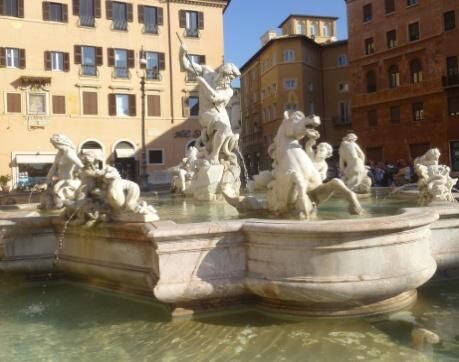
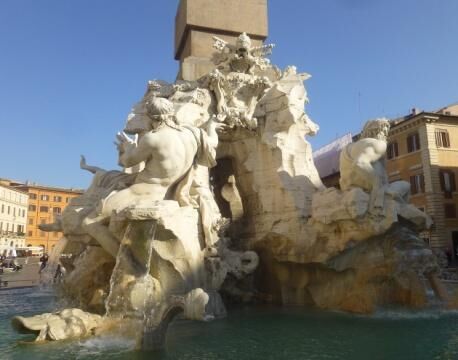
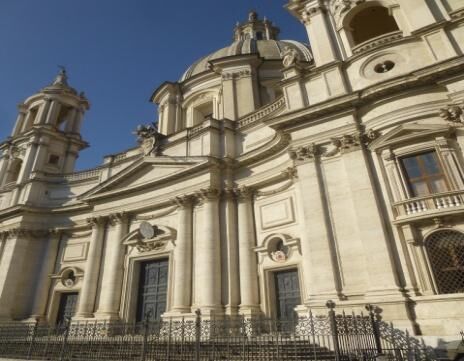
从住所步行到著名的纳沃纳广场(Piazza Navona)不到 5 分钟。这个巴洛克(Baroque)风格的广场以及四周的建筑,是在罗马帝国时代一个竞技场的遗址上,逐渐建造起来,在文艺复兴后期最终完成的。那竞技场原本是“长轴”沿南北方向的椭圆形,纳沃纳广场因而是南北长,东西短。人们说这是罗马最美丽的广场。我以为这“美”,不仅来自四周富丽堂皇的教皇宫殿和教堂,而广场上的三座喷泉更如璀璨的珠宝,亮丽耀眼,夺人心魄。傍晚的广场上依然人山人海,人们大多聚集在那三座喷泉处。喷泉中的石雕是似人非人的海神与河神、惟妙惟肖的海豚与章鱼等等神怪,都栩栩如生。广场中央的那座“四河喷泉(Fontana dei Quattro Fiumi)”,出自开创巴洛克风格的艺术与建筑大师贝尼尼(Bernini)之手,最为引人注目。那石雕的四个巨人,当然是四位“河神”,代表着大地上分属欧、非、亚、美四大洲的多瑙河、尼罗河、恒河与普拉特河。希腊神话说它们原本是“天河”,飞降人间,分布在大地之四角。这神话并不离谱,大地上的河水,不是来自“天上”,就是出于“地下”啊!
广场南端附近,就是世界闻名的万神殿,这是罗马一座有两千年历史的古老庙宇。最初,大约在公元前几年,一位叫做阿格里帕(Agrippa)的军事将领设计并督造了这座神庙。此人文武双全,是罗马帝国第一个帝王奥古斯特(Augustus),其本名屋大维(Octavian),不离左右的一员大将,战功赫赫,却又酷爱艺术,懂得建筑。阿格里帕建造这个神庙之初衷,是为了纪念屋大维大败政敌安东尼(Anthony)。安东尼是凯撒(Caesar)时期的大将,骁勇善战,但缺乏政治谋略。公元前 44 年,凯撒遇刺身亡后,养子屋大维继位,野心膨胀的安东尼却蔑视他乳臭未干,文弱书生。几经政治与军事之折冲较量,罗马的军事巨头各自割据一方。屋大维占据罗马地区;安东尼则占据了罗马的属地埃及,在当地称王称霸。那位常被戏剧、影视大肆渲染的“埃及艳后”克里奥帕特拉(Cleopatra),成了安东尼的情妇。屋大维虽然不善挥刀舞剑,但长于运筹帷幄,尤擅政治权谋,纵横捭阖。他不容割据局面永存,兴兵征讨安东尼,并且得手。随着安东尼的垮台,“埃及艳后”也被迫自尽。这场战争的胜利,不仅统一了罗马帝国初期的版图,也奠定了屋大维称帝的基础。虽然名义上,屋大维是罗马帝国之“执政官”,实则帝王,获得神圣封号“奥古斯特”,时公元前 27 年 8 月。这是世界历史上的一件大事,乃至于 8 月份在西方世界就被称为“奥古斯特”了。万神殿为此而兴建,顺理成章。
公元 80 年,万神殿被大火吞噬。40 年后,罗马帝国史上誉为“五贤帝”之一的哈德良(Hadrian),下令重建万神殿。那时,罗马还不是基督教国家,人们敬拜着许多神祇,万神殿之名由此而来。公元 313 年,罗马帝王君士坦丁(Constantine)承认了基督教的合法地位,之后万神殿被改为一座基督教堂。约公元 600 年时,拜占庭王朝把它献给了罗马教皇。教皇更其名为“圣玛利亚和殉道者教堂”(Santa Maria and Martyrs)。这是万神殿的正式命名,沿用至今。两千年来,万神殿虽经修缮维护,但原貌丝毫未动。
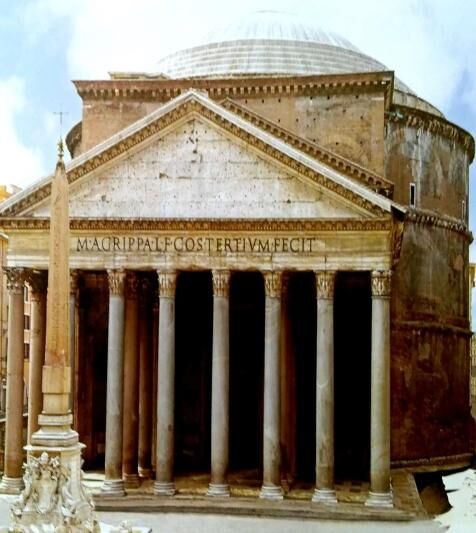
大致上看来,万神殿是一座希腊风格与罗马风格的结合。正门高大宽敞的柱廊,尤其是正门上端那巨大三角形的“山花”以及上面的浮雕,均透露出不凡的宏伟气度。这些都是典型古希腊神庙的风格。哈德良还下令,把神殿之原始设计阿格里帕的名字,雕刻在山花以下的横梁处,可见“贤帝”之胸怀。万神殿不同于古希腊神庙的是,正门后的大殿之屋顶,乃是个巨大的穹顶。为采光计,穹顶中央不封顶,敞开直通天际,任凭雨水降落殿堂之内。以五颜六色的大理石和花岗岩,搭配混合敷设的地面,不仅拼出美丽庄严的图案,而且呈现坡度,把雨水迅速排出大殿。万神殿高大的穹顶是罗马首创,也成为古罗马建筑的一大特色。
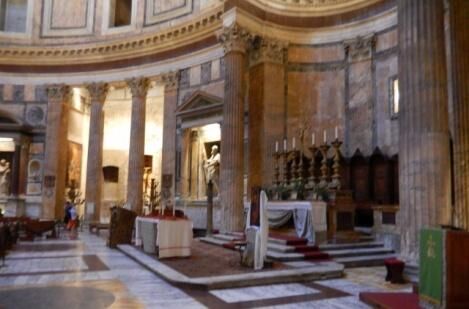
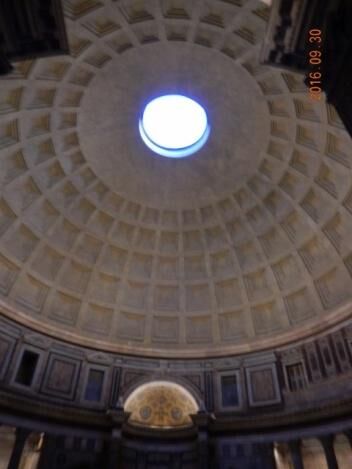
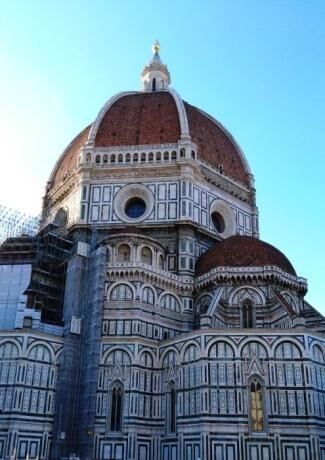
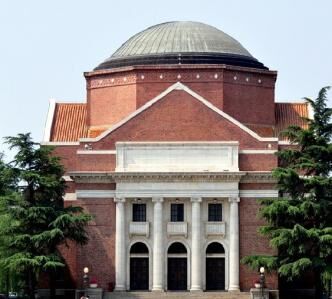
万神殿之能保存两千多年的首要原因,自然是人们,包括外邦入侵者,对于神祗的敬畏。其次,这也与建筑材料有关。罗马人两千年前就发明了混凝土,(想想看,国人什么时代才知道“洋灰”的?)例如神殿内外,那些高大的圆柱都是混凝土构件。石头当然也是必不可少的材料,例如各处的混凝土柱子的柱础和外壳,华丽的地面,四周的浮雕装饰,立体雕塑等等。至于穹顶,用的是以火山灰为材料的板材,这大大减轻了那巨大穹顶的重量。这个穹顶是建筑史上的经典。千年之后,佛罗伦萨出现了一座“圣母百花大教堂(Cathedral of Santa Maria del Fiore)”,其穹顶更为宏大美丽。那设计者当年,就以万神殿穹顶为参考、获启发,而创造了穹顶建筑的另一个高峰。万神殿在建筑学上不仅影响了西方,也被东方的建筑家们模仿。我曾经任教过的清华大学,里面那座大礼堂是清华之早期建筑,其外观就有万神殿的影子。
万神殿里除了供奉神祗和天主教的圣贤外,极为少数的哲人先贤与帝王也被安葬于此,其中就有大画家拉斐尔(Raphael)。从这个意义来说,称之为“万圣殿”似乎更为合适。拉斐尔是与达芬奇(Leonard da Vinci)和米开朗基罗(Michelangelo)同时代、比肩齐名的意大利文艺复兴的先驱。他比达芬奇和米开朗基罗都年轻些,但不幸英年早逝,仅仅在世 37 年,留下的杰作却丰富之极,有三百多幅,其中传世精品也在百幅以上。
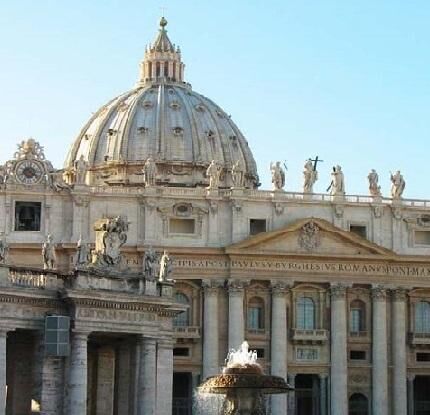
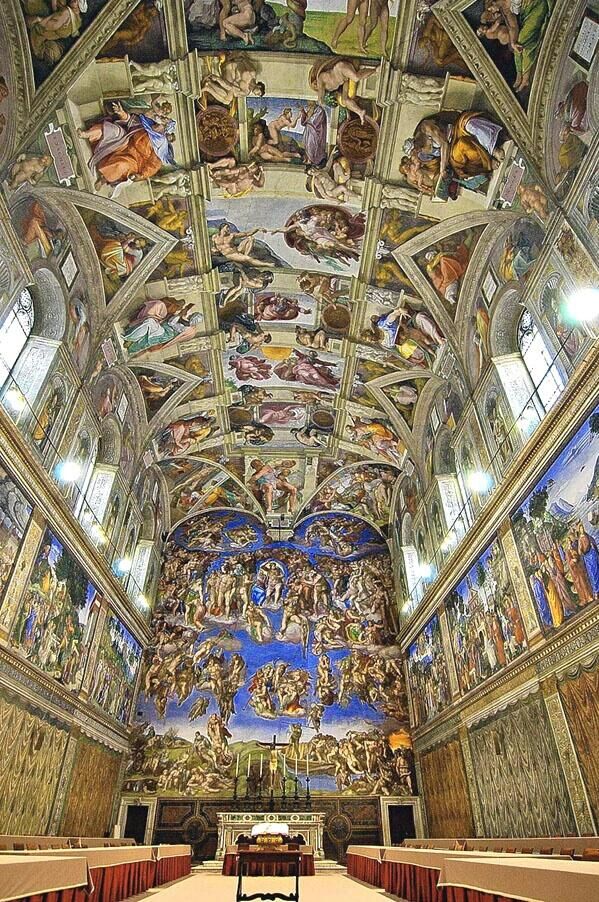
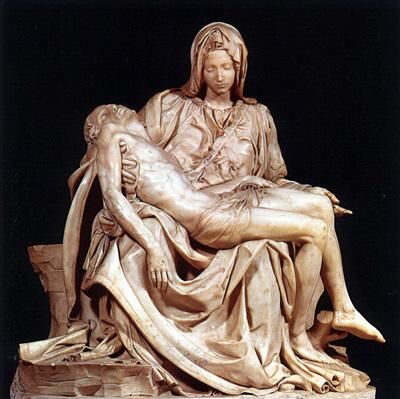
在文艺复兴时代,天主教教皇扩建梵蒂冈(Vatican),拉斐尔与米开朗基罗同时受聘,设计扩建圣彼得大教堂(St. Peter’s Basilica),以及周边教皇办公和居住各个房间的内部装潢。教皇汝利亚二世(Julius II)委任拉斐尔担任圣彼得大教堂的总设计师。拉斐尔去世后由米开朗基罗接替,后者设计了圣彼得大教堂的穹顶以及布放在教堂内部的著名雕塑“圣母怜子(Pieta)”。梵蒂冈圣彼得大教堂之穹顶,又是建筑史上的一个经典。米开朗基罗谦卑地说:我可以造得(比佛罗伦萨的圣母百花大教堂的穹顶)更大,却不能更美!米开朗基罗更为著名的杰作,是他以圣经《创世纪(Genesis)》为主题,创作了一个绘画系列,并亲手画在教皇私用之教堂“西斯廷(Sistine)”的天花板上,那工作几乎要了他的命!他在绘画时需要被吊起来,面朝天,一笔笔地往天花板上画,任凭那颜料掉落满脸满身,整整 4 年才完工。
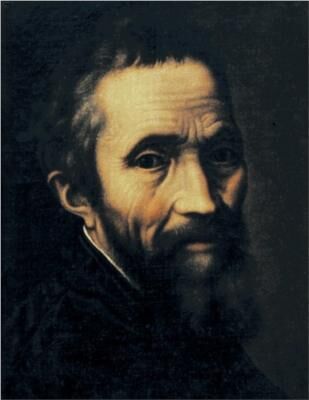
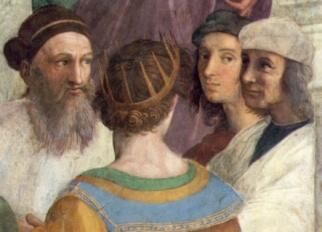
拉斐尔在西斯廷教堂,亲眼见到米开朗基罗如何献身忘我、全神贯注地工作,深受感动,就在他那即将完成的传世名画“雅典学院(School of Athens)”里,添加了米开朗基罗的形象。那是一个坐在石阶上,一手执笔,一手托腮,穿着邋里邋遢的工作服,专心思考设计的米开朗基罗。“雅典学院”的画面里,有许多的希腊先贤,例如数学家欧几里得(Euclid),毕德格拉斯(Pythagoras)都在其中。此画的中心意思是,人类的全部知识,均来自于上帝的启示;而理性思维则是人类追求真理的必经之路!哲学与逻辑,在人类的知识范畴中,具有非凡的地位,画面上中心的人物乃是柏拉图(Potato),他的面容之原型就是达芬奇。拉斐尔把自己也画在里面,一个在画面的右方边缘角落里,谦逊地聆听哲人们发表宏论的年轻人。拉斐尔把不同地域、不同时代的众多先哲们,放在一间大厅里,让他们跨越时空、互动交流,可谓奇思妙想!我以为拉斐尔此画还想表达的是,上帝的启示与人类理性的探索,此二者之间的和谐与平衡。
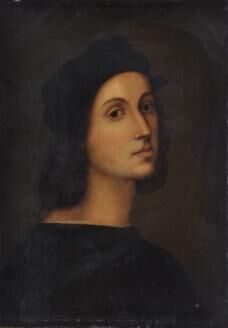
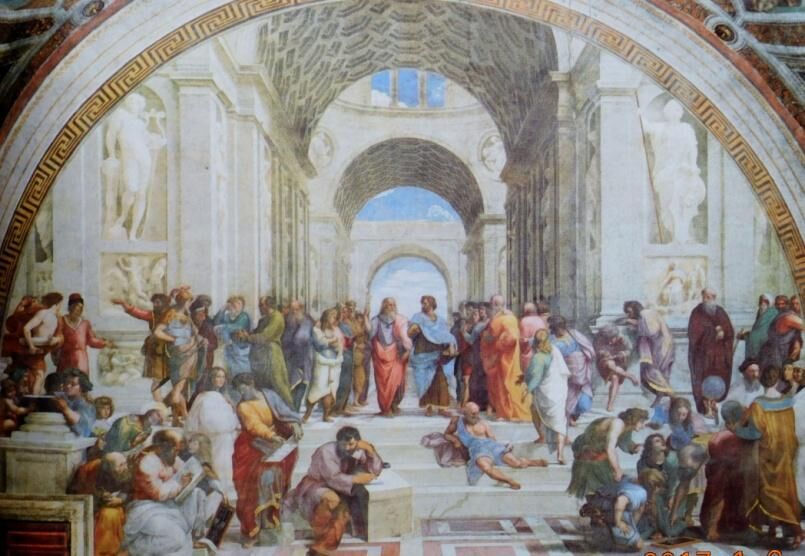
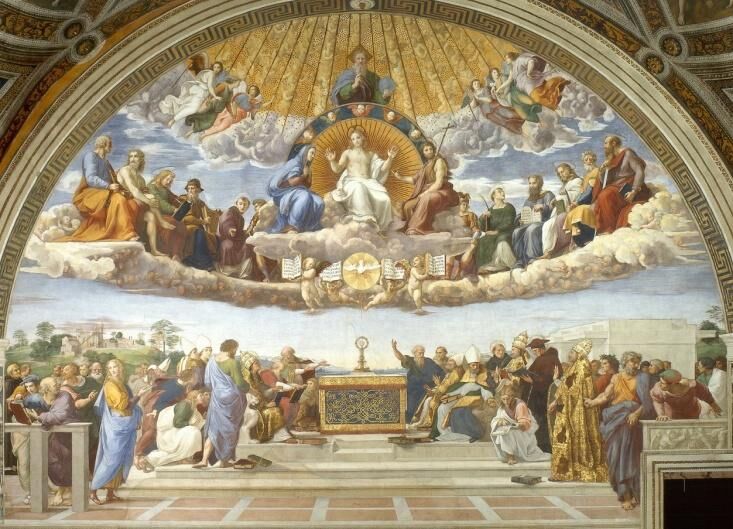
世界一流的梵蒂冈博物馆内,有一个专属拉斐尔的区域,叫做“拉斐尔房间(Raphael Rooms)”。对外开放展览的有四间展览室,其中两间是当年教皇处理公务的大厅。拉斐尔依据各厅的功能,构思绘画,装饰办公厅之四壁以及天花板,其中就有包括巨幅壁画“雅典学院”在内的多幅传世名画。另一间是拉斐尔授徒开课的“教室”,四壁甚至天花板,布满拉斐尔和他学生们的作品。还有一间应该是他的画室兼卧室,因为该室标明是斯人去世的地方。
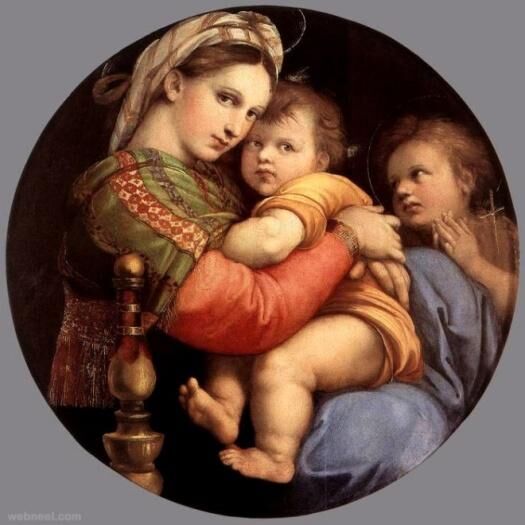
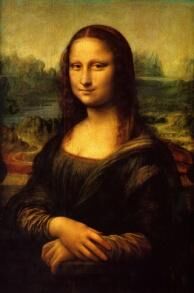
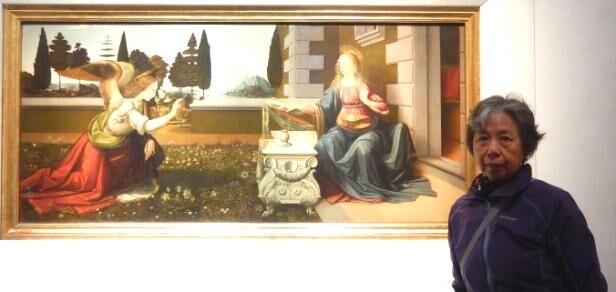
达芬奇,米开朗基罗和拉斐尔,共同为文艺复兴留下了浓墨重彩。只要提起文艺复兴,人们首先会记起他们。三位的画风迥然不同,但他们都笃信基督,熟读圣经。以圣经为题材的绘画或雕塑,占据了他们作品的多数。达芬奇的画作意境深远、庄严神秘;米开朗基罗的绘画与雕塑,大气磅礴且又细致入微;拉斐尔的绘画则笔触细腻、色彩鲜艳、十分唯美。相同的主题,三位的表现各异,反射出他们各自对于圣经人物与教义的理解。例如“圣家庭(The Holy Family)”这个题材,三位都有作品传世。达芬奇笔下的圣母玛利亚之面容,不仅神圣而且有几分神秘;米开朗基罗笔下的圣母是一位农妇模样,壮实而憨厚;而拉斐尔则把圣母画得美若天仙,赛过蒙娜丽莎。他们的绘画都是那么感人,令人过目难忘!
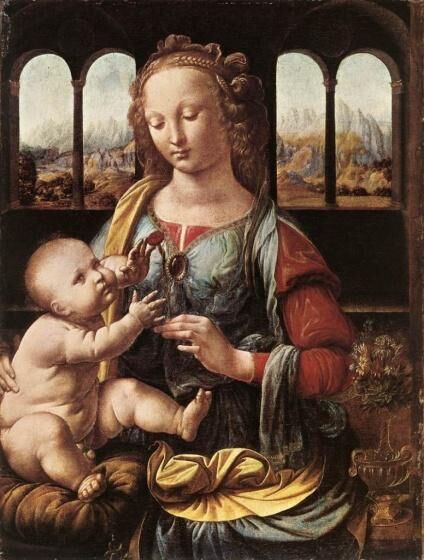
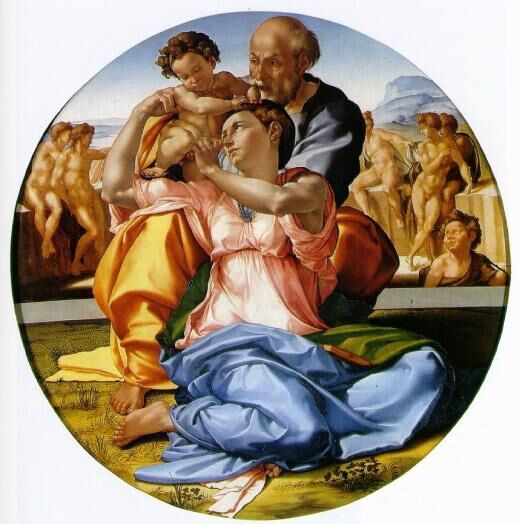
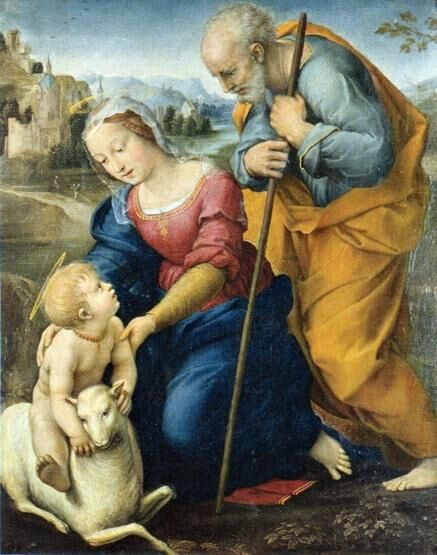
这三位是同时代文化巨匠,达芬奇年岁最大,影响也最大,但留下来的画作最少。我想这是因为,达芬奇实在多才多艺,绘画仅仅是他工作的一部分。他还忙着发明飞行器和各种机械,例如佛罗伦萨圣母百花大教堂的穹顶,虽然是达芬奇的老师布鲁尼雷斯基(Brunelleschi)设计监造,但吊装穹顶巨大部件时所用的起重机械,则属于达芬奇天才的创造发明。达芬奇还参加解剖人体,绘制解剖图谱,这不仅是对于医学的贡献,而且使得后继的画家和雕塑家们在创作时,关于人体比例、骨骼肌肉的形状、甚至筋脉血管走向,都把握得很准确。达芬奇还著书立说,其遗留手稿是人类文明进步的见证。内子和我,在伦敦大英图书馆和美国加州一个私人的“杭廷顿图书馆(Huntington Library)”里,有幸见识过达芬奇的部分手稿真迹。
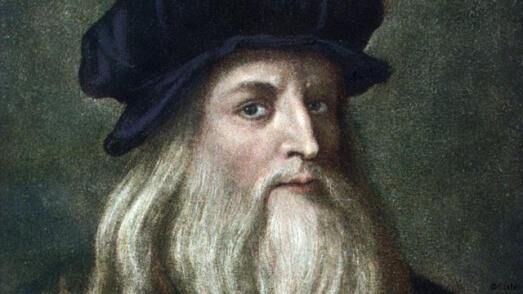
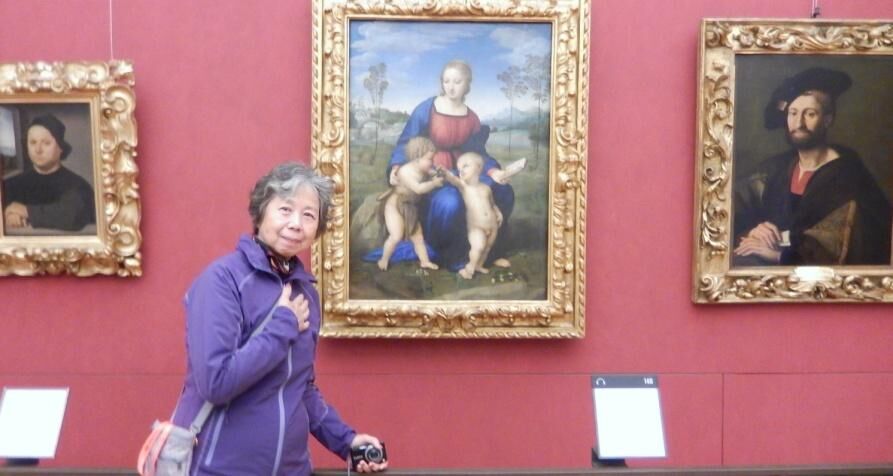
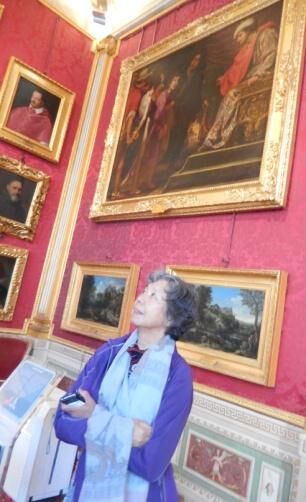
世界上著名的大博物馆或画廊,都竞相收藏、展览达芬奇、米开朗基罗和拉斐尔的作品,并列其为该馆最珍贵的藏品,独辟专区展出。近十年中,内子和我在纽约的大都会艺术博物馆(New York Metropolitan Art Museum)、伦敦的国家画廊(National Gallery)、巴黎的卢浮宫里(Louvre),见识了三位大师的很多传世精品。但是,他们还有很多佳作名品,只保存在意大利的博物馆或者教堂里,别处没有。达芬奇曾受聘于米兰的“圣母怜悯大教堂(Basilica di Santa Maria delle Grazie)”,装潢该教堂之大餐厅。这是当年一两百名教士们用餐的所在。在此餐厅的一面墙上,达芬奇花了 4 年时间,创作并亲手画了那幅众所周知的“最后的晚餐”。500 年来,此画遭受过人为的毁坏与自然的侵蚀,画面多处属于后人修复。虽然如此,“最后的晚餐”仅仅属于米兰的圣母怜悯大教堂,独一无二。该教堂定时开放参观并严格限制人数。我们行前没有预约成功,但还是决定到米兰后再碰碰运气。不料门禁很严,铁面无私,我们被拒之门外。恰好一个来自旧金山的团队,临时一人缺席。那领队看我们“可怜见儿”,主动邀请我俩中之一人“入团”。内子本来比我内行,我主动“让贤”啦!虽然我们多次欣赏过此画之图本,对画面熟悉极了,但内子看过真迹后,仍难掩激动,连说:只有在现场,你才能理解:这幅画是达芬奇为此餐厅量身打造的,画面与该教堂之建筑风格浑然一体啊!只有面对原作,你才能明白:达芬奇在画面上,把耶稣和其 12 门徒如此布局,令透视的焦点离开画面,而汇聚到墙面上方那巨大拱形天窗之外,于是画面“共长天一色”,匠心独运啊!仅凭此一节,来米兰一趟,我们不虚此行!
米开朗基罗和拉斐尔,相对高产。他们的绘画与石雕作品,除了在世界一流大博物馆或画廊展出外,在佛罗伦萨的“乌菲兹画廊(Uffizi Gallery)”、“披帝宫(Patti Palace)”以及“佛罗伦萨美术学院(Florence National Academy of Fine Arts)”,还在罗马的“博盖世画廊(Borghese Gallery)”等处,并不罕见。但是,米开朗基罗的大型绘画和雕塑诸如“创世纪”、“最后的审判”以及精雕细刻的“圣母怜子”和拉斐尔的绘画如“雅典学院”等等“大制作”,仅与梵蒂冈,西斯廷教堂共存,不可分割!若非万里迢迢来罗马,怎得亲近这些举世无双的“重量级”文化瑰宝?
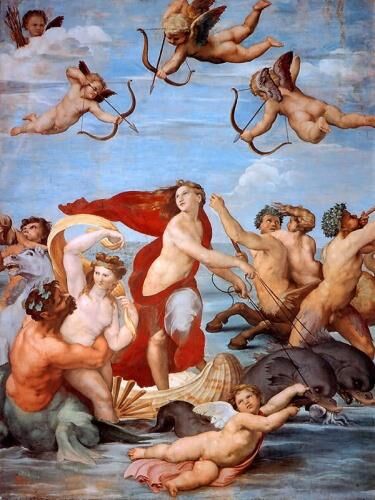
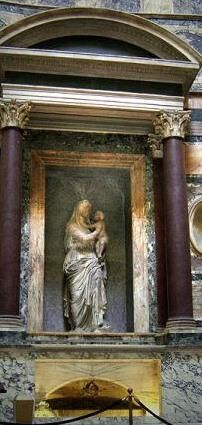
拉斐尔去世后,安葬在万神殿。内子和我极其喜爱他的绘画,特别欣赏他绘画中的唯美主义表现。所绘人物,无论宗教或世俗;所绘自然,无论天空或田园;所绘神话,无论天上或人间;无一不美!他的墓地,当然是我俩必定要去凭吊的。在这敬奉万神的所在,拉斐尔的长眠之所很不显眼。我俩一遍走过,竟不能发现。在工作人员指点下,才找到了拉斐尔的陵墓。它在大教堂的边缘一角,而且半隐藏在地下。
我们注意到墓碑上一小段读不懂的拉丁文字,据说它出自贝姆博(Bembo)主教之手。此人文学造诣非凡,是位很有名望的诗人。此段文字想必非常有趣,于是我回家后仔细研习,发现许多名家包括各国的主教、诗人或作家,都在试图按照自己的理解,把该段拉丁文字译为英文。多姿多彩的各家译文,不仅帮助了我理解拉丁原文的含义,也触发了我把它译成汉语的念头。
首先,把墓碑拉丁文字,照抄不误:ILLE HIC EST RAPHAEL: TIMUIT QUO SOSPITE VINCI RERUM MAGNA PARENS ET MORIENTE MORI。
在众多的英译中,我最喜欢下面这个: Here is Raphael. In life, Nature feared to be outdone by him. In death, she feared she too would die.
据此,我的汉译:拉斐尔长眠于此。斯人生前,大自然视其为可畏对手,却因其离世而顿失颜色。
反复体会,我感到贝姆博主教内心的意思就是中文的“天妒英才”!
2016 年圣诞节前夕初稿,加州亚凯迪市
2017 年 1 月 11 日定稿,加州吉尔珞邑
This introduction was translated from the Chinese by AI (Claude) in November 2026.
The author, Professor CK Yuan (袁传宽), graduated from Peking University and then went to study in the United States, where he received a PhD in mathematics from the University of California. He has taught for more than 40 years to date: 20 of them in China, at Tsinghua University, and 20 in the United States, at the University of California, Santa Barbara, Pepperdine University, Santa Clara University and International Technological University. He served as Vice President of International Technological University in the United States, and has also served in turn as director of three research institutes at Tsinghua University and as president of the Zhongguancun Institute for Innovation (中关村创新研修学院).
Translated from the Chinese by AI (Claude) in November 2026. Not yet reviewed by the author.
Heaven Envies Talent
Visiting the Pantheon, Paying Homage to Raphael
CK Yuan
Rome is one of the few truly ancient cities in the world, and its appearance of more than two thousand years ago can still be faintly made out. Of the temples, imperial temples, tombs and even palaces built two or three thousand years ago, most no longer exist, apart from the Pantheon. But the ruins and remains scattered all over the old city of Rome bear witness to one chapter of history after another. They record wars and all kinds of natural and man-made disasters. There were conquests of new lands and triumphant returns; there were also invasions by foreign peoples and utter destruction. There were raging plagues, with corpses strewn across the fields; there were also savage massacres, with blood flowing in rivers. Linked together, they make up the history of Rome's rise and fall, through the "Kingdom" and the "Republic" to the "Empire". These ups and downs of ancient Rome, from 753 BC to AD 476, span roughly 1,200-odd years; they, together with the 300 years of the Italian Renaissance that began in the 14th century, are the parts of world history that fascinate me most.
On September 30, 2016, my wife and I took the Italian high-speed train south from Florence to Rome. We boarded at Florence's Santa Maria Novella station, and in less than three hours we arrived at Rome's Termini station. Outside the station we got straight into a taxi, and after a ride of about 15 minutes a woman driver delivered us to the hotel we had booked. This "lady cabbie", like the "cabbie guys" we met all over Italy, was warm and talkative and enormously strong: she lifted our two suitcases in and out without the least effort! Our eight-day "Roman Holiday" had an easy and cheerful start.
From where we stayed, it was less than a five-minute walk to the famous Piazza Navona. This Baroque square and the buildings around it were built up gradually on the site of a stadium from the days of the Roman Empire, and were finally completed in the late Renaissance. The stadium was an oval whose "long axis" ran north and south, so Piazza Navona is long from north to south and short from east to west. People say this is the most beautiful square in Rome. To my mind this "beauty" comes not only from the splendid papal palaces and churches around it; the three fountains in the square are even more like dazzling jewels, brilliant and breathtaking. In the evening the square was still packed with people, most of them gathered around the three fountains. The stone carvings in the fountains, sea gods and river gods that are human and yet not quite human, lifelike dolphins and octopuses and other mythical creatures, all seem alive. The "Fountain of the Four Rivers" (Fontana dei Quattro Fiumi) in the middle of the square, the work of Bernini, the master artist and architect who founded the Baroque style, draws the most attention. Its four stone giants are, of course, four "river gods", standing for four rivers of the earth on four continents, Europe, Africa, Asia and the Americas: the Danube, the Nile, the Ganges and the Río de la Plata. Greek mythology says they were once "rivers of heaven" that flew down to the human world and spread out to the four corners of the earth. This myth is not so far-fetched: the rivers of the earth come either from "the heavens" or from "under the ground"!
Near the southern end of the square is the world-famous Pantheon, an ancient temple in Rome with a history of two thousand years. It was first designed, and its building overseen, a few years BC by a military commander named Agrippa. Skilled in both letters and arms, he was a great general who never left the side of Augustus, the first emperor of the Roman Empire, whose original name was Octavian; his military achievements were illustrious, yet he also loved art and understood architecture. Agrippa's original purpose in building this temple was to commemorate Octavian's great victory over his political rival Antony. Antony had been a great general in Caesar's time, brave and skilled in battle, but lacking in political strategy. In 44 BC, after Caesar was assassinated, his adopted son Octavian succeeded him, but Antony, swollen with ambition, looked down on him as a wet-behind-the-ears, frail scholar. After rounds of political and military maneuvering and trials of strength, Rome's military strongmen each carved out a region of their own. Octavian held the region of Rome; Antony held Egypt, a Roman possession, where he lorded it over the land as king. Cleopatra, the "glamorous Queen of Egypt" so often played up on stage and screen, became Antony's mistress. Although Octavian was no swordsman, he excelled at strategy and planning, and above all at political scheming and maneuvering. He would not let the land stay divided forever, and he raised an army against Antony, and succeeded. With Antony's fall, the "glamorous Queen of Egypt" too was forced to take her own life. The victory in this war not only unified the territory of the early Roman Empire but also laid the foundation for Octavian to become emperor. Although in name Octavian was the Roman Empire's "consul", in fact he was emperor, and he received the sacred title "Augustus" in August of 27 BC. This was a great event in world history, so much so that the month of August came to be called "Augustus" in the Western world. It was only natural that the Pantheon was built for this.
In AD 80, the Pantheon was swallowed by fire. Forty years later Hadrian, praised in the history of the Roman Empire as one of the "Five Good Emperors", ordered the Pantheon rebuilt. At that time Rome was not yet a Christian country, and people worshipped many gods; that is where the name of the Pantheon comes from. In AD 313 the Roman emperor Constantine recognized Christianity as lawful, and after that the Pantheon was turned into a Christian church. Around AD 600 the Byzantine dynasty gave it to the Pope in Rome. The Pope renamed it the "Church of Saint Mary and the Martyrs" (Santa Maria and Martyrs). This is the Pantheon's official name, and it is still used today. Over two thousand years, although the Pantheon has been repaired and maintained, its original form has not been altered in the slightest.
On the whole, the Pantheon is a blend of the Greek and Roman styles. The tall, spacious colonnade at its main entrance, and above all the huge triangular "pediment" above the entrance and the reliefs on it, give off an air of uncommon grandeur. All of this is in the style of a typical ancient Greek temple. Hadrian also ordered that the name of Agrippa, the temple's original designer, be carved on the beam below the pediment, which shows the generous spirit of this "Good Emperor". Where the Pantheon differs from ancient Greek temples is that the roof of the great hall behind the main entrance is a huge dome. To let in light, the center of the dome is left open, straight through to the sky, and the rain is allowed to fall into the hall. The floor, laid with a mixture of marble and granite of many colors, not only forms beautiful and solemn patterns but also slopes, carrying the rainwater quickly out of the hall. The Pantheon's lofty dome was a Roman first, and became one of the hallmarks of ancient Roman architecture.
The first reason the Pantheon has survived for more than two thousand years is, naturally, people's awe of the gods, invaders from foreign lands included. Second, it also has to do with the building materials. The Romans invented concrete two thousand years ago (just think: when did our countrymen first learn about cement, the "foreign ash"?). For example, the tall columns inside and outside the temple are all made of concrete. Stone, of course, was also an essential material, for example for the bases and casings of the concrete columns everywhere, the splendid floor, the relief decorations all around, the free-standing sculptures and so on. As for the dome, it was built of slabs made from volcanic ash, which greatly reduced the weight of that huge dome. This dome is a classic of architectural history. A thousand years later, a "Cathedral of Santa Maria del Fiore" appeared in Florence, with a dome grander and more beautiful still. Its designer took the Pantheon's dome as his model and inspiration, and created another peak of dome building. In architecture the Pantheon not only influenced the West but was also imitated by architects in the East. At Tsinghua University, where I once taught, the Grand Auditorium is one of the university's early buildings, and something of the Pantheon can be seen in its exterior.
Besides the gods and the Catholic saints who are honored there, a very few sages of the past and monarchs are also buried in the Pantheon, among them the great painter Raphael. In this sense, it would seem more fitting to call it the "Hall of All Saints" (万圣殿). Raphael was a pioneer of the Italian Renaissance, a contemporary of Leonardo da Vinci and Michelangelo and their equal in fame. He was somewhat younger than both Leonardo and Michelangelo, but sadly he died young, living only 37 years; yet the masterpieces he left are extraordinarily rich, more than three hundred of them, of which over a hundred are treasures handed down through the ages.
During the Renaissance, when the Catholic popes enlarged the Vatican, Raphael and Michelangelo were both engaged to design the enlargement of St. Peter's Basilica and the interior decoration of the rooms around it where the Pope worked and lived. Pope Julius II appointed Raphael chief architect of St. Peter's Basilica. After Raphael died, Michelangelo took his place; he designed the dome of St. Peter's Basilica and the famous sculpture the "Pietà" placed inside the church. The dome of St. Peter's Basilica in the Vatican is another classic of architectural history. Michelangelo said humbly: I can build it bigger (than the dome of Florence's Cathedral of Santa Maria del Fiore), but not more beautiful! Michelangelo's even more famous masterpiece is a series of paintings he created on the theme of the Bible's "Genesis" and painted with his own hand on the ceiling of the "Sistine" Chapel, the Pope's private chapel; the work nearly cost him his life! As he painted he had to be hoisted up, face to the sky, painting stroke by stroke onto the ceiling while the paint dripped all over his face and body, and it took fully four years to finish.
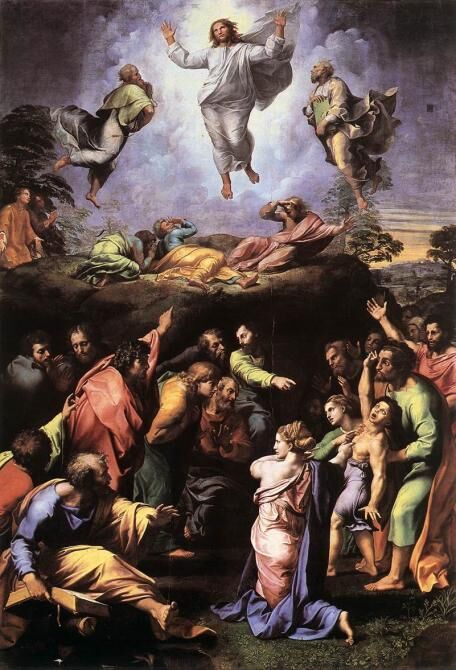
In the Sistine Chapel, Raphael saw with his own eyes how selflessly and single-mindedly Michelangelo worked. Deeply moved, he added Michelangelo's likeness to the great painting he was about to finish, "The School of Athens". It is Michelangelo sitting on the stone steps, pen in one hand and chin propped in the other, in sloppy work clothes, absorbed in thinking out a design. In "The School of Athens" there are many Greek sages; the mathematician Euclid and Pythagoras, for example, are among them. The central idea of the painting is that all human knowledge comes from God's revelation, and that rational thought is the path humanity must take in seeking the truth! Philosophy and logic hold an extraordinary place in the realm of human knowledge; the figure at the center of the picture is Plato, and the model for his face was Leonardo da Vinci. Raphael painted himself into it too: a young man in the corner at the right edge of the picture, listening humbly as the philosophers hold forth. Raphael put many sages from different places and different ages together in one great hall, letting them cross time and space and talk with one another: a truly ingenious idea! I believe that what Raphael also wanted to express in this painting is the harmony and balance between God's revelation and humanity's rational inquiry.
In the world-class Vatican Museums there is an area devoted to Raphael, called the "Raphael Rooms". Four rooms are open to the public, two of which were the halls where the popes conducted official business in those days. Raphael conceived paintings suited to the function of each hall and decorated the four walls and the ceilings of these offices, among them several masterpieces including the huge fresco "The School of Athens". Another is the "classroom" where Raphael taught his pupils; its four walls and even its ceiling are covered with works by Raphael and his students. Yet another must have been his studio and bedroom, because the room is marked as the place where he died.
Leonardo da Vinci, Michelangelo and Raphael together left a rich and vivid mark on the Renaissance. Whenever the Renaissance is mentioned, they are the first people remembered. The three painted in strikingly different styles, but all were devout Christians who knew the Bible well. Paintings and sculptures on Bible subjects make up most of their work. Leonardo's paintings are profound in mood, solemn and mysterious; Michelangelo's paintings and sculptures are majestic yet meticulous in detail; Raphael's paintings are delicate in brushwork, bright in color and utterly beautiful. Given the same theme, the three treated it differently, reflecting each one's own understanding of the figures and teachings of the Bible. For example, all three left works on the subject of "The Holy Family". The face of the Virgin Mary from Leonardo's brush is not only holy but also somewhat mysterious; Michelangelo's Virgin looks like a farm woman, sturdy and simple; while Raphael painted the Virgin as beautiful as a goddess, lovelier even than the Mona Lisa. Their paintings are all so moving, unforgettable once seen!
These three were cultural giants of the same era. Leonardo was the oldest and the most influential, but left the fewest paintings. I think this is because Leonardo was so truly versatile that painting was only one part of his work. He was also busy inventing flying machines and all kinds of mechanical devices. For example, although the dome of Florence's Cathedral of Santa Maria del Fiore was designed and its building overseen by Leonardo's teacher Brunelleschi, the lifting machines used to hoist the dome's huge parts into place were inventions of Leonardo's genius. Leonardo also took part in dissecting human bodies and drew anatomical atlases. This was not only a contribution to medicine; it also let later painters and sculptors grasp very accurately, in their work, the proportions of the human body, the shapes of bones and muscles and even the courses of tendons and blood vessels. Leonardo also wrote books, and the manuscripts he left behind are a testament to the progress of human civilization. My wife and I have been fortunate to see some of Leonardo's original manuscripts in the British Library in London and in a private library in California, the "Huntington Library".
The world's great museums and galleries all compete to collect and exhibit the works of Leonardo, Michelangelo and Raphael, rank them as their most precious holdings and show them in rooms of their own. Over the past ten years my wife and I have seen many of the three masters' great works in the Metropolitan Museum of Art in New York, the National Gallery in London and the Louvre in Paris. But they have many more fine and famous works that are kept only in Italy's museums or churches, and nowhere else. Leonardo was once engaged by the "Basilica di Santa Maria delle Grazie" in Milan to decorate the church's great refectory. This was where the church's one or two hundred clergy took their meals in those days. On one wall of this refectory Leonardo spent four years creating, and painting with his own hand, the world-famous "Last Supper". Over 500 years the painting has suffered damage by people and erosion by nature, and many parts of it are restorations by later hands. Even so, "The Last Supper" belongs only to Milan's Santa Maria delle Grazie; there is nothing else like it. The church opens for visits at set times and strictly limits the number of visitors. We had not managed to book before our trip, but decided to try our luck anyway once we got to Milan. As it turned out, the entry control was strict and unbending, and we were turned away at the door. As luck would have it, a tour group from San Francisco had one member missing at the last minute. Their leader, seeing how "pitiful" we looked, invited one of the two of us to "join the group". My wife is more of an expert than I am, so I stepped aside and "gave way to the worthier"! Although we had admired reproductions of the painting many times and knew it extremely well, after seeing the original my wife still could not hide her excitement, and kept saying: Only on the spot can you understand: this painting was made by Leonardo specially for this refectory, and the picture blends seamlessly with the architecture of the church! Only before the original can you see that Leonardo arranged Jesus and his 12 disciples in such a way that the focal point of the perspective leaves the picture and converges beyond the huge arched window at the top of the wall, so that the painting "shares one color with the endless sky" (共长天一色): what original craftsmanship! For this alone, the trip to Milan was well worth it for us!
Michelangelo and Raphael were comparatively prolific. Besides being shown in the world's leading museums and galleries, their paintings and stone sculptures are not rare in Florence's "Uffizi Gallery", "Patti Palace" and "Florence National Academy of Fine Arts", or in Rome's "Borghese Gallery" and elsewhere. But Michelangelo's large paintings and sculptures, such as "Genesis", "The Last Judgment" and the finely carved "Pietà", and Raphael's paintings, such as "The School of Athens", these "grand productions" exist only together with the Vatican and the Sistine Chapel, and cannot be separated from them! Unless you travel thousands of miles to Rome, how could you get close to these unrivaled "heavyweight" cultural treasures?
After Raphael died, he was buried in the Pantheon. My wife and I love his paintings dearly, and especially admire the aestheticism in them. The people he painted, whether religious or worldly; the nature he painted, whether sky or countryside; the myths he painted, whether in heaven or on earth: there is nothing that is not beautiful! His tomb was, of course, a place the two of us simply had to visit to pay our respects. In this place where all the gods are worshipped, Raphael's resting place is quite inconspicuous. The two of us walked through once and could not find it. Only when a member of staff pointed the way did we find Raphael's tomb. It is in a corner at the edge of the church, and half hidden below ground.
We noticed a short Latin inscription on the tombstone that we could not read; it is said to be from the hand of Bishop Bembo. He was a man of extraordinary literary attainment, and a very well-known poet. The inscription must surely be very interesting, so after I got home I studied it carefully, and found that many notable figures, including bishops, poets or writers of various countries, had tried to translate it into English according to their own understanding. These varied and colorful translations not only helped me understand the meaning of the Latin original, but also gave me the idea of translating it into Chinese.
First, here is the Latin on the tombstone, copied exactly: ILLE HIC EST RAPHAEL: TIMUIT QUO SOSPITE VINCI RERUM MAGNA PARENS ET MORIENTE MORI.
Of the many English translations, I like this one best: Here is Raphael. In life, Nature feared to be outdone by him. In death, she feared she too would die.
Based on it, my Chinese translation: Raphael rests here forever. In his lifetime, Nature regarded him as a formidable rival, yet at his passing she suddenly lost her color. (拉斐尔长眠于此。斯人生前,大自然视其为可畏对手,却因其离世而顿失颜色。)
After pondering it again and again, I feel that what Bishop Bembo meant in his heart is exactly the Chinese saying "Heaven envies the gifted" (天妒英才)!
First draft on the eve of Christmas 2016, Arcadia, California
Final draft on January 11, 2017, Gilroy, California