
Memoir回憶錄回忆录
軍人 新聞人 發言人Soldier, Journalist, Spokesman
Major General Huang Sui-Sheng, a retired spokesman of the Republic of China’s Ministry of National Defense, looks back on his life as a soldier, journalist and spokesman. The article is shown as it was printed.
中華民國國防部發言人退休的黃穗生少將,回顧軍人、新聞人、發言人的一生。文章以刊出時的版面呈現。
从中华民国国防部发言人职位退休的黄穗生少将,回顾自己作为军人、新闻工作者、发言人的一生。文章以刊出时的版面呈现。
本文保留原文的繁体字。
黄穗生少将,中华民国国防部发言人退休
軍人 新聞人 發言人
復興崗教育支撐了我一生
新聞系/黃穗生
畢業但求學能有所用
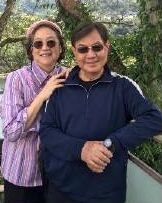
民國61年我們18期畢業了!在新聞館深思耽讀了四年,畢業之際,沒有揚鞭躍馬的豪情,但求崗上所學能有所用,學的是新聞,有朝一日能夠進軍事新聞機構,專長歸位,於願足矣!
但是在當時大環境,覺得這是一種遙不可及奢望,然而現今回顧過往的歲月,一路走來,復興崗的新聞教育,幾乎支撐了我一生,這是始料未及的。
軍旅生涯新聞歷練完整
竟然在我的軍旅生涯中,新聞單位的歷練是十分完整,細顧前後期學長弟,我可能是少數之一。
畢業留校在十一中隊當區隊長,不久就到第一個新聞單位報到,被借調到《復興崗報》當新聞官,負責第四版的新聞編採,這段時期的歷練,強化了在學生時代所欠缺的編輯實務。
留校一年,就揮別復興崗,下部隊到33師砲指部砲兵連歷練連輔導長,爾後幾乎是除受訓外,就循序歷練各級部隊的新聞工作。
師級,曾辦過《埔光快報》,當時是33師政二科參謀,新聞系同學高新生是政戰隊新聞官,在一次全師從台南駐地夜間機動到台中清泉崗演習中,我們組成新聞組,協力發行了一份油印的快報,記得當時一邊在夜行軍,一邊撰稿,在睡眼惺忪的清晨到達清泉崗,就將我下部隊後的第一份快報問世。
軍級,歷練澎防部《建國日報》總編輯。軍團級,歷練了《六軍團忠誠報》、《陸軍後勤司令部忠誠報》。從師、軍、軍團、總部等各級部隊軍報社的歷練,慢慢磨出了一些新聞編採寫的實務心得。
進入青報從記者歷練到社長
民國69年,參加《青年戰士報》記者的甄試,獲得錄取,從以往單純軍中報紙到與民間報紙規模內涵完全一致的《青年戰士報》(後來更名為《青年日報》),將在新聞館所學,作完整徹底的實踐,對我而言是夢寐以求的。
在《青年日報》度過了20年的歲月。從基層的少校記者、採訪主任、總編輯、軍聞社社長到少將社長,這是人生最菁華的歲月,這也是我人生中最重要的學習、歷練的階段。
記得在當記者的時候主跑的是政治要聞,當時行政院長每年年終的時候都舉行記者會,由行政院長主持,答覆黨政記者提問。
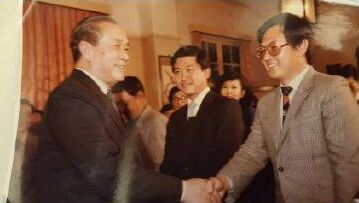
有一年我綜觀時局(當時黨禁、報禁尚未開放),向孫運璿院長提問:「當前有媒體或輿論認為,國內政治情勢已走向兩極化的趨勢,請問院長的看法!」
孫院長不疾不徐的表示:「政治兩極化對國家的發展是極不利的,當前國內尚未有此現象!」
在孫院長的語氣中,可感覺到他是有警覺且憂心的。次日的一家晚報卻以三版頭條報導,而且說這是官媒跟行政院設計出來的議題,真會扯。但證諸今日,孫院長的憂心是前瞻、睿智的。
在社長任內,民國88年發生921大地震,台灣遭逢空前大難。災區死傷無數,道路及電力中斷,對外通訊困難,媒體的資訊難以進入災區,雖然政府和國軍傾全力救災,但民眾無法獲知訊息,人心惶然。當時的總政戰部主任曹文生上將指示:青年日報社即刻編印《青年快報》,將政府救災的措施、重建的規劃,救災物資的發放,國軍和全國民眾救災的行動,讓災區的民眾瞭解。
當時總統赴災區巡視,肯定《青年快報》的功能,要求行政院新聞局也應立即編印發行《重建快報》。該局曾徵詢當時的《中央日報》、《新生報》,兩報均表示沒有執行的能量,最後決定還是由青報來負責編採印送,將國防部發行《青年快報》改成行政院新聞局名義發行《重建快報》。
《青年日報》在此一期間,同時編、採、校、印、發行兩種報紙:《青年日報》與《重建快報》,每天發行份數近20餘萬,一套人馬辦兩種報紙,同仁們不眠不休全力以赴達成任務。每天陸總派直升機將報紙空運到救災指揮所,再分發給災區民眾,讓他們能最迅速的瞭解政府救災及重建的規劃,方使政府重建工作得以順利開展。
說明了復興崗的新聞教育和國軍政戰的新聞機制,在國家發生重大變故時,可發揮無可替代的功能。
接任國防部軍事發言人
民國89年9月中旬,長官召見面告二星期後接任國防部軍事發言人。這對我人生是一個大大的驚嘆號,因為軍事發言人這一歷練,完全不在我人生的預期中,是一個意外。
當時正在《青年日報》少將社長任內。擔任社長對一個復興崗新聞系的畢業生而言,已經是最大的幸運和榮寵,心存感激,只想全力以赴做好這個職務後,就解甲歸田,況且以往從青報基層幹到社長的前輩,都是任滿退伍,也是常態。
萬萬沒想到自己有這麼一個機緣。雖然兩個職務位階相當,算是平調,但發言人能將新聞理論作更大的延伸發揮。能在另一和新聞有關的崗位上讓自己接受挑戰。在人生的際遇中,是一個重大的轉折點。
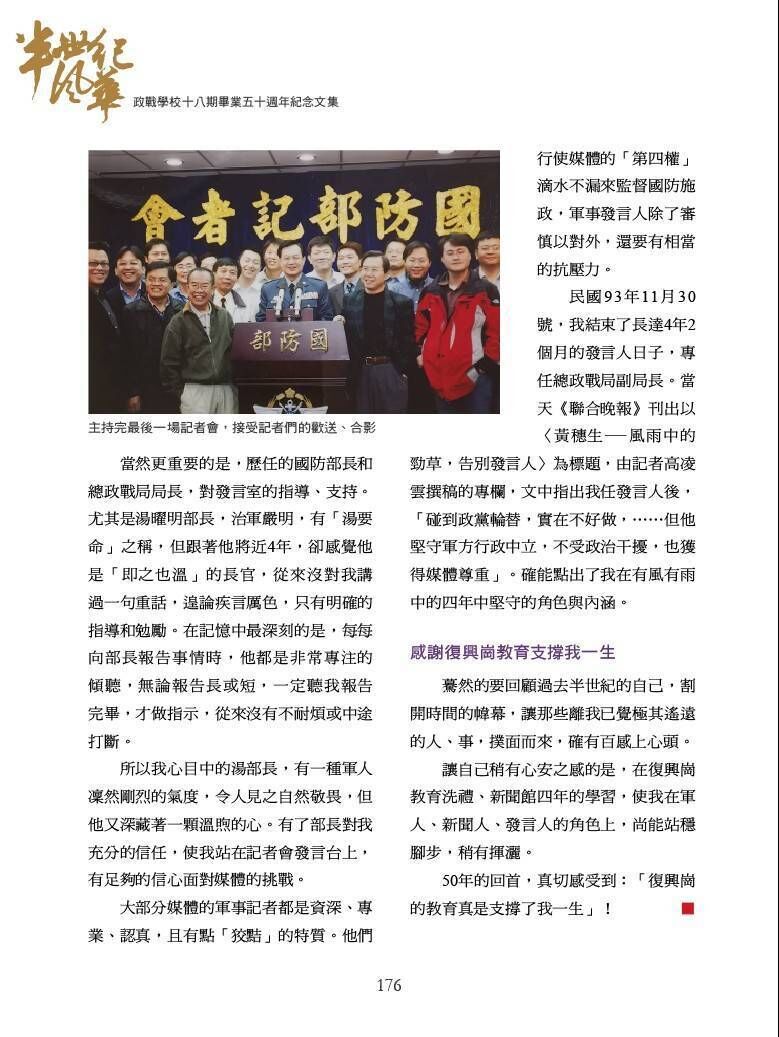
到國防部軍事發言人室報到的第三天,就粉墨登場,主持國防部記者會,扮演起發言人的角色。
眾所周知,發言人首要任務就是在每週定期記者會上,闡釋國防政策、答覆記者針對國防議題提問,自由發問,沒有時間限制而且是「問到飽」。
國防部是在各部會中,成員最多,編制最龐大的機構。國防事務更是經緯萬端,發言人就必須方方面面去瞭解,尤其是負面新聞的處理,猶如是危機處理,關係著國軍的形象至鉅。
在數十台攝影機及照像機前亮相,大部分電視台都是派SNG車,現場直播車,話出如風,收不回來的,這種壓力之大,是一生中所未曾經歷的。當然這種壓力隨著臨場的歷練和業務的熟稔而逐漸的減弱。初期看到SNG車及記者來的愈多壓力就大,後來適應後,看到SNG車及記者不多時,反而會悵然若失。
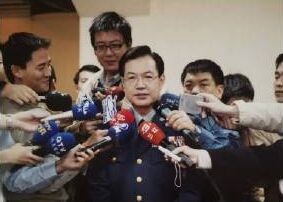
每一場記者會,都必須殫精竭慮的去準備。必須深入瞭解並熟讀熟記相關資料,很多是以往未接觸過,但在面對記者提問時,就必須朗朗上口,猶如業管參謀般熟悉,同時更要就近期的新聞和輿論作深入研析,就媒體關切議題要擬定周延完整的回應。
記得第一次記者會的前夕,家中妻女也都噤聲,不敢打擾我,讓我獨在書房孤燈下苦思苦讀,那一夜即使就寢後,亦是輾轉反側。爾後每逢記者會前夕,都是我深思苦讀時刻,家人都保持寧靜的氛圍,絕對不干擾我,女兒戲稱猶如「宵禁」。在4年2個月的發言人任期內,曾舉行189場記者會,換言之,我的家庭也「宵禁」了189個夜晚,真是難為妻女了。
發言人任內拾穗
記者會只是發言人任務內涵之一。還有必須不分平假日,手機24小時開機,絕不漏接記者的電話,記者來電採訪或查證新聞,必須立即以正確訊息回應,絕對不容許不確實新聞被刊播,造成後遺。
部長在公開場合出現,發言人必須要亦步亦趨的在場,伺機安排部長接受媒體訪問等新聞作為。
部長巡視三軍各級部隊時,必須跟隨,掌握部長指導部隊方向,同時自己也深入瞭解國軍官兵現況,增加對部隊的瞭解,累積發言時的深度。
我給自己的期許是發言人要做好三個角色:一是國防政策的闡釋者。二是國軍形象的捍衛者。三是國防部長的代言人。務必透過發言的機制,要達到三大目標:1.鼓舞國軍士氣。2.贏得國人民心。3.威懾敵人。
漫長四年的發言人生涯,不都是平靜無波,也常有風口浪尖的時刻,總是在堅忍冷靜以對下,迎刃而解。
當然這不是一己之力而成。首先我有一群銳氣十足、效率奇高的政戰菁英組成發言人室團隊,夜以繼日的掌握國內外訊息、協調聯參、聯繫媒體,讓我能掌握全局,有二位上將曾公開地說:「發言人室是總政戰局的聯三」。後來這團隊產生了一位中將、四位少將。
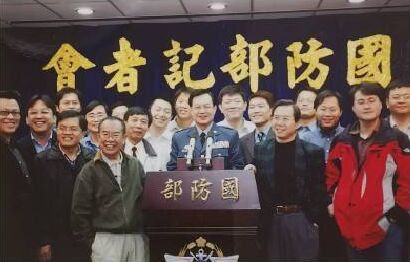
當然更重要的是,歷任的國防部長和總政戰局局長,對發言室的指導、支持。尤其是湯曜明部長,治軍嚴明,有「湯要命」之稱,但跟著他將近4年,卻感覺他是「即之也溫」的長官,從來沒對我講過一句重話,遑論疾言厲色,只有明確的指導和勉勵。在記憶中最深刻的是,每每向部長報告事情時,他都是非常專注的傾聽,無論報告長或短,一定聽我報告完畢,才做指示,從來沒有不耐煩或中途打斷。
所以我心目中的湯部長,有一種軍人凜然剛烈的氣度,令人見之自然敬畏,但他又深藏著一顆溫煦的心。有了部長對我充分的信任,使我站在記者會發言台上,有足夠的信心面對媒體的挑戰。
大部分媒體的軍事記者都是資深、專業、認真,且有點「狡黠」的特質。他們行使媒體的「第四權」滴水不漏來監督國防施政,軍事發言人除了審慎以對外,還要有相當的抗壓力。
民國93年11月30號,我結束了長達4年2個月的發言人日子,專任總政戰局副局長。當天《聯合晚報》刊出以〈黃穗生──風雨中的勁草,告別發言人〉為標題,由記者高凌雲撰稿的專欄,文中指出我任發言人後,「碰到政黨輪替,實在不好做,……但他堅守軍方行政中立,不受政治干擾,也獲得媒體尊重」。確能點出了我在有風有雨中的四年中堅守的角色與內涵。
感謝復興崗教育支撐我一生
驀然的要回顧過去半世紀的自己,割開時間的幃幕,讓那些離我已覺極其遙遠的人、事,撲面而來,確有百感上心頭。
讓自己稍有心安之感的是,在復興崗教育洗禮、新聞館四年的學習,使我在軍人、新聞人、發言人的角色上,尚能站穩腳步,稍有揮灑。
50年的回首,真切感受到:「復興崗的教育真是支撐了我一生」!
原刊版面
Author: Major General Huang Sui-Sheng, retired Defense Ministry Spokesman, Republic of China
Translated from the Chinese by AI (Claude) in November 2026. Not yet reviewed by the author.
Contents目錄目录 (7)
- Soldier, Journalist, Spokesman Fu Hsing Kang's Education Carried Me Through My Whole Life
- Graduating, and hoping only to put my learning to use
- A military career with complete experience in news work
- Joining the Youth Daily: from reporter to publisher
- Becoming the Ministry of National Defense's military spokesman
- Gleanings from my years as spokesman
- Thanks to Fu Hsing Kang's education, which carried me through my life
Soldier, Journalist, Spokesman
Fu Hsing Kang's Education Carried Me Through My Whole Life
Department of Journalism / Huang Sui-Sheng (黃穗生)
Graduating, and hoping only to put my learning to use
In 1972 (year 61 of the Republic), we of the 18th class graduated! I had spent four years in the Journalism Hall, thinking deeply and absorbed in study. At graduation I had none of the bold spirit of cracking the whip and galloping off; I hoped only that what I had learned at Fu Hsing Kang (復興崗) would be of use. I had studied journalism, and if one day I could join a military news organization and put my specialty to work, my wish would be fulfilled!
But in the circumstances of the time, this seemed a luxury of a hope, far out of reach. Yet looking back today over the years gone by, all along the way, Fu Hsing Kang's journalism education has carried me through almost my whole life, something I never expected.
A military career with complete experience in news work
As it turned out, in my military career my experience in news units was remarkably complete; looking carefully at my seniors and juniors from the classes before and after mine, I may be one of only a few.
After graduation I stayed at the school as a platoon leader in the 11th Company. Before long I reported to my first news unit: I was seconded to the Fu Hsing Kang News (復興崗報) as a press officer, responsible for reporting and editing its fourth page. The experience of this period strengthened the practical editing skills I had lacked as a student.
After one year at the school, I bade farewell to Fu Hsing Kang and went out to the troops, serving as political officer of an artillery battery of the 33rd Division's Artillery Command. From then on, almost without exception apart from training courses, I worked step by step through the news work of units at every level.
At division level, I ran the Puguang Bulletin (埔光快報). I was then a staff officer in the 33rd Division's Second Political Section, and my journalism classmate Gao Xinsheng (高新生) was the press officer of the political warfare unit. During an exercise in which the whole division moved by night from its base in Tainan to Ching Chuan Kang in Taichung, we formed a news team and together put out a mimeographed bulletin. I remember writing copy while on the night march; in the bleary-eyed early morning we reached Ching Chuan Kang, and with that the first bulletin of my time with the troops came out.
At corps level, I served as editor-in-chief of the Penghu Defense Command's Jianguo Daily (建國日報). At army-group level, I served on the Sixth Army Loyalty News (六軍團忠誠報) and the Army Logistics Command Loyalty News (陸軍後勤司令部忠誠報). Through service on the military papers of units at every level, from division, corps and army group to general headquarters, I slowly honed some practical know-how in news editing, reporting and writing.
Joining the Youth Daily: from reporter to publisher
In 1980 (year 69 of the Republic), I took the selection exam for reporters at the Youth Warrior Daily (青年戰士報) and was accepted. I moved from papers that were purely military to the Youth Warrior Daily (later renamed the Youth Daily, 青年日報), whose scale and content were entirely on a par with civilian newspapers. To put what I had learned in the Journalism Hall into complete and thorough practice was, for me, a dream come true.
I spent 20 years at the Youth Daily. From a major serving as a reporter at the grassroots, to chief of the reporting desk, editor-in-chief, director of the Military News Agency, and then publisher with the rank of major general, these were the finest years of my life, and also the most important stage of learning and experience in my life.
I remember that when I was a reporter, my main beat was political news. In those days the Premier of the Executive Yuan held a press conference at the end of every year, chaired by the Premier, answering questions from reporters covering the party and government.
One year, taking stock of the times (when the bans on new political parties and new newspapers had not yet been lifted), I put a question to Premier Sun: "Some in the media and in public opinion believe that domestic politics is moving toward polarization. I would like to ask the Premier's view!"
Premier Sun answered calmly and unhurriedly: "Political polarization is extremely harmful to the nation's development; at present our country does not yet show this phenomenon!"
From Premier Sun's tone, I could sense that he was alert to it and worried. The next day, one evening paper ran the story as the lead on page three, and moreover claimed that this was an issue cooked up by the official media together with the Executive Yuan. What nonsense. But as today bears out, Premier Sun's worry was farsighted and wise.
During my term as publisher, the 921 earthquake struck in 1999 (year 88 of the Republic), an unprecedented disaster for Taiwan. In the disaster zone the dead and injured were countless, roads and power were cut, communication with the outside was difficult, and information from the media could hardly get into the disaster zone. Although the government and the armed forces threw all their strength into the relief effort, the people could not get any news, and they were anxious and afraid. General Cao Wensheng (曹文生), then Director of the General Political Warfare Department, gave the order: the Youth Daily was immediately to edit and print the Youth Bulletin (青年快報), to let the people in the disaster zone know about the government's relief measures and reconstruction plans, the distribution of relief supplies, and the relief work of the armed forces and of people all over the country.
When the President of the time toured the disaster zone, he praised the role of the Youth Bulletin and asked the Executive Yuan's Government Information Office to immediately edit, print and publish a Reconstruction Bulletin (重建快報) as well. The Office consulted the Central Daily News (中央日報) and the Shin Sheng Daily News (新生報) of the time; both papers said they did not have the capacity to do it. In the end it was decided that the Youth Daily would still be responsible for the editing, reporting, printing and delivery, and the Youth Bulletin published by the Ministry of National Defense was changed into the Reconstruction Bulletin, published in the name of the Executive Yuan's Government Information Office.
During this period, the Youth Daily was editing, reporting, proofreading, printing and distributing two newspapers at once, the Youth Daily and the Reconstruction Bulletin, with a daily print run of nearly 200,000-odd copies. With one team running two papers, our colleagues worked without sleep or rest, giving their all to accomplish the mission. Every day Army Headquarters sent helicopters to airlift the papers to the disaster relief command posts, where they were handed out to the people of the disaster zone, so that they could learn as quickly as possible about the government's relief and reconstruction plans, and the government's reconstruction work could get under way smoothly.
This showed that Fu Hsing Kang's journalism education and the news system of the armed forces' political warfare branch could play an irreplaceable role when the nation faced a major upheaval.
Becoming the Ministry of National Defense's military spokesman
In mid-September 2000 (year 89 of the Republic), my superior called me in and told me that in two weeks I would take over as military spokesman of the Ministry of National Defense. This was a great big exclamation mark in my life, because serving as military spokesman was completely outside anything I had expected in my life; it was an unexpected turn.
At the time I was publisher of the Youth Daily, with the rank of major general. For a graduate of Fu Hsing Kang's Department of Journalism, being publisher was already the greatest good fortune and honor; with a grateful heart, I only wanted to give my all to doing this job well and then take off my armor and go home to the fields. Besides, the predecessors who had risen from the grassroots of the Youth Daily to publisher had all retired at the end of their terms, which was the norm.
Never in my wildest dreams had I imagined such a chance would come my way. Although the two posts were of equal rank, a sideways move, as spokesman I could extend and apply news theory more widely. I could take on a challenge in another post connected with the news. Among the turns of my life, it was a major turning point.
On my third day after reporting to the Ministry of National Defense's Office of the Military Spokesman, I put on my stage makeup and made my entrance, hosting the Ministry's press conference and taking on the role of spokesman.
As everyone knows, the spokesman's foremost task is, at the regular weekly press conference, to explain defense policy and answer reporters' questions on defense issues; they may ask freely, there is no time limit, and it is "all you can ask".
Of all the ministries, the Ministry of National Defense has the most personnel and the largest establishment. Defense affairs are endlessly complex, so the spokesman must understand every aspect of them, especially the handling of negative news, which is like crisis management and bears greatly on the image of the armed forces.
I appeared before dozens of television and still cameras, and most TV stations sent SNG vans, live broadcast trucks; words once spoken are gone like the wind and cannot be taken back. The pressure was greater than anything I had ever experienced in my life. Of course, as I gained experience on the spot and grew familiar with the work, this pressure gradually eased. At first, the more SNG vans and reporters came, the greater the pressure; later, once I had adapted, when I saw few SNG vans and reporters, I would instead feel a little lost.
Every press conference had to be prepared for with every ounce of thought and energy. I had to understand in depth, read thoroughly and memorize the relevant material, much of which I had never dealt with before; but when facing reporters' questions, I had to rattle it off as readily as the staff officer in charge of the matter. At the same time, I had to study recent news and public opinion in depth and draw up thorough, complete responses on the issues the media cared about.
I remember that on the eve of my first press conference, my wife and daughter kept silent and did not dare to disturb me, leaving me alone in my study under a solitary lamp, thinking hard and studying hard. That night, even after I went to bed, I tossed and turned. From then on, every eve of a press conference was my time for deep thought and hard study; my family kept the house quiet and never disturbed me, and my daughter jokingly called it a "curfew". In my four years and two months as spokesman, I held 189 press conferences; in other words, my family was under "curfew" for 189 nights. It was truly hard on my wife and daughter.
Gleanings from my years as spokesman
The press conference was only one part of the spokesman's duties. I also had to keep my mobile phone on 24 hours a day, weekdays and holidays alike, and never miss a call from a reporter. When reporters called for an interview or to check a story, I had to respond at once with accurate information, and never allow inaccurate news to be printed or broadcast and leave lasting harm.
When the Minister appeared in public, the spokesman had to be there, following him step by step, and look for chances to arrange media interviews for the Minister and other news work.
When the Minister inspected units at every level of the three services, I had to go with him, grasp the direction of the Minister's guidance to the units, and at the same time gain an in-depth understanding of the present state of the armed forces' officers and soldiers, knowing the units better and building up depth for what I said as spokesman.
What I expected of myself was that the spokesman should fill three roles well: first, the interpreter of national defense policy; second, the defender of the armed forces' image; third, the voice of the Minister of National Defense. Through the mechanism of speaking for the Ministry, I was determined to achieve three great goals: 1. Boost the morale of the armed forces. 2. Win the hearts of the people. 3. Deter the enemy.
My four long years as spokesman were not all calm and smooth; there were often moments in the eye of the storm, but each time, faced with fortitude and calm, they were readily resolved.
Of course, this was not achieved by my strength alone. First of all, I had a team in the Spokesman's Office made up of political warfare elites, full of drive and remarkably efficient, who worked day and night to keep on top of news at home and abroad, coordinate with the joint staff and liaise with the media, which let me grasp the whole picture. Two generals once said publicly: "The Spokesman's Office is the General Political Warfare Bureau's J-3 (operations)." Later this team produced one lieutenant general and four major generals.
Even more important, of course, were the guidance and support that successive Ministers of National Defense and Directors of the General Political Warfare Bureau gave the Spokesman's Office. Above all Minister Tang Yao-ming (湯曜明): he ran the military strictly and was known as "Deadly Tang" (湯要命), yet in nearly four years with him I found him a superior who was "warm when approached" (即之也溫). He never once spoke a harsh word to me, let alone with a stern face and sharp voice; there was only clear guidance and encouragement. What I remember most deeply is that whenever I reported to the Minister, he always listened with full attention; whether the report was long or short, he always heard me out before giving instructions, and he never showed impatience or interrupted me midway.
So the Minister Tang in my mind had a soldier's stern, unyielding bearing that made people instinctively hold him in awe, yet he also kept a warm heart deep inside. Having the Minister's full trust, I could stand at the press conference podium with enough confidence to face the challenges of the media.
Most of the media's military reporters were seasoned, professional and conscientious, with a touch of "craftiness" about them. They exercised the media's "fourth estate" to watch over the administration of national defense so closely that not a drop could leak through, so besides being careful in dealing with them, a military spokesman also needed considerable resilience under pressure.
On November 30, 2004 (year 93 of the Republic), I ended my four years and two months as spokesman and became full-time Deputy Director of the General Political Warfare Bureau. That day the United Evening News (聯合晚報) carried a column by reporter Gao Lingyun (高凌雲) under the headline "Huang Sui-Sheng – Sturdy Grass in Wind and Rain – Bids Farewell to the Spokesman's Post" (黃穗生──風雨中的勁草,告別發言人). The article said that after I became spokesman, "he ran into the change of ruling party, and it was really hard to do the job... but he held firm to the military's administrative neutrality, kept free of political interference, and also won the respect of the media". It truly captured the role I held to, and what it meant, in those four years of wind and rain.
Thanks to Fu Hsing Kang's education, which carried me through my life
Suddenly called on to look back over half a century of myself, I cut open the curtain of time, and those people and events, which had seemed so very far away, came rushing at me; a hundred feelings truly welled up in my heart.
What gives me some peace of mind is that, through the shaping of Fu Hsing Kang's education and four years of study in the Journalism Hall, I was able to keep my footing as a soldier, a journalist and a spokesman, and to show a little of what I could do.
Looking back over 50 years, I keenly feel: "The education of Fu Hsing Kang has truly carried me through my whole life"!
The article as printed